Tag Archives: Narcissus Twilight

Is it spring yet?

The early magnolias and bulbs are telling us that winter is waning and spring is starting. I noted last month that May and June were quiet months for bulbs. July is not, but it is mostly the daintier bulbs that are opening.
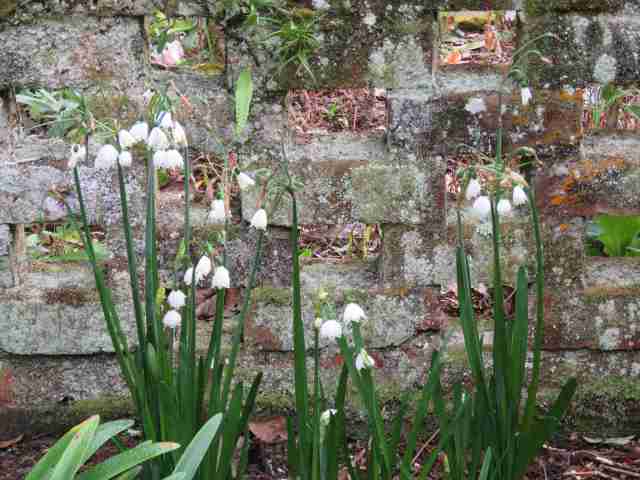
Leucojum vernum ‘Gravetye Giant’ has a very long season in bloom but is more useful than choice

Is this particularly early? Some of us ask that question; others boldly declare, based on ‘vibes’, that this is very early.  I thought it was early but it really isn’t. I have checked photo dates from my files and the snowdrops and narcissi are right on cue, as are Magnolias campbellii and ‘Vulcan’.
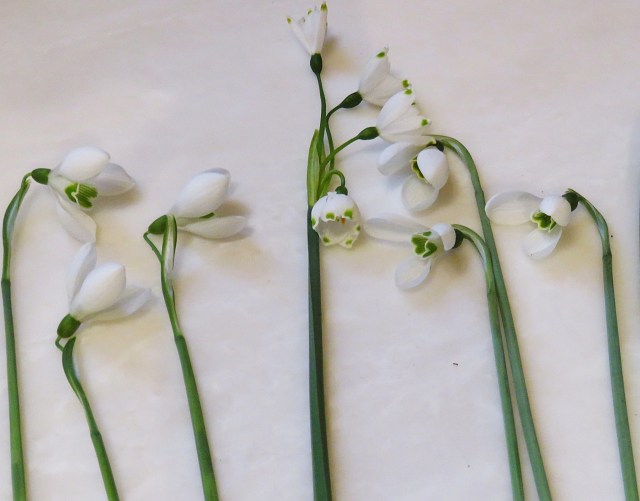
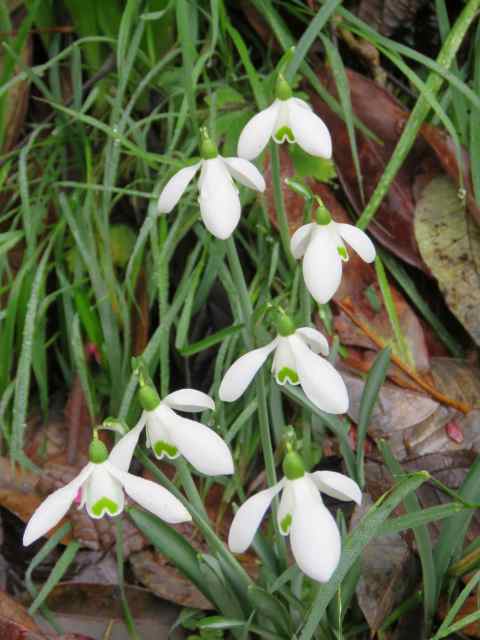
left to right: Galanthus nivalis ‘S Arnott’, Lecojum vernum (snowflake) and Galanthus elwesii

It is indeed peak snowdrop time which is but brief in our area which has only once ever had snow that we know of. I can tell you very specifically that it was on August 15, 2011, quite possibly between the hours of 6.00am and 7.00am. Out of all the snowdrops – and there are many, many different ones – we have ended up relying on just two different ones that perform well and actually increase in our warm temperate conditions. People in colder climates will have a much larger range that they can grow and they will have a longer season. We are confined to Galanthus nivalus ‘S. Arnott’ and Galantus elwesii and we really only get a couple of weeks out of them. The snowflake or Leucojum vernum ‘Gravetye Giant’ flowers over a couple of months.
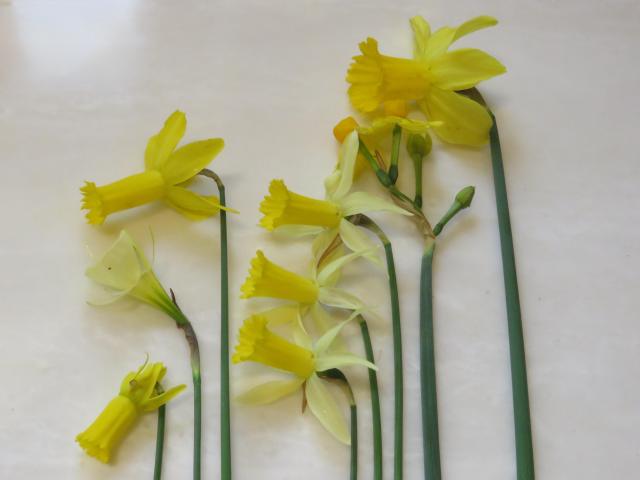
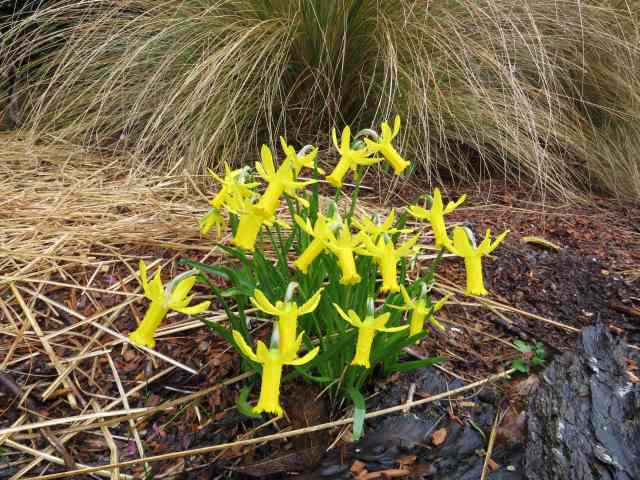
‘Twilight’ as a set of 3 in the centre, ‘Peeping Tom’ on the right

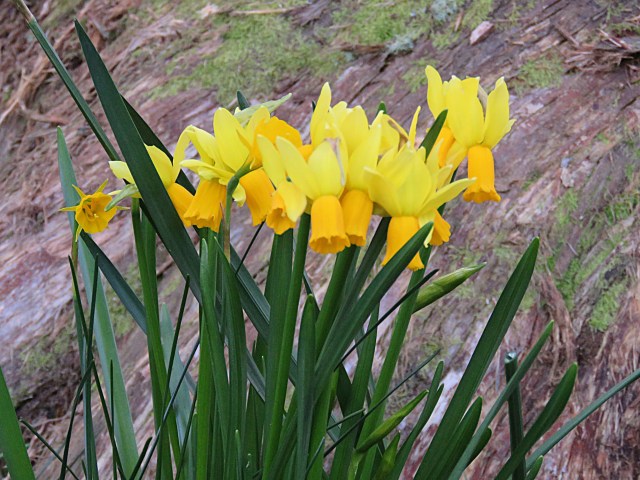
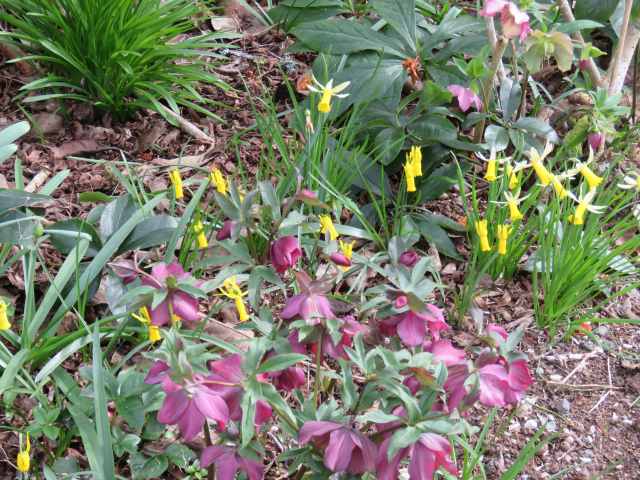
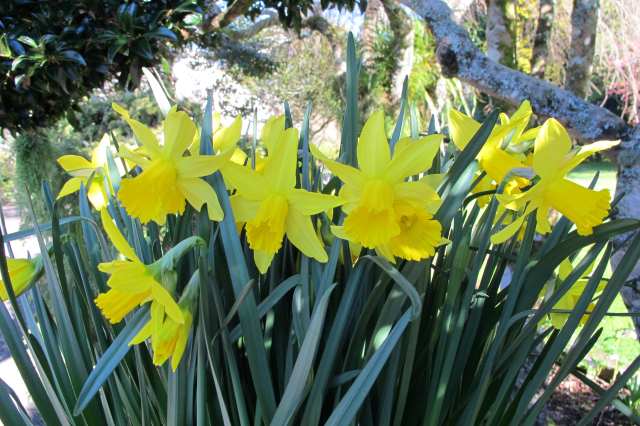
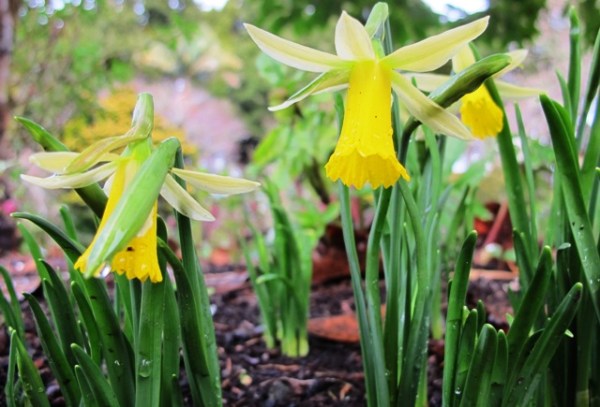
What we lack in range on the snowdrops, we make up for with the daffies. We grow a wide range of dwarf narcissi, both named varieties and cyclamineus seedlings,  and the season is just starting. ‘Peeping Tom’ is in full swing. It has an interesting name – maybe it was peeping out as snow melted? Or maybe somebody felt obliged to name it Tom but didn’t wish to? No matter, it is a bold and reliable performer and it certainly doesn’t skulk around quietly. So too is Felix Jury’s ‘Twilight’ a mainstay performer for us. It is sterile so it puts its energies into flowering for a long time and increasing its bulbs rather than setting seed. Next month will see an explosion in the narcissus varieties in bloom and ‘Twilight’ will continue to bloom alongside them.
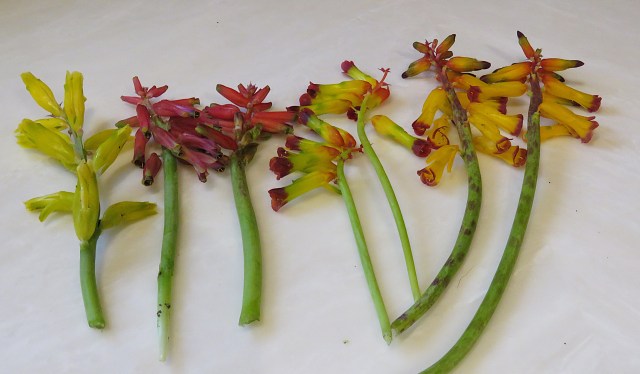
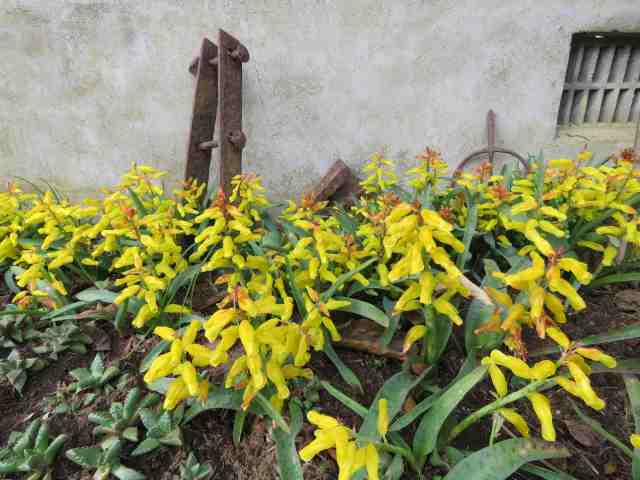
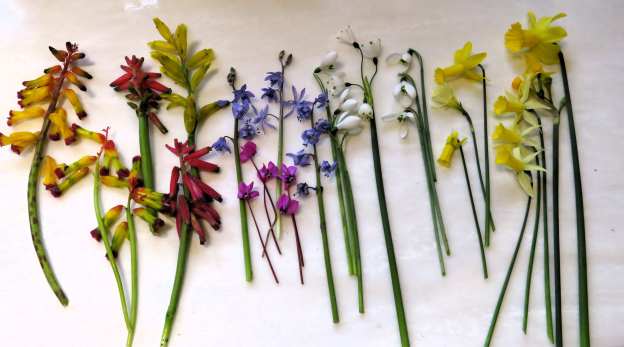
L to r: Mark’s reflexa hybrid, red L. bulbifera, L aloides quadricolor and the common old L. aloides var aloides.
Mark’s Lachenalia reflexa hybrid which has proven to be a good early performer

The other group starting its season is the lachenalias. The more desirable pink, blue and lilac ones will come later but these early ones are very cheerful and some have a long season in flower.
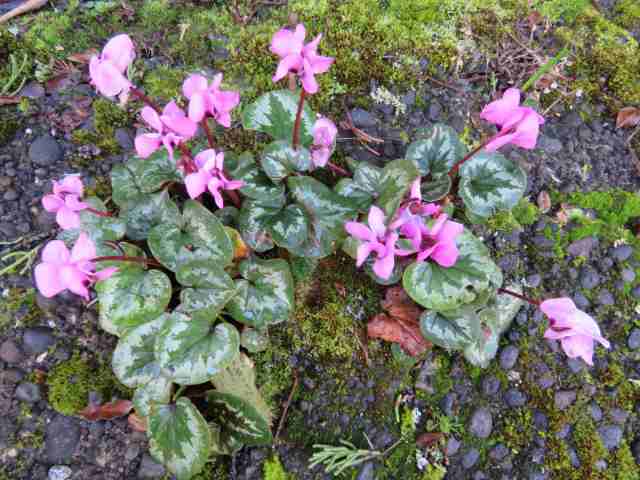
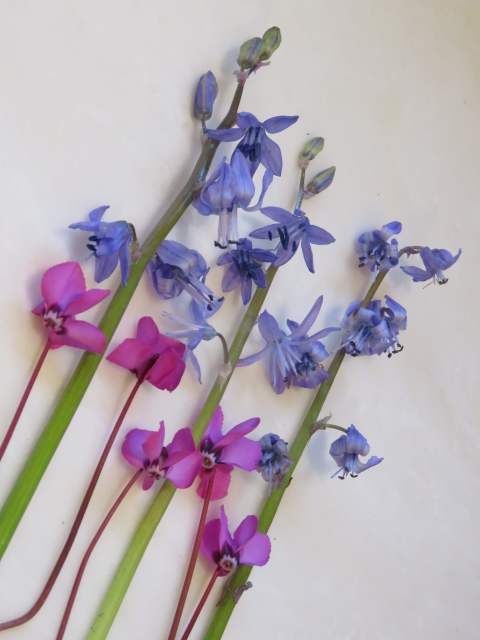
Cyclamen coum
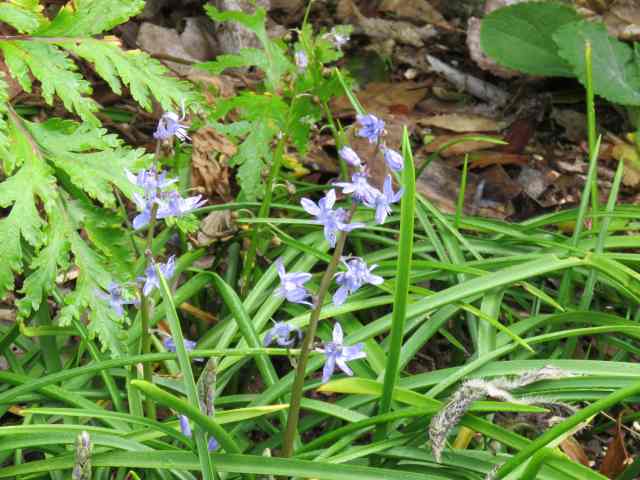
A winter flowering scilla. It will have a species name but I don’t know what it is and, to be honest, don’t care enough to go searching through back catalogues of ours and online.
Cyclamen coum and scilla

Cyclamen coum flies the flag for this plant family all winter and we have enough to set seed freely. It is smaller growing than the earlier C. hederifolium, and the dominant form we have is more cerise pink. The blue is an early season scilla, charmingly referred to as meadow squill, but I have no idea which one. We will have had a species name on it at some point. I wouldn’t get too excited about it. It is a pretty blue but has too high a foliage to flower ratio and is more suited to meadow planting than rockery. Not choice.

Overall, there is nothing much out of the ordinary but for mid-winter, the earliest bulbs are a very cheerful sight. July is the early harbinger of the peak bulb season of spring. I should give an honourable mention to Oxalis purpurea alba (still!), Oxalis versicolor and the simple blue anemone seedlings that have gently seeded down as survivors from a packet of De Caen mix I planted maybe 25 years ago.
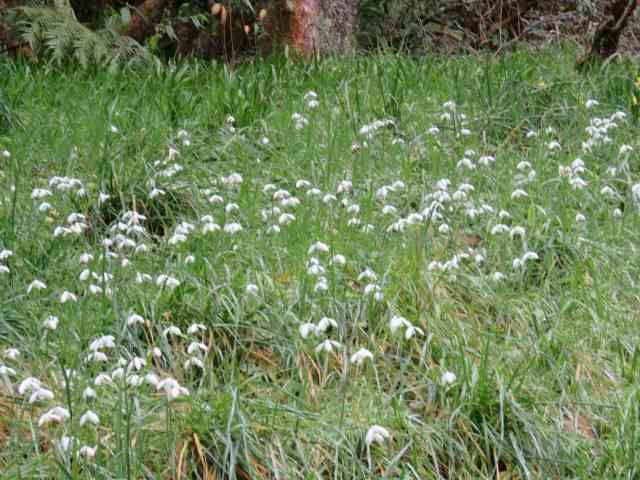
The gentle charm of snowdrops in a meadow situation

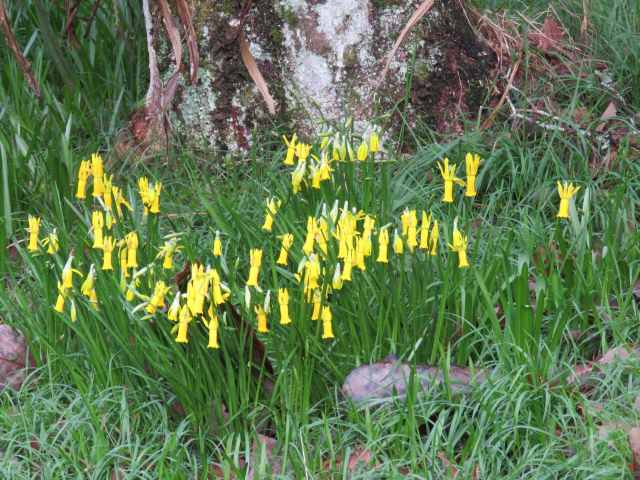
In the ‘you need to be here to really appreciate it’ category, July opens up our season of bulb hillsides down in the park. We don’t have actual acres of snowdrops yet but we do have extensive plantings and they are in flower now. The meadow narcissi are also opening their flowers. We rely on the stronger dwarf forms – particularly Narcissus ‘Twilight’ and cyclamineus seedlings which Mark raised to get high enough numbers to have an impact. Meadow bulbs bring charm through being an unexpected surprise and that is a little visual treat in early spring each year.
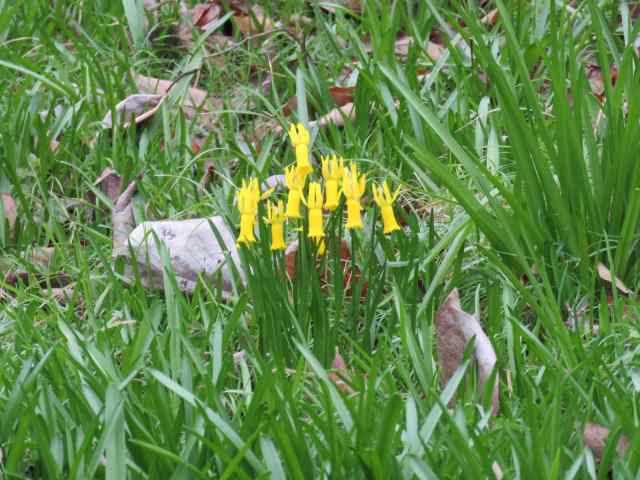
Dainty Narcissus cyclamineus competing well with bluebells and grass in the park
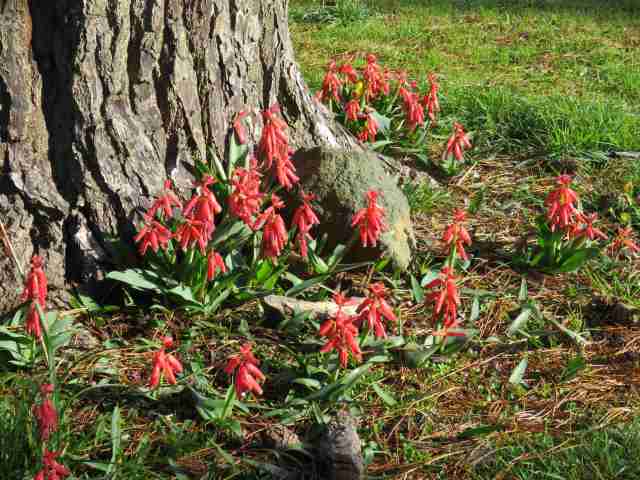
Lachenalia bulbifera at the base of an old tree amidst a grassy area that gets mown. Around bare tree trunks is often a good place to start planting bulbs for a meadow of sorts.

Early spring gold

A selection of the earliest flowering narcissi – we like variety

What a delight are the dainty narcissi. I see I started photographing them in in mid July so we have had a month of pleasure so far and plenty more to come. When it comes to magnolia flowers, we lean to the bigger is better way of thinking but the narcissi are different. Small and dainty, thank you.

In the Court Garden

The big daffodils flower later and we don’t have many of those. In fact, we have none of the large-bloomed, modern hybrids which are what dominate the commercial bulb catalogues. They just don’t fit our garden style. Also, because they are later flowering, they get hammered by the narcissi fly and with their long stems and heavy heads, they flop over as garden plants in heavy spring rains.

Down in the park. Those backswept petals are a feature of cyclamineus narcissi but they are by no means all as backswept as these specimens that look particularly startled.

We once went to the National Daffodil Show when, for some unknown reason, it was staged in the War Memorial Hall of our nearest small town. It was amazing but the only dwarf varieties on show took up about one square metre while the rest of the hall was packed with impressive displays of show blooms and there was a clear preference for what we sniffily refer to as ‘novelties’ but devotees would describe as ‘breeding breakthroughs’. Those split coronas (the trumpet part in the middle) that look squashed don’t do anything for me and I am unconvinced by the colour break to pastel, salmon pink. But that is a matter of personal taste and life would be dull if we all liked the same thing.

Against a tree trunk in our entrance area

Mark and his father before him gathered up all the dwarf varieties they could find at a time when there were more available than seem to be around these days. So we have a reasonable representation of named varieties like ‘Tête-à-tête’ (more commonly written as Tete a Tete, without the French accents these days), ‘Beryl’, ‘Jetfire’, bulbocodiums (hooped petticoats) in both bright yellow and lemon (Bulbocodium citrinus), ‘Thalia’ and others. But we wanted more and we wanted them sooner than we could get by lifting and dividing existing clumps, which is why both Felix and Mark started raising seed.

In the hellebore border beside the drive

It is the back story of our garden, really. We could not afford to garden on the scale we do if we had to buy in all the plants. A lot of what we have across most of the genus we grow are unnamed seedlings that have been raised on site. In most cases, those seedlings are the result of controlled crosses rather than random, self-sown seedlings. A controlled cross is selecting two good parents and taking the pollen from one to fertilise the other, marking the flower stem and watching until the seed is ripe enough to gather. It is quite a bit more faffing around than just collecting random seed that has set but it ensures a higher percentage of good progeny.

That is a Felix Jury hybrid which he named Twilight which may still be available in NZ. Naturalised on our bulb hillside in the park.

If you want to start in a smaller way, you can just gather seed but, with narcissi, you need to sow it in a seed tray, look after it and pot on the seedlings when they are large enough, growing them on – usually in small pots – until they are large enough to plant out. From seed to flowering size takes about three years which may seem a long time to some who are used to more instant results but we are patient gardeners here.

If you are wondering where to start, Peeping Tom is a very early season, larger variety that is fantastically reliable and prolific. It and Twilight in the preceding photo are the strongest growers and form the backbone of many of our larger plantings.

The classification of narcissi is a complicated business and there are many different species and groups. In our climate, we have most success with the cyclamineus types, often characterised by swept back petals. The other advantage of keeping to dwarfer varieties is that their foliage is smaller and finer so they die off more gracefully, rather than the spent foliage flopping down and smothering everything around them.

Mid August is a very pretty time for us. The early magnolias are magnificent and the dainty narcissi scattered all around the place are such a good contrast in scale, colour and detail. We have figured we can never have too many little narcissi and are continuing to spread them further afield from cultivated areas, to extending the bulb meadows and tucked in wherever we think they can grow undisturbed that they may emerge and delight during their weeks to shine their golden light in early spring.

I laughed at myself when I found this photo of Jetfire from nine years ago. I was clearly having a flight of fantasy as I photographed flowers set against our stainless steel splashback, lit by the spotlights on the rangehood.

Tikorangi Notes: Friday 13 July, 2012

Spring must be getting close - dwarf Narcissus Twilight is opening

Spring must be getting close – dwarf Narcissus Twilight is opening


Last week was garden bed...

Last week was garden bed…

Latest posts:
1) The Great Garden Make Over (aka renovating the rose garden). Not quick, not even that easy, but hugely satisfying.
2) They were the first narcissi to flower this season – Narcissus bulbocodium citrinus ‘Pandora’. However, others are starting to open, including the little Felix Jury hybrid ‘Twinkle’ above.
3) Grow it Yourself – tamarillos, this week. Yet another subtropical fruit, from South America again this one, that we have taken over in this country as if it were our own – even to the extent of branding it tamarillo!
4) Away from gardening and on to recipe books – 500 Tapas reviewed.

Tikorangi Notes: Friday 13 July 2012

The work in the rose garden has absorbed all my recent energies, and a good deal of Lloyd’s too. If the rain had just held off for another couple of days, it would have been finished but intermittent showers and the developing mud has driven me indoors.

Camellia Fairy Blush

Camellia Fairy Blush

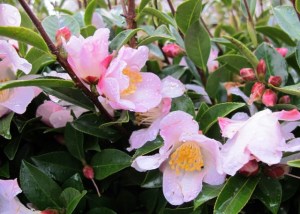
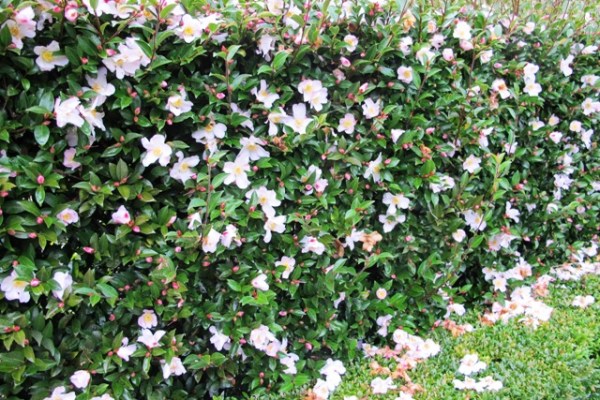
Camellia Fairy Blush is looking particularly pretty in our little hedge. This was the first camellia Mark ever named – a scented, lutchuensis hybrid. Mark is not given to exaggeration or overstating matters so he was always rather deprecating about Fairy Blush. “It’s just a little single,” he would say, “but it does flower well and has reasonable scent.” Yes, it is a little single that flowers for several months on end and is as fragrant as any camellia, on a compact plant which clips very well. These days we regard it as the one that got away from us. We should probably have taken out Plant Variety Rights (a plant patent) on it. It is now a market standard in both Australia and New Zealand and it can be a little galling when nurserymen tell you how very well they have done out of your plant. Such is life. But then we have learned the hard way that even agreements and Plant Variety Rights don’t necessarily give market protection either. We would still plant Fairy Blush in our own garden and recommend it to others, even if it wasn’t our cultivar and that is a fair testimonial.

Our hedge of Camellia Fairy Blush

Our hedge of Camellia Fairy Blush

Tikorangi notes: August 6, 2010

Our plant sale starts today. It is of limited duration (from today until Monday 9 August and then again the following Friday and Saturday) but there are good bargains as we try and clear space in the nursery.

Latest posts:
1) August 6, 2010: Illicium simonsii is flowering now with dainty little blooms which resemble unlikely water lilies cast from wax.
2) August 6, 2010: Hints on garden tasks for this week – don’t beat the gun on planting out summer vegetables, a recommendation for white sapotes and what you should not be doing with your wheelie bin.
3) August 6, 2010: Into the fraught territory of lawn renovation – our latest Outdoor Classroom.

Tikorangi Notes
As the galanthus start to pass over, the dwarf narcissi are opening, along with the early magnolias. The cyclamineus types are a favourite here – resembling a floppy eared dog with its head out the car window, perhaps? Twilight, shown here, is one of Felix Jury’s most successful cyclamineus hybrids – not so reflexed in the petals but a pleasing form and colour and it increases at a most satisfying rate. More magnolias open each day but we are still a couple of weeks off having the display entering its most spectacular phase. The fragrance of the earliest flowering michelias (all white at this stage) is already noticeable, hanging in the air. The worst of winter is over and temperatures are on the rise.