
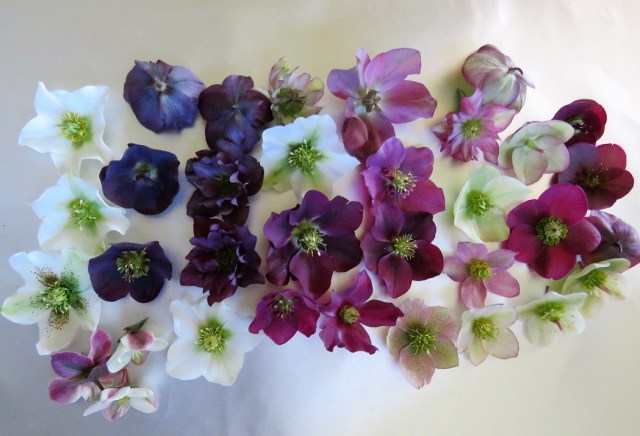
I have decided I just can’t get excited about hellebores. The most common hellebore – Helleborus orientalis – in particular, but not exclusively so. Not in our conditions with its mild climate and the explosion of spring flowers we get before winter has even officially ended. I have seen them in colder climates and they are way more rewarding than here.

I have tried and so has Mark. I have mollycoddled them, replaced inferior performers with better selections, weeded out endless seedlings, scrupulously dead-headed them to reduce unwanted seeding and to hold the infestations of aphids at bay, removed unsightly foliage (it takes years for scruffy spent foliage to drop and decay of its own accord), given them compost, bought new selections and still they are underwhelming. Mark has raised many seedlings of controlled crosses to get cleaner colours and flower spikes that stand above the foliage and they can look very promising in nursery pots and very average in the garden.
I don’t know how many H. niger we have raised and planted out. It is the pretty, low-growing white with the upward-facing flowers held just on the foliage. It is a one season wonder for us. I was delighted with ‘Angel Glow’ but after three very pretty seasons, it has all but disappeared this year.
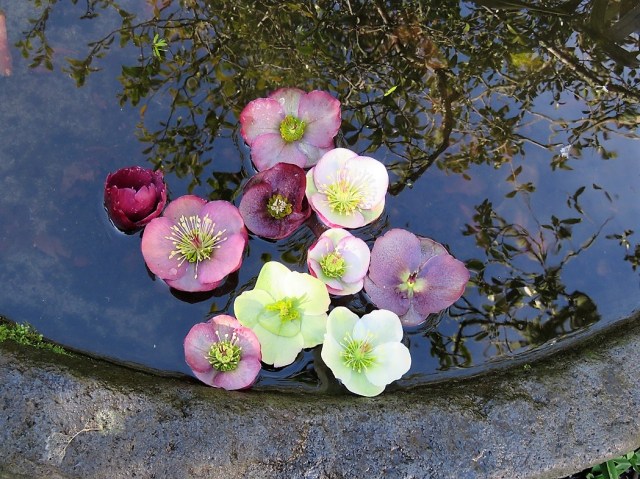
They are not all without merit. I remain sold on the ‘Marbled Group’ from UK breeder, Rodney Davey. ‘Anna’s Red’ and ‘Penny’s Pink’ remain the best of that series in our garden but we also have ‘Molly’s White’, ‘Ruby Daydream’ and ‘Sophie’s Delight’. Just a word of warning: ‘Anna’s Red’ made a big and luscious plant so I thought I would divide it to use it further. It did not appreciate this treatment and has been slow to recover- as in a few years, not months. Mark informs me that hellebores do not generally like being dug and divided in the same way as other perennials. They can sulk somethin’ chronic.


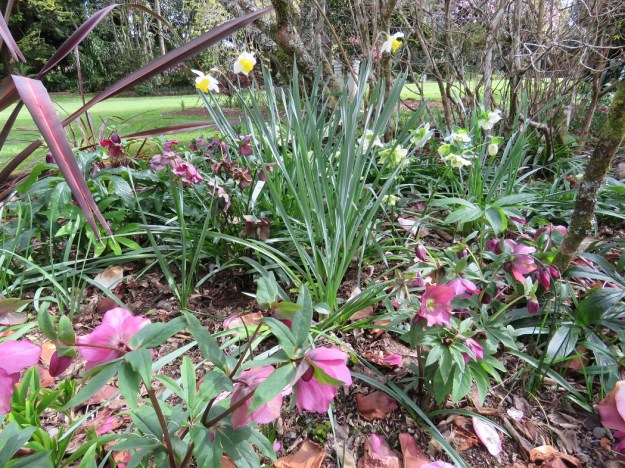
Helleborus x sternii is a mainstay in the woodland garden and very easy care. All it ever needs is the spent flower spikes removed at the end of the season. So too with H. argutifolius which is one of the parents of x sternii. H. foetidus is fine – more utility than exciting and it can spread a bit but it has interesting foliage. What these three have in common is that they all have green flowers but hold their flower spikes up above the foliage.
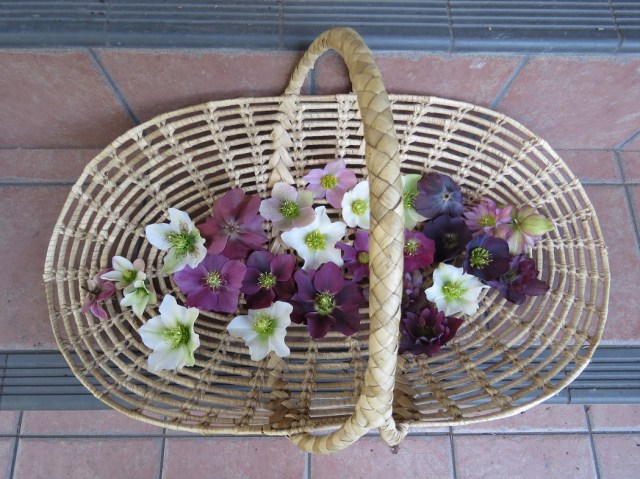
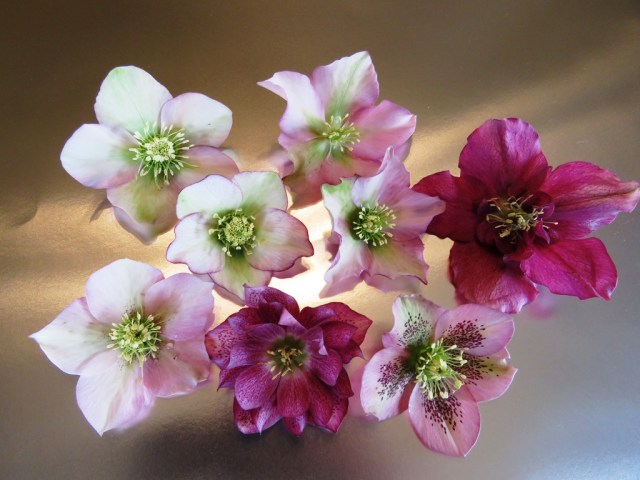
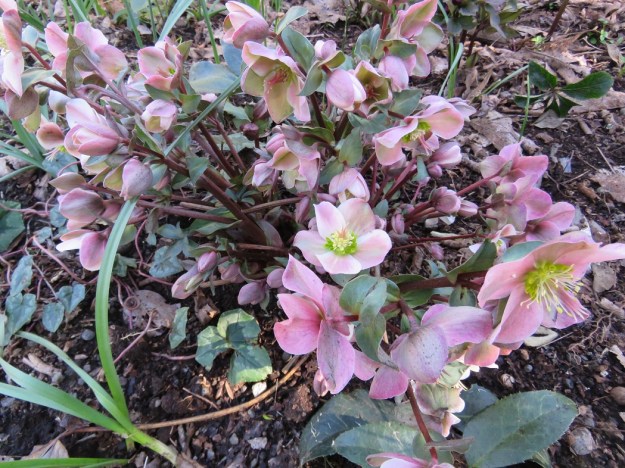
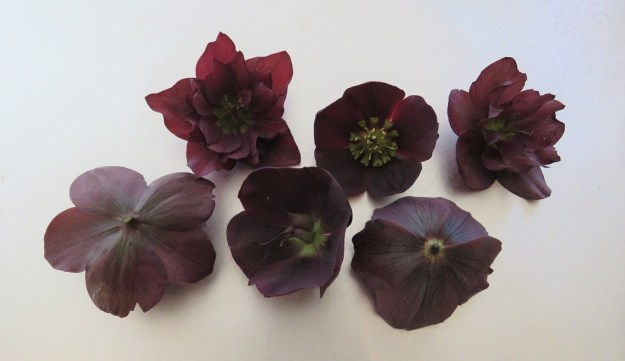
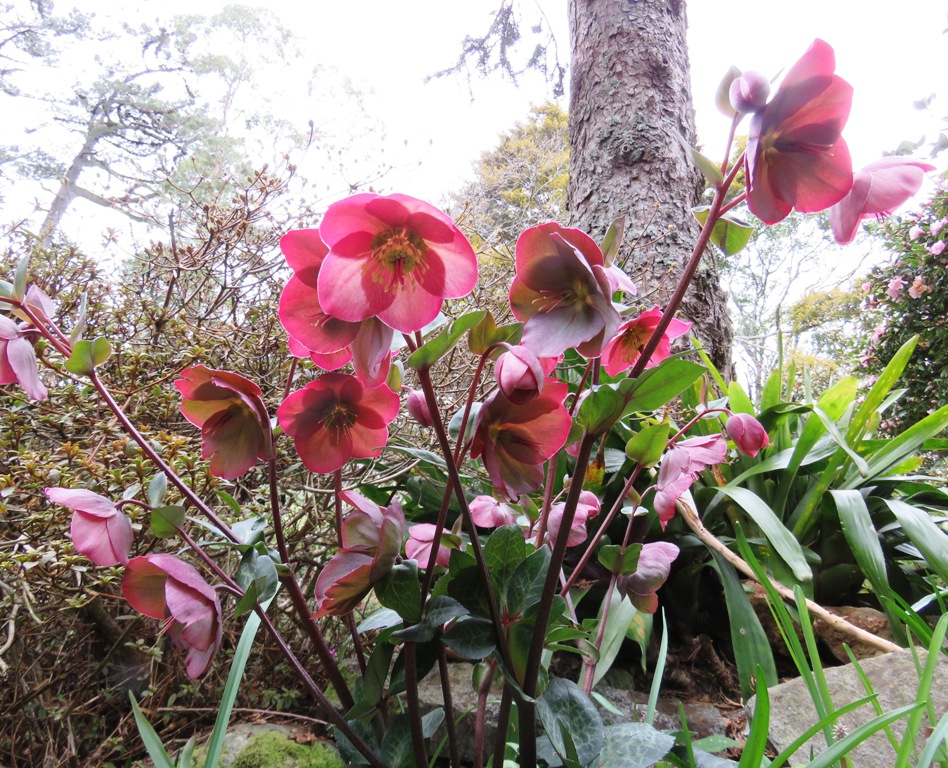
And therein lies the problem. There are many lovely staged photos of picked blooms arranged to face upwards. I have done a few myself. But that is not what they look like in the garden where H. orientalis is characterised by downward facing blooms. And as soon as one gets into the popular double blooms, the extra weight drags them over even further. Also, the interest in the dark slate colours – the deeper purplish-black the better – is based on picking a flower and looking at it facing upwards. As a garden plant with those dark flowers, they just tend to meld into the backgound. The best I can say is that orientalis opens a wider colour range than the other types we grow.

While I am in awe at the far-reaching and long-standing enthusiasm that has made H. orientalis such a popular plant, they are best in cold climates which don’t have the same options we have. Colder, drier climates are even better. With calanthe orchids and Hippeastrum aulicum both in full bloom at the same time, I am not convinced that the utility hellebores that grow in similar conditions are worth more effort on my part. If you really want to grow them in softer climates like ours, keep them in a pot. They seem to perform better in controlled conditions. I don’t love them enough to give them that sort of special attention.

 I meant to do a round-up across the different hellebore types we grow here this year but I left my run too late. There is more to hellebores than just the most common H. orientalis types and some of the other species and inter-species crosses are also interesting and fill a different niche in the garden. But I had to make do with mostly H. orientalis and a few hybrids for today’s picking.


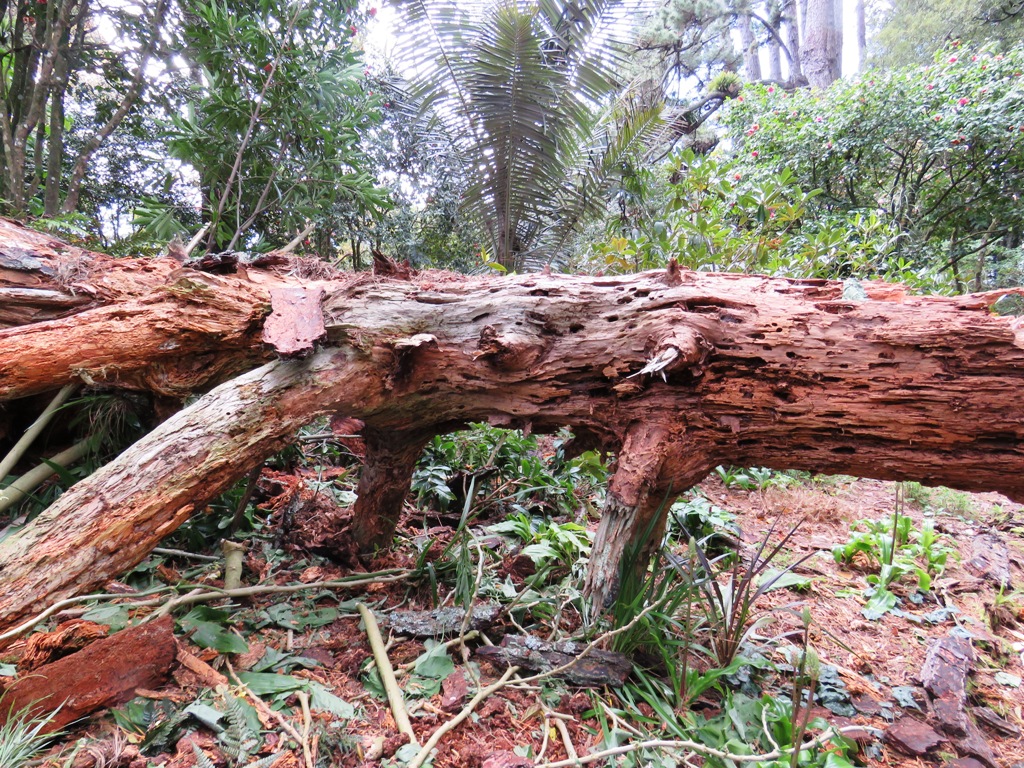 The latest natural garden feature arrived last week as the dead Pinus radiata we refer to as
 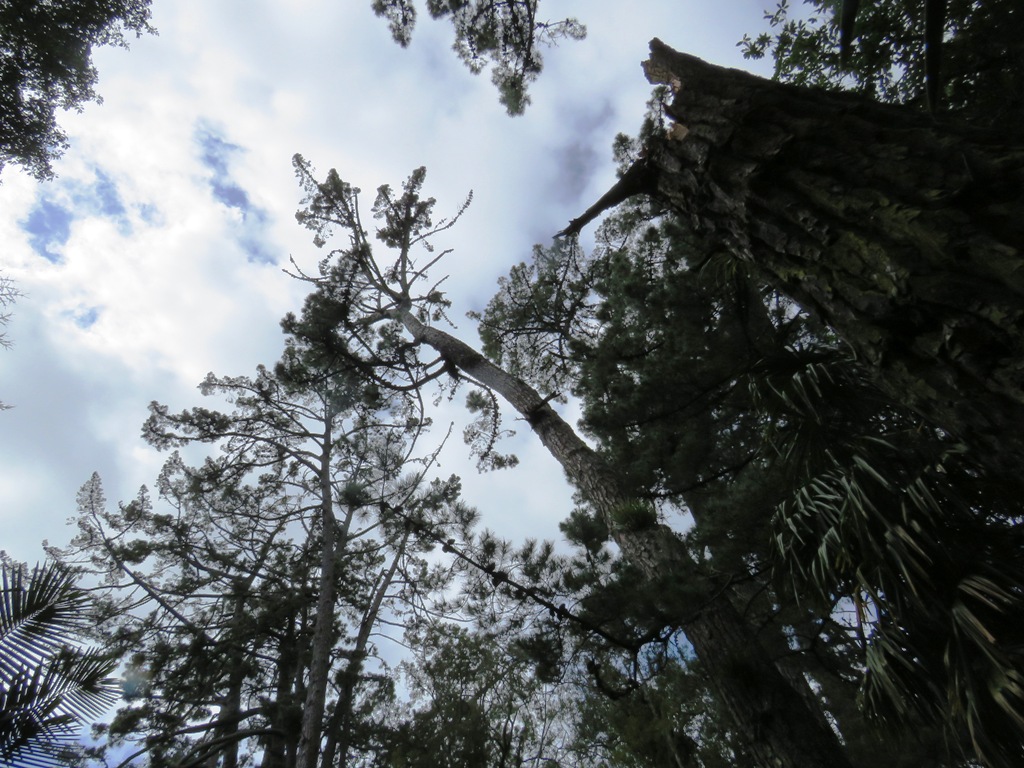 I am pretty sure that the next tree in the row is developing a bigger lean and will likely fall sooner rather than later, but Mark is unconvinced. I like to remind him that
  We went to the North Island daffodil show last Saturday. There is a larger album of photos posted on our
  Nothing to do with gardening, but I still have a strong mental image of an acquaintance many years ago, earnestly crocheting aqua coloured edges to white face cloths. “I think it is nice for guests to have special face cloths,” she said with a high degree of self-satisfaction. I looked around her home – a large and cavernous turn-of-last-century villa which had been cut in pieces and relocated but not restored. The walls were scrim, the facilities and decor still more or less original. It was truly grim. And I thought to myself, you poor woman. You think guests won’t notice the surrounds if they have new face cloths? It was all so evocative of Kurtz in Joseph Conrad’s ‘Heart of Darkness’, where the rituals of civilisation are all that keeps the chaotic universe at bay and without those, what is left is “the horror, the horror”. It had the makings of a short story, but instead I became a garden writer.
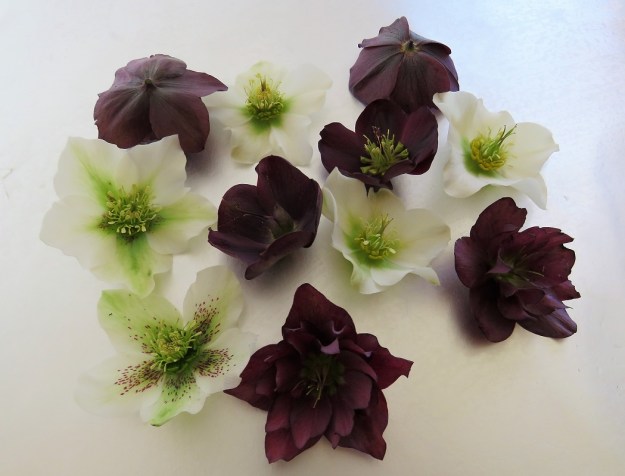
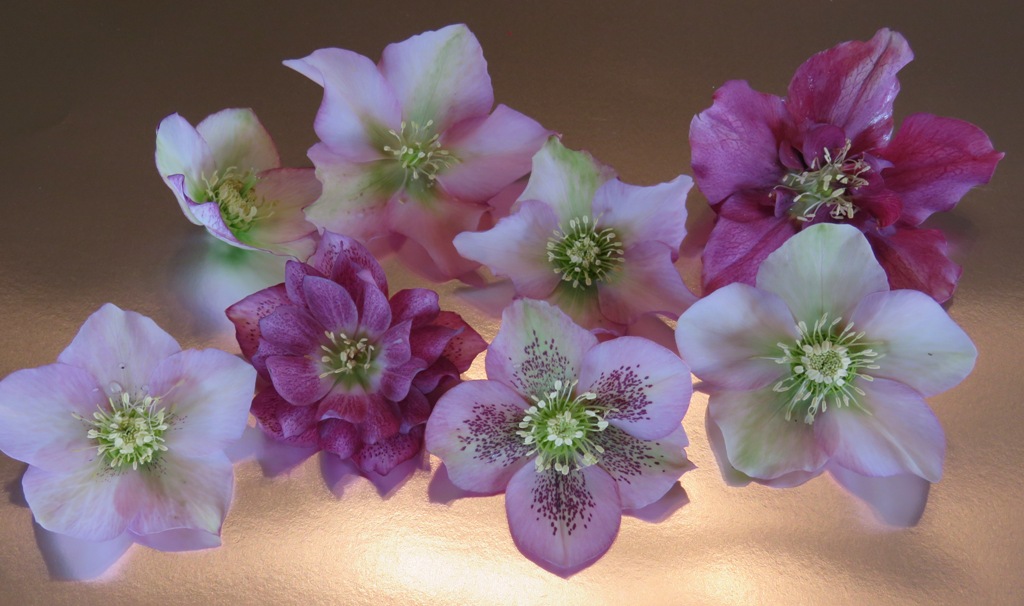 Sunday was wet and gloomy so I picked hellebores to photograph indoors. And what a wonderful subject for photography they are. All I did was collect one representative bloom from a number of plants. This was more illustrative in intention than artistic endeavour.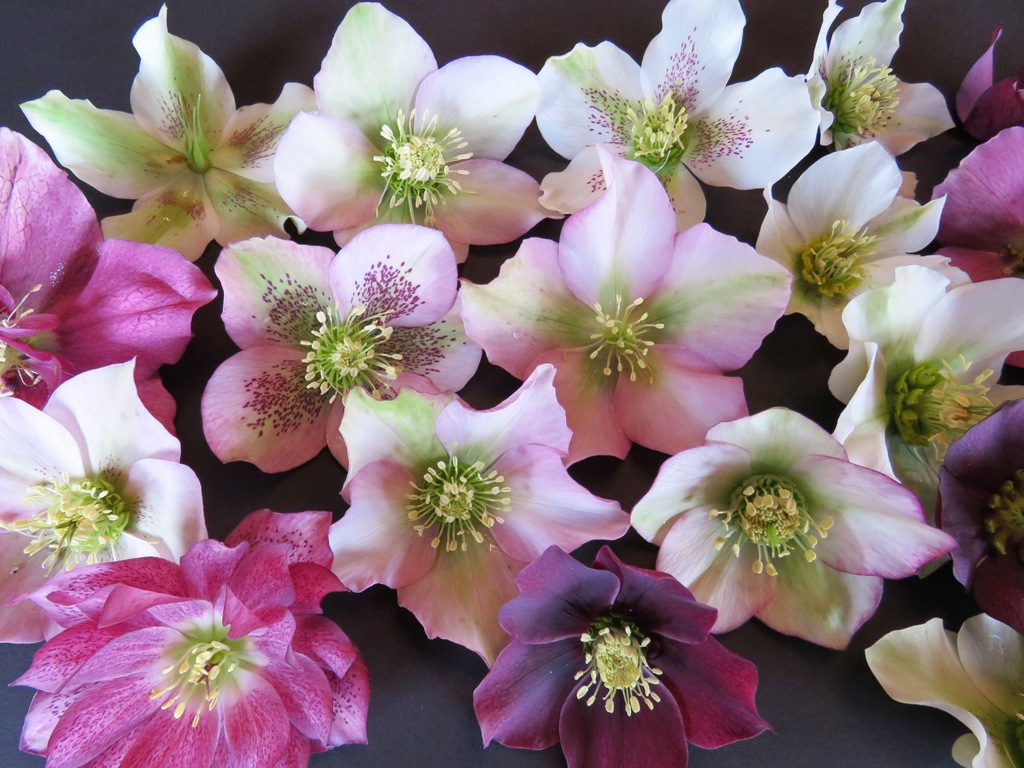
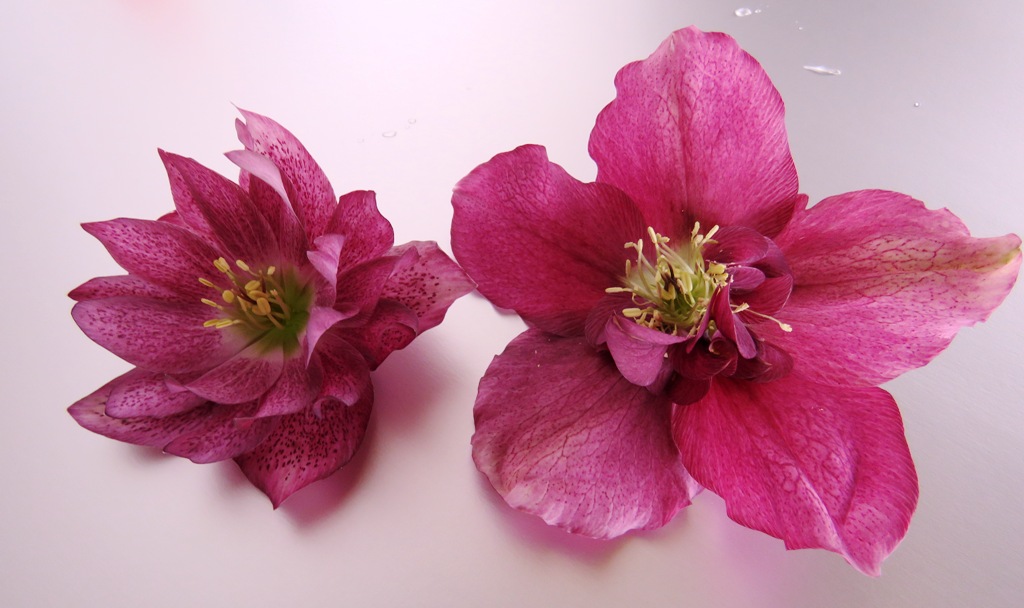 Mark has been raising hellebores in the nursery, in preparation for the upgrade. And he is interested in whether he can get better performing selections for our conditions. Generally, hellebores like a colder climate and the best ones we have seen are in areas with much more winter chill. The very dark flowered ones with bluish tones – referred to as slate – are not exactly booming here. Similarly, the doubles that we, and every other keen gardener at the time, rushed to purchase don’t seem to get much larger and showier than they were when we bought them over a decade ago. Mark’s seedlings may perform better though the wonderfully large pink with petaloids is probably blown up by nursery conditions. In the garden, the flowers may scale down.
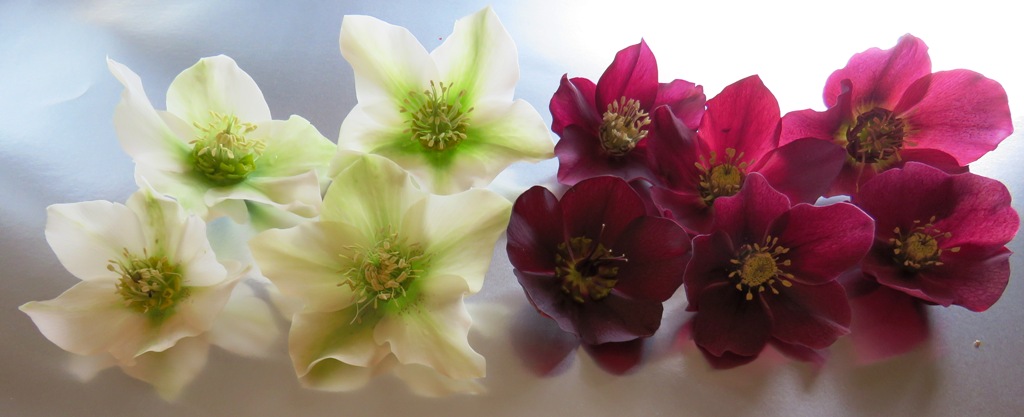 We have worked out that the desirable dark colours display far better as garden plants with the contrast of white flowers alongside. We will also banish all the murky ones to the compost heap. While clean pastel pink and green can be a charming combination, in hellebores these often lean to muted shades which are frankly of no merit. We also want plants that will fade gracefully and not to that dirty greenish brown which does not lift the soul.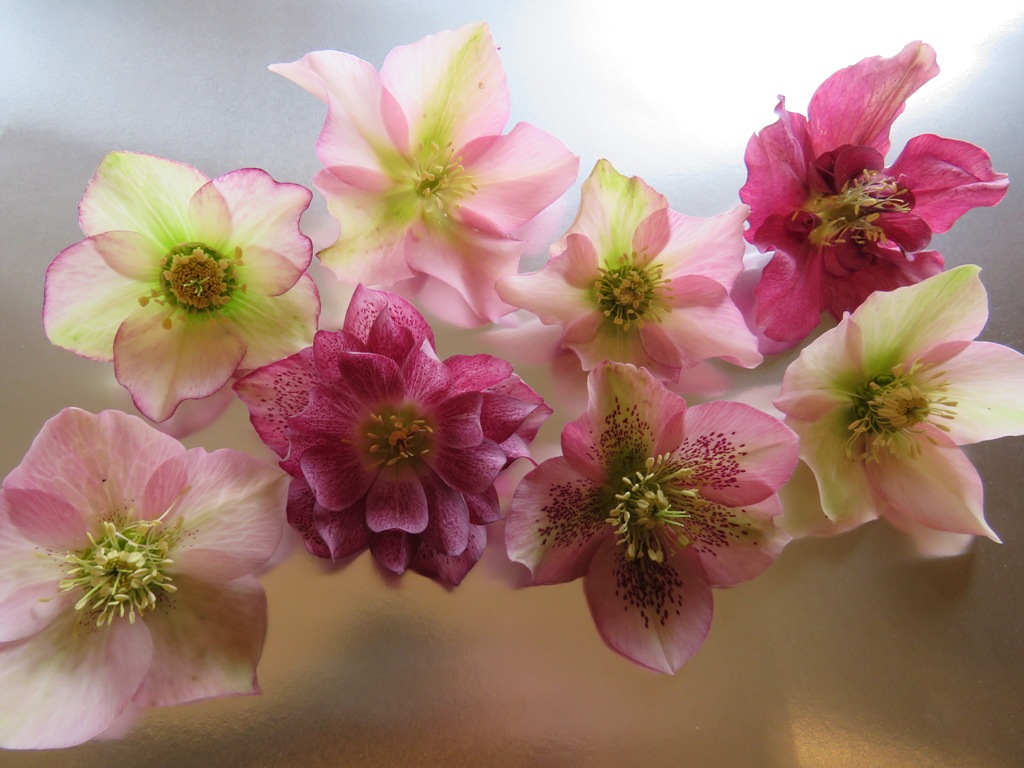
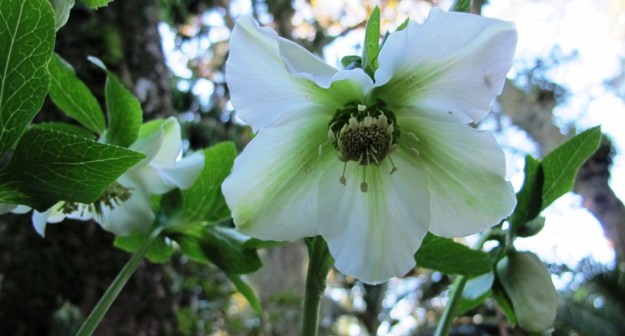 I am cutting all the old foliage off the Helleborus orientalis and I am pleased I have my timing right. Few plants are putting out their new foliage yet. We never used to do this. Indeed, for decades, the main hellebore border (about 30 metres long) was just left to its own devices. Then I read about NZ hellebore expert, Terry Hatch, cutting off all the foliage – even putting a lawnmower through them, though you would have to get your timing absolutely right to carry out this approach.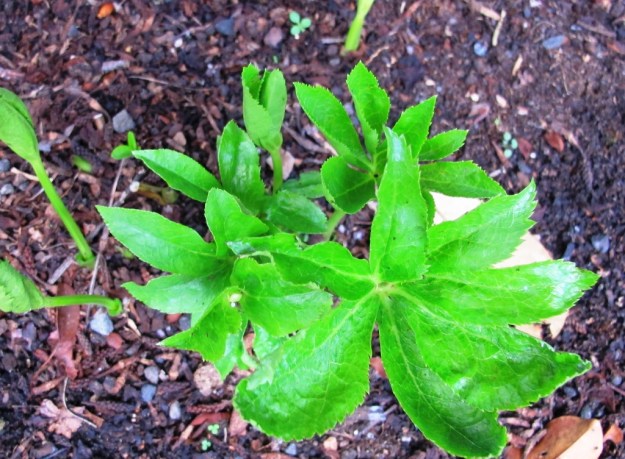
 Tikorangi The Jury Garden