Tag Archives: Hippeastrum papilio

The bulbs of October

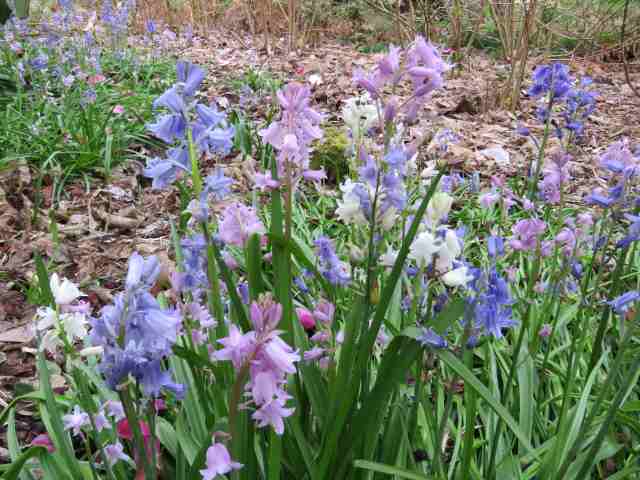
Bluebells in abundance but now all but passed over for another year

October opened with the bluebells, the pinkbells and the whitebells. I don’t want these in cultivated garden areas any longer but they are very pretty in wilder areas. In terms of a single colour sweep, blue is always best. White might as well be onion weed. Pink is a bit novelty-ish. When it comes to a colour mix, blue should still be in the highest proportion, as it is in the wild. At least that is the rule of Abbie if you are after a naturalistic, sweeping meadow effect.
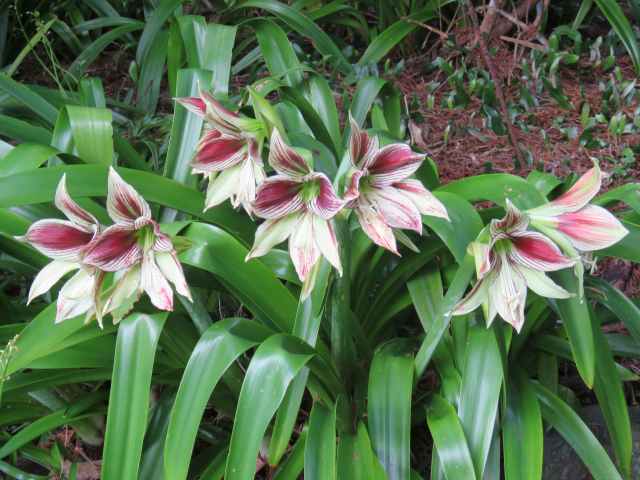
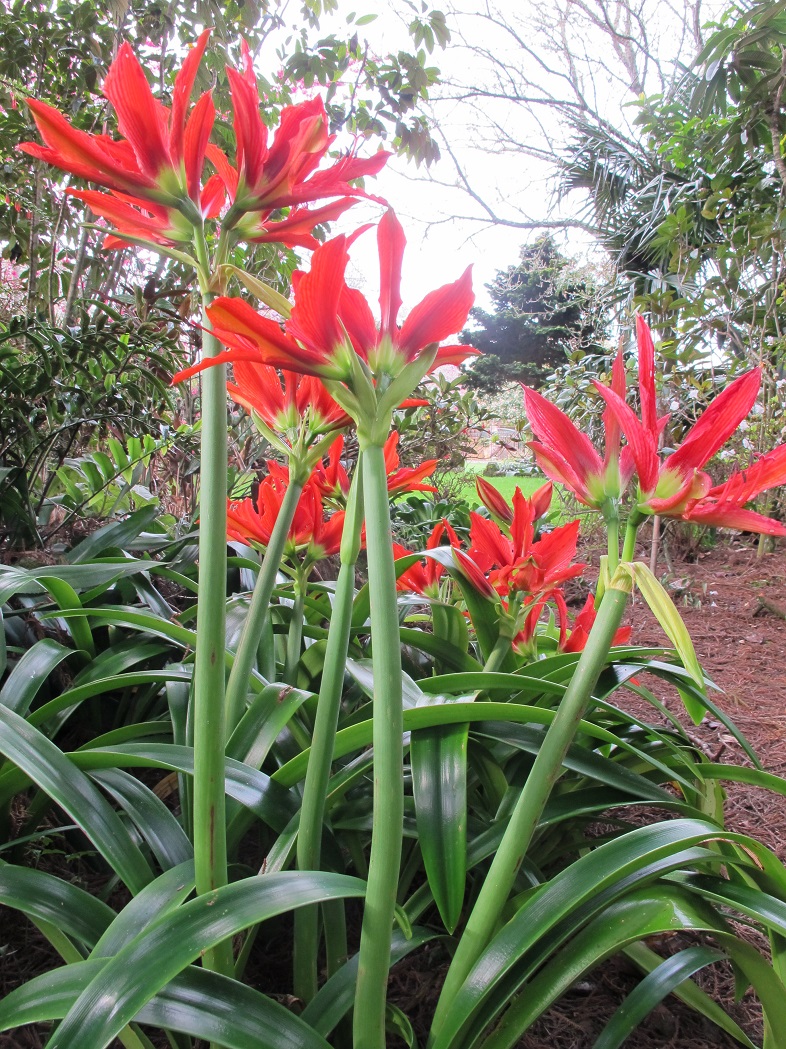
This was as good as the Hippeastrum papilio got in the unusually prolonged spring rains
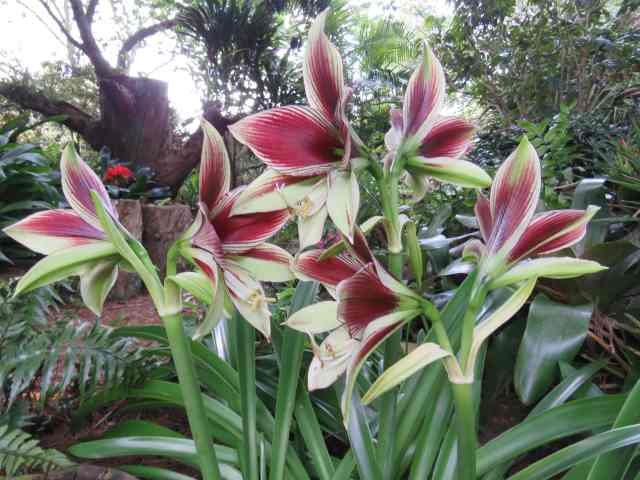
Looking happier in previous years – Hippeastrum papilio

Last month belonged to red Hippeastrum aulicum. This month opened with Hippeastrum papilio. It has taken a few years but we now have plenty of this bulb, able to be counted by the score rather than single figures. It is available for sale and it is expensive to start with – probably around $25 or $30 a bulb. But it is not difficult to grow and it multiplies at a reasonable rate if you quietly lift and divide it every year or two, replanting into well cultivated soil with some compost added. Its flowers are large and showy. Its season was somewhat shortened this year with The Rains. It feels as though it has rained most days this spring. The magnolias and michelias did not appreciate the very wet season and were particularly disappointing. H. papilio tried to bloom and did well enough for me to get this photo. Alas, when I looked a few days later, even with their heavy texture, the blooms had largely sogged out and given up.
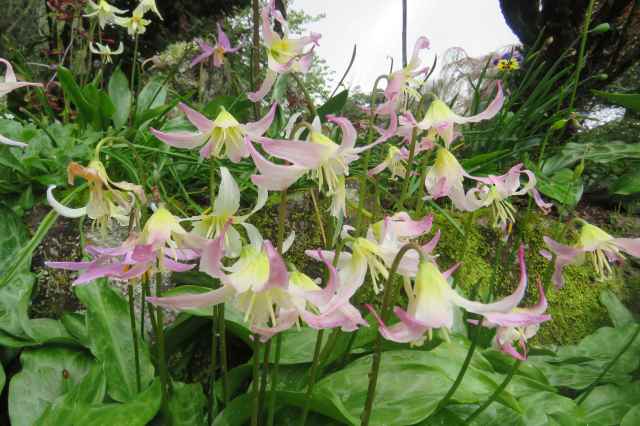
The erythroniums in a previous year

The dogs tooth violets – Erythronium revolutum – are marginal with us at the best of times. Their very soft blooms can mush up in our spring rains so I had to reach into my file photos, given that there were a few brave blooms at best. The Fritillaria meleagris is equally marginal our climate and has also been and gone for the season. These are plants that are very charming but they will love your conditions more if you can give them more winter chill and less spring rain.
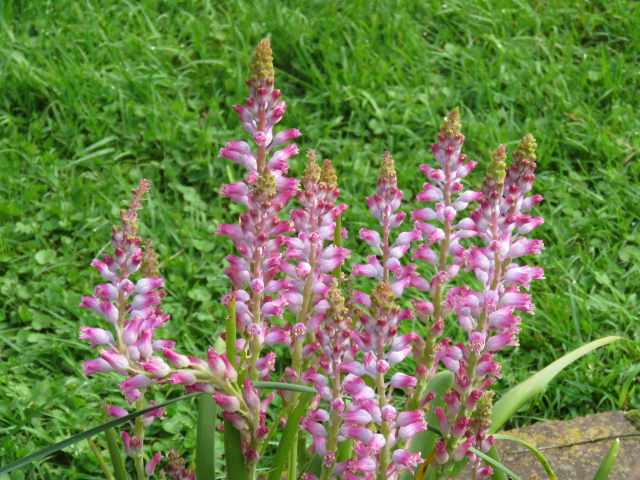
We have failed to get a species name for this striking, late-season lachenalia. Its pink, blue and pale colouring is almost luminous.

The lachenalias have proven more weather hardy for us. Now that the early ones have long gone, we are onto the late bloomers, particularly this rather striking pink and blue number and the white species L. contaminata.
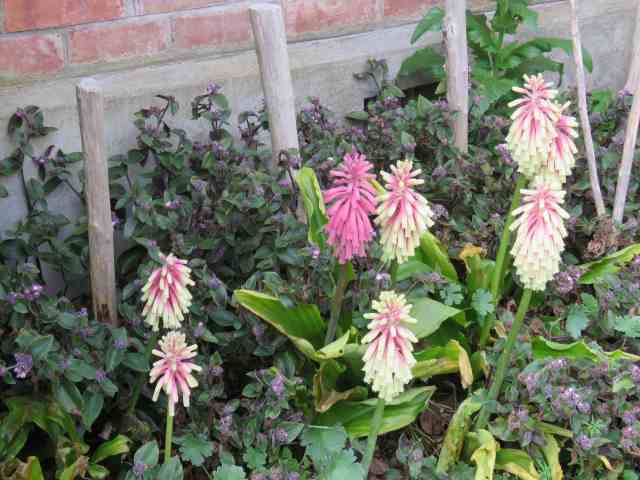
Veltheimias – ‘Rosalba’ is prettier than the more common pink V. capensis

The veltheimias are another large bulb that has surprised us with its willingness to settle in and naturalise. It is a South African native, triggered into growth by autumn rainfall but otherwise happy in dry, conditions. We assumed it would want full sun but Mark’s efforts scattering seed through the woodland areas has seen it settle in without fuss and gently establish in shade as well as sun. Veltheimia capensis is the pink form and it is common enough and reasonably hardy; the prettier lemon and pink form is less common, probably less hardy and is Veltheimia capensis ‘Rosalba’.
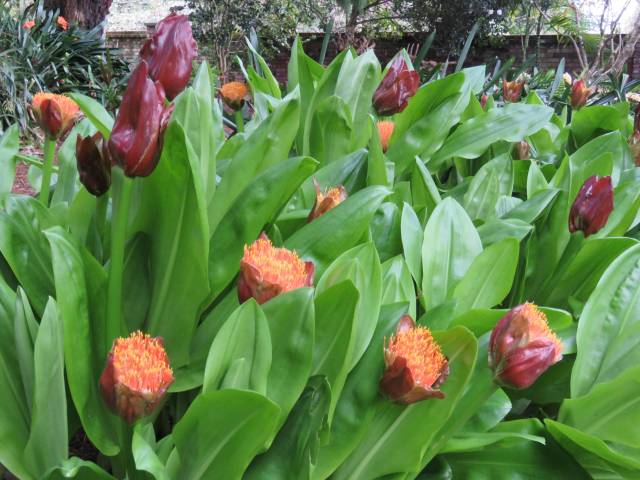
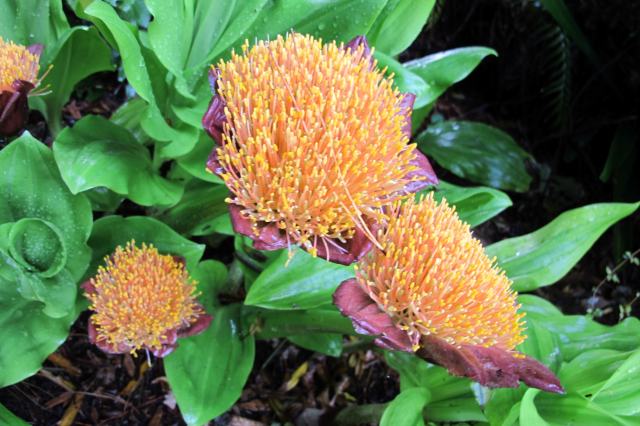
Scadoxus puniceus

Our other stalwart this month and into early November is Scadoxus puniceus. Part of the family oft referred to as blood lilies, this species is not common. You will be lucky to find it offered for sale in New Zealand. The summer flowering Scadoxus katherinae (technically S. multiflorus ssp katherinae) is readily available, although certainly not cheap. We have both gently seeding down in woodland where they make big, bold statements with their presence. If you are a patient gardener, you can build these up from a single bulb, as we have. If your conditions are favourable, you may even get them to naturalise over time, as we have.
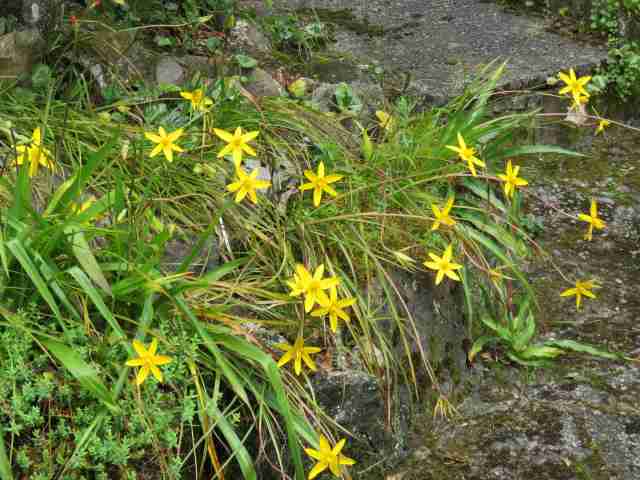
It may remain a spiloxene to us, although it seems it is now reclassified as a pauridia

I am not writing a comprehensive book so I am not doing a full listing of which bulbs flower this month. There are too many, from pretty Albuca canadensis through to Phaedranassa cinerea,  that sit on the choice, less common end of the bulb spectrum. There are families that we tend not to think of as ‘bulbs’ like alstromeria (we must have those blooming every month of the year) or the vast iris family. And there is that whole cluster of somewhat messy bulbs which often seem to overlap categories – babiana, sparaxis, ixia, vallota, tritelia, brodiaea, spiloxene syn  pauridia and more – many coming into flower now.  I say messy because a fair number of them come up with foliage that starts to die off as the flowers open. There are times I think greater separation between flowers opening and foliage browning off would be preferable.
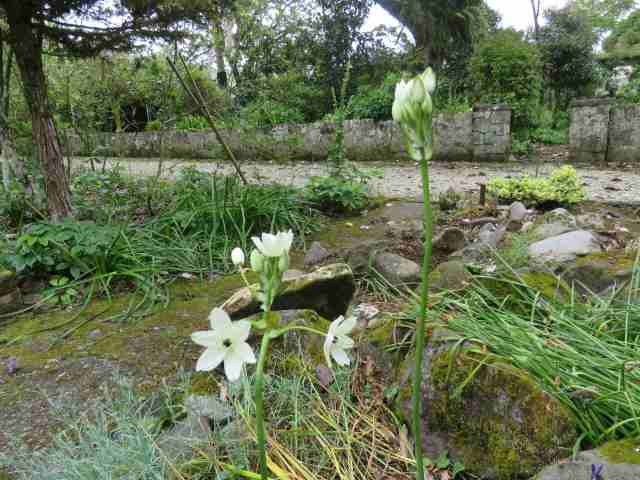
Ornithogalum arabicum

I will mention Ornithogalum arabicum, sometimes referred to as black-eyed Susan but it shares that name with other plants too, which all goes to show that common names can be problematic. Arabian star flower or star of Bethlehem are perhaps preferable options. It is not that O. arabicum is particularly rare but it does exercise great mystique for me as a prime example of random reinforcement. Every few years it pops up flower spikes but it clearly does not wish to be taken for granted because it doesn’t do it every year. It makes it a fresh surprise and pleasure when it deigns to bloom.
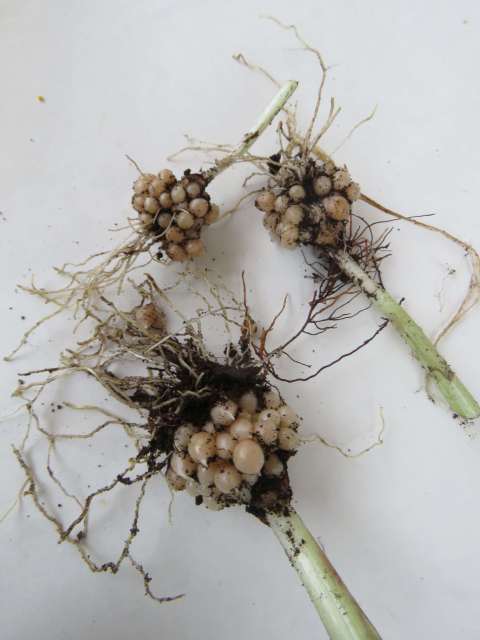
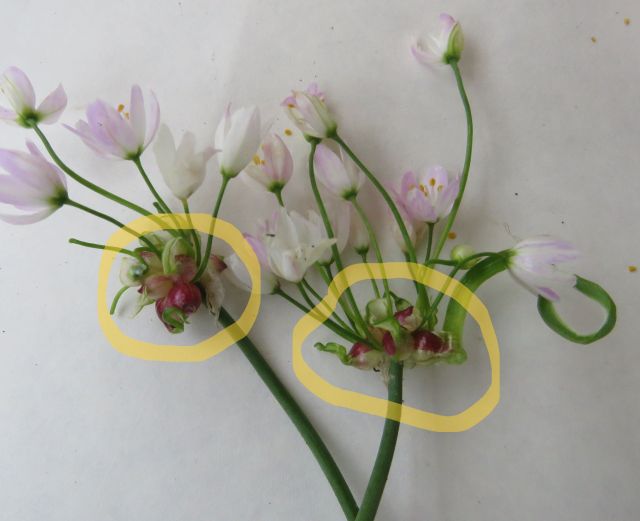
Look at that set of bulb offshoots. Every one will grow, given half a chance.
Even more bulblets forming at the base of the flowers

Unfortunately, I am also dealing with An Incident – The Incursion of the Allium Bulbs. “Oh, that is the one Dad tried to get rid of,” Mark said as he passed. It is probably a species that was sold at some stage but, with over 1000 species of alliums now identified, I have no idea which it is. There are not too many of that thousand that I would accept these days, excepting onions and garlic, of course. Look at how many bulbs a single stem is creating. And not just at the base. If you look at the flowers, you can see a whole lot more babies forming at the base of each bloom. This is a scary rate of reproduction. I shall continue attempting to get rid of it here, even though total eradication does not seem possible. 
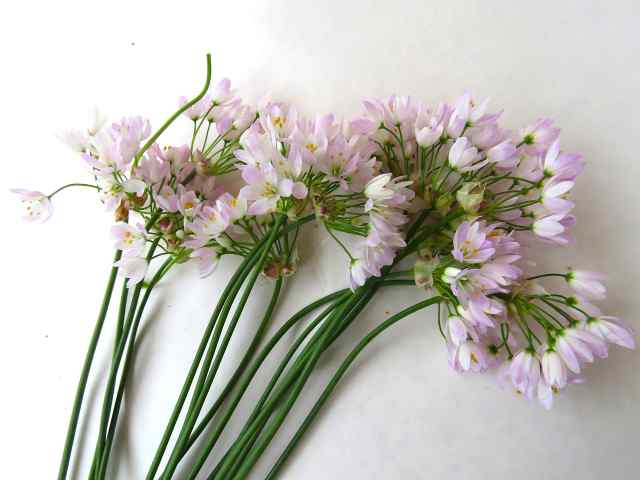
Do not be fooled by the pretty flower with the strong onion scent. Let this in at your peril and future generations of gardeners will rue your decision.

Generally unenthused by green flowers and other garden observations

Mark has never been a fan of green flowers. I asked him why and he replied with utter simplicity, “because I like colour”. As I have observed before, green is colour neutral in a garden situation. Maybe Hippeastrum papilio passes muster because it has quite a bit of red in it and has some hefty flower-wow-power but his preference lies with the glowing red of H. aulicum.

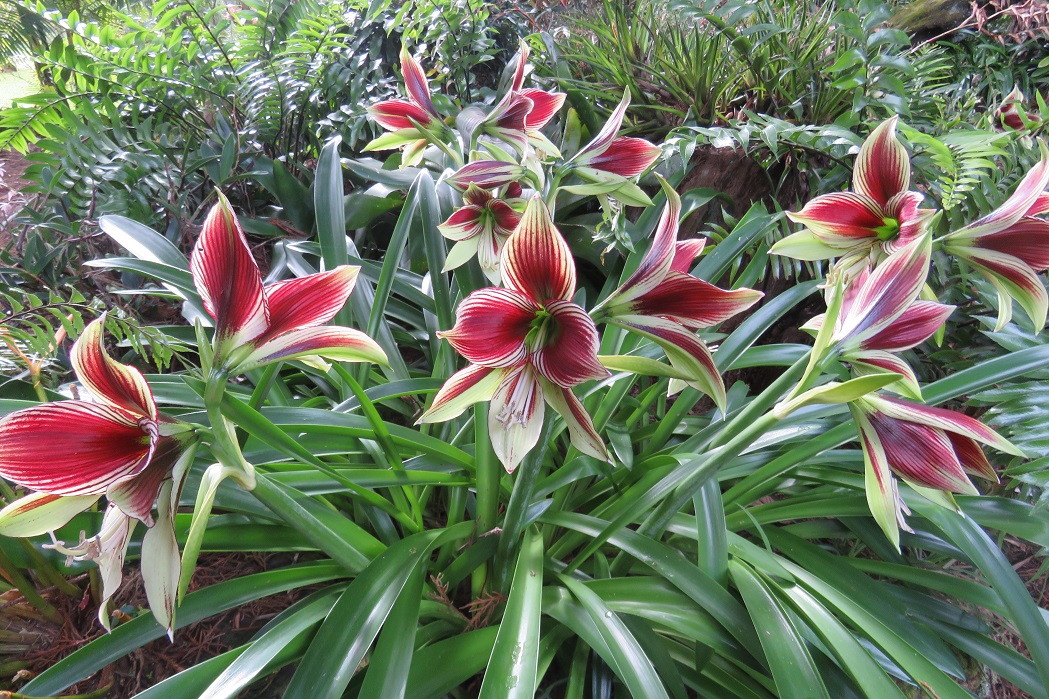
Hippeastrum papilio

I am pleased with H. papilio. We started with a single bulb and now have two good sized patches of it with a profusion of flower spikes this year – at least a dozen on the point of opening in one area alone. It is just patience, time and lifting and dividing that gets a single expensive bulb to a significant block – or an extravagant budget if you want a quicker response. We grow our hippeastrums in woodland conditions because the narcissi fly stay out in the sun so the bulbs don’t get burrowed out by narcissi fly larvae.

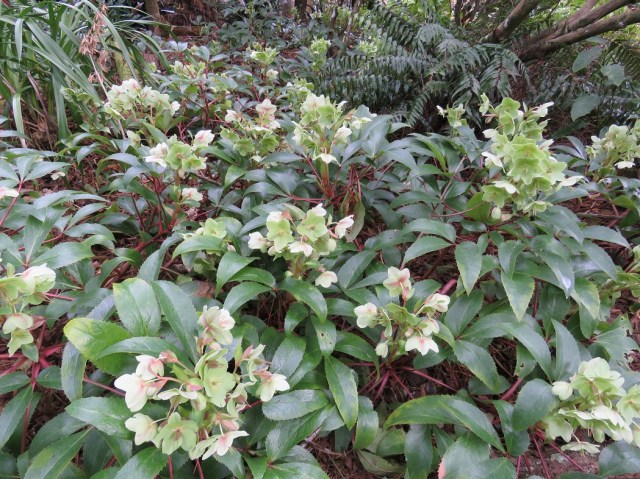
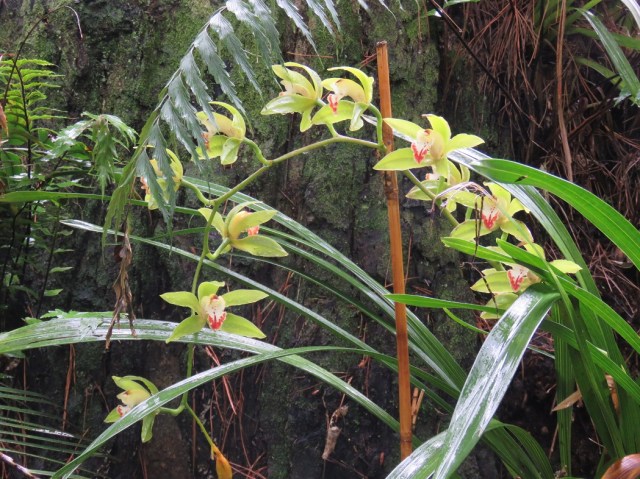
We have plenty of green hellebores – Helleborus ‘Sternii’, H. argutifolius and H. foetidus feature heavily in the woodland Avenue Garden – some green arisaemas and a single green orchid but generally I see Mark eyes glaze over with disinterest when green flowers are praised by others. He will go as far as white fading to green or white with streaks of green – but predominantly white, thank you.

Helleborus sternii
I think I was having difficulty getting a good photo in the garden of Helleborus foetidus and, to be honest, it looks more exciting staged
Just the one green orchid but it has a certain grace and style
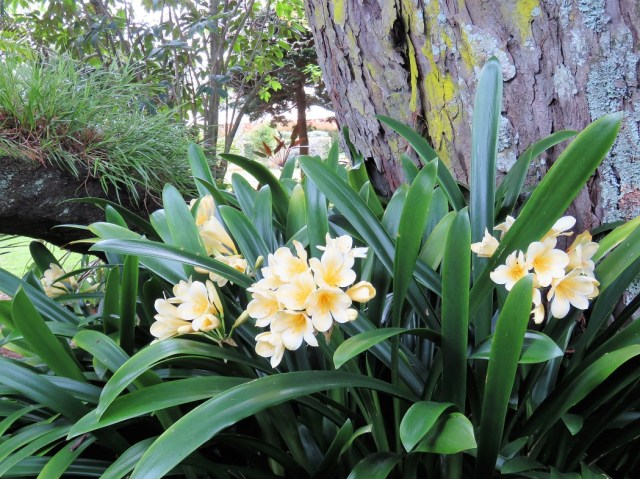
Yellow clivias, we have a few. Quite a few really.

Some readers may remember when the first yellow clivias became available here, retailing for up to $50 a plant, as I recall. I think about this as I pull out the self-sown seedlings and discard them as surplus to requirements. If you want to raise plants from seed, if the seed is yellow, the plant will flower yellow. Red seed gives orange or red flowered plants. Now the fashion appears to be for the new green flowered varieties, but not here, for reasons already stated. I wouldn’t mind some richer yellow ones but I have only seen one in another garden. The pale yellows can be a bit insipid en masse but really sing when combined with orange and red clivias. Pretty peach clivias would also be a nice addition and are now available but haven’t come our way yet.

The trimming of the Podocarpus parlatorei in the summer gardens

Our focus is entirely on getting the garden ready for opening. Mark is trimming the Podocarpus parlatorei to pillar shapes and he is welcome to this job. It has to be done with secateurs and loppers more than clippers to get the main shape formed. Hopefully it can be done with electric clippers in the future once the shape is defined and the plants have bushed out so it is foliage that needs to be trimmed and not woody branches. The top knots are because he wants to stretch them over to form an archway in time. There are six of them and as the chief shaper is currently incapacitated by a bad shoulder and a cracked rib, it is taking him some time. Notice the old shade cloth spread beneath to capture the mess. Lloyd does the same when he is trimming hedges. It only takes a moment to spread a drop sheet (old sheets or curtains do the same job) yet it makes the clean-up so much faster.

My goal today is to finish down in the park. It is all about tidying in that area, but selective tidying because we like a looser, more natural look in that area. Then it is back up to the top gardens for the final round with fingers crossed that we get no major storms between now and October 30.

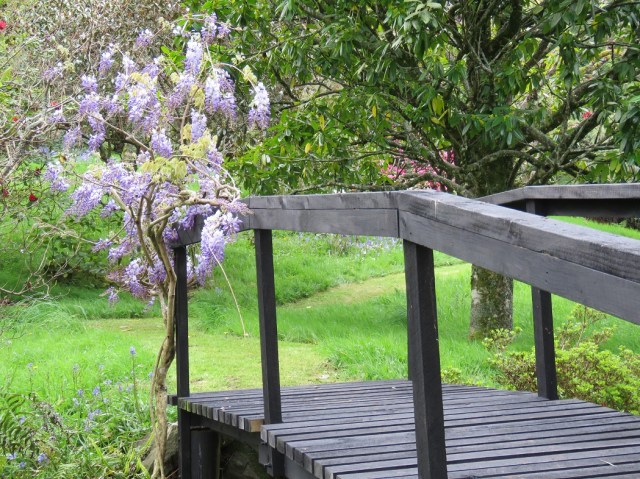
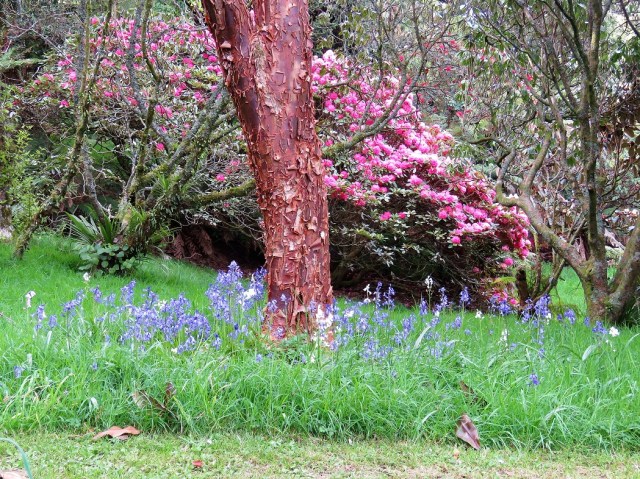
Down in the park tidying up so I get to enjoy the wisteria, bluebells and rhododendrons
Rhododendron ‘College Pink’ is both very large and very pink
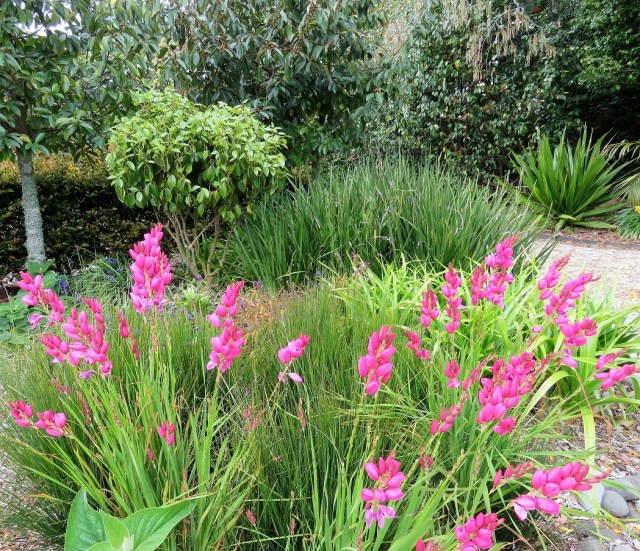
Following the pink theme, ixias in the new borders
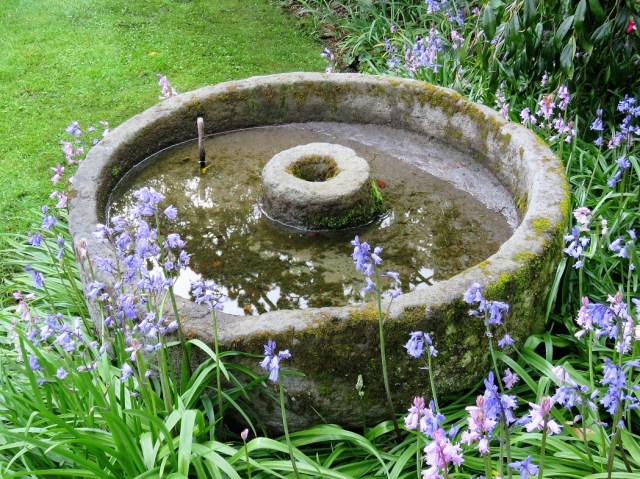
Finally, the bird bath – well used, particularly by tui. It is the outer mill wheel from a grain mill. I used to worry that it wasn’t level until Mark pointed out that is to that small birds can also use it without fear.

Waiting for hippeastrum flowers

We only have two species of hippeastrum in the garden. And one hybrid that bravely lives on in the rockery despite never receiving any praise and I don’t even appear to have photographed it. Most people probably grow the hybrids rather than the species and they are a genus that lends itself to novelty status – enormous flowers and some odd variations that are not necessarily creations of beauty.

Hippeastrum aulicum in the garden

Hippeastrum aulicum in particular is a mainstay of our early spring woodland. I have always described it as looking more like a Jacobean lily. Because it thrives with us, we have a lot of aulicum though we don’t get seed on the plants in the garden. Mark says this is because we are not hot enough but it will set seed if brought under cover.

Hippeastrum papilio. It has taken a while to increase it from a single bulb but we now have two patches like this.

It has taken a while to build up H. papilio but we are on track now with quite a few flowering in the same woodland conditions that suit H.aulicum. They certainly have a wow factor as a garden plant but we don’t get seed. Whether this is temperature related or they are not self-fertile, we do not know.

Mark wondered if we would get any interesting variations if he crossed the two species, while acknowledging that it was more a cross of convenience rather than one based on using the best possible parents. He did it so long ago that he can’t remember now which species he used as the seed-setter. Nor can I remember how many years it is since I grew tired of the pots of seedlings kicking around the nursery so took it upon myself to plant them out. Maybe about eight years?

The plants have done absolutely nothing in the garden except grow larger in the intervening years. Until this week! Two are flowering, well over a decade after the cross was made. Curiously, they are flowering before either of their parents: H. aulicum is only just putting its flower spikes up and is still some way off showing colour and it will be October before H. papilio blooms. I probably planted out a tray of 40 pots all up so there are a whole lot more to come. Eventually.

Nothing to get excited about

So what did we get? I was a bit underwhelmed by the first one. It only has two flowers to the stem and really just resembles a larger version of H. aulicum, maybe with more prominent green veining. I prefer the original species at this stage.

It is big – much bigger than its parents. And showy. But is it an improvement as a garden plant?

The second one is certainly larger, showing considerable hybrid vigour. The flower spike is over a metre tall and the spike has five big blooms opening on it. It is another red with green veining. So it looks as though it will be big and showy, if big and showy is how you like your bulbs. We would be happy with smaller and more interesting. Mark’s only comment so far has been that it never was a brilliant cross in the first place but it was just to get some variation in the garden.

Maybe the other 38 or so will show more interesting variations over the next few years? A large part of gardening is optimism.

I see there are about 90 species of hippeastrum though most of the hybrids are from just six of the species – including H. aulicum which surprised us, but not H. papilio.

Exotica in the shade

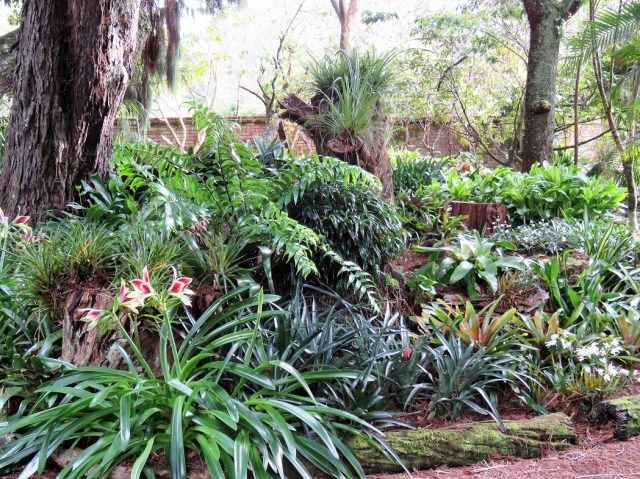
Shade gardens we have a-plenty

Shade gardens we have a-plenty

Glory be, but I do love spring.  This month subtropical bulbs and orchids shout out to be noticed.

We have extensive shade gardens. It is an inevitable result of a large, mature garden with many evergreen trees dating back as far as 1870. We do a lot of what we call lifting and limbing – taking off lower branches and keeping areas open to the light, for there are not a lot of plant options when it comes to deep, dark shade. Beneath the mighty tree canopy, it is dry but frost-free with dappled light. Over the decades there has been much trial and error to find what will thrive in these conditions and the plantings have become increasingly complex.

Dendrobium Bardo Rose

Dendrobium Bardo Rose

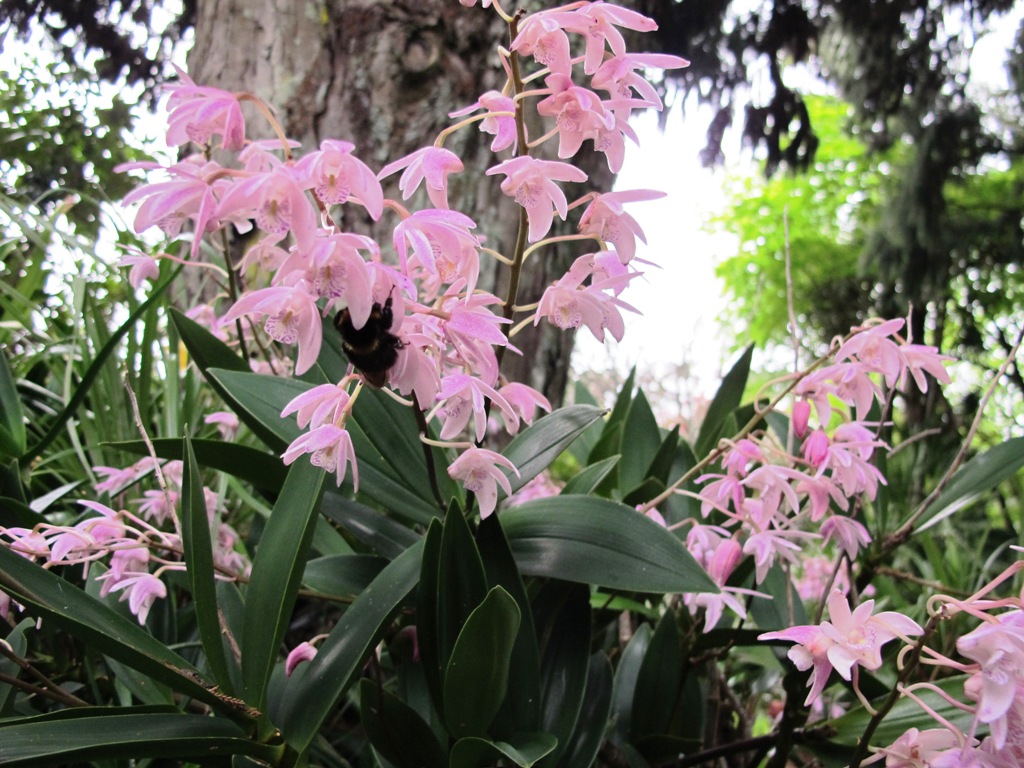
By this time in spring, we are over peak season for cymbidium orchids but the Australian dendrobiums are a delight. These are much smaller and more mounded or clumping in appearance and they take care of themselves. We have found the Bardo Rose group to be particularly obliging and free-flowering in woodland conditions. Ours all came from the local Orchid Society, an organisation that we have found combines generosity with superior technical knowledge.

Pleione orchids in the woodland

Pleione orchids in the woodland

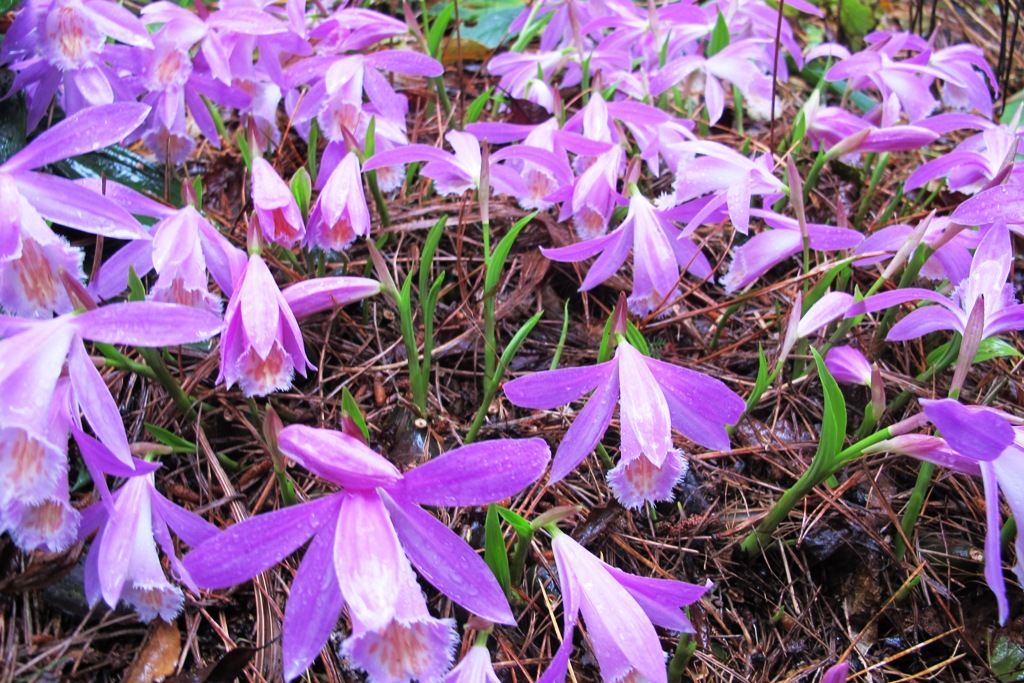
Pleione orchids do not last as long in bloom as many of the other orchids. Their flowers are soft rather than waxy but oh my, they make such a pretty carpet. It is easy for them to get swamped so we try and keep the area around them open but beyond lifting and dividing every few years, we just leave them alone. In our experience, the lovely yellow varieties do better in a climate where they get more winter chill. I think all our yellows have died out now but we have plenty in shades of lilac, purple and pure white. Most of our successful varieties came from the late George Fuller, orchid expert and former curator of Pukekura Park, and seem to have formosana in their parentage. If you want to build them up, a single bulb will usually set 2 offsets each season so you can double them every year.

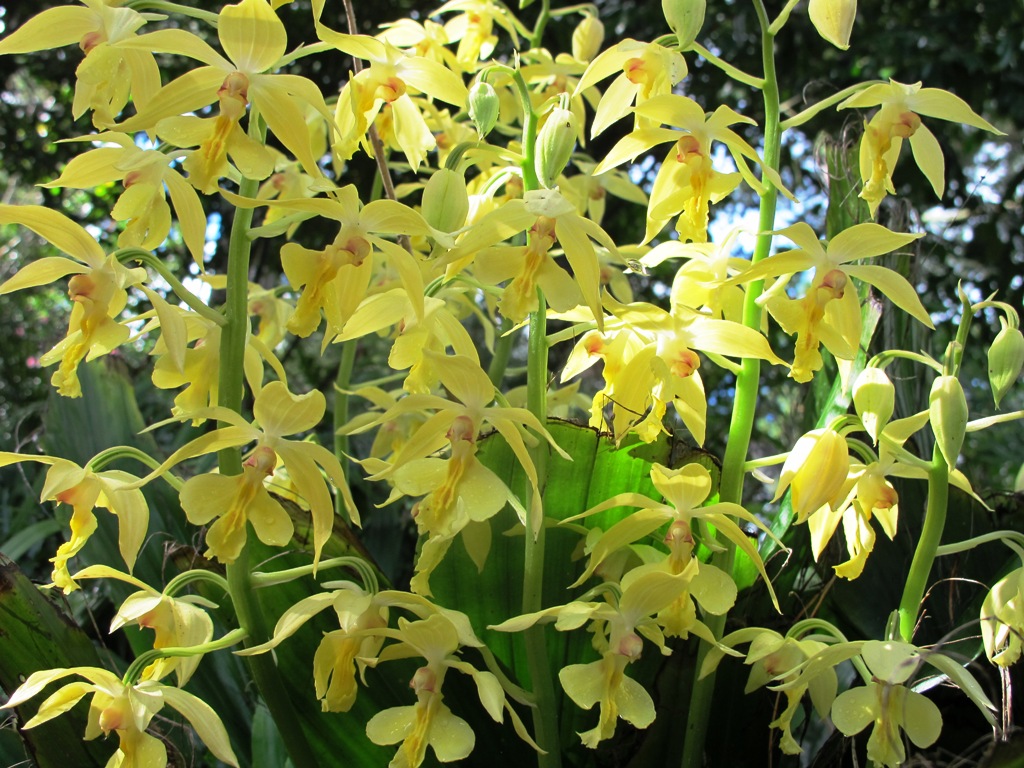
Calanthe orchid - CopyThe calanthes are ground orchids and we have big clumps now because these obliging plants can just be left to quietly increase in size. These are fully evergreen and somewhat frost tender but they are a delightful sight through spring and they combine very well with clivias, ferns and even hostas.
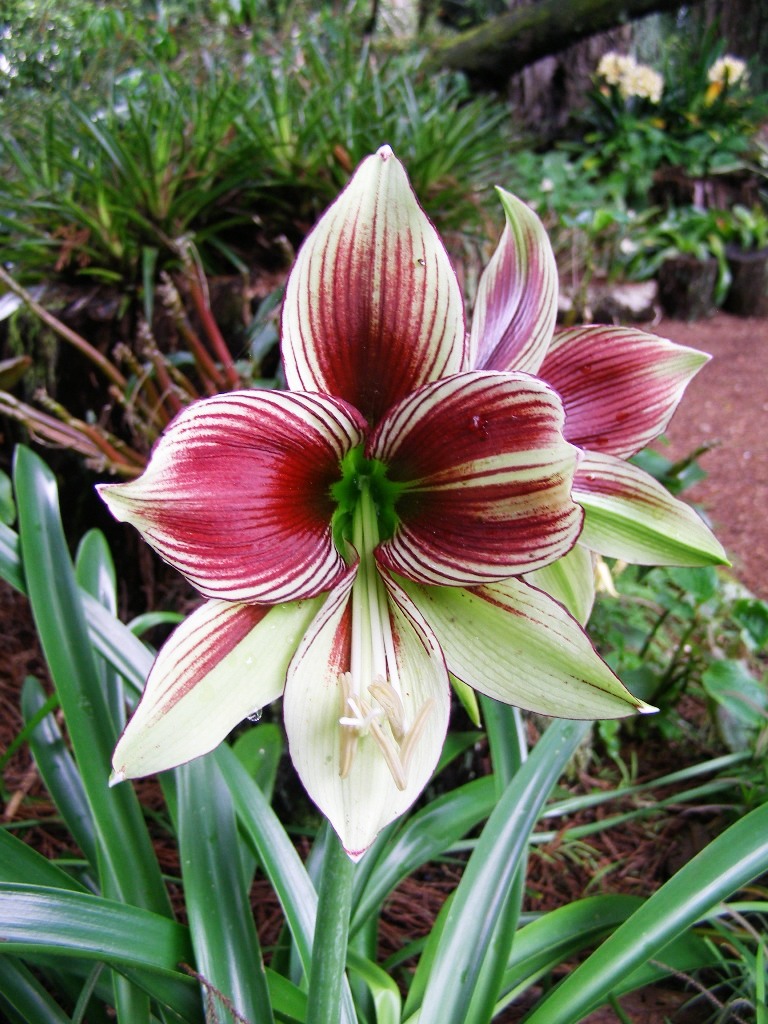
Hippeastrums are a plant family that has been much hybridised but I am not entirely convinced that has been to their advantage. It is two species that we rely on, both South American. It was by chance we found they settled happily into woodland conditions. In full sun, they were ravaged by narcissi fly but in high shade they are fine. Apparently nazi flies, as they are often called, don’t like shade. H. aulicum is one of our early to mid spring mainstays, flowering consistently year in and year out while multiplying most satisfyingly. To me, they look like beautiful Jacobean lilies in the woodland.

Hippeastrum aulicum, one of our woodland mainstays

Hippeastrum aulicum, one of our woodland mainstays

Hippeastrum papilio has been a more recent acquisition for us and it is certainly spectacular, looking more like an orchid than the butterfly for which it was named. It is offered for sale but be prepared to pay a lot for a single bulb – maybe $30 if it is flowering size – because it takes several years to get to that point. I can’t think that we would have started with more than just one or two bulbs at that price. I see with a bit of dividing and replanting we now have about sixty but not all are flowering size yet. Mark has done some hybrids of aulicum x papilio to increase numbers and get some variety, but they have yet to bloom.

Hippeastrum papilio

Hippeastrum papilio

I will have to leave the arisaemas, trilliums and the Paris polyphylla for another time but will finish with Scadoxus puniceus from South Africa. Many readers will be familiar with the summer flowering red S. multiflorus ssp. katherinae, especially in the Auckland area because it was, and maybe still is, much beloved by landscapers. It is a mainstay of our summer woodland, but in spring it is the lesser known S. puniceus that is the showstopper. Growing from large bulbs which are slow to increase, the foliage is lush and the large blooms are curious rather than beautiful. S. puniceus is not widely available, but if you can find somebody with it, it is easy enough to raise from fresh seed as long as you are willing to wait quite a few years to reach flowering size.

The rewards are there for patient gardeners.

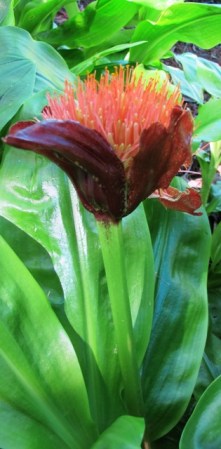
The lesser known Scadoxus puniceus

The lesser known Scadoxus puniceus

Text first published in the October issue of NZ Gardener and reprinted here with their permission 

The late spring bulbs


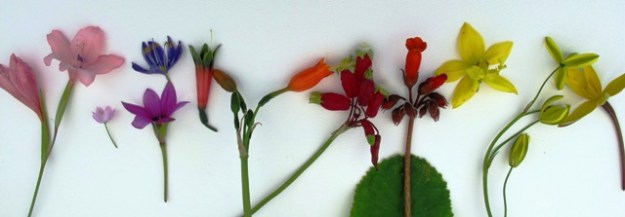
Left to right: Gladious carneus, a dainty allium, Romulea rosea, camassia, Phaedranassa cinerea, Stenomesson miniatum, Gesneria cardinalis, calanthe orchid, Albuca candadensis and spiloxene.

When spring bulbs are mentioned, most people think of daffodils, bluebells and tulips. But when they have been and gone and all that is left is the scruffy foliage, there are the late spring bulbs coming into flower. Most of these are less well known and certainly less celebrated in literature and art. For all that, they are often more interesting, maybe because they are unexpected.

We love bulbs here and with bulbs I include corms, rhizomes and tubers. More than any other type of plant, they seem to mark the passage of the seasons and to create the smaller, detailed pictures that add layers of interest to the garden. Maybe because the perennials and annuals are coming into their own at this time, the late spring bulbs are often ignored and therefore harder to source.

I headed out to the garden to see what was coming into flower. Discounting the earlier bulbs which are still flowering but well past their peak (veltheimias, the late lachenalias, Hippeastrum aulicum and the like), I found about 20 different types of bulbs coming into their own and that is by no means complete. There is little which is duller than endless lists and plant descriptions so I lined a number up for photographs.


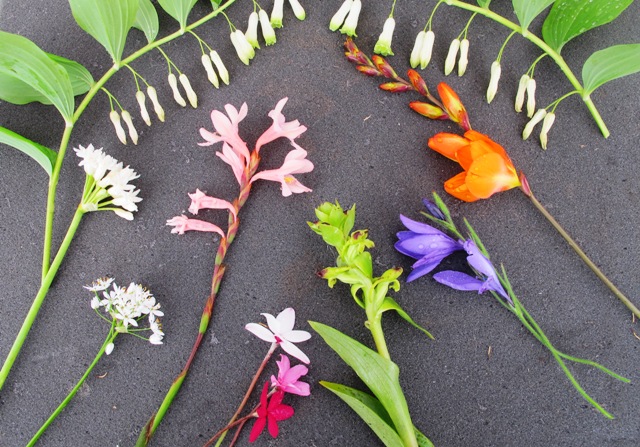
Clockwise from top – Soloman Seal (Polygonatum multiflorum), tritonia, babiana, Satyrium odorum (orchid), rhodohypoxis, Watsonia brevifolia, tulbaghias – probably comminsii and possibly simmleri

I featured the rhodohypoxis in Plant Collector a fortnight ago. These are relatively common and form attractive carpets in pinks, whites and carmine red with their mass of star flowers. There is nothing rare or exclusive about Soloman Seal (Polygonatum multiflorum) either. It was common in the gardens of grandparents and is perhaps undergoing a surge of discovery amongst newer generations of gardeners. It is particularly handy for semi shade positions and, after battling a near impenetrable mass of entangled rhizomes, I decided it may well have some merit as a natural stabiliser for an eroding bank. I will report back in three years about the success or otherwise of this venture but as it will grow pretty much on top of the ground and grip hard, I am optimistic. As a bonus, the foliage turns golden in autumn – an unexpected source of autumn colour for us.

Hippeastrum papilio

Hippeastrum papilio

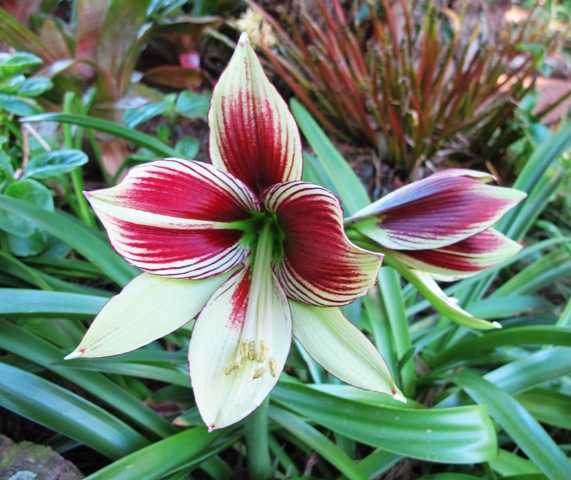
For sheer exotica, it is hard to beat Hippeastrum papilio which is just opening. Papilio means butterfly though I think it is more orchid-like really. This is a spectacular bulb from Brazil which is offered for sale from time to time. It is more expensive than rare. We had to try a couple of different places in the garden before we found a spot where it was happy but we now have it thriving in open woodland conditions.

Scadoxus puniceus

Scadoxus puniceus

While on the big bulbs, Scadoxus puniceusis one of our showiest but I won’t dwell too long on it because it is rather too frost tender for inland areas and rare in this country. Its cousin, Scadoxus katherinae, is a better bet for frosty areas because it is dormant in winter and doesn’t start moving until spring, flowering in summer. Similarly, our love affair with the arisaema family (sometimes called snake’s head lilies though they aren’t lilies) is of limited value because our showiest ones are Mark’s hybrids which we have never sold so they can’t be seen anywhere but in our garden. Given time, we may put them on the market but that is a way off. Most of the arisaema family hide their flowers below the foliage but Mark has managed to breed with varieties to bring out the desirable trait of holding their flowers above the leaves, making them much showier as well as being easy garden plants. You may, however, find Arisaema speciosum which is easy to grow and Arisaema ringens is relatively common. If you have a bank that you look up to, the flowers are little more obvious without having to part the leaves to see them. We describe A. speciosum as the closest thing to a cobra you would want in the garden.

If you are getting frustrated trying to find more unusual plants, there are good reasons why. Many if not most of the specialist nurseries throughout the country have closed down over the last decade as have most mail order nurseries. Treasure the ones that are left because there are few new plant businesses opening. However, bulbs are perhaps a little easier than trees and shrubs and I occasionally look at the bulbs section of Trade Me and see some interesting and less common material offered for sale there. Beyond that, you may have to start haunting your local horticultural society or keen gardening groups where there are likely to be one or two people who know their bulbs from their onions.

First published in the Waikato Times and reprinted here with their permission.