
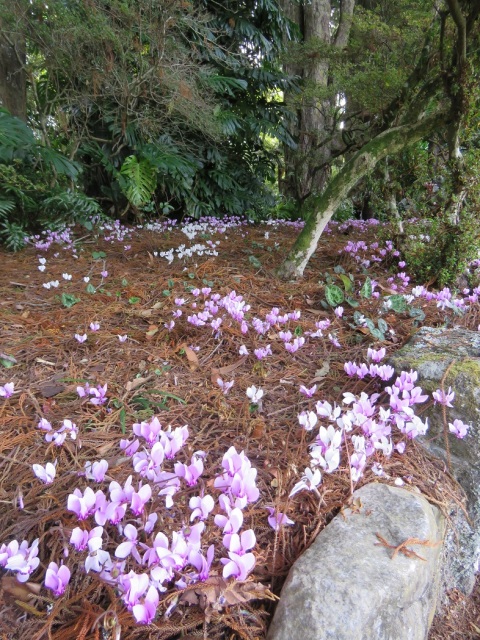
Over the years, we have tried growing any and all of the cyclamen species we could find. I see there are 23 species but we wouldn’t have had that number available to us. Most of them come from dry parts of Europe and North Africa, often with cold, dry winters – conditions that could not be further from ours. This is why we have only ever succeeded in naturalising three different species. Coum is our winter cyclamen, repandum in spring but it is the carpets of hederafolium that are delighting me in autumn.
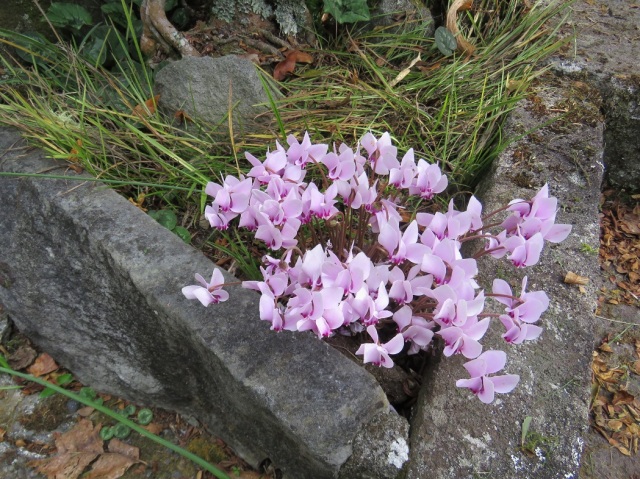
We didn’t plant all these hederafolium in pretty pink and white. We probably started this area with maybe three or four tubers but, over time, they have gently spread. That is what I mean by naturalising. We have them growing in cultivated conditions all through the rockery and in other garden beds and also growing in grass in the park meadow. I thought this drifting area was interesting because of the conditions where they have spread and the showy display they make.
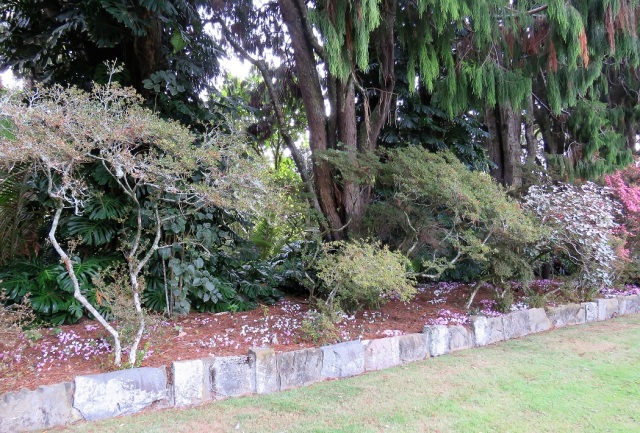
They are growing in extremely poor ground, bone-dry and bereft of goodness because the enormous rimu trees suck up all the available moisture. There is also a natural carpet of rimu needles covering them. But, there is no competition from other bulbs or shade loving perennials. This means they never get swamped or crowded out by other plants or so wet in the shade that the tubers rot when dormant. And when the seed spreads, it has a fair chance of germinating and growing because the whole area is largely left undisturbed. Hederafolium sets seed freely and Mark has been pleasantly surprised when he has scattered the seed further afield and found cyclamen flowering there a few years later. It is best sown or scattered fresh, though. Gather the ripe seed and spread it at the same time rather than storing it for later.
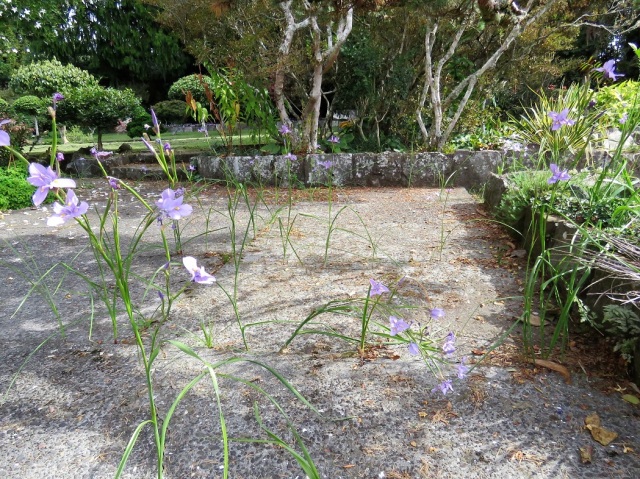
While on bulbs naturalising, I don’t mind the lovely blue Moraea polystachya seeding down in even less hospitable conditions – the cracks in the old concrete. It gently seeds itself through the rockery but not at an alarming rate and it cohabits happily with other plants. Also, the corms are large enough to find easily if I want to move them. It also has the longest flowering season of any of the autumn bulbs because it keeps flowering down the stem. They are iris-like in appearance and if you trace back the family tree, you get to what most of us might call the broader iris family.
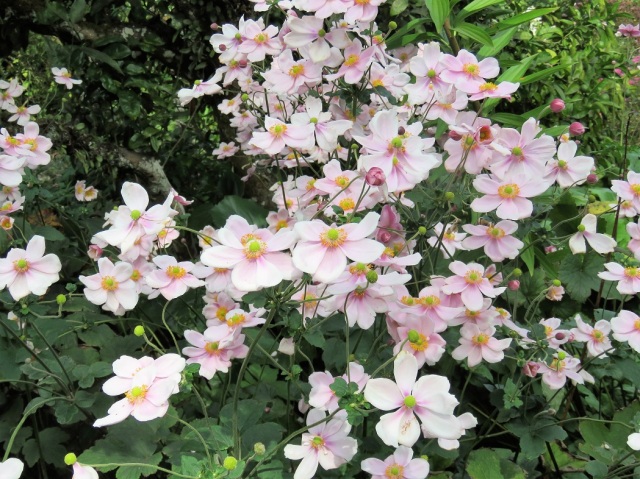
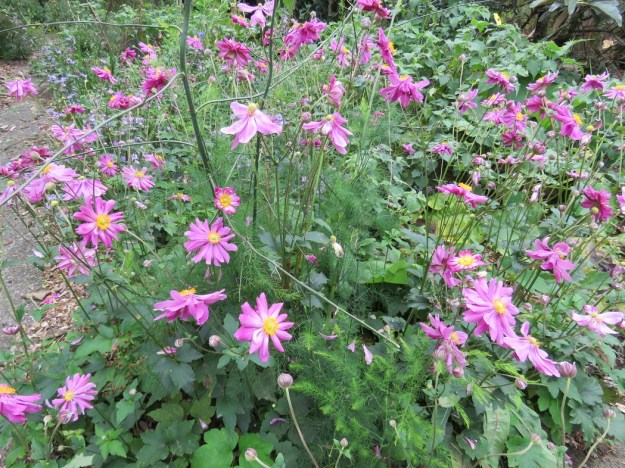
Also spreading alarmingly are the Japanese anemones which aren’t even from Japan, commonly known as windflowers. I love them and am prepared to wage ongoing war on their spreading ways but they should always come with a warning. Don’t plant them anywhere near treasures of a more refined disposition because they will swamp them. It is best not to plant them near trees and shrubs because they spread below ground and you will have them all through the root systems of other plants all too soon. If you can, define a space and keep them to it which means having a clear area around them so you can see when the roots are popping up growing tips beyond their allotted space.
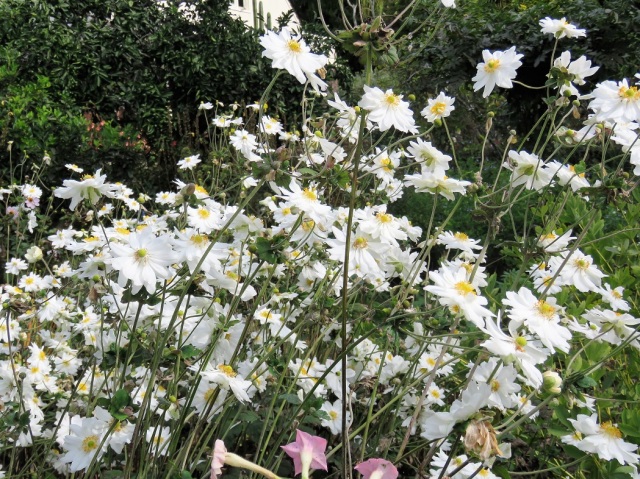
Naturally, I haven’t done this myself – at least not on these clumps which are in the Iolanthe cottage garden/meadow. I know I will regret it but I still have a sentimental fondness for them at this time of the year.
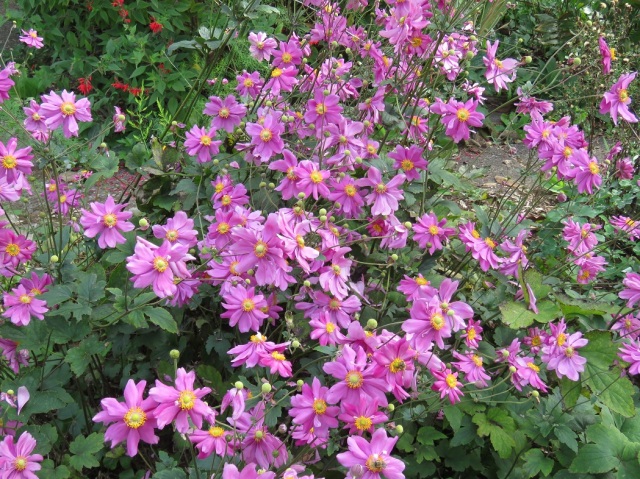
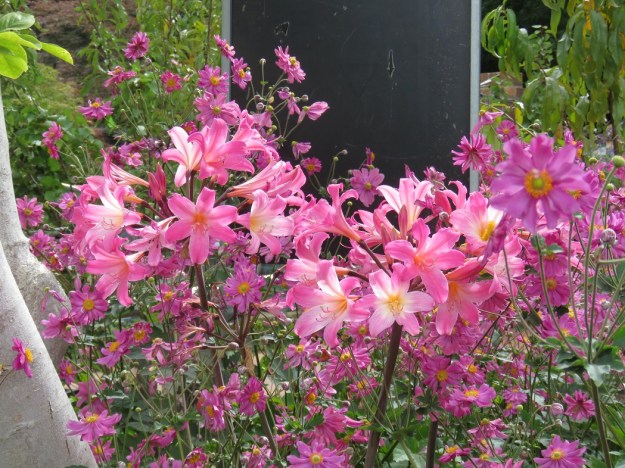
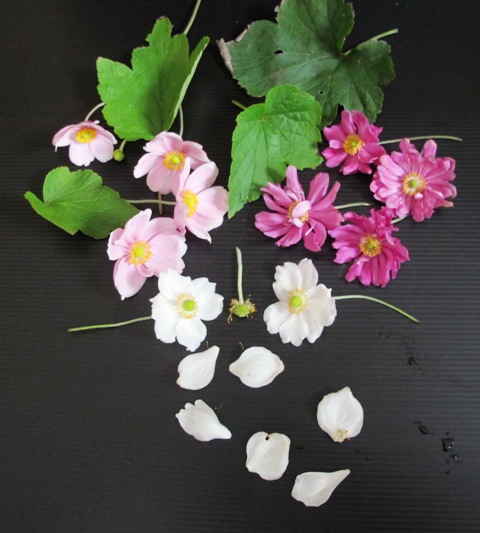
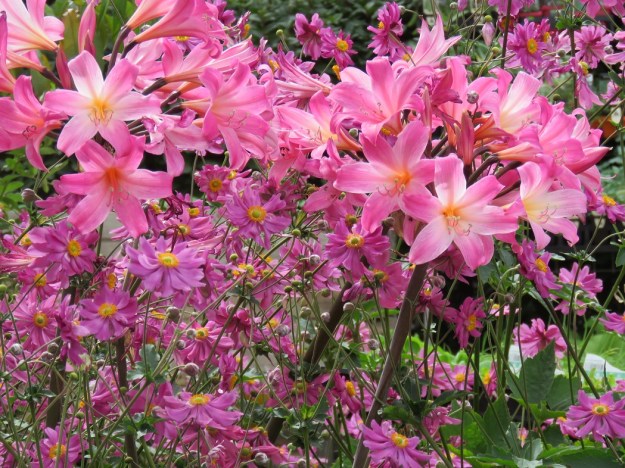 As we adjust to lock down and our personal worlds become so much smaller, I did at least solve a small mystery yesterday. I saw a lovely combination of vibrant pinks when we visited Cloudehill Gardens in the Dandenongs outside Melbourne last year. I can repeat that in my new perennial meadow, I thought.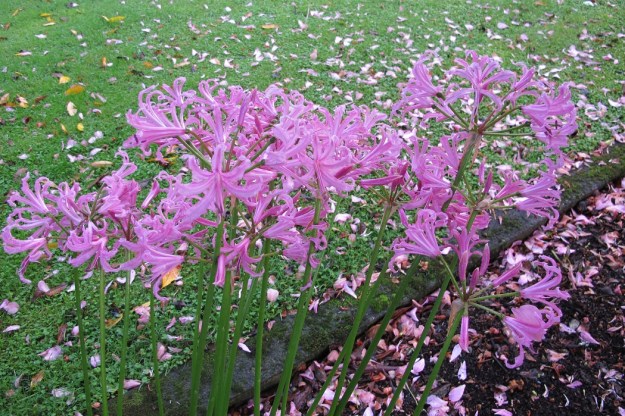

 I
I 


 The
The 

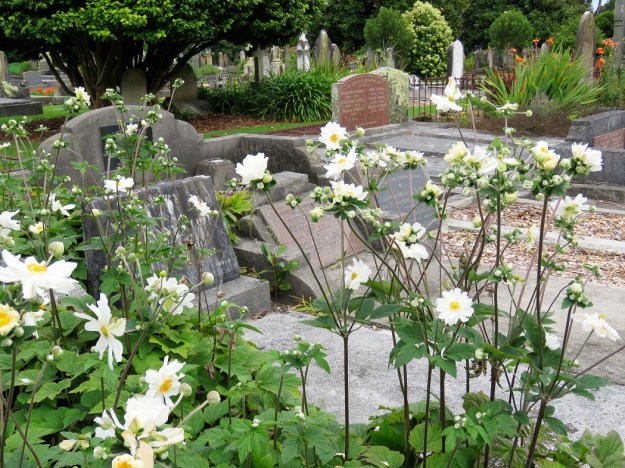


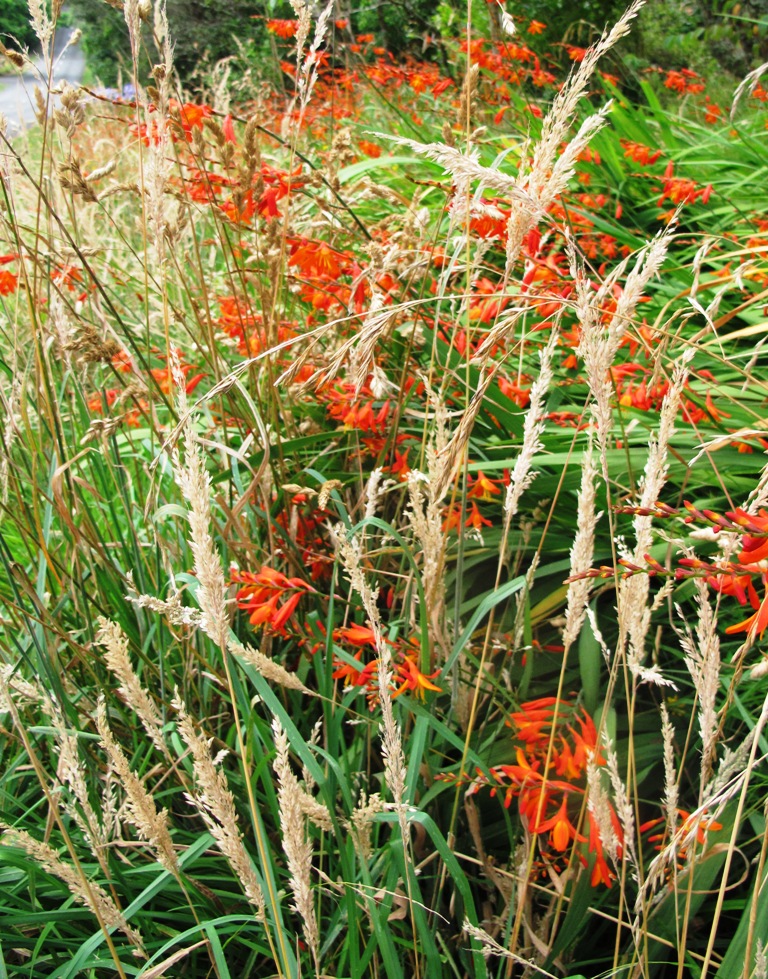
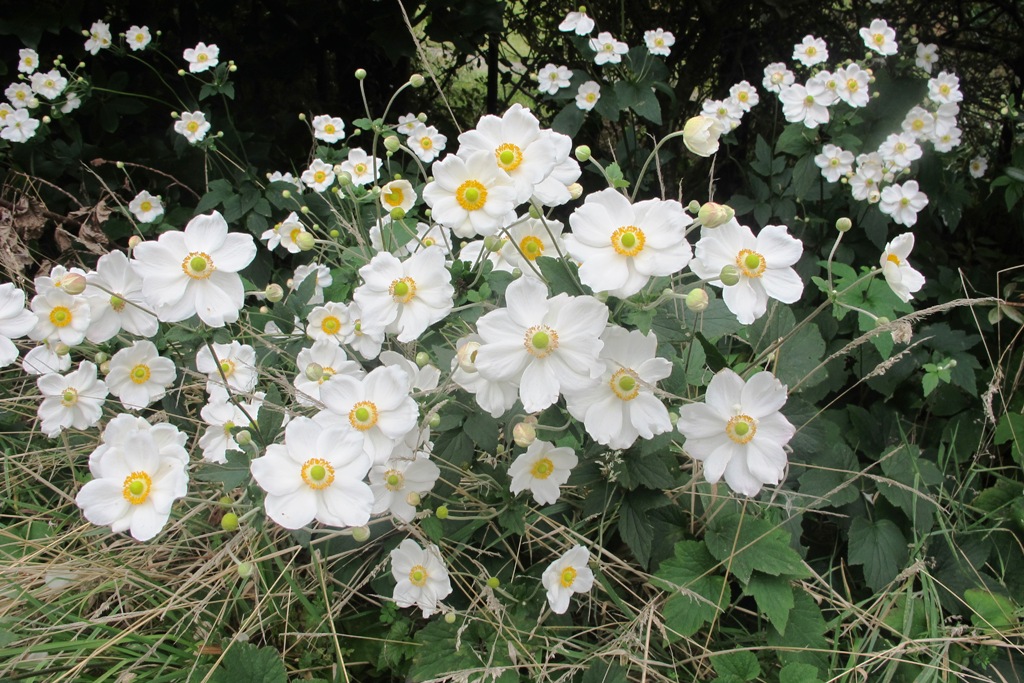 The white Japanese anemones that flower in the long grass around the country corner where we live make me smile every autumn. Orange-red crocosmia – earlier referred to as montbretia – feature large around here. So too do red hot pokers, fennel, arum lilies and cannas while further north the ox-eye daises, yellow vetch and wild carrot feature more.
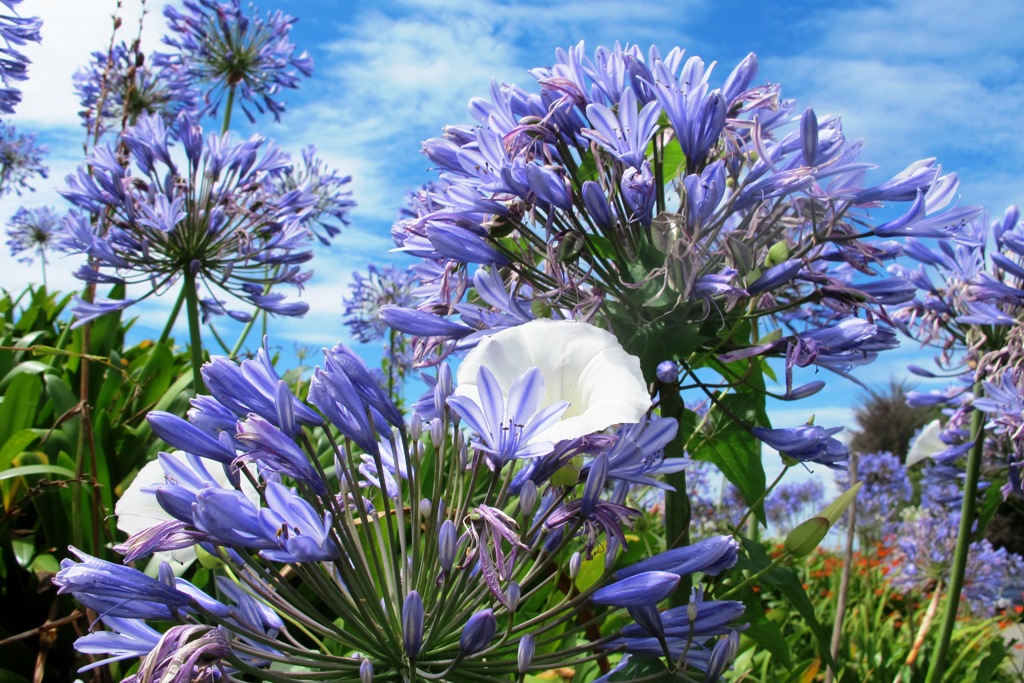
 And agapanthus. There is a plant that is a great deal more revered overseas than here. It is controversial, actively discouraged and some forms banned in northern regions. Some folk hate it with a passion and it cannot be sprayed out with glyphosate. But truly, our roadsides round here would be the poorer without the summer display. In its defence, we have not seen this tough plant seed down any great distance from its parent in our conditions and it is also very good at stabilising clay banks.


 Tikorangi The Jury Garden