Tag Archives: Leucojum autumnale

February bulbs signalling seasonal change

Will my bulbs of February be the month when there are slim pickings, I wondered at the start of the month. But no. I begin to think that there may be no such months, in our garden at least.
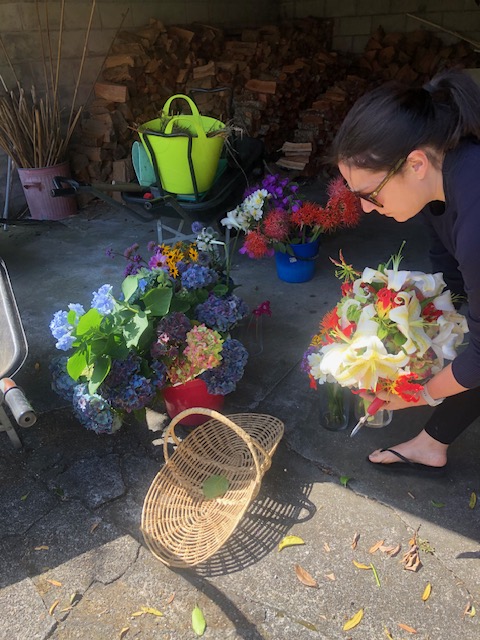
A wedding posy largely comprised of auratums and gloriosas. The bride also chose to wear gloriosas in her hair.

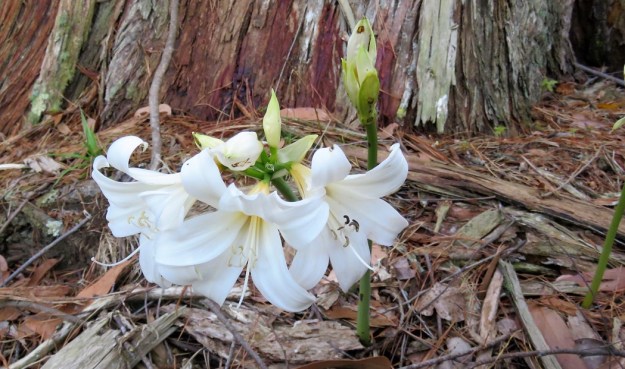
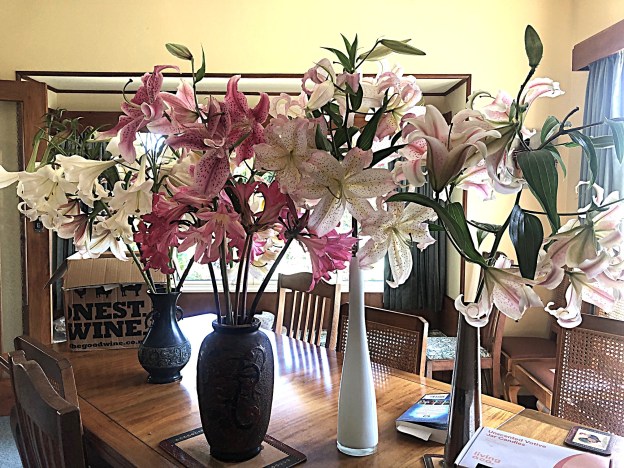
February was marked by a bit of a rollover from January, notably auratum lilies, gloriosas and Scadoxus ssp multiflorus katharinae. All are excellent cut flowers. I knew the lilies were but I have never cut the scadoxus before and they show a remarkably long vase-life. This discovery was made because our middle child came home for a small, intimate wedding in the garden here – an event we never expected to see. In the spirit of this informal occasion where the vows were both heartfelt and a central part of the whole event, she did her own wedding flowers from the garden here. She made her posy and a smaller one for their two year old to carry as well as the vases for the long table while I did the big showy vases of OTT lilies – mostly auratums but with a few Lilium formasanum and belladonnas.
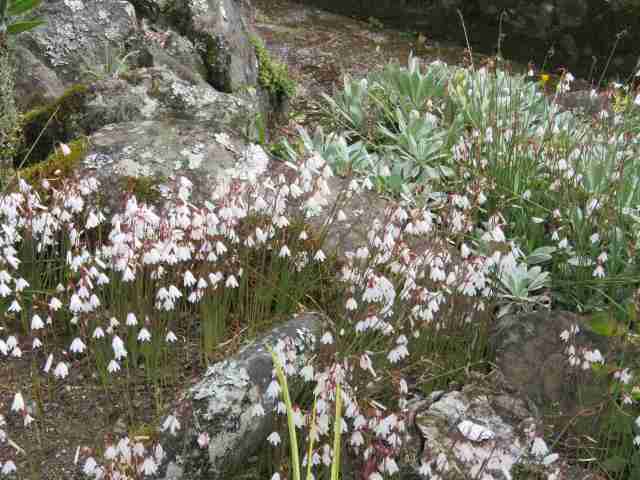
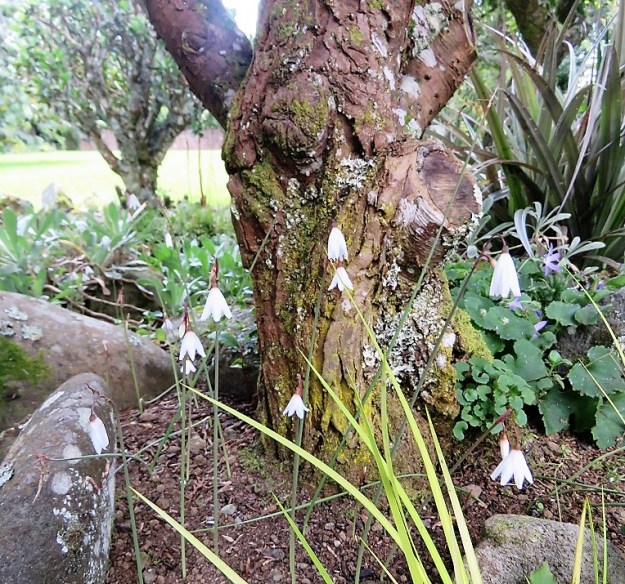
The ephemeral delight of a sea of tiny Leucojum autmnale – autumn snowflakes – in the rockery

Some bulbs are a fleeting delight. The daintiest, tiniest little flowers of the autumn snowflake – Leucojum autumnale – all bloom at once as harbingers of the change in season. The Worsleya procera came and went in the first ten days of the month. No less spectacular, the Paramongaia weberbaueri impressed with its debut performance this very week. I do not think it will have a long season in bloom.  
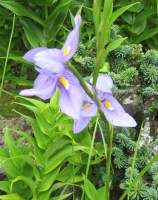
Moraea polystachya

Then I pondered the fact that many of the bulbs that I declare have a long season are in fact bulbs that we have in the garden in abundance, counted in the high hundreds. If we had 500 worsleya, they are likely to flower more in succession and might have me admiring their long season in bloom. That is the case with the blue Moraea polystachya just opening and likely to flower for a good couple of months. But it is not each individual moraea bulb that is flowering that long, although it does set buds that open successively. It is having many bulbs around which open for their weeks to star.
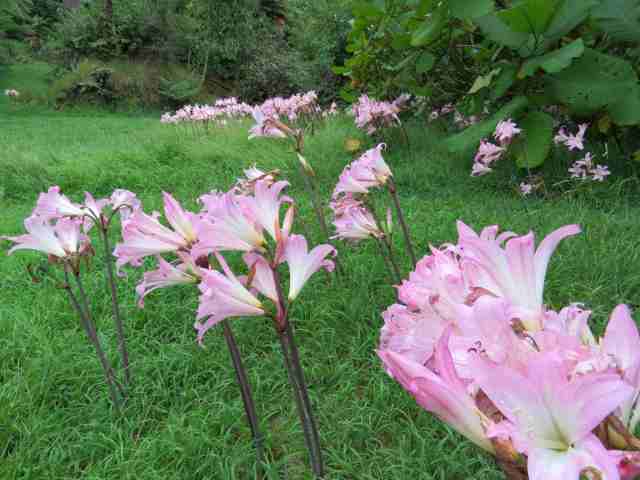
Belladonnas – showy but not choice

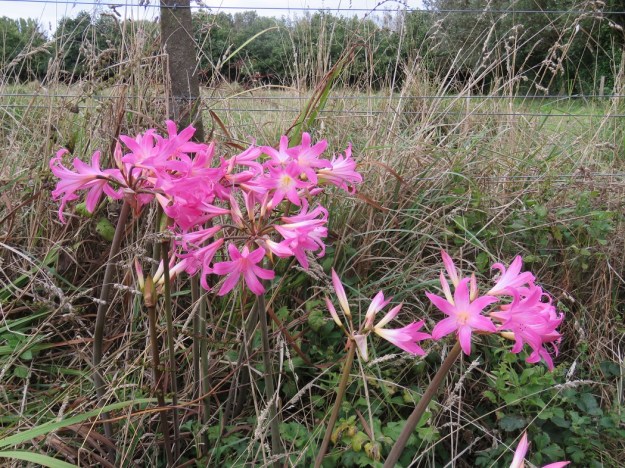
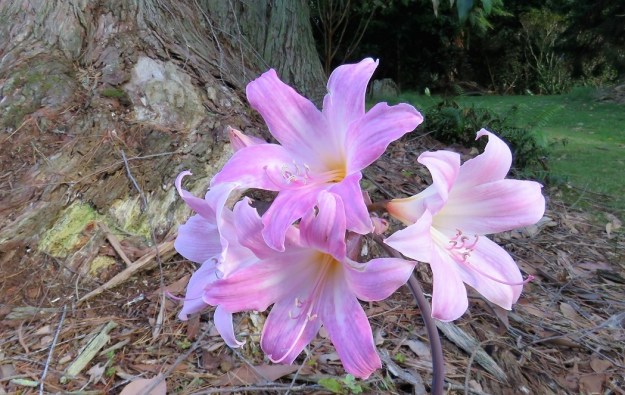
Some are short in season but somewhat glorious. The belladonnas – Amaryllis belladonna  -are more wildflower or roadside plant than one for cultivated garden but that does not diminish their charm on the day. They last well in a vase, too.
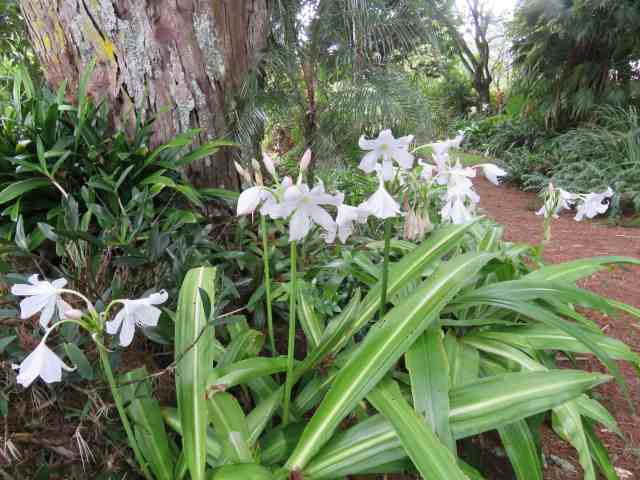
Crinum moorei var. in the woodland gardens

Crinum moorei variegated has spectacular foliage in late spring and early summer but the foliage starts to whiff off a bit, sometimes losing its variegation, as the perfect, white, scented blooms open. I would prefer it to time the foliage and the flowers to perfection but the gardener’s personal preference is irrelevant. It remains an excellent bulb, showy for a long period with the foliar lead-in followed by lovely blooms. We always grow it in the shade gardens because that foliage will burn in our bright summer sun.
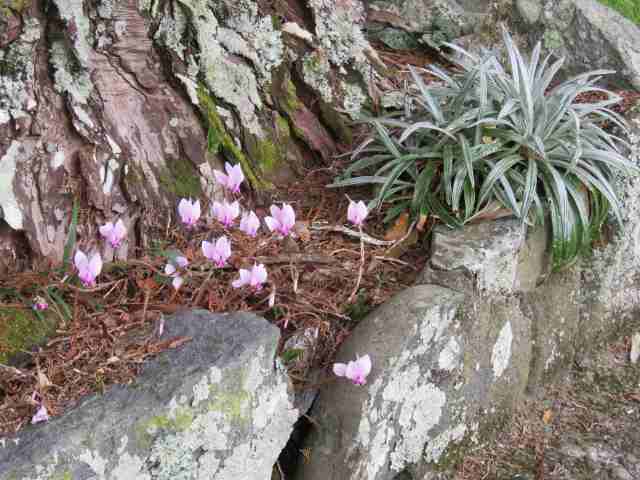
Little Cyclamen hederifolium is all through the rockery and woodland margins – naturalised but never a problem

As the big blowsy bulbs of summer pass over, the autumn snowflakes are joined the by the dainty Cyclamen hederifolium which we have in abundance – decades of letting it gently seed around to naturalise.
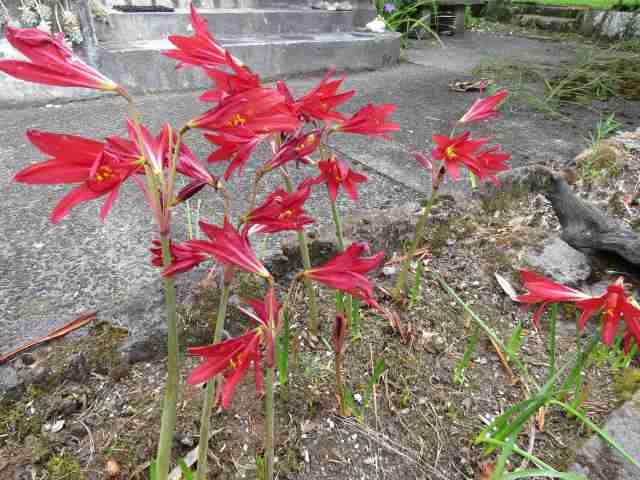
A zephyranthes now, which was news to me. We have it in red and pink.

We have known this plant as Rhodophiala bifida, following on from a period of it being Hippeastrum bifida but apparently it was classed as Habranthus bifida prior to that; now, now it has been moved again to Zephyranthes bifida. I do hope it has found its forever home in the zephyranthes family. It doesn’t have a long season in flower; nor does it increase quickly but it is lovely in its time.
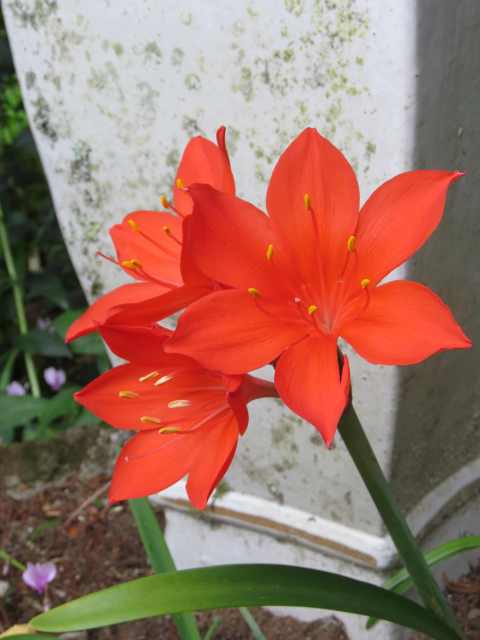
Nothing rare or unusual about this bulb but it is no longer a valotta, now being in the cyrtanthus family

Whereas what we once had as a valotta (and was it also once an habranthus?), is now to be known as Cyrtanthus elatus. I do try to be botanically accurate but it is not always easy to do so. For those railing against name changes, they may be inconvenient but there is scientific data to justify the reclassifications. I would assume it is all DNA-based these days.
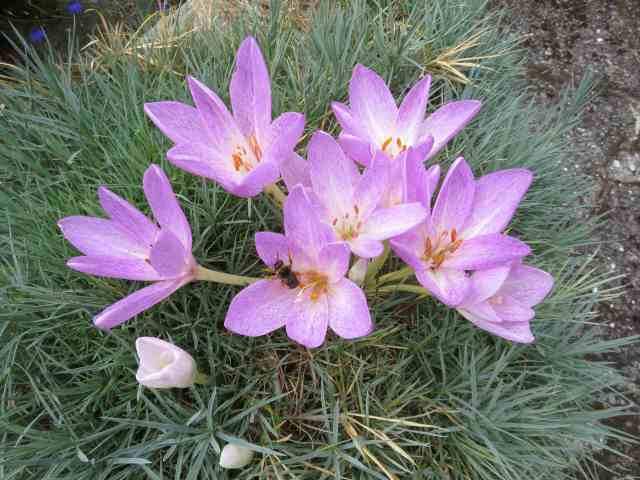
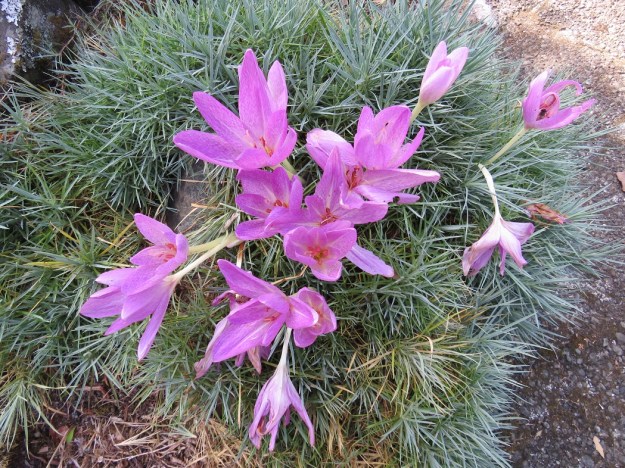
Colchicums! Not autumn crocus, but I am not sure whether this is Colchicum autumnale from northern Europe or Colchicum speciosum from Turkey. I think we have both.

Haemanthus coccineus may be the most fleeting of all the late summer bulbs we grow, but mostly this plant is grown for its spectacular foliage, colloquially known as elephant ears. Colchicums, too, have a brief season but not as brief as the haemanthus. They are oft referred to as autumn crocus but that is not botanically correct at all.

The bulbs are telling us that we are on the cusp of summer turning to autumn.
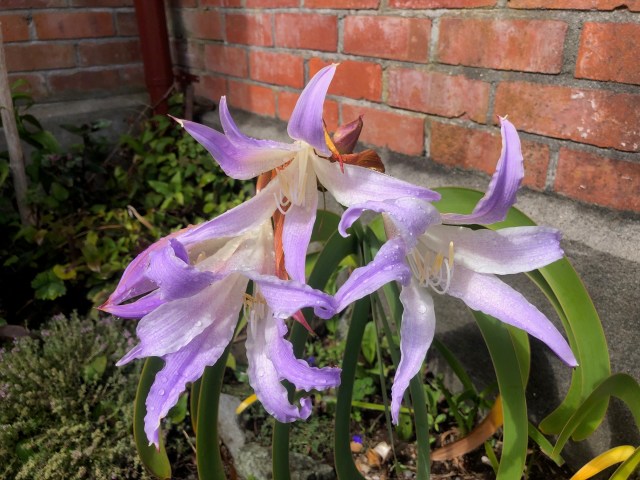
Worsleya procera – choice but not prolific.

The first autumn blooms and the journey to gardening nirvana

Amaryllis belladonna – more roadside flower than garden plant in our conditions

As the calendar moves into March, the autumn bulbs are the first reminder that summer will not be endless. First Cyclamen hederafolium and Colchicum autumnale remind is that the seasons wait for no man or woman. Now they have been joined by the belladonnas and the truly tiny Leucojum autumnale.

Colchicum, not autumn crocus. The foliage is unrelated, being a dianthus

Colchicums are often referred to as autumn crocus but there is no botanical connection, just a visual perception. The best known leucojum is L. vernum or the common snowflake which flowers in spring – a vigorous bulb that is widely found around old house sites that date back to the nineteenth century. The old brick chimney may be all that is left standing but it is highly likely to have clumps of the double daffodils and snowflakes, maybe some violets and a couple of really old camellia trees. For overseas readers, almost all the early European settlers’ homes were built in wood and house fires were common which is why the chimney is the only remaining evidence.

Blink and you may miss the delight of tiny Leucojum autumnale

Little Leucojum autumnale is a very different creature, a fleeting, dainty little flower that has to be measured in millimetres, not centimetres. It is very cute but easily swamped by larger plants if you are not careful. I see it is now classified as an acis, not a leucojum but it may take me a while to remember that. It comes from the western areas of the southern Mediterranean so places like Spain, Morocco, Tunisia and Sicily which are very hot and bone dry but the first autumn rain will trigger the bulbs into their very short flowering and growing season.

Some welcome rain fell this week – 62ml to be precise, which was very welcome after an exceptionally dry summer. Sadly it was followed by the first chill wind of autumn which rather reinforced the message of the autumn bulbs. Summer 2020 is over and we are now entering our long autumn season. I have removed my togs and towel from the swimming pool and put them in the laundry basket although the younger visitors here are still swimming.

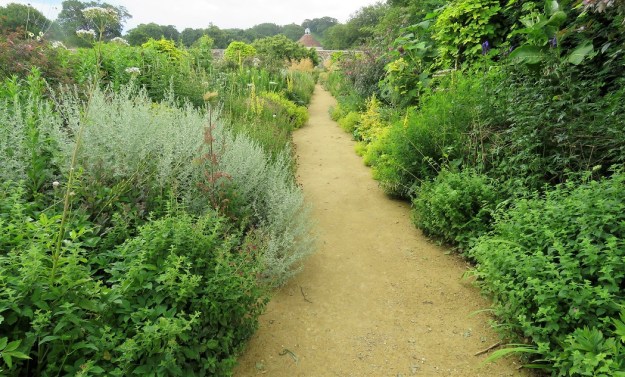
What I call English manor house style of twin borders – seen here at Parham House

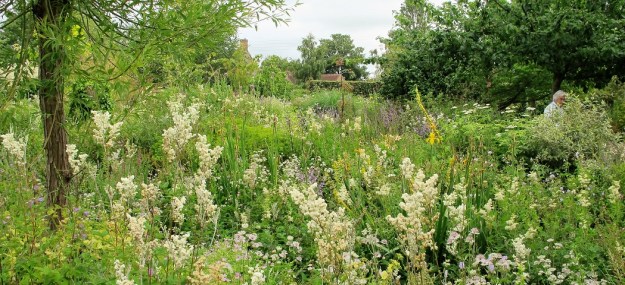
Cottage garden style as per Margery Fish at East Lambook Manor

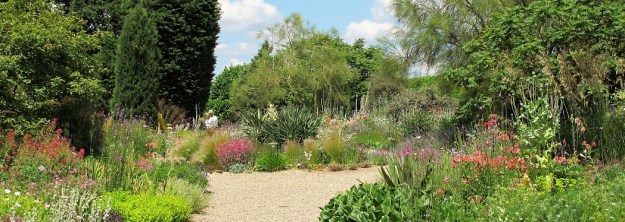
Beth Chatto’s dry garden

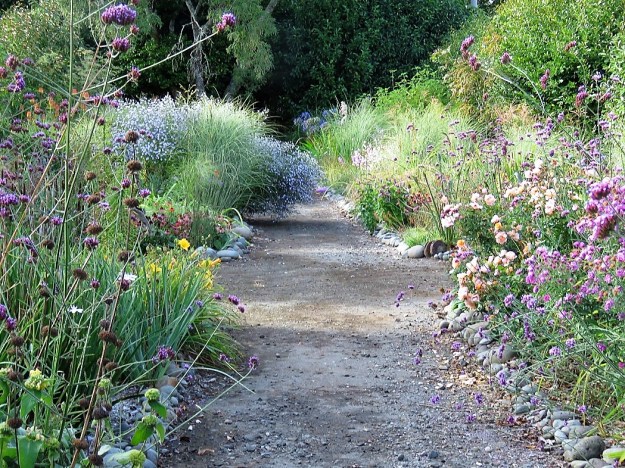
As the summer borders reach their point of peak profusion, I ponder again how full I want these borders to look. The tradition of herbaceous borders is to have them packed so full that no soil is visible. Cottage gardening encourages the plants to meld and run together whereas herbaceous tradition says that each plant occupies its own space without much intermeshing with its neighbours. And then there is the Beth Chatto dry garden where, even in a mature garden, she kept each plant standing alone in its own space. Mark likes the Chatto approach because it displays the individual plants to their best. It is a style he has used extensively in the more detailed woodland areas. If you analyse the Chatto dry garden, they are predominantly smaller plant varieties growing in very hard condtions (dry river bed with very low rainfall) which could not be further from our summer garden conditions which foster lush and exuberant growth.

I am leaning to the traditional herbaceous position for these summer borders but it is a constant learning process about how each plant variety performs. I want to be able to walk amongst the plants to weed, stake and dead-head and that means knowing how much space to leave between each different clump that they may floof themselves over the space to fill it but still leave me passage between the plants at ground level without tramping on them.

The summer borders here

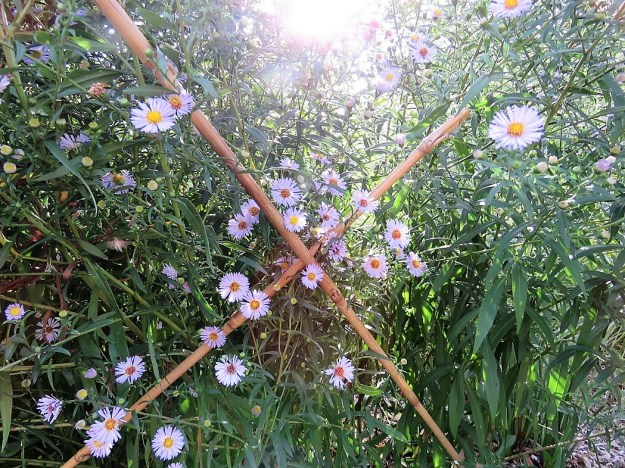
The bouffy aster needs staking to keep the path clear. I do it very simply and this is not visible when the plant is allowed to flop back

I love this big, bouffy aster coming into flower. We have the more compact version that makes a low carpet in bloom and another similar one that is just above waist height. I am guessing this larger version is a species – or close to it – with its daintier, paler blue blooms that are like a cloud of butterflies dancing on the bush. This year I have had to stake it to keep the path clear and it is obvious I have too much of it too close together for future seasons. Some at least will need to be moved to another area before next summer.

It is a constant learning process but that is what makes gardening interesting. Once a garden is all planted up, most of the gardening activity is simple and repetitive maintenance – outdoor housework, in effect. The interest levels in that are not high. It is the ongoing learning and constant tweaking in search of the impossible state of perfection that makes it interesting. That is how I see it for those of us who actively garden.

As a final comment: the new summer gardens have all been planted following the modern trends of lower labour input and management than the older, more traditional herbaceous plantings of the English manor house style of borders. But they still involve me in quite a lot of deadheading, dividing, staking and cutting back. I enjoy doing it but it is certainly more than I originally anticipated. My gardening nirvana may be when I have tweaked the plantings to the point where such a high level of intervention is no longer required.