Tag Archives: Magnolia Yellow Fever

The Yellow Magnolias

Magnolia ‘Honey Tulip’ with ‘Iolanthe’ behind

When the first yellow magnolia hybrids became available in New Zealand in the early to mid 1990s, they were a bit of a revelation. Most deciduous magnolias are from parts of central Asia and come in shades of pink, white, purple and hues through to red. Yellow seemed a significant addition and many people hadn’t realised that USA has its own deciduous magnolia and it flowers yellow. That is M. acuminata, sometimes referred to in its homelands as the cucumber tree.  

It takes time to see how a magnolia will perform in a different climate. We knew that M. acuminata was very cold hardy, could grow very large (think 30 metres) and had small flowers. When you are looking at small nursery plants sporting their first yellow flowers, they can look exciting – something very different and new, to us at least. Given time, the picture becomes clearer and I quote Wikipedia: “Unlike most magnolias, the flowers are not showy. They are typically small, yellow-green, and borne high in the tree…”.
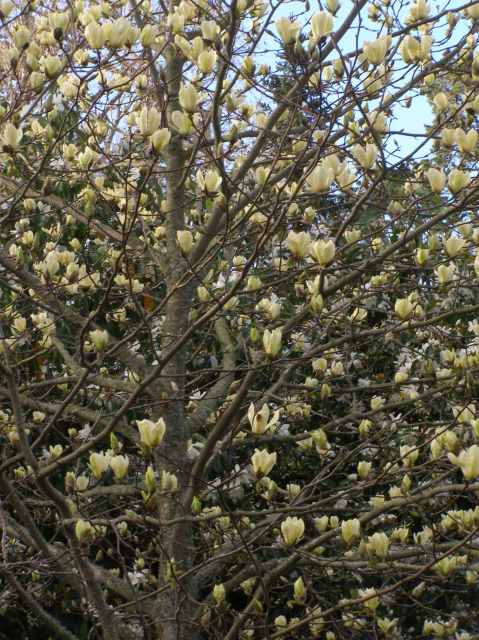
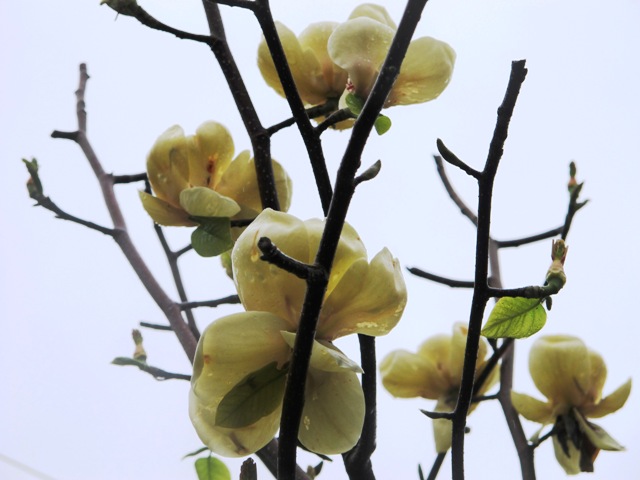
Magnolia ‘Yellow Fever’ on one of our road boundaries. I have never understood why anyone would choose that name

I remember talking to an American enthusiast about magnolias and it was a revelation as to different perceptions of plant hardiness. When we talked about hardiness in magnolias in our temperate climate, we measured things like vulnerability of the open flowers to frost or late storms. The timing of flowering mattered most to us. To the Americans, it was a matter of whether the bark split when the ground and trees froze in winter. That is next-level plant hardiness and they need plants that flower later in the season. Their yellow magnolia species is hardy in their winter cold.

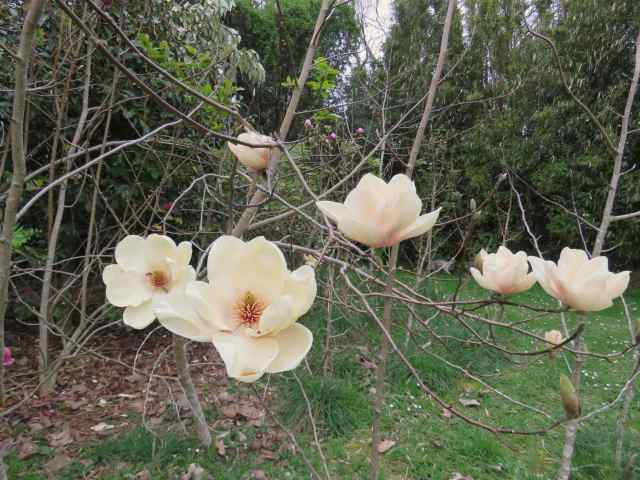
One of the early yellow hybrids – probably ‘Yellow Fever’ – in the magnolia dell at Pukekura Park
And a close-up to show the problem of smaller flowers getting engulfed by new foliage. Most of the first batch of yellow selections flower even later so the flowers get hidden more.

The problem with most of the yellow hybrids in our temperate conditions is that the flowers come out late, at the same time as the leaves, and get lost in the foliage. The trees also grow extremely quickly and become large. The early hybrids came from Brooklyn Botanic Gardens In New York. We started with ‘Elizabeth’ (flowered early enough to beat the foliage but cream, not yellow and small flowers), ‘Yellow Bird’ (best yellow but flowered with its foliage and the small flowers became lost to view), ‘Yellow Fever’ (paler yellow but its main flowering came before the new foliage swamped them from sight and it still puts on a good display, despite its small flowers) and ‘Sundance’ (just another small, pale yellow in a similar mould). To those we added ‘Koban Dori’ (reputedly like a dwarf M. acuminata but the bright yellow flowers disappear behind the lush new foliage), ‘Eva Maria’ (novelty flower in a mix of pink, yellow and green that looks striking viewed close up but simply murky as a landscape tree – the same can be said of ‘Woodsman’) and ‘Hot Flash’ (which we rate as one of the better options because it is a good strong colour and it largely flowers on bare wood for us).

Poor old ‘Hot Flash’ never even got out of the nursery. It has long since rooted through from its pot but at least we get to admire it in a prominent spot beside the driveway to the neighbours.

In the years since those early hybrids, there has been an explosion of new selections internationally. The size of blooms has increased a bit but most keep that upward pointed shape and, in our conditions, most flower with their new foliage . Many magnolia specialists agree that too many yellow hybrids have been named. We stopped collecting more because Mark started hybridising his own and none of the overseas hybrids seemed to shout out to us as ‘must-haves’.
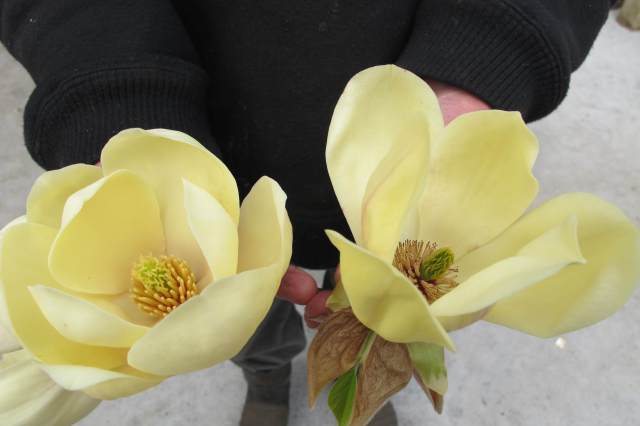
‘Honey Tulip’ on the left, ‘Hot Flash’ on the right
and ‘Honey Tulip’ on the left with ‘Sundance’ on the right

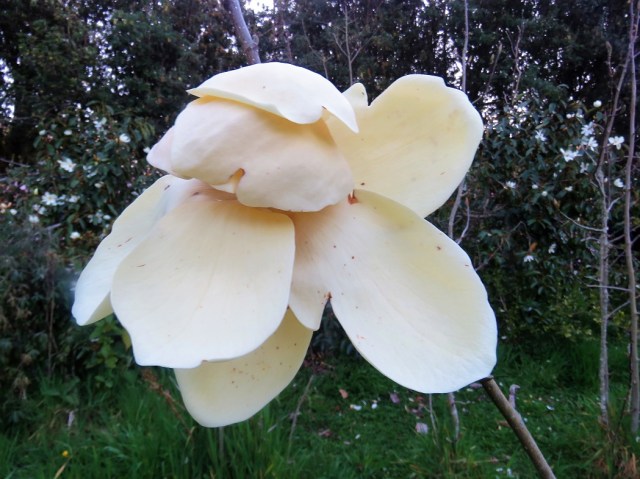
Mark’s ‘Honey Tulip’ is the only yellow he has named and he selected it for its cup shape – rounded petals, different to the more pointed shapes of other yellow hybrids – its reasonable flower size by yellow standards, smaller growth habit than the originating species and the fact that it flowers in abundance before the leaves appear. We have not regretted selecting it as it continues to go from strength to strength as the tree matures.
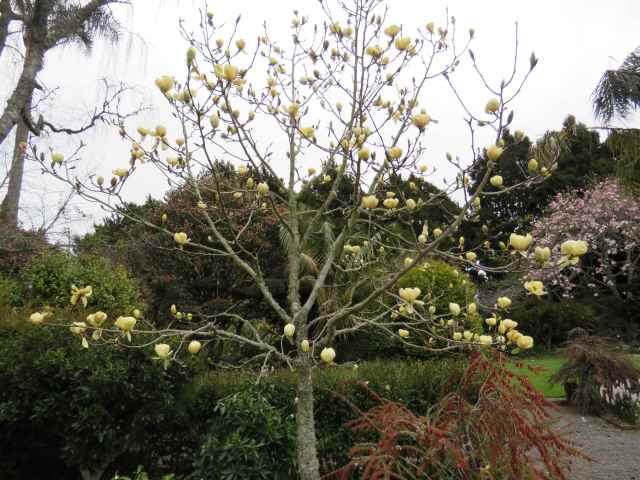
The original plant of ‘Honey Tulip’

But ‘Honey Tulip’ was a step on the way. Mark would have preferred a clearer yellow and his quest has always been to see if he could reach a big flower – something the size of an ‘Iolanthe’ bloom – in clear yellow with the cup and saucer form. As we edge past the peak blooming season for the Asiatic magnolias in red, white and pink, his yellow seedlings are all starting to bloom. The dream of a big, proper yellow ‘Iolanthe’ type bloom will likely take another generation or two of plant breeding and, sadly, he may be running out of time. But there is enough amongst the seedlings to see that it is possible. He has reached the size, the colour and the flower form – just not all on the same plant yet!

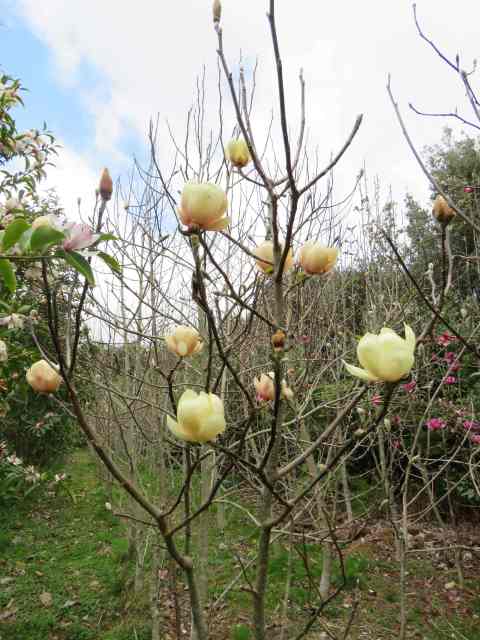
We are flowering a lot of next generation ‘Honey Tulip’ controlled crosses and most are ending up looking very like their dominant parent. Good colour but not good enough to name.
And again – a good plant but not good enough to name when we already have one
‘Big Flop’, as Mark calls this one. Getting there on size and overall flower form but the upper petals flop and it is not a good enough colour
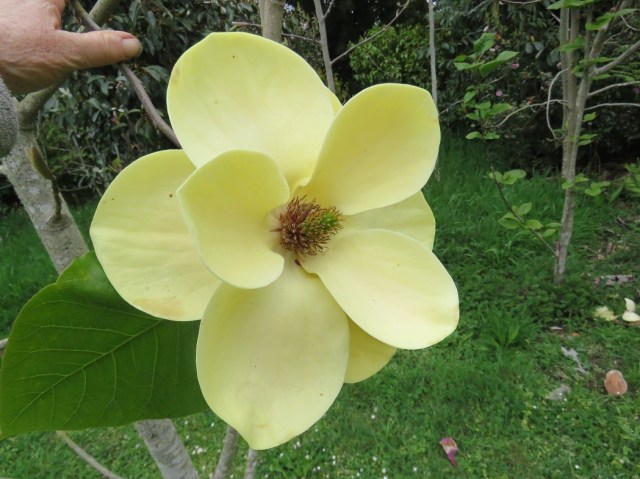
Good flower size and form but not there yet on colour – more cream than yellow
Good colour but not flower form
Getting closer but Mark hates the notched petals…
Good colour and flower size but the tree is growing way too large to even consider

Breeding magnolias is a numbers game, Mark will tell you. Amongst the several score of yellow seedlings, there are two that excite us. Neither are big yellow ‘Iolanthes’ but there is enough that is special about them to make us pick them as worth tracking for potential selection. I don’t share photos of ones that we think may be special, sorry. You only get to see them when we rule them out or when they are actually ready for release. In a world already overcrowded with yellow magnolia selections, we need to be very confident before we add one or two more.
The Yellow Magnolias and Honey Tulip

Honey Tulip - looking very good this week

Honey Tulip – looking very good this week

There is some relief here this week as our newest magnolia, Honey Tulip, is looking particularly good. It is always a bit nerve wracking releasing a new cultivar on the market and hoping we have it right.

We are still a little bemused by a communication from some random person when Honey Tulip was first shown in an overseas publication. I will have to paraphrase it because I must have deleted it in irritation at the time, but it said something along the lines of: “It is good that Mark Jury is discerning in the magnolias he names, but the world has enough yellow magnolias already….” It then proceeded to instruct my Mark on what he should be breeding for instead.

The international world of magnolias is pretty small, the number of international magnolia breeders even fewer. We know most of them by repute, if not personally. This email did not come from anyone we had heard of before. What was galling was that in the heady world of new magnolias, Honey Tulip represents a genuine step in flower form for the yellows.

Honey Tulip - a lucky break in flower form and performance

Honey Tulip – a lucky break in flower form and performance

The yellow magnolias descend from a single species and while most magnolias originate from parts of Asia, the yellow deciduous M. acuminata and the evergreen grandiflora magnolias are from USA. M. acuminata is from eastern USA up into southern Ontario in Canada. We can remember when it first came into this country maybe 25 years ago, along with four of the earliest yellow hybrids – Yellow Bird, Yellow Fever, Elizabeth and Koban Dori. They were a collector’s novelty. Who knew that magnolia flowers could be yellow?

It did not take that long to realise that the yellow magnolias were not quite like the big pink, red, purple and white ones. There are a few problems yet to be solved. M. acuminata itself grows very rapidly and very large which takes it beyond the size most gardens can accommodate. The flowers are small, very small by magnolia standards, though they have good fragrance. Mind you, it has to be a very strong scent to mean anything when the blooms are 20 metres up above.

However, the biggest problem with acuminata and most of the hybrids is that the flowers come so late in the season that they coincide with the new foliage which then hides them. We are of the opinion that the whole point of a deciduous magnolia is to have all those fat, furry buds exploding into a mass of blooms on a bare tree in late winter and early spring. So little flowers, no matter what colour, obscured by masses of fresh foliage, are not going to set the world on fire.

Magnolia Yellow Fever planted on our road boundary

Magnolia Yellow Fever planted on our road boundary

We have not kept buying the many new yellow hybrids that have come on the market. There is a limit to how much space we have and too many of them show the same flaws. In a large garden, the best performer we have seen so far remains the early American hybrid with the unfortunate name of Yellow Fever. It is not the strongest yellow but it does flower on bare wood and is a pretty primrose, unlike Elizabeth which is more cream.

There is yellow form of the Asian M. denudata but we have not heard of it being imported to this country yet and have not seen it in person. It is difficult to judge colour from the range of hues shown on the internet. A form called ‘Yellow River’ is being sold overseas but the nature of its breeding and origin is unclear. Certainly it came out of China and it has denudata origins but whether it is a yellow sport of that species, a natural hybrid or a controlled cross seems unclear. Even less clear is when or if it will become available in this country. Only time will tell whether international breeders get the jump on different yellow magnolias using denudata yellow, with or without acuminata.

For all these reasons, our Honey Tulip represented a significant breeding step. It flowers on bare wood, before the foliage. It does not appear that it is going to be of timber tree stature. The colour is a pretty butterscotch but the big breakthrough is the form. While not huge flowers, the tulip shaped blooms are larger than most other yellows – very similar in fact to a soft yellow form of Magnolia Black Tulip. It was also a lucky break because it was the only one of the plants from that particular cross that flowered in that form and colour.

The ultimate challenge is to get a pretty yellow Iolanthe with big cup and saucer flowers. Mark has about 20 years left in him to work towards this goal. I wonder then if the overseas critic who saw himself as an expert on yellow magnolias will concede that there is always room for improvement.

The ultimate breeding challenge - is a yellow Iolanthe even possible?

The ultimate breeding challenge – is a yellow Iolanthe even possible?

First published in the Waikato Times and reprinted here with their permission.