
 1) Some plants are difficult to propagate from cuttings, even more so for home gardeners without temperature and moisture controlled conditions. If you are not in a hurry, layering a plant can be a simple way of increasing numbers or of getting a back-up plant for rare or special material which may not be available for sale. This rhododendron has layered naturally where branches lie on the ground.
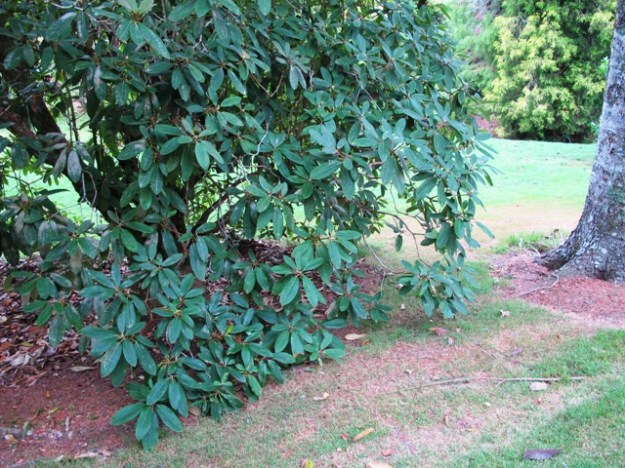 2) The plant needs to have low growing, flexible branches which reach to the ground. You may wish to try layering plants such as magnolias, rhododendrons, camellias, daphnes or conifers. Most woody plants can be layered over time but it is faster to do easily propagated plants like hydrangeas from cuttings.
 3) Select a firm branch or stem which can reach to the ground. It does not matter how old the wood is though young growths from last season may root faster. Remove the leaves from the middle if necessary. Slice a thin layer of bark off the lower side (called making a wound). You can paint the wound with rooting hormone if you have it, but this is not critical.
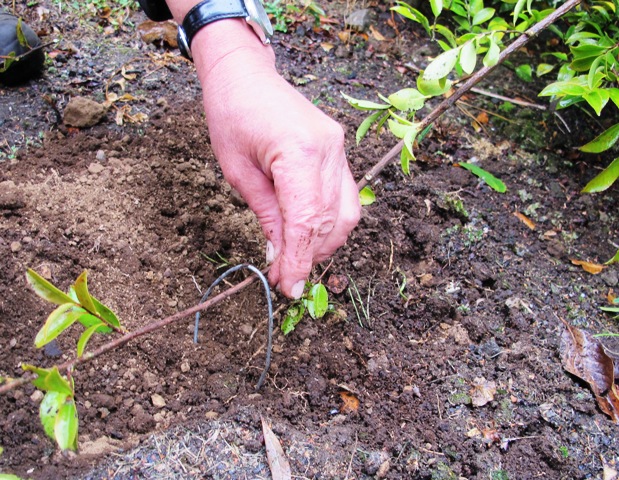 4) Cultivate a small area of ground beneath the branch or dig a small trench. Peg the branch down so the wound is in contact with the soil. A hoop of wire is ideal for this part of the process. Peg it firmly so it cannot move. Cover the pegged area with up to 10cm of soil. You want to prevent the layered stem from drying out. Leave the branch tip uncovered. Now be patient. It will take a year for easy material and maybe as long as three years for difficult to propagate plants such as many of the rhododendrons.
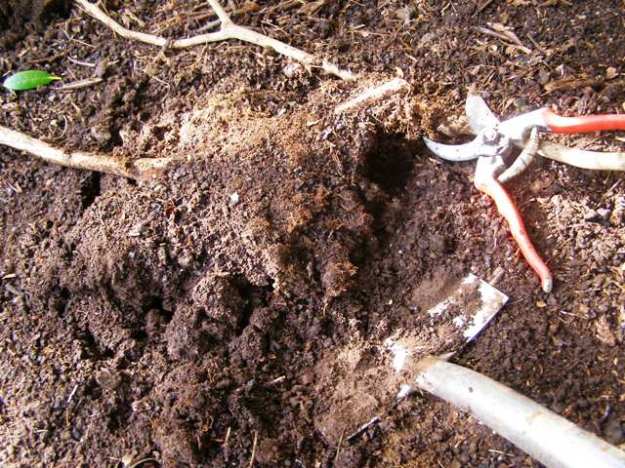 5) When the layer has formed a reasonable mass of roots, cut it from the parent plant (think of this as cutting the umbilical cord) and either let it grow a little longer where it is or move it to some well cultivated soil – the vegetable garden is often good – so you can take care of it while it develops into a more sturdy plant.
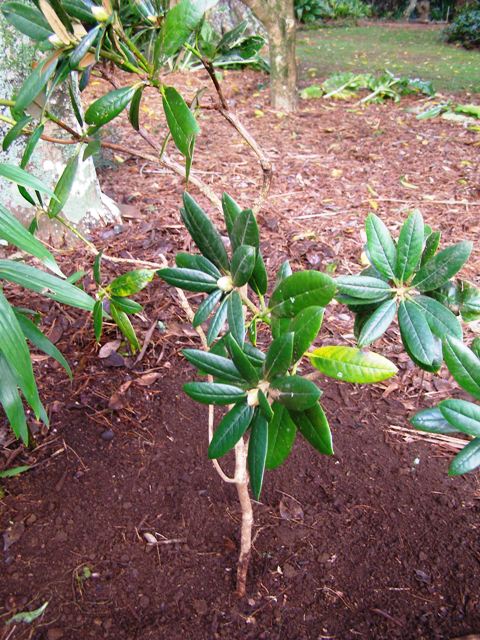 6) You will usually need to stake the plant to train it to grow upwards and to start developing a good shape although you can sometimes plant it on an angle to get the main leader almost vertical.
Tag Archives: Mark and Abbie Jury
Plant collector: Aurelian lilies
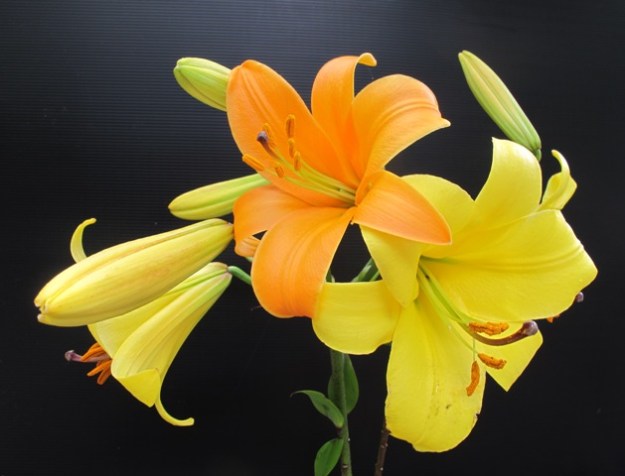
The lovely Aurelian lily hybrids
‘Tis the season of the Aurelian lilies. These are hybrids (so crosses of different species) and fall within the trumpet lily group. Their blooms are indeed shaped like trumpets which face outwards, often dropping a little with their weight. And sweetly scented, though not with the heady intensity of the auratum lilies which are just starting to open.
Aurelians are all hybrids of Lilium henryii. It is orange with reflexed petals (so they curve backwards) and no scent but it is a tough survivor. The original crosses were with Lilium sargentiae from China which is a trumpet species so brought in the flower form along with the fragrance. Now the Aurelians are pretty mixed in terms of breeding but typically flower in shades of yellow and apricot orange. Most will set seed so if you can’t find them to buy, you can at least raise seed if you know of somebody with them. These are seedlings Mark raised to build up numbers for the garden. It can take from 3 to 5 years for seed to reach flowering size.
Like most lilies, these bulbs like humus rich conditions and plenty of sun and moisture. They are quite tall – up to 180cm – so grow them amongst plants that you can prop the lily stems up against or they will need individual staking. Despite very sturdy stems, the weight of the flower heads pulls them over. The number of flowers per stem can vary from one (often an indication of weaker bulbs) up to full heads. The most I have counted is 18.
Aurelian was a Roman emperor and, of course, aureum means golden in Latin.
First published in the Waikato Times and reprinted here with their permission.
The answer truly lies in the soil
 Who has never complained about the absence of flavour in supermarket tomatoes, particularly when out of season? Almost without exception we laud the merits of homegrown produce as being much more flavourful, even more so if crops have been grown from heritage varieties. Very hipster these days. Many people believe that the flavour has been sacrificed in commercial crops in the quest for high production.
Things are never that black and white. For some years, we have been pondering the triggers for flavour. I cite my experience with tomatoes in Southern Italy. A taste treat beyond compare, so full of flavour were they. But it was only the first week of June so it wasn’t a hot, dry summer that determined the quality of the taste. Nor, indeed, was it the variety. In recent years there has been an explosion of heirloom or heritage seed varieties becoming available in this country. We have tried growing a fair number of different ones and, to be ruthlessly honest, while better than the wishy washy supermarket ones, they all fall well short of those I ate in Italy. That leaves the soil as the key variable.
The answer may indeed lie in the soil. Unfortunately the solution is not as simple as scattering fertiliser with added trace elements, which is the usual recommended treatment. We have taken good care of our soils here and believed that we made good, balanced compost to nourish them. I use the past tense – believed. Summer reading here is “The Intelligent Gardener” by Steve Soloman. That is to say, Mark is reading it and sharing the highlights as he goes. While some of the book drives him nuts, the underlying premises make a lot of sense. Our soils are almost certainly nowhere near as good as we thought.
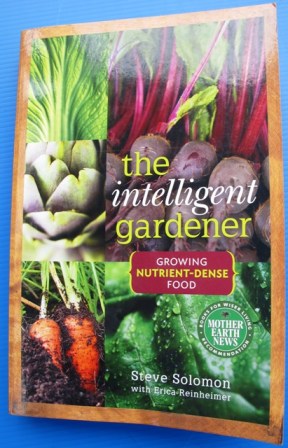
The subtitle of the book is “Growing Nutrient-Dense Food”. Nutrient density has been hovering on the periphery of our lives ever since Kay Baxter started writing about it. It is the principle that you can have two apparently similar crops but one has a much higher nutritional value than the other. Kay Baxter is the leading light of the Koanga Institute and a true pioneer of organics and the preservation of heirloom and heritage varieties in this country. She advocates the use of Brix measures to determine nutrient density. Brix are commonly used in the wine industry to measure sugar content.
It may be something of a leap to link flavour to nutrient density, but it seems logical that there may well be such a link and certainly both go back to the nature of the soil.
As a country, New Zealand has some widely recognised soil deficiencies. Insufficient naturally-occurring iodine is why we have iodised salt in this country. Prior to that, goitre was very common in humans and indeed in animals. “Bush sickness” is a widely recognised problem attributable to cobalt deficiencies on pumice soils. Selenium is deficient. At the risk of treading on sensitive ground in the Waikato, I understand that the trace element fluorine is deficient in NZ which is a major contributor to why New Zealanders have long been renowned for poor teeth. According to my father, who was a medico in the British army in WW2, they could pick the NZ soldiers at time of autopsy because most had false teeth. Correspondingly, pre-dental bleaching, all those beaming white toothy smiles of many Americans were apparently attributable to higher levels of naturally occurring fluorine.
If you are really keen on running a closed system of food production with no external inputs, it matters a great deal that you understand the exact composition of your soils in considerable detail. Even then, it is not as simple as topping up a certain element because there are reactions and inhibitors which can affect the ability of soils to incorporate additions. But most of us get our food from a variety of sources, which means deficiencies don’t usually have dire effects on human health because there is a degree of balancing out which occurs.
Mark is planning to delve further into the exact compositions of our soils. We are interested to see whether better balanced soils will give us better flavoured food. We will be watching to see if the link between flavour and nutrient density is proven. Certainly, it is disconcerting to have our existing notions about the quality of our soil and compost turned upside down. But this is not a once over lightly project which will appeal to all gardeners.
If you want to know more, the Koanga website is: http://koanga.org.nz/ The book referred to is “The Intelligent Gardener” by Steve Soloman. (New Society Publishers; ISBN:978 0 86571 718 3). Elder daughter purchased it for her father from the bookshop of Canberra Botanic Gardens. In this country, you may need to order it, in which case the ISBN number is important.
First published in the Waikato Times and reprinted here with their permission.
New Year’s Gardening Resolutions for 2014
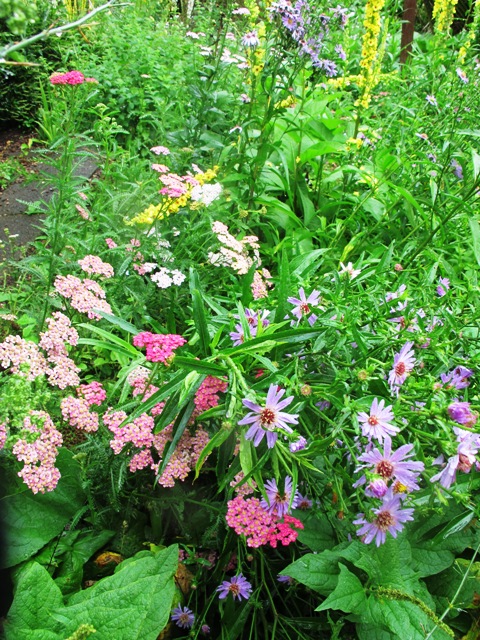
Plant food for the bees. Collectively, gardeners can make a difference
I failed on the Christmas-themed column. I am not big on poinsettias and I couldn’t think of anything new to say about Christmas trees. But New Year’s resolutions – these are different. If you are making garden resolutions, you may like to consider some of the following.
Lawns are a shocker when it comes to good environmental practice. There is nothing sustainable and healthy about most lawns but the vast majority of us have them for a variety of reasons. Don’t make the mistake of thinking that if you cut your lawn really short, it will mean you have to mow it less often. Not true. You stress the grass and open it up to weed invasions. Set the level on the lawnmower a little higher to keep a green sward. Good lawns invariably have longer grass.
Next time you buy a lawnmower, choose one that mulches the clippings. That way you don’t have to remove the clippings to get a tidy finish and if you are not removing the grass, then you don’t need to feed the lawn to keep it looking healthy. It reduces your inputs and therefore reduces both time and cost.
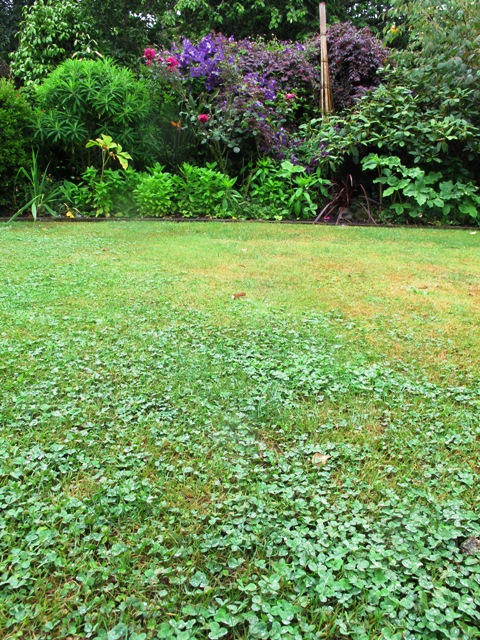
We are encouraging clover back into our lawns. It stays green, doesn’t need mowing as often and feeds the bees
Be cautious about lawn sprays and read the label information carefully. We are not fans of lawn sprays at all here. Year in and year out, we field enquiries about plant damage which is attributable to spray drift from lawn sprays. If you are using a spray which has a six month withholding period before it is safe to use on food crops (and that is common), you may want to think again about how environmentally sound is your gardening practice. Putting it through the compost process will not make the clippings safe for use. It might even be time to move on from the Chemical Ali generation. We are going back to encouraging the clover here. It used to be popular in days gone by and it has many merits.
Mulch. Mulch well, but only after the soil is wet through. If you lay mulch on top of dry soil, it stays drier longer. The rains this week may have been a reprieve for those who missed getting mulch laid in spring. If you lay the mulch on top of relatively weed-free soils, it will save you a lot of work later because it should suppress many of the germinating weed seeds that lurk in all our soils.
While on the subject of weeds, if they really worry you (and they do worry most of us even though, as the old saying goes, a weed is merely a plant in the wrong place), remember the old adage that one year’s seeding gives rise to seven year’s weeding. It is best to weed before the plant sets seed if you want to save yourself work down the track. If you weed with the push hoe, you need to remove seed heads that have formed already. You can leave the rest of the plant to wither in the sun but the seed heads will just continue to ripen and then germinate.
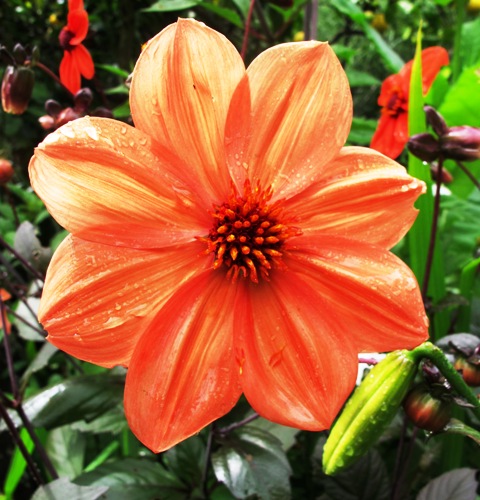
Single flowers with visible pollen and stamens feed the bees and indeed the butterflies
Grow plants with flowers for the bees. This means any flowers with visible stamens and pollen. We all know the bees are under deep stress, here in New Zealand as well as the rest of the world. We need the bees for pollination even more than honey. Every gardener’s contribution counts and collectively, we can make a difference to their food supplies. Fortunately, most of us have moved on from the austerity of the 1990s minimalist garden which contributed a big fat zero to the natural environment.
I am of the view that gardening should be two things above all else. It should be a pleasure. At its best, it can make your heart sing at the beauty. At a more mundane level, it can be quietly satisfying. If you get neither pleasure nor satisfaction from your garden, if it is all a great, big, tedious chore then review what you have and what you are doing.
If you really don’t enjoy gardening, then keep it very simple. It is much easier to maintain, especially if you can’t afford to pay someone to come and do it for you. If all you have to do is maintain edges, sweep paved areas, mow the lawns and do a seasonal round of tightly defined garden beds in order to keep it looking tidy, then it becomes more manageable for the reluctant gardener. Alternatively, move to an upper floor apartment.
Secondly, I think we should be gardening WITH nature, not in spite of it. Gardening shouldn’t be about imposing human will over nature, controlling and suppressing it, establishing dominance. Too much gardening practice is an imposition on the landscape, a battle with nature. Happy gardeners are often those who have managed to carve out a more constructive relationship with the natural world.
On which note, I wish readers a happy gardening year in 2014.
First published in the Waikato Times and reprinted here with their permission.
Garden Lore
“I wish the sky would rain down roses, as they rain down from the shaken bush. They would fall don light as feathers, smelling sweet, and it would be like sleeping and yet waking, all at once.”
George Eliot (1819 – 1880).
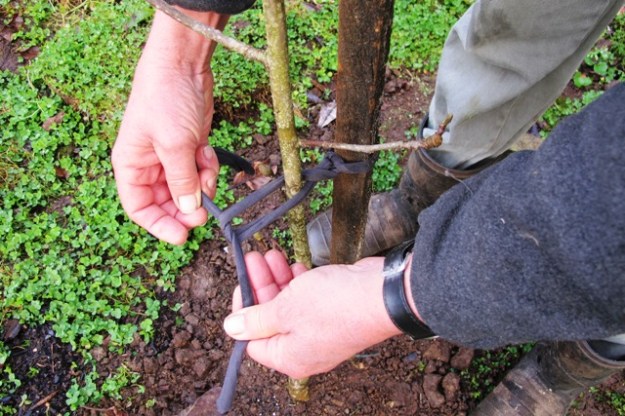 Staking trees
Staking trees and shrubs is often done so badly that it does more damage than good. If you have to stake a plant to keep it upright, don’t force the stake in as close to the trunk as you can get it. This sheers off all the roots in the wedge radiating out from that point. Even moving the stake out a few centimetres can make a big difference to the damage caused.
Keeping trees staked can do more harm than good. A bit of wind rock actually helps the plant to stabilise itself and to develop a tapered trunk as a result. Where you need to stake because it will fall over, keep the stakes low. They should not be more than a third of the existing height of the plant. If you still have a problem with stability, reduce the canopy bulk (called the “sail” area because this is what catches the wind). It is likely that you have a plant with too much top and not enough of a root system to sustain it.
Always use flexible ties of stockinette, old panty hose, strips of rubber from an old inner tube or similar. String and wire will cut into the trunk causing damage and potentially ringbarking it.
The bottom line remains: only stake if you really need to, not as a matter of course. It is actually better for the plant in the long term not to be staked.
First published in the Waikato Times and reprinted here with their permission.
 Tikorangi The Jury Garden