More Tikorangi tui – in Prunus Te Mara this week

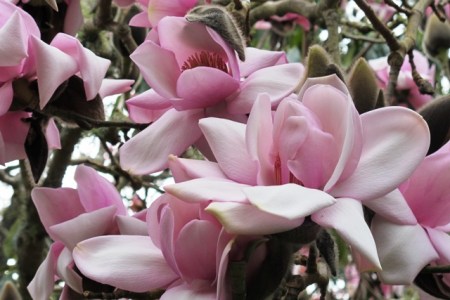
Magnolia Mark Jury – what else could it be?
Three years ago, I charted the magnolia flowering season here in a Magnolia Diary. Just posted is an update explaining why, despite raising hundreds of different magnolias over a period of 60 years here, we have only ever named eleven – eight of Felix Jury’s breeding and three of Mark’s (with a fourth in the pipeline). In the meantime, our magnolia display here goees from strength to strength, with both named varieties (our own, and others) and also-rans from the breeding programme.
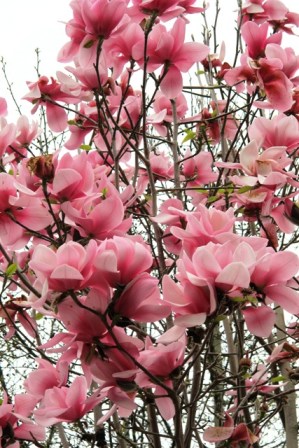
Sweetheart is not one of ours, though we would be happy if it was
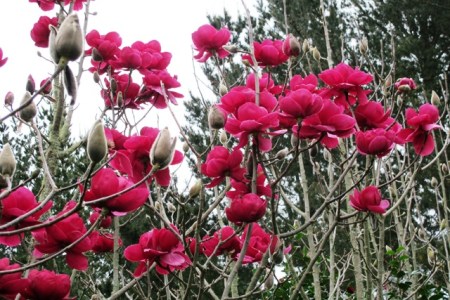
It might as well be Felix, but it’s not
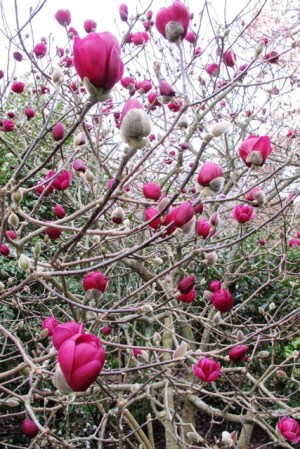
Baby Tulip – a small version of Black Tulip
Magnolia time. Many are surprised to hear that Felix Jury only ever named eight magnolias. Mark has only named and released three so far (with a fourth in the pipeline) despite raising and trialling hundreds. Why so few? We are picky. With the benefit of hindsight, we would probably have released only seven of Felix’s eight. Atlas was named for flower size but really is not up to the quality of the others in terms of long term performance.
We can do plenty of ring-ins, generic copies, slight improvements or variations. But while roses and camellias are like buses (there will be another one along in a few minutes), we see magnolias as being for the long haul. They are nowhere near as easily hiffed out and replaced and most people can only fit one or two into their garden. To name something new means it must be a breakthrough, a major improvement on what is already available. It takes years to trial and select a new magnolia and we like to be very confident with our releases. We took another walk around this afternoon, looking at the lookalikes. At this early to mid season stage, it is still the stronger colours that dominate. I will update as the pales and whites come into full bloom.
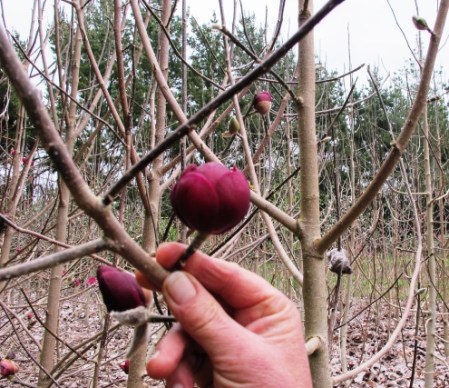
Or how about Bambino Tulip?
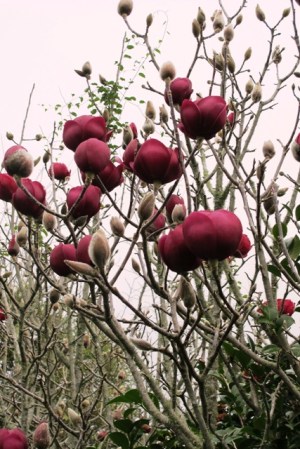
It’s not Black Tulip, but it might as well be
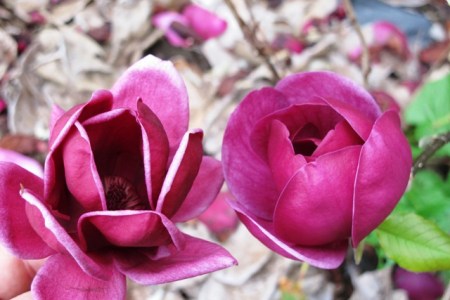
Genie to the left, our seedling to the right

Ruby
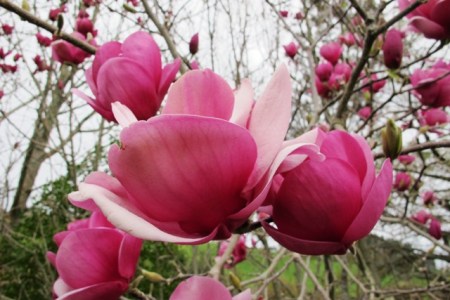
Our equivalent of Ruby
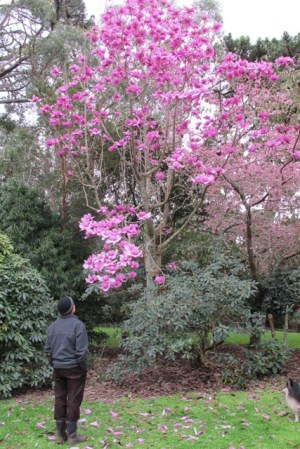
Lanarth sets the standard. Is this significantly better? Probably not.
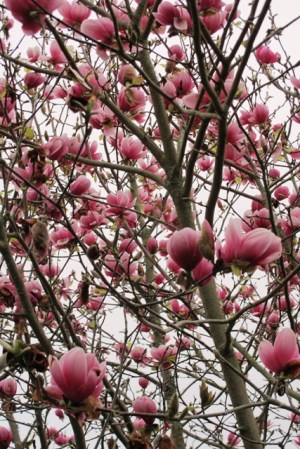
Plenty of generic soulangeanas here
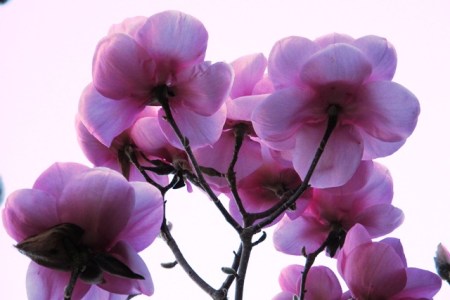
Too much like Iolanthe

But maybe there is a future in patio magnolias?
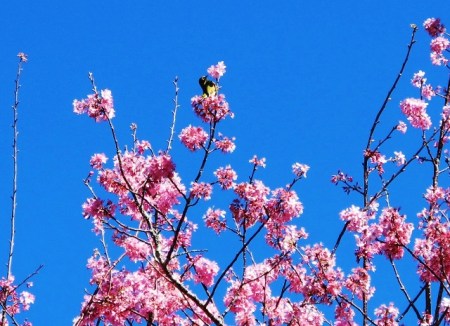
Perched on the very top – the dainty silvereye or tauhou
Fifty eight seconds of video, captured with much delight and good fortune, of kereru feeding on plum blossom. The colours of a Tikorangi springtime.
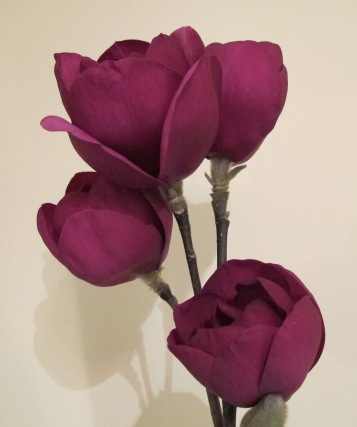
Magnolia Black Tulip
Somewhat slowed down by a bout of flu and heavy cold this week (the last time this happened would be over a decade ago), I have spent some time photographing birds and magnolias this week. Still tui in abundance, but also kereru, waxeyes (syn. silveryeyes or tauhou) and even the elusive bellbird, all feeding at the same time from Prunus Mimosa. The tui usually chase the bellbirds away. This must surely be one of the most beautiful times of the year here. If you use Facebook, *liking* our garden page will see the magnolia updates arriving on your news feed.
The garden is now open daily. No appointment is necessary. If we are not around, there is an honesty box.
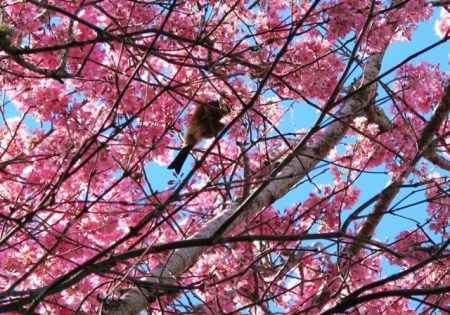
The shy bellbird or korimako
The fair-weather gardener, who will do nothing except when the wind and weather and everything else are favourable, is never master of his craft.
Canon Henry Ellacombe (1822 -1916)
Feeding Plants
In climates subject to relatively high rainfall and torrential downpours, the timing of feeding plants is more important. All that precipitation leaches the soil and washes away fertiliser. Plants can only take up fertiliser when they are in growth so the optimum feeding time is spring. If you feed when they are dormant (and winter planting instructions usually include adding fertiliser in some form or other to the planting hole), much of the goodness will have washed away before the plant is ever ready to take it up. The soil does not store nitrogen readily.
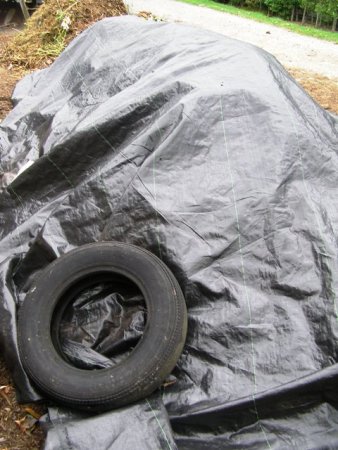
For the same reason, it is really important to cover compost heaps in wet climates to stop the goodness leaching out with the run-off.
Published in the Waikato Times and reprinted here with their permission.
 Tikorangi The Jury Garden