Tag Archives: Mark and Abbie Jury

Tikorangi Diary, Friday 18 May, 2012

Latest posts: Friday 18 May, 2012.
A mere three new posts this week.

1) Cyclamen purpurascens – one of the most rewarding of the species cyclamen in our garden.

2) Differing shades and grades of organic purity in gardening. Like being a part-time vegetarian here.

3) Grow it yourself – aubergines (if you can – there are easier crops to grow and timing is everything).

Tikorangi Notes; Friday 18 May, 2012

Back in summer, I wrote about my battle with the water weeds. Now it is time to own up and say that when I reached the first of the ponds, I retired. Mark has persevered and has now reached the point where he has all the sludge now accumulated in the lower large pond. It has reached the point where he needs to hire the sludge pump to finish the job once and for all – or rather once in a decade or maybe slightly longer.

Narcissus bulbocodium citrinus "Pandora" - the first in flower this season

Narcissus bulbocodium citrinus “Pandora” – the first in flower this season

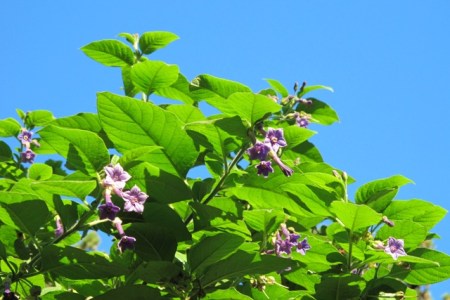
At least we are both back into the garden though it was pretty disappointing when the magic autumn weather staged an exit this week and the temperature dropped. Writing and publishing garden advice and thoughts every week is an exercise in keeping us focussed but it doesn’t always mean we get around to following our own advice. This can make us feel a bit of a fraud at times. The hellebores still need to be cut down (getting urgent), the major project in the rose garden has yet to be started and Mark’s vegetable garden is severely under producing at the moment – though we should be able to hold famine at bay with potatoes and dried beans. But at least we are enjoying the autumn flowering of the massive evergreen tree hydrangea is in flower, looking decidedly impressive (pictured above). The earliest of the narcissi, N. bulbocodium citrinus “Pandora” is coming into flower. Before we know it, June will be upon us and the magnolia buds will be fattening.

Tikorangi Notes: Friday 11 May, 2012

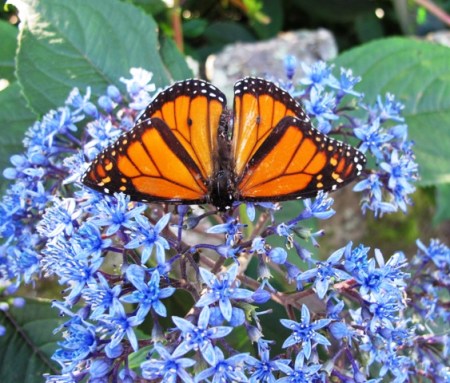
Monarch butterfly on Dichroa versicolour

Monarch butterfly on Dichroa versicolour

1) Garden diary – in praise of cheering pink sasanquas and being grateful for living in a mild climate.
2) Step by step instructions on how to prune raspberries – Outdoor Classroom revisited.
3) Passing the sniff test – fragrant and scented plants.
4) Metasequoia glyptostroboides Such a difficult name for a magnificent tree. It is no wonder it is oft referred to as the dawn redwood (a living fossil).
5) Grow it Yourself – cape gooseberries or, more correctly, Physalis peruviana.
6) Nothing to do with gardening, but there are new reviews on my book site (http://www.runningfurs.com) including three cookbooks – Jax Cooks, Dulcie May Kitchen and Nadia’s Kitchen – and assorted children’s picture books including a couple of exceptionally good ones.

I have an admission to make – the monarch butterfly was in fact dead. They’re easier to photograph that way and we have an alarmingly low number of live monarchs this year (blame the wet and cold summer – more on that topic later). There were not enough fluttering around for me to snap with the camera. In fact we still have an abundance of swan plants which are now interplanted with stinging nettle. Why stinging nettle? Because we are besotted with butterflies and we won’t get the beautiful red and yellow admirals in the garden unless we have their host food which, unfortunately, is stinging nettle.

Outdoor Classroom: pruning raspberries, step by step


OLYMPUS DIGITAL CAMERA

1) The timing of pruning raspberries is not critical as long as it happens before they come into growth in early spring. In fact it is widely recommended that you start taking out spent canes as soon as they have finished fruiting in summer (or in autumn for the twice fruiting varieties) but it is far easier when they have lost their leaves and you can see what you are doing. In our experience, it does not matter if we leave it until winter because it does not seem to affect fruiting or plant vigour.


OLYMPUS DIGITAL CAMERA

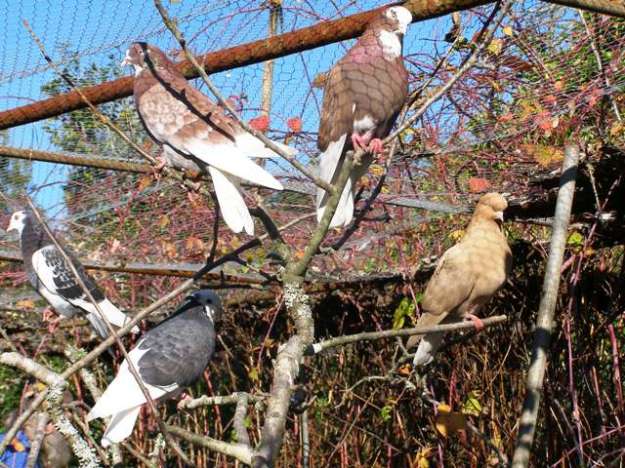
2) We grow our raspberries in a netted cage which is currently home to the new pigeons who are undergoing six weeks of acclimatisation before release. The pigeons were less than impressed at our intrusion.


OLYMPUS DIGITAL CAMERA3) Strong gloves are recommended, along with sharp secateurs.


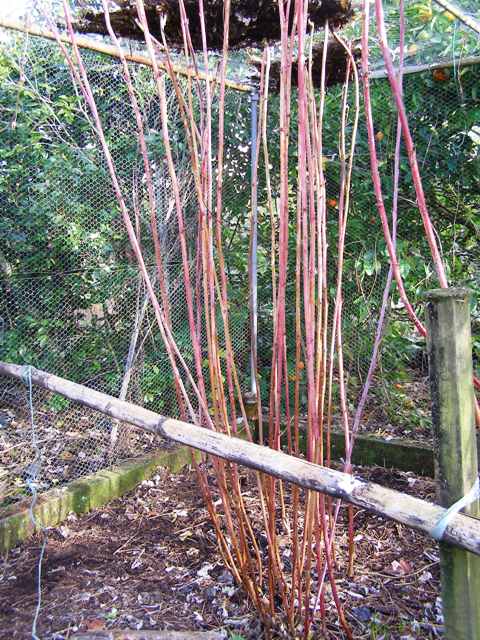
OLYMPUS DIGITAL CAMERA4) This season’s new canes which will bear fruit next summer are red. The old canes, which are dying off, are brown and dry. Remove all old canes from the base of the plant. Thin out any weak new canes.
 

OLYMPUS DIGITAL CAMERA

5) Shorten the new season’s canes to a manageable length around 150 to 180cm. Dig out any suckers which are in the wrong place.

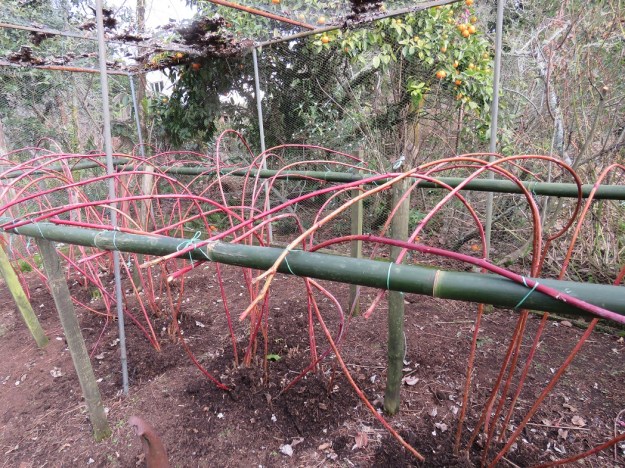
IMG_00316) Alternatively, hoop the canes over and tie them to a frame as shown here. This is now my preferred approach. While it takes a little more time, it keeps the rampant canes under better control, increases the fruit set down the stem and makes picking very much easier. I then feed each clump with a generous helping of compost.


OLYMPUS DIGITAL CAMERA6) The prunings need to be burned or disposed of. We clip them to manageable lengths and gather them in a wool bale for convenience. You can’t compost prickly old stems. Town dwellers may like to dry them and then burn them on a woodfire or put them out with the rubbish. Ours will go on the burning heap.

Tikorangi Notes: Friday May 4, 2012

Autumn crocus - real ones

Autumn crocus – real ones

Latest posts:
1) An example of really bad naming (from a PR point of view) – Vireya rhododendron “Satan’s Gift” in Plant Collector this week.

2) Stop moaning – the weather here is not at all bad, even in the depths of winter (comparatively speaking). At least we don’t need to wrap our echiums up in individual sleeping bags.

3) Grow it yourself this week is on pumpkins (if you have the space).

4) Episode two of the serialised history of the Jury plants, as published in the RHS Yearbook for the rhododendron, camellia and magnolia group. It is on the vireyas this year (it was rhododendrons last year and will be camellias next year).

5) A slightly aggrieved post on naked ladies, autumn crocus and so-called autumn crocus (colchicums and sternbergia) and why sternbergia are no more accurately called autumn crocus than colchicums…. (We aim for accuracy here).

Being thankful for gardening in a benign climate

We tend to take it for granted that our gardens are green and lush all year round

We tend to take it for granted that our gardens are green and lush all year round

As the days get shorter and the nights get colder, it is easy to lose sight of quite how benign our climate really is. There is a tendency to take our bright, clear light for granted and the fact that we can sit outside for morning coffee all year round on sunny days comes as a surprise to those from harsher climates. Of course it means we have to keep mowing the lawns, though the interval between cuts will stretch.

True, down the southern half of the South Island, it is cold enough to stop growth (and therefore stop mowing lawns in winter) but at least they keep the bright light which is a hallmark of both this country and Australia. I recall visiting London one December. Quite aside from the fact that darkness fell soon after 3.00pm, when the sun did struggle above the horizon, it was a poor watery thing. On that visit, we headed out to Leeds Castle which has a notable garden designed by famous English gardener, Russell Page. It had been put to bed for winter. Literally. There was only the formal structure to see. Beds were smothered in straw to protect the plants below. Some plants were wrapped up in their own padded sleeping bags – layers of straw, sacking and insulating material and that was just for echiums which are clearly prized a great deal more there than here. It is altogether a different way of gardening.

Autumn cheer in the earliest azalea flowers

Autumn cheer in the earliest azalea flowers

Here we may moan about miserable winter days, whinge about winter wind and stress over storms (enough alliteration!), but the bottom line is that we are green and verdant with flowers all year round. For most of us, temperatures are high enough to be out in the garden in fine weather, even in June and July. Autumn is recommended as the very best planting time for trees and shrubs because it gives plants a chance to settle in over winter and start getting their roots out before the spring flush. Similarly, many perennials can be dug and divided throughout winter. In cold climates, this is a spring and summer activity only because the plants can rot out when dormant in their cold conditions. The timing of pruning is a great deal more critical in colder climates. This applies to deciduous plants like roses, hydrangeas, wisterias, as well as evergreens such as hedges. Pruning can force plants into growth and, when carried out too early, the tender new growth gets burned off by frost and cold.

In cold climates where you only get to view your garden through the window in winter, design, shape and form become all because that is all you see. Most cold climate gardens have a large quantity of deciduous plants, punctuated by a few hardy evergreens such as buxus, conifers, or laurels. Even if the design is good and strong, it can be a bit bleak.

But unless you live in a really cold winter location by our standards (National Park, Ohakune or the like), it is reasonable to expect to look around your garden and see flowers and fresh foliage for twelve months of the year. Sure you may get frosts. Anywhere more than five kilometres from the coast can expect frosts, even in Northland. But we can still grow winter flowering plants.

The gordonias are opening. This is an unidentified Vietnamese species

The gordonias are opening. This is an unidentified Vietnamese species

The sasanqua camellias are opening now and will take us into winter when the early flowering japonicas open. Early season evergreen azaleas are flowering. I see flowers on the gordonias. These look like big, white camellias on steroids but they are only very distant relatives. The first of the luculias is in flower and we always have sub tropical vireya rhododendrons blooming, no matter what the season. These last two plant types are more problematic if you have hard frosts, but in favoured positions or closer to the coast, they are a delight. In the depths of winter, the Magnolia campbellii, michelias and rhododendrons will be opening. None of these flowering trees and shrubs are particularly viable in cold climates. Even the utility camellia can be hard to grow in colder parts of Britain.

There are plenty of autumn bulbs still in flower. Hot on their heels are the winter bulbs, already rocketing through the ground and some showing the first flowers. The earliest narcissi are opening. Most of the dwarf and miniature types flower much earlier than the classic daffodils. In so doing, we find they are less susceptible to narcissi fly which lays its eggs in the crowns of bulbs later in the springtime. Narcissus bulbocodium citrinus “Pandora”, the pale lemon hooped petticoat type, has its first flowers out. The peak display of our dwarf collection is in the depths of winter. The earliest of the lachenalias will be opening soon. The first to flower here is the easy to grow red L. bulbifera which has naturalised happily around tree trunks.

In some places, our common NZ pongas are so highly prized, they are lifted from the garden and moved under cover for winter. True. I have seen it done in the north of Italy. It really does seem churlish to complain about colder seasons here.

First published in the Waikato Times and reprinted here with their permission.