Tag Archives: Mark and Abbie Jury

Plant Collector: Ulmus elegantissima “Jacqueline Hillier”

Ulmus (should that be elegantissima, minor or x hollandica?) "Jacqueline Hillier"

Ulmus (should that be elegantissima, minor or x hollandica?) "Jacqueline Hillier"

It’s an elm but from there on there seems to be some debate. We received it under the species classification of elegantissima. The Hillier Manual of Trees and Shrubs lists it under the species name of minor with elegantissima added as a synonym. A quick net search and I see others now list it as Ulmus x hollandica which is a natural hybrid of minor and glabra. In other words, nobody knows for certain so we will stick with Hillier’s own classification.

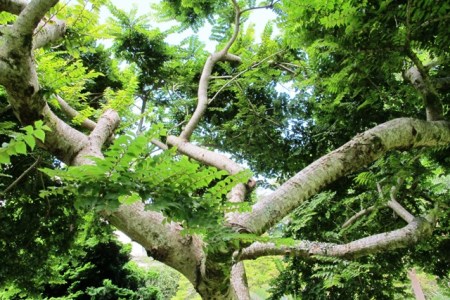
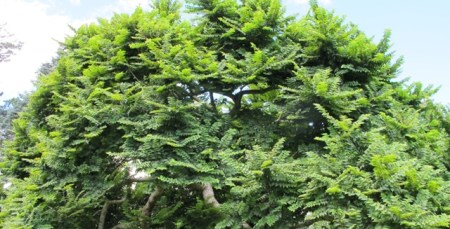
The reason nobody knows for certain is that it was found in a garden in Birmingham in the early 1960s and it was visibly different. Most elms are renowned as handsome, large trees, though they have suffered hugely in the UK and Europe since the 1970s from a major outbreak of Dutch Elm disease which kills them. “Jacqueline Hillier” is smaller growing. In fact it came to us under the descriptor of dwarf. It has tiny, sawtooth leaves and very fine tracery of branch structure whereby the leaves are held in fan shapes. This means it is extremely attractive when it is a bare skeleton in winter. It is delightful when flushed with bright spring growth and it is lovely and lush in summer until the predations of the red spider sometimes defoliate it.

Dwarf it is not. I planted a specimen in our rockery where it set out to prove it belongs to the large shrub category. We have to keep working on it extensively every year to keep it down to about 3 metres x 3 metres. It also seeds and suckers but not in a dangerous way. Had I realised it would grow to that size, I would have planted it somewhere with more space – but I would definitely still have planted it.

First published in the Waikato Times and reprinted here with their permission.
Grow it yourself: spinach

Silver beet and spinach are close relatives. Indeed, somebody very close to me claims they taste the same when cooked, which I can’t argue against because it is so long since I have eaten the former. Texturally, I much prefer the finer, softer leaves of spinach and will happily eat those. Spinach is a winter vegetable. It will continue growing in colder temperatures but as soon as the weather warms in spring, it will bolt to seed. It is not quite as amenable as silver beet to grow and while you can leave plants in the ground and just pick as much as you need, it does not have the same cut and come again characteristics.

Well cultivated, well drained soil rich in nitrogenous fertiliser and full sun are the keys. Spinach is usually direct sown from seed and most of us now know to pick the thinnings and eat them as micro greens in salads or stir fries. The final spacing is in the 10cm range. In the right conditions, it is a quick crop because it will mature within a couple of months and you may have been eating immature leaves all that time. Some gardeners like to sow successive crops every few weeks to ensure continued supply.

There are a number of different spinach varieties, including New Zealand spinach or kokihi which is a different plant altogether (though similar taste and texture) and is our one great contribution to the global world of vegetables. While most spinach are spinacia, it is Tetragonia expansa. We recommend shunning the heirloom strawberry spinach (Chenopodium foliosum), being of the opinion that the reason it has been around for over 400 years is because it seeds so freely it is nigh on impossible to eradicate once you have it. The leaves are pleasant enough but the so-called strawberry seed heads are not.

First published in the Waikato Times and reproduced here with their permission.

Tikorangi Notes: Friday 3 February, 2012

Our pregnant gecko, Glenys, is back in view

Our pregnant gecko, Glenys, is back in view

Latest posts: Friday 3 February, 2012

1) The battle with the water weeds in Abbie’s column this week.

2) One for the dendrologists in Plant Collector this week – Pinus montezumae. It takes a bit to convince most New Zealanders that any pine tree is capable of being special but garden visitors do single our specimen of P.montezumae as being a tree out of the ordinary realm of the common pine.

3) Grow it yourself – silver beet. Some people are even alleged to enjoy eating this iron-rich but utility vegetable.

4) Welcome back Glenys, our highly prized but rather shy resident gecko. We are terribly excited by the evidence that we have a population of gecko in our garden, though that excitement does not appear to have been widely shared by others! But in this country, the small skinks are a common sight whereas our native gecko is nocturnal, elusive and rarely seen.

5) Check out the lily photo album I am building on our Facebook garden page. If you feel inclined to “like” the whole Facebook page, it would be most gratifying. Our popularity on Facebook lags behind the visitor numbers to our websites, and even the subscribers. This may of course just indicate that gardeners are less inclined to use social networks.

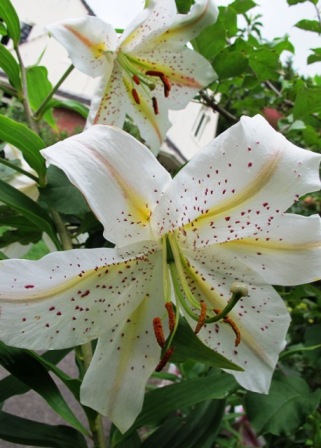
The auratum lily season is late this year, but no less spectacular for its delay

The auratum lily season is late this year, but no less spectacular for its delay

Tikorangi Notes: Friday 3 February, 2012

Oh summer, where art thou? Even the auratum lilies seem to be waiting for some real summer heat before opening fully in all their glory. This may go down in history as one of the coolest summers in recent history. On the bright side, the garden is very lush and green and working conditions are not unpleasantly hot. In fact, for Lloyd and I cleaning out the ponds and stream in our park, working conditions have been very pleasant. I just like a little searing heat to justify the fact we have a swimming pool. It has had precious little use so far this year.

Mark is very excited to see the blandfordia coming into flower. I have tried to photograph it but even by our standards, it is still looking a little too modest to boast about. It may look more notable when additional buds open. The reason for our excitement is that it was planted in the rockery by Felix Jury and as Felix died in 1997, it means it has been there for quite a long time and not doing very much. In fact, in all those years, it has only flowered twice before. Its third flowering is cause to celebrate.

Our Lloyd makes a prettier sight than I do when it comes to weeding the pond

Our Lloyd makes a prettier sight than I do when it comes to weeding the pond

Tikorangi Notes; Friday 27 January, 2012

Crocosmia hybrids

Crocosmia hybrids

Latest posts: Friday 27 January, 2012
1) No amount of wishful thinking can alter the fact that we do not in fact have a Mediterranean climate here and romantic recreations of the glam of Med holidays are likely doomed to disaster. Abbie’s column.
2) A big, beautiful, fragrant rhododendron flowering in mid to late January? R. diaprepes in Plant Collector this week (but don’t expect to find this one offered for sale at your local plant store).
3) Grow it Yourself – broccoli. Personally I prefer not to. I have tried repeatedly over many years to learn to love broccoli and have met with dismal failure but others are more enthusiastic and it is fearfully good for you.
4) The latest instalment of our fortnightly garden diary as published first in the Weekend Gardener – dealing with prickly onehunga weed without resorting to lawn sprays and other garden matters.

The sad state of Camellia chyrsantha

The sad state of Camellia chyrsantha

Tikorangi Notes; Friday 27 January, 2012

It was only last year that I featured one of the best flowerings we have had on Camellia chyrsantha (it of the butter yellow flowers – bright New Zealand butter at that). It only took a decade or two to start performing well. Alas, it came off second best to the rapid descent of a massive old pear tree last week. The trouble is that it is a grafted plant and the trunk has been split. We are hoping it may still recover and live to bloom again. We can take the long view and wait another decade, if need be.

I have been photographing the different bulbs flowering this month. We were worried we had lost the yellow-orange form of crocosmia but it has leapt into flower and is remarkably showy with very large blooms. The red form (the one above is a hybrid called Lucifer) is such a strong grower that the chances of losing it are negligible, which means we take it completely for granted. Indeed, red crocosmia is a widespread roadside flower regarded as an invasive weed and known as montbretia in our area. The pink vallota is also looking particularly fetching. I would describe it more as peach than pink. There appears to be some debate about whether it is a vallota or a cyrtanthus so the pink vallota may in fact be the peach cyrtanthus. The auratum lilies are still fattening buds and not yet in full stride – just some tasters open so far.

The pink vallota. Or should that be the peach cyrtanthus?

The pink vallota. Or should that be the peach cyrtanthus?

Grow it Yourself – Broccoli

Ssh and I will make an admission. I am not keen at all on broccoli despite understanding that it is terribly good for me. There is just something about the taste and texture that does not appeal, though I concede it is acceptable in a creamy soup with blue cheese. But, it is a staple vegetable and so easy to grow that it is a mainstay for most vegetable gardeners. We avoid growing it over summer here because it is a magnet for white butterflies and we don’t want to have to spray it but as the cooler weather of autumn approaches, it is planting time again. The white butterflies peter out when cooler weather comes and in the interim, it is easier to keep small plants insect free.

If you start from seed, it is usual to sow it into small pots or a seed tray to get the plants growing strongly before planting them in the garden. Unless you have a huge family of voracious broccoli eaters, buying an occasional punnet of seedlings is the easy way to go. They need the usual well cultivated soil rich in humus and with plenty of sun. Being a leafy green, they also appreciate fertiliser. We prefer to give this through extensive use of compost (nature’s very own slow release fertiliser) and blood and bone or you can feed with any number of cheap and cheerful proprietary mixes if you prefer. Aim for one rich in nitrogen. Keep the water up to the plants if we get a dry spell – leafy plants need plenty of moisture. Allow about half a metre of space around each plant. It seems a lot when the plants are small but they need room to spread and they don’t appreciate competition from neighbours. Plant them a little deeper than they are in the seed pots to encourage them to develop more roots higher up the stem.

Broccoli is generally cold hardy and will hold in the ground in winter to enable you to harvest as little or as much as you want at a time. Plants may need protecting from birds while they get established.

First published in the Waikato Times and reprinted here with their permission.