I will admit that I felt a sense of relief to wake this morning to the sound of rain. Experience has taught me that it means a slow start to the morning and that takes a bit of pressure off us all. It was forecast to clear later in the day and it did so that was fine.
It is a busy garden festival. Not on a par with what we refer to as the Covid festival in 2020 – that period of time when the rest of the world was in the worst grip of the pandemic but we were gloriously Covid-free in these islands of ours with no restrictions, bar a closed border. So many people were clearly suffering from cabin fever that they grabbed the opportunity to travel internally. That was also the year we reopened after being closed for seven years and the crowds came.
So not quite in that league in 2022 but we are not far off it. Clearly the message has been received that this is our last festival and we are closing to the general public as of this Sunday at 5pm. Lots of lovely people who have really enjoyed the garden – and lots of vehicles to be managed.
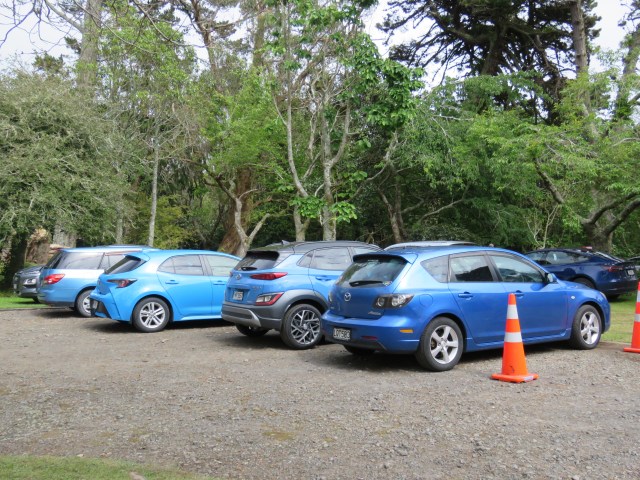
All blues together
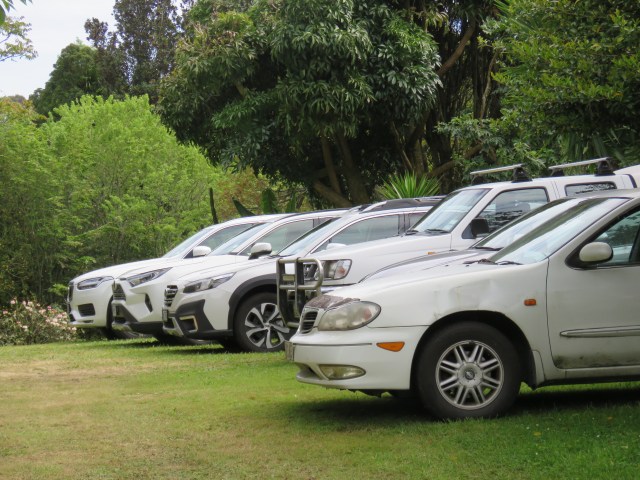
A tidy row of whites
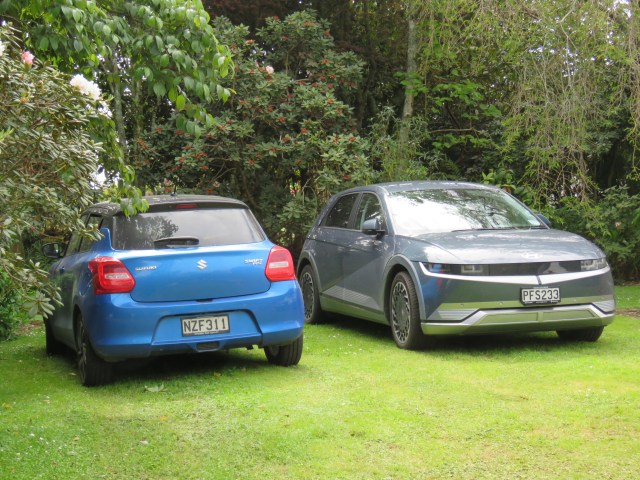
Car parking, like clean toilets, is one of those back room logistical issues that we spend a lot of time and effort managing but that is rarely noticed. Yesterday’s brief triumph by Zach was only commented on by one visitor but amused us all greatly. For one beautiful moment in time, he had the car parking area colour toned – the blues grouped together, the whites in a row, the silvers across under the trees. True, there was one blue car in the wrong place and those of us with OCD tendencies wondered if we could locate the driver to move that car to the blue section. But then somebody left and red cars started arriving. The moment was over.
“Excuse me, madam, would you mind moving your car to the blue area?”
I was doubly amused when told that our friend who helps with the parking over the weekends had been attempting to get the front row alternating black and white vehicles but had not managed that feat on the day.
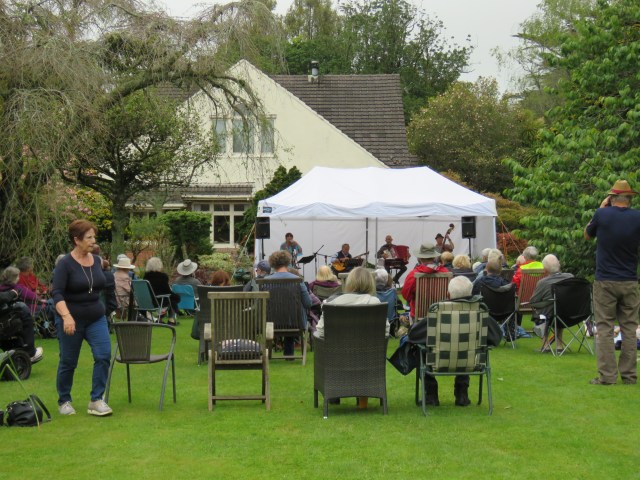
La Mer in concert
Rain caused us great anxiety on Sunday because the concert in the garden by La Mer was weather dependent. We had to make a call by 11am when the rain was still falling, albeit forecast to clear. We decided to take the risk and, miraculously, the rain stopped shortly after, any surface water drained quickly and it was full steam ahead. The carpark was controlled chaos and we had to stop latecomers at the gate to get them to park on the road, something we try hard to avoid on our narrow rural road. The contrast between the busy entrance and the calmness just through the courtyard behind the wall was magical as the strains of music wafted across the front lawn and through the house gardens. It was everything I hoped for in terms of ambience and a delightful experience.
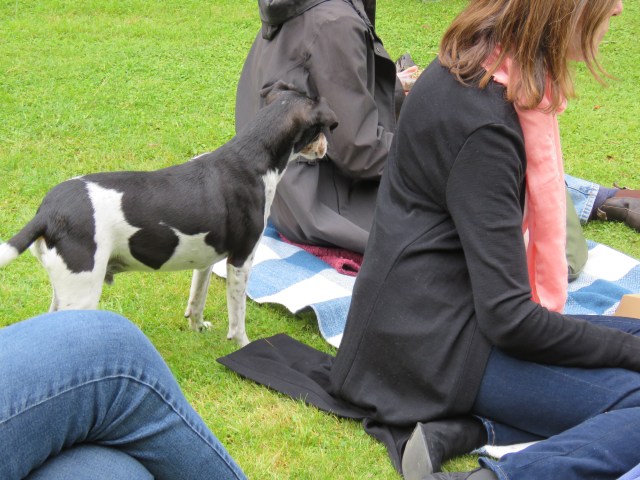
That is our Dudley quietly working the crowd in the hope of delicious tidbits
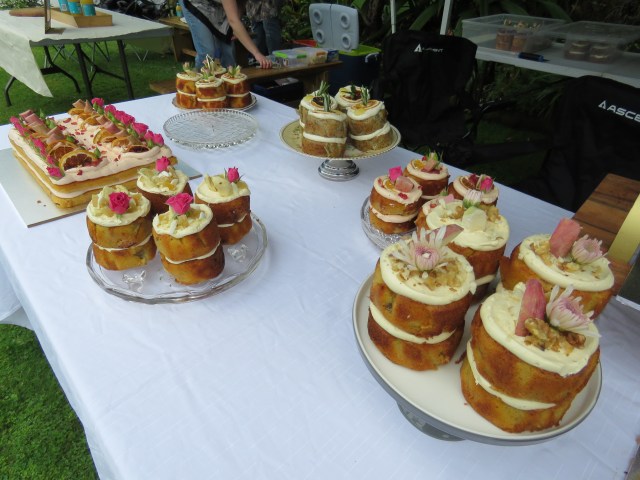
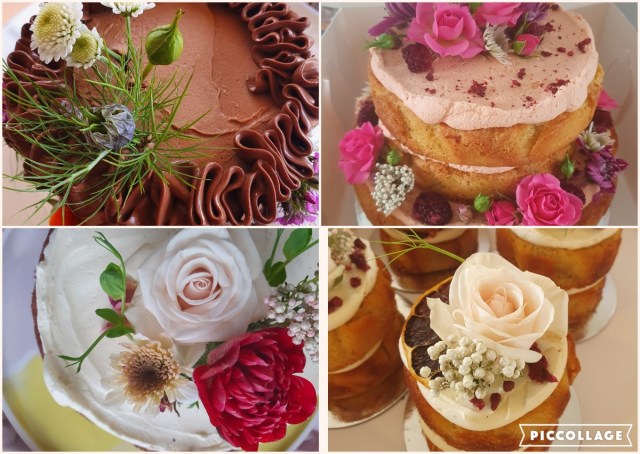
Small servings of these sorts of tidbits is what he was hoping for – and quite probably scored. Cakes from Rose at the Garden Cake Kitchen
True, the window of fine weather didn’t last but we had 80 minutes of music, coffee, cake and savoury platters in pleasant, calm and warm conditions before the heavy rain returned. People may have been a tad damp as they left, but at least the spell in the middle had its own magic.
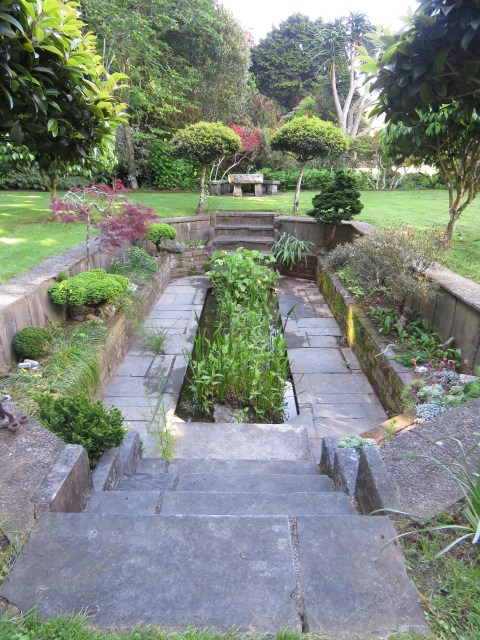
A coach tour came in yesterday and large groups can come and go in something of a blur but one participant stood out. A gentleman clad in black told me he was not a gardener, he was an artist; he liked to view gardens as pictures. When he returned from his walk, the coach was waiting for him so the conversation was brief but he assured us we are true artistes. Vanitas was mentioned but Jennifer, our artist in residence, gently suggested that perhaps it was more memento mori – a reminder of our mortality and the transience of life. He mentioned one particular view that he adored – our ‘large pond’ framed so perfectly and the end point punctuated by – wait for it – a stone sacrificial altar.
Is that a sacrificial altar I see at the end of the view-line?
The mention of the large pond had me mentally picturing down in the park meadow where we have large ponds but for the life of me I could not think what constituted a sacrificial altar in that area. Further questioning ascertained that he was talking about the sunken garden and the altar was in fact the large stone millwheel that Mark’s parents repurposed as a garden table with stone benches to sit on.
I may never look at the millwheel with the same eyes again. We are rather too down to earth to regard ourselves as true artistes here but at least he found plenty of rewarding pictures in our garden so we can’t be too bad on our proportions and definition.
I must pay tribute to the small team who back us up this week. Lloyd and Zach are a tower of strength and able to handle problems both large and small. And we are blessed to have good friends who come and help us, too. We simply couldn’t do it without them.
The Centuria Taranaki Garden Festival finishes for 2022 this coming Sunday. It will continue next year but without us. We will be bowing out on Sunday. Three days left.
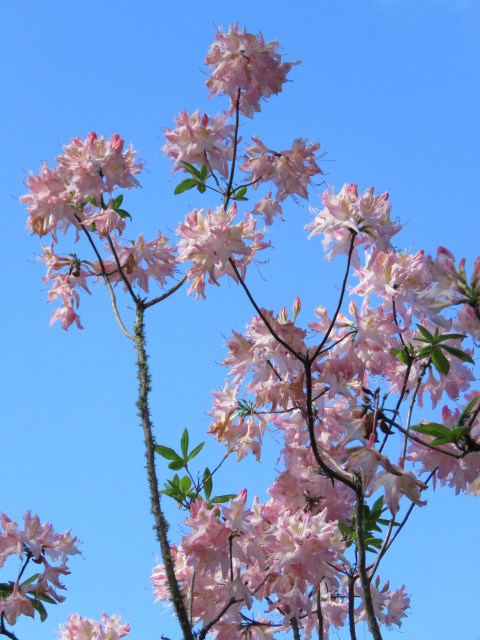
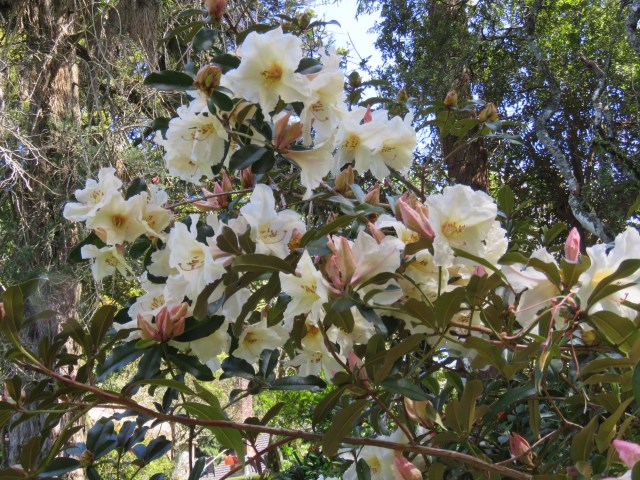
The garden festival started 33 years ago as the Taranaki Rhododendron Festival and to this day, I rate R. polyandrum as one of the loveliest sights as well as one of the most fragrant.
We are down to the last few days before we open this coming Friday as part of the Centuria Taranaki Garden Festival. I may write about how we prepare our very large garden for opening one day soon, but not today. There is still too much to do. All I will say is that it never ceases to amaze me how the final garden round (The Great Rake Over, as Mark calls it) brings all the earlier work together to present the garden at its best – or certainly its tidiest.
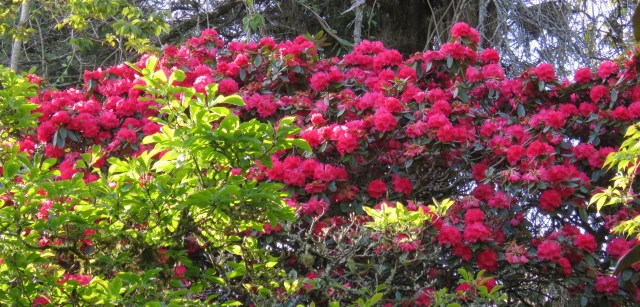
Some people prefer the classic ball truss on rhododendrons and we have those, too – in this case, ‘Noyo Chief’
At the risk of being repetitive, this is our final festival so a last chance to visit our garden. We have no plans to open for the general public after this event from the coming Friday 28 October to Sunday 6 November.
I am really hoping for fine weather next Sunday 30 October for our Music in the Garden event and also for a good turnout because other people are involved so I feel personally responsible that it be a success for them. Music is from La Mer, cake sold by the slice from Rose at the Garden Cake Kitchen, pre-ordered savoury platters from Becky at Humble Grazing and the Etta Coffee Van on site selling teas and cold drinks as well as coffee. Our gardener, Zach, will also be selling his plants including the sought-after Stipa gigantea, Curculigo recurvata, Elegia capensis and assorted perennials. Bring folding chairs or a rug and, if you wish, your own bottle of wine.
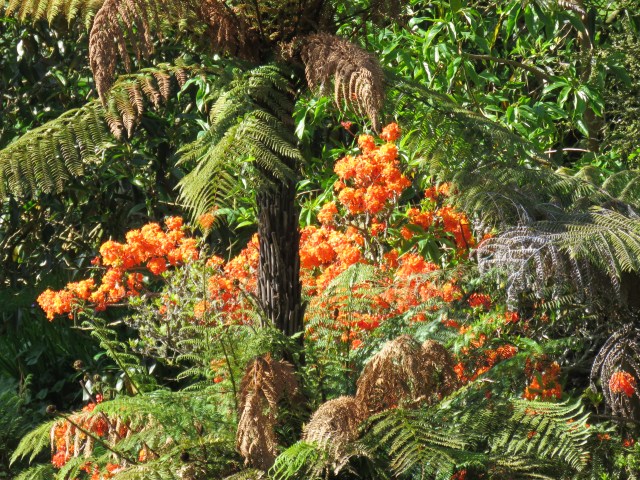
Azaleas are also members of the rhododendron family and can come in colours that may be described as vibrant or garish, depending on your liking for them. I can go with vibrant when they light up an area which would otherwise be just green.
I am offering free garden tours at 11am on Friday 28 Oct, Tuesday 1 and Thursday 3 Nov. Just turn up five minutes early if you want to join one of these.
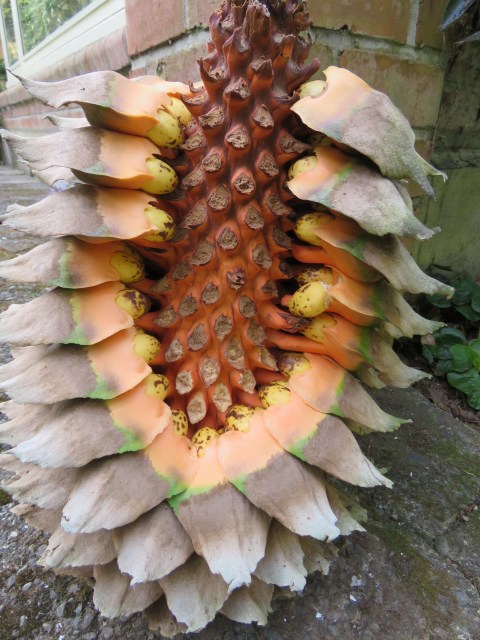
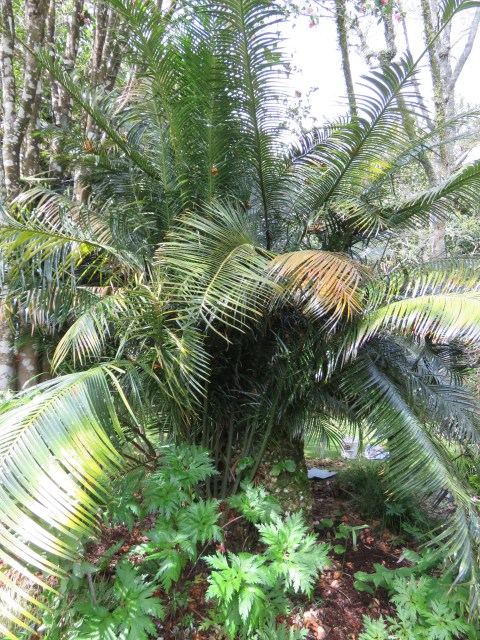
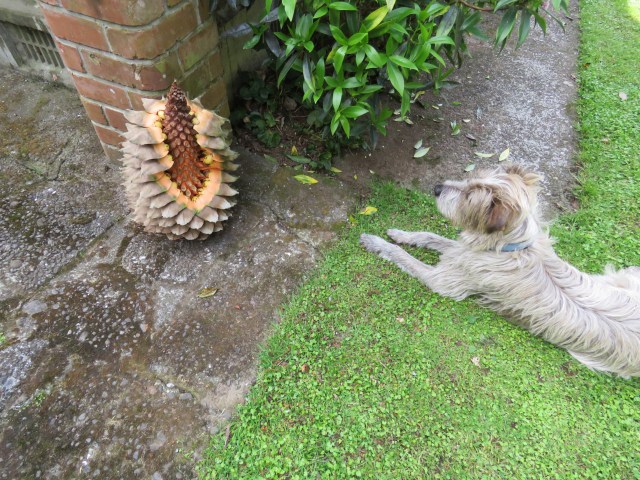
Look at this cycad cone. It is from the very handsome Lepidozamia peroffskyana, sometimes known – Wiki tells me – as Scaly Zamia or Pineapple Cycad. It is an Australian native coming from areas that are more warm-temperate than tropical which will be why it is thriving here. I see it is one of the tallest cycads and can reach up to seven metres tall but it is clearly going to take a long time to get anywhere near that height here. We cut the cone off because our experience is that if we leave it on the plant, it reacts by turning the new growth yellow which is distinctly unsightly. Neither of us being botanists, we are uncertain why this happens although Mark vaguely mentioned ‘something to do with a chemical reaction’.
Lepidozamia peroffskyana
Ralph was particularly fascinated by it and felt sure that the segments should be edible. There is not much that bypasses that dog’s nose. There is some anxiety here about how Ralph will cope with festival, this being his first (and last, as it turns out). We bought a new chest harness for him in case we have to keep him on a lead or tie him up but he is fairly sure that harness is a punishment and an instrument of torture. Dudley dog is more experienced and likely to take on his seasonal role of Carpark Biosecurity Officer as he optimistically checks all arrivals for hidden food.
The summer gardens are our newest area and starting to mature well
This is it, folks. The die has been cast, the decision made. This is our last festival. I am referring to the Centuria Taranaki Garden Festival that starts in under three weeks – on Friday 28 October. This is likely to be your last chance to visit our garden.
Much and all as we love meeting you and seeing you enjoy our garden, we would rather go out on a high note than fade away. The garden is looking its very best – or it will be in another couple of weeks. This festival looks as though it will be a cracker event and that seems a good time for us to say farewell before we close the gates to visitors.
If you are one of the people who say, “I have been meaning to come for ages,” this is your last opportunity. We won’t stop gardening or sell up but we will be closed to the public from November 7 and we won’t be opening next year.
La Mer
We are particularly keen that our music in the garden event on Sunday 30 October be a success. We can’t control the weather (and the music from La Mer is weather dependent) but we have everything else in hand. La Mer is a four-piece group playing a mix of gypsy swing and French chanson which blends delightfully with a garden setting.
Delights from the Garden Cake Kitchen, available by the slice on the day
Not only is Rose from the Garden Cake Kitchen selling her dreamy cakes by the slice, but there is more.
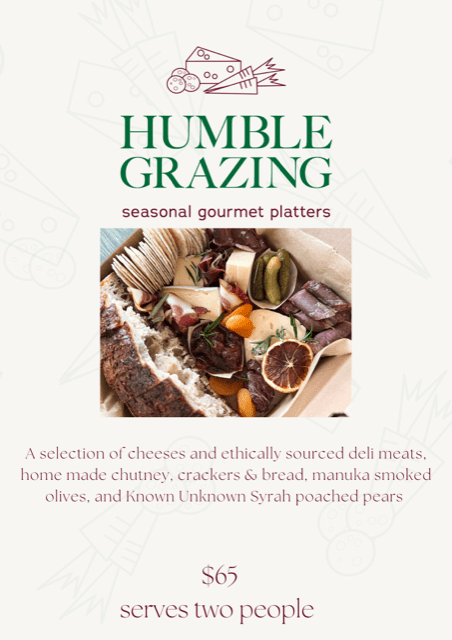
Humble Grazing’s platters need to be pre-ordered
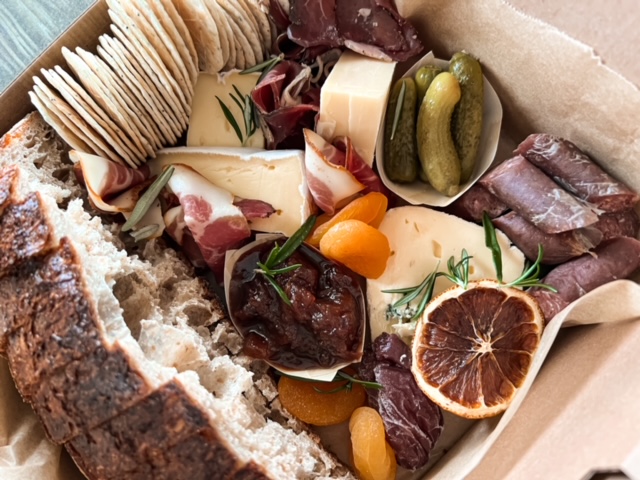
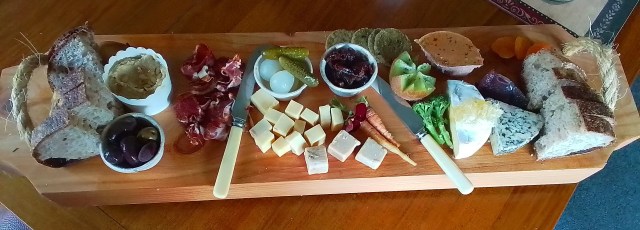
Look! I have been lucky enough to try Humble Grazing’s platters before. This is most of one taken out of the box and plattered for our consumption. And consume it we did, with great gusto.
Becky from Humble Grazing is offering pre-ordered platters for those of a more savoury persuasion. Becky can be contacted through her Facebook page, her website under the name of Humble Grazing or Instagram. If the weather forces a cancellation of the music and you have pre-ordered a platter, you can pick it up from here and take it back to your accommodation to consume. You are welcome to bring a bottle of wine to accompany your platter – or indeed bring your own picnic.
Good coffee and more from Etta
But we will also have the Etta Coffee Van on site selling both hot and cold drinks. These include iced coffee and chocolate (the day may even be hot!), smoothies and a range of organic teas, if coffee is not your favoured afternoon drink.
Seating is limited so maybe add a picnic blanket or folding chairs if you want to be seated. La Mer will be playing from 2.00pm onwards. Please come. There is no additional charge for the event – just the garden entry fee of $10. You are free to sit and enjoy the music or to wander the garden at your leisure. For those of us who are still Covid-anxious, we have plenty of space and being able to physically distance is not an issue.
Jennifer
Auckland botanical artist, Jennifer Duval-Smith is our artist in residence. Three of her four nature journaling workshops are already fully booked and there are just a few places left on her Tuesday 1 Nov workshop centred on the grandeur and glory of rhododendrons.
If you are interested in my garden tours on Friday 28 Oct, Tuesday 1 and Thursday 3 Nov, no bookings are needed. Just be here at 11am and we will be starting from the main lawn. These tours last between about 75 to 90 minutes but you don’t have to stay the whole distance. That said, Mark is in awe at my ability to enter the garden with a group and return later with pretty much the same number as I started.
And it will all end on November 6 when we close our gates (metaphorically speaking).
This is a longer piece than I usually post on this site but it was written for and first published by the Royal Horticultural Society (UK) annual journal of the Rhododendron, Camellia and Magnolia Group, 2022.
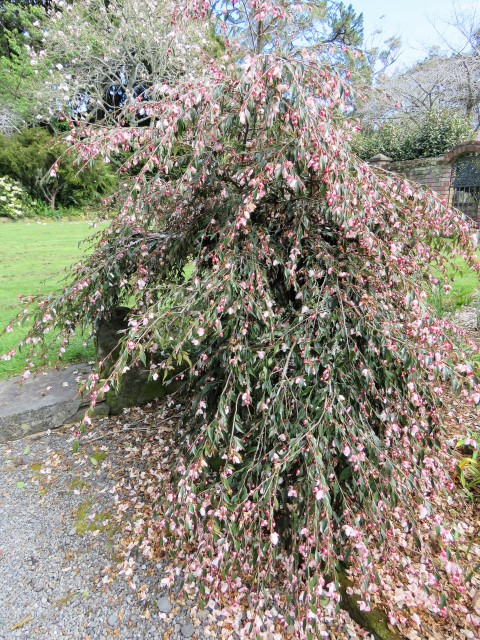
C. sasanqua ‘Crimson King’ showing the typical open, graceful form many sasanquas have as they mature
I married into a camellia family. Both Les Jury and Felix Jury were recognised in their day as making significant contributions to the camellia world with their new cultivars. Both worked with Camellia japonica and hybrids to create plants that were self-grooming (dropping spent flowers rather than having them hang onto the bush) and breeding out the tendency for stamens to turn black as blooms aged. Hugely popular in New Zealand, camellias ranked second only to roses in sales figures.
My own mother was not as keen. True, she described a young plant of Felix’s C. x williamsii ‘Rose Bouquet’ as being like growing an herbaceous paeony in a climate which did not favour the growing of any paeonies at all, but it was clear she saw it as second best. Memorably, she once declared that the trouble with camellias was that they were all red, white or pink blobs with shiny green foliage. With more experience, I now realise she was only thinking of C. japonica and hybrid camellias. I do not think she ever met the species or had anything to do with C. sasanqua.
We have a large garden with many camellias used in a variety of situations. I have never counted them but it will be in the hundreds, not the tens. When Mark started plant breeding, he followed in the footsteps of his father and his uncle and chose camellias first. They are right at home in our climate so we have camellias as feature plants, background plants, hedges both informal and clipped, windbreaks and as a backbone plant repeated throughout the garden.
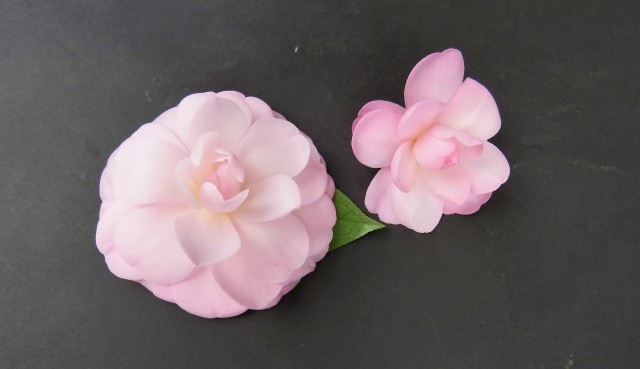
The unsightly appearance of petal blight on japonicas, reticulatas and many hybrids. It looks marginally better on red blooms but a great deal worse on pale and white blooms.
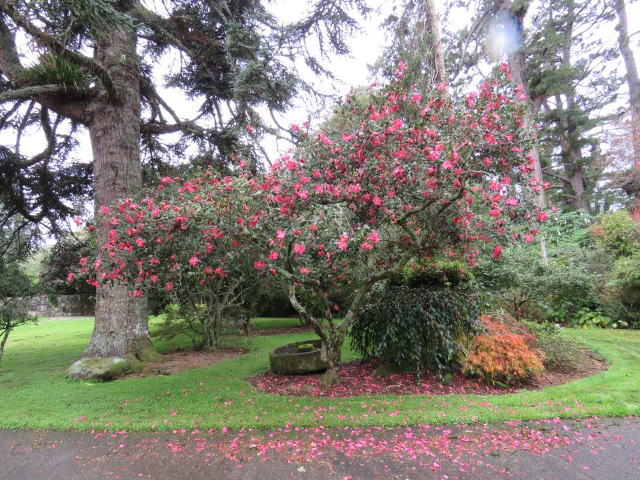
The arrival of camellia petal blight – Ciborinia camelliae – was nothing short of devastating. Our massed displays of C. reticulata, C. japonica and hybrids blooming in winter and spring disappeared as petal blight took hold and now they are just a memory. Petal blight is common throughout the world. Is it only Australia that remains free from it now? It took a trip to the International Camellia Convention in southern China in 2016 for us to realise that our particular climatic conditions mean that the impact of blight here is arguably at the very worst end of the scale. We are humid and mild with regular rainfall and plenty of wind to spread the spores far and wide – ideal conditions for any fungal ailment. In the drier conditions of China, it was nowhere near as big a problem as here and talking to growers from around the world, they don’t suffer the same level of impact as we do.
In our particular location, it is bad enough for me to say that we haven’t and wouldn’t plant a C.japonica, a large flowered hybrid or a C. reticulata now. There is no point. Flowering has become sparse and all that early breeding for plants which are self-grooming does not work for these vulnerable camellias so the display is now pale brown blighted blooms or blooms in the process of being blighted with just a few lovely flowers to remind us of times past.
Camellia minutiflora
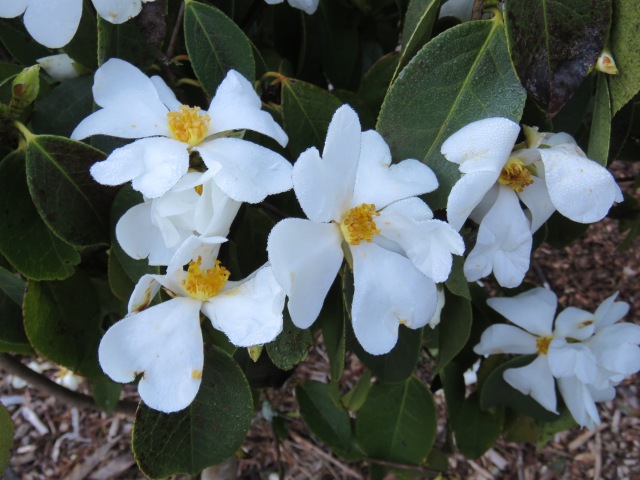
All is not lost, but we have done a serious re-think. Fortunately, Mark had always been interested in miniature flowered camellias with a strong personal preference for the simplicity of singles and semi doubles. They mass flower and each bloom only lasts a couple of days so they fall before blight takes hold. We also like the species and had already set out to build a collection of most that are available in this country. Some of the species bring in a wider range of growth habits and foliage than are seen in commercial camellias. In fact, some don’t even look like camellias as most people know them. We are so besotted with little C. minutiflora that we have several in the garden; what came to us as C. puniceiflora doesn’t look like a camellia at all and only aficionados would identify the pink flowered form of C. sinensis and the assorted yellow species we have as camellias.
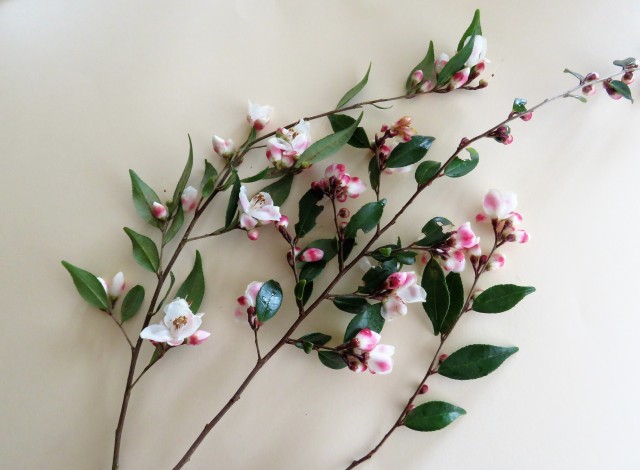
The dainty flowers of C. minutiflora
We also have a good representation of autumn flowering varieties from the C. sasanqua group, which are not affected by the blight. In the days when the large flowered C. japonica were favoured, with a particular preference for the perfection of formal doubles like ‘Dreamboat’ and scores of others, the attitude to C. sasanqua was bit dismissive. They lack the solid petal texture and defined form in their blooms and are slower to establish, as nursery plants at least. In New Zealand, they were largely seen as utility hedging, best in white and even better if C. sasanqua ‘Setsugekka’. The white ‘Setsugekka’ hedge became a cliché.
Tastes can change. Now we appreciate the C. sasanqua cultivars for their mass display in autumn through to early winter, preferring that looser flower structure and simplicity. Added to that, as mature plants, most have a naturally graceful form that is easy to tidy up and enhance to create a feature plant even when not in bloom. Shapes are important all year round and shapes with good, healthy foliage that are also hardy, reliable and low maintenance are not to be disdained.
We give a lot more thought to our camellia plants these days. Many are invaluable for shelter and wind breaks. Flowers are a bonus. But not every camellia plant is valuable. If they are not flowering at all well, are not pleasing to the eye as a shrub and are not filling a useful purpose, we have no qualms about removing them. These plants used to at least fulfil one of those functions – that of mass flowering.
Lifting and limbing – finding the natural shape of a plant and highlighting it – Camellia ‘Tiny Princess’
Camellia ‘Dreamboat’
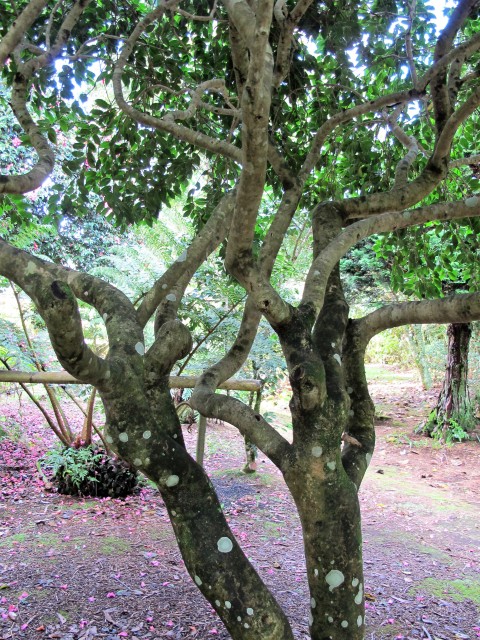
We do a lot of what we call lifting and limbing here. In a mature garden, raising the canopy and letting light in is ongoing. What sets lifting and limbing apart from simple pruning is that it is more focused on making the most of the natural shape of the mature plant. Mark is the master of this but my skills are improving. More time is spent standing and looking, then tracing where branches go than actually cutting and there is much going up and down the ladder. It is very satisfying to find the most pleasing forms within a plant and to highlight the shape by removing extraneous growth. Added to that, it is a one-off activity that just needs a bit of occasional maintenance in future years. It is possible to remove a lot without a plant looking massacred, as long as clean cuts close to the trunk or branch are made.
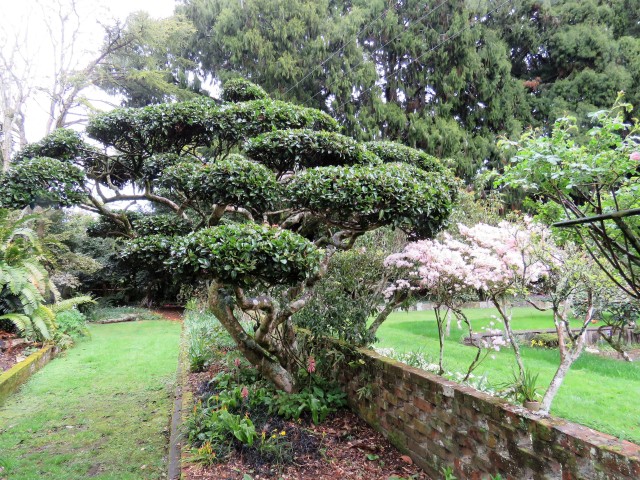
Cloud pruned ‘Mine-no-Yuki’
Our garden is very light on ornamentation. We don’t go in for sculptures, statuary, pots or a plethora of trellises and archways, preferring to use key plants as focal points, along with natural vistas. Mark’s cloud-pruned camellias are particularly fetching. He started on Camellia sasanqua ‘Mine-no-Yuki’ which was so huge that its weeping growth was blocking a pathway. The initial shaping took him several days up and down the ladder which was hard on his knees. He must have removed well over half the jumbled plant but found the most pleasing shape beneath. We keep it clipped to flat- topped cloud shapes. It only needs trimming once a year to maintain that form and that is a simple job that takes a couple of hours with hedge clippers. ‘Mine-no-Yuki’ is not good in bloom here. We get a few days of pristine white blooms before they get weather damaged; from then on we get a display of brown and white flowers. As a clipped, evergreen shrub it makes a splendid feature all year round.
I differentiate between clipping and pruning. Pruning is done with a pruning saw and secateurs; clipping is carried out with trimmers, be they hand-held hedge clippers or motorised trimming blades. Good pruning is a higher grade skill because the aim is to get into the plant and shape it without the work being visible – ‘blind pruning’, an older colleague used to call it. Hacking is bad pruning.
Left to right: ‘Elfin Rose’, C. puniceiflora, C. trichoclada and C. gauchowensis. All are clipped once a year.
We don’t clip many plants – ours is not a garden modelled on the clipped and corseted Italian genre – but we have a few that we like to use as punctuation points in the garden. Inside our entrance, we have a small grouping of camellias that we clip tightly once a year. The shape of each has been entirely determined by following their natural growth habit and exaggerating that. So C. gauchowensis is a plump, rounded pillar, C. puniceiflora a three tier cake stand and the somewhat insignificant C. trichoclada is a flat plinth. They are backed by the cloud pruned C. x hiemalis ‘Elfin Rose’.
Cloud pruned ‘Elfin Rose’
The problem with clipping is that it cuts every single outside leaf that then turns brown on the cut edge. This does not matter when the clipping is being done on plants with very small leaves and it is not generally a problem on the C. sasanqua cultivars which have a somewhat softer leaf. It matters a great deal if the clipping candidate has the tough, shiny, leathery leaves common to the C. japonica types. I drive past a clipped white C. japonica hedge from time to time and it simply looks awful when it has been freshly cut. I wonder if the owners went to buy the aforementioned ‘Setsugekka’ (which would have been much more successful) but the garden centre had sold out so they talked them into a white japonica instead? It was not a good choice. Keep your clippers away from C. japonica varieties is my advice; reach for secateurs instead and forget any ideas of tight-clipped shapes.
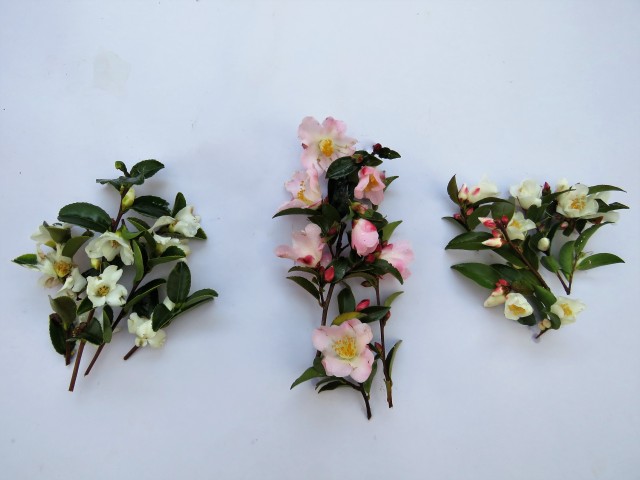
Our preferred hedging options. Left to right: C. microphylla, ‘Fairy Blush’and C. transnokoensis
We have camellia hedges ourselves but all are small leafed varieties that clip tightly to make a dense barrier over time, looking sharp-edged and smart. We also select for small single flowers that drop cleanly and break down quickly, thereby avoiding the brown sludge that large, heavy textured flowers can create when they fall. The three camellias we have used for hedging are ‘Fairy Blush’, C. transnokoenis and C. microphylla. ‘Fairy Blush’ is our first choice where we want dense hedges to around 1.5 or 1.8 metres high. It is a C. lutchuensis hybrid, the first camellia Mark ever named and the one that remains our all-time favourite with its exceptionally long flowering season. Unlike its scented parent, it is fully tolerant of sun and open conditions (C. lutchuensis is inclined to yellow in the foliage in full sun), very free flowering and, en masse, it exudes a delightful scent on warmer, sunny days.
Camellia ‘Fairy Blush’ as a clipped hedge.
We have never grown much buxus hedging here but when the threat of box blight loomed (mercifully, it has still not reached us and we don’t have the buxus caterpillar in New Zealand), Mark took the opportunity to rip out a couple of box hedges and replace them with C. transnokoensis. I think the blight might just have been an excuse really, because the main reason was that he thinks hedges should be more than just green walls; they should also contribute to the eco-system and plants that flower and attract bees and butterflies do more than just act as a visual divider. C. transnokoensis has excellent small foliage and tiny white blooms but its flowering season is much shorter than ‘Fairy Blush’ and it is taking longer to become dense in its growth.
When it comes to tight clipping, timing is important. We tend to clip hard in early to mid-spring, just as the new growth is being made. If it gets left later, the next season’s flower buds will have set and clipping will be at the expense of next season’s flowering. Sometimes we get to the C. sasanqua plants earlier; in our relatively mild climate, we have more latitude and can garden through winter without risk. We only clip once but we are fine with the softer, woolly look that develops as the seasons progress. If you want a sharper look, do the hard spring clip and then follow up in summer, but just with a light prune to tidy up the wayward fresh growths.
C. microphylla will be kept lower as an undulating wave hedge, between 30cm and 70cm high.
Camellia microphylla backed by C. yuhsienensis
C. microphylla has an even shorter season in bloom and flowers in late autumn for us but we selected it less for its white, starry blooms and more for its very compact habit and small leaves which lends it to tighter clipping where we want low, undulating hedges in the area we call the Wave Garden. It is taking some time to grow and clip into the tight growth we want, particularly because the plants Mark had raised from both cuttings and seed languished, unloved, in pots in the nursery for longer than they should have. It took us a while to plan and then plant the garden they were destined to grace. Healthier plants would have taken off faster but we can see it will work exactly as planned.
Camellia yuhsienensis used as punctuation points, backed by Mark’s ‘Fairy Magnolia White’
It is possible to remove a lot of plant without it looking as though it has been brutally attacked if pruning is considered and careful. This is getting C. yuhsienensis back to a manageable size.
Overall, we do more pruning than clipping and that is aimed at keeping some key plants from growing to their full potential. Essentially, we are trying to contain them to a certain size. We have used the lesser-known species, C yuhsienensis, as punctuation points with winter interest along the summer gardens. We love its open, starry blooms which are lightly scented and reminiscent of a michelia as well as the heavy-textured foliage which many people fail to identify as a camellia. It is not self-grooming and it is one of the few camellias I am willing to go through and brush off spent blooms which is a sign of how much it pleases me. Left to its own devices, it will reach 2.5 to 3 metres high by 2 metres wide in our conditions, getting somewhat more open as it grows. I am keeping these to around 1.6 metres high and a metre wide and that is done on a single, perfectly straightforward annual prune with secateurs and sometimes a handsaw. Each plant is reviewed individually as I work out which branches I want to take out entirely and which ones I just want to shorten. It sounds more onerous than it is in practice but my aim is always that the pruning not be visible to other people’s eyes.
Camellia yuhsienensis
A top-worked hybrid of Mark’s we named ‘Pearly Cascade’ which is unlikely to still be in cultivation. While the flower is not special, the slow, spreading growth habit kept it small and made it an ideal candidate for training to a feature plant.
A top-worked (high grafted) weeper. This came to us as ‘Nuccio’s Pink Cascade’ but that may not be an accurate name.
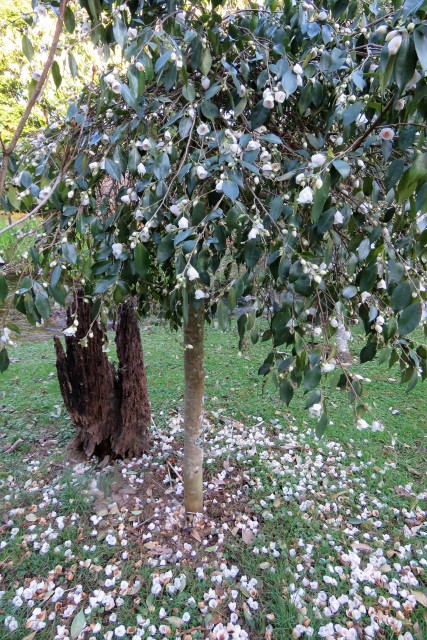
We have a few high-worked standard camellias, grafted a metre or so up a single, strong trunk. These are not easy to do so certainly not widely available commercially here, if at all these days. Our plants date back to when we still had a plant nursery and specialised in unusual options. The weepers are just left to weep. These are ‘Quintessence’ and one that came to us ‘Nuccio’s Pink Cascade’ but I am now doubting that name because I can’t find it on line. I scrapped all the weeping ‘Sweet Emily Kate’ specimens because the exceptionally pretty flower did not atone for the dreadful yellowed foliage.
Our other standards are slow growing hybrids from Mark’s breeding programme that are not commercially available. The natural characteristics of being both slow and dense in growth is what makes them easy to maintain. Trying it with stronger growing varieties would mean a whole lot more work fighting nature to keep the desired shape.
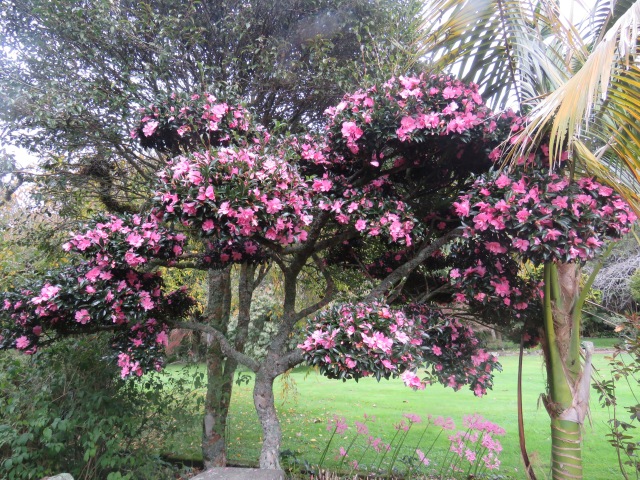
When we removed the garden beds around the top of the sunken garden, we retained the eight camellias and three dwarf maples as clipped and shaped character plants.
Mark is not a lollipop or pompom man. He likes these camellias clipped to low, flattened domes – mushroom shapes he calls them, or maybe umbrellas. Again, we clip or prune just once a year and that is sufficient to keep these as statement plants.
An espaliered sasanqua camellia from another person’s garden.
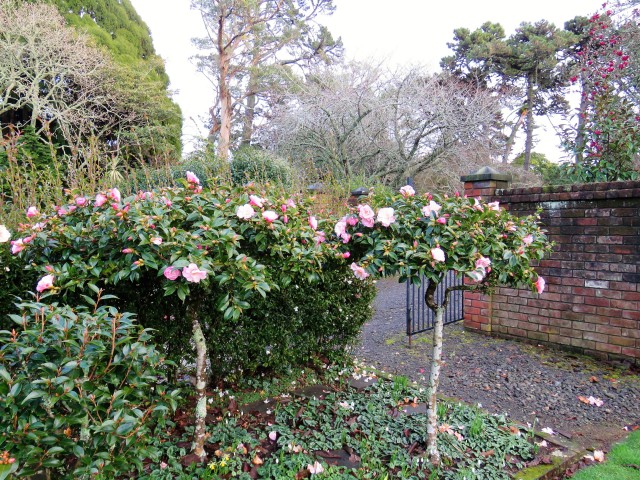
I have never gone in for espalier. I am not so keen on that level of extended fiddle-faddling, myself. But I stopped to photograph a very well-established espalier done with C. x hiemalis ‘Elfin Rose’ in a garden down the road. Unfortunately, the flowering was finished for the season so you will just have to imagine how pretty it looks with the bright pink blooms and deep forest-green foliage. It has been trained on a readymade trellis fan and is kept clipped to make a dense screen which is only about 30cm deep.
In days gone by, I used to keep a small collection of trained and clipped camellias in large containers to move around to particular locations. Each one was treated differently to emphasise individual characteristics. The reason I planted them all out or gave them away was simply because I decided that, in a garden as large as ours, having large plants in pots that need regular watering, feeding, repotting and root pruning was too much work. I prefer to work on plants already growing in the ground but the container approach may work for other situations.
Camellia ‘Fairy Blush’ again
We used to view camellias as a low maintenance, undemanding but top performing utility plant in our garden. That changed with petal blight. Now their roles have changed. We treat each plant individually and give them a lot more attention but that is what makes gardening interesting for us. We wouldn’t be without them. It may be putting a brave face on it, but I am not sure I miss those days when they were largely big blobs of white, pink or red on shiny green foliage. Times change and we just change our gardening ways to meet the new situation.
In memory of times past when we used to have mass displays of blooms like this. We refer to this one as ‘Mimosa’s sister’, not because Mark’s mother ever had a sister but because it is a sister seedling to ‘Mimosa Jury’ that Mark’s father bred and named for her.
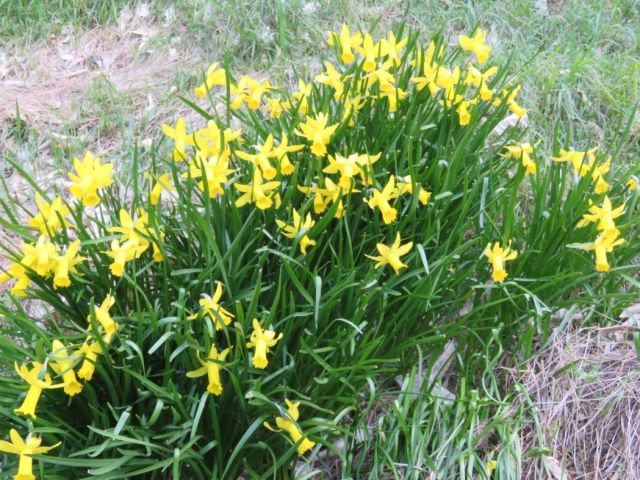
The narcissi tell us spring is here, irrespective of what an arbitrary calendar says.
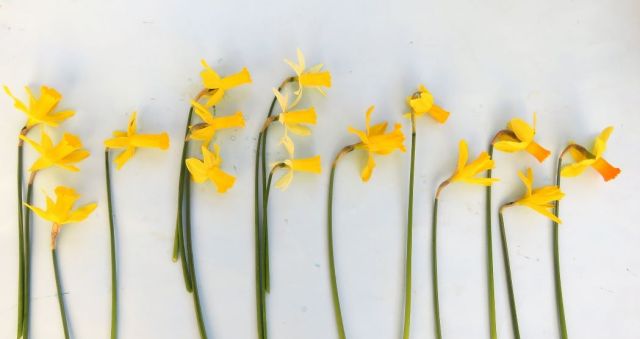
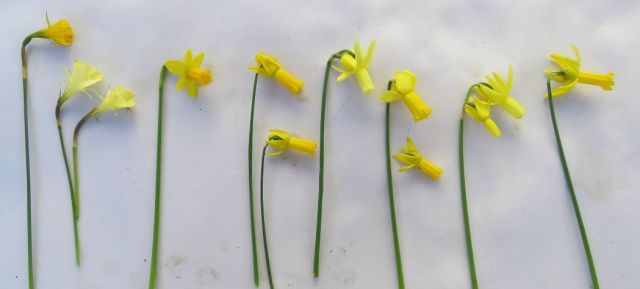
A representation of those narcissi currently flowering
We once went to the National Daffodil Show when it was held in our local town. Alas, despite trawling through my files, I can not find the photos I took to convey the nature of the show. It was beautifully staged and moderately spectacular – in a daffodil-y sort of way. It was also an interesting insight into how those who breed and show daffodils are on a different trajectory. Bigger was undeniably better, extraordinarily long stems topped with enormous flowers, split corollas galore, a lot of different colour combinations and novelty variants. These were blooms grown to be staged as cut flowers. The little dwarf and miniature types were confined to one very small and somewhat insignificant table.
Our interest in narcissi begins and ends with them as garden plants or naturalised in a meadow situation. I cut some simply for photos yesterday. Because we over-heat our house in winter, we don’t generally cut flowers to bring inside where they immediately wilt and die. And those big show daffodils don’t make good garden plants in our conditions. The heavy heads pull them over and heavy rain and spring wind knocks the blooms about too much.
Peeping Tom at the front – reliable, tough and maybe a little too enthusiastic in its rate of increase. We do seem to have rather a lot of it.
These will be named varieties from the 1950s because they are a relic of original planting done by Felix and Mimosa when they started the garden here.
We don’t have a single big King Alfred type often favoured by people wanting to planting swathes of daffodils. Amongst other things, they flower later in the season. We prefer the early flowering types because they are largely done and dusted before the narcissi fly are on the wing.
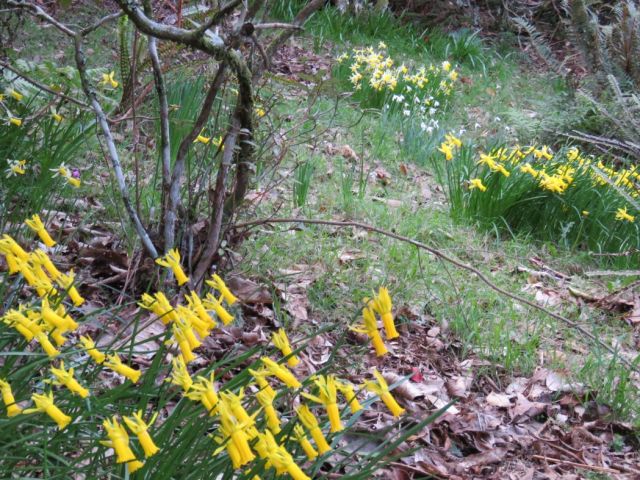
Cyclamineus type
Our narcissi flower over a reasonable period of time and some are still to show any colour at all. While we probably have a respectable collection of named dwarf varieties (Tête-à-tête, Jetfire, x Odorus, Twilight, Beryl, Peeping Tom and others), many of those we grow are unnamed, controlled cyclamineus crosses that Mark and his father before him have done to increase numbers. It takes a lot of bulbs to naturalise around the garden and the plant budget here has never stretched to buying bulbs by the hundreds or even thousands needed to put on a good show. We could not afford to garden on the scale we do if we had to buy all the plants.
I have never unravelled the different narcissi groups in detail. We grow the hooped petticoats – N. bulbocodium – in lemon and the later flowering bright yellow but they are not my favourites. The bright yellow is showy but increases somewhat too readily, the lemon (citrinus) may need a bit more love than it gets here to flower well.
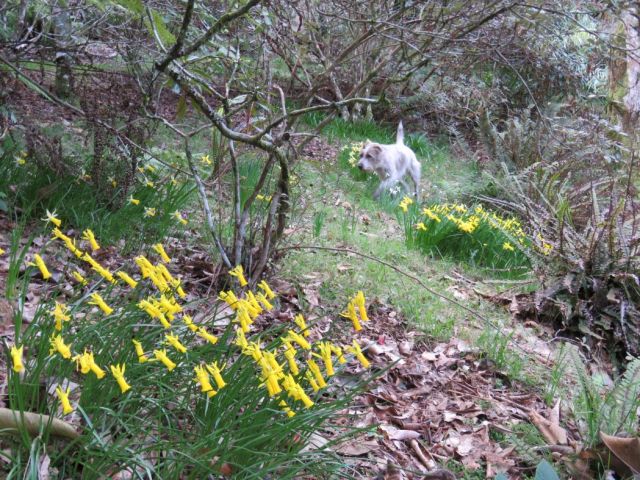
I would like to say Ralph is tiptoeing through the daffodils but I would be lying. His movements are more akin to thundering.
I love the look of Narcissus poeticus but it doesn’t love us so the best we can manage is the poeticus hybrid ‘Beryl’. We have some from the triandrus,jonquilla and tazetta groups but the reason why our collection is heavily dominated by cyclamineus types is because they are the best performers in our conditions. The ones with swept back petals are a particular delight for me.
Managed meadow! Planting on the slope gives and even better view from the path below.
It isn’t necessary to have big King Alfred types for meadow situations. I think our smaller dwarf ones are just as showy but we plant in clumps and drifts rather than scattered single bulbs and they flower before all the spring grass growth that would drown them. We need to get the timing right for mowing or strimming the meadow grass before the foliage comes through but otherwise, they are self-maintaining. And what a joy they are at this time of the year as the snowdrops of winter fade.
The bad news is that most daffodils sold commercially in this country are of the later flowering King Alfred type – big strong growers with big heads. The smaller growing ones are sometimes available in garden centres but you may have to search to find much of a range, or start raising your own from seed.
These are the largest varieties we grow. The manky first one of the left may be Narcissus pseudonarcissus double, then Silver Chimes, I don’t know what the next one is, the centre one with white petals may be the Narcissus pseudonarcissus (the wild daffodil), then Peeping Tom and Narcissus x Odorus.
Mid-sized dwarf varieties including Twilight, Twinkle, Jetfire and unnamed seedlings













 Tikorangi The Jury Garden