Tag Archives: Mark and Abbie Jury

Tikorangi Notes: November 11, 2011

How curious is Hippeastrum papilio?

How curious is Hippeastrum papilio?

Latest Posts: 11/11/11

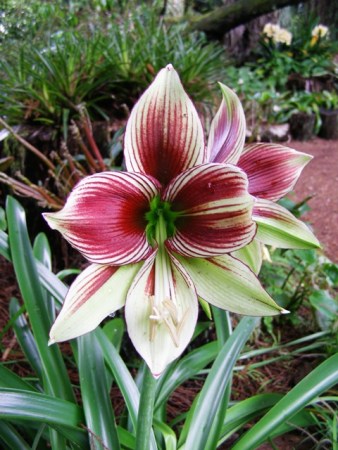
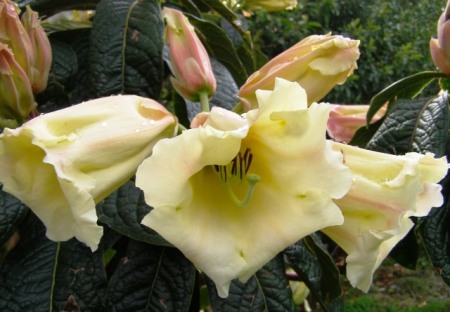
1) The exotica of Hippeastrum papilio in flower this week. To me it looks more like an orchid than a butterfly.

2) So you think you might like to open your garden to the public? Abbie’s column (based on 24 years of experience here).

3) Grow it yourself – parsley, a vegetable garden staple of underestimated value.

4) Cordyline Red Fountain receives high praise in Australia.

5) In the Garden this fortnight – the first of a new series written for the Weekend Gardener, detailing what we have been up to in our garden.

Tikorangi Notes: 11/11/11

Rhododendron Ivan D Wood

Rhododendron Ivan D Wood

With the end of our garden festival (formerly the Taranaki Rhododendron and Garden Festival but these days the equal mouthful of Powerco Taranaki Garden Spectacular), we woke up on Monday feeling like zombies. Ten days of standing on concrete and meeting and greeting of visitors takes its toll when the pressure comes off.

Dichelostemma Ida Maia

Dichelostemma Ida Maia

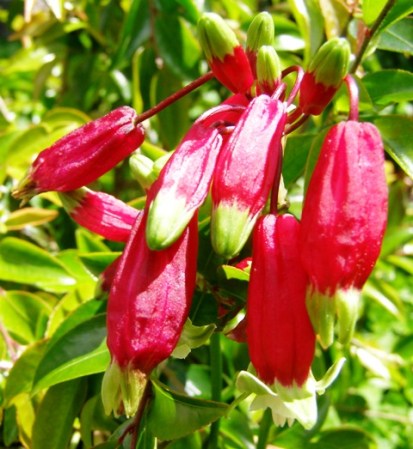
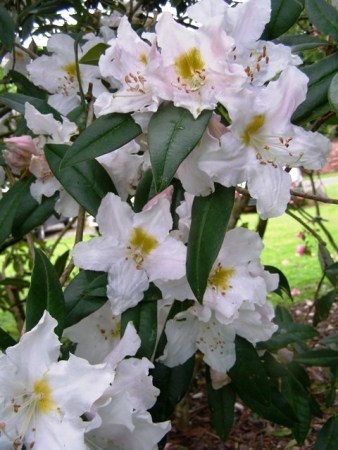
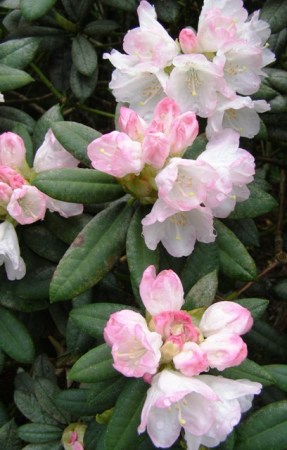
Our flowering remains late but no doubt the season will catch up soon. The curious Dichelostemma Ida Maia (formerly a brodiaea) has been attracting frequent comment and Rhododendron Ivan D Wood is justifying its place with its annual flowering – lovely colour range but the foliage is pretty unappealing for the remaining 50 weeks of the year. It wants to live in a colder climate than ours.

We are stripping out the retail area and are no longer selling plants, though the garden remains open. The plant sales list has been taken off this site until next September or early October. We will not be selling again until Labour Weekend next year when there will be a two week period of sales. We have just had enough of selling plants and would rather enjoy gardening and gardening conversations.

It was undeniably pleasing to see Gardening Australia name Cordyline Red Fountain amongst their top 20 plants in the last 20 years. Equally pleasing to see Fairy Magnolia Blush named amongst their top 10 recent picks for long term success.

So you want to open your garden to the public?

A welcome sight perhaps, carloads of garden visitors, but by no means a certainty

A welcome sight perhaps, carloads of garden visitors, but by no means a certainty

Spring in New Zealand sees the main flurry of garden visiting. If you have been out and about with friends recently and one is starting to make dangerous comments like: “My garden is as good as this one,” or “I have got one like that but mine is better,” maybe: “My standard Icebergs are more advanced than hers,” be proactive. It may be kinder to take your friend to Harvey Norman and persuade him or her to buy a new home appliance instead. Opening your garden to the public is a time consuming, expensive and demanding activity.

Many open garden circuits are of short duration with all proceeds going to charity. Clearly this motivation is entirely above reproach and we will just set it to one side as not being relevant to this discussion.

But too many garden openers are under the misapprehension that they can make money by opening. Experienced openers will tell you that in many cases it actually costs you money because you go to a great deal of time and expense preparing your garden, often buying expensive potted colour to plug gaps which you would otherwise have ignored. The bottom line is that there are too few garden visitors in this country to make it financially viable. To get more than just a few visitors, you need a brilliant location (preferably main road close to a population centre, right on a tourist route and featuring a castle), usually allied to an established reputation which takes years to build and a very good garden. Added attractions are advisable, whether they be a cafe, craft shop, plant sales or major events. If you go in for added attractions (which can certainly contribute a great deal to financial viability), don’t delude yourself into thinking that visitors are all coming to enjoy your garden. In reality your garden simply becomes a pleasant venue and many visitors come for the attractions, not to see your gardening efforts.

Don't expect the sort of visitor numbers Great Dixter gets

Don't expect the sort of visitor numbers Great Dixter gets

So what are the main reasons for opening besides charity? At its best, positive affirmation of one’s efforts. At its worst, ego. Garden openers’ egos can be a scary force to encounter and the whole exercise can turn a perfectly pleasant Dr Jekyll of a gardener into a Mr Hyde garden opener.

If you are contemplating opening your own garden, the first piece of advice I would offer is to go out and look closely at other people’s gardens – not critically but comparatively. You need to work out where your garden fits in and what you have to offer that is better, more skilled or more interesting than what is already out there.

The second step is to come home and look critically at your own garden, trying to assume the persona of an outsider looking for the first time. Over the years, we have met many gardeners who expect visitors to see their garden through the same eyes as they do. You know your own garden inside out. Often you envisage the potential when plants grow and fill out. The mistake is to think that the first time visitor will also see your dream. They won’t. They will see the reality on the day. You need to take off rose-tinted glasses to see that reality for yourself.

If you have children still at home, they won’t thank you. We always had two flat rules for the kids: no loud music and no loud arguments. But I do recall Second Daughter saying plaintively one busy week: “And you could tell visitors they don’t have to wave to me through the window when I am having breakfast.” That would the 11.30am weekend brunch when she was still in her dressing grown.

If you are determined to open, presentation becomes a key issue. Open gardens are finished and presented to a higher standard than your average home garden. All that lawns, hedges and edges stuff has to be done well and maintained at that standard. Established weeds are a no-no as are unsightly areas of wasteland. Visitor safety can be an issue, especially when the average age of garden visitors usually works out somewhere over 60 (which means a fair proportion will be decidedly elderly). Access to a toilet and safe parking are additional factors, as is the personal touch of meeting and greeting visitors. Opening your garden these days requires a whole lot more than just sticking out an icecream container and collecting the money.

That said, our experience of opening for many years is enormously positive. We can count on the fingers of one hand the attempts at plant theft over the years (the loss of the unripe seed on Mark’s Paris polyphylla was particularly galling). There is the odd person who tries to sneak in without paying but we have become pretty good at dealing with that (it is so embarrassing but it should be embarrassing to the guilty party, not the host). Only once have we ever caught an old biddy going through the house (shameless, she was!). The vast majority of garden visitors regard it as a privilege to be able to come into a private garden and behave accordingly. Though I should add that we are a more expensive garden at $10 for adults. The cheaper you are, the more riffraff you will attract.

In the end, it is enormously affirming to have garden visitors who really enjoy the environment you have created and who are unstinting in their expression of appreciation. In New Zealand, that has to be the main reason for opening. If you are thinking about it for any other reason, you may be better off going to try some retail therapy instead.

First published in the Waikato Times and reproduced here with their permission.

Tikorangi Notes: Saturday 5 November, 2011

Mark's "Platinum Ice" is just opening

Mark's "Platinum Ice" is just opening

And "Coconut Ice" is looking a picture

And "Coconut Ice" is looking a picture

Latest Posts
1) From designer trend to cliché in the blink of an eye – Abbie’s column

2) The wonderfully brazen Azalea mollis in Plant Collector this week.

3) Grow it Yourself: lettuces with particular reference to Misticanza di Lattughe (available from Franchi Seeds, or Italian Seeds Pronto in New Zealand).

Tikorangi Notes: Saturday 5 November, 2011

There has not much (indeed, any) gardening going on here this week. As we host the large majority of our annual visitors in one ten day period, we get to spend 8 or even 9 hours a day standing on concrete doing the meet and greet. It is very tiring but also enormously affirming to have so many people come and enjoy the garden. Little do they realise that this means our Lloyd was out mowing the park at 6.30am this morning. I admit it was as late as 7.00am before I was out and about doing the clean up of our public welcoming areas.

The later season rhododendron display is just coming into its own – the wonderful nuttalliis and the later flowering maddeniis. We are still running at least a week behind on the blooming season.

Our annual garden festival finishes on Sunday. Monday will see us back in gardening clothes, probably mooching about in solitary silence achieving very little but focussing our attentions back on the garden. It is a source of amazement to garden visitors that we manage a garden this size with just ourselves as gardeners and our one staffer, Lloyd, on the mower, mulcher, tractor, weedeater and generally assisting. While we would enjoy having additional assistance, visitor numbers in New Zealand are not high enough to pay the wages. However, in the final analysis, we garden for our own pleasure and the visitors are a welcome bonus.

The wonderful fragrant nuttalliis are coming into flower - this one is Floral Legacy (nuttallii x sino nuttallii)

The wonderful fragrant nuttalliis are coming into flower - this one is Floral Legacy (nuttallii x sino nuttallii)

Plant Collector – Azalea mollis

Look at me! Look at me! Azalea mollis

Look at me! Look at me! Azalea mollis

The mollis azaleas can be such a wonderfully flamboyant addition to a garden with strident colours which shout “look at me”! They are members of the rhododendron family but deciduous, cold tolerant and more forgiving of less than ideal soil conditions, particularly wetter and heavier ground. Many have fragrance which is gilding the lily further. Not all of them are such loud colours. You can get pastels, whites and subdued shades which show more refined taste, perhaps. But the vibrant oranges, yellows, reds and colour mixes have an intensity which is unrivalled in other members of the rhododendron family, magnified by the fact that they flower on bare wood, before the new season foliage appears.

Azalea mollis used to be very popular but are nowhere near as readily available these days. Their habits don’t suit modern nursery growing practices and they are only saleable when in flower so garden centres often shy away from them. In winter they are just bare sticks and in summer they are relatively anonymous and prone to mildew in warmer, humid climates. Their comparatively short selling season does not suit modern plant retailing so you may have to search them out and grab them when you find them without worrying too much about particular named cultivars. They are easy to raise from seed and often what is sold are just seedlings. Plant them in sunny positions where they can star in flower and not be too obvious when they aren’t.

Azalea mollis are not a species (which is how they occur in the wild). They are hybrids from controlled crosses, initially between the Chinese and Japanese azaleas but now pretty mixed in their genetics.

First published in the Waikato Times and reproduced here with their permission.

GIY – Lettuces

I am married to the former Mr Buttercrunch Lettuce Man. For years he has favoured Buttercrunch as the most reliable lettuce for the home garden because it grows so well and can be harvested leaf by leaf over an extended period. This year he has tried a different product from Franchi Seeds who are Italian so it has the name of Misticanza di Lattughe (or just plain lettuce to most of us). It is a great mix of different lettuces of cut and come again varieties which mature at different rates – and it includes Buttercrunch. He is most impressed by the range and performance and his lettuce patch has been yielding an abundance of mixed leaves from the early thinnings (micro greens) through to mature plants. He is now a convert to this particular product which is distributed in NZ through www.italianseedspronto.co.nz and he is sowing in succession at about three weekly intervals.

Lettuces like friable soil with plenty of nitrogen to help them make all that leafy growth. This means they are an excellent crop to follow on from a heavily fertilised crop like corn. They also need plenty of water – a bitter taste is often due to drought. Most take around 60 days to mature. When first planted, we keep a close eye out for slugs and also for cutworm which can work its way along the row, eating the roots off. Diazinon prills are used against cutworm if necessary. We don’t worry about slugs later on which means that the leaves need thorough washing before use. In high summer, lettuces tend to bolt to seed rather than making leafy growth but you can keep sowing and cut them as young plants.

First published in the Waikato Times and reproduced here with their permission.