Tag Archives: Mark and Abbie Jury

GIY – Lettuces

I am married to the former Mr Buttercrunch Lettuce Man. For years he has favoured Buttercrunch as the most reliable lettuce for the home garden because it grows so well and can be harvested leaf by leaf over an extended period. This year he has tried a different product from Franchi Seeds who are Italian so it has the name of Misticanza di Lattughe (or just plain lettuce to most of us). It is a great mix of different lettuces of cut and come again varieties which mature at different rates – and it includes Buttercrunch. He is most impressed by the range and performance and his lettuce patch has been yielding an abundance of mixed leaves from the early thinnings (micro greens) through to mature plants. He is now a convert to this particular product which is distributed in NZ through www.italianseedspronto.co.nz and he is sowing in succession at about three weekly intervals.

Lettuces like friable soil with plenty of nitrogen to help them make all that leafy growth. This means they are an excellent crop to follow on from a heavily fertilised crop like corn. They also need plenty of water – a bitter taste is often due to drought. Most take around 60 days to mature. When first planted, we keep a close eye out for slugs and also for cutworm which can work its way along the row, eating the roots off. Diazinon prills are used against cutworm if necessary. We don’t worry about slugs later on which means that the leaves need thorough washing before use. In high summer, lettuces tend to bolt to seed rather than making leafy growth but you can keep sowing and cut them as young plants.

First published in the Waikato Times and reproduced here with their permission.

Tikorangi Notes: Friday October 28, 2011

Latest posts:
1) Scadoxus puniceus – another bulb delight from southern Africa in Plant Collector this week.
2) Where to start with garden design – Abbie’s column from the Waikato Times.
3) Grow it Yourself – green beans

The season is late this year - Prunus Pearly Shadows is still opening

The season is late this year - Prunus Pearly Shadows is still opening

Tikorangi Notes: Friday 28 October, 2011

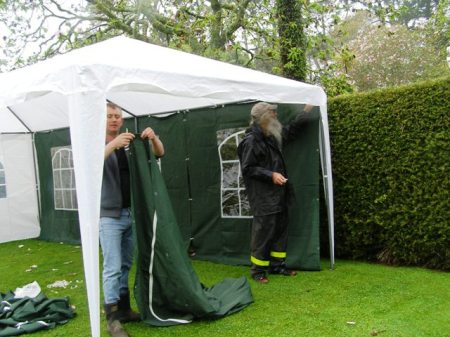
The kind neighbours, erecting a temporary gazebo (with the doubly kind neighbour to the left who happens to own said item)

The kind neighbours, erecting a temporary gazebo (with the doubly kind neighbour to the left who happens to own said item)

Our garden festival starts today with a hiss and a roar – a full coachload of Probus members (from Levin, if my memory serves me right), a guided tour of the garden for any, all and sundry and a small Australian tour (that is few in number, not small of stature) all happening at about the same time in the morning. It has been a busy week sprucing up but we are feeling reasonably well prepared with an hour or two in the morning to finish the final touches. The season is later than usual which means that the bluebells are still in flower. We never worry too much about variations in seasons because there is always something blooming. Prunus Pearly Shadows in our entrance area is looking very fetching whereas it is normally passing over by now.

In a moment of great clarity, we have decided to give up on retailing plants after mid November so if you have been planning to purchase anything, you will have to get in quickly. From next year, we plan to retail for two weeks of the year only – from Labour Weekend until the end of our garden festival. And we will not be continuing with much in the way of woody trees and shrubs. However, we will be looking to offer more of the rare and interesting curiosities so there should be material that is interesting on offer for those two weeks this time next year. In the meantime, we are keen to clear out plants so there are bargains to be had – check the Plant Sales section. Most magnolias are currently half the listed price. When they are gone, they are gone. We don’t have crops coming through. We will hold prepaid orders until you can the plants collected, if required.

Plant Collector: Scadoxus puniceus

Scadoxus puniceus - another gem from the bulb wonderland of southern Africa

Scadoxus puniceus - another gem from the bulb wonderland of southern Africa

The bulb wonderland of southern Africa gives us this mid to late spring flowering treasure from Natal. Scadoxus puniceus is not often seen in the country and rarely offered for sale but well worth having if you find it. The bulbs are large fist-sized affairs and slow to increase, but if you find somebody with a plant, it sets seed and as long as you are working with fresh seed, it germinates readily.

Usually the flower stem appears first in late winter, followed soon after by the lush pale lettuce green foliage. The relatively large flowers consist of a mass of orange stamens surrounded by a maroon outer petal casing, which is not a common colour combination in any plant. It is happy in woodland or semi shade conditions which never get hot and dry in summer or cold and wet in winter. The former will force it into early dormancy whereas the latter will rot out the bulb.

It is the same family as Scadoxus multiflorus ssp. katherinae which is far more readily available. Katherinae has large spherical flower heads in red which look like a mass of spidery stamens and runs about three months behind puniceus. It is just coming into growth now and will flower in mid to late summer making a real feature in the summer garden.

Grow it Yourself: dwarf beans

Variously called dwarf, green or French beans, these are an easy and reliable summer crop for the home gardener, even more so if you are willing to plant in succession to ensure continued supply. They are a staple in our garden and kitchen. The first crop has been sown and we will continue to sow another double row every three weeks until the end of February.

We sow the bean seeds about 10cm apart, with side by side rows as close together as 20 to 25 cm. Cover with about 3cm of soil. They do not require staking or a frame to climb on. Beans are a reasonably hungry crop because they grow quickly with plenty of leafy growth. Being a legume, they do not require nitrogen but a mulch of compost feeds the soil and stops the roots from drying out. They may need watering in summer – excessive dryness will affect the crop quality and quantity. Pests and diseases are minor and rarely require attention. You can expect to start harvesting from about eight weeks onwards so a crop sown now will be ready for picking in early January.

The favoured varieties here are Top Crop and Chef’s Choice. We are not so keen on the butter beans but they are just as easy to grow. The attractive Borlotti Fire Tongue Beans have to be eaten very young or allowed to mature and used as dried beans. The stage in between is not so nice. There is some debate about whether green beans are safe to eat raw – we err on the conservative side and lightly blanch them.

Tikorangi Notes: Friday 21 October, 2011

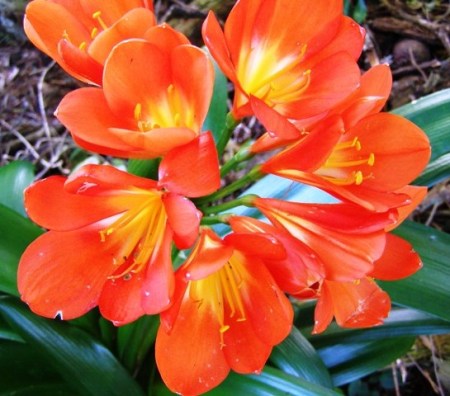
There is nothing subtle about the orange clivias at this time of the year

There is nothing subtle about the orange clivias at this time of the year

Latest posts:
1) Simple ideas to import (from Spain and Portugal).
2) Bring back plants! Please. Abbie’s column.
3) Arisaema sikokianum in Plant Collector this week.
4) Grow it yourself: gherkins and cucumbers.

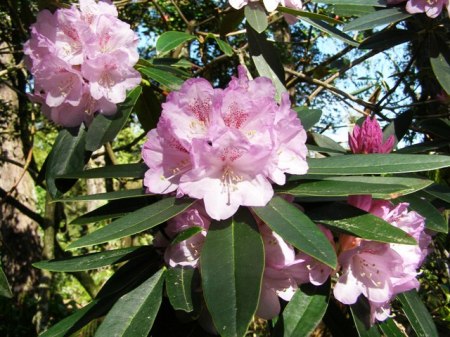
Just another seedling of Mark's - R. metternichii x Susan

Just another seedling of Mark's - R. metternichii x Susan

Tikorangi Notes: Friday October 21, 2011

With just a week until our annual garden festival, now styled the Powerco Taranaki Garden Spectacular (but formerly the Rhododendron and Garden Festival), it is a time of high pressure here as we primp and preen the garden in preparation for the 10 days that delivers up two thirds of our visitor numbers in one hit. It is all about leaf rakes, trimming, clipping, edges and the like – what we call garden grooming. While we work to maintain standards all year with regard to weeding, mulching, feeding and general maintenance, this is presentation with sharp edges.

The flowering this year is a week to maybe 10 days later than normal, but as we garden for year round interest, it does not matter if the usual candidates have not yet bloomed. There will always be something else in flower. The clivias are looking very showy. There is nothing subtle about the strident orange and red hybrids but they certainly light up darker areas and they are a tolerant and forgiving garden plant for relatively frost-free conditions. As the magnolias finish their season, the rhododendrons are coming into their own. We would not be without them for the spring display. Besides named cultivars, both hybrids and species, we have a fair number of hybrids from Mark’s breeding programme. The average to poor cultivars get discarded, but there are many which are good garden plants, even if they are not sufficiently sensational to name.