
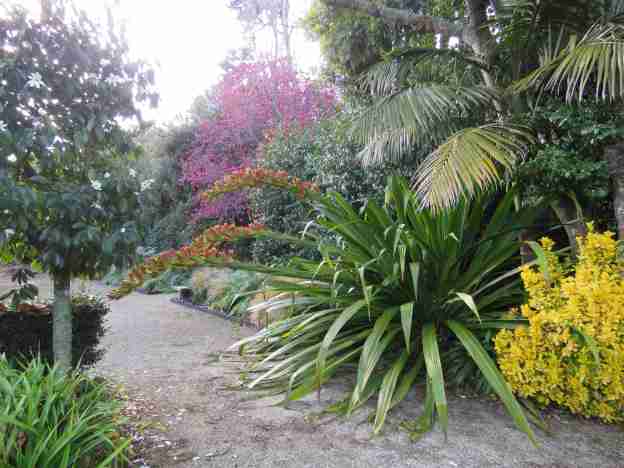
The Doryanthes palmeri last bloomed here in 2018. Only eight years have passed since then. To have it flowering again already seems to be quite a quick turnaround. Taking ten years to bloom and then dying is the norm.
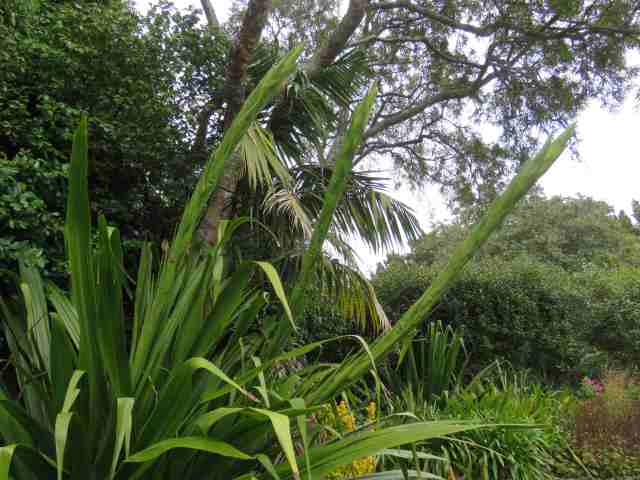
It is a clumping perennial and each rosette only blooms once before making offsets and the one that bloomed dying off. The rosette that bloomed last time died off fairly tidily. In fac,t I recall wondering if it actually did die off at all but I am assuming it did. It is a bit hard to remember how it behaved eight years ago. It looks as though each of the three spikes this year come from different rosettes.
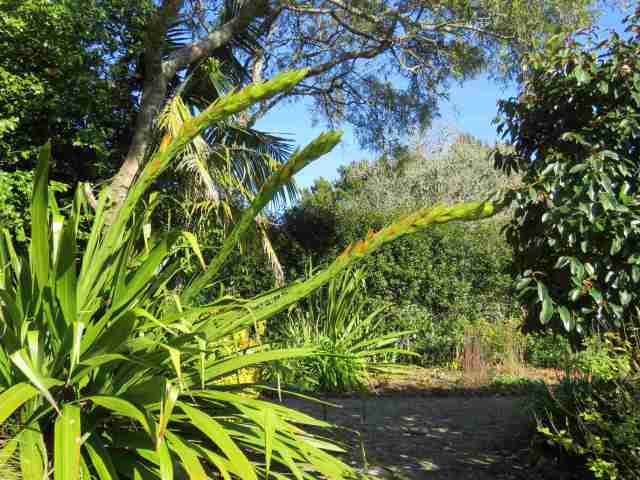
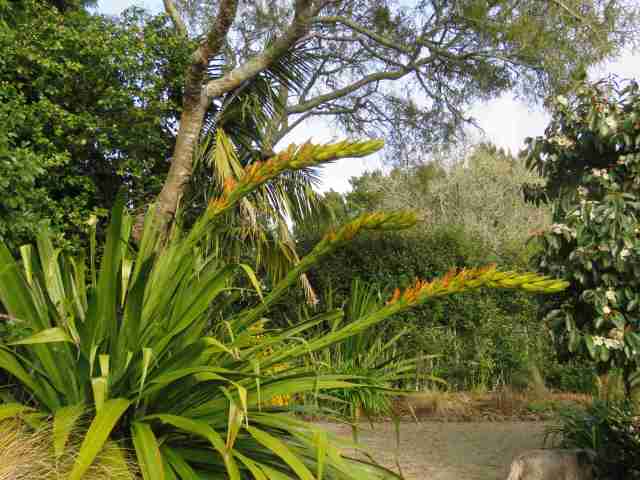
This is not a plant for those short of space, living in a colder climate or faint of heart. Ours is now well over three metres in diameter so if you feel inclined you could calculate the area (Pi R squared, is it?) or the circumference (Pi D, I think). Or you could just take my word for it that it takes up a lot of space and you can not plant anything close in to it because those leaves act as brooms or blunt scythes in windy weather.
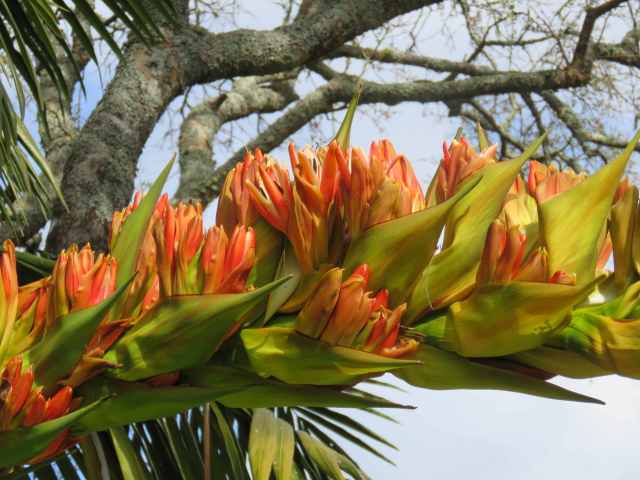
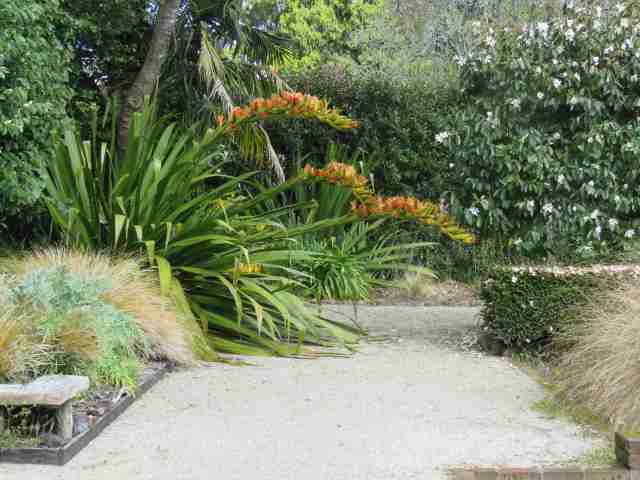
Doryanthes palmeri is the Queensland spear lily, although any debt to the lily family is a long way back in the botanical family tree. I expect it to flower through until around Christmas. To be honest, it is a little bit inconvenient. I can still duck under it but Zach referred to the difficulty of limboing beneath it and I assume he and Lloyd are taking the long way round. The flower spikes are far too robust to push aside or stake out of the way. Based on past experience, I am confident that this massive flower spike will not break and is not likely to weigh itself down to ground level.
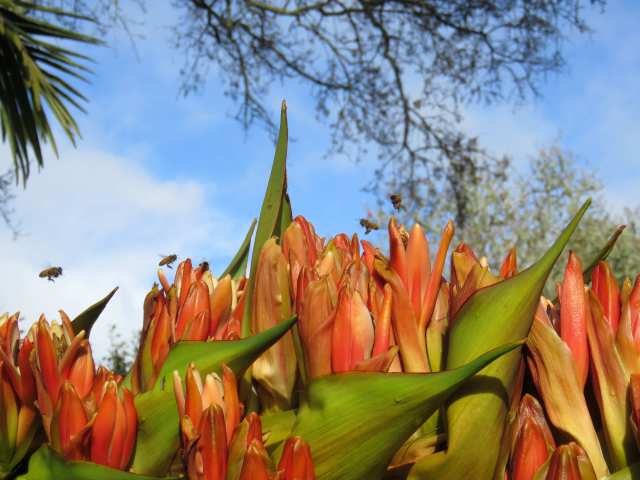
We must let it do its thing. What is a minor matter of inconvenience in the face of something as impressive as these flower spikes?
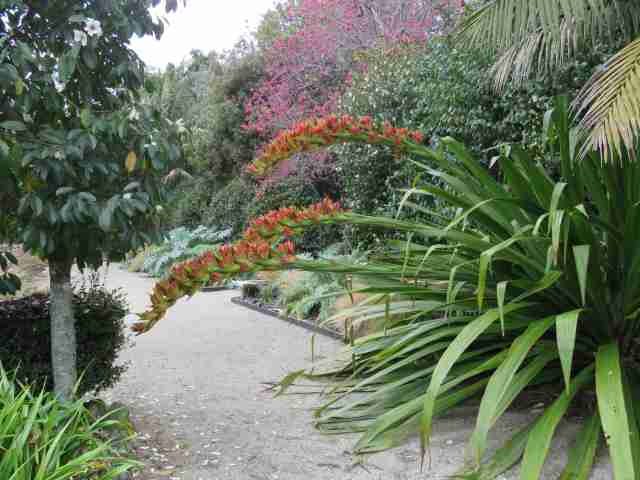


There used to be a magnificent specimen in Lake Road, Hamilton – right next to the footpath! Not the best spot for the public but it would be a crime to remove it. (I must see if it’s still there; it is easy to disregard without the flower spikes to draw attention.) The tuis would surely love it.
As always I enjoy your writing very much Abby keep up the good work!
It is more likely to have been the only other doryanthes – D. excelsa – which is somewhat smaller, hardier to frosts and the flower spikes tend to stay vertical as opposed to arching outwards and downwards.
Thanks for your kind words.
We had one of these, I think, on the road side outside our place in Te Puke. I’m afraid the new owners removed it. It blocked the sight line up the road they said. The locals were horrified at its removal.
Well that is mighty disappointing.