
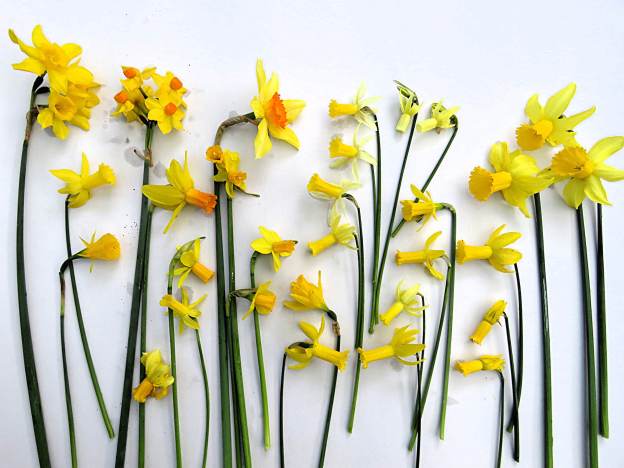
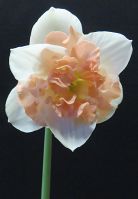
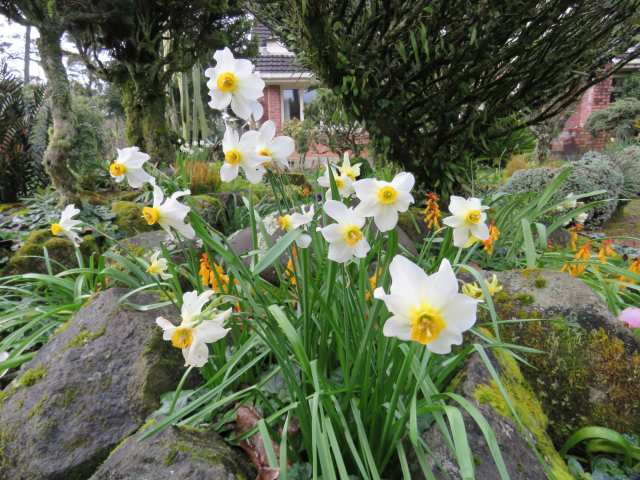
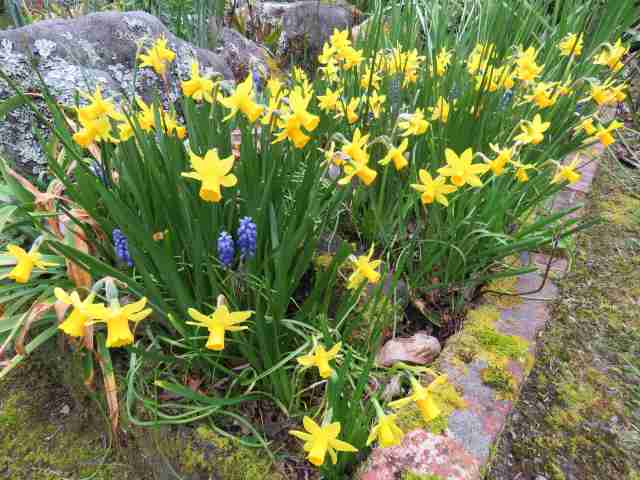
True, so are July and September. If you grow enough different ones, you can have somewhere over three months of cheerful daffies in bloom. I have timed them. We avoid the big show daffodils; as garden plants, the weight of the flower pulls the stem down. They make better cut flowers than garden plants. Nor are we into the novelty breeding of split corona (which make the flower look like a squashed nose to me) or novelty colours like pink and peach. As far as I am concerned narcissi are in shades of yellow, occasionally white, sometimes with orange centres but predominantly sunshine yellow.
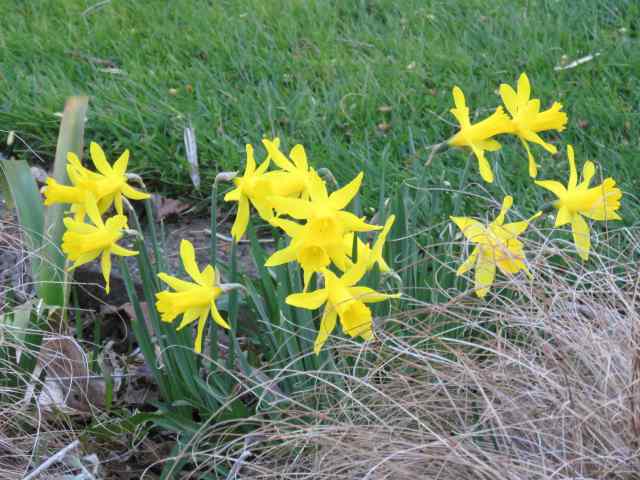
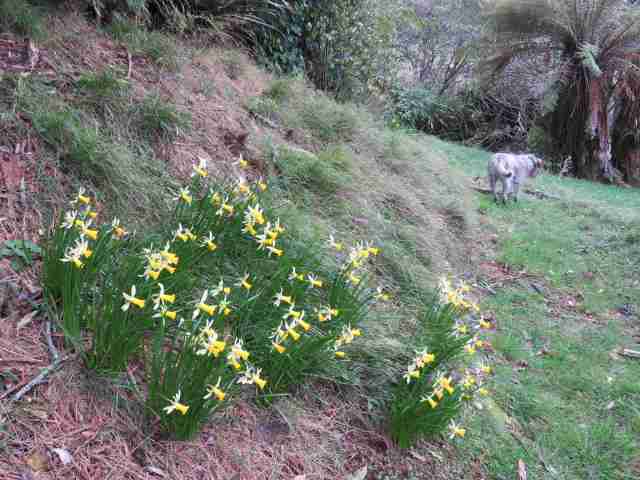
We have plenty. Mark and his parents before him sourced every named, smaller growing variety they could find so we have ‘Beryl’, ‘Jetfire’, ‘Peeping Tom’, ‘Thalia’, ‘Tete a Tete’, ‘Pandora’ and more, including the various species. But then Felix started dabbling with hybridising to produce his own selections (‘Twilight’ and ‘Twinkle’ were named and we released them through our nursery). Mark raised many more by controlled crosses just to get the numbers to make a show in the garden. It may have taken several decades, but we now have a splendid early spring display over a long period of time.
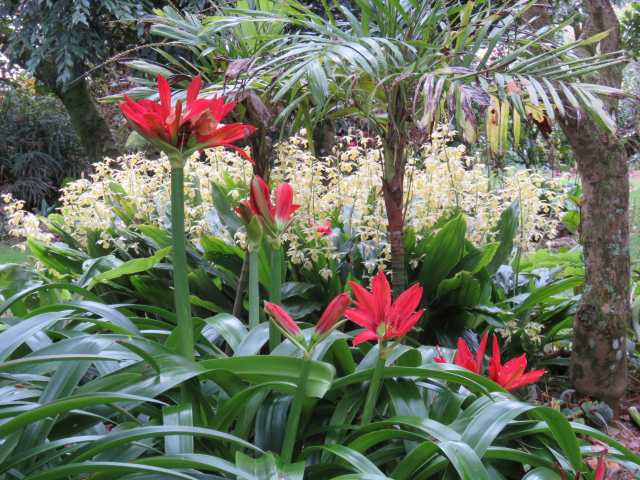
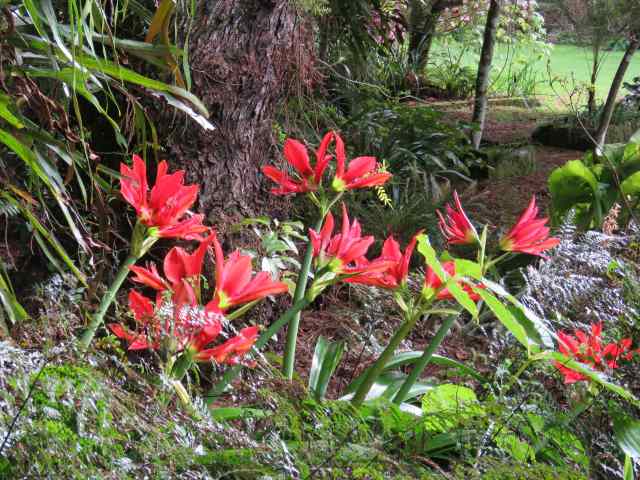
Also brightening large areas are the Hippeastrum aulicum. Again, decades of gently spreading them has increased numbers so that they are our dominant woodland bulb for August. Quite simply, they are large flowered but elegant in their simplicity and with the right ratio of flower to foliage. All class, is aulicum and that cannot be said of all hippeastrums. I am not a fan of most of the hippeastrum hybrids I have seen but each to their own.
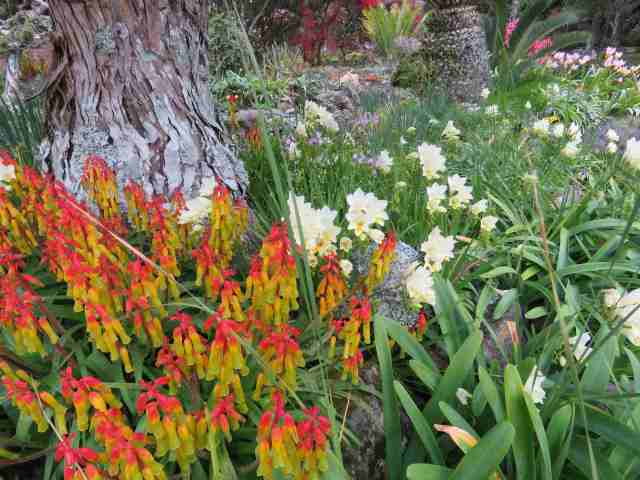
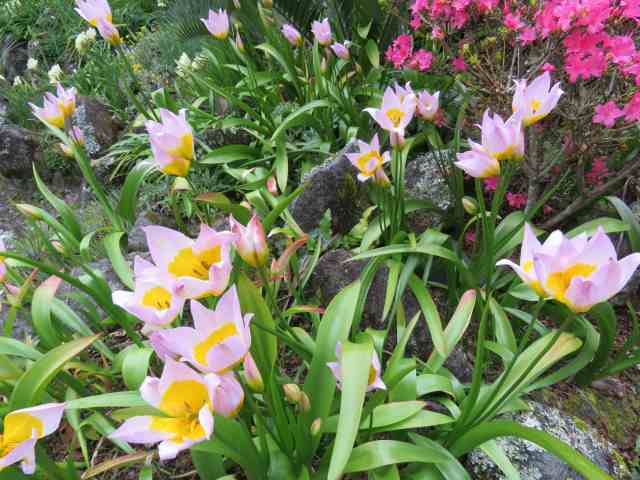
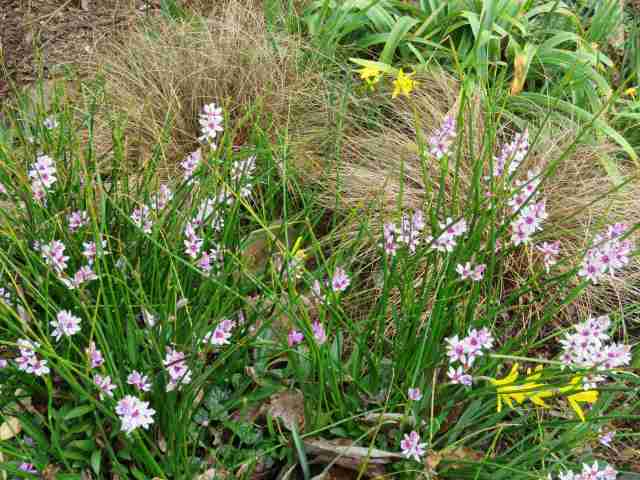
The rockery is hitting its spring peak with lachenalias, freesias, Tulipa saxatilis, Wurmbea stricta (formerly Onixotis triquetra), grape hyacinth (muscari), the first of the season’s moraeas (peacock iris) and more. I would note that the pretty lilac tulip from Crete is much hardier than I thought it was and I have probably been giving incorrect information on this for many years. I see photos of it from UK gardens come through social media. The schizostylus continue to bloom intermittently. We never seem to get a mass flowering from it here, as per photos I see on line, but both the red and pink flower randomly throughout the year for us. Amazingly, the large snowflake Leucojum vernum ‘Gravetye Giant’ is now into its fourth month of flowering and that is not to be sneezed at. Cyclamen coum is finishing for the season while dainty little Cyclamen repandum is opening.
The first of the bluebells are already open. And that is the end of a year in bulbs. I started with September last year which, when I reviewed it, could equally apply to August really but bulbs are not limited to calendar months. May and June were the quietest months but it is possible to have fresh bulbs flowering every month of the year in our climate.
I have an elderly gardening friend who once told me she wouldn’t grow bulbs because she hates the messy foliage that hangs on most of them after flowering. I was a bit gobsmacked but I wasn’t going to argue it with her. I tend to discard bulbs where the foliage to flower ratio is too high, but I would not want to be without the freshness and energy of seasonal bulbs. I can forgive them their messy time.
 Tikorangi The Jury Garden
These smaller flowered narcissus have become more and more popular here and make outstanding garden plants.
They make better garden plants, in my experience. Also, they flower earlier in the season so are not as vulnerable to narcissi flies which are not yet on the wing.