Tag Archives: Mark and Abbie Jury

Grow it Yourself: dwarf beans

Variously called dwarf, green or French beans, these are an easy and reliable summer crop for the home gardener, even more so if you are willing to plant in succession to ensure continued supply. They are a staple in our garden and kitchen. The first crop has been sown and we will continue to sow another double row every three weeks until the end of February.

We sow the bean seeds about 10cm apart, with side by side rows as close together as 20 to 25 cm. Cover with about 3cm of soil. They do not require staking or a frame to climb on. Beans are a reasonably hungry crop because they grow quickly with plenty of leafy growth. Being a legume, they do not require nitrogen but a mulch of compost feeds the soil and stops the roots from drying out. They may need watering in summer – excessive dryness will affect the crop quality and quantity. Pests and diseases are minor and rarely require attention. You can expect to start harvesting from about eight weeks onwards so a crop sown now will be ready for picking in early January.

The favoured varieties here are Top Crop and Chef’s Choice. We are not so keen on the butter beans but they are just as easy to grow. The attractive Borlotti Fire Tongue Beans have to be eaten very young or allowed to mature and used as dried beans. The stage in between is not so nice. There is some debate about whether green beans are safe to eat raw – we err on the conservative side and lightly blanch them.

Tikorangi Notes: Friday 21 October, 2011

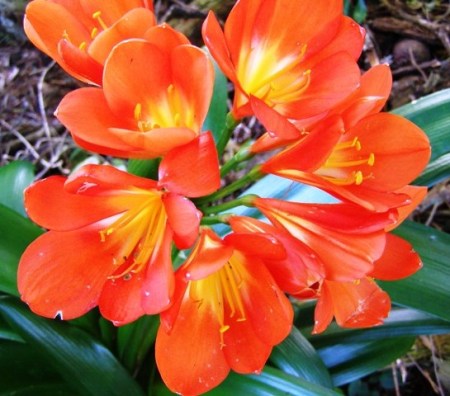
There is nothing subtle about the orange clivias at this time of the year

There is nothing subtle about the orange clivias at this time of the year

Latest posts:
1) Simple ideas to import (from Spain and Portugal).
2) Bring back plants! Please. Abbie’s column.
3) Arisaema sikokianum in Plant Collector this week.
4) Grow it yourself: gherkins and cucumbers.

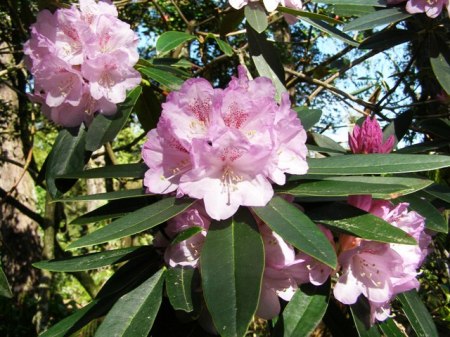
Just another seedling of Mark's - R. metternichii x Susan

Just another seedling of Mark's - R. metternichii x Susan

Tikorangi Notes: Friday October 21, 2011

With just a week until our annual garden festival, now styled the Powerco Taranaki Garden Spectacular (but formerly the Rhododendron and Garden Festival), it is a time of high pressure here as we primp and preen the garden in preparation for the 10 days that delivers up two thirds of our visitor numbers in one hit. It is all about leaf rakes, trimming, clipping, edges and the like – what we call garden grooming. While we work to maintain standards all year with regard to weeding, mulching, feeding and general maintenance, this is presentation with sharp edges.

The flowering this year is a week to maybe 10 days later than normal, but as we garden for year round interest, it does not matter if the usual candidates have not yet bloomed. There will always be something else in flower. The clivias are looking very showy. There is nothing subtle about the strident orange and red hybrids but they certainly light up darker areas and they are a tolerant and forgiving garden plant for relatively frost-free conditions. As the magnolias finish their season, the rhododendrons are coming into their own. We would not be without them for the spring display. Besides named cultivars, both hybrids and species, we have a fair number of hybrids from Mark’s breeding programme. The average to poor cultivars get discarded, but there are many which are good garden plants, even if they are not sufficiently sensational to name.

Plant Collector: Arisaema sikokianum

Arisaema sikokianum

Arisaema sikokianum

You have to love arisaemas. They are notable for their ability to change sex. When immature or not growing strongly, they are male. When romping away with vim and vigour, they become female and capable of setting seed. The poor weak male will still flower but is only suitable as a pollen donor. Should the female weaken itself by setting too much seed or coming under stress, it will have a little rest, becoming a male again. Is this a commentary on the human condition, I ask.

A. sikokianum is a Japanese species, remarkable because it is one of the few which holds it head above the foliage. Most varieties hide coyly beneath a canopy of leaves but sikokianum stands erect and proud, and somewhat phallic in appearance even when female. It grows from a flattish, circular corm but the problem is that, unlike most corms, bulbs and tubers (including most other arisaemas), it doesn’t multiply and set offshoots. You have to gather seed to increase it by raising them in pots or seed trays. But it is worth the effort to get a little clump or drift because the flowers last for weeks and are truly eye-catching. These are woodland plants, happiest with a light canopy of trees above, and humus rich soil which never dries out but which never gets waterlogged.

Arisaemas belong to the Araceae family which also includes arum lilies and the mouse plant (arisarum). You may have picked certain similarities in appearance, though they are not close relatives. A. sikokianum is available in New Zealand though you will have to search it out. These treasures are not standard garden department fare in this day and age. We also have quite a bit of success with A. speciosum (which is easy to grow and multiply) and A. candidissimum, if you find them available but we struggle with some of the showy varieties which need more of a winter chill.

Grow it Yourself: gherkins and cucumbers

Gherkins are a pickling cucumber. Cucumbers are actually a tropical plant so are not going to want to be planted out until temperatures have risen. By all means start them from seed now but keep the babies under cover for a few more weeks. But is it worth growing gherkins at home? Fresh, home pickled gherkins should always taste much better than those commercially produced but you have to be pretty passionate about them to want to grow them yourself. Just don’t make the mistake of thinking you will put in one plant because then you will get a few baby gherkins every few days whereas what you want is plenty of them all at once so you can start the pickling process. You probably need about five plants, each of which will take up a square metre, and then pull them out and compost them as soon as you have harvested sufficient quantities.

All the cucurbits are gross feeders (hungry plants) so they need rich, fertile soil in full sun with plenty of depth to get their roots well down. They also need plenty of water during the heat of summer but as they are prone to mildew and all sorts of nasty diseases including Fusarium wilt, you are best to direct water to the root zone and avoid wetting the foliage. Keep the sprinkler well away. You can train the runners over a frame or structure to reduce the amount of ground space required or you can just leave them to sprawl over the ground like pumpkins. Personally, I think it is worth making more effort with a few cucumber plants which will gently crop from January to early April, when salad veg are most in demand. I am particularly keen on the little Lebanese cucumber. But then I would say that because we have neighbours who adore pickled gherkins. We make land available, they grow them and pickle them and give us a jar or two.

Tikorangi Notes: Friday October 14, 2011

Feeding from both the veltheimia and the agapetes

Feeding from both the veltheimia and the agapetes

Latest Posts:

1) ‘Tis spring – must be rhododendron time. R. johnstoneanum “Ken Burns” in Plant Collector this week.
2) A call for more rigour and less fervour in Abbie’s column this week – what used to be called The Good Life (courtesy of Felicity Kendall and whover Briars – was it Richard?) but is now styled Green Urban Living.
3) Grow it Yourself – beetroot this week.
4) Tikorangi Diary and notes about half price clearance special on most magnolias.

Tikorangi Notes:
I was delighted by the sight of the little waxeye gathering nectar from the veltheimia flowers outside my office window. We often see them working the Agapetes serpens (which I describe as the waxeye bush, for its ability to feed the birds) but this is the first time I have seen one feeding on the veltheimia which looks better suited to humming birds because of its very long, tubular flowers. We do not have humming birds in this country which has always seemed a bit of a pity to me. We would gladly trade blackbirds and sparrows for humming birds.

Rain has not helped the garden preparation this week – our annual festival (now styled the Powerco Taranaki Garden Spectacular) starts in a fortnight so the pressure is on. I did feel sorry for the tour group here on Wednesday when it was hosing down but at least it wasn’t windy or cold! The magnolia season is drawing to a close with only Serene looking picture perfect now. But the michelias (now also reclassified as magnolias) have a longer season. The first of Mark’s new series, Fairy Magnolia Blush, is looking particularly pink this year. Indubitably pink which, in the world of white michelias, is pretty remarkable. More rhododendrons open every day though the maddenii and nuttallii types are generally later flowering and won’t be doing much for another fortnight. The garden is open every day now and we are generally around for plant sales – sound the car horn if we do not appear because we will be in the garden.

Indubitably very pink this season - Fairy Magnolia Blush

Indubitably very pink this season - Fairy Magnolia Blush