Tag Archives: Mark and Abbie Jury

Garden maintenance, sustainability or just garden grooming?

Judge not a garden upon the daisies in its lawn

Judge not a garden upon the daisies in its lawn

There is nothing like preparing a presentation to focus the thinking. So most of our discussions here recently have been clarifying thoughts on what makes a good garden. The ever-so-brief outline is that good gardening is a combination of good design, good plants and plantsmanship over time, maintenance and sustainability all served up with more than a dash of panache, style or flair. If you want the full details along with all the accompanying examples, you will just have to come to the Waikato Home and Garden Show today at 12.30 or tomorrow at 2.30 (find the Weekend Gardener Stage).

Because we garden on a large scale here and The Significant Other had a deeply disturbing Significant Milestone Birthday recently (“It is all downhill from here,” he keeps reminding me), sustainability is a gardening principle we are spending a lot of time thinking about. But it wasn’t until I was working through my presentation that I came up with the hypothesis:
“We spend far too much time worrying about garden maintenance in this country and not enough time worrying about sustainability. In fact, so-called maintenance is in danger of being accorded a status way beyond its importance. What compounds this is that what is frequently seen as garden maintenance is in fact garden grooming – edges, hedges and lawns.”

Garden grooming is what presents a garden well and it is just as important as housekeeping indoors. But while the initial design and fit out of a house is a highly skilled exercise, often employing the services of an architect and an interior designer, the routine cleaning is a low skilled task at best and can be carried out perfectly adequately by someone with little thought and no understanding of the skill level that went into creating the interior. So too in the garden. When we still employed staff in the nursery, we would despatch them into the garden with leaf rakes and edging tools when we had to spruce up in a hurry. Generally they weren’t gardeners and they needed clear boundaries set lest they do real damage, but they were fantastic garden groomers. They could whip through and titivate in next to no time, partly because they didn’t get distracted by plants. At the end of it, the garden looked fantastic. It was a bit of a revelation to us that if the underpinning garden is in good shape, it doesn’t take particular skill to add the icing to the cake. Yet it is that sharp finish that is often judged as garden maintenance.

People who open their garden to the public will know all about this final grooming round and just how smart it makes the garden look. Most garden visitors now expect that high level of finish, especially for festivals and events. It is a great deal easier to manage if your patch is a small town garden and I have seen some splendid examples of immaculate presentation. Alas, as many have come to consider that this elevated level of garden grooming is the measure by which a good garden is judged, large gardens encompassing several acres have come under pressure to achieve the same, immaculate, sharp appearance. We do it here once a year for our annual garden festival and I love how smart the garden looks and vow every year to maintain it at that level. But it is completely unsustainable across seven acres. Without an army of gardeners (about one to an acre, perhaps), it just is not possible to keep it that spic and span for 52 weeks of the year. Besides, battling nature takes all the fun out of gardening.
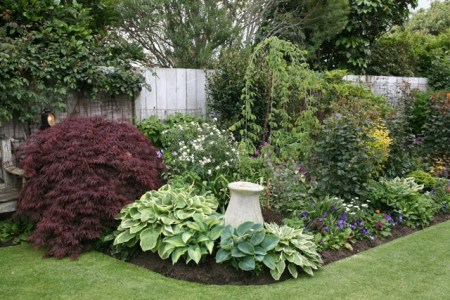
Immaculate garden grooming is not the same as maintenance (photo: Jane Dove Juneau)

Immaculate garden grooming is not the same as maintenance (photo: Jane Dove Juneau)

I call that finish garden grooming. Garden maintenance should be considerably more extensive and require much greater skills. It is, or should be, all about managing your garden in sustainable ways so that it is a source of pleasure and not a burden. It is about keeping control of weeds so they never get beyond you, about keeping plants and soils healthy and about eliminating gardening practices which are all round bad for the environment. It is about adapting to changing environments within the garden over time. As trees and shrubs grow, they start to cast shade and their roots spread further. The gardener needs to change some plantings and practices as the growing environment changes. Maintenance is about keeping trees a good shape, avoiding forked trunks, lifting and limbing, and about knowing how and when to prune. It is about lifting and dividing choked perennials, deciding which plants are precious and which are expendable, restricting or eliminating plant thugs, rescuing bulbs which have become so overcrowded they no longer flower.

That is what garden maintenance should be about. To me, it is not about whether there is the odd flat weed in the lawn. Goodness knows, we have a park full of pretty white daisies though we do try and keep flat weeds out of the house lawns. At least our lawn clippings are not toxic and can safely be put on the compost heap or indeed used in the vegetable garden except that we never gather the clippings. We mulch them back in and that means we never have to add fertiliser to the lawn.

I appreciate the immaculate presentation of a garden but only when it is the final touch to one which is actively and positively gardened, not when it substitutes for an underlying lack of quality management. Look beyond edges, hedges and lawns.

Grow It Yourself: Potatoes

The history of the potato is a remarkable one and surely warrants further exploration at a later date. But is it worth growing at home? If one potato is much the same as the next to you, then probably not, because they are so cheap to buy. But if you love your taties and can tell the difference between varieties, then of course you will be growing them. And the message from the Head Vegetable Grower here is that if you want new potatoes for Christmas dinner, you will have to get them in this very weekend because most early varieties take from 75 to 90 days to mature, though Swift and Rocket can do it in 60 days. Potatoes are vulnerable to disease so it pays to start with fresh certified seed potato from garden centres each year rather than using your own old potatoes which are shooting.

Potatoes are heavy on space. Because this is not a problem for us, we do them in rows digging narrow trenches about 20m deep and wide (full sun, well cultivated friable soil, fresh ground if possible), piling the soil to the side of the trench. The potatoes are then laid on the bottom of the trench and covered with 10cm of compost. As the shoots reach about 20cm, more soil is layered on top – a process called mounding. The potatoes form on the stems so you need to encourage stem growth and keep a thick enough layer of dirt to keep the potatoes well covered and stop them going green. The mounding process continues until the plants have flowered and it may be necessary to water in dry spells because the mounds lose moisture.

In smaller spaces, the stack of tyres is a popular technique, though hardly aesthetic. Potatoes need good drainage so it is better to build your stack on dirt rather than concrete. Start with one tyre and fill with good soil or compost, making sure you fill the rims as well. Plant about three potatoes and, as mounding is needed, add another tyre and fill with soil. You will probably end up with a stack of 3 or 4. If you plan to use potting mix instead of soil, they will become expensive potatoes.

One of the reasons for getting potatoes in now is to try and get crops through before the dreaded blights hit. In our experience, if you are not willing to spray your potatoes regularly with copper (about every fortnight), unless you know what you are doing, get your crop in early and manage them very well, you will get disease. Don’t use nitrogen based fertilisers as they are a root crop. Favourite early varieties here are Liseta and Jersey Benne, for main crop Red Rascal and Agria.

Tikorangi Notes, Friday 30 September, 2010

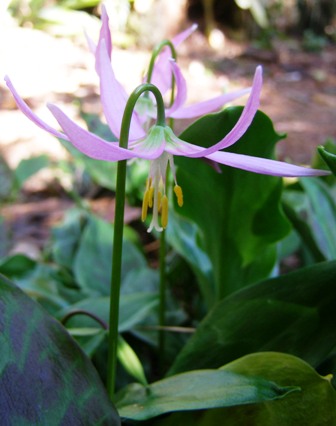
The ephemeral delight of the erythroniums in flower this week

The ephemeral delight of the erythroniums in flower this week

Latest Posts:
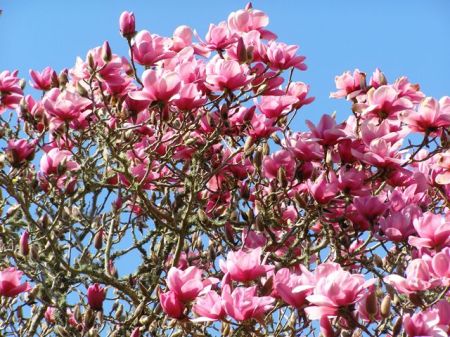
1) Magnolia Athene in all her glory in Plant Collector this week and gratitude for the mid season varieties.

2) New Zealand’s Native Trees by John Dawson and Rob Lucas. Thank you Craig Potton Publishing for not cutting corners, simplifying and dumbing down on the assumption that most of us have the mental capacity and experience of a child.

3) The differing agendas of gardeners, novices and designers (or why I am happy to accommodate plants with a scruffy period which includes deciduous plants and bulbs)

4) Grow it Yourself topic this week is Mark’s absolutely most favourite vegetable – sweetcorn.

5) Clearance special this week is Magnolia grandiflora Little Gem – a snip at $12 but very limited numbers.

6) In Praise of Plunging – a traditional technique from the UK which has its relevance here, in our conditions too.

The pink puffery of Magnolia Serene

The pink puffery of Magnolia Serene

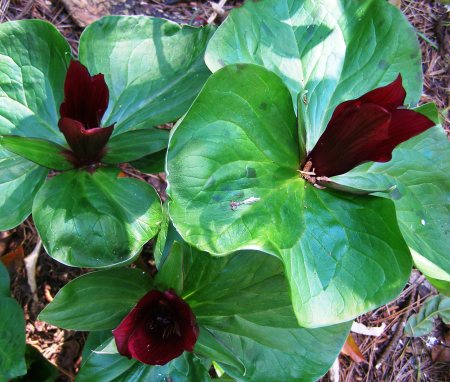
I suggested to Mark that the start of a new year here was marked by the magnolias and early spring but he was pretty adamant that it is the snowdrops that herald the new beginning. The snowdrops have long finished, most of the narcissi are passing over and while the magnolia season continues, it is on the wane – the opening of Serene heralds the end of the season because it is the last of the major ones to flower for us. But temperatures are rising, the rhododendrons are opening and other new plants open every day. The trilliums are a triumph for us here. We are not natural trillium territory (bar two days this winter, we lack the winter chill they prefer) and have to choose planting situations carefully.

Showing off: the trilliums

Showing off: the trilliums

Each flower may be only three petals but when you get the deep red ones blooming with the light passing through, the effort is well worth it. The erythroniums are in full flower. If we don’t get torrential rain, we may get two or even three weeks of pleasure from these short-lived, dainty delights. The countdown to our annual garden festival at the end of October is on so the pressure is mounting.

In a rash moment, I agreed to present at the Waikato Home and Garden Show next Friday and Saturday. My main presentation is entitled “What Makes a Good Garden” (Friday at 12.30 and Saturday at 2.30) and I am also doing a presentation on our annual festival (styled the Powerco Taranaki Garden Spectacular this year but we will say no more about that, formerly known as the Taranaki Rhododendron and Garden Festival) at 6.30 on Friday and 4.30 on Saturday.

GIY Sweetcorn

I am married to one of the world’s biggest fans of sweetcorn. Maybe he has been reincarnated from an indigenous tribe from the Americas, where our modern sweetcorn has its antecedents as the primary carbodydrate staple. He has planted his first seed of this season into small pots to get them started under cover and he will plant them out, in accordance with NZ tradition, at Labour Weekend. From there, he will sow in succession through as late as the end of January in order to get fresh corn for a period of five months of the year. Sweetcorn is worth growing at home because the freshly picked product is infinitely superior to anything you will buy. The natural sugars start turning to starch almost immediately on picking.

Corn can either be sown direct into the ground (well cultivated soil and full sun, as with most vegetables) or started in small pots. He Who Grows the Corn here does not subscribe to the advice sometimes given to sow closely together. Quite the opposite – too close and the tall stems lack strength and fail to develop full cobs. You only get one or two good cobs per plant anyway. He recommends spacings of 20 to 30cm between plants and up to a metre between rows. They need lots of sunshine and light and growing in open conditions means the stems will be stronger and hold themselves up. Corn is a gross feeder so needs plenty of compost added and they respond well to superphosphate if you want to add a general garden fertiliser.

Modern corn is far removed from the old heritage crops which are more akin to tougher maize. These days we save our own seed but started from Honey and Pearl which is one of the newer generation hybrids which made corn more palatable to eat and easier to prepare.

Managing meadows or drifts of bulbs

The bulbocodiums are the highlight of the narcissi world this week

The bulbocodiums are the highlight of the narcissi world this week

We are bulb fanatics here. It doesn’t matter how large or small your garden, there is always space for bulbs. They mark the progression of the seasons in a wonderfully detailed manner, often little pictures of ephemeral delight. We have been charting the narcissi here this year, tracking which ones flower for long periods of time and which ones give us a succession of blooms to extend the season as others are just finishing. We don’t grow many of the big, show daffodils, preferring instead the dwarf and miniatures, both species and hybrids. It is the bright yellow hooped petticoat type that are the showiest at the moment (bulbocodium citrinus). The best early variety, flowering over a long period, has been Peeping Tom. The single best mid season variety has been the cyclamineus hybrid, Twilight.

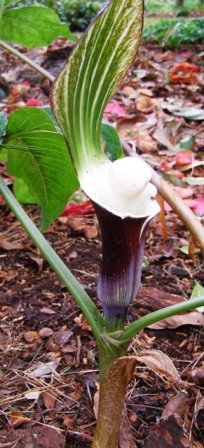
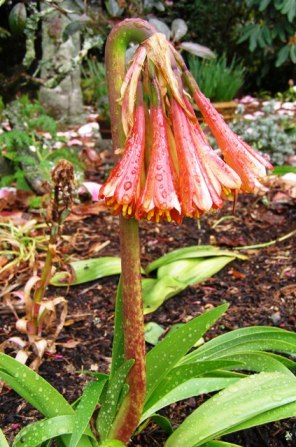
Now the erythroniums or dogs tooth violets are opening, as are the veltheimias (big bulbs which resemble lachenalias on steroids), the early arisaemas are through the ground and the bluebells are coming into bloom. Early to mid spring is peak bulb time and that is because we do best with South African bulbs whose growth is triggered by the autumn rains. It is not that the autumn rains are significant here. Most of us get winter rain, a great deal of spring rain and some summer rain too. It is more a case that the autumn rain bulbs are in full growth during our rather wet winters so they don’t rot out as readily.

Bulbs are easiest to manage in pots and in designated areas such as a rockery. Sometimes I combine the two and plunge the pot to sit flush with the soil level in the rockery (a good technique for confining invasive bulbs as well as keeping track of vulnerable treasures). They can be a bit problematic in garden beds and borders where it is all too easy to find their location by severing them with the spade.

Not perhaps the most obvious candidate for Mark's hillside of naturalised bulbs - pleione orchids

Not perhaps the most obvious candidate for Mark's hillside of naturalised bulbs - pleione orchids

But the real challenge here is to extend the meadow drifts of bulbs and that has taken a great deal of thinking and planning. It all comes down to grass growth. Areas of the country which are suitable for intensive dairy farming tend, by definition, to have more fertile soils and an abundance of grass growth for most of the year. Most bulbs naturally grow in opposite conditions – often dry and poor ground – and are triggered into growth by seasonal change. Romantic woodland drifts occur in open, deciduous forests where enough light gets through during winter to allow the bulbs to flourish while in summer, a canopy of foliage creates shade which reduces rampant grass growth which can choke the bulbs. After years of experimentation, the lessons we have learned include:

1) Only plant bulbs in areas which won’t need mowing during their growth season. This can be easier said than done with bulbs which coincide with the spring flush of the grass. We have been working on extending the bluebell drifts but have taken care to site the bulbs closer to the trees and shrubs, so to the side of the main mown areas. They still look as if they are drifting naturally but it is a managed drift.

2) Don’t use bulbs which are going to need frequent lifting and dividing to keep them flowering well. For this reason, we have pretty well given up on the big daffodils. They look great for one or two seasons but in our conditions, it is all downhill from there to the point where they can be mostly foliage with very few blooms. They do better in harder conditions.

3) Control the grasses. Mark (the husband) has gone to considerable lengths to eliminate strong growing grasses from his bulb hillside in favour of the weaker growing, fine native grass, microlina. We can get away with only needing to weedeat the microlina occasionally so the bulbs are not disturbed and we can manage a succession over several months.

4) It takes a lot of bulbs to get a drift. Many hundreds of bulbs, not tens. We multiply ours by dividing existing clumps but also gather our own fresh seed each year to increase the numbers.

5) The most successful bulbs so far are: bluebells (also pink bells and white bells), colchicums or autumn crocus, cyclamen species (hederafolium, coum and repandum), proper English snowdrops (galanthus) and some of the dwarf narcissi. Pleione orchids and assorted lachenalias (especially the more desirable blue ones) take a bit more work but are worth the effort. All except the pleiones disappear entirely below ground when they are dormant.

6) Large bulbs which grow with their necks above ground include the belladonna lilies, crinums and veltheimias. These can never be mowed over or walked on so have to be placed in areas which don’t generally grow grass. This means they are not suitable candidates for meadow drifts.
There are those for whom gardening is all about controlling nature and those for whom it is about emulating nature and managing it. We fall into the latter category. Meadow bulbs and drifts of spring delights are an important ingredient for us.

Managed drifts of bluebells

Managed drifts of bluebells

First published in the Waikato Times and reproduced here with their permission.