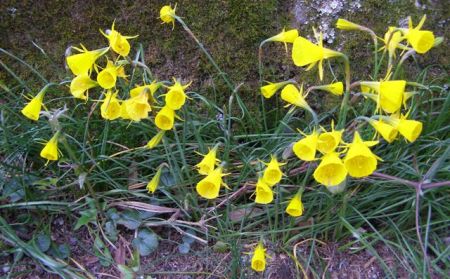
The bulbocodiums are the highlight of the narcissi world this week
We are bulb fanatics here. It doesn’t matter how large or small your garden, there is always space for bulbs. They mark the progression of the seasons in a wonderfully detailed manner, often little pictures of ephemeral delight. We have been charting the narcissi here this year, tracking which ones flower for long periods of time and which ones give us a succession of blooms to extend the season as others are just finishing. We don’t grow many of the big, show daffodils, preferring instead the dwarf and miniatures, both species and hybrids. It is the bright yellow hooped petticoat type that are the showiest at the moment (bulbocodium citrinus). The best early variety, flowering over a long period, has been Peeping Tom. The single best mid season variety has been the cyclamineus hybrid, Twilight.
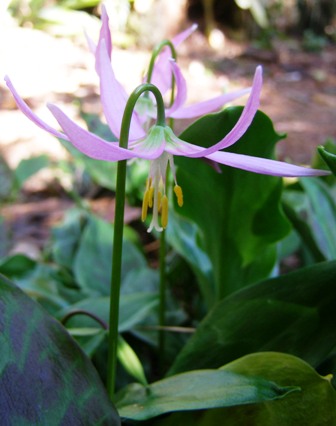
Now the erythroniums or dogs tooth violets are opening, as are the veltheimias (big bulbs which resemble lachenalias on steroids), the early arisaemas are through the ground and the bluebells are coming into bloom. Early to mid spring is peak bulb time and that is because we do best with South African bulbs whose growth is triggered by the autumn rains. It is not that the autumn rains are significant here. Most of us get winter rain, a great deal of spring rain and some summer rain too. It is more a case that the autumn rain bulbs are in full growth during our rather wet winters so they don’t rot out as readily.
Bulbs are easiest to manage in pots and in designated areas such as a rockery. Sometimes I combine the two and plunge the pot to sit flush with the soil level in the rockery (a good technique for confining invasive bulbs as well as keeping track of vulnerable treasures). They can be a bit problematic in garden beds and borders where it is all too easy to find their location by severing them with the spade.
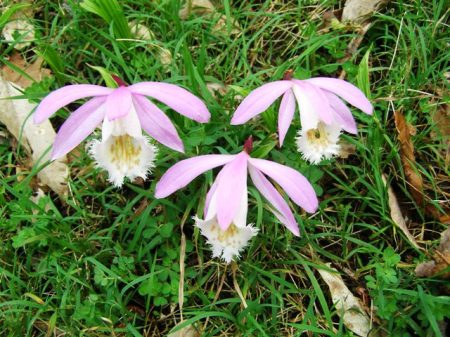
Not perhaps the most obvious candidate for Mark's hillside of naturalised bulbs - pleione orchids
But the real challenge here is to extend the meadow drifts of bulbs and that has taken a great deal of thinking and planning. It all comes down to grass growth. Areas of the country which are suitable for intensive dairy farming tend, by definition, to have more fertile soils and an abundance of grass growth for most of the year. Most bulbs naturally grow in opposite conditions – often dry and poor ground – and are triggered into growth by seasonal change. Romantic woodland drifts occur in open, deciduous forests where enough light gets through during winter to allow the bulbs to flourish while in summer, a canopy of foliage creates shade which reduces rampant grass growth which can choke the bulbs. After years of experimentation, the lessons we have learned include:
1) Only plant bulbs in areas which won’t need mowing during their growth season. This can be easier said than done with bulbs which coincide with the spring flush of the grass. We have been working on extending the bluebell drifts but have taken care to site the bulbs closer to the trees and shrubs, so to the side of the main mown areas. They still look as if they are drifting naturally but it is a managed drift.
2) Don’t use bulbs which are going to need frequent lifting and dividing to keep them flowering well. For this reason, we have pretty well given up on the big daffodils. They look great for one or two seasons but in our conditions, it is all downhill from there to the point where they can be mostly foliage with very few blooms. They do better in harder conditions.
3) Control the grasses. Mark (the husband) has gone to considerable lengths to eliminate strong growing grasses from his bulb hillside in favour of the weaker growing, fine native grass, microlina. We can get away with only needing to weedeat the microlina occasionally so the bulbs are not disturbed and we can manage a succession over several months.
4) It takes a lot of bulbs to get a drift. Many hundreds of bulbs, not tens. We multiply ours by dividing existing clumps but also gather our own fresh seed each year to increase the numbers.
5) The most successful bulbs so far are: bluebells (also pink bells and white bells), colchicums or autumn crocus, cyclamen species (hederafolium, coum and repandum), proper English snowdrops (galanthus) and some of the dwarf narcissi. Pleione orchids and assorted lachenalias (especially the more desirable blue ones) take a bit more work but are worth the effort. All except the pleiones disappear entirely below ground when they are dormant.
6) Large bulbs which grow with their necks above ground include the belladonna lilies, crinums and veltheimias. These can never be mowed over or walked on so have to be placed in areas which don’t generally grow grass. This means they are not suitable candidates for meadow drifts.
There are those for whom gardening is all about controlling nature and those for whom it is about emulating nature and managing it. We fall into the latter category. Meadow bulbs and drifts of spring delights are an important ingredient for us.
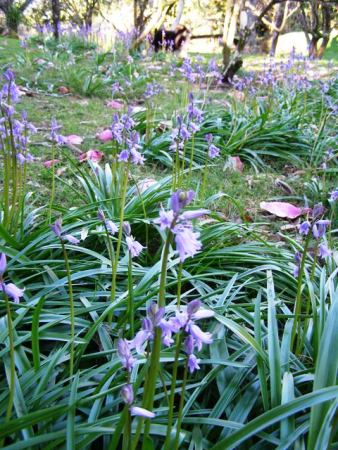
Managed drifts of bluebells
First published in the Waikato Times and reproduced here with their permission.
-39.042098
174.300314

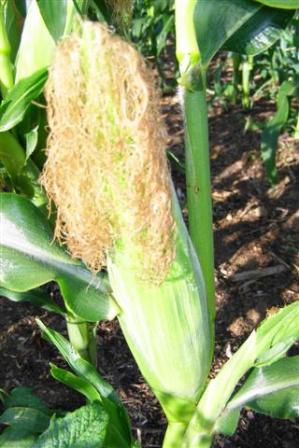 I am married to one of the world’s biggest fans of sweetcorn. Maybe he has been reincarnated from an indigenous tribe from the Americas, where our modern sweetcorn has its antecedents as the primary carbodydrate staple. He has planted his first seed of this season into small pots to get them started under cover and he will plant them out, in accordance with NZ tradition, at Labour Weekend. From there, he will sow in succession through as late as the end of January in order to get fresh corn for a period of five months of the year. Sweetcorn is worth growing at home because the freshly picked product is infinitely superior to anything you will buy. The natural sugars start turning to starch almost immediately on picking.
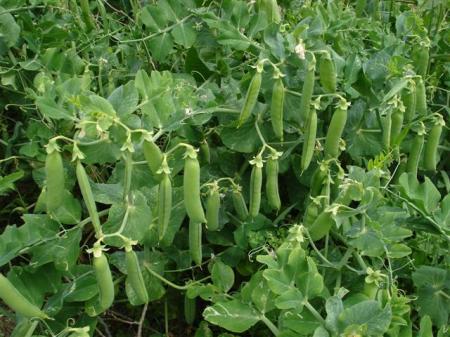 Peas are a marginal crop in mild climates. They tend to be much more reliable and productive in cooler areas. The frozen products in the supermarkets are ridiculously cheap to buy and of very high quality. So the reasons to grow peas at home are less related to quality and volume and more related to life’s simple pleasures. The satisfaction of picking fresh peas to serve with Christmas dinner is an adult pleasure. The opportunity to browse fresh peas in the garden, popping them from the pod straight into the mouth is a delight that every child should experience and one that does not wane with age. Raw, fresh peas don’t last well so are rarely nice if you buy them. You need them straight from the plant.
 Tikorangi The Jury Garden