Tag Archives: Mark and Abbie Jury

Tikorangi Notes: Friday 16 September, 2011

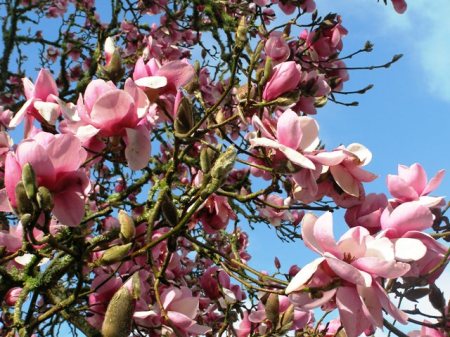
Magnolia Athene in our park this week

Magnolia Athene in our park this week


Latest posts:

1) The yellow Camellia chrysantha – looking rather more spectacular in the photo than on the bush. Plant Collector.
2) Trees for small gardens – Abbie’s column.
3) In praise of Bok Choy (aka Pak Choi) (this weeks GIY).
4) Tikorangi Diary with effusive praise for Magnolia Iolanthe and a plaintive complaint about people who can not read the important notes on our website explaining repeatedly that we do not mailorder or courier plants.

Magnolia Iolanthe in all her magnificence this week

Magnolia Iolanthe in all her magnificence this week

Tikorangi Notes: Friday 16 September, 2011

While much of the country is in the grip of rugby world cup fever (save us should the All Blacks fail to deliver the silverware. Elections have been lost on less and the country may plunge into deep depression), it is magnolia time here. I read a colleague advocating planting magnolias at the bottom of a slope so you can look down on them but I disagree. I love looking up through them from below and I prefer my magnolias displayed against a blue sky rather than framed by other greenery. With some of our trees around 60 years old now, they have considerable stature. In fact the original plant of Iolanthe has a diameter of about 10 metres – that is a lot of Iolanthe on show. The other mid season magnolias – Athene, Lotus, Milky Way, Atlas and the like- are all opening and the coming week will be one of the highlights of our gardening year.

Grow it yourself: Bok Choy or Pak Choi

Mark, the vegetable-growing husband here, comments that we have been a bit slow to wise up to the fact that the Chinese know a great deal about food production and we should have been looking to their crops a long time ago. Bok Choy, also known as Pak Choi, is a case in point. In the world of leafy greens, it is a great deal faster and easier to grow than the likes of spinach. It can also be grown throughout most of the year and deserves to be a staple crop, though you are best to avoid sowing in mid summer when it is more likely to get stressed and bolt to seed rather than to leaf. It is so easy to grow from seed that there is not a lot of point in buying baby plants.

Sow into the usual vegetable garden conditions – full sun and well cultivated soil with plenty of compost or humus added. Water if it gets too dry. Within a few weeks, the seeds will have germinated and you can start thinning the row and eating those baby thinnings as micro greens, raw in salads or lightly cooked in stirfries. Bok choy only takes about six weeks to reach maturity so you can be harvesting for as much as four weeks of that time, at various stages of growth. As with many crops, sowing a few seed every three weeks ensures a steady supply but it really comes into its own as a winter green when the more common crops basically stop growing and fresh veg are expensive to buy. There is a lot to be said for a quick maturing green vegetable which grows all year round and is not silver beet.

First published in the Waikato Times and reproduced here with their permission.

Tikorangi Diary: Thursday 16 September 2011

The original Iolanthe is a wondrous sight this week

The original Iolanthe is a wondrous sight this week


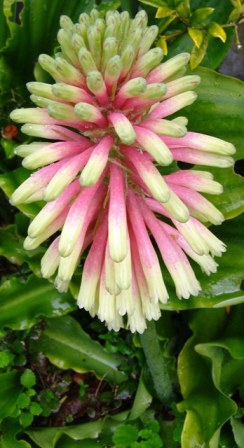
Veltheimia bracteata "Rosalba"

Veltheimia bracteata "Rosalba"

It is not easy to convey the full impact of the original Magnolia Iolanthe in flower. It is a wondrous event. Mind you, at about 50 years old, the canopy does measure around 10 metres across so there is rather a lot of Iolanthe to be wondrous. As somebody commented to us, what will Felix Jury be like in full flower when it achieves the same age and similar stature? Possibly even more astounding. We never tire of magnolia time here.

We advertise that we are open for plant sales on Fridays and Saturdays which means that we will definitely be here in attendance. In fact we are here most of the time and the garden is open every day (there is an honesty box if we are not around) but we just don’t guarantee our availability on other days. You can ring first to check if you want to come on other days. Details on what we have available are listed in Plant Sales. I have to comment though that despite every page on Plant Sales explaining that we do not courier or mail order plants, (sales are to personal customers only), every single day brings enquiries from people who have either failed to read that header comment or who hope that we will make an exception for them. If it was easy to pack and courier plants, we would still be doing it but it isn’t, so we don’t. End of story, I am afraid. We will however hold plants out the back while you arrange for somebody else to pick them up for you or until you can get here.

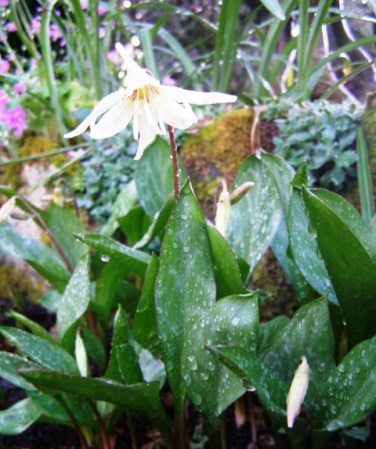
The dainty delight of the erythronium

The dainty delight of the erythronium

The highly sought after lemon and pink variant of veltheimia (bracteata Rosalba) is just coming into flower but we only have a few plants left so be in quickly if you want it. We have plenty of the more common pink (bracteata). And just as a complete contrast to the opulent magnolias, we have plants of one of the daintiest and most ephemeral seasonal delights – dogs tooth violets or erythroniums. Spring here is all about the big pictures and the tiny treasures. Why would anybody want an evergreen garden which looks the same all year round?

Tikorangi Diary, September 9, 2011

Magnolia Felix Jury in its glory now

Magnolia Felix Jury in its glory now

Latest Posts: Friday 9 September, 2011
Back in business! Today sees the resumption of weekly series of posts, but this time first published in the Waikato Times. It feels good to be back into regular writing to deadlines, believe it or not.

1) Plant Collector – campanulata or Taiwanese cherry trees and a photo of a feeding tui which represents about the 40th attempt to capture the moment.

2) Blighted! I don’t even like buxus hedging, but in deference to all the searches I see looking for information on wretched buxus blight, herewith the essential information as far as I can decode it.

3) Finocchio – the first of a new series looking at a different vegetable crop each week.

4) The constructions at Paloma Gardens – not from the Waikato Times, this one, but a piece I wrote for Weekend Gardener looking at the constructions and creations of the enterprising Clive Higgie. It was very interesting watching Alan Titchmarsh talking about the Victorian garden on TV last week. There is a shade of those Victorian gardeners to Clive – the flamboyance, the drive to be genuinely original and the passion for collecting plants which are different, new and interesting.

Prunus Te Mara and a seedling magnolia in our carpark area

Prunus Te Mara and a seedling magnolia in our carpark area

Tikorangi Diary: Friday 9 September, 2011

The abnormally cold weather of late winter may have taken out the early magnolia display (well, it did, to be more precise) but a week of mild weather has brought on the next flush of blooms and the garden is full of colour, flowers, fragrance and birds. This is when magnolias which flower down the stem (like Felix Jury) come into their own. The first blooms were taken out by the weather, but fresh flowers have opened and they look wonderful whereas cultivars like Lanarth, which only set buds on the branch tips and open all at once, was a non-event this year. If you want to see the magnolias and early spring garden, we are offering one free adult garden entry with each magnolia purchase today and this weekend. You can check out what we have available under Plant Sales.

Prunus Te Mara has never looked as good. This is a semi evergreen cherry and I had been threatening it with the chainsaw because I was underwhelmed by it. The winter chill this season took most of the foliage off and the flowering is considerably more impressive. I would guess that this is cherry better suited to areas with colder winters.

Moraea spathulata

Moraea spathulata

In the bulbs, it is Moraea spathulata which has been a minor triumph. It is not that it is meant to be difficult to grow, just that it has taken several attempts to find the right place for it in the garden. Apparently the front row of the rockery suits it just fine because it is flowering in a most obliging fashion. M. spathulata grows from a bulb which is similar to its more refined siblings, villosa and polystachya, but it is evergreen and its exceptionally long, strappy green leaves can be a little scruffy in the wrong place. I can forgive that when I see the delicate yellow iris blooms.

A Sign of the Times

We are amused. We have received a letter from the Taranaki Rhododendron Group advising us that as they no longer have competitive displays, the committee is looking at what to do with the trophies. There are, apparently, three options. The first is to return them to the donors or their families. The second is to donate them to the local museum (in which case, please would we supply full details of the horticultural achievements of the donor). Should the museum not want them, the third option is for the committee to decide on their disposal.

Quite some time ago, Mark went all out one year with exhibition blooms and, as far as we can recall, he won all but one of the trophies. In due course, a large carton arrived here with the engraved trophies for us to hold for the year. They were fairly extensive. Besides the usual cluster of silver cups, there was a very large barometer which did not work, a large crystal vase which made up for in size what it lacked in style, the odd tray or two, maybe a shield and a fairly remarkable, large wooden piece carved out of rhododendron wood in a freeform fashion, adorned with handpainted clematis. Maybe it also had Mount Taranaki on it. It was certainly a curious mixture of European folk art and traditional Maori carving designed to be the centrepiece of any room in which it was placed. I am sorry to admit that these trophies spent the whole year of our possession living, unseen, in their carton. I am sure it fell to me to clean the silverware before they were returned for the following year’s awards.

I banned Mark from ever entering again. Though, in his defence, he had already decided that it was not fair for amateur members to be competing against professionals and it would be poor form for him to try and repeat his successful performance.

Fortunately the silver cup which Felix donated (for the best maddenii hybrid bloom) is of modest proportions and reasonably inoffensive. We have advised the Rhododendron Group that it seems most appropriate to return it to us as part of our family history. I think we can spare the local museum from the problem of what to do with the Felix Jury cup.