In a week of more greyness and rain, the colour purple took my fancy this week. How pretty is my purple flower lay? I was surprised how many purple flowers I found in the rain and the first blast of winter cold. I included some pastel lavender flowers; had I extended into the pinker lilac hues, I could have doubled the number of different flowers.
It was not the coronation of King Charles that made me think of purple. It is the traditional colour of emperors, reserved for them because it was so difficult, tedious and expensive to extract the purple pigment to use as dye from snail mucus. Charles 111 may have many titles but emperor is not one of them, I think.
I saw very little of the coronation but it seemed, as the king changed his cloaks of many colours, that the colours of the British crown are more about red, white and royal blue with liberal lashings of gold.
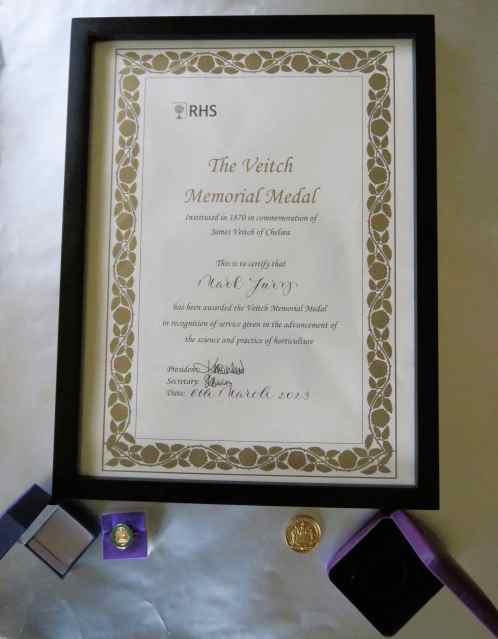
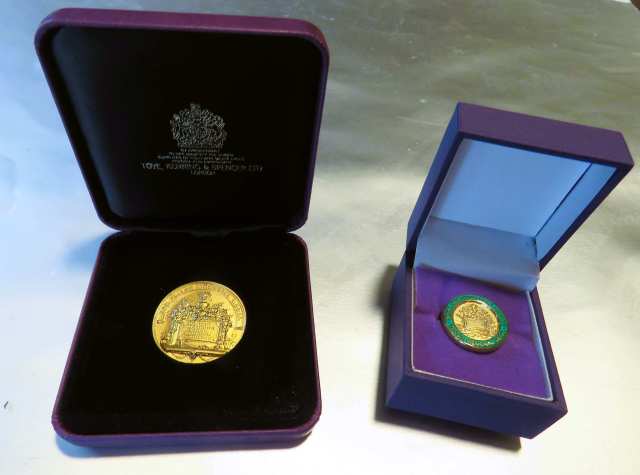
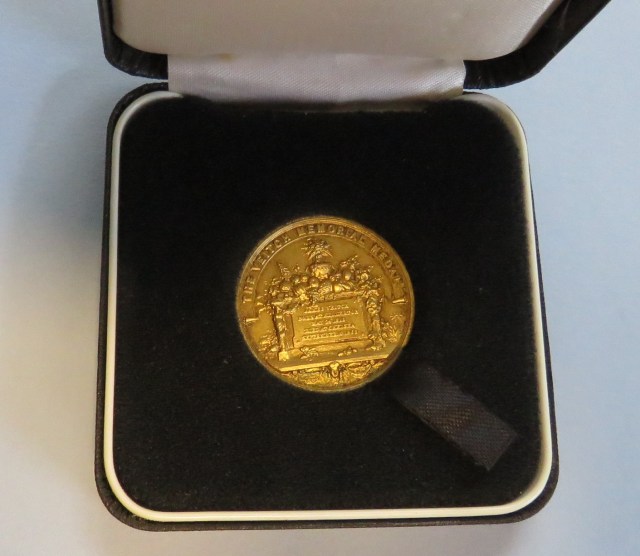
No, it was the arrival of Mark’s Veitch Memorial Medal accoutrements. These were despatched by rather slow mail from London, on account of us not being able to travel to the official ceremony. Some of us remember when airmail was the expensive Fast Post option and the cheap alternative was slow boat. These days, airmail is a great deal more expensive but without the speed of delivery. Indeed, it can take as long as the old slow boat option. The certificate is impressive – a full A3 size. Oddly, because we are not given to public displays of such things, Mark felt it warranted hanging so it is destined to join the rogue’s gallery of family photos and pictures that adorn the private area of the spacious upstairs landing.
The purple boxes were discreetly impressive. One holds the medal while the other holds a golden and enamel lapel pin. They can go in the sideboard that holds his father Felix’s matching Veitch medal.
Mark is a reserved man but his delight was palpable.
It is a well-known fact that King Charles 111 is a very keen gardener and has been for a long time. We received confirmation this week that Mark’s Magnolia ‘Felix Jury’ was included in a collection of 25 carefully selected plants presented to him to mark his coronation.
The gift was from the Royal Horticultural Society (RHS), specifically from the Rhododendron, Camellia and Magnolia Group of which he has been the royal patron since 2018. Reportedly, he was delighted to receive the plants this week and they are destined for his Sandringham estate which is undergoing a major rejuvenation under his personal direction.
There are only three magnolias included in this collection and all are from Aotearoa New Zealand, which is a sign of this country’s standing in the heady world of international magnolias. Most of the collection is focused on rhododendrons with just three camellias included, one of which is also a NZ hybrid. ‘Festival of Lights’ was bred by the late Neville Haydon of Camellia Haven fame.
Magnolia ‘Genie’ bred by Vance Hooper
The other two magnolias are ‘Genie’ which is the best-known cultivar of breeder, Vance Hooper and the late Os Blumhardt of Whangarei’s ‘Starwars’.
‘Starwars’ dates back to the 1960s when Felix was also raising the first generation of Jury magnolia hybrids. We knew Os Blumhardt fairly well. He used to stay with us when he came to Taranaki and he was most encouraging to Mark in his early days of plant breeding and extraordinarily generous with his own material. We still have some very fine vireyas and camellias of his in our garden and his early, limited work with michelias (‘Mixed Up Miss’ and ‘Bubbles’ are his best known) laid the groundwork for Mark’s Fairy Magnolia series many years later. But we were less enamoured by his Magnolia ‘Starwars’ – until we made a magnolia trip to the UK, Italy and Switzerland back in the early 2000s.
Magnolia ‘Starwars’ bred by Os Blumhardt
At home, we have ‘Starwars’ planted on the roadside on our lower boundary in a row of other magnolias. It is pretty enough and puts on a good show but the flowers are a bit floppy and, to be brutal, it looks a bit dated compared to many of the magnolias we grow now. It was a different story in the UK and Europe. That was before any of Mark’s hybrids were available in that part of the world and we were tracking how his father’s varieties were performing. There is a huge difference in climate, growing conditions and light between here and over there and there is no guarantee that plants will look the same. We were a bit disappointed, particularly in ‘Iolanthe’ in those conditions.
‘Starwars’, on the other hand, was an absolute stand-out and it was being grown widely. Many of the international group we were travelling with assumed it was a Jury plant because it came from NZ. After we had seen several looking brilliant, Mark was moved to reply, “No, it isn’t one of ours but I wish it was.” I think it has earned its place in the Royal Collection as a proven performer.
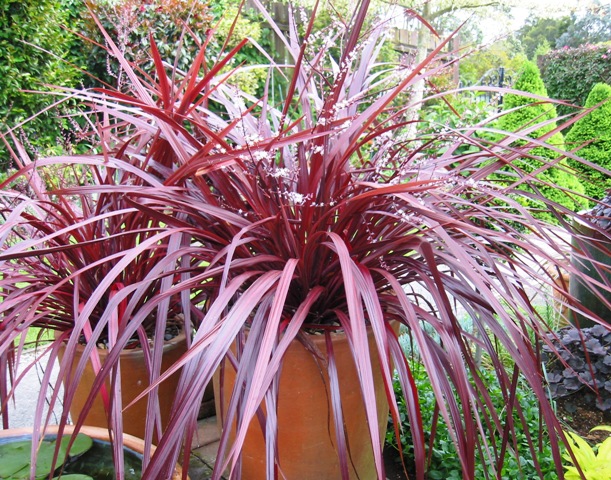
Cordyline Red Fountain
This is not the first of our plants to grace the royal estates. The first we know of was when our Cordyline ‘Red Fountain’ was presented to the then Prince Charles in a ceremony at Auckland Regional Botanic Gardens – but not by us. While I have no doubt that the plant was a very fine specimen, we rather doubted that it had all the phytosanitary clearance and paperwork needed for plants to cross international borders. Mark quipped at the time that maybe we should alert Border Control that the royal entourage was carrying plant material. We have no way of knowing whether Royals are subject to the same regulations as travellers of lesser status or whether it even left the country. I hope it might be in his garden at Highgrove.
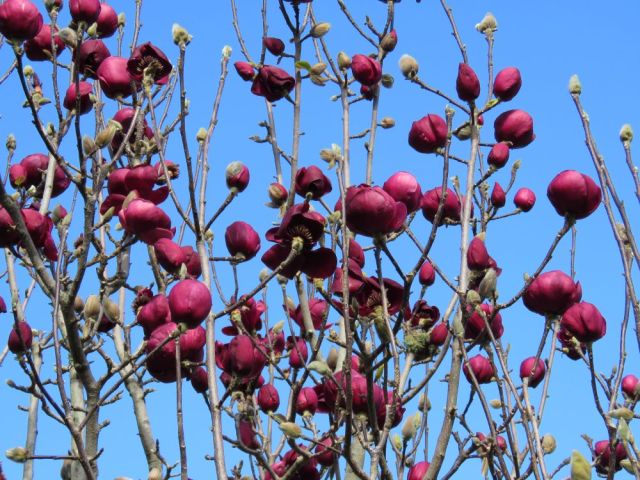
Next, there was a presentation of Mark’s Magnolia ‘Black Tulip’ to the late Queen in 2010. We don’t know which royal garden that plant ended up in – maybe Windsor?
Then there was the ceremonial planting of another specimen of Magnolia ‘Black Tulip’ by the Burmese leader Aung San Suu Kyi with the then Prince of Wales and the Duchess of Cornwall at their London residence of Clarence House in 2012.
That felt like a significant moment in history and to our great amusement, it is immortalised in a You Tube clip. That video shows it in a prime spot close to the residence. From memory, the magnolia they move over to look at was one planted by the Dalai Lama but I can’t remember what that variety was now – one of the species, maybe.
Magnolia Black Tulip
At the time, I wrote here: “We are honoured by this international recognition, though Mark would have preferred them to have planted his Magnolia Felix instead. It appears to be performing very well in the UK and the Royals’ gardens are large enough to take large flowered magnolias.”
We are very pleased that it will be ‘Felix Jury’ that will grace the Sandringham estate.
“The Rhododendron, Camellia and Magnolia Coronation Collection is a collection of
plants and trees gifted to His Majesty, to mark his Coronation. As our Royal Patron
it represents our appreciation of how much his support and interest in our genera is
valued by our members from around the world.
It tells the story of the Rhododendron, Camellia and Magnolia Group’s one hundred
and seven-year history. The twenty-five plants and trees provide a historical and
horticultural link between the genera and the Royal Family and represents the
legacy of great gardens, the passion of private breeders and having good plants
in the garden. The specially chosen plants form a tapestry of our beautiful genera
internationally.
The best of the past and of the future, old and new. We hope that His Majesty enjoys
these plants and that they give him great satisfaction in the years ahead.”
In different times, we would have been in London now for Mark to attend a special presentation. He has been awarded the RHS Veitch Memorial Medal although I don’t expect many people in this part of the world to understand just how big that honour is.
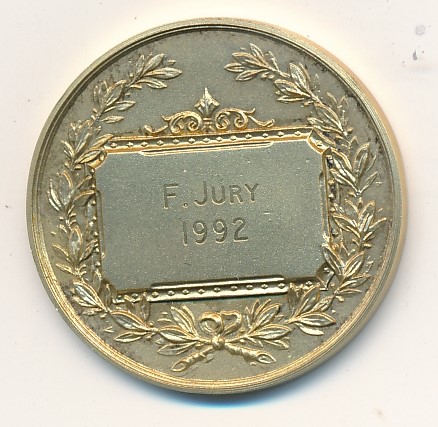
Felix’s medal. Mark’s may take a while to arrive from the UK. International mail is much slower than it used to be.
The Veitch is the highest honour Britain’s prestigious Royal Horticultural Society award to people who are not citizens of that country. It is also the highest international honour we know of in our field – a literal medal that is gold in colour but I rather doubt that it is made of gold. I draw a comparison to the medals earned by sportspeople when they win a world championship. For us, the honour is in that league.
Mark Jury
We have known for about two months that Mark is one of this year’s recipients but were asked to keep it quiet until after the presentation ceremony in London yesterday. They usually award about four Veitch medals a year, covering the globe. For us, it is doubly special because Mark’s father, Felix, was awarded it in 1992 and this is one of the very (very) few times, that two generations from one family have received it. I still remember Felix’s quiet pride to be honoured internationally for his work in plant breeding.
I trawled the list of recipients down the years and oh my, but the company is very elevated internationally. As far as I could see, Mark is the thirteenth New Zealander to have been honoured since its inception in 1870, of whom only three others are still alive (Alan Jellyman, Keith Hammett and Bev McConnell).
For Mark, it is even more of an honour to have been nominated by international colleagues. Last year alone, over 425 000 of his cultivars grown under licence were sold internationally. This does not include production and sales of plants he has bred but we did not retain ownership rights over.
Our thanks go to Anthony Tesselaar Plants, our Australian-based agents, who have had the role of managing Mark’s cultivars on the international market over many years and who have always acted in his best interests.
In the manner of magazine writers these days, I interviewed Mark with quickfire questions on his plants. Well, to put it more accurately, as we sat having an afternoon cup of tea, I double-checked my preconceptions.
Magnolia ‘Felix Jury’
Favourite magnolia you have bred: Magnolia ‘Felix Jury’. (Named for his father because it was what Felix was trying to get to in his earlier generation of breeding).
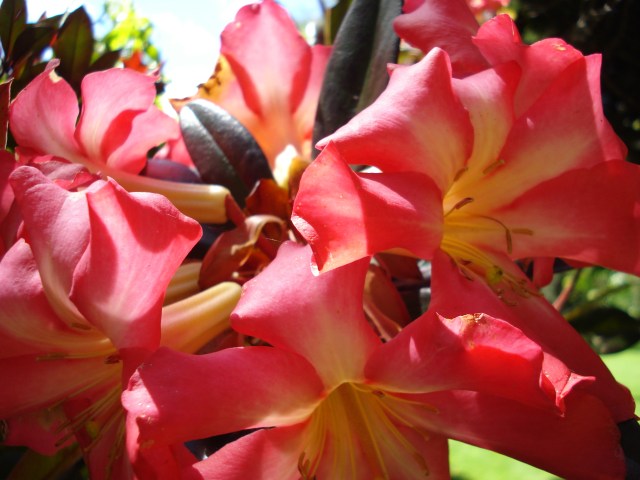
Rhododendron ‘Floral Sun’
Favourite rhododendron: ‘Floral Sun’. (To quote Mark from an earlier time when he was unusually extravagant in his assessment or maybe had been drinking wine, “If I never breed anything as lovely as that again, I will die happy.”
Vireya rhododendron ‘Pink Jazz’
Favourite vireya rhododendron: ‘Pink Jazz’ (which is why it is named for our first-born child in an oblique sort of way).
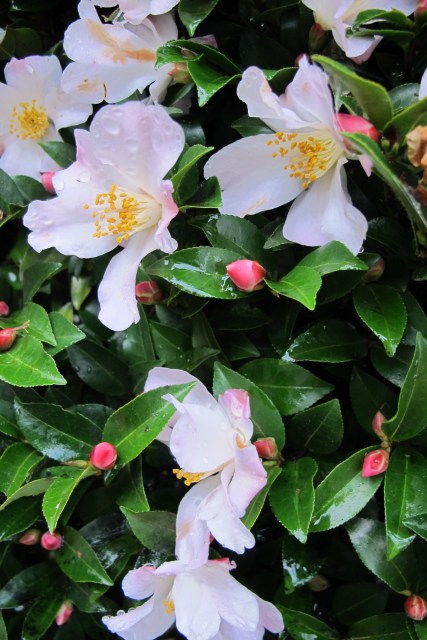
Camellia ‘Fairy Blush’
Favourite camellia: ‘Fairy Blush’ (known here as the one that got away from us in terms of retaining ownership rights. It was the very first plant of his own breeding that Mark named and released on the open market).
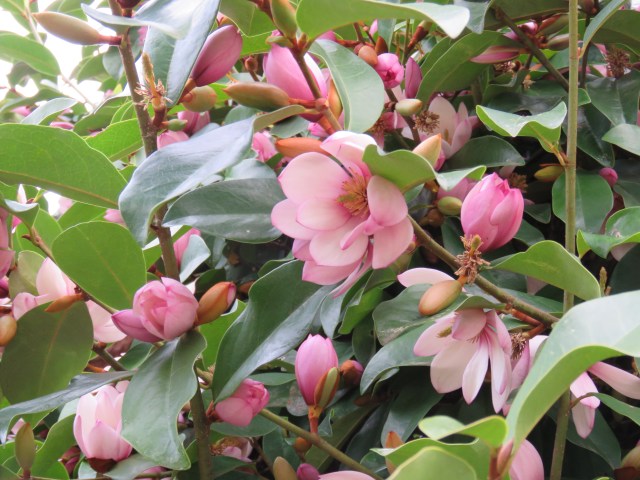
Fairy Magnolia Blush
Favourite michelia: “RFA,” he replied. “Room for improvement”. The michelias are on ongoing project at this stage, but of those already released, he named ‘Fairy Magnolia Blush’ because it is the first to bring colour into the range.
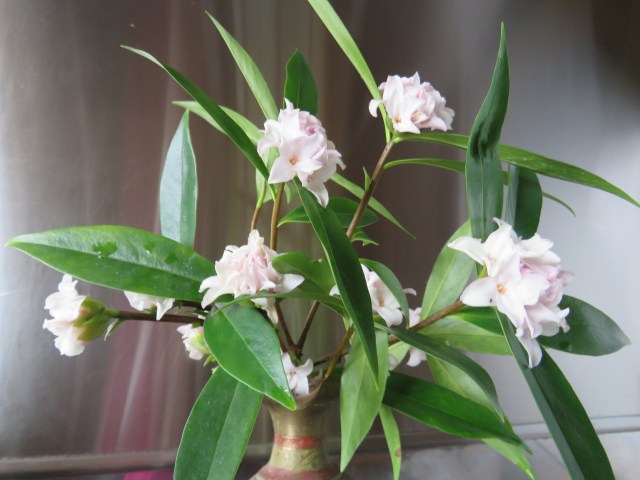
Daphne ‘Perfume Princess’
Biggest surprise: Daphne ‘Perfume Princess’.
It is not so much a red letter day here as a gold medal day and that does not happen often.
First published in Woman magazine, July 2022 edition and reprinted here with additional photographs.
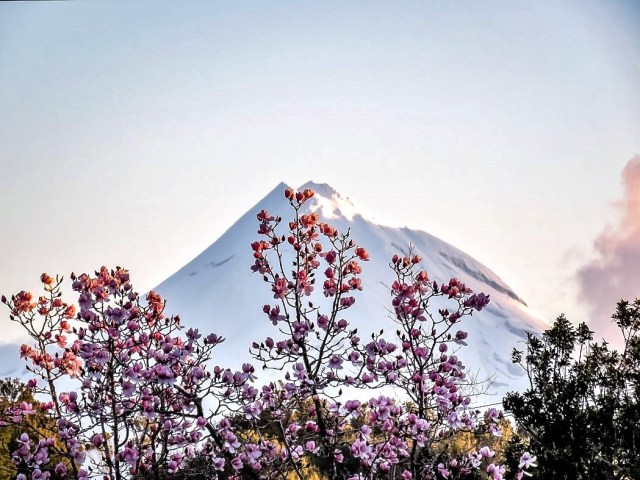
Magnolia campbellii is always the first to open a flower bud, seen here framed against the distant peak of Mount Taranaki.
I am a Jury. Ergo, I love deciduous magnolias. Why does one follow the other, you may wonder. My very late father-in-law, Felix Jury, was the creator of such varieties as Magnolia ‘Vulcan’, ‘Iolanthe’ and others and we still have the original plants here in the garden at Tikorangi. I am married to the man who created ‘Black Tulip’, ‘Felix Jury’, ‘Honey Tulip’ and ‘Burgundy Star’ with more to come soon.
I have long declared that the first blooms on the magnolias herald the start of a new gardening year. The first one to open for us is always the pink Magnolia campbellii in our park. It is one of the earliest harbingers of spring and we usually get the first flower a few days after the winter solstice which is around June 21.
Enter Matariki which we celebrated as a nation on June 24 this year. While we accept the Gregorian calendar dating back to 1582, that only determines the elements of time which are derived from Earth’s position in the solar system – such as the length of individual months, equinoxes and solstices. The assignment of certain dates to celebrations is an arbitrary human decision. The determination that January 1 is the start of a new year is based entirely on northern hemisphere tradition and it happens to come 9 or 10 days after the winter solstice. What I find fascinating is that Maori arrived at the same conclusion, give or take a few days. It may be six months out of step as far as the calendar goes but it is synchronised with the seasons.
Matariki is determined by the rising in the sky of the star formation generally known as the Pleiades and the start of the new lunar year. It just so happens that Matariki occurs within a few days of the winter solstice in New Zealand. It seems perfectly logical to me and of much greater relevance to my gardening year than the January 1 date.
Our pink Magnolia campbellii is not quite as predictable as the solstice dates and it doesn’t hit its peak display until well into July, but that first bloom bravely opens around the time of Matariki and is a significant seasonal marker for me. Each year, I don my woolly gloves on fine frosty mornings and head out to capture the one beautiful line of sight we have with the blooms on the bare tree and the snowy slopes of te mounga – Mount Taranaki – behind. I am using a zoom lens – te mounga is somewhere over 35km distant.
Over time, most magnolias grow into trees. From left to right are an unnamed pink seedling, Magnolia ‘Felix Jury’ and Magnolia ‘Manchu Fan’.
That magnolia was first sold in New Zealand in the latter half of the nineteenth century by a Lower Hutt nurseryman commonly referred to as Quaker Mason on account of him being a Quaker. It was also the first magnolia planted in our garden by my father-in-law, Felix Jury in the early 1950s. This pink M. campbellii is probably the most recognisable form in the country. Interestingly, that is unusual internationally. In the wild, most campbelliis are white. The pink ones are largely limited to a small area around Darjeeling in India and we should count ourselves lucky that Quaker Mason just happened to get a particularly good form of the unusual pink one to popularise here.
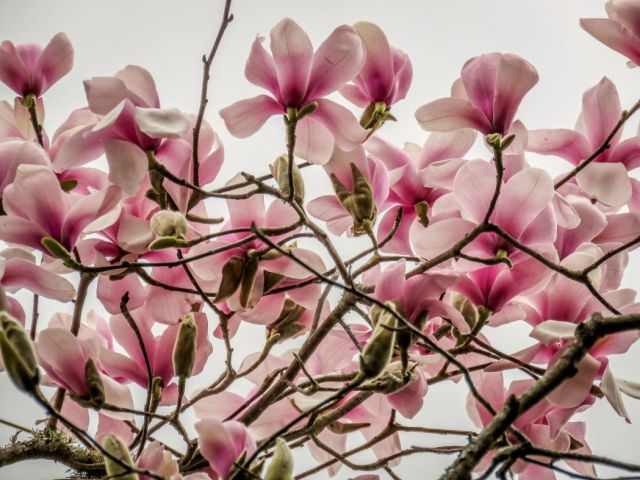
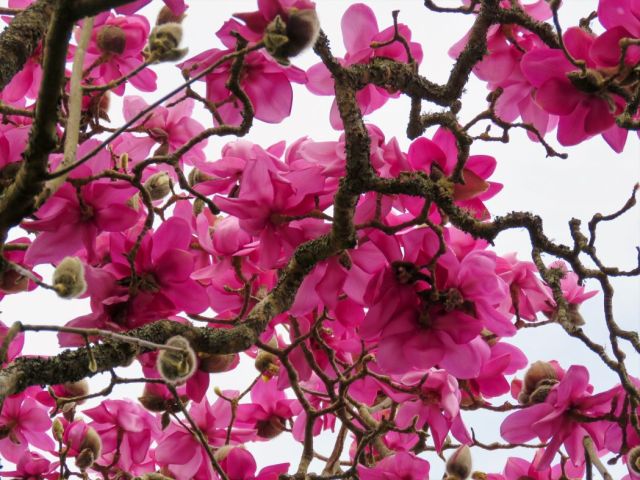
Looking up into the floral skyspaper of Magnolia sargentiana robusta
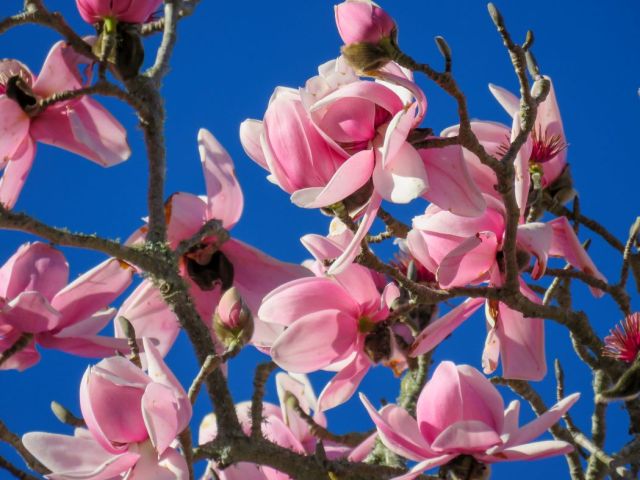
The magnolia flowering season from late June to September is a special time of year for us. We have many magnolias, both named varieties and species and unnamed hybrids from the breeding programme. This is a plant family where the larger the plants get, the bigger show they make.
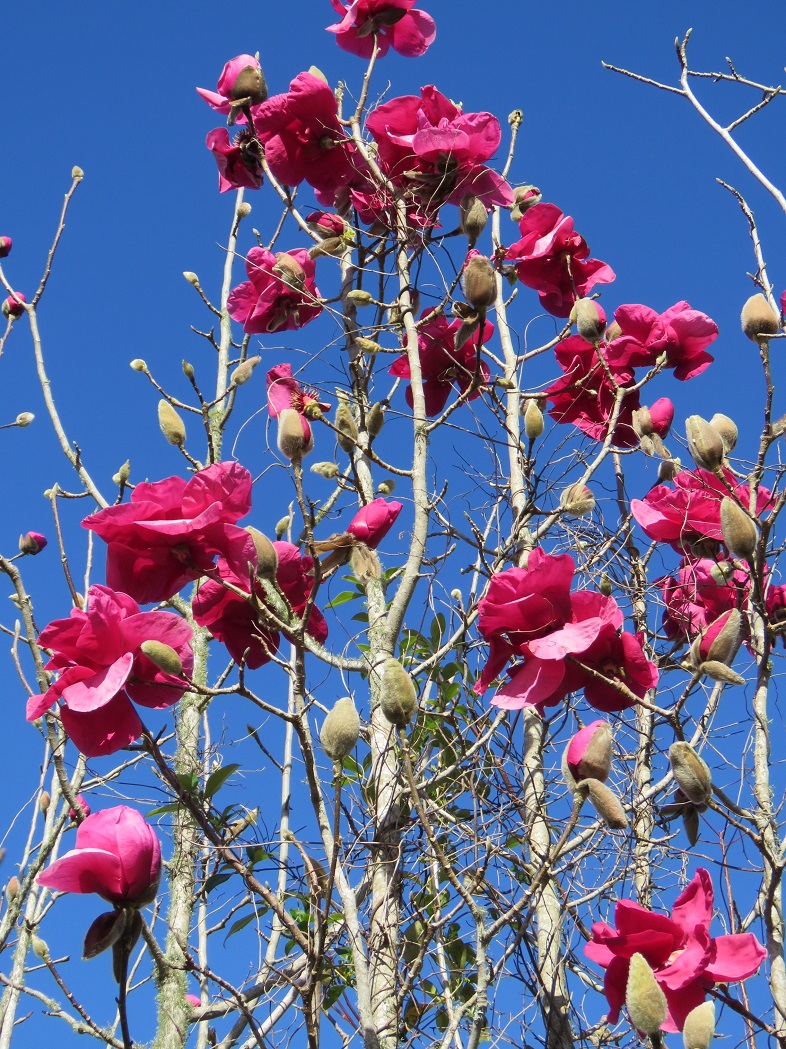
For me, the deciduous magnolias hold pride of place. That display of bare blooms on a tree with no foliage can take my breath away. Because we have large trees, I am often looking up from below and I describe it as floral skypaper.
The purple petals of Magnolia campbellii var mollicomata ‘Lanarth’ forming a carpet beneath.
When I look down, I see the petal carpets on the ground and I have a great fondness for petal carpets. However, I will concede that they are not great on paths, driveways and sealed areas where the carpet can soon turn to slippery brown sludge. We will use a leaf rake or leaf blower on sealed areas but leave the petals on grass or garden.
And looking up to ‘Lanarth’ against a grey wintry sky
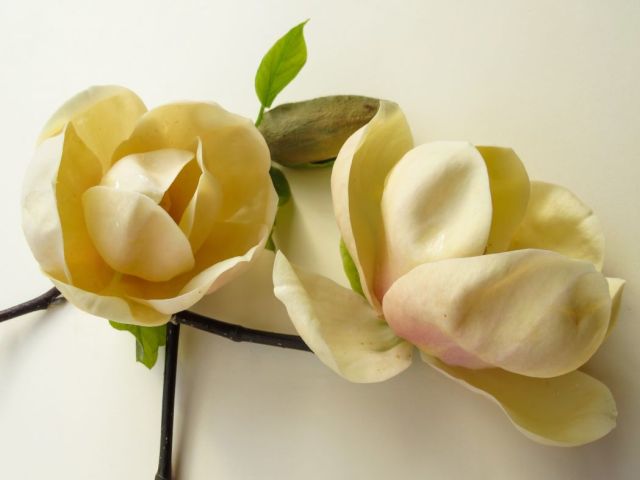
Most of the deciduous magnolias are Asiatic in origin – particularly areas of China, northern India and Nepal. The exception is the one truly yellow deciduous species – Magnolia acuminata – which is from North America. It is one of the parents of all the yellow hybrids that have become available in the last 25 years.
USA is also the homeland of the most popular evergreen magnolias which are widely grown here. These are characterised by heavy, leathery leaves and large, white flowers. I am not a fan of the evergreen grandiflora types; the ratio of flower to foliage is not high enough for my liking. I prefer the 100% flower to 0% foliage of most deciduous varieties.
Michelias, on the other hand, are all Asian in origin with many also being found in tropical areas, so into Southern China, Vietnam and Thailand. These are also evergreen but with softer, smaller leaves than the American leathery ones, a higher ratio of flowers and they are smaller growing overall. Botanically, they are magnolias but they look very different to the deciduous magnolias and they fill a different role in the garden.
Magnolia Iolanthe in pink
Magnolia Apollo in purple
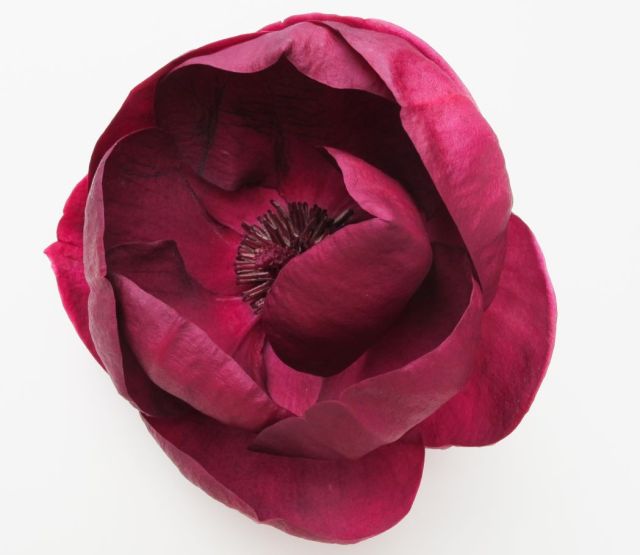
Magnolia Black Tulip in red
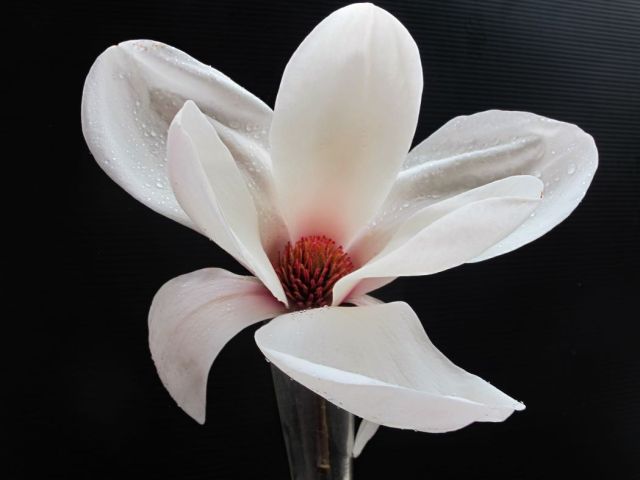
Magnolia Lotus in white
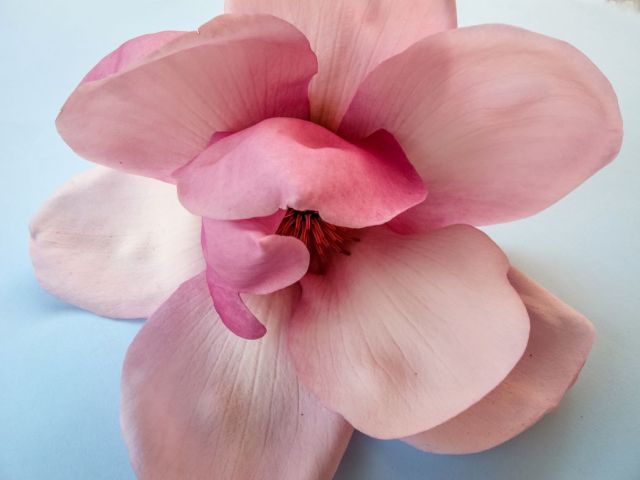
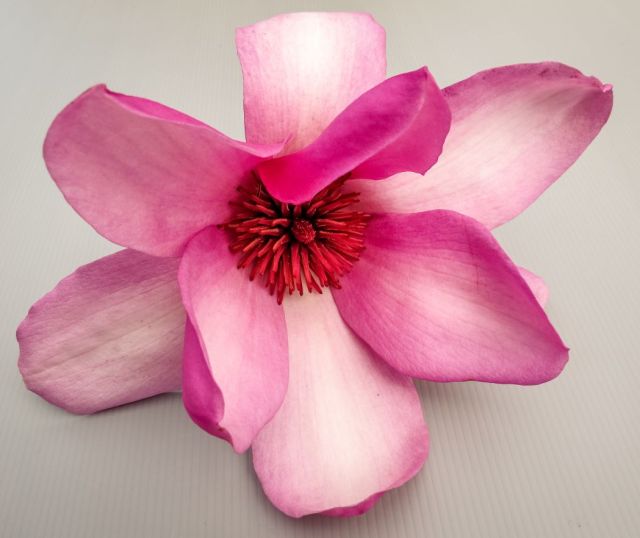
Deciduous magnolias come in shades of pink, purple, red, white and yellow.
Magnolias are ancient, evolving before bees emerged. It is thought that they were originally pollinated by beetles. Now they provide a food source for bees at a time of short supply in late winter.
We get deeper, richer colouring in magnolias in New Zealand. It is likely to be related to our soils, climate and the clarity of light here. The same plant can look very different with the colour washing out, particularly in Northern Europe and the UK where winters are longer and colder and light levels lower.
New Zealand is recognised internationally as leading the way on breeding red magnolia hybrids, initiated by Felix Jury with ‘Vulcan’ and continued by Mark Jury, Vance Hooper and Ian Baldick.
No, you can not get very large blooms on a deciduous magnolia that will stay a small plant under two metres. Smaller growing varieties will have smaller blooms and the vast majority of deciduous magnolias are trees, not shrubs.
If you have a magnolia where the buds either drop off or fail to open properly, it is a sign either of frost damage or pest damage by rats or possums.
When deciduous magnolias have new leaves that are clearly distorted on opening, it is an indication of spray drift. Lawn spray is the main culprit. If you feel you must spray your lawn, don’t do it in early spring when the leaf buds on magnolias are about to break into growth.
The limited range of species that were all that was available in the past could take 15 to 20 years before they set flower buds. Nowadays, you can expect magnolias to bloom within a couple of years of planting and some will even be sold with flower buds.
Back in our nursery days, we used to send our reject plants down to be given away, sometimes sold for just a dollar or two, at a local op shop that a good friend was closely involved with. There are always reject plants that don’t make the grade to sell – usually due to being poorly shaped or sometimes over-produced – and it seemed a good solution. Our local town of Waitara is what is often politely described as ‘lower socio economic’. There isn’t a lot of spare cash in the community and no local plant retailers so we saw it as a means of encouraging planting in an area where most people wouldn’t buy plants.
In the early days, we had more reject plants of Magnolia Felix Jury than we would have liked so quite a few of those went down to be dispersed and I quipped at the time that if only a quarter of them grew, they would make their mark. The magnoliafication of Waitara, I used to describe it.
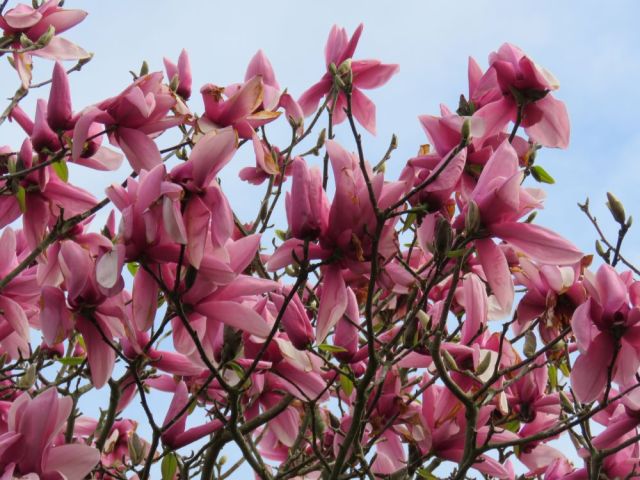
Iolanthe to the left, Felix to to the right
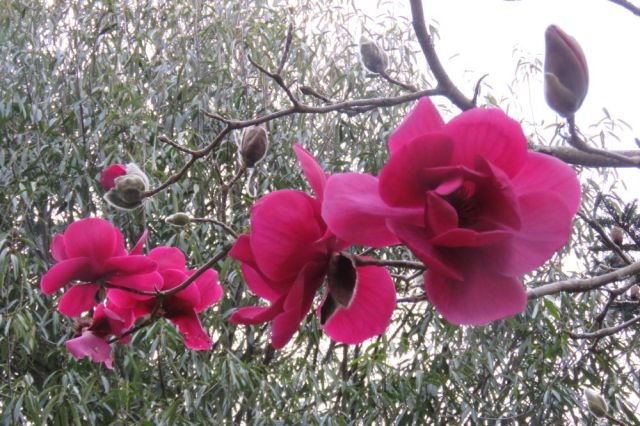
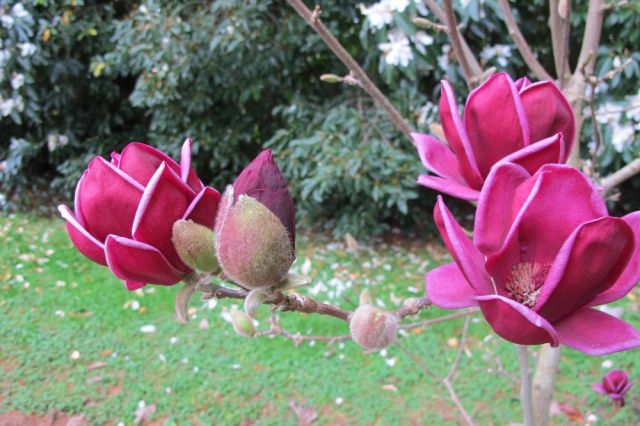
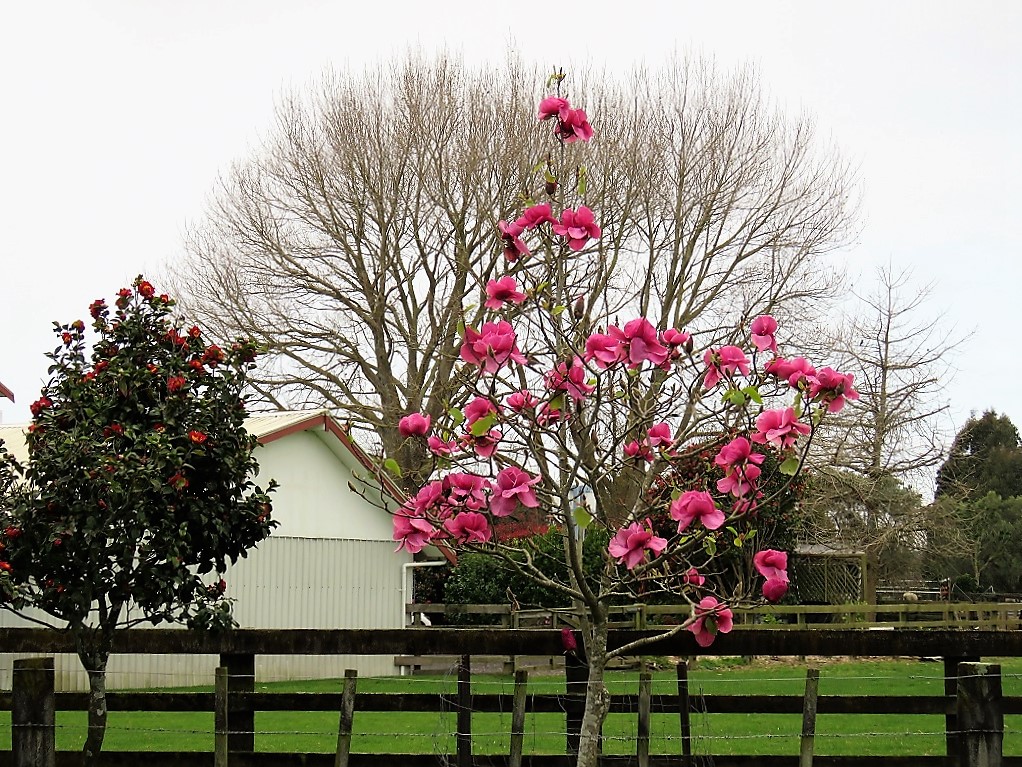
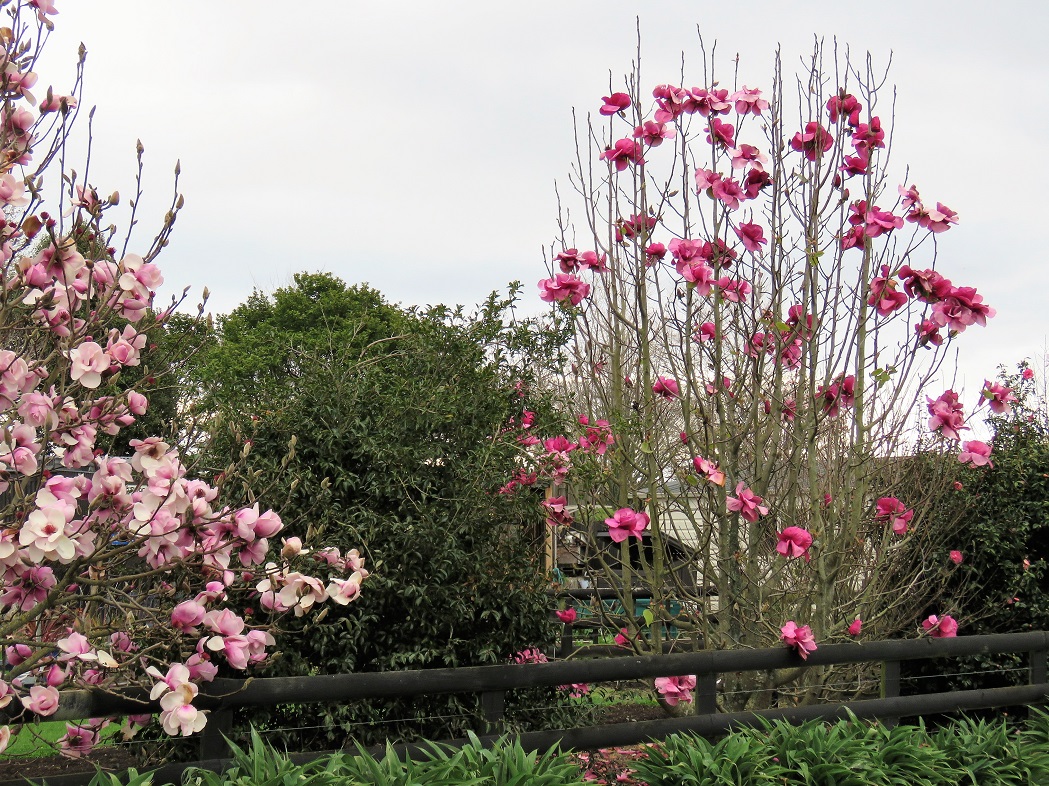
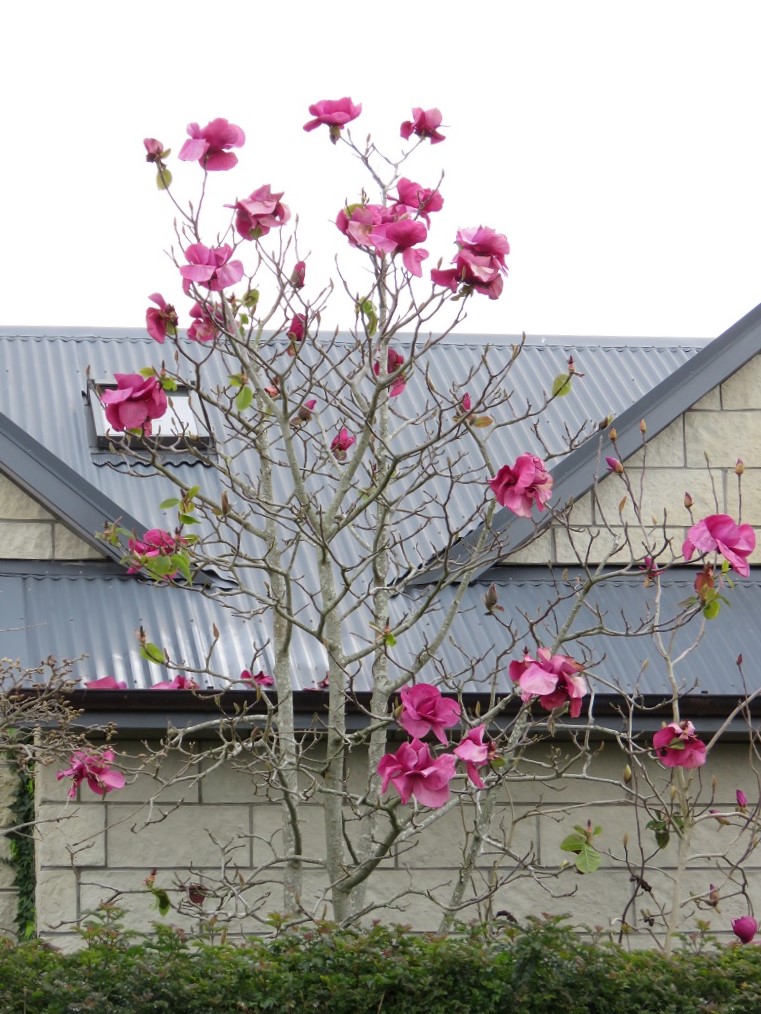
This year was the first year I have really started to notice Felix in bloom locally. It is unmistakeable with its enormous flowers so I drove down just a few streets, Felix-spotting, when I went to the supermarket yesterday. I doubt that the locals know that it was bred locally, named for a long-term resident and is now our flagship magnolia internationally but that doesn’t matter. It is just pretty spectacular and will continue to get better year on year. Magnolias are long-lived plants if they are allowed to be. I was a week too late to catch them with the best colour, but you can see what I mean.
Best colour – it fades out with age as the season progresses
We can get deeper and richer colour here than in some other parts of the world. Why? We don’t know whether soils, seasonal weather or climate affect it. All Mark is willing to say is that the stronger the plant is growing, the better the colour it achieves. I am loathe to recommend piling on the fertiliser; we never do and we don’t think it is good practice. We plant well, keep them mulched and will feed with compost if a plant needs a boost. Other gardeners like to manage feeding differently but the advice from the breeder is to get your plants established and growing well and you may find the colours are richer.
Next year, I shall get around a week or two earlier to catch the local plants in peak bloom. By then, I will have canvassed local friends to find the location of more trees.
Poor light and nearly finished, but another local Felix









 Tikorangi The Jury Garden