
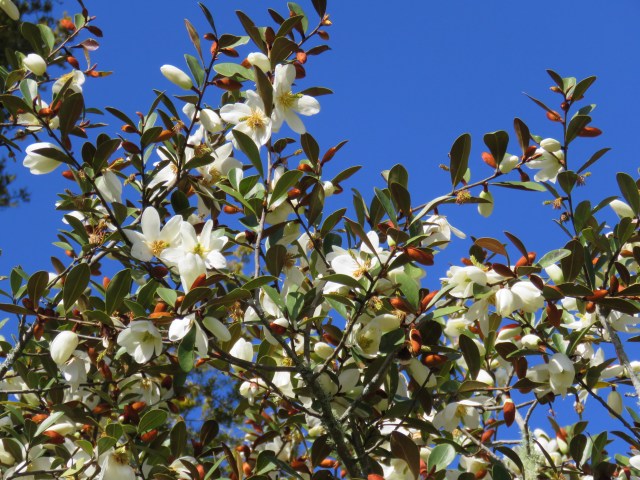
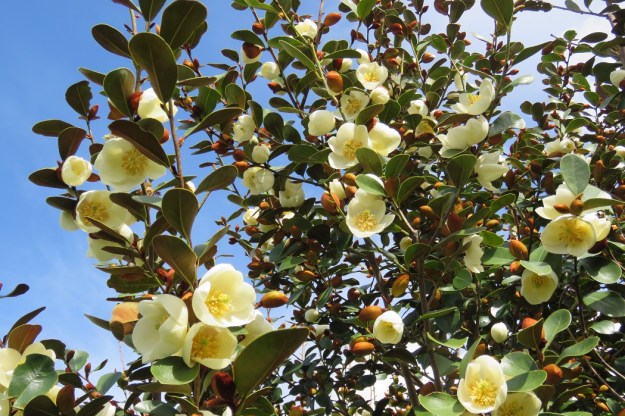
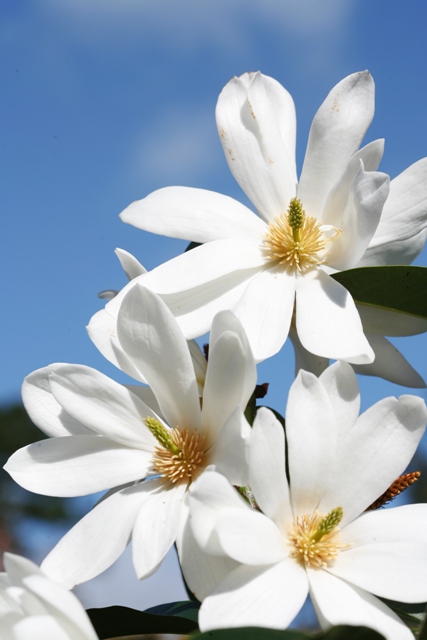
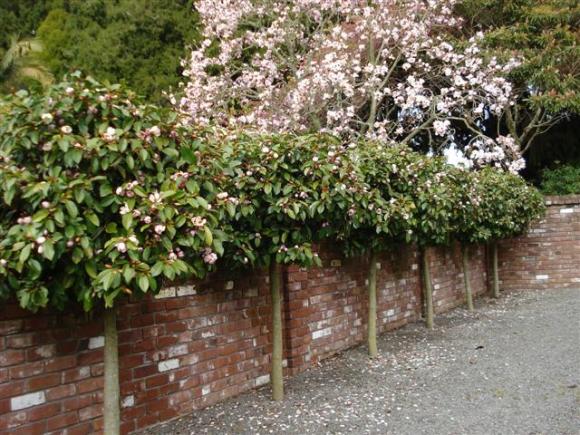
I took this photo on Thursday morning when the joy of a blue sky and bright sun made the whole world seem a better place. I admit that feeling was brief. An hour later, it clouded over, the temperature dropped and then it rained, remaining patchy rain, cloud and sun for the rest of the day. Such is a typical spring day here in the antipodes. Our weather is very changeable.
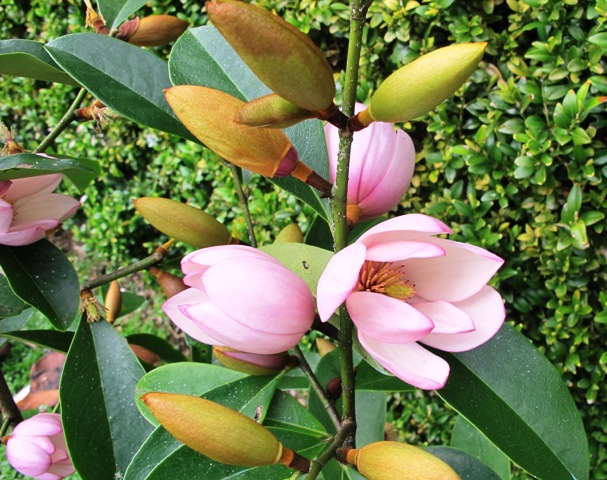
But how pretty is Magnolia laevifolia? You may know it – as we used to when it first became available in Aotearoa New Zealand and we produced it commercially in the nursery – as Michelia yunnanensis. I think it is still widely sold by that earlier classification but genetic testing moved all michelias into the magnolia group.
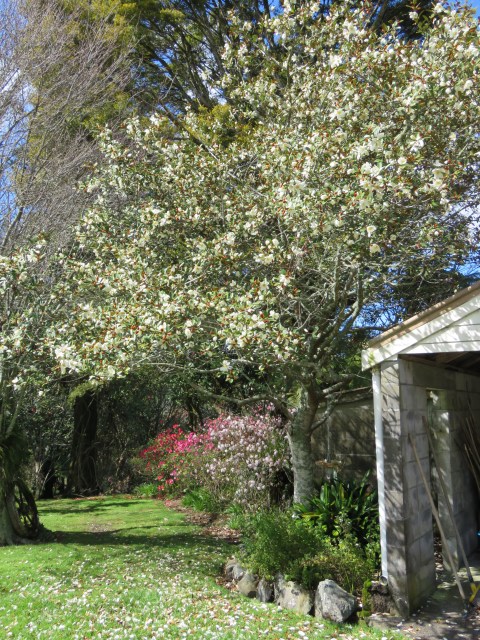
This particular one is named ‘Velvet and Cream’ and is a selection made and released by Peter Cave, back in the early 1990s. There are countless other named selections around, both in this country and overseas because this is a plant species that sets prolific amounts of seed. For a while it seemed as though every man, woman and their dog had named a selection. Even Mark picked one out – more honey coloured than cream or white and he named it ‘Honey Velvet’.
We have two reasonably prominent plants of ‘Velvet and Cream’ and after a period of time, they are both attractive small trees. As far as we can remember, both were planted maybe 25 years ago but they achieved that small tree stature within 10 or 15 years. We could have clipped them hard and kept them down to shrub level had we chosen to, but their natural instinct is to grow a little larger than most people expect – but not too large.

I also wanted to show the effect of hard pruning on the second plant which is a central specimen in the front lawn. We don’t generally go for specimen plants in our lawns but this is a legacy installation that dates back to Mark’s parents creating a minor garden feature around a small millwheel and stone trough from the early colonial days of New Plymouth. See it leafy and flowering.
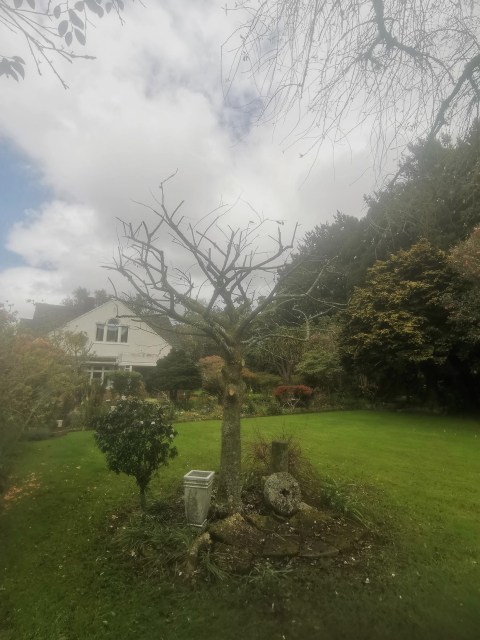
Last spring in mid October, it received a severe prune. M. laevifolia has a tendency to defoliate – drop all its leaves – in a wet spring and we get plenty of those. Last year, its flowering was patchy and it had dropped pretty much all its leaves. It was looking twiggy, overgrown and pretty much dead, to the inexperienced eye at least. We thought it would be better to cut it back hard and emphasise its natural form. What a difference a year can make.
This type of drastic pruning and shaping also works on camellias and indeed loropetalums but not on every plant. It is do or die on rhododendrons (some will respond with vigour and some will die) but it will kill most conifers because they don’t sprout from bare wood. You really need to know the capacity of the plant to regenerate and to push growth buds out from the trunk and stems before you start.
While the flowering of the deciduous magnolias this year is patchy yet again (we are blaming La Nina with frequent heavy downpours and too many spoiled blooms hanging on the branches), the michelias bloom on unscathed.
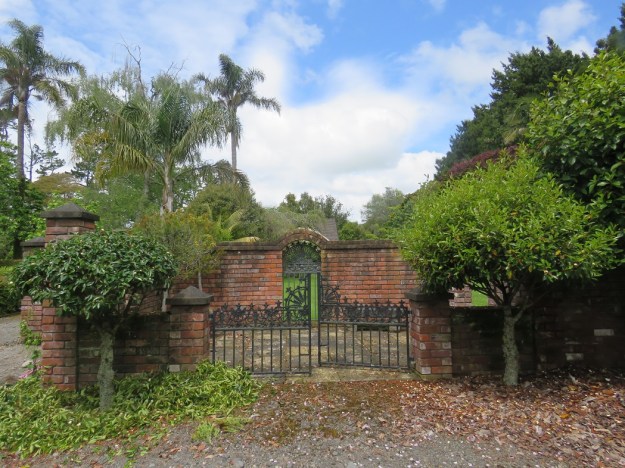
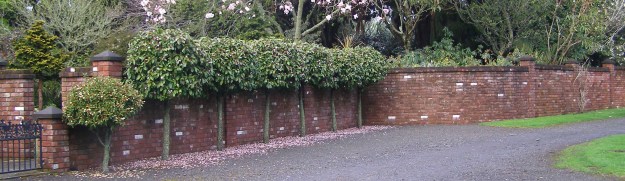
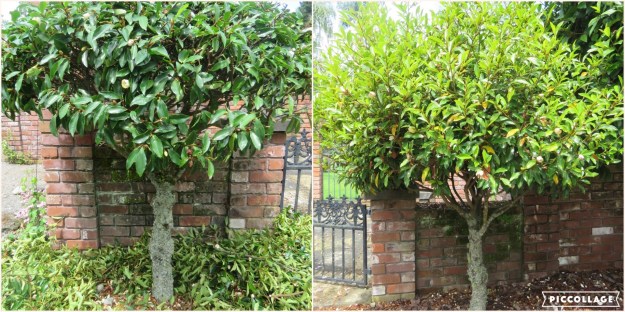 Aesthetically speaking, cutting with secateurs means there is no leaf damage whereas the speedier clippers or hedge trimmer will cut almost every external leaf which will then discolour on the damaged edges. It is also easy to reach in at the time and remove dead wood and do a clean-up of the interior of the ball using secateurs and the finished result is less… brutally shorn, shall I say?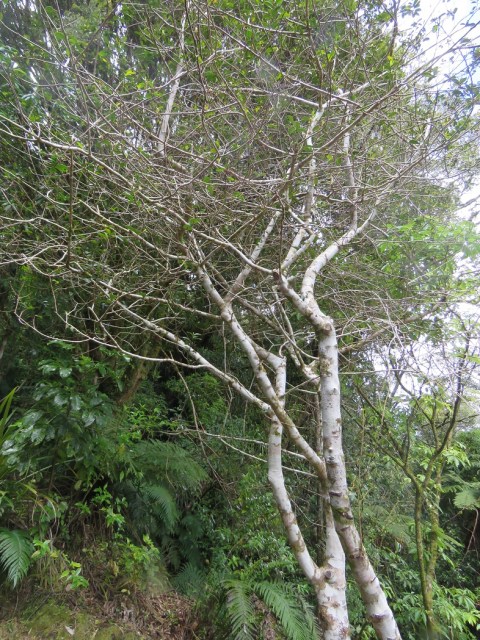




 Tikorangi The Jury Garden