After I posted last week’s piece about Matariki – the Maori new year, the winter solstice and Magnolia campbellii, a loyal reader commented that no magnolias are opening where he lives so he went looking to see what could be his Matariki flower. He settled on Mark’s Camellia ‘Fairy Blush’ which felt like an honour to us.
I like the idea of people determining their Matariki flower. We had our first ever public holiday to mark Matariki last Friday and for many of us, it was special. Not only does it mark a point in time that is significant both spiritually and scientifically to the first people of the land here, it is the only public holiday that has a nation gazing at the stars and taking an interest in astronomy.
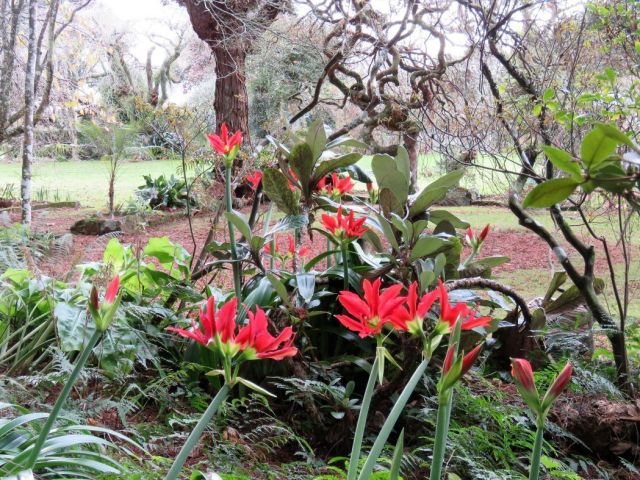
Friends invited us to lunch to celebrate the occasion. Home entertaining is back in these Covid times, at least for our demographic. I took a bunch of Hippeastrum aulicum and our hostess commented that she had no flowers in her garden. This wasn’t quite true. She had Alstromeria ‘Indian Summer’ still blooming but nothing else I could see. It inspired me to come home and walk around the garden with my camera to capture some of the flowers we have in the depths of mid-winter.

The subtropical rhododendrons are blithely unaware of the seasons, except for frost which makes them turn up their toes, and we have them in flower all year round. We have a mix of species, named hybrids and unnamed seedlings from crosses Mark has made. This is an R. hellwiggi seedling which means it is also sweetly scented.
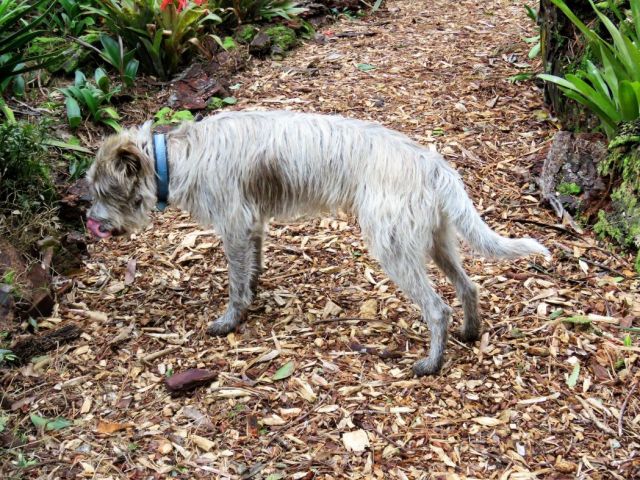
Everywhere I go in the garden, Ralph is at my side. He does not, alas, show any respect for the garden at all and this morning knocked off the first open flower on a dainty dwarf narcissus. We have some work to do teaching him to respect garden boundaries.
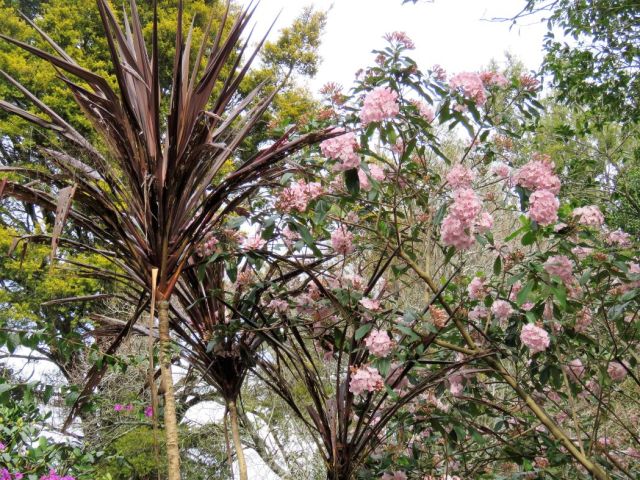
It is luculia season and my favourite of these is the almond pink, scented blooms of ‘Fragrant Cloud’ which has a very long flowering season but generally flops if I cut them to bring indoors. I could do without the yellow totara to the left of the scene but the red form of our native cordyline works well. This luculia is rangy, brittle and lacks any merit in its form as a shrub but all is forgiven when it flowers.
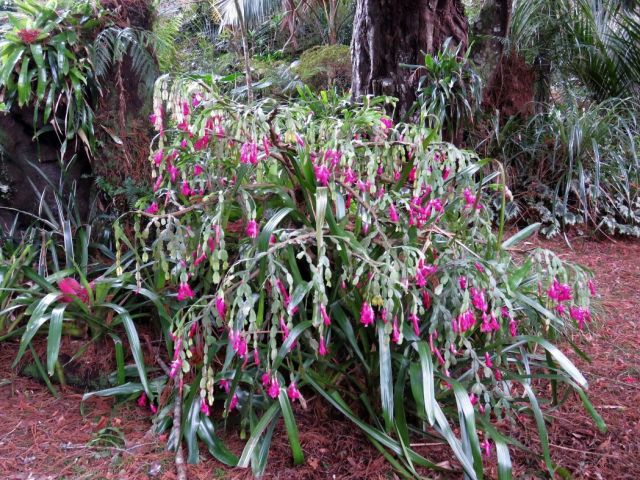
Right at home under the rimu trees is the schlumbergera, commonly called chain cactus. We have a few different colours but this cerise form is easily the most obliging and showiest of them. These are plants that thrive in dry shade and, despite the cactus reference, have no prickles and spines. They are also dead easy to increase by just snipping off a length and tucking into a crevice with a bit of leaf litter to root into.
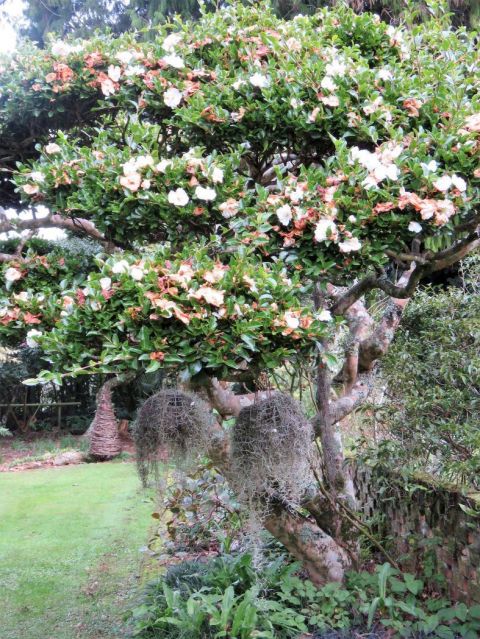
It is of course camellia season and this is why I don’t love Camellia sasanqua ‘Mine No Yuki’ at this time of year. It doesn’t shed its spent flowers because the foliage is so dense and they sit around looking brown and sludgy. We only keep the plant because for the rest of the year we clip it tightly into stacked clouds and it justifies its existence for the form of the plant and healthy foliage. The flowers are a disadvantage, not a bonus as far as I am concerned.
That is a fine form of Spanish moss or tillandsia threaded on inverted, old, wire hanging baskets – a trick I learned from an Auckland gardener several years ago. His were more loved than mine but they add a detail suspended from the camellia branches.

We love Camellia yuhsienensis far more, enough to grow a fair number of them as specimen plants, particularly for winter interest in the Summer Gardens. It is meant to be strongly scented but it needs a warm day and a nose stuck right in the flowers to get much of a whiff so that is a bit hyperbolic. However, the bees love it and anything that feeds the bees in midwinter is a good thing.
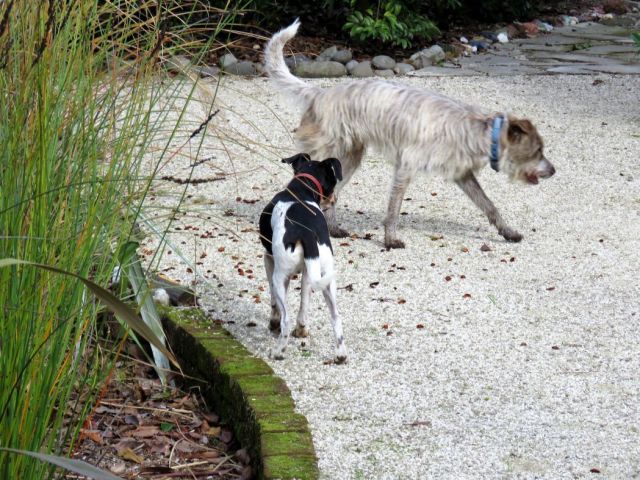
I reached the the Summer Gardens and Dudley had risen from his retirement bed to join Ralph and me. Duds is a quiet, old dog and the arrival of Ralph has come as a bit of a shock to him but they co-exist harmoniously. Dudley has made it clear that ALL dog beds are his while Ralph has laid claim to all the dog toys and already destroyed some that had survived years of Dudley’s more gentle play.
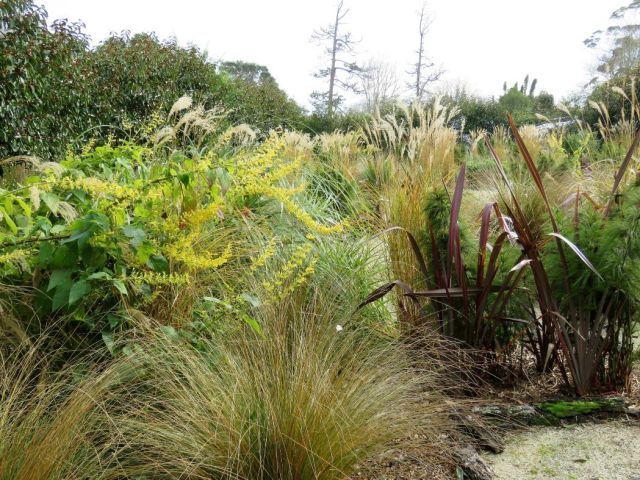
I was focusing on flowers that are coming out or at their peak in midwinter rather than the carryovers from autumn but I made an exception for the yellow Salvia madrensis which makes a great autumn/winter plant for frost-free areas with plenty of space and nothing delicate nearby for it to smother. It is showy but large and rangy.

I have to acknowledge Mark’s Daphne ‘Perfume Princess’. Sure, it is just a daphne but what a daphne. Vigorous, reliable, exceptionally large flowers and an exceptionally long flowering season. Very scented, of course, as daphnes should be. We had stock plants left in the nursery that I threaded through the house gardens so it is quite a dominant plant here for us at this time.
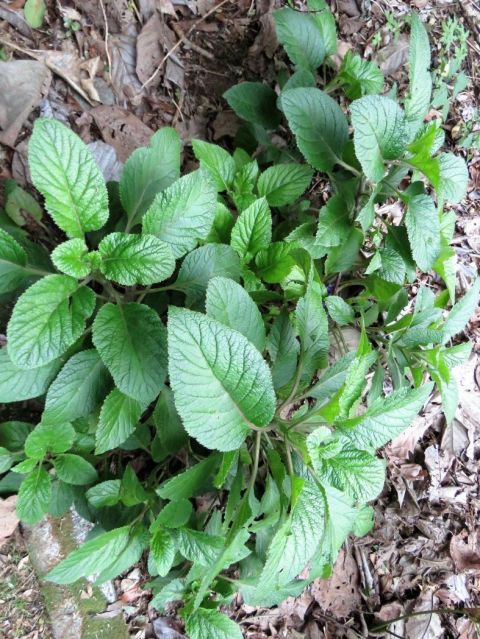

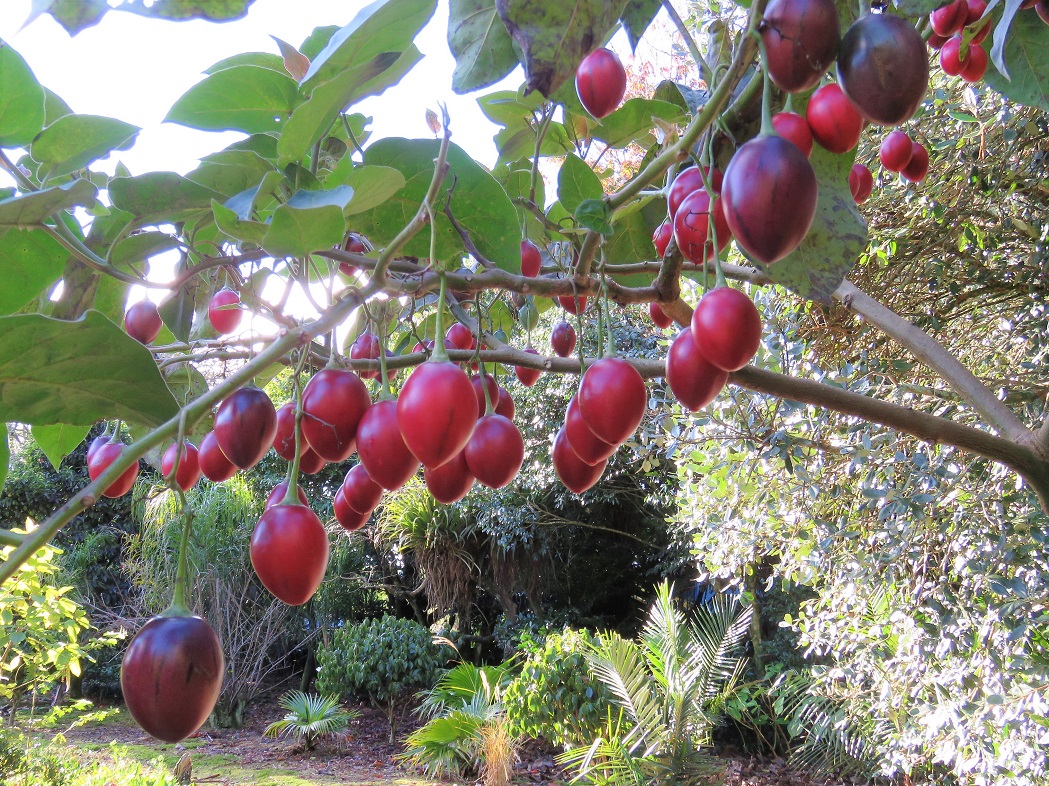
Look at this lesser known NZ native – Lobelia physaloides! It is sometimes referred to as the NZ hydrangea, presumably because its lush foliage loosely resembles some of that plant family. To my shame, I missed the flowering on it but the photos on line do not show any resemblance to hydrangeas. It is the berries that are the most extraordinary feature, in both size and colour. It is another rare, endangered plant on our threatened list, mostly from loss of habitat. In the wild it is limited to our offshore, subtropical islands (Three Kings and a few others) and a few mainland spots in the far north. For the botanically inclined, there is a whole lot more information here about this interesting plant. We are very pleased to have three plants of it in the garden.

I didn’t focus on the bulbs this time. We are on the cusp of peak bulb season – the early snowdrops are opening, the first of the narcissi, lachenalias in red, yellow and orange, Cyclamen coum is at its peak. It may be midwinter but we are blessed with conditions that allow plant growth and flowering all year round.
Happy Matariki from Aotearoa.
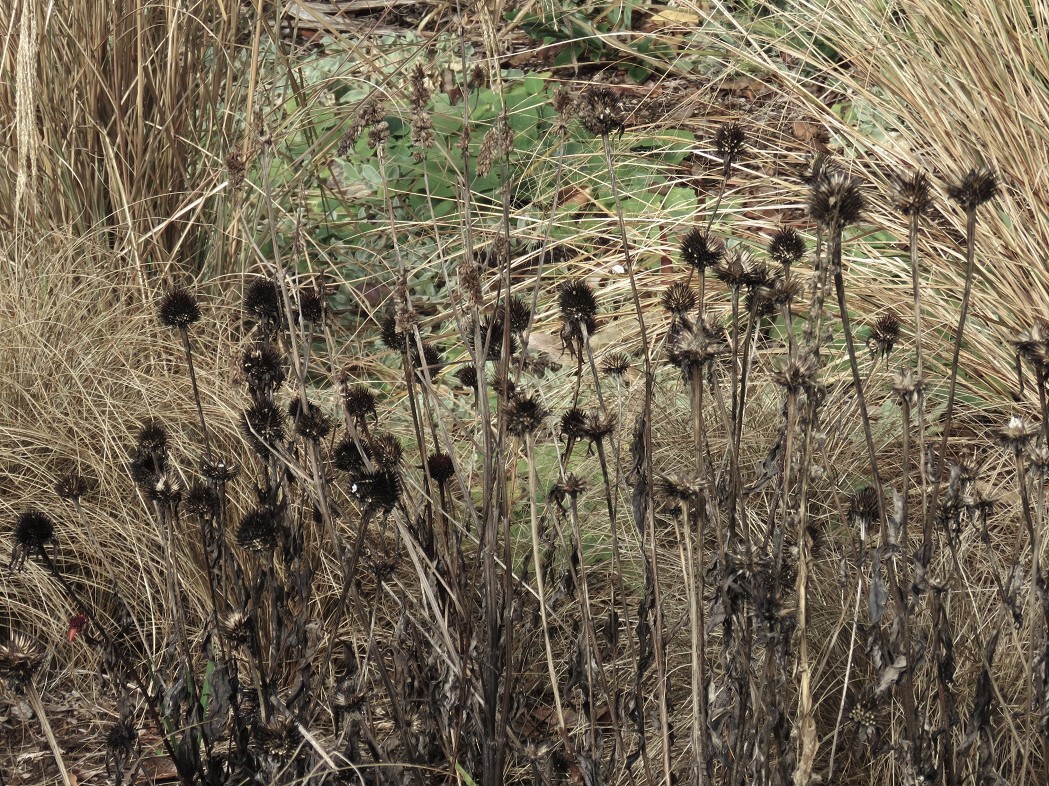
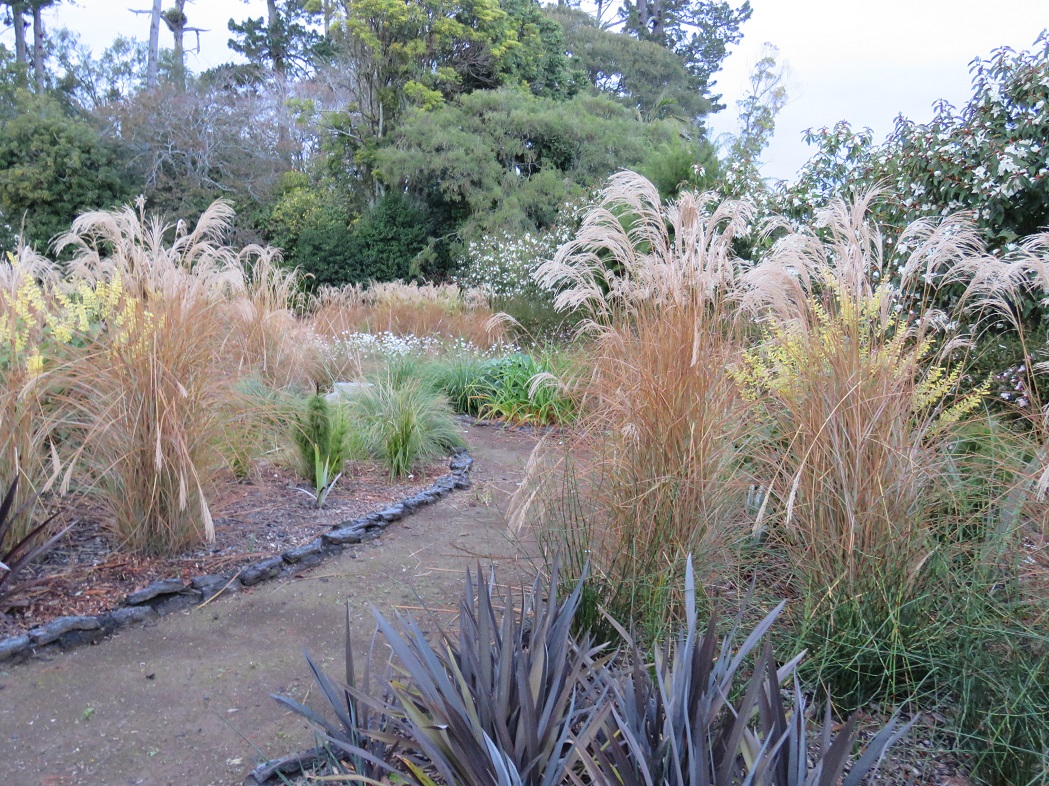
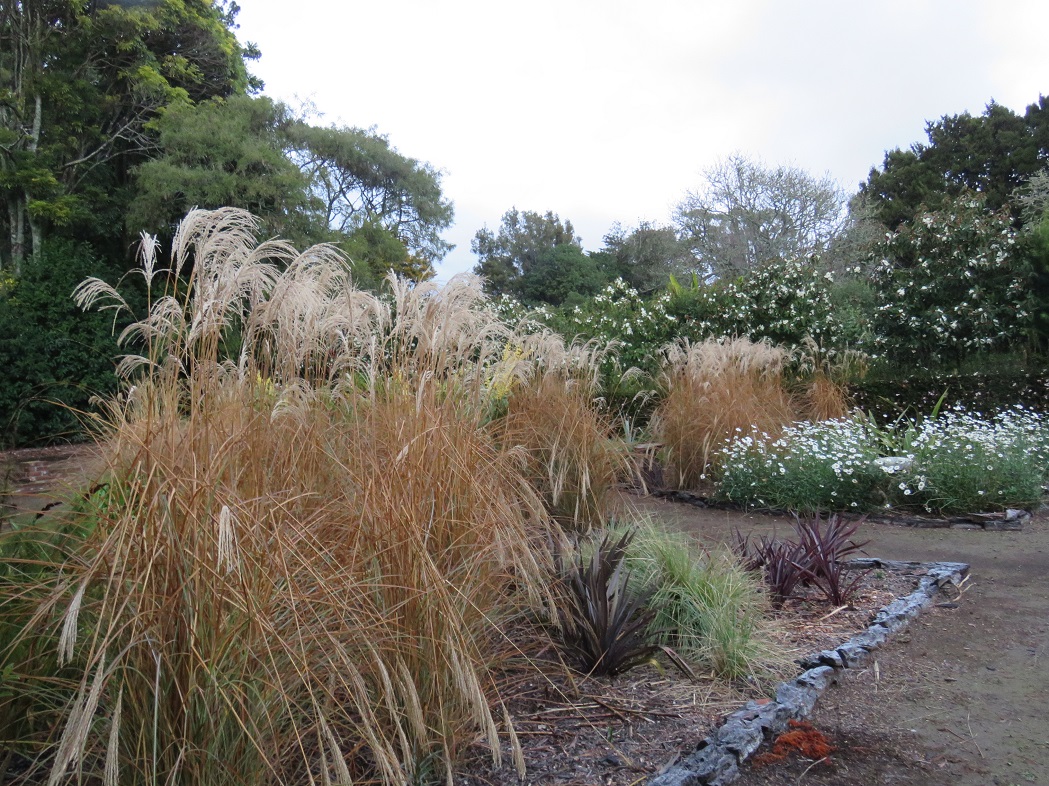
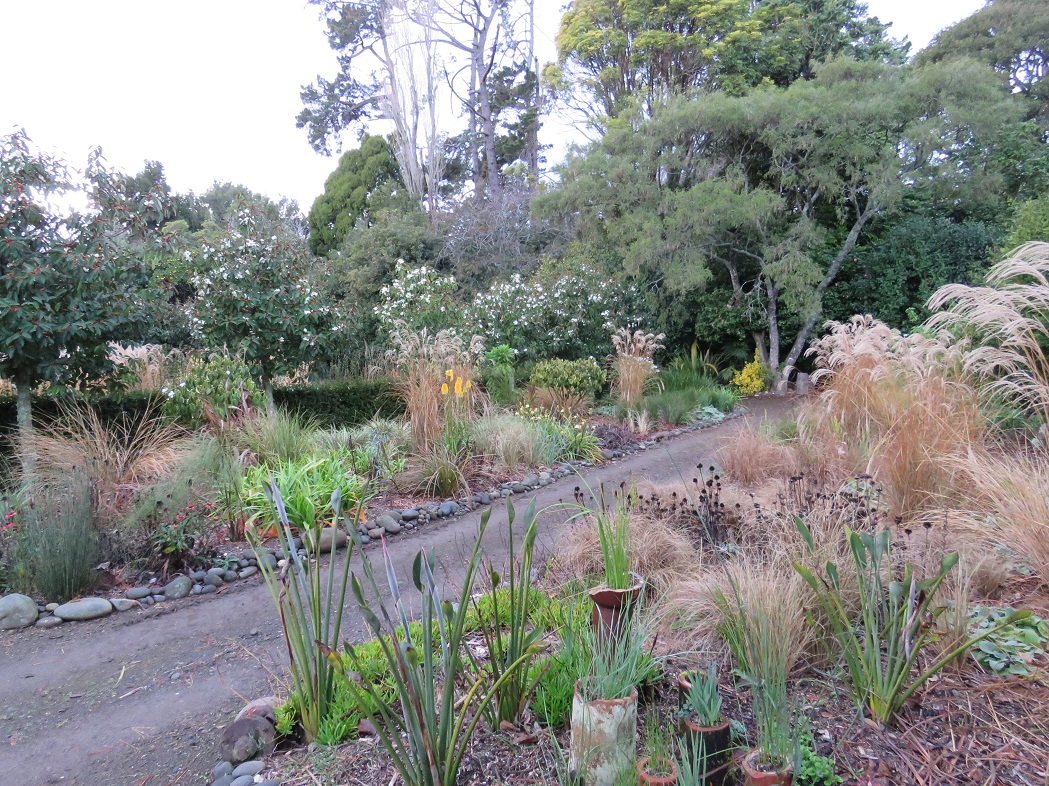
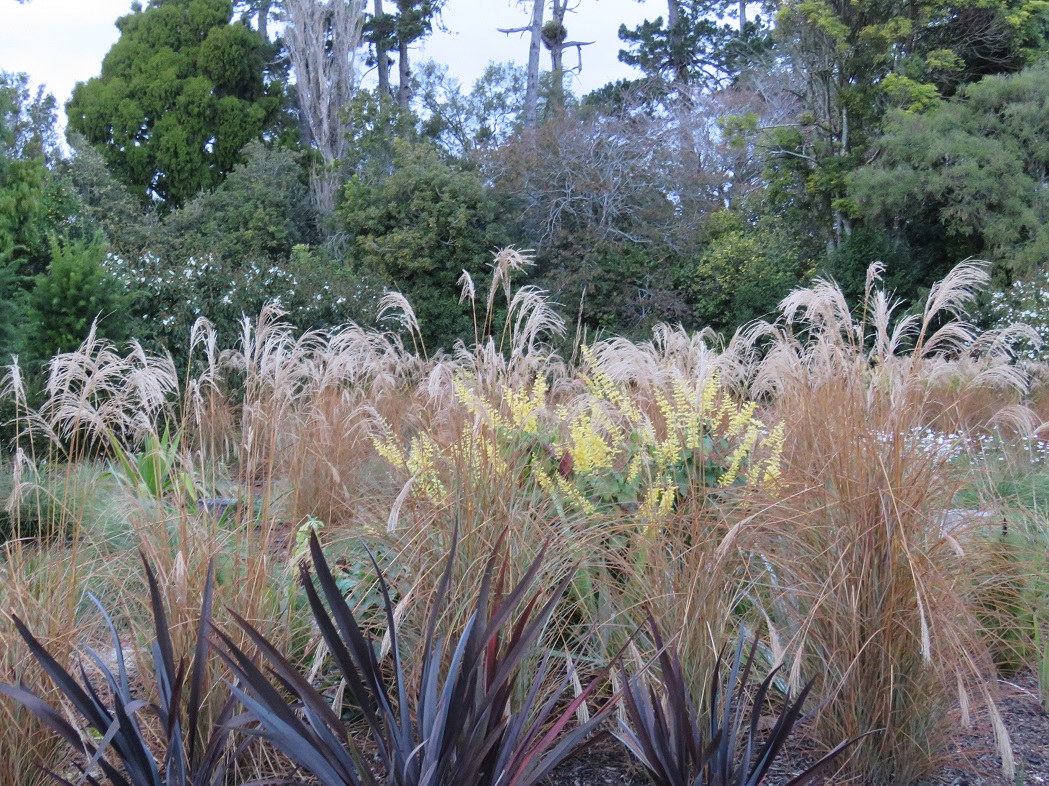 We will go through the Court Garden in the next week or two and cut down all the miscanthus, the six remaining Calamagrostis ‘Karl Foerster’ and the salvias. A frost this week finally hit the foliage of the salvias the day after I took these photos. The calamagrostis is evergreen but very scruffy at this time of the year and I think it will look better in spring with all fresh foliage.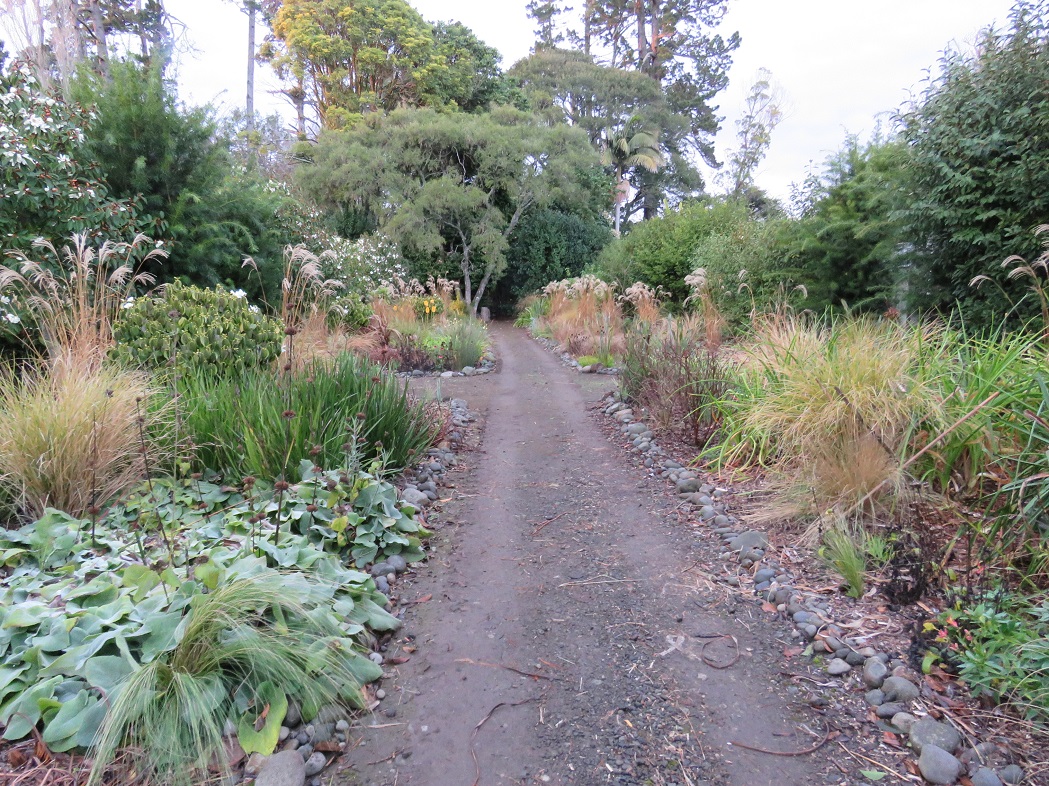



 Inspired by the pineapple lump, on a bed of spent magnolia leaves we have yellow blooms of midwinter. Left to right: calendula, some yellow leafed shrubby plant I have little interest in so do not know the name, the first jonquil, corydalis, ligularia, salvia, primrose, the last of the dahlias, tubes of kniphofia, clivia seed, hemerocallis and vireya rhododendrons.
 Following on from my post last week on the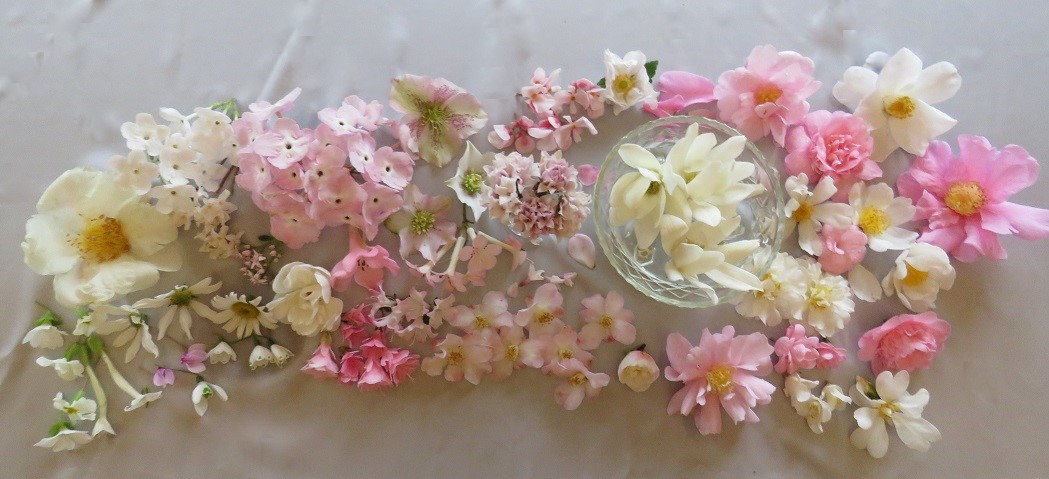
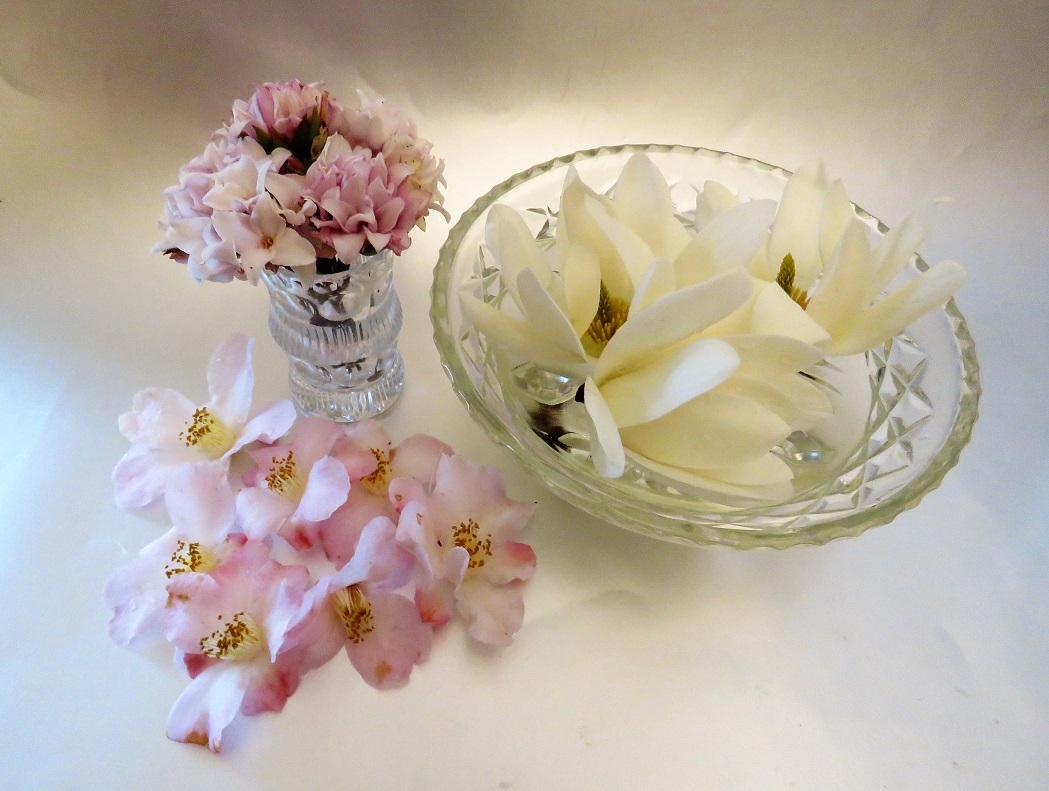 The centrepiece, I decided should be three of Mark’s cultivars. Fairy Magnolia White is well into bloom and a delight to us. We are proud of this one. Daphne Perfume Princess is in its full glory and the scent as we walk along our driveway is a pleasure. Camellia Fairy Blush never fails to please us, even after many years. It was one of the earliest plants Mark selected, named and released, if not the very first.


 The named ones from left to right are C. gauchowensis, C. transnokoensis, Fairy Blush, Silver Dollar, Tiny Star, C. yuhsienensis Sweet Jane, Superstar and Showgirl.




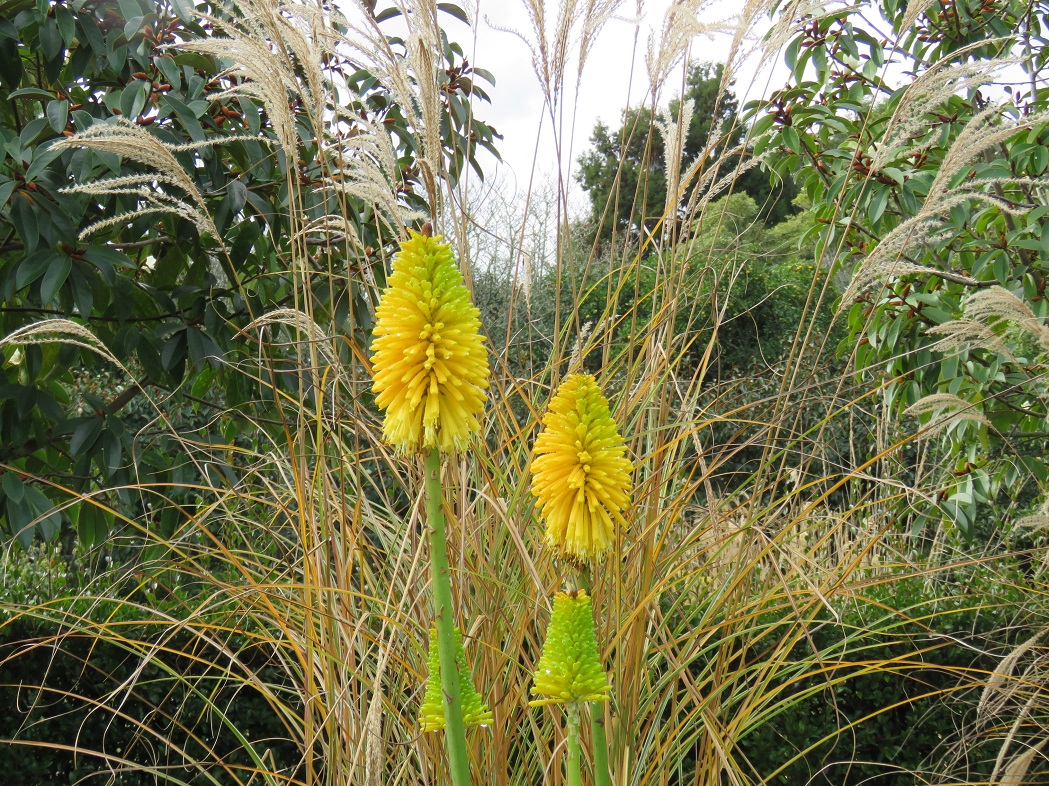 Yellow I will give to the kniphofia. This one, Mark retrieved from one of our fenced shelter belts where a neighbour had been dumping his garden rubbish so that was a find. I like the clarity of the yellow as a garden plant, maybe even more than the orange forms.
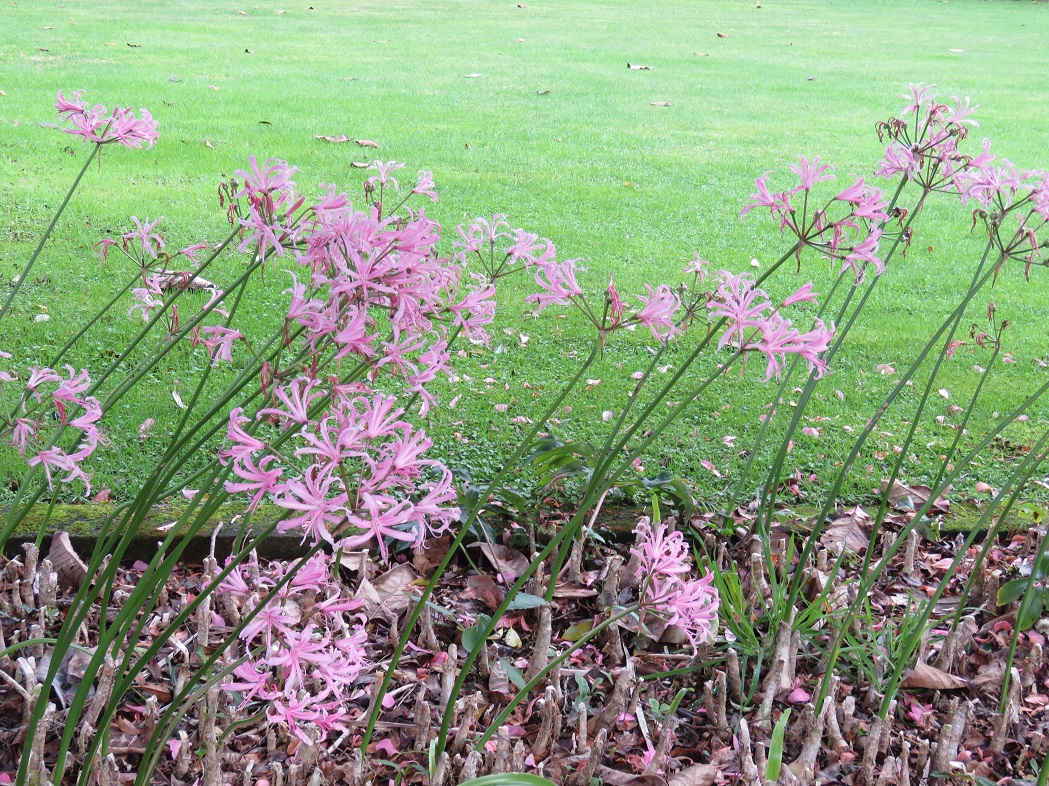 Green. Where to start? In our climate we are green all year round. Not for us the white of snowbound winters, nor the unrelenting grey of climates where the sunshine hours plummet in winter and the sun barely rises over the horizon. Nor the soft beige-golden tones of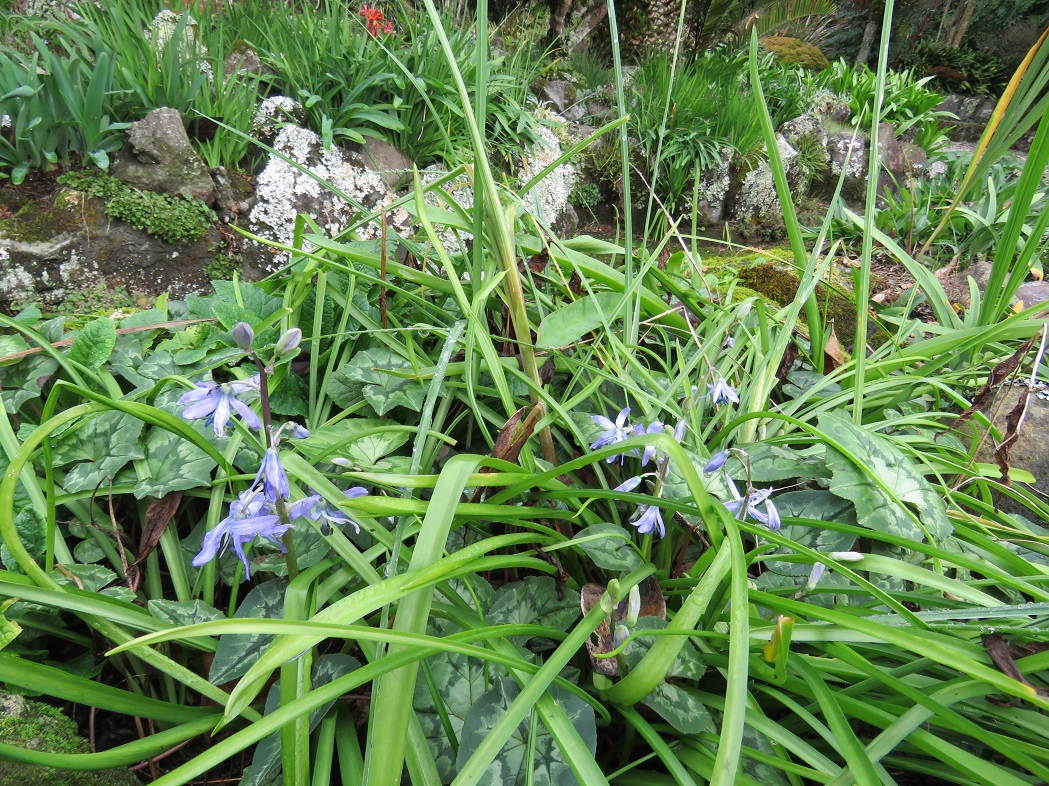
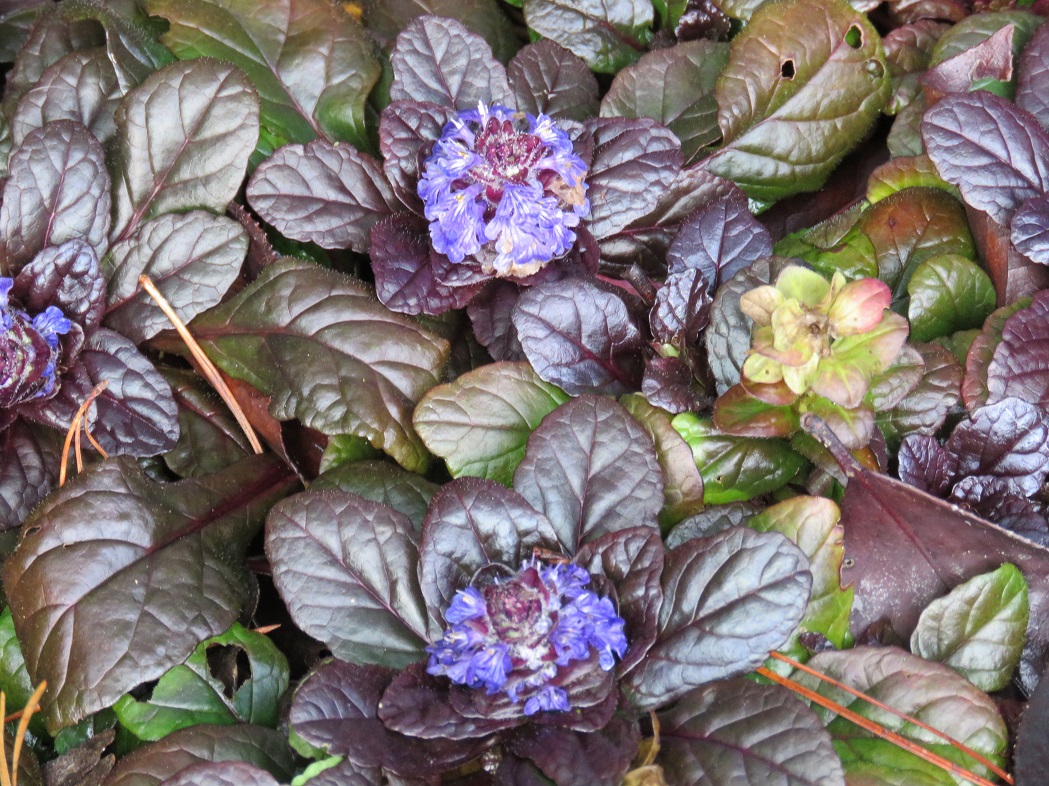 Indigo – just the ajuga which is perhaps an under-rated groundcover for woodland areas. The deep blue is a bonus with the dark burgundy foliage. What is indigo even doing as a colour of the rainbow when you think about it?
 And finally to violet and while I entertained the violet hues of the stokesia that flowers all year round for us, I settled on a bromeliad with an indubitably lilac centre at this time of the season. Is it a neoreglia? Feel free to correct me. Bromeliads are not my forte.
 Tikorangi The Jury Garden