Tag Archives: naturalising bulbs

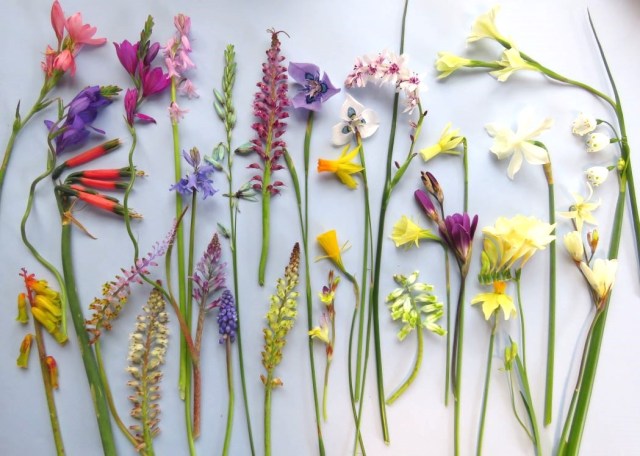
Looking at finer detail

I picked a sampling of the smaller bulbs currently in flower yesterday morning, just before the rain returned

I was thinking about writing about rhododendrons this week. The big-leafed Rhododendron macabeanum that was *temporarily* heeled into the Iolanthe garden years ago, pending relocation to a more suitable spot, is looking absolutely splendid. It is clearly in its forever home where it is. And the firecracker R. spinuliferum never fails to delight me, but the rain has returned, interfering with photo opportunities. Apparently four consecutive fine days is all we can expect. Besides, for all the grandeur and stature of the fine rhododendrons, it was the simple sight of a few flowering bulbs down in the Wild North Garden that gladdened my heart more.
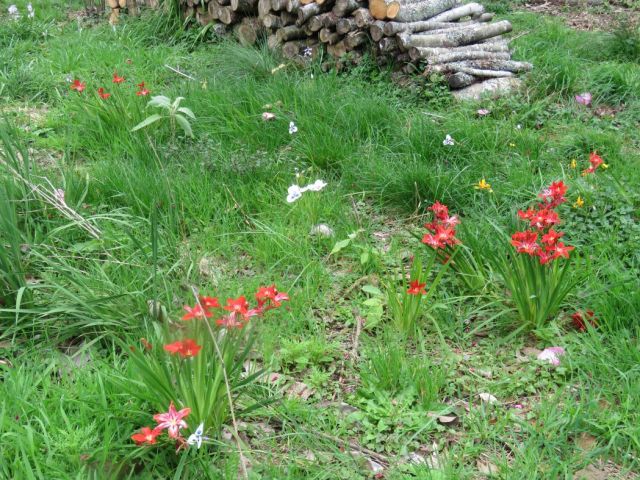
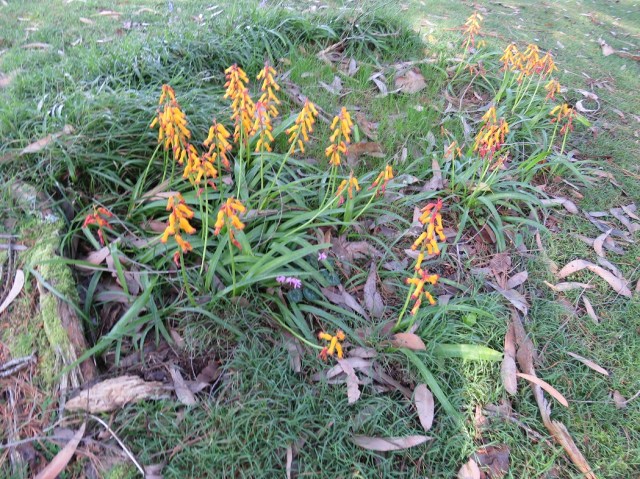
A simple sight on an ongoing project but one that is delighting us all. Red valottas, moraeas and a dainty little yellow bulb that I have forgotten the name of but belongs to that babiana, sparaxia, valotta group of bulbs.

Have I mentioned before how much we love gardening with bulbs? Of course I have. The Wild North Garden is now largely the project of our garden apprentice, Zach. I give him surplus bulbs from the more cultivated house gardens that we think may be able to bed in and compete in the more naturalistic environment and he plants them where he thinks they may thrive.
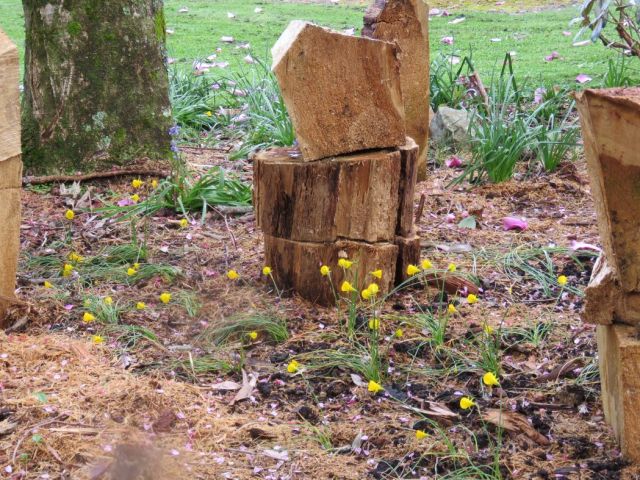
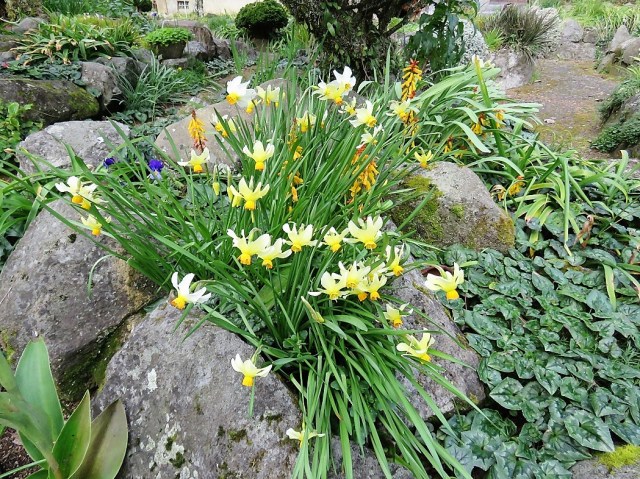
The Narcissus bulbocodium were planted planted just last week but have already opened up their flowers

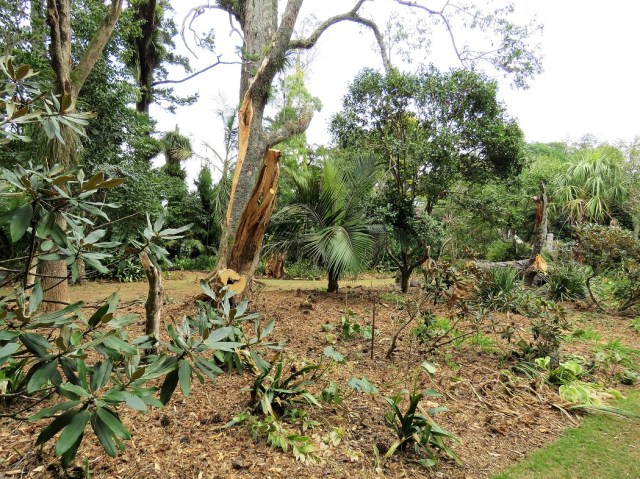
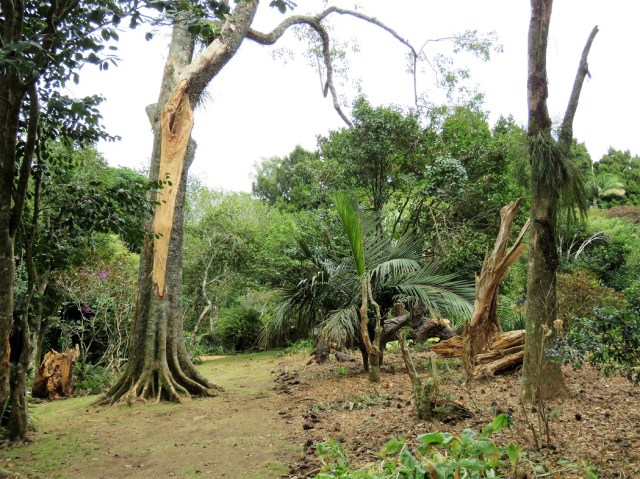
Zach has also been tidying and replanting the area where the fallen giant gum tree laid waste when it fell in Cyclone Dovi last February. Because there are enough trees and shrubs in the area that will recover over time, we have taken advantage of the more open conditions to thread rivers of surplus bulbs through below.
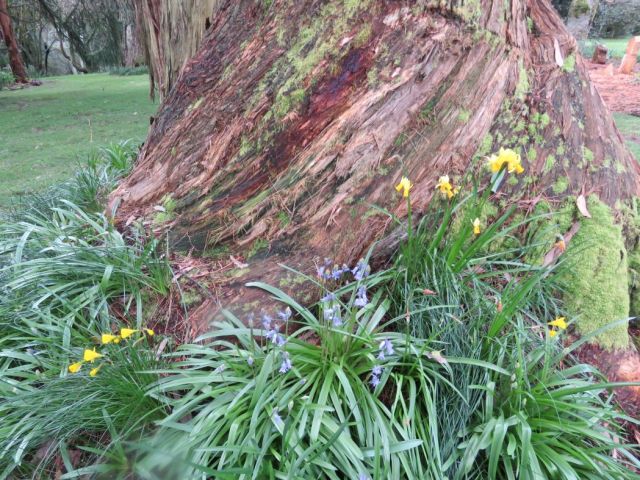
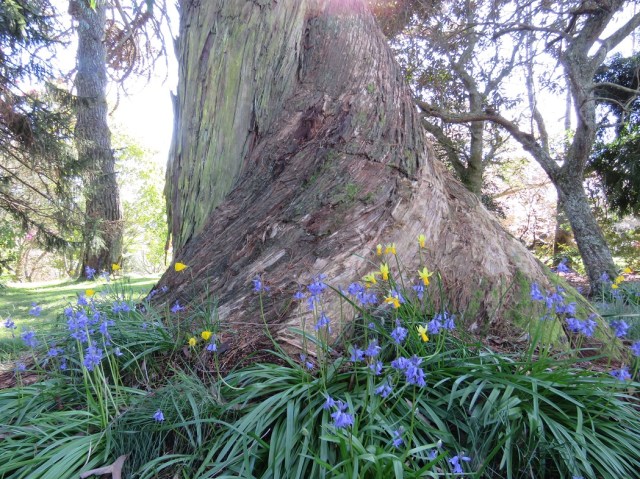
This is another gum tree – you can tell by the characteristic twist in the trunk – but fortunately it survived Cyclone Dovi and its falling neighbour.

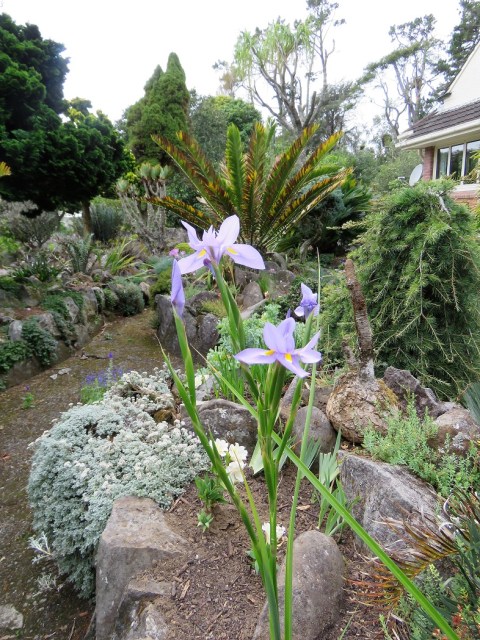
Wilder areas need tough, robust bulbs that are capable of surviving competition. That means bluebells, snowflakes (leucojum), snowdrops, some of the vigorous smaller narcissi and lachenalias, peacock iris (Moraea villosa), valottas and the like.  The more delicate, pernickety bulbs are given prime positions in well-tended areas like the rockery where we can guard them from being out-competed by stronger plants.
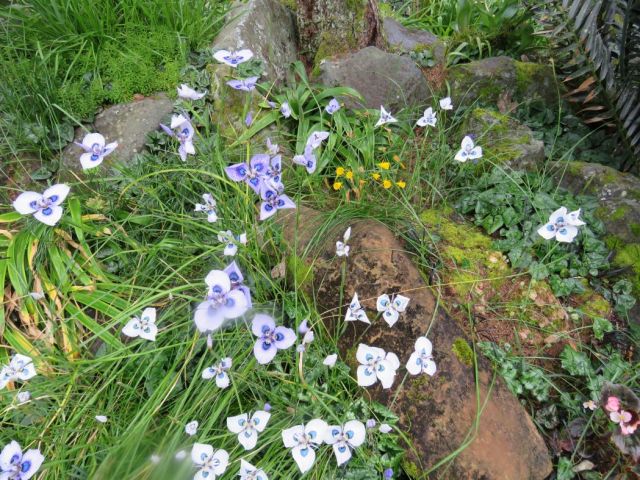
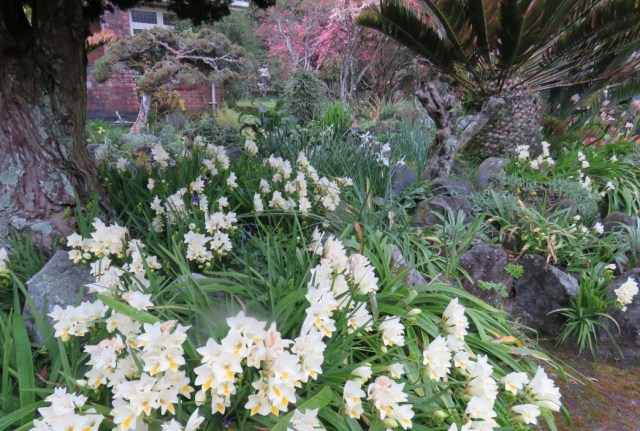
Moraea villosa and bulbocodiums in the rockery
There are too many freesias but we will relocate some and they are pretty on their day.

The most interesting bulbs also have back-ups kept in pots, sometimes in a covered house. They don’t get a lot of love and attention but the conditions mean they are more likely to survive and enable us to replenish the garden when they may have died out or to extend existing plantings. This is particularly true of some of the more interesting lachenalias, especially the blue forms.
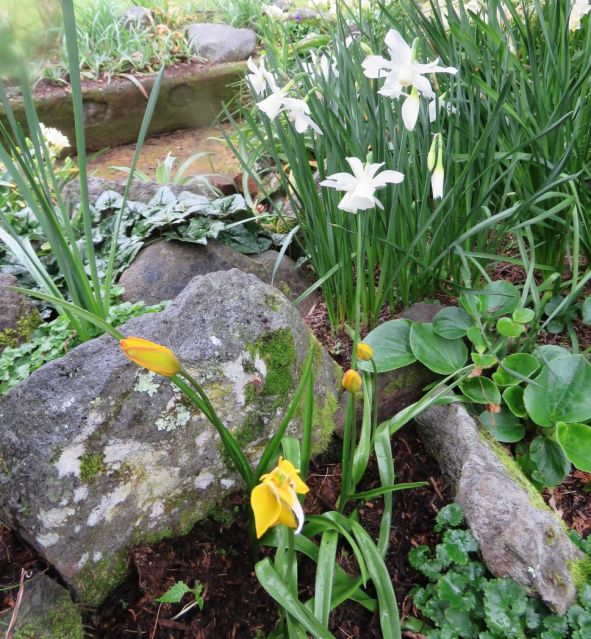
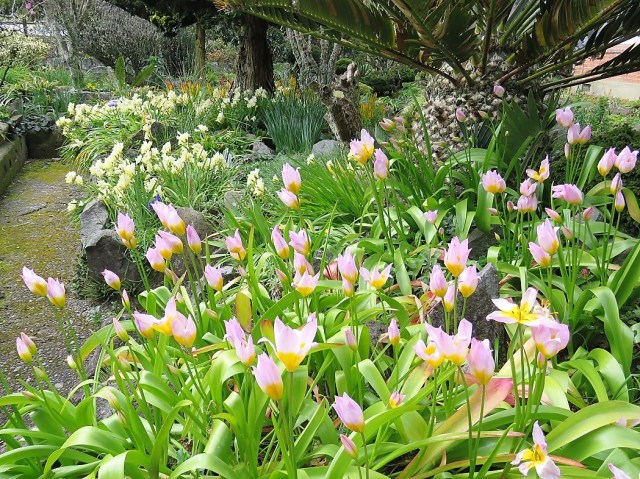
Somewhere I have the name of this yellow tulip species. I am just not sure where. It does not exactlyy thrive here but it does keep returning each spring as long as it is given its own space. The white daffodil behind is ‘Thalia’.

It takes ongoing attention to keep the detail in a garden and it is the high level of detail that brings both Mark and me most pleasure and interest on a daily basis. Vistas, views and big pictures – a beautiful magnolia in full bloom or the aforementioned R. macbeanum – are great but they are only part of the gardening experience.

“Why do you like the dwarf narcissi?” Ruud Kleinpaste once asked Mark’s dad, Felix. when in the garden filming a story on magnolias for the TV garden programme hosted by Maggie Barry.

“Because they are small,” Felix replied.

I know exactly what he meant. I did, however, pop out briefly in the rain to snap the macabeanum for readers who prefer bigger, showier pictures.
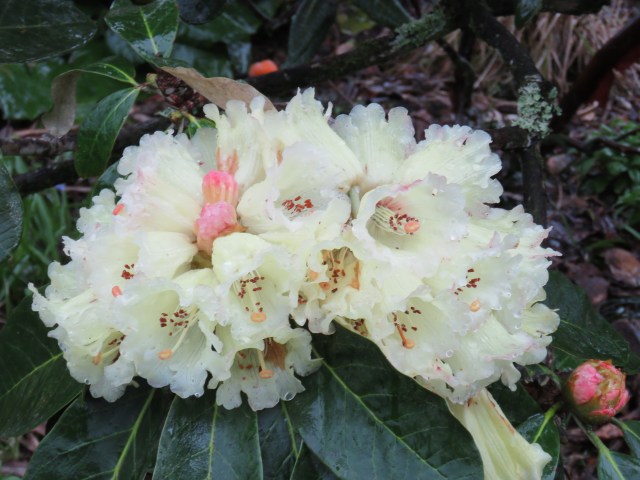
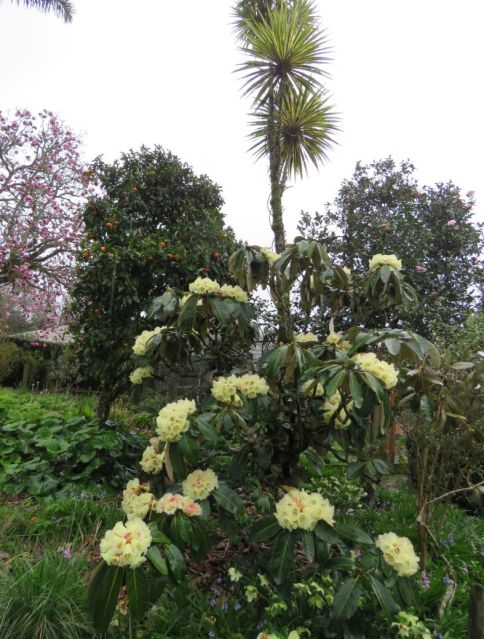
Rhododendron macabeanum
The macabeanum was not supposed to stay in this position because it will grow a great deal larger over time but we will work around that as need be.

A small kingfisher, autumn bulbs and cyclone recovery

Does anybody else feel they are living life day by day, waiting to see what else life will throw at us? Oh, most of you? I thought so. As I heard somebody on the radio saying yesterday, the pandemic has hit pretty much every corner of the world and it ain’t over yet. Add in the invasion of Ukraine, the very real threat of a nuclear war in Europe, the appalling flooding in northern New South Wales and it makes our experience with Cyclone Dovi seem minor.

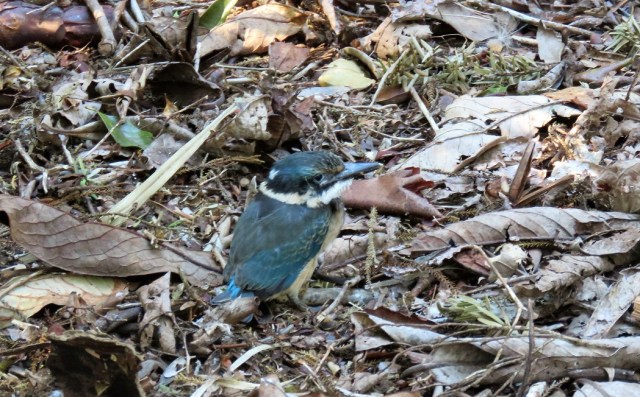
Little Beaky the kingfisher or kōtare

I have to focus on the little things in my immediate physical world to keep me sane. Meet our little kingfisher or kōtare. Zach found it on the ground on Tuesday and it had clearly fallen out of its nest-hole high, high above in the Phoenix palm. Zach named it Queenie but told me the next morning it had changed to Beaky. I can only assume that these are pop culture references which I am too old to understand.

For such a small creature, Beaky had a very loud voice and on Wednesday, it spent a lot of time calling to its whanau (family) above. At times the mother would reply so she knew where it was and we hoped she was feeding it.

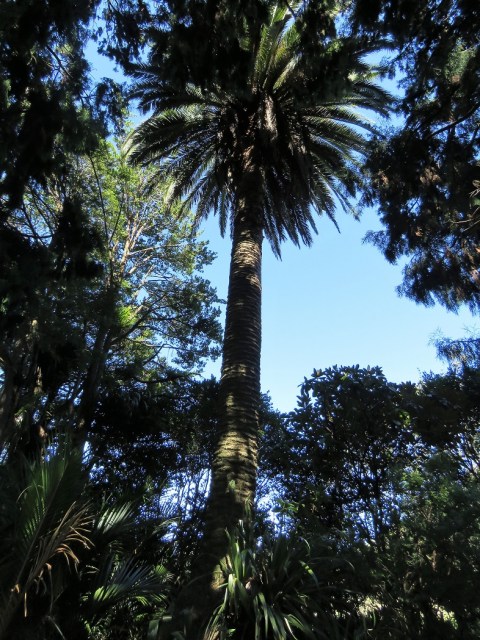
Beaky’s family nest was a hole high in the Phoenix palm

Thursday – no sign. No bird. No noise. I hoped Beaky had not been taken by a feral cat or stoat. Zach bravely declared that he was sure the tail feathers must have grown sufficiently for Beaky to fly but I had my doubts. Zach was right.

On Friday, the sound of loud kingfisher squawks drew me back to the area where I saw a little kingfisher perched in an adjacent tree. As I watched, it flew over to the Phoenix palm and then back before flying a little more confidently further afield. Was it Beaky? It is a bit hard to tell when it is up in a tree but it was a baby kōtare, clearly new to flying and managing to make a great deal of noise so I think it was likely to be Beaky who may just be the noisiest, small kōtare of all time. I hope it was.

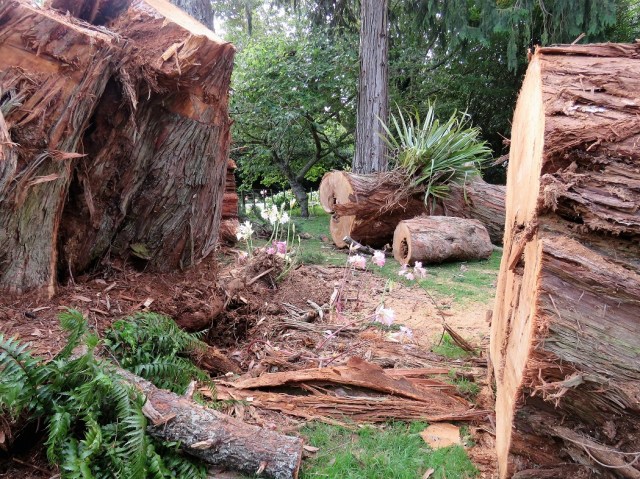
The gum tree or eucalyptus at our gateway with the rootball and base standing upright again. The belladonnas are not bothered by all that has gone on around them

On the cyclone clean-up front, we have made good progress. In a difficult operation, the arborist dropped what remained standing of the giant gum tree at our gate, removing also the broken branches – called swingers – caught up in an adjacent tree and in danger of falling onto passing cars. This involved getting in a large truck with a hiab to lift down sections safely but also meant that they could stand the base of the main trunk upright again which is way more pleasing visually. I got out the tape measure – it is about 2 metres across near the base so that is a pretty huge chunk of timber to fall.

In the Avenue Gardens

The main damage in the Avenue Gardens has been cleared. It remains to be seen how much of the herbaceous underplanting returns in spring. The whole area was densely planted and lush until three weeks ago. I am hoping Mark is thinking his way into deciding what we can replant for the middle layer of shrubs and small trees that were taken out. That is his area of expertise.

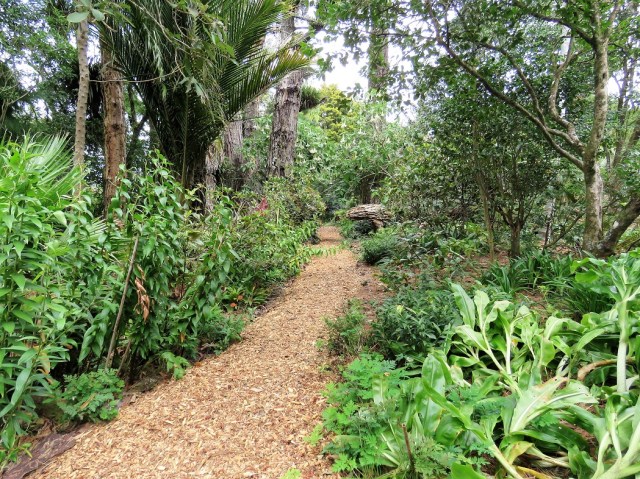
The next path over from the areas of damage and all looks well with the new surface

Because so much of the material was mulched on site, we have used some of that fresh woodchip to cushion the paths, which gives a nice, soft surface to walk on. We still have a small mountain of mulch left but it was important to get the big piles off the garden before they heated up more and cooked the herbaceous material beneath.  

Moraea polystachya in the rockery

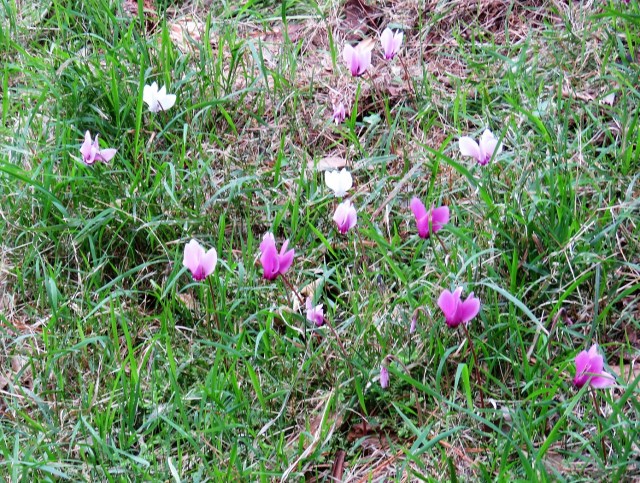
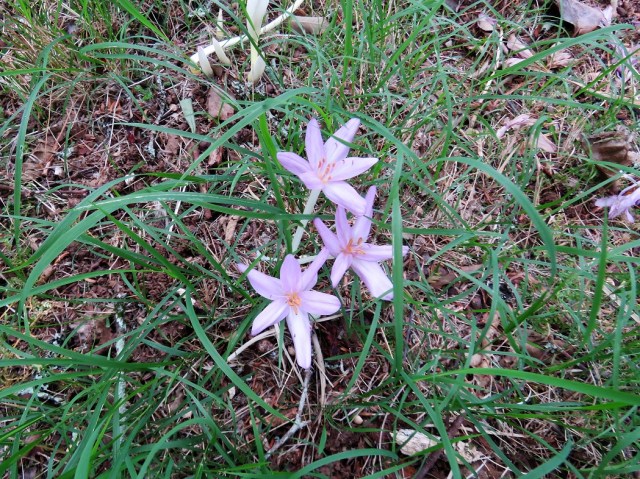
More autumn bulbs are opening every day. While I love the bulbs in the rockery – all the Cyclamen hederafolium, Rhodophiala bifida, Haemanthus coccineus, Leucojum autumnale, Moraea polystachya, sternbergia, Colchicum autumnale and the first of the nerines amongst others – there is something particularly engaging about the brave cyclamen and colchicums flowering in wilder conditions in the long grass in the park.

There is a resilience and an element of surprise with bulbs that will naturalise in more challenging conditions.

When the detail brings delight, not the devil

Tulipa saxatilis and simple cream freesias in the rockery this week

Bulbs play a major role in our garden. We use a huge range of bulbs, many no longer available commercially. Some never were readily available. Very few of those we grow are the larger, modern hybrids which are generally what are on offer these days. We prefer the simpler style of the species or at least closer to the species.

Added to that, seventy years of intensive gardening across two generations has built up the numbers most satisfyingly. Most of our cultivated gardens have bulbs incorporated in the plantings. Or at least bulbs, corms, tubers or rhizomes to cover the range.

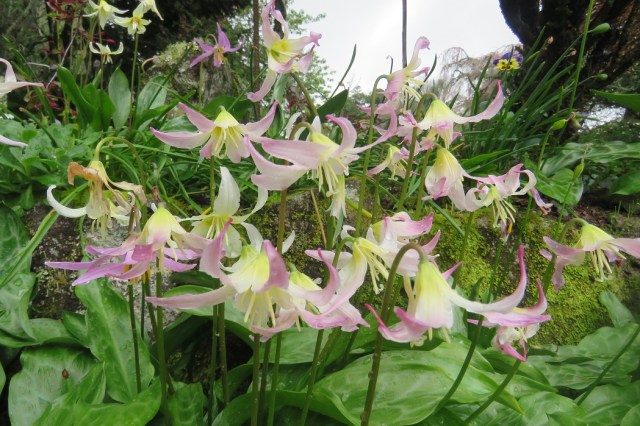
Erythroniums

We have a fair few that are fleeting seasonal wonders in our climate but we just adjust our expectations. The cute erythroniums – dog’s tooth violets – are maybe a 10 day delight and can be taken out by untimely storms but that is just the way things are.

Meet Beryl. Narcissis ‘Beryl’ with cyclamen, nerines and even a Satyrium coriifolium in the bottom left corner

I don’t grow any in containers now although the same can not be said of Mark. His bulb collection is currently sitting in limbo for us all to see the scale as his inner sanctum – his Nova house – is currently being relocated. He hasn’t taken good care of them in recent times but he is determined to keep some of the rarer, touchier varieties alive. It is possible to maintain a more comprehensive bulb collection if you are willing to faff around with growing them in containers in controlled conditions. I am not so dedicated. My interest wanes if we can not grow them in garden conditions.

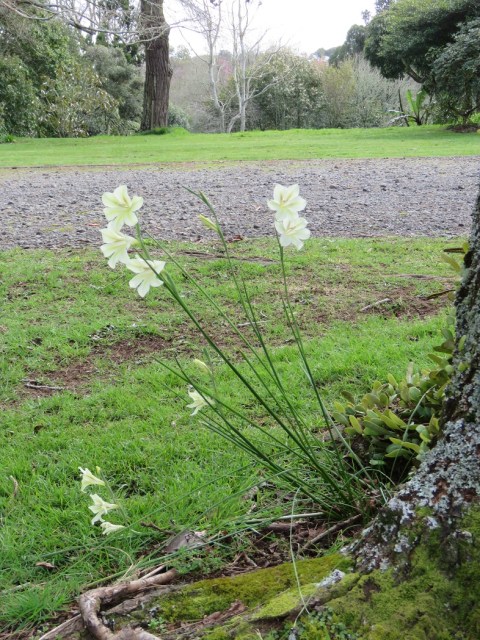
Gladiolus tristis popping up unexpectedly in our parking area

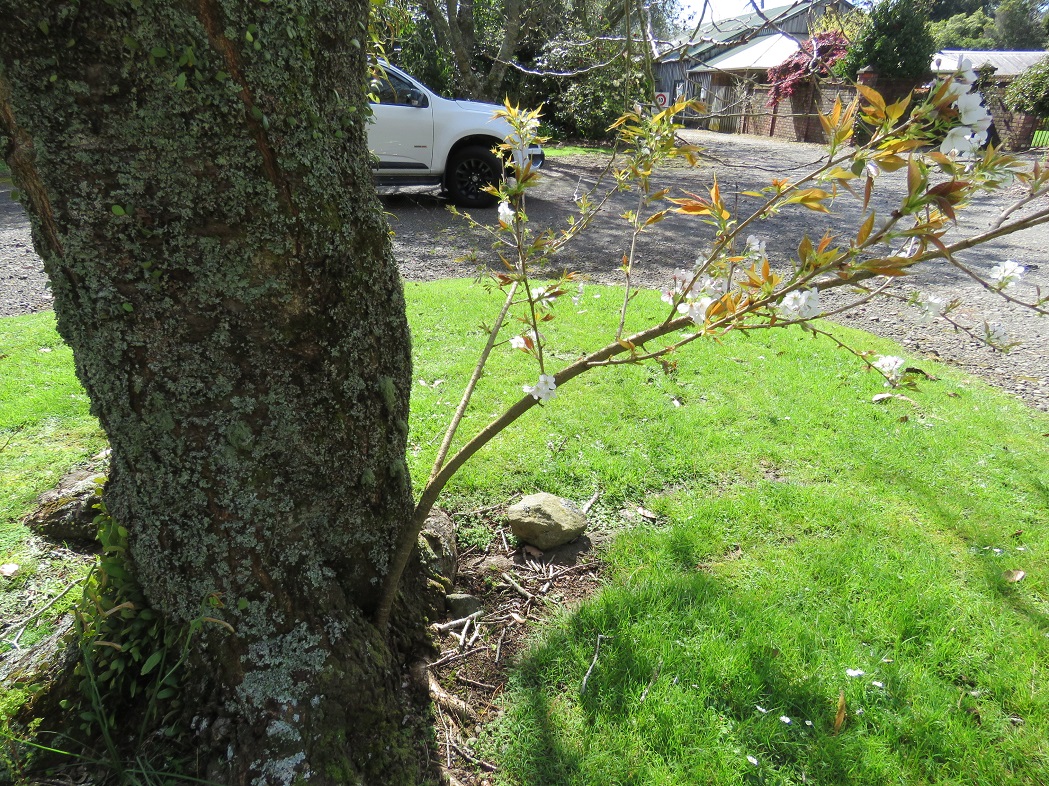
It is the random bulbs beyond the gardens that are currently bringing me pleasure. Some of these have been planted. Some have popped up from our nursery days. When trays of bulbs were being repotted, Mark had a strict rule that fresh potting mix was to be used (granulated bark was our chosen medium). Hygiene, he would explain. The old potting mix was spread around the place and at times it had seed or tiny bulbs within it. I am guessing this is how the Gladiolus tristis, a species gladiolus, came to be at the base of a cherry tree. I certainly don’t remember planting it there and I can’t recall it flowering before.

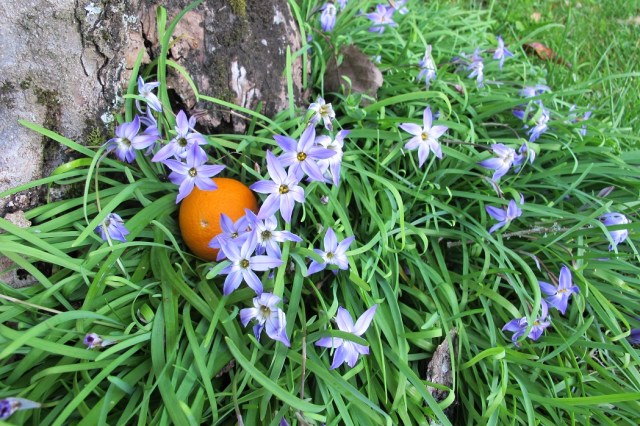
Ipheions at the base of an orange tree

When we plant bulbs beyond the cultivated garden areas, we try and select spots where they can establish in fairly undisturbed conditions. At the base of trees is good, as long as there is plenty of light. Around old tree stumps, on margins that don’t get mown often, or in little spots where we can walk past and be surprised to see them in bloom.

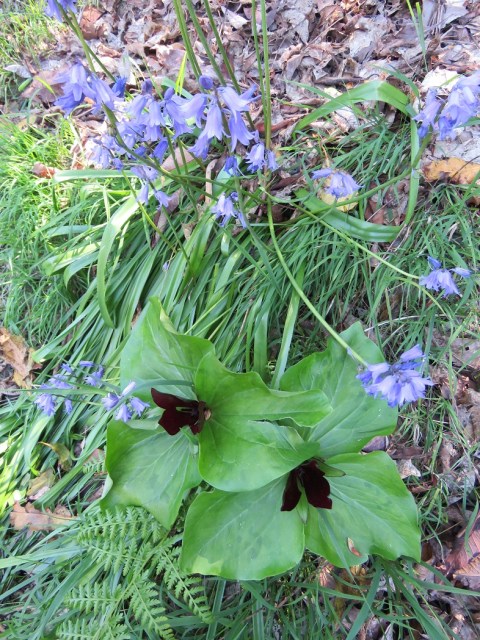
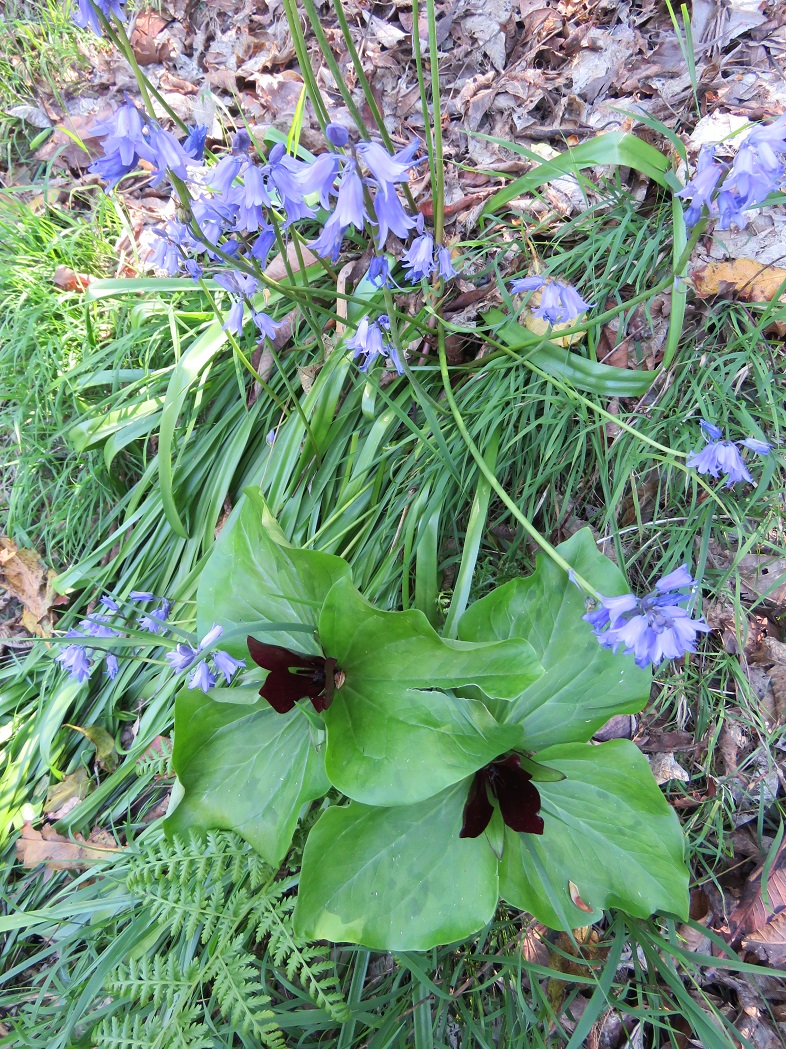
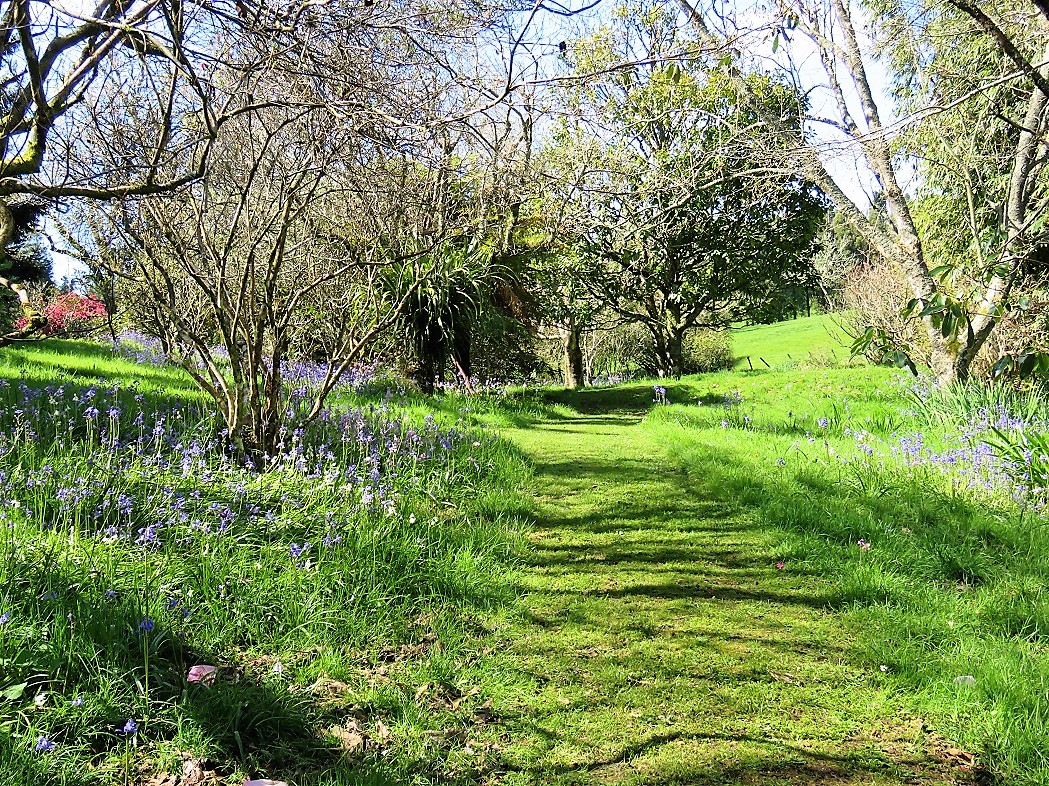
Trillium red with bluebells down in the park meadow
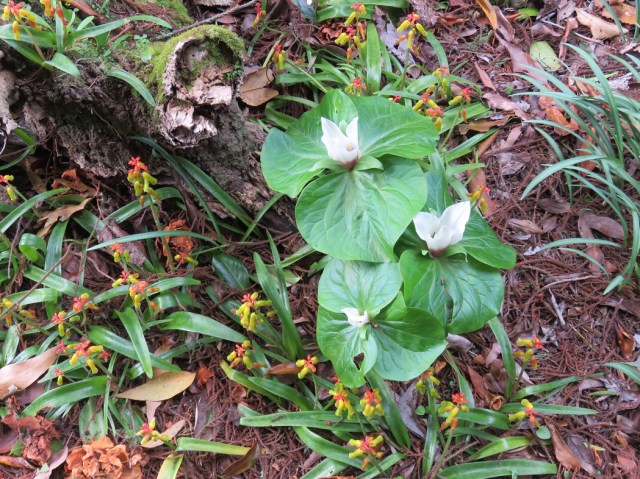
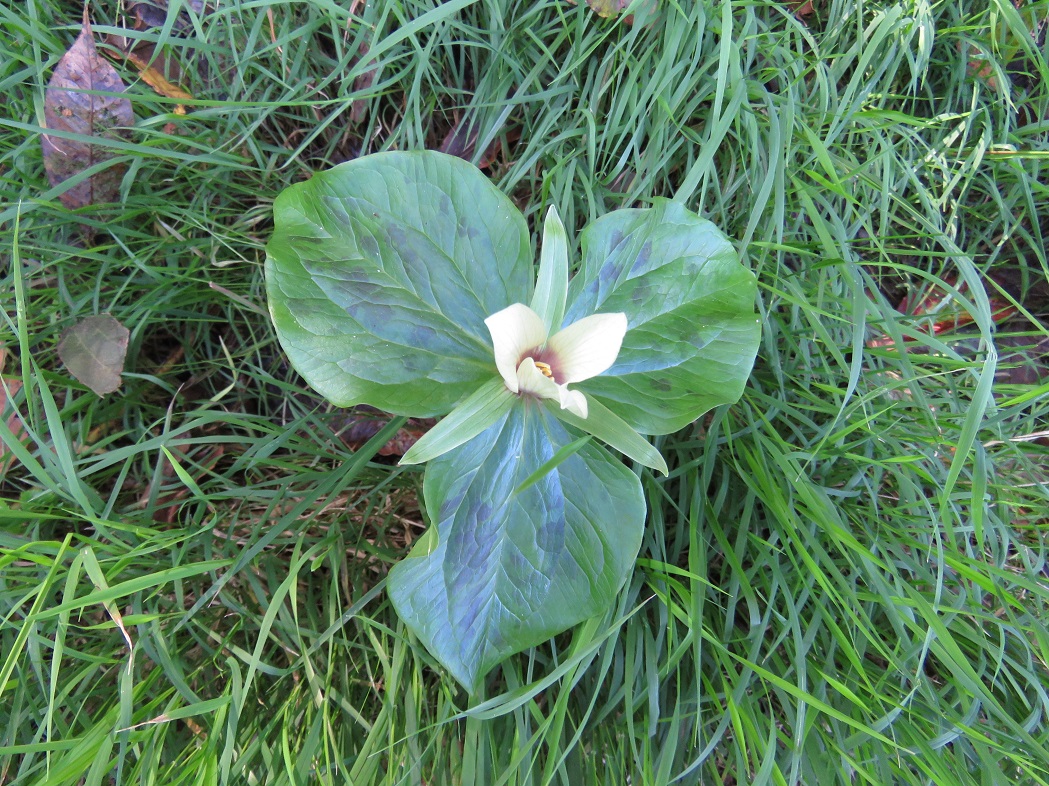
And trillium white with Lachenalia aloides tricolor and snowdrops to the right on the margins by a stump

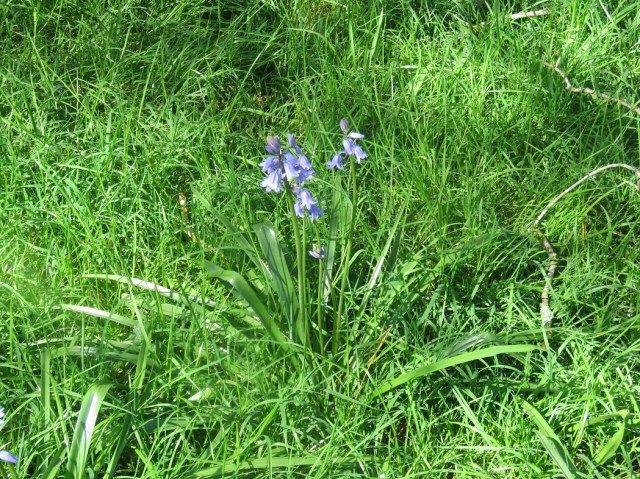
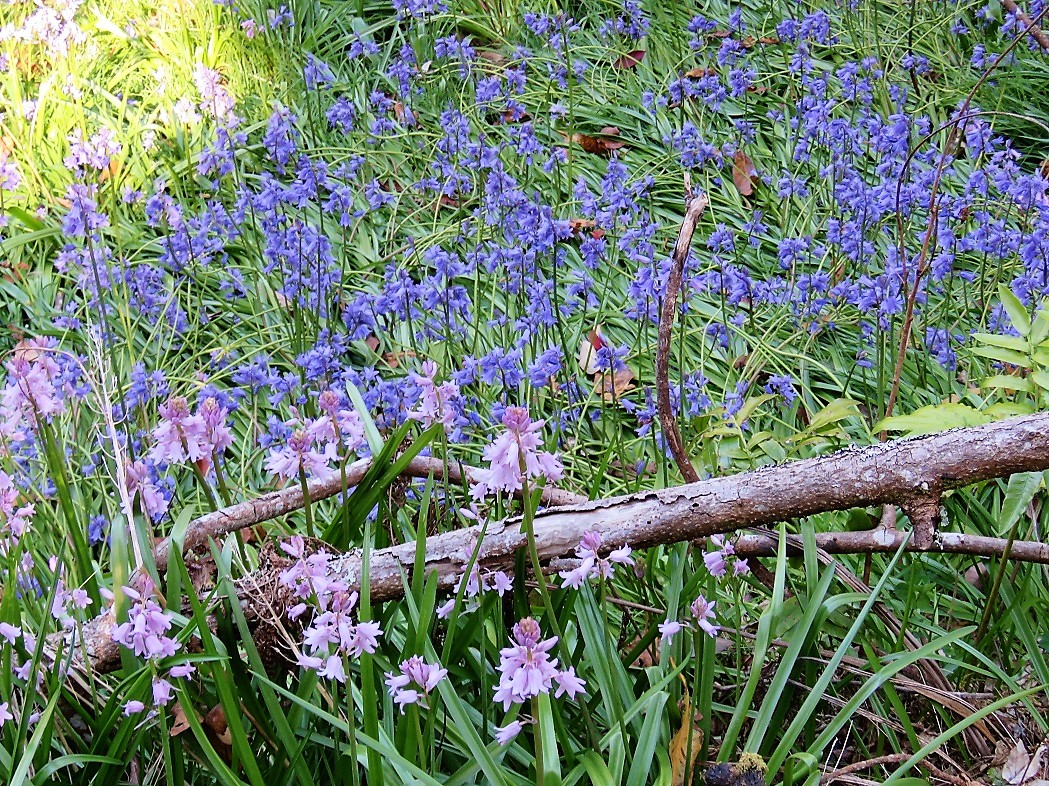
We have rather too many bluebells now, to the point where I often dig out clumps to reduce overcrowding. The Spanish bluebells or the ones that are crosses between the vigorous Spanish and the more refined English species are definitely rampant, bordering on weeds. That sea of blue is very charming in their flowering season but sometimes it is the one seedling escape flowering bravely on its own that makes me smile as I pass.

The simplicity of a self-sown bluebell
Common old Lachenalia aloides where a tree stump used to be

It is both the transient nature and the detail that makes bulbs so interesting in a garden context. Far from simplifying our own garden as we age, the more we garden, the more we like to add fine detail. That is what keeps it interesting for us.

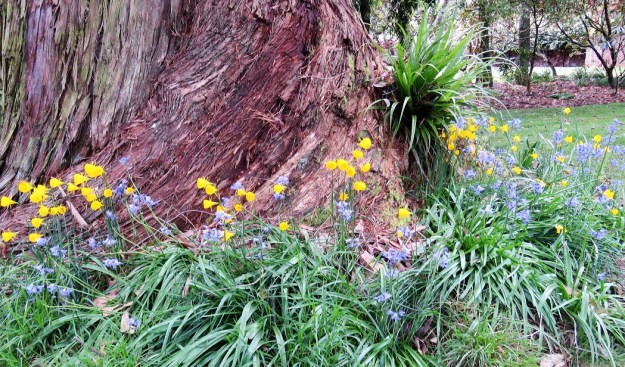
Bluebells and narcissi at the base of gum tree
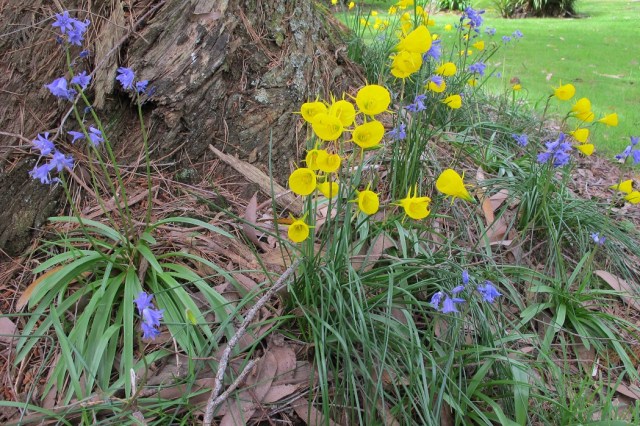
Narcissus bulbocodium with bluebells

Tikorangi notes: Iceland poppies are not from Iceland, naturalising trilliums, bluebells and escaping root stock

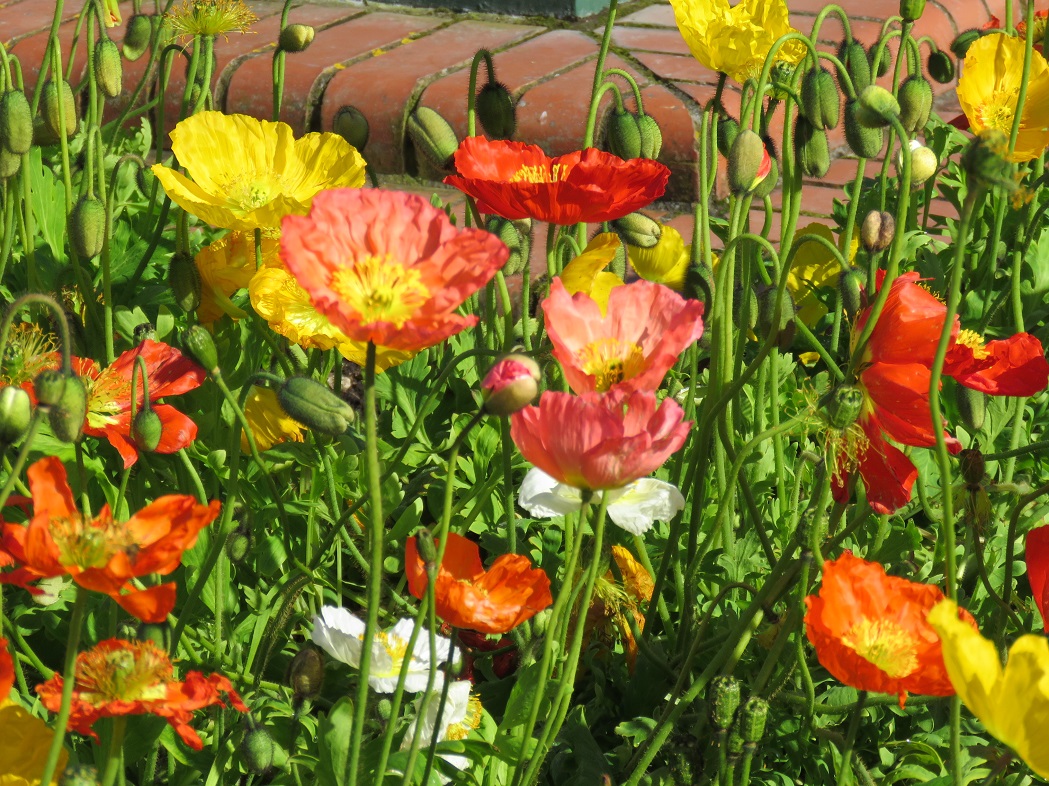
I have never been a fan of Iceland poppies. They were the one flower I remember my mother buying  when I was a child – a bunch of stems still in bud. She would burn the stems and then put them in a vase where they would open to what seemed garish and unappealing flowers to me. Tastes change and in recent years, I have found my eyes drawn to mass displays of these simple blooms. This patch is on a traffic island which holds the very modest clock tower in my modest local town of Waitara and it makes me smile when I pass.

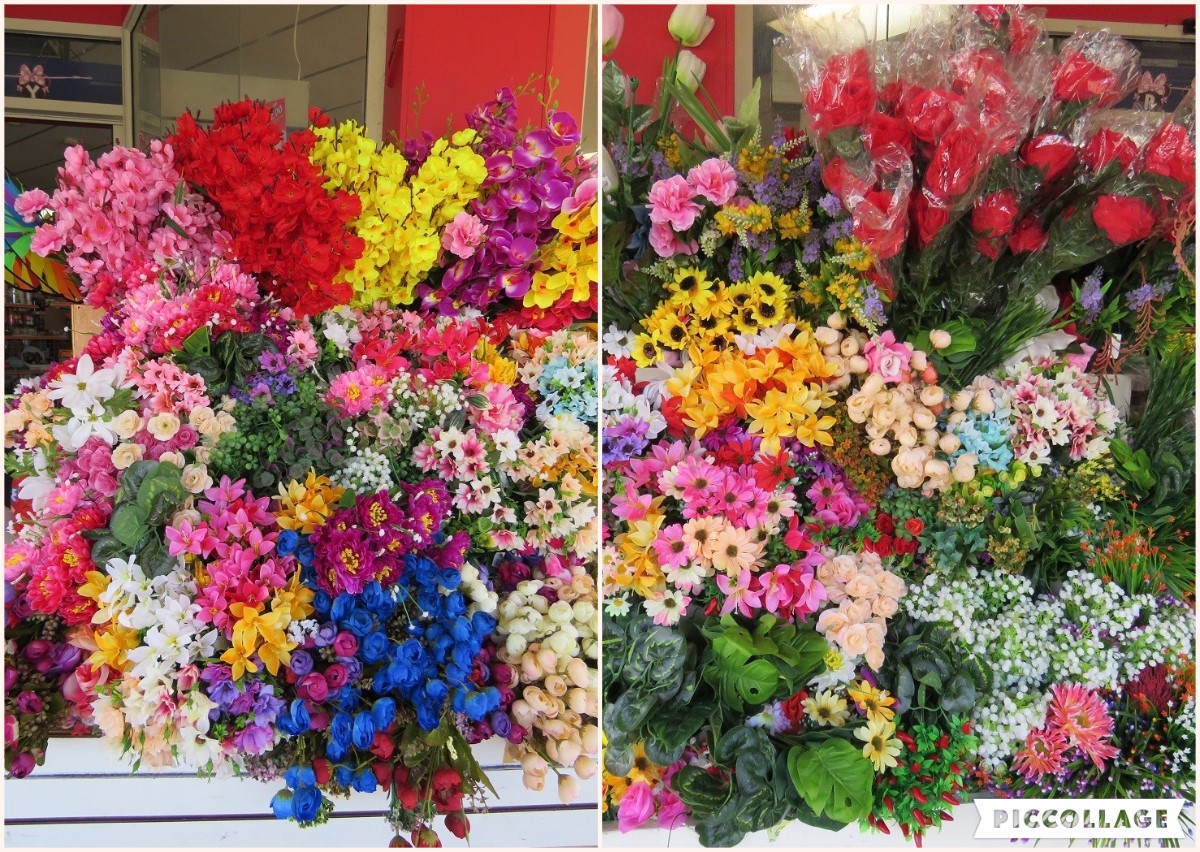
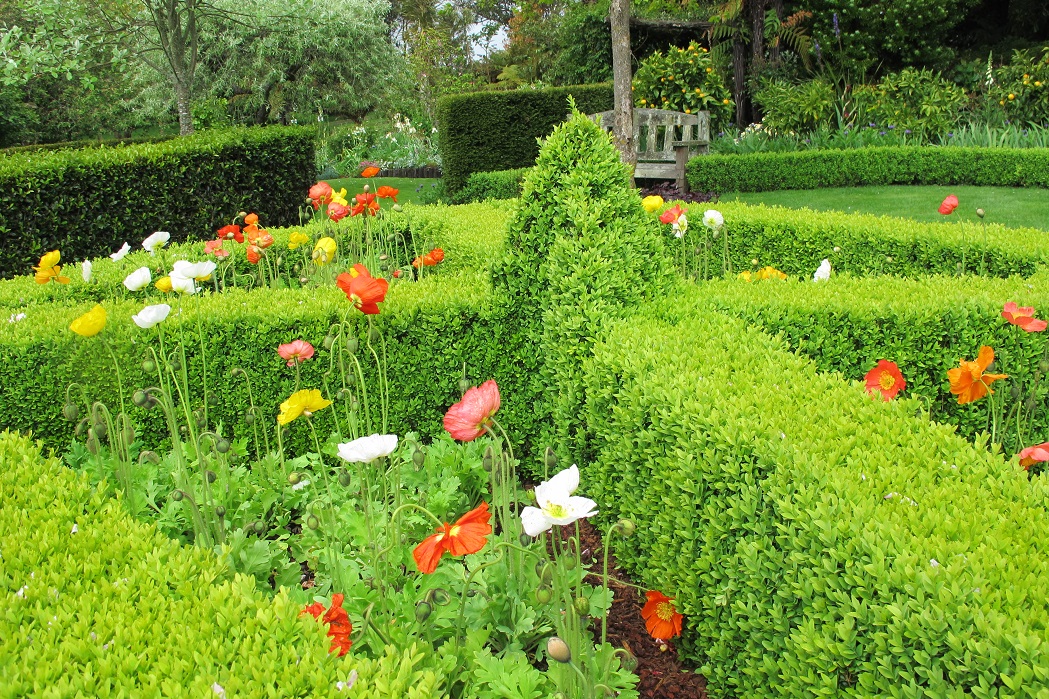
The Waitara clock tower in a traffic island 

Ironically, on the opposite corner was this stand of fake flowers outside a Gold Coin shop.

Iceland poppies do not come from Iceland. I finally checked and in fact they come from the chilly areas of Europe, Asia and North America – sub polar territory, so presumably alpine meadows.  In the wild, Papaver nudicaule  (nude because of its bare stem which makes it a good cut flower) are pretty much all white or pale yellow. The other colours are recessive genes which have been brought out by plant breeding – presumably line breeding which is selecting down the generations of individual plants to pick out the stronger colours until those coloured genes have come to the fore.

Puketarata Garden near Hawera

This is not a plant I have ever felt the need to grow myself but there is a simple appeal to a mass display. I remember being quite charmed by their use in the clipped buxus formation at Jen Horner’s garden, Puketarata, one spring. It is hard to beat the simplicity of a single poppy, or indeed a daisy flower.

This poor little white one survived being taken off at the base with the strimmer last spring

These trilliums represent a minor triumph in Mark’s experiments with plants he can establish in meadow situations. We have plenty of trilliums in our woodland gardens but establishing them in a cultivated garden is different to getting them to naturalise on his bulb hillside. When I say “naturalise”, I mean that they are now sufficiently well established to return each year, able to compete with the grass and uncultivated soil. They are not actually increasing yet but they are at least established.

Mark has raised more seed and has about 70 pots of them in flower in the old nursery area. He is disappointed that most of them have come up white and said that he wants the red ones for planting in the meadow and he asked that the pale yellow ones be kept together as a group in one area. For him, this is all part of blurring boundaries in gardening again. He really likes the idea of trilliums thriving in managed garden conditions and then, as the garden becomes looser and more informal further out, the same plants popping up as wild flowers. Especially when it is something as choice as trilliums. Maybe I could surprise him with the surplus Paris polyphylla making an appearance on the bulb hillside, too.

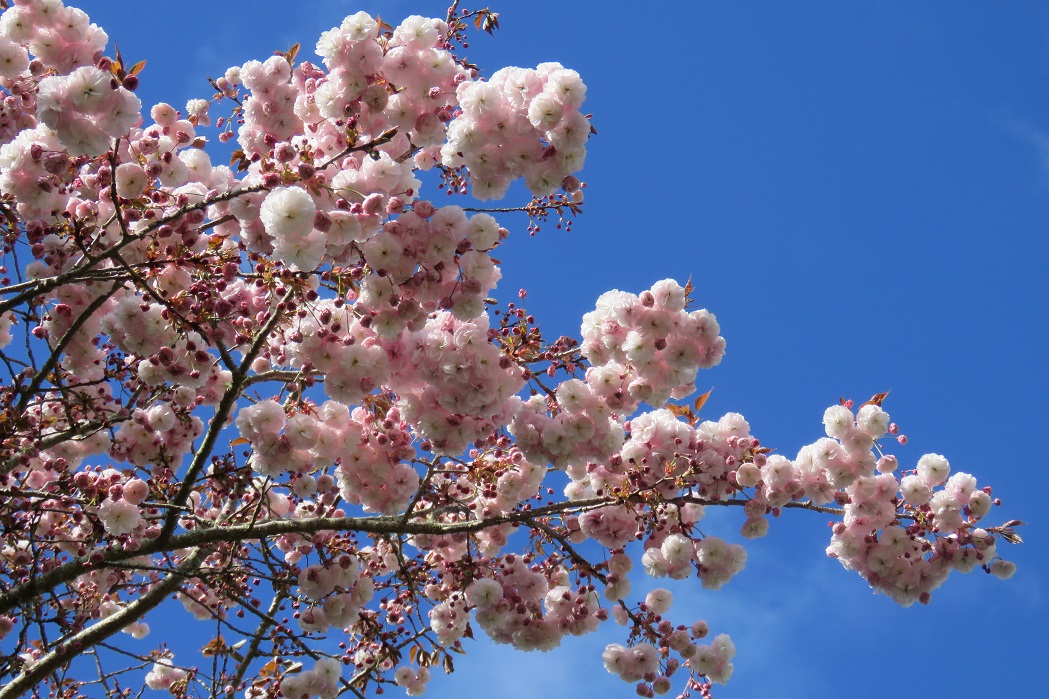
I photographed this small flowering growth on Prunus Pearly Shadows as an example of unwanted root stock shooting away, even on a very well-established tree. Many plants are budded or grafted onto other rootstock so that the desired cultivar can utilise the strength of strong growing root stock. Which is well and good when the rootstock is compatible and doesn’t escape. If you don’t cut off the root stock, it can overwhelm the grafted selection so it is best to see to it as soon as you spot it. How do I know it is rootstock? It is a single white; Pearly Shadow is a fluffy pink double and is not yet in flower.

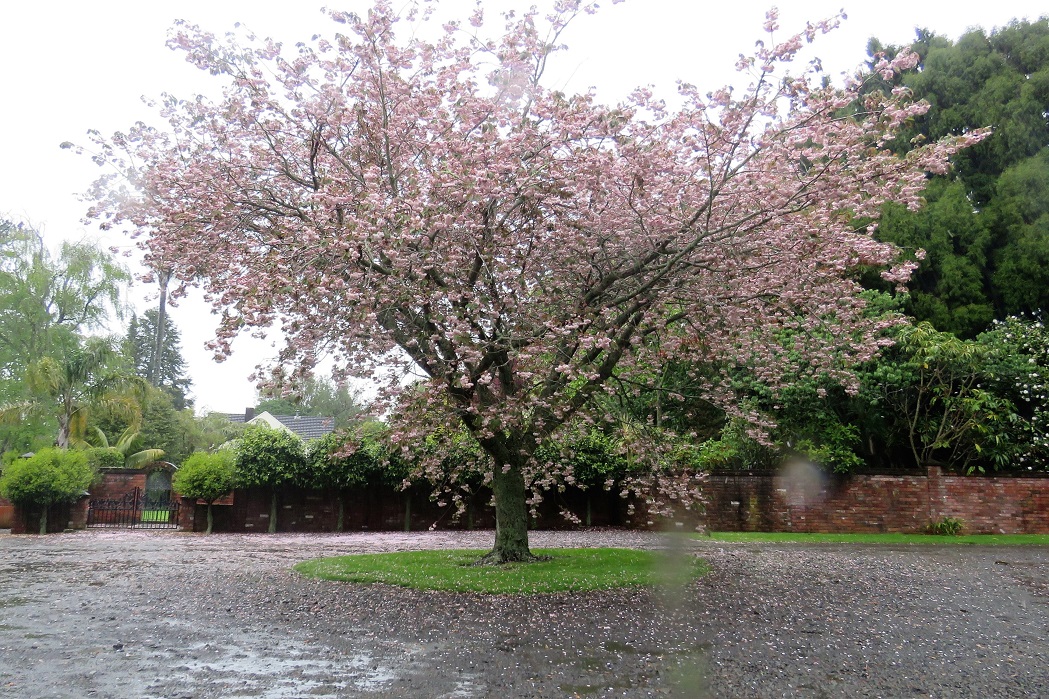
Prunus Pearly Shadows

This particular tree is a splendid example of what is described as a ‘vase-shaped form’. It has not been shaped. It grows naturally in that upward Y shape. It is in our car park area and has so far attracted three reversing cars. I am not quite sure how people fail to see it in their rear vision mirrors.

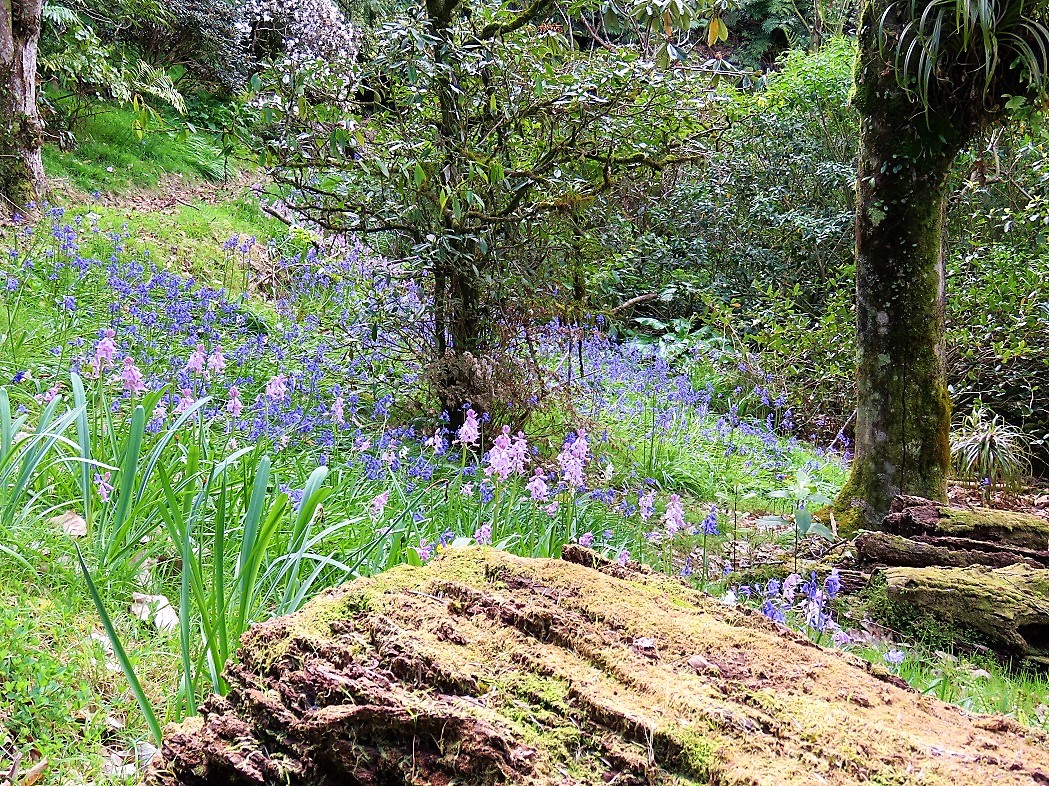
It is peak bluebell time in the park and even if these can be weedy, the drifts of colour are very pretty. Bluebells should, in our opinion, be predominantly blue. But the addition of a few white or pink ones amongst the blue gives a contrasting accent of colour that can lift the blue. The pink is also a strong grower, the white less so. We don’t want bluebells everywhere so I am removing them from some areas of the garden they are attempting to infiltrate but we are happy to let them spread in our meadows.

Notes from the Garden of Jury, September 30, 2018

The early spring bulbs are over and we are now into mid-season. We garden with many, many bulbs and probably find them a great deal more fascinating than most who are less enthusiastic. I could wow a few readers with the Phaedranassa cinerea or maybe the Cyrtanthus falcatus in bloom now, but to the casual eye, a simple planting of bluebells and Narcissus bulbocodium naturalised around the base of an old eucalyptus tree is likely to be far more charming. That eucalyptus dates back to around the 1870s when Mark’s great grandfather planted several around the property. They are messy trees because they shed bark and small twiggy growth all year but look at that interesting twist in the trunk that some varieties develop with age.

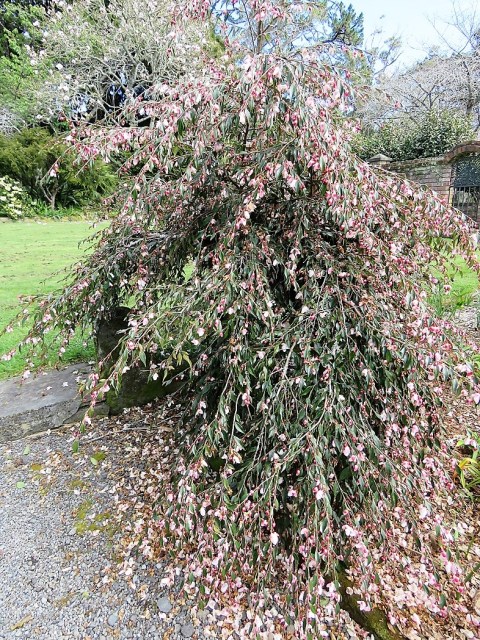
Camellia minutiflora – a charming and graceful species

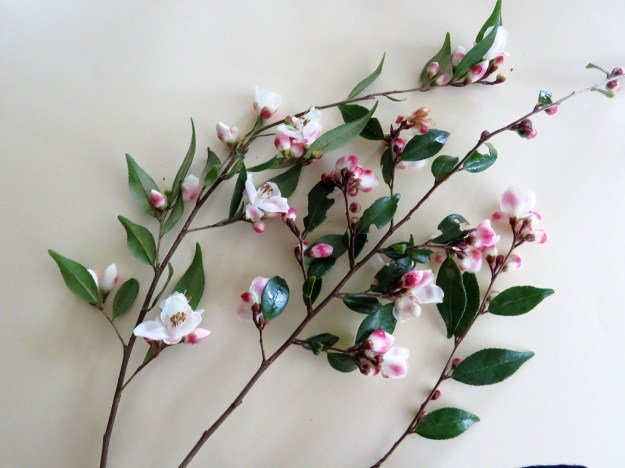
The flowers are delightful and abundant but small – C. minutiflora again

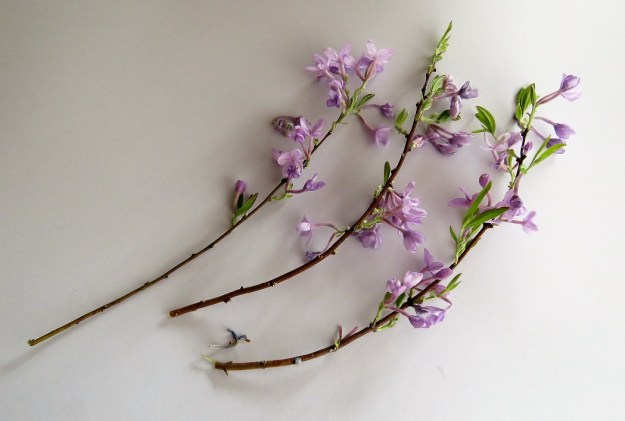
I do a lot of flower and garden photography although I would only describe myself as a gardener and writer who takes photographs, not a photographer as such. And some flowers are really difficult to photograph. I feel I have got to grips with magnolia images but making a series of flower shots of some genus can be particularly challenging. It is mighty hard to make a whole lot of full trussed rhododendrons, japonica camellias or hybrid tea roses look interesting rather than a series of blobs. More on rhododendrons later in the season. But so too is it difficult to capture some of the smaller flowered shrubs, conveying their charm. I have taken many photographs of the dainty camellia species, C. minutiflora, and they remain a dismal failure in capturing the simple visual delight to the naked eye. It is such a delightful plant that we have used it in a number of places through the garden. In the end, I decided I just had to pick a few sprays and lay them on a plain background to try and show just how sweet this little camellia is when you can see the detail.

Daphne genkwa – the blue daphne

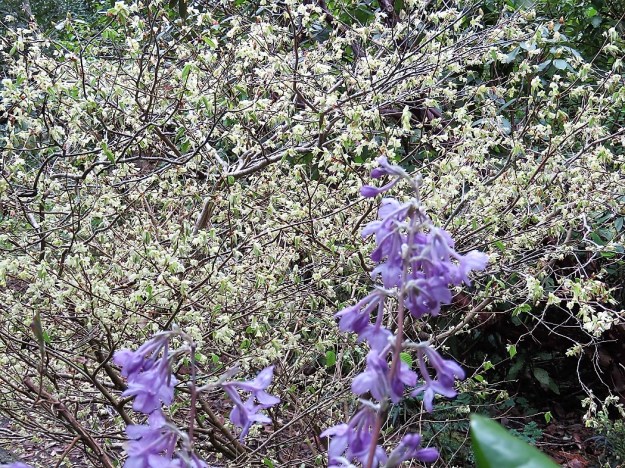
Daphne genkwa with its corylopis backdrop

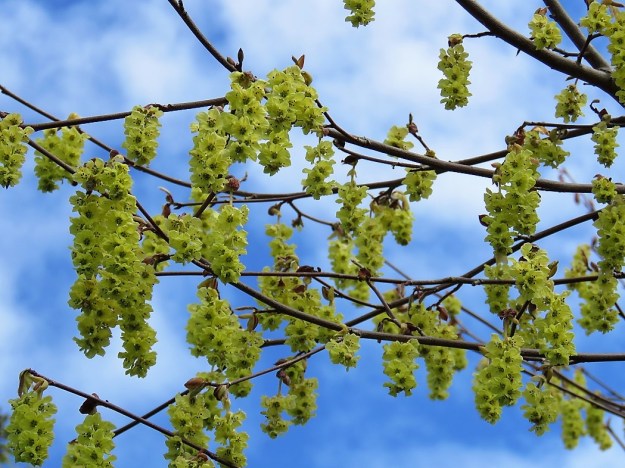
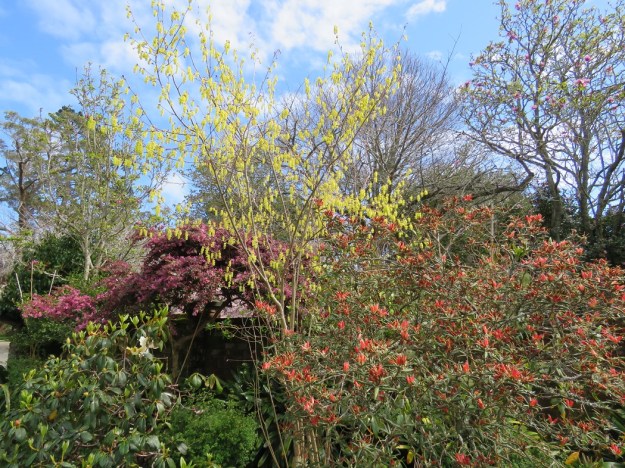
So too with the less common blue daphne, D. genkwa. I photograph it every year and then delete almost all the photos as not doing justice to the plant at all. This may be because it is not a shrub with much to distinguish it other than its remarkable lilac blue flowers. And so too the corylopsis, often referred to as witch hazels. I think we only have two different forms of corylopsis. One flowers earlier and makes a charming haze of creamy yellow behind a Daphne genkwa. The other is flowering now and may be a form of C. pauciflora but we have never taken much interest in unravelling the family. They just occupy a space and remain relatively anonymous for most of year except for their splash of dainty blooms in the two weeks or so when it is their turn to shine. Colder, drier climates appear to get a more extended flowering season on a number of these deciduous shrubs whereas, in our mild conditions, they are more of a fleeting delight. But on their days, what a delight they are.

Corylopsis

And the corylopsis in situ with Rhododendron spinuliferum to the right front and and the burgundy loropetalum behind

It was garden writer, Neil Ross, whom I first heard likening a garden to musical theatre. Don’t plan a garden full of stars only, he said. Those stars need the chorus to make them shine so don’t forget those plants filling the role of the chorus. That is how I see these plants which have a short season – chorus cast with a brief solo in the spotlight.

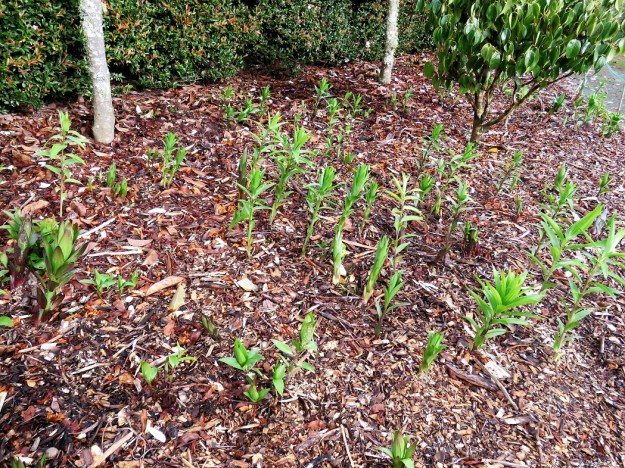
Just look at the lily border. It never looked like this last year when the rabbits won the battle on the emerging shoots. Mark is getting bored with his daily round of vigilance and looking forward to the time when the stems get tall enough to be out of the reach of the rabbits. But spraying the plant with water and sprinkling just a part teaspoon of blood and bone on each plant is working. The reason for doing it one by one is because it has to be reapplied after rain and we don’t want to be over fertilising the whole border by broadcasting the blood and bone freely and often. Besides, I was a bit shocked at the price last time we bought some. It would be easier to manage if we bought some liquid blood and bone so it could just be applied with one action but we will use up what we have first.

The price to pay for a lily display is clearly ongoing vigilance.

Yes, yes I know the advice is always given not to drive over hoses. Based on experience, it appears that you can get away with it when the hose is still relatively new but there comes a point in the age of the hose when one incident of driving over it can render it a very leaky hose. This of course means that over the course of the next weeks, any user of said hose gets wet legs until the right stage of being fed up is reached and the hose replaced. We haven’t quite got to this point but it is imminent. And I will try not to drive over the next hose length.