Tag Archives: New Zealand magnolias

Late winter equals magnolias here

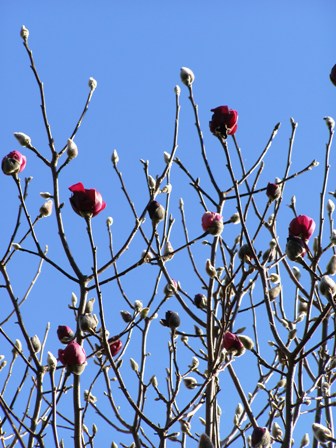
Magnolia Black Tulip is opening its flowers here now

Magnolia Black Tulip is opening its flowers here now

We were greatly amused to discover that Mark’s Magnolia Black Tulip was presented to the Queen last year. Yes, as in Queen Elizabeth of England. Apparently she likes magnolias. Sadly, we were not invited to the ceremony. It is coming into flower here now and you too can buy a magnolia fit for a queen. What is more, you get to meet Mark or me in person at the same time. Our trees on a sunny slope are coming into flower now, though it is still early in the magnolia season for us and peak display won’t be for another fortnight or so. Many of magnolia plants have flower buds so you can get the benefit of flowers immediately – the days when you had to wait a decade are long gone. Black Tulip is a splendid option for a feature tree to be viewed close up, so is ideal for smaller gardens. Because the flowers are so dark, it can meld in the bigger landscape where some of the larger, bolder flowered types will have more impact, but its perfect form certainly seems to appeal to people when they view it close up.
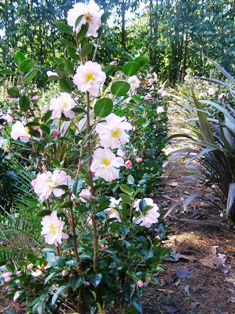
Camellia Apple Blossom Sun - one of the field grown hedging options we have available here at the moment

Camellia Apple Blossom Sun - one of the field grown hedging options we have available here at the moment

If you are after hedging, we have various options in camellias from small plants for small, low hedges to small plants for people with small budgets and patience, to instant hedges for those with larger budgets (they will still be cheaper than building a fence!). We have crops in the field (in other words we will dig to order) which are around five to six years old and ready for instant impact. Options include Mimosa Jury, Dreamboat, Apple Blossom Sun, Moon Moth, Roma Red and transnokoensis. These field grown plants are not listed under plant sales on the website – you will need to talk to us about them.

We are open for plant sales every Friday and Saturday (other days by appointment) and we have Eftpos here but we only sell to personal customers. Sorry, no mailorder. If you want to check what else we have available, check our Plant Sales

Tikorangi Notes: Thursday July 29, 2011

New Zealand Woman's Weekly on magnolias - Burgundy Star, Black Tulip and Fairy Magnolia Blush in the photos

New Zealand Woman's Weekly on magnolias - Burgundy Star, Black Tulip and Fairy Magnolia Blush in the photos

I think I have only bought the NZ Woman’s Weekly twice in my life – both times because I knew gardening stories of interest to us were included. It bills itself as “NZ’s No.1 Royal Mag” and I just think I am not amongst their target demographic. But it is very popular so the colourful double page spread on magnolias this week, written by Denise Cleverley, was gratifying to see, given that it focuses quite heavily on our Jury magnolias.

Schefflera septulosa - distinctly worse for the frost

Schefflera septulosa - distinctly worse for the frost

An abnormally heavy frost this week has left us ruefully contemplating the damage. In colder climates, plants are better acclimatised to lower temperatures but here it tends to be so mild that they are not hardened off and extreme events can cause a lot of damage. How much is damage which the plants will outgrow and how much is loss by death will become clearer soon. It is not so bad in the garden where there is a lot of protection afforded by the trees but under the shade cloth in the nursery and out in the open, it is a bit of a sorry sight. Schefflera septulosa does not normally sport the brown velvet look. I think Mark ranks it as the second worst frost he has ever seen here – a ground frost of around -5.5 degrees.

Mark has been experimenting in his glasshouse with passive heating. He hopes to apply this on a larger scale in the near future (I think this means a much larger glasshouse in a new location) partly because he is determined to grow more tropical fruit including his beloved pineapples. He has moved in some largish containers of water and has built a compost heap from dung and straw in the glasshouse. Fortunately it no longer smells and it does appear it is working to raise the temperature and to prevent it losing all the heat overnight. I am just looking forward optimistically to future harvests.

The white sapote - now a winter fruit staple here

The white sapote - now a winter fruit staple here

However, we don’t need a glasshouse for the white sapote or casimiroa edulis which we can grow in a protected position outdoors and which rewards us with a very good crop of ripe fruit in mid winter. They have the texture of a ripe rock melon and taste a little like vanilla custard – delicious.

The weekly blurb on plant sales highlights Hippeastrum aulicum this week (I felt the need of something bright and cheerful on the coldest day of the year) and one of my most favourite camellias – dainty little C. minutiflora.

And on a very cheerful note, yesterday I was offered a new garden writing contract. Not with our local paper, the Taranaki Daily News, which is determined to press on without me but that is fine because the new contract offers a much better platform. Until it is signed and sealed, I won’t say with whom but it feels good to be back in the mode of thinking about regular contributions and deadlines. It will be three pieces a week which will then appear as a regular feature on our website.

Tikorangi Notes: July 18, 2010

Magnolia Black Tulip is just starting to open

Magnolia Black Tulip is just starting to open

Latest posts:

1) Clean and green in New Zealand? Not as much as we claim and, alas, not at all if you look at the common treatment of our rural road verges.

2) Digging and dividing clivias – one in the Outdoor Classroom series of step by step guides.

3) Mid winter photos – on our new Facebook page: http://www.facebook.com/thejurygarden I have to admit, however, that I have not been out with the camera on the rain sodden days when we threaten to wash away and there have been rather a lot of those lately. We had a massive 237ml in June alone (or about 9½ inches for those still on imperial measurements) and we won’t be far off that in the first half of this month. Our winters can be wet. But the snowdrops don’t mind and it has only been the two hailstorms that have damaged the early magnolia blooms.

4) Nothing whatever to do with gardening (but I am guessing some readers also have other interests), I have just launched a separate website devoted to book reviews of a non gardening nature: www.runningfurs.com For some years, I have reviewed books, firstly for the Taranaki Daily News but these days for the Waikato Times. I have always had a particular interest in children’s books and in New Zealand fiction. I went back to the children’s books a few years ago because I thought we might be lucky enough to receive the gift of a grandchild at some time in our lives and our book collection could do with updating. There is no sign of any grandchildren any time soon, but I keep the best books and pass on the others. These reviews, along with a few on books for adults, did not sit with the gardening websites so I have not done anything with them before. But the advent of The Naughty Corner by Colin Thompson made me want to table these reviews for others – it is quite the funniest picture book I have read in a long time.

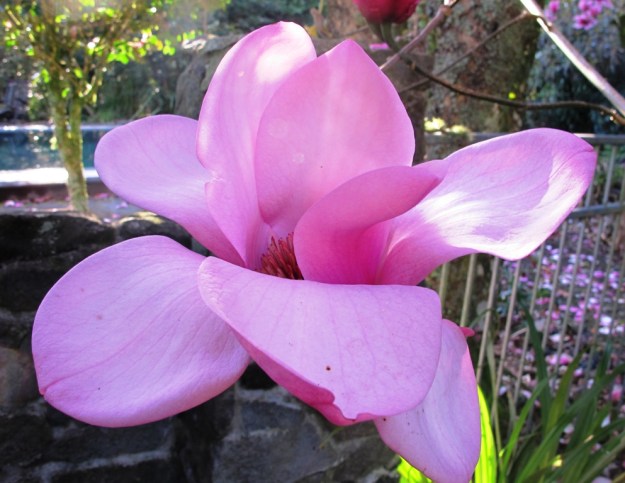
Plant Collector: Magnolia Serene

The very pink Magnolia Serene in full bloom

The very pink Magnolia Serene in full bloom

For us, Serene in full flower heralds the last chapter of the magnolia season each year. It is the latest and the last of the Jury magnolias to flower. It is also the pinkest. This is another of the series named by Felix Jury back in the early 1970s and the original tree now stands around six metres tall and is pyramidal in shape rather than spreading. In full flower, it is just a mass of large rosy pink bowl-shaped blooms.

001Being so late to flower, Serene is an excellent choice for people in colder areas or prone to late frosts. It also tends to miss the worst of the equinoctial winds. Cold conditions will make the plant adjust to blooming even later but Serene does get its flowers through before its foliage. We are picky here – we want deciduous magnolias to mass flower on bare stems before the new season’s leaves unfurl. When the leaves do come, they are a particularly good deep green and tidy in form so Serene stands out as a good summer foliage plant in a way in which few deciduous magnolias do. It will also set a flush of summer flowers which is bonus territory.
Serene was another of the series Felix bred using his wonder breeder parent, slightly embarrassingly named Magnolia Mark Jury. Its other parent is liliiflora.

Tikorangi Notes – a blue sky day in Taranaki

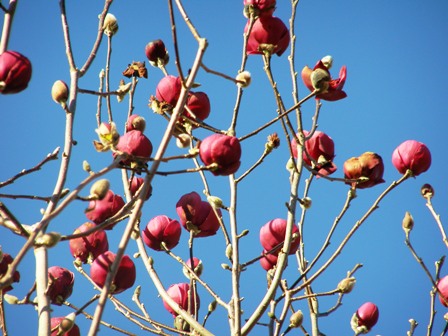
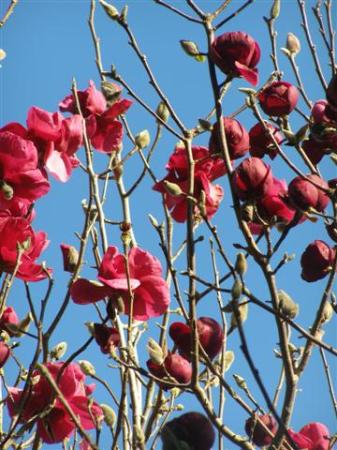
Magnolias Black Tulip and Felix Jury on a blue sky spring morning in Taranaki, Monday August 23, 2010

Magnolias Black Tulip and Felix Jury on a blue sky spring morning in Taranaki, Monday August 23, 2010

We tend to take our blue as blue skies for granted here, especially in mid winter or early spring as it is now. New Zealanders also tend to take red magnolias for granted, not realising that the sheer intensity of colour we can get here is unsurpassed elsewhere and that most of the breeding of red magnolias has taken place in this country – in fact much of the work was done in this very garden here – Jury Magnolias charts the journey.