
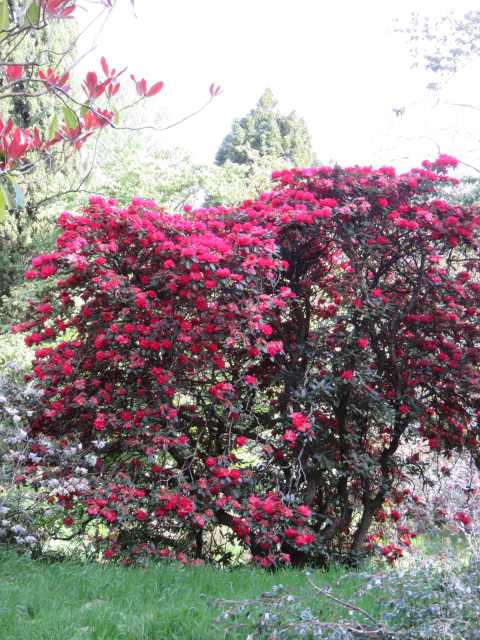
Back in the days when we used to retail plants, I would quip that nine out of every ten big, red rhododendrons were bought by men; the tenth was usually bought by a woman for her husband. This may well be an exaggeration but it made me view big, red, rhodos as very… well… masculine.
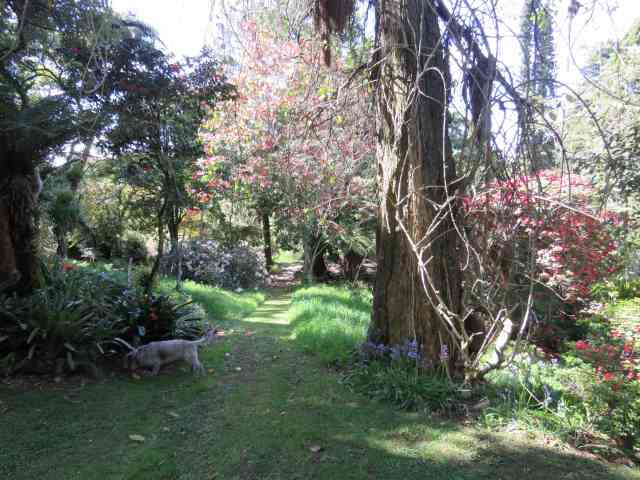
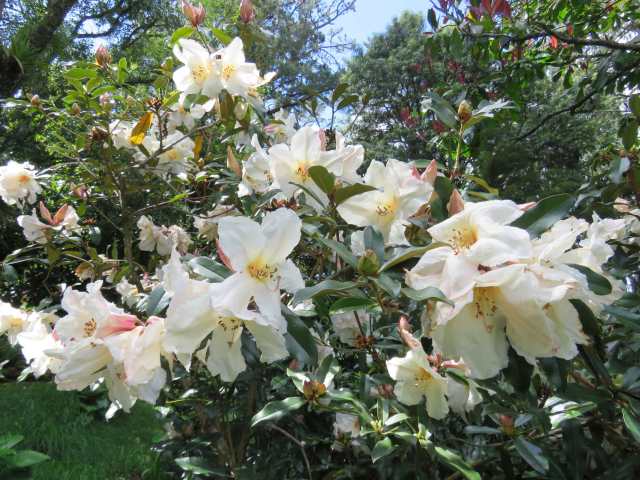
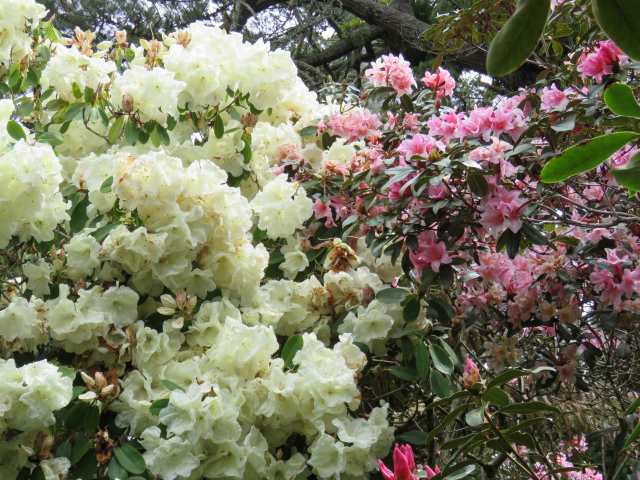
It may be that, in the intervening years, men have matured beyond that manly cliché and refined their tastes. I couldn’t possibly comment. This train of thought came back to me as I stood looking down one of the tracks to our park. On one side is a large, handsome plant of ‘Noyo Chief’ in full bloom and on the other side of the track is R. polyandrum in flower. My brain registered that ‘Noyo Chief’ was putting on its usual showy display but my heart drew me down to look more closely at polyandrum. It is all a matter of taste and preference. I can see the merit of the big red but it was the gentler charm of the very fragrant, loose-flowered cream that stirred my emotions.
Back in the early 1980s, Mark started the nursery here. We will give his father, Felix, credit for many things but contrary to what some people still think, he did not start the nursery. That was all Mark’s effort, from one wheelbarrow up. He started with rhododendrons as the main line and, as one in four New Zealanders lived in the Auckland area at the time (now more or less, one in three), he always had the goal to produce rhododendrons more suited to their climate. This meant varieties that would keep good foliage and not need regular spraying in a mild, high humidity climate that lacked winter chill.
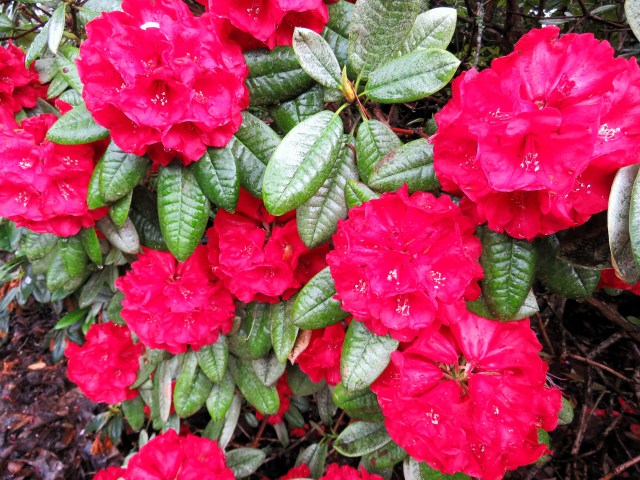
There are a few big ball truss types that perform well in Auckland and this includes the arboreums, many of which are big reds. ‘Kaponga’ is a good example. But it was the maddenii group that Mark targeted. Felix had already found that they performed way better here in our mild, humid climate, keeping healthy foliage without spraying, flowering abundantly every year and many, if not most, had fragrance. Most of Felix’s successful hybrids are from within the maddenii group – ‘Bernice’, ‘Moon Orchid’, ‘Floral Dance’ and ‘Barbara Jury’, amongst others.
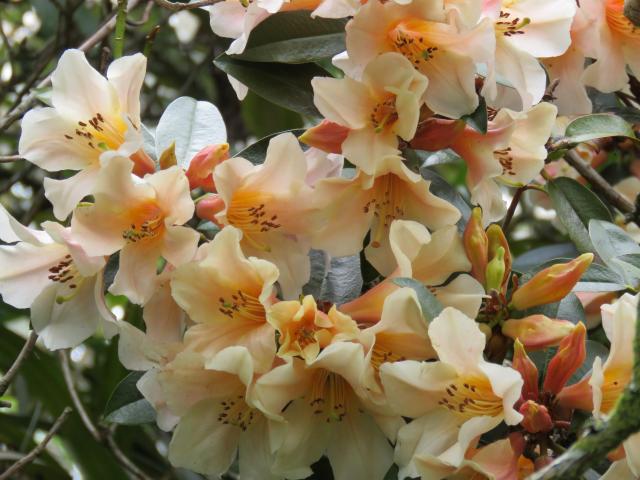
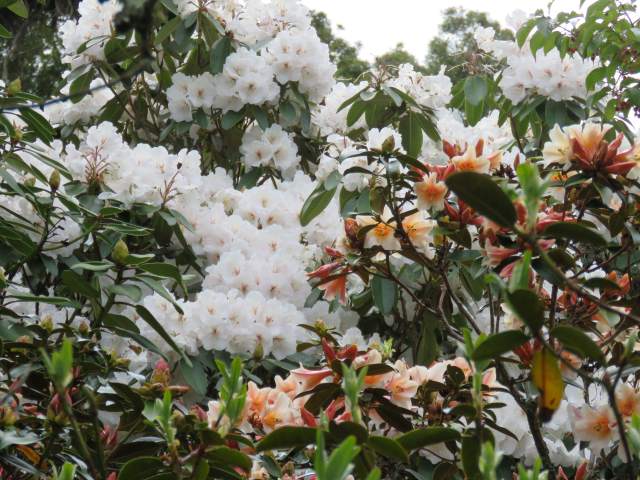
Alas, none of the maddeniis have big, ball trusses that are generally associated with rhododendrons. Nor do they come in red, be it bright red or dark red or pure red. And the maddeniis don’t have that chunky, solid, rounded form of growth seen in many rhododendrons, instead being much looser in form. We spent years working hard to convince the buying public of their merits. It often felt like pushing the proverbial excrement uphill and I don’t miss those days at all. These days, I am happy to enjoy them in our own garden. The maddeniis make my heart sing more than any other group of rhododendrons. Personal taste and all that.
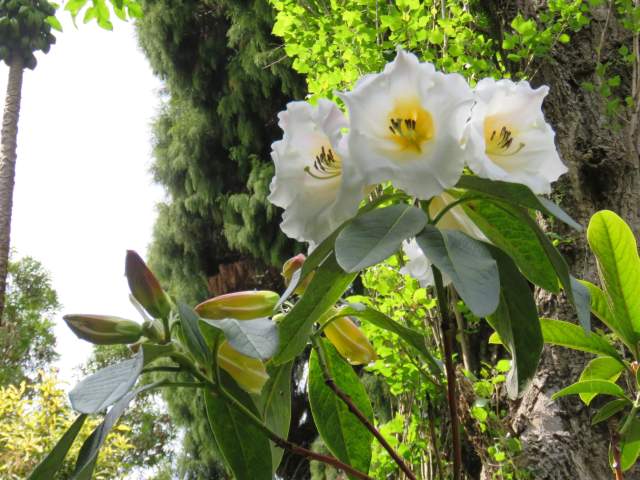
As a postscript to big red rhododendrons, let me tell the story of ‘Fireman Jeff’. Back in the early days of the nursery, our country’s borders were much looser and there was a lot of new material coming into the country. Mark bought all the new hybrids he could find locally, mostly originating from the USA. It was the era of plants like ‘Lems Monarch’, ‘Lems Cameo’, ‘Puget Sound’, ‘Trude Webster’ and so many more. I see our 1990 mailorder catalogue ran to a full 127 different rhododendron options, which seems a huge number for what was still a small nursery. ‘Fireman Jeff’ was amongst those recent imports. Mark and I must have been a bit tired in 1989 when we wrote its description for our catalogue:
Fireman Jeff (Jean Marie de Montague x Grosclaude) 2m Mid season.
This over-rated hybrid is best suited to a cooler climate where its bright red, almost hose in hose flowers could make a splendid feature in your neighbour’s garden. Large plants $10.00.
I see a year later, in 1990, we changed our tune a bit and wrote: “To prove our comments last year wrong, it flowered beautifully for us this season. Better suited to cooler climates where it may justify its good reputation.” And we had put the price up to $15.50. We dropped if from our range, though, because it wasn’t suitable for our target market.
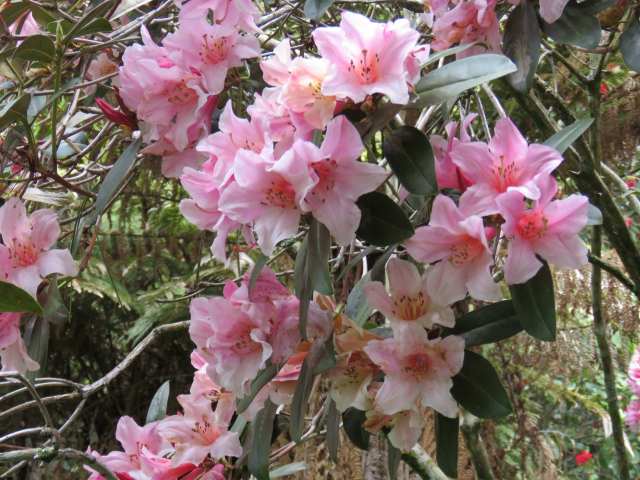
‘Fireman Jeff’ is still being sold extensively but the advice remains sound – best in cooler climates (south or inland) with winter chill and lower humidity. Keeping to the arboreums and maddeniis is a safer move if, like us, you are high humidity and lacking winter chill. With a garden dating back to the early 1950s here, we can speak with some authority on the rhododendrons that have lasted the distance in these conditions.

 Tikorangi The Jury Garden