
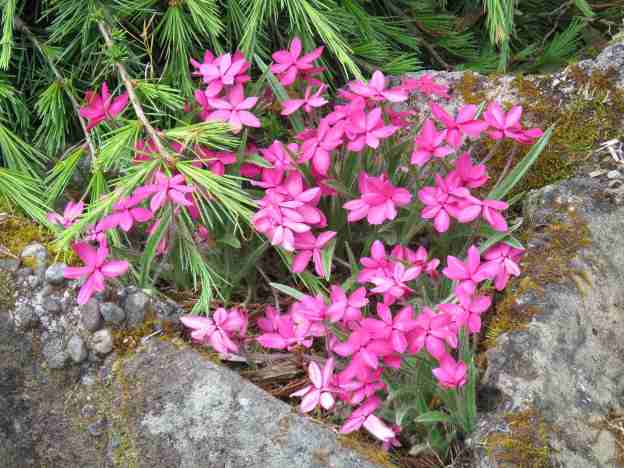
Arguably, rhodohypoxis could be the provincial flower of Taranaki. Like clockwork, they bloom on cue for the garden festivals which take place here at the start of November and there wouldn’t be too many gardens that don’t have rhodohypoxis growing either in garden soil or, more commonly, in shallow pots. They may hail from southern Africa, but we have made them our own.
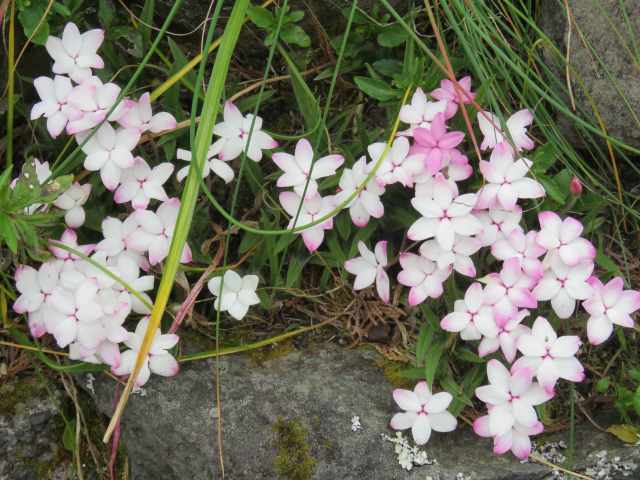
For all our years opening the garden and when we had the nursery, we would pot up what seemed like an inordinately large number of these little rhizomes in shades of pink, white and deep carmine. I wondered if we would reach saturation point when every local gardener and any return gardeners from out of the region already had them, but we never did. It seems the market for these charmers – referred to as ‘roxypoxies’ by more than one customer – is endless in the month of November.
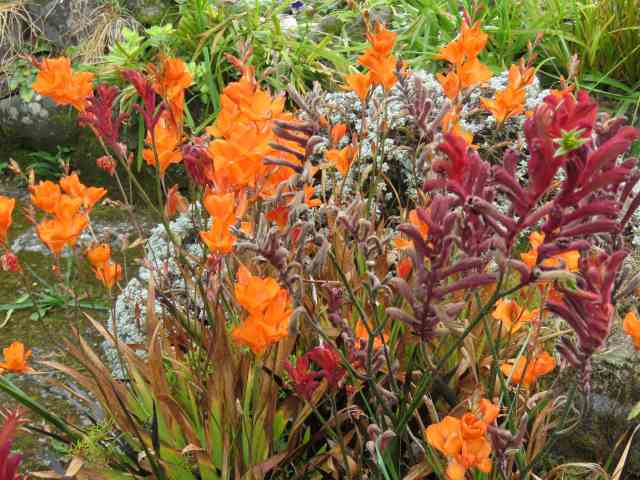
Also standing out are the orange tritonias. There is nothing subtle about these easy bulbs, also from South Africa. They need to be managed and used thoughtfully or they just look a bit… vulgar really. They pull their weight in vibrant meadows, set against deep blue flowers or in predominantly green situations.

I am pretty sure the muted pink clumps repeated down the front of the borders at Riverlea Garden are also tritonias, or a close relative. They were very pretty and maybe easier to place in the garden than the orange.
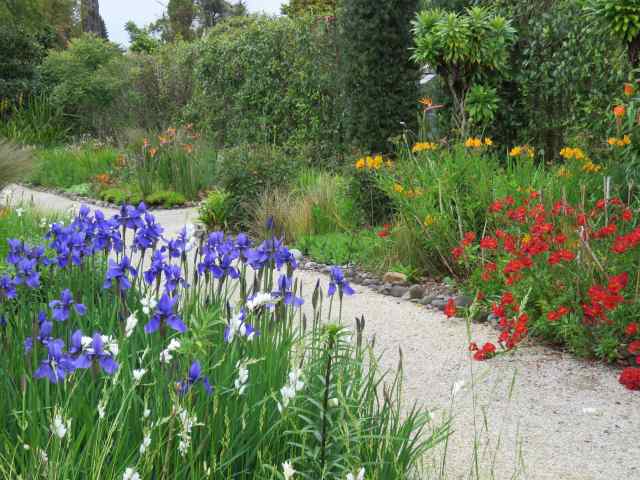
Also in the ‘easy’ bulbs class are ixias – African corn lilies. Not that all ixias are equal. I had a brief look at the ixia family and it seems there are somewhere around 100 different species and there seems to be quite a strong correlation between different colours and different species. Our form of Ixia viridiflora – the best known and unusual coloured one in strong blue-green – is a poor form. Despite my best efforts, it never flowers well and I have seen photos of way better performing selections. It is the pure white ixia that delights me this week, both in the Wild North meadow and in conjunction with the blue Iris sibirica in the borders. We also have ixias in various shades of pink from pastel to cyclamen pink, in lilac and in yellow.
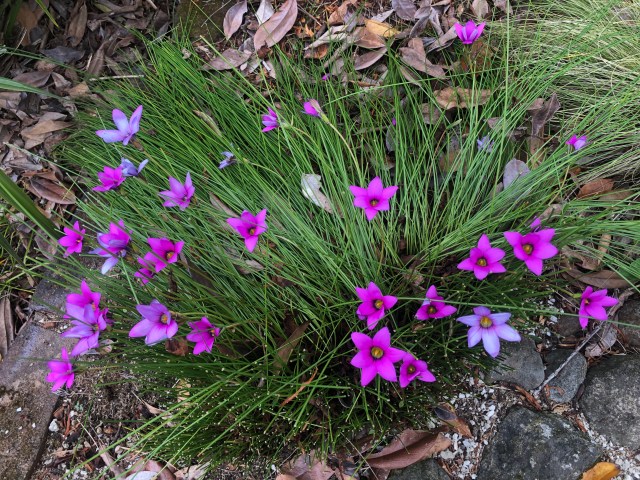
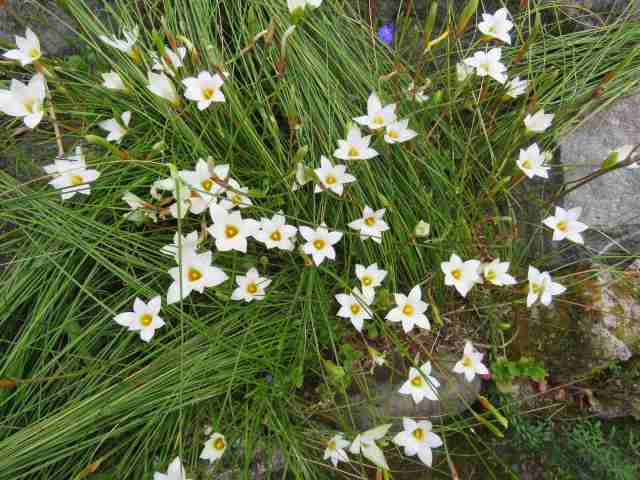
Romuleas can be a bit too enthusiastic on the reproduction stakes but both R. rosea (in brightest pink) and R. candidissima (in pure white) are earning their keep this week. Mark tells me that the best romulea is R. sabulosa but it is also the most difficult to grow and we lost it.
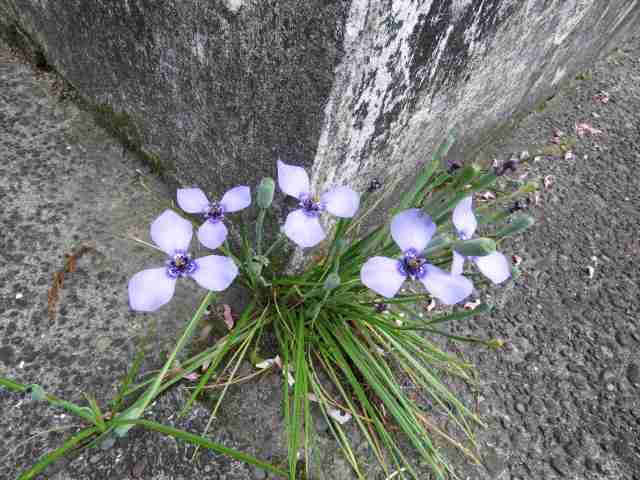
Crossing the ocean to the central and southern Americas, we get Herbertia lahue with the charming common name of Prairie Nymph. Neither Mark nor I have known what this was until now, although Mark gave his assessment that it ‘looks dangerous’. He is right that the visible evidence of seed development is scary, but in all the years we have had it, it has not become an invasive problem.
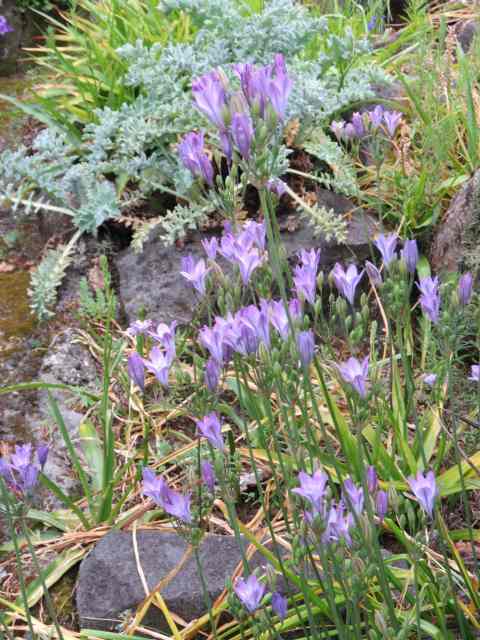
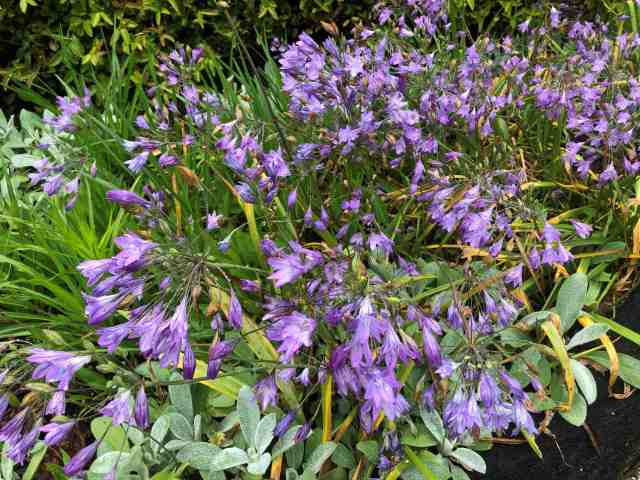
Then there are the multitudinous but welcome plants of Brodiaea laxa ‘Queen Fabiola’. Or is it definitively reclassified as a tritelia these days? This I do not know. It has built up most satisfyingly here without becoming a problem. In a climate where the giant blue alliums are not a starter for us – or indeed for many people in this land, given the whopping price per bulb let alone sparse availability – I see my brodiaeas as the poor man’s alternative to swathes of late spring blue. True, it falls over in the rain but it stands up again when the rains stop.
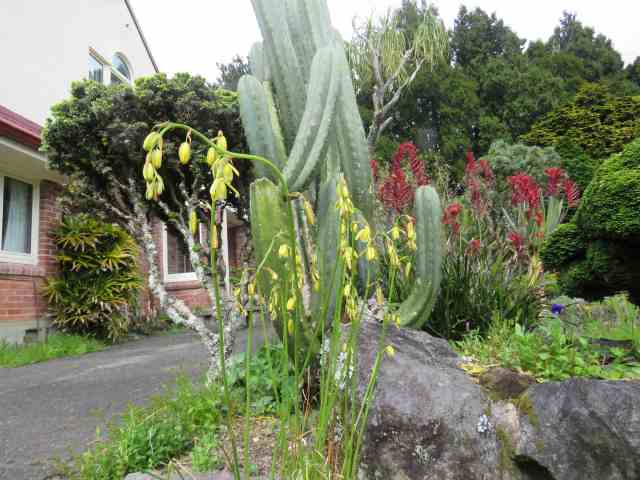
It has taken a few years (read: quite a few, possibly many years) to build up Albuca flaccida (incorrectly named and sold in this country as A. canadensis, including by us) in sufficient numbers to put on a show but we are finally there. In the class of graceful, hooded, hanging bells in yellow with green stripes, this South African bulb is a winner and even more charming when in a clump of many. The bigger growing white and green albucas are only just opening and we will get to them next month.
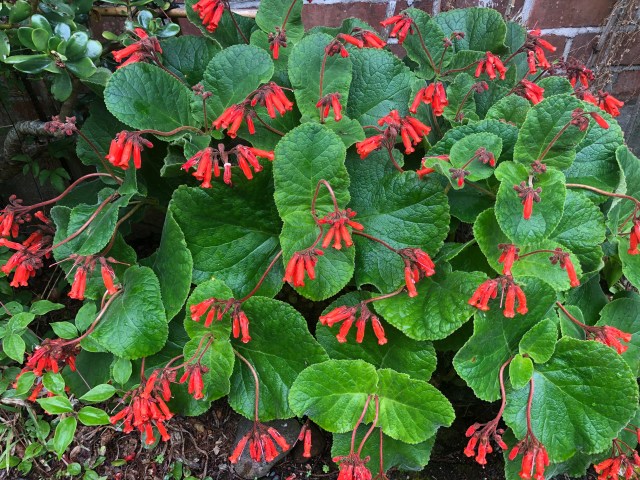
Sinningia cardinalis (alternatively known as Gesneria cardinalis) is one of our curiosities here, built up over decades to be standout clumps of foliage and flowers that attract attention. I am not aware that it has a common name but it belongs to the same family as African violets, streptocarpus and some gloxinias. You don’t see it around much because it doesn’t appear to reproduce easily from seed and its large tuber doesn’t set offshoots so propagating it requires a bit more skill than most bulbs.
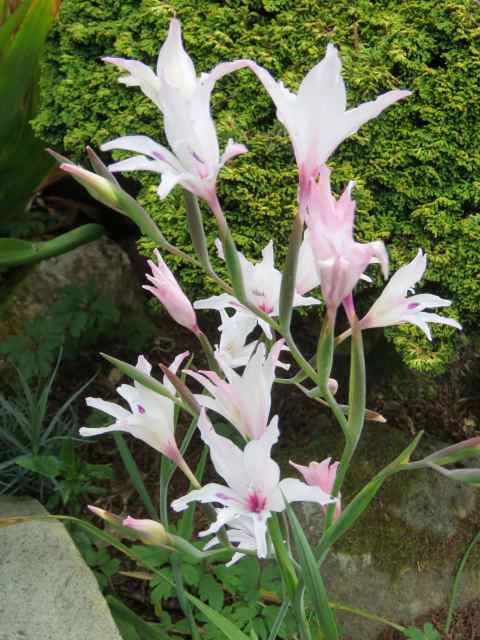
Our interest in bulbs largely begins and ends with what we can grow as garden plants. We have enough garden without having to faff around with pots. Some bulbs are easier to manage in pots, particularly those that are being grown outside their climatic and geographic areas. It is easier to manage water and growing medium requirements in pots, as well as controlling temperature and day length. It is also easy to take your eye off pots and find the contents withered away to nothing in high summer, eaten out by hungry mice in winter, or sprouting with unwelcome seed from invasive neighbours. Ideally, potted bulbs should be replanted in fresh mix every year. We prefer to keep them to the garden once we have enough to plant out.
 Tikorangi The Jury Garden