Tag Archives: seasonal change in a garden

Let there be flowers and the gentle change of seasons

In a world that seems to be growing more chaotic, unstable, downright dangerous and even vicious by the day, let there be flowers.

I know I am not alone in limiting my time following the news and on social media. Never in my life did I think I would be taking life guidance from RuPaul but his advice to ‘look at the darkness but don’t stare’ are words that I repeat to myself every day. It is one thing to be aware of what is happening but it can be overwhelming if I spend too much time following it closely.
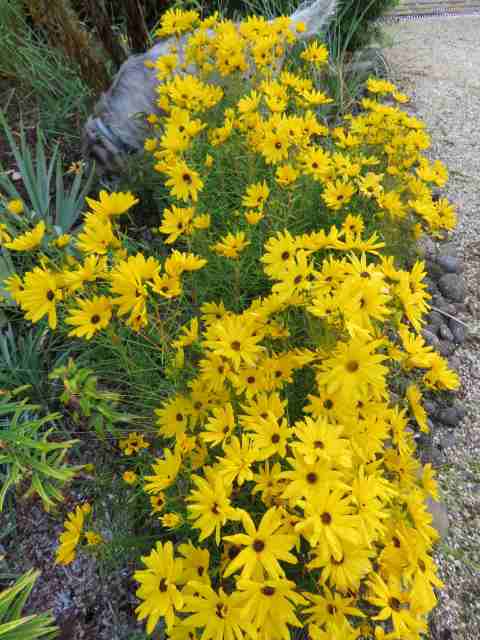
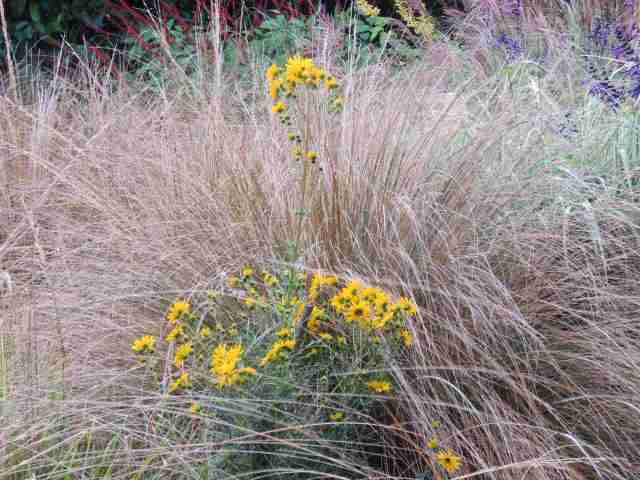
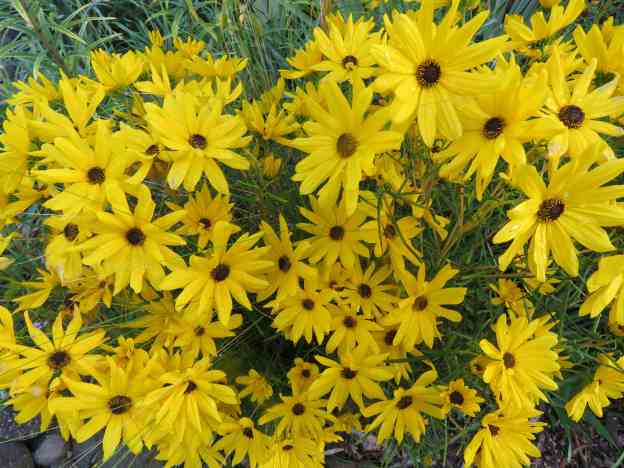
The bright cheer of the dwarf helianthus makes me smile. This is a named cultivar but I have forgotten where I recorded the name.

Instead, I give you the gentle predictability of the change of season from summer to autumn here with photos from yesterday. I have used the shorter version of the helianthus in the borders but the tall leggy form – likely closer to the species or as it is found in the wild – seemed to fit better in the controlled abandon of the Court Garden. No more. We are in danger of losing it because it is not as capable of coping with competition as I thought. As soon as this remaining clump has finished flowering, I will relocate it to the more cultivated environment of the borders where it will be given its own space to thrive.
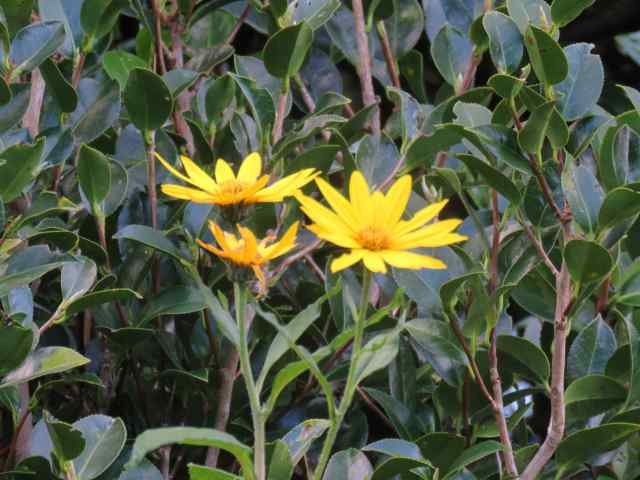
The Jerusalem artichoke is also a member of the helianthus family but it does not justify its place as an ornamental plant. Not enough flowers, I am afraid, but an abundance of tubers which I dare not eat. While tasty, no matter how hard I try, I can not find ways to prepare it that improve its digestibility without the unfortunate side effects. Its name as fartichoke is fully justified.
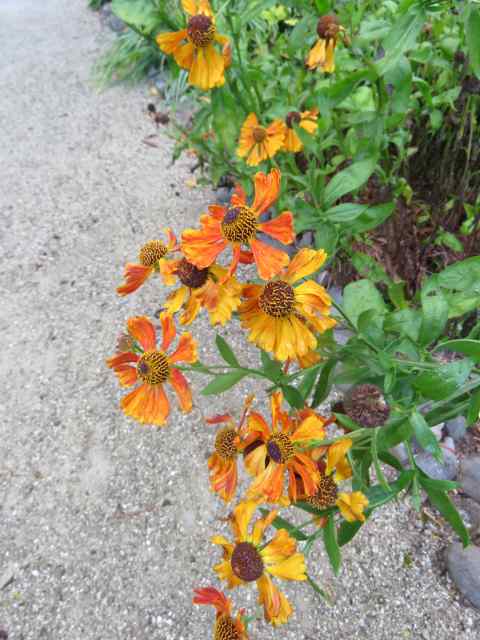
The heleniums are in the twilight of their season but remain eyecatching. These have one of the longer flowering seasons of the summer perennials and fully justify their prime position in the borders.
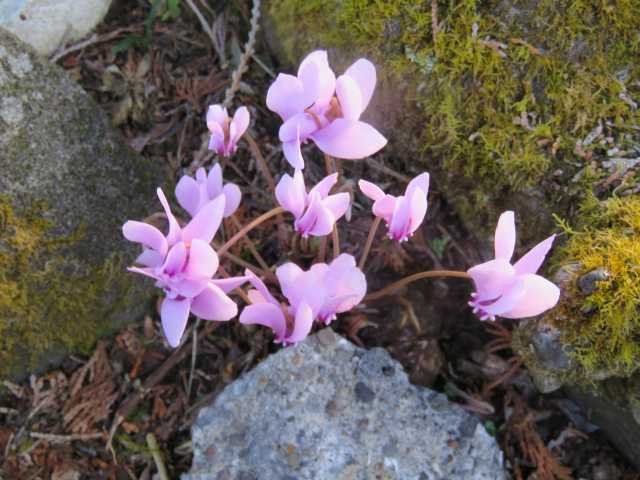
Cyclamen hederafolium are coming into their autumn peak and what a delight they are. We have many of them, many many in fact because we encourage them to seed down in their pretty pink and white charm. I am not a fan of the bigger cyclamen hybrids but the species are a source of great delight throughout the garden.
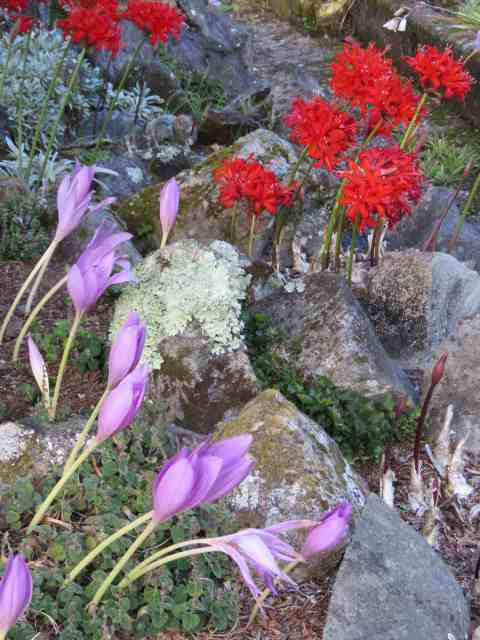
The rockery is hitting its stride with its autumn display. The colchicums are a fleeting delight but one we would not be without. The nerines are just starting, mostly red so far but plenty about to open in other colours. I live in hope that the Lycoris aurea will stage a reappearance. I planted a pot of flowering bulbs out in the rockery years ago but I can’t remember where and it has never flowered since. It may have gently withered away to nothing or it may still be masquerading as a random clump of nerines which I just haven’t noticed aren’t flowering. Perhaps our hot, dry summer will have triggered it to flower. Or maybe not.
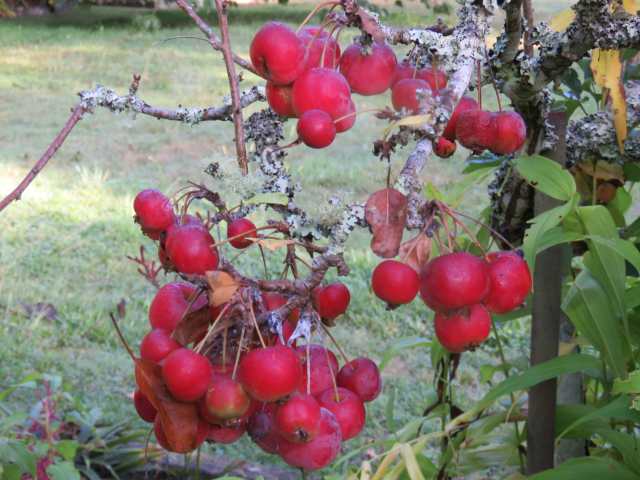
We have two dwarf crabapples in the rockery, standing little more than 1.2metres high after about 50 years. Their flowering is insignificant and their form and foliage unremarkable but they justify their place with their ornamental fruit in autumn.
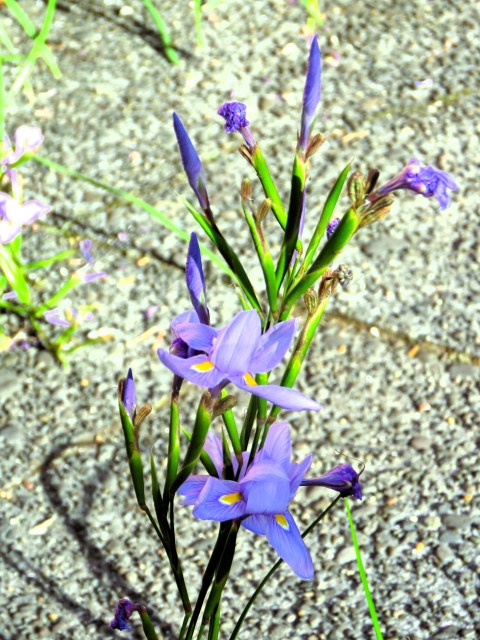
Moraea polystachya, an autumn form of the peacock iris, seeds around enthusiastically but harmlessly and rewards us by popping up randomly – on the edge of the drive in this photo – and having one of the longest seasons in flower of any of the autumn bulbs because it keeps opening a generous succession of buds.
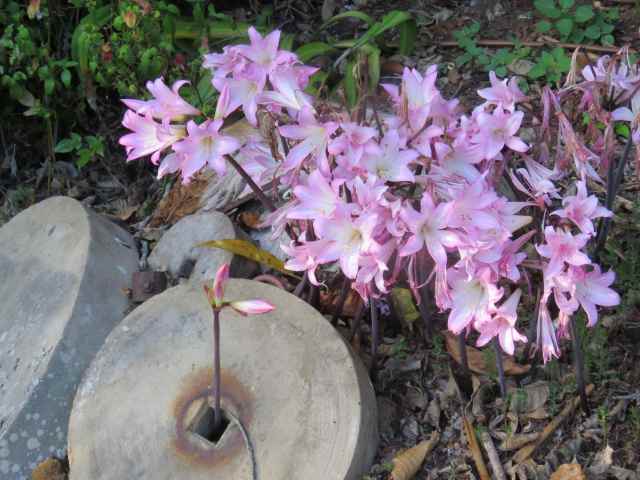
The belladonnas are bold, a bit scruffy and have bulbs and foliage that are too large to make them obliging garden plants. But they are a welcome addition in wilder areas, in this case on the site of the old woodshed we removed this summer before it fell over of its own own accord. We don’t know anything about the grinding wheels except that Felix must have gathered them up fifty years ago and there are three in graduated sizes.
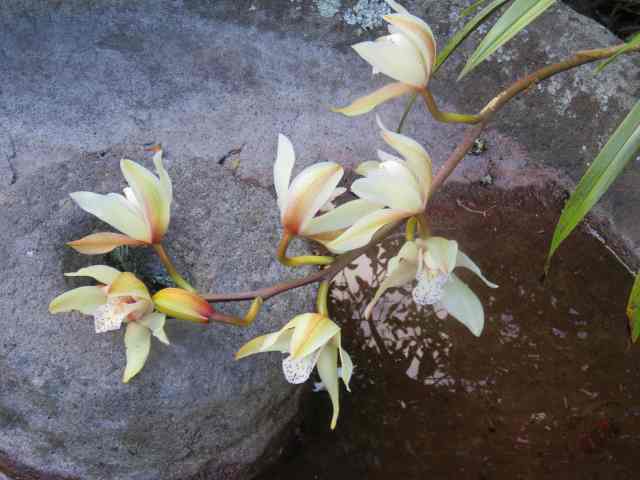
The first cymdidium orchid is opening. This somewhat understated one is always the first of the season and is a top performer in its spot, arching over the old stone millwheel which has been repurposed a bird bath.
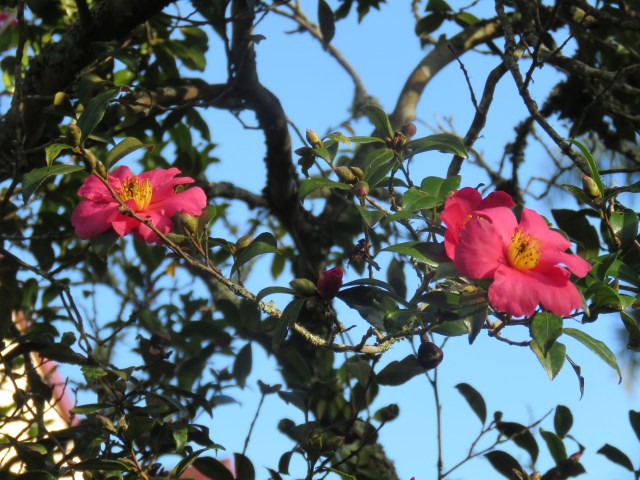
Finally, camellia season has started. Camellia sasanqua ‘Crimson King’ is always one of the first to open. Even with climate change, there is a reassuring predictability in the cyclic nature of the seasons.

May there always be flowers. I can stare at them as long as I like without fear of being overwhelmed by a sense of despair, anxiety and helplessness. In the flowers and the seasons lie promise and joy and we need a whole lot more of that at this time.

A garden for all seasons

Is it possible to have a garden for all seasons? In our soft climate, yes, it is. But is it possible to have a garden that is at its peak for 12 months of the year? That is what many folk visualise when they think of a garden for all seasons. And the answer is no.

You can have a garden that looks more or less the same all year round. This is achieved by lots of hard structure, heavily trained and clipped plants, very little seasonal interest and constant maintenance or garden grooming. Seasonal interest (flowers, bulbs, autumn colour and suchlike) is messy and alters the tidy picture.

A reader left a comment on a recent post which included “I’m hoping that you have invented the solution to the 4 season perennial garden by then.” (Here’s looking at you, Cath). It started a train of thought along the lines of whether this is even possible and whether I had ever seen it done. If by a four-season garden, is meant incidents of colour (usually flowers), then yes, you can do it. But not massed, peak performance all year round.

It is an old photo of us and the view out the window has recently changed. It is the border to the left of the coffee table that I have recently replanted in blocks for flowery interest

I replanted a border recently, aiming for year-round performance. About 20 metres long by just over a metre wide, it contains a few established shrubs which flower in spring and summer and I underplanted in large blocks – each at least a square metre, some larger – to get big splashes of colour through most of the year. It is a garden that we look out to from one of our favourite indoor seating positions for afternoon tea or an early evening drink. It now has a pretty blue scabiosa (dreadful name – the pincushion flower) for summer, Mark’s mother’s vintage Sweet Williams and hot pink Phlox paniculata for spring and early summer, large white flowered polyanthus for winter, blue asters for late summer and pink and white sedums for autumn. All interplanted with random bulbs I lifted from elsewhere. It doesn’t quite cover the full 12 months although it should have something showy, in bloom, for most of the year. But it is one block at a time, not the full border simultaneously.

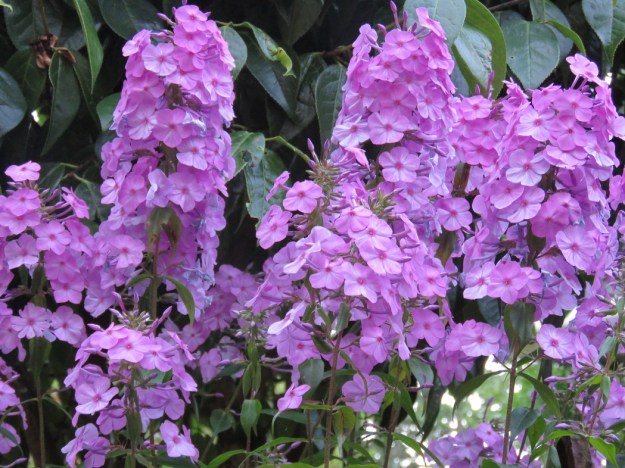
Phlox paniculata, I think. Easy to grow, vibrant and seasonal

Elsewhere, we go more for matrix planting, rather than block planting.  The new grass and perennial garden is strongly modelled on matrix principles but even so, as winter draws in, that garden is going into a rest phase. There is not much to carry it through the coldest weeks.

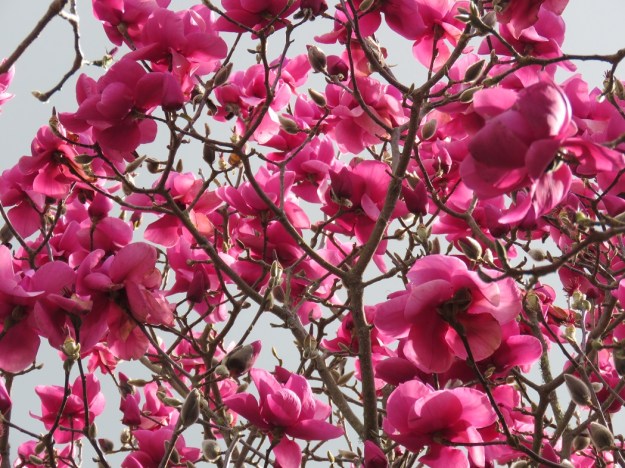
The magnolias, of which we have quite a few, do not all bloom at the same time. Nor do we want them to.

It is a conundrum. From time to time, we ponder reopening the garden for selected days through the year – snowdrop weekend, magnolias, lilies and the like. But while the snowdrops – or bluebells or lilies – have a defined and finite peak season which is relatively easy to determine, which weekend would we pick for the magnolias? They flower from July to the end of September here. No matter which date we select, some will have finished flowering and others will not have opened.

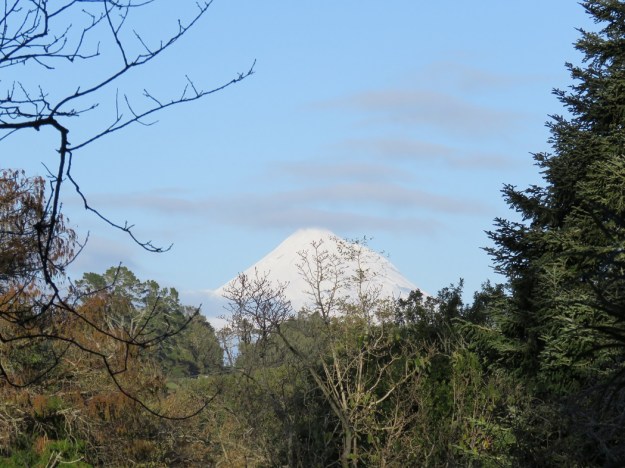
Early winter – just last week in fact. The view from our park.

I used to get so irritated by visitors at our annual festival who would go round the garden and come out saying of the rhododendrons, “It must have been gorgeous a few weeks ago,” or “There is a lot that have finished flowering, aren’t there?” I would quell my irritation and smile courteously, saying something bland along the lines of “there is always something different in bloom but yes, some have finished for the season and some are yet to open”. What they wanted was peak display when everything bloomed en masse, perfectly timed for the garden festival. This is what I saw at the Floriade tulip festival in Canberra and what, I understand, can be seen at the Butchart Gardens in Canada in their peak season of July and August. But ours is a private garden. Our rhododendrons flower from July until Christmas and what we want is something of interest every week of the year.

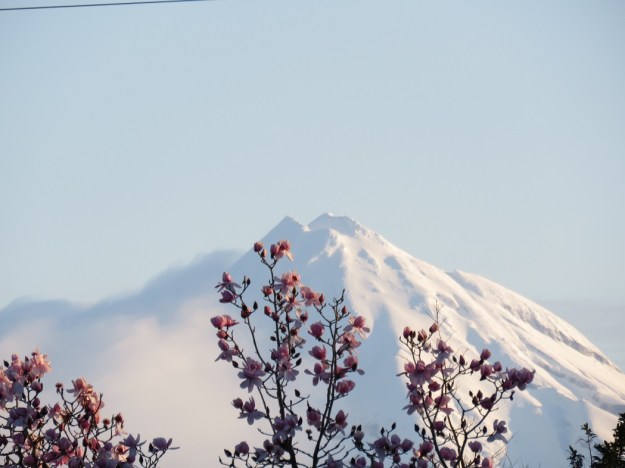
Late winter – as in August 9th.

Knowing this, we raised our eyebrows when Pukeiti Gardens, then a private trust, went to a great deal of effort to rebrand itself as “a garden for all seasons”. It seemed like an over-promise that they could never deliver. Its main focus was rhododendrons and yes, they flower from July til Christmas, but not all at once for all that time. Their location, at altitude, butting up to a national park means that winter is not a hospitable time for garden visitors – far from it – and being surrounded by evergreen, native forest means that autumn is never going to be as showy as in other places. It was – and probably still is – primarily a garden for spring and summer. Intrepid visitors outside those two seasons will still find much of interest, but not mass, seasonal display as implied by the catch line ‘a garden for all seasons’.

Large parts of the gardening world put their gardens to bed for winter and do not expect anything to happen during that rest period of chill. In our mild conditions, we have flowers in bloom all year round and actively garden for 12 months of the year. But, as I commented in my last post about vireya rhododendrons, it is a trade-off. You can have the big bang impact of peak season with mass blooming and all-round showiness, or you can have long performance of gentler display.

Do the maths. It is not even just the four seasons. Each season has its early, mid and late period. If you want year-round interest, then you have to allocate about one twelfth of the area and the plants to peak in each seasonal period. That is never going to give you the massed bangs for buck display at a single time. But it will give you garden interest all year round.