
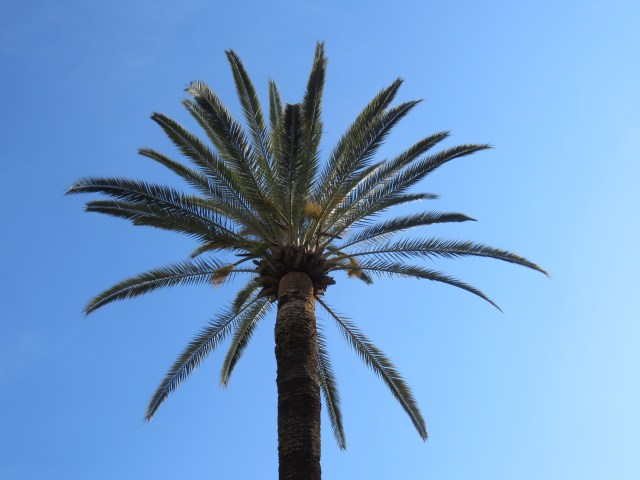
Palm trees are iconic in the south of France. There are only two native palm trees but imports are now the backbone of the landscape. Alas, the red palm beetle (Rhynchophorus ferrugineus) is likely to change that. It only arrived in France in 2006 but is so rampant that it is cutting a swathe through the trees and killing them. Many have been removed.
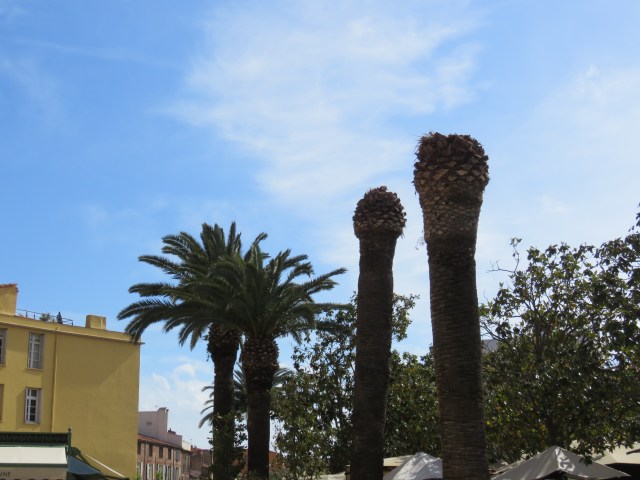
Apparently, it is possible to spray for it but as soon as the spraying stops, it returns and spraying tall palm trees must require a cherry picker and some heavy-duty insecticides. A horticulturist told me that the only hope for the future is finding selections that are resistant to the palm beetle. We may rail against our border controls here and in Australia but oh my goodness, this is another destructive pest that we don’t want hitching a ride here. What will the Côte d’Azur be like without its palm trees if the beetle is left unchecked?
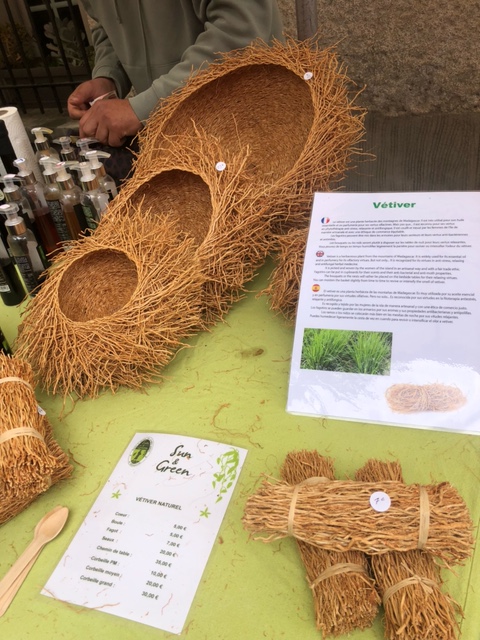
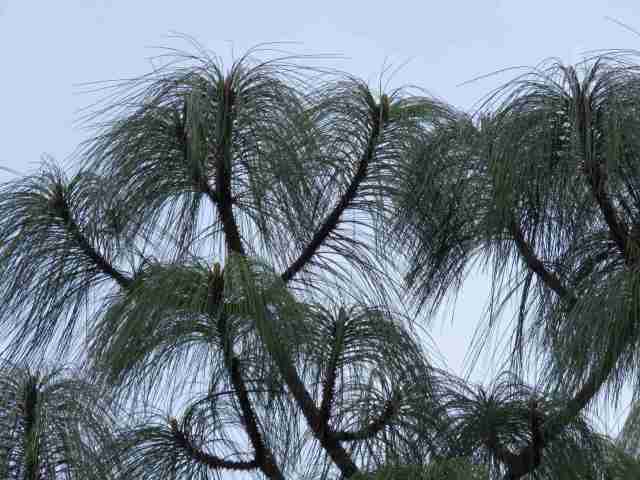
I have only ever seen vetiver grass used in this country once and I admit I was surprised our biosecurity even let it in, given that it can put its roots down to four metres deep in the first year alone. It seems that its abundant production of leaf blades can be turned to good use and there is not much danger of running out of raw material. I saw these on a market stall at the cherry festival in Céret, near the French border with Spain. They were very charming but comparatively expensive. You don’t have to have vetiver grass to make something similar. It occurred to me that, were I still of the craft-y persuasion, some of our native grasses with leaves that have some substance – Chionochloa rubra and Carex buchananii come to mind – would likely work just as well. I had a friend who was keen to try weaving with pine needles and I sent her some of the exceptionally long needles that fall from our Pinus montezumae. But she never sent a photo of the finished product so it may not have been as successful as she hoped.
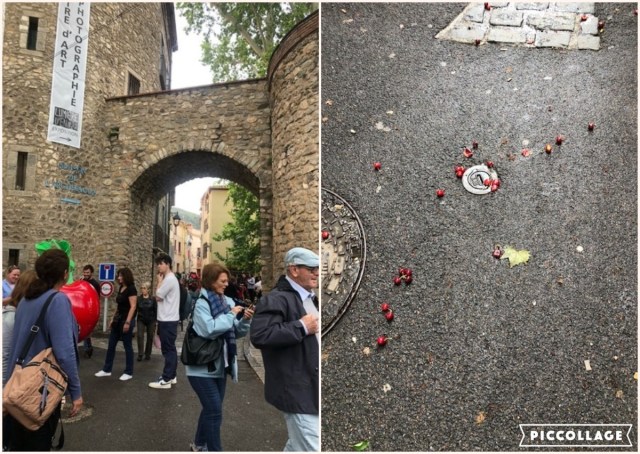
Sadly, I have to report that the cherries at the cherry festival were a disappointment. After an unusually wet spring, they were watery, splitting and lacking sweetness, bearing no resemblance to the fleshy Black Dawson cherries I pay an arm and a leg for in season here, but there were plenty of them and the French do street festivals very well. They do love a brass band – or four or five of them on street corners in this case.
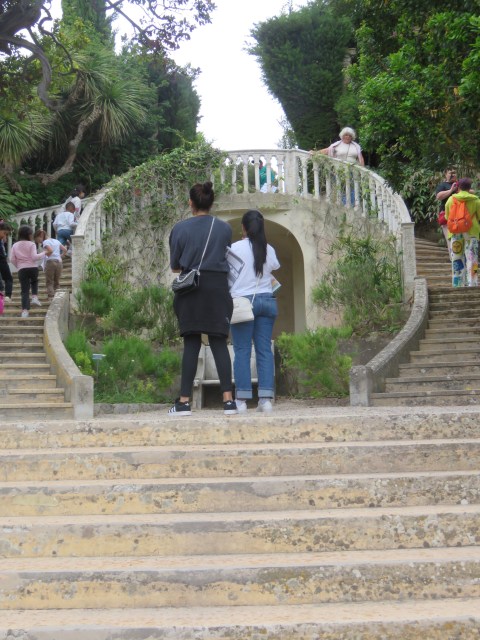
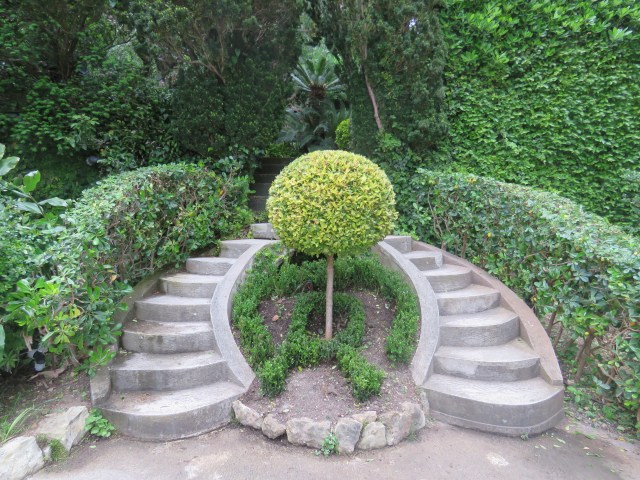

In the Ephrussi de Rothschild garden, the Baroness who created it clearly liked split steps. There were at least three, maybe more. If you do a net search for split stairs, also known as bifurcated stairs, you will see many examples in internal situations, mostly from USA and in modern, opulent homes. I have seen them used externally on grand old villas in Italy and always thought them particularly graceful. Executed in stone – or even concrete – they are a feature in themselves which would not be appropriate in our more informal garden. It is the form I like and there is no reason why they could not be constructed in a more naturalistic style. I am rather regretting that we never even considered something more ambitious for steps in our garden. You need gradient but also space and I am pondering where we might adapt some steps to try an informal version.
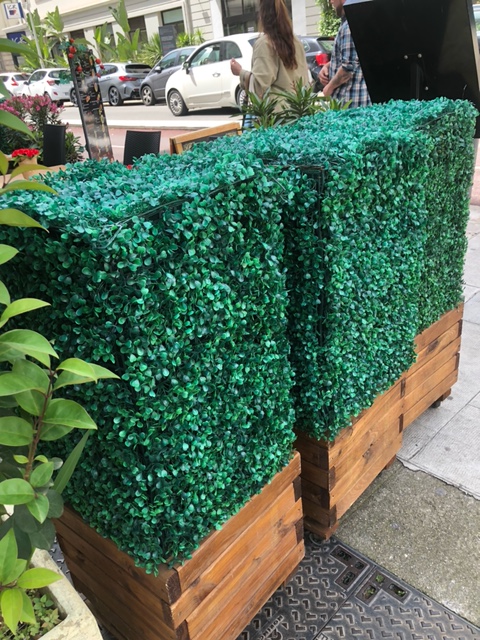

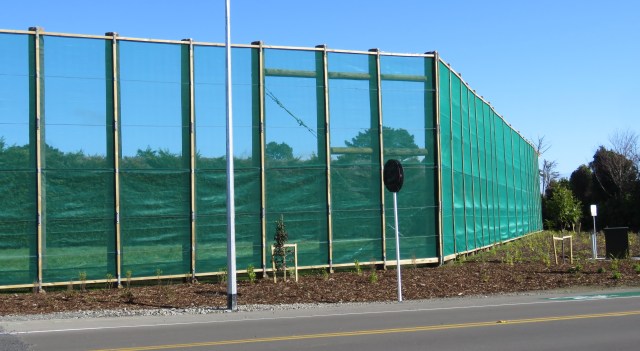
The French do many things well but these ghastly synthetic fences and screens are not one of them. No, no. Just no. They are really awful, both visually and environmentally. People lacking all aesthetic sense seem to think that the blue tones of synthetic green will ‘tone with the environment’, on account of being green. I see the same thinking down at the new roundabout finally completed where our country road joins the state highway. I get that the landowner who lost the corner of their property wanted windbreak but did it have to be so very high, built like Fort Knox but in tanalised timber and then wrapped in synthetic green netting? Black would have blended with the environment much better. Still ugly, but utilitarian ugly, not an assault on the visual senses.
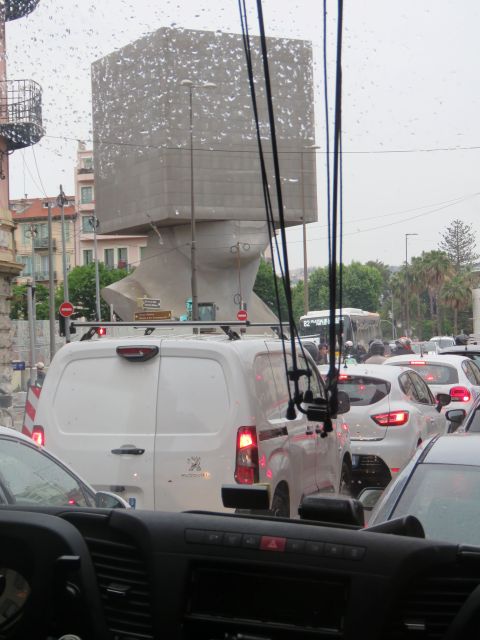
Also related to assaults on visual senses, these two commercial buildings in and near Nice were impossible to miss. I am sure they are as controversial for locals as for visitors.

I had to photograph this second one from a moving coach so you may miss the fact that the head looks mighty like it was modelled on King Charles. The similarity was unmissable. I am surprised it hasn’t sparked a fresh outbreak of the Hundred Years War of old.
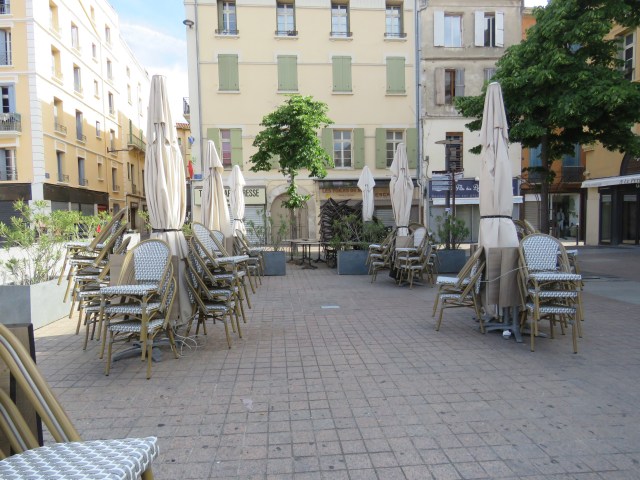
Outside of tourist areas, much of France closes on Sundays. We wandered through the near-deserted city square in Perpignan where all the outdoor furniture remained outdoors, albeit loosely tied to make it clear they were not free for the taking. Just as I marveled at the use of ceramic pots with topiaries planted in them to block off a road (instead of traffic cones?) in Malaysia, this level of trust in human decency and good behaviour made me ponder where we have gone wrong in this country.
 Tikorangi The Jury Garden