Tag Archives: Taranaki gardens

Plant Collector: Sasanqua camellia Crimson King

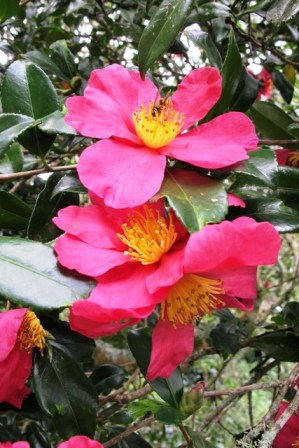
Crimson King - harbinger of autumn

Crimson King - harbinger of autumn


Crimson King forms a graceful, open shrub when mature

Crimson King forms a graceful, open shrub when mature

Crimson King heralds the arrival of autumn. It is a sasanqua, one of the autumn flowering camellia family from Japan. Too many people seem to think that sasanqua is synonymous with Setsugekka (how clichéd is the Setsugekka screen planting?) and only comes in white. In fact there are a relatively large number of family members, including Crimson King. It has the usual sasanqua attributes of finer foliage and a graceful, open habit of growth as it matures. In addition to that, the exceptionally long flowering season means it will last well in winter.

Single flowers have just one row of petals and exposed yellow stamens in the centre. The birds and the bees, and indeed the butterflies, need these stamens exposed to be able to feed from the flower. Big full forms or sterile formal flowers are not a source of pollen and nectar. Most sasanquas lack the highly refined flower forms so prized in japonica camellias but single flowers like this shatter and dissipate without ever leaving a sludgy mess below. There is also a simple charm in such a simple flower.

Sasanquas are renowned for being one of the most sun and wind tolerant types of camellias. They also flower early enough in the season to avoid the dreaded camellia petal blight. Overseas reports say that they can suffer from this dreaded fungal ailment but we have never seen it in our sasanquas here. Crimson King has a pleasant scent if you stick your nose right in the flower but I think that the faint waft of fragrance in camellias is rather over-hyped.

First published in the Waikato Times and reproduced here with their permission.
In the garden this fortnight: Thursday 29 March, 2012

A fortnightly series first published in the Weekend Gardener and reproduced here with their permission.

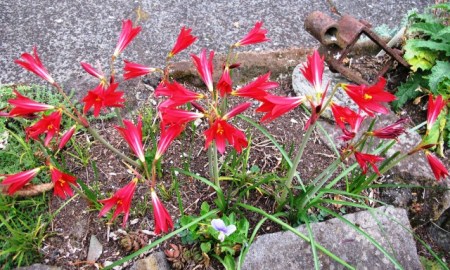
The little known Rhodophiala bifida

The little known Rhodophiala bifida

We keep talking about sustainable gardening here. For us, sustainable garden is twofold – both managing the maintenance of a large garden with a small labour input (wouldn’t we love legions of skilled gardening staff?) but also following garden practices which are not damaging to the environment. To this end we make our own compost, mulch heavily, use a mulcher mower, eradicate or control plants that threaten to become invasive, shun chemical fertilisers and hardly use sprays at all to keep plants healthy. We have a few plants of exceptional note that warrant a touch of insecticide, but generally, if a plant can’t grow well in good conditions, we will not persist with it. A few more roses are destined for the incinerator as I cull further. We do use glyphosate for weed control and Mark lives in fear that it may one day be ruled environmentally unacceptable because we would find it very hard to maintain standards without it.

The enormously useful leaf blower

The enormously useful leaf blower

But our biggest environmental footprint here is the internal combustion engine – the lawnmower, weed eater, mulcher, chainsaw, water blaster and motor blower (leaf blower). We console ourselves with the thought that we are only a one car household and that car often has only one outing a week so maybe that compensates for CO2 emissions. The motor blower is a huge timesaver for a big garden. We started with a cheap handheld one but progressed to a backpack model. It is possible to sweep and groom one’s way right around the garden at walking speed. That is an awful lot faster than doing it with a leaf rake, broom and barrow. As we hurtle at alarming speed from deeply disappointing summer into premature autumn, the blower comes into its own. Fine debris gets dispersed (it does generate dust) while larger leaves can be hustled into discreet areas to break down and rot.

The autumn bulbs are starting. At the moment the little known Rhodophiala bifida is looking terrific as are the red paintbrush blooms of Haemanthus coccineus (the plant many readers may know better as elephant ears). The lovely blue Moraea polystachya is coming into bloom, along with Cyclamen hederafolium and the early nerines are open. These seasonal delights offer some compensation for a summer which never really got going.

Top tasks:

1) As perennials pass over and many fall over, we need to do a tidy up round of the garden borders. Because our temperatures are mild here and we have soils which never stay waterlogged, we can and do lift and divide perennials most of the year. There is still time for plants to re-establish before winter temperatures stop growth.

2) Where repeated use of the blower has led to too much of a build up of debris (mostly in our hellebore border), I need to get through and rake off the surplus for the compost heap before we add this season’s leaf drop.

Tikorangi Diary: Friday March 16, 2012

What can I say? One of life's more unusual experiences this week. Anda Union.

What can I say? One of life's more unusual experiences this week. Anda Union.

Is that a Mongolian by my washing line? Why yes, actually, he is.

Is that a Mongolian by my washing line? Why yes, actually, he is.

Latest Posts:

1) Araucaria heterophylla commonly known as Norfolk Island Pine. All I want to do is to put a Christmas star on top each time I see one of these handsome landscape trees.

2) Grow it Yourself Fruit and Nuts by Andrew Steens – the latest offering in the New Zealand garden books market.

3) It’s a plant product so it must be natural and safe, right? Think again. Maybe natural, hardly safe Abbie’s column.

4) Onions. Are they worth the effort to grow?

Tikorangi Notes: Friday March 16, 2012

Each year at this time, New Plymouth hosts Womad, a remarkable event which brings a host of interesting world music performers and musicians to the area. This week we had the delight of hosting Anda Union in the garden giving a special performance for Tikorangi locals, including the two senior classes from the local primary school. These Mongolian performers keep the ancient music of their tribal homelands alive and this includes fascinating throat singing. It is like nothing else, really.

The whole experience was made more memorable because as soon as the musicians arrived, it was clear they wanted to see the garden. I took them on the short tour of the top garden (lunch, hosted by Todd Energy was awaiting them, to be followed by the performance). Their pleasure in seeing the garden was a delight, even if there were some language barriers.

The school children arrived a little early, while the adults were still eating. One of their teachers asked if they could also have a look in the garden so I headed off with them. They were entranced by the magical feel under the rimus (and some of the kids could even identify the trees). When we came to the path down to the park, these bright buttons of 8 to 10 year olds shrieked with delight and sprinted down the hill to play jumping games across the stream. We could have spent a great deal longer looking at different things. Glenys the Gecko was sunbathing on her tree and while it was possible to show her to a few children, pressures of time meant we had to head back to the marquee for Anda Union’s performance.

All this, and it was my birthday too. Mark, naturally, took credit for organising it all for my birthday, even down to the delicious lunch.

Anda Union - bringing the music of bygone Mongolia to Tikorangi.

Anda Union - bringing the music of bygone Mongolia to Tikorangi.

Tikorangi notes, Friday 24 February, 2012

Summer and Mark's vegetable garden is taking on its meadow garden alter ego as he grows food for the butterflies

Summer and Mark's vegetable garden is taking on its meadow garden alter ego as he grows food for the butterflies

Latest posts:

1) For us, the flowers of summer are lilies but you need to grow a range of different species to get them performing through the season.

2) Lepidozamia peroffskyana in Plant Collector this week – including how a Russian benefactor came to have an Australian plant named after him.

3) Grow your own garlic and keep vampires at bay. This piece also suggests that the conventional wisdom of planting on the shortest day and harvesting on the longest day may not always be the best advice.

4) Quite possibly the last in the short lived garden diary series done for the Weekend Gardener (unless a miracle happens and the magazine rises like a phoenix from the ashes of liquidation.

Tikorangi notes: Friday 24 February, 2012:

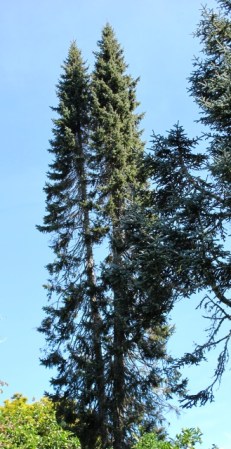
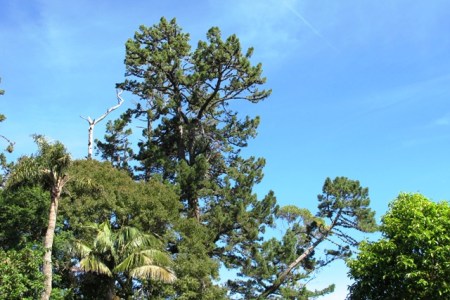
Summer came for three days this week. It was warm enough to entice me into the swimming pool where I looked up at the trees silhouetted against our blue, blue skies and reached for the camera as soon as I got out. I never tire of trees and skyscapes. The elderly pines make a pretty amazing sight even if the one leaning to the right is indeed leaning as much as it appears in the photograph below. One day it may lean beyond the point of balance.
Sadly there is no doubt that a full-on summer is simply not going to happen this year. Yesterday had the unmistakeable hint of autumn. Mark is bringing in grapes every day and muttering about how we had better eat the grapes before the melon harvest starts. Eighty something rock melons, he tells me there are ripening away out in his melon patch. He will have counted them. In the meantime we will not admit defeat and we will eat our way through the grapes. The only crop to rival them here is the green beans, which lack the romance.

The cyclamen are opening which promises an extended delight. The lilies are on their last legs – another torrential rain will spell the end of the auratums but within a few weeks, the autumn bulbs will be starting. That at least is some consolation for a truly disappointing summer.

Our old man pines, Pinus radiata, are large trees after 130 years

Our old man pines, Pinus radiata, are large trees after 130 years

Plant Collector: Lepidozamia peroffskyana

Lepidozamia peroffskyana - an Australian cycad

Lepidozamia peroffskyana - an Australian cycad

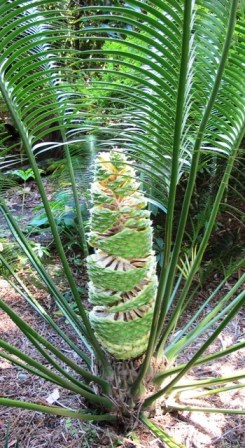
Difficult name, I know, but this plant does not appear to have a common name. It is a cycad and one native to Australia at that. Some mistake it for a palm because it grows a trunk and sprouts it leaves in a palm-like habit, fountaining from the top as it matures. Those leaves can be up to 3 metres long, which is extremely large when you think about it. But it is a cycad which is an entirely different plant family to palms. This particular plant is a seedling from a mature specimen we have and I photographed it because of its spectacular cone which has split open in a wonderful spiral. This split is to release its pollen, rather than to create a perfect pattern.

Lepidozamia peroffskyana cone

Lepidozamia peroffskyana cone

Normally we remove cones to stop the plant putting its energies into trying to set seed. It is suspected that forming the cone robs the plant of too many essential micro nutrients which can lead to yellow banding disfiguring mature leaves. It looks like sunburn. Our mature plant suffered badly in the past from this yellowing but it is still a little early for us to be able to state with confidence that de-coning it solves the problem, though it is looking hopeful.

This is an east coast rainforest plant from northern New South Wales through to Gympie in Queensland (I have been to Gympie though I cannot say I recall seeing lepidozamia there). In our conditions, it will tolerate light frosts and cooler temperatures overall. The natural rainforest habitat gives an indication that it likes fertile soils rich in humus, growing in company and in ground that never dries out. I had to go searching to find out for whom this plant was named – Count Peroffsky, a Russian nobleman and benefactor of the St Petersburgh Botanic Garden where this plant was first cultivated beyond its natural habitat. First in gets dibs on the naming rights even now.

First published in the Waikato Times and reproduced here with their permission.