Tag Archives: Taranaki gardens

Tikorangi Notes: Friday 9 December, 2011

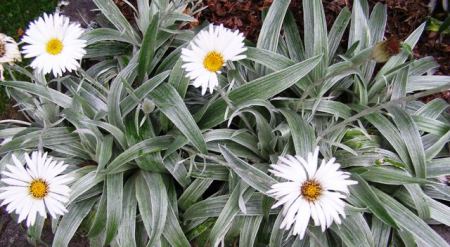
Celmisia - New Zealand's mountain daisy

Celmisia - New Zealand's mountain daisy

Latest Posts: Friday 9 December, 2011
1) No fewer than 700 Higo iris waiting to be planted out in Plant Collector this week.
2) Yet another joint venture infomercial masquerading as a reputable garden reference book – the Tui NZ Flower Garden this time.
3) The current quest for self sufficiency, of sorts at least. More a measure of a high quality of life here than a point of principle – Abbie’s column.
4) Grow it Yourself – rhubarb this week.
5) And absolutely nothing to do with gardening but a link to my other website (www.runningfurs.com) where I publish book reviews of a non gardening nature (mostly cookbooks, children’s literature and a bit of adult fiction) – the latest of which was indeed a cookbook: The Molten Cookbook by Michael Van de Elzen. Food porn, my chef friend calls it.
Inspired by Hidcote - the white foxgloves
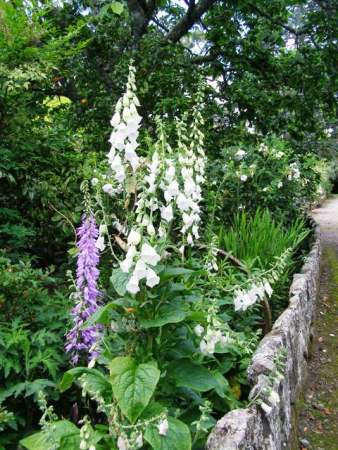
Inspired by Hidcote – the white foxgloves

At last the temperatures are rising and it feels as if we may be on the cusp of summer after all. The tall white foxgloves have been bringing me much pleasure, simple though they are. We saw these used to great effect at Hidcote Manor in England but, being a biennial, it has taken eighteen months to get them performing here. I am hoping they will seed down as readily as their pink counterparts (most of which are being consigned to the compost to try and keep the white strain pure).
Sparrows in the Queen Palm condo

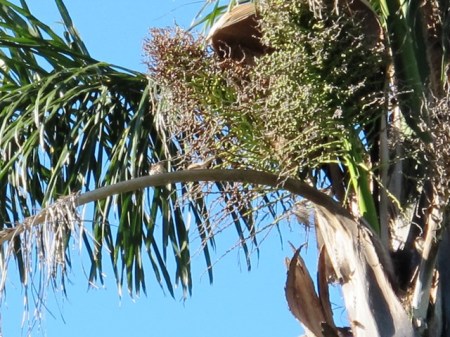
Sparrows in the Queen Palm condo

We have been somewhat amazed in recent weeks watching the entire condominium of nesting birds in the crown of the Queen Palm (Syagrus romanzoffiana) – they must be fifteen metres up and it appears that every nesting space is occupied. The dominant population is sparrows with the odd starling having made a move on vacant property. As we sit in our favourite conversation spot, we look out at the many comings and goings, while the tui nesting in the nearby rimu attempts to patrol the entire area and convince all other birds that they are deeply unwelcome.

The celmisia in flower is a reminder to me of the next website project – building the record of native plants we have in the garden. This is of less interest to New Zealanders who tend to fall into one of two camps – the dedicated purist (natives only) and the rather dismissive (“natives are so boring”). In fact, we use many native plants in the garden but interspersed with exotics. I read an opinion recently that the use of native plants is an important way of anchoring a garden into its environment and its country of origin, which seemed to make good sense.
Tikorangi Notes: Friday November 25, 2011

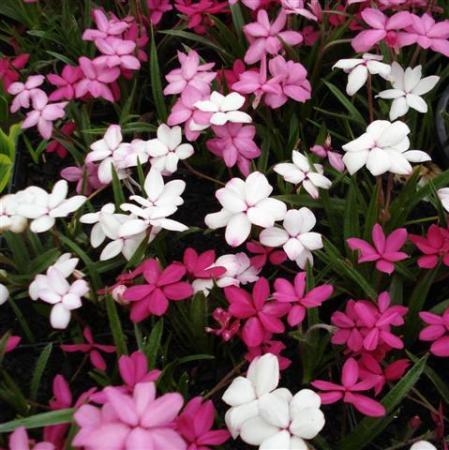
It is rhodohypoxis time

It is rhodohypoxis time

Latest Posts: Friday November 25, 2011
1) Why would gardening be exempt from fashion? Abbie’s column. It never has been before, but in keeping with modern times, the cycles of fashion are moving ever faster.
2) Yet another lightweight NZ gardening book. Even indexes are expendable these days, apparently.
3) Plant Collector this week: Dracophyllum latifolium or neinei, a seriously cool small tree and a native at that.
4) 100 Gardens by Jamie Durie (Australia’s pin-up boy of landscaping). More about ideas for outdoor spaces than gardening as such.
5) Grow it Yourself – melonsthis week. Preferably rock but water will do at a pinch.

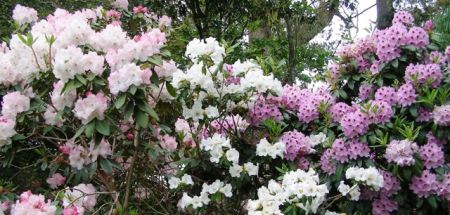
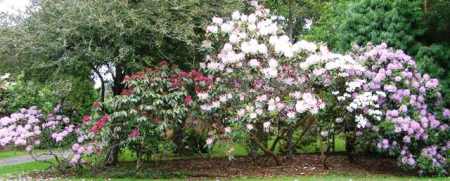
Rhododendron Elizabeth Titcomb to the left, Blue Pacific to the right and R. lindleyi (Ludlow and Sherriff form) caught in their cleavage, as Mark describes it – though nearly strangled might be a better description.
Our unusually cool spring is continuing here, which does at least mean that the spring flowering has been extended way past the usual time. At least the roses have finally opened. We are not the greatest of climates for roses – they don’t appreciate our high humidity – so the first spring blooms are all the more welcome as the bushes are still full of healthy, lush foliage. As the season progresses and black spot strikes, the plants start to look ever more sparse. One can spray roses, of course (and many do) but we choose not to. If a rose plant can not survive and perform without spraying, it ends up in the incinerator.


From left: Caroline Allbrook, Olin O. Dobbs, Elizabeth Titcomb, R. lindleyi and Blue Pacific – a swathe of pink and purple across one side of our carpark.

In The Garden: November 18, 2011

A fortnightly series first published in the Weekend Gardener and reproduced here with their permission.

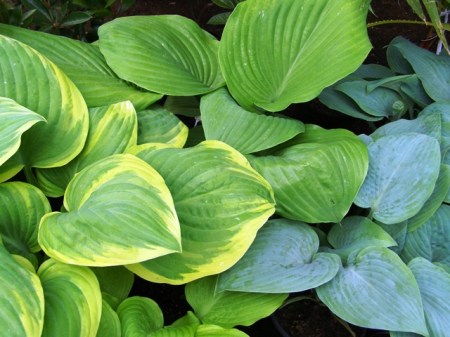
Planting out hostas now

Planting out hostas now

With our annual garden festival (now the Powerco Taranaki Garden Spectacular) over, it is back into the garden with a vengeance. The festival is incredibly important to us but standing on concrete all day every day for ten days on end, meeting and greeting visitors is far more tiring than a hard day in the garden. Unless we have a very wet spell, it is late for planting out woody trees and shrubs. Large plants will now be heeled into the vegetable garden because it has very well cultivated soil and offers easy planting and growing conditions, to be relocated next autumn. Any planting now requires wetting the root ball thoroughly. We plunge the plant, pot and all, into a bucket (or a drum for large plants) until the bubbles stop rising which means the root ball is saturated. This can take anything up to 30 minutes. Once a root ball has dried out, it is very hard to get it to take up water again without soaking.

We will continue planting out perennials, particularly hostas and bromeliads. Perennials in full growth can be divided now, as long as they are well watered and planted into well dug soil where they can get their roots out easily. We mulch with compost as a matter of routine, to enrich the soil and to keep moisture levels up in the soil before summer arrives. It also controls weeds, as long as you make a hot compost mix which kills any seeds in the composting process.

Top tasks:

1) The daffodils in the lawn need to be lifted and separated. I will only replant the large bulbs. They have been there for many years and the flowering is now greatly reduced which means that either they need dividing or we have a problem with narcissi fly in them. If I leave it any longer, I won’t remember exactly where the bulbs are because the grass will cover them.
2) Narcissi fly are on the wing. They look like a small blowfly but with a yellow abdomen. Removing all foliage from narcissi bulbs will reduce problems as long as I cover the bulbs with dirt so the narcissi fly can’t lay its eggs in the hole left from the foliage. Mark also stalks the flies individually with a little sprayer of Decis, which is a synthetic pyrethroid.
3) Label overcrowded patches of spring bulbs which need lifting and dividing when they are dormant over summer.

In the Garden: November 4, 2011

The start of a new fortnightly series first published in the Weekend Gardener and reproduced here with their permission.

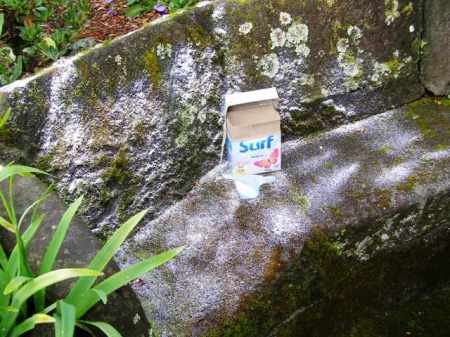
An easy method of killing unwanted moss

An easy method of killing unwanted moss

With our garden festival currently in full swing (now styled the Powerco Taranaki Garden Spectacular), all our efforts in the garden have been on presentation for the most important days of our garden visitor year. We call this garden grooming – a bit like giving your car a valet treatment. It doesn’t last long but it looks great in the meantime. When it comes to the lawns, we have made a deliberate decision to avoid chemical use where possible, both for weed control and fertilising. We use a mulcher mower, an edger and we hand dig flat weeds. As long as the rest is comprised of small, fine leafed green plants which mow well, we are willing to live with a mixed colony rather than just rye grass and fescue. At least our lawns are not toxic.

We don’t worry too much about moss in the lawns – it occurs most in shade where the grasses struggle. And if we were Japanese, we would revere the moss. But with our high rainfalls and humid conditions, we get a lot of moss growth on paths, brickwork and stonework. Often I will sprinkle soda ash (which is simply powdered washing soda crystals available from bulk bins) which kills the moss overnight. Indeed, cold water washing powders work equally well though I have found the leading brands are better than the budget brands – perhaps they have more water softener in them. Our chemist daughter reassures me that there should not be any problems of toxicity in using soda ash or washing powder to kill moss though if you get too carried away over time, you will be altering the pH of your soils because they are alkaline. I have experimented on grass and it kills moss without harming the grass. Do not do as someone I know – use so much that when it rained, his entire lawn foamed. The moss dies but does not disappear so you have to rake it out of lawns and brush it off hard surfaces.

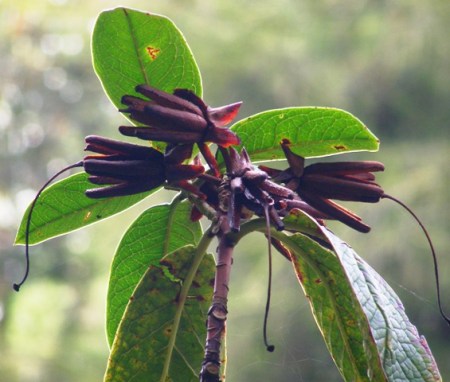
Rhododendron seed head, missed from last year

Rhododendron seed head, missed from last year

Top tasks:
1) Deadheading rhododendrons. While conventional wisdom is that all rhododendrons including vireyas need deadheading, in fact only those that set seed need it. Setting too much seed can weaken a plant and even cause it to die over time. The others just look better for having it done.
2) Mulching garden beds. There is no point in mulching dry soils so we like to get it on before summer. We mulch frequently with homemade hot compost mix which means we rarely need to fertilise garden borders.
3) Getting the planting out of this season’s trees and shrubs completed. November is getting late for this but we soak all root balls thoroughly and can generally rely on regular rainfall here in North Taranaki.

Tikorangi Notes: Saturday 5 November, 2011

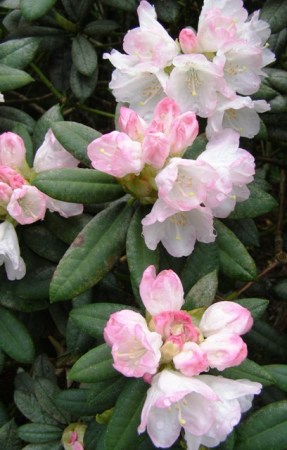
Mark's "Platinum Ice" is just opening

Mark's "Platinum Ice" is just opening

And "Coconut Ice" is looking a picture

And "Coconut Ice" is looking a picture

Latest Posts
1) From designer trend to cliché in the blink of an eye – Abbie’s column

2) The wonderfully brazen Azalea mollis in Plant Collector this week.

3) Grow it Yourself: lettuces with particular reference to Misticanza di Lattughe (available from Franchi Seeds, or Italian Seeds Pronto in New Zealand).

Tikorangi Notes: Saturday 5 November, 2011

There has not much (indeed, any) gardening going on here this week. As we host the large majority of our annual visitors in one ten day period, we get to spend 8 or even 9 hours a day standing on concrete doing the meet and greet. It is very tiring but also enormously affirming to have so many people come and enjoy the garden. Little do they realise that this means our Lloyd was out mowing the park at 6.30am this morning. I admit it was as late as 7.00am before I was out and about doing the clean up of our public welcoming areas.

The later season rhododendron display is just coming into its own – the wonderful nuttalliis and the later flowering maddeniis. We are still running at least a week behind on the blooming season.

Our annual garden festival finishes on Sunday. Monday will see us back in gardening clothes, probably mooching about in solitary silence achieving very little but focussing our attentions back on the garden. It is a source of amazement to garden visitors that we manage a garden this size with just ourselves as gardeners and our one staffer, Lloyd, on the mower, mulcher, tractor, weedeater and generally assisting. While we would enjoy having additional assistance, visitor numbers in New Zealand are not high enough to pay the wages. However, in the final analysis, we garden for our own pleasure and the visitors are a welcome bonus.

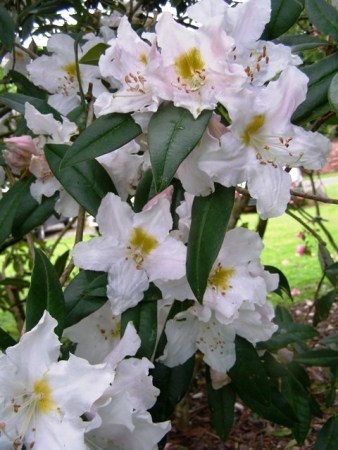
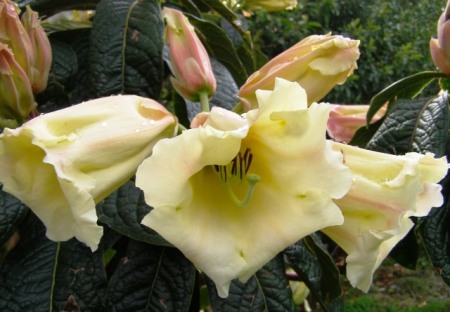
The wonderful fragrant nuttalliis are coming into flower - this one is Floral Legacy (nuttallii x sino nuttallii)

The wonderful fragrant nuttalliis are coming into flower - this one is Floral Legacy (nuttallii x sino nuttallii)