Tag Archives: Taranaki gardens

Plant Collector: Kerria japonica “Pleniflora”

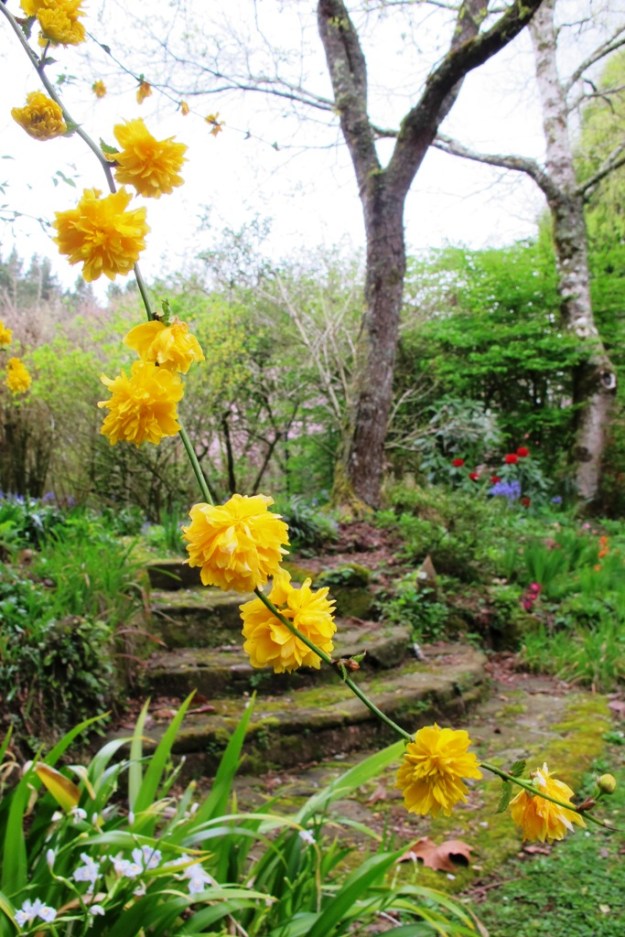
Kerria japonica 'Pleniflora'

Kerria japonica ‘Pleniflora’

I hadn’t registered the kerria until we went to see the bluebells at Te Popo Gardens and there, lo and behold, it was impossible to ignore. The double form looked somewhat like a bright gold, thornless banksia rose. I wasn’t quite so keen on the single form which is a bit like a giant buttercup flower but others may like the simplicity. On a gloomy early spring morning, the kerria were like rays of gold.

This is a deciduous, clumping Chinese shrub which will spread by putting out suckers. It flowers just at the point when the leaves start to emerge. It is not a plant with strong form or shape, being more a thicket of arching canes. When not flowering, it is one of those anonymous plants that does nothing to attract attention to itself. It benefits from being pruned (thinned, really) once a year because the flowers come on the newest canes. Treat it like a raspberry, in other words.

The real boon is that kerrias are not fussy and they will grow and flower in shade – full shade, even. It is no surprise that the Japanese have always liked them. An arching spray of golden flowers is a wonderful statement of both simplicity and cheer.

First published in the Waikato Times and reprinted here with their permission.

Peak bluebell!

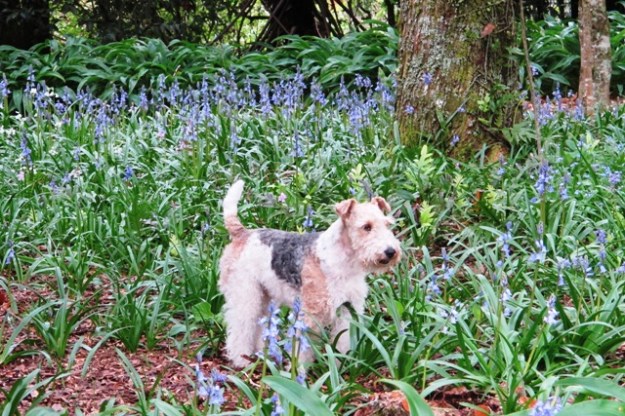
Flynn the dog did not show a great deal of respect for the Te Popo bluebells, alas

Flynn the dog did not show a great deal of respect for the Te Popo bluebells, alas

The first time I visited Scotland was at exactly the right time to see the bluebells bloom. This was in woodland near Gatehouse of Fleet in the south west. Like many others, I was enchanted by this natural phenomenon.

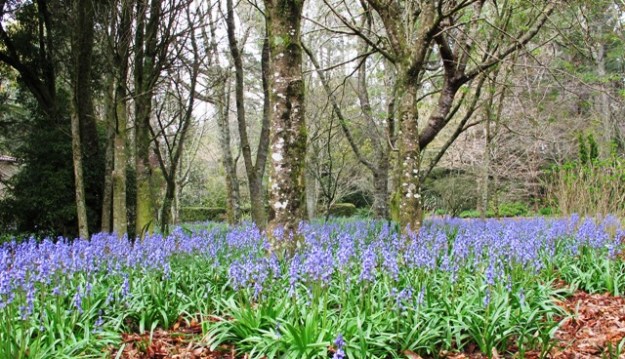
It is Peak Bluebell here this week. We headed down to see the blue glory at Te Popo Gardens in central Taranaki. While we grow bluebells in relatively large numbers ourselves, we have yet to attain the magnificent expanse they manage in their conditions.

At Te Popo, there are many deciduous trees which creates a woodland cycle. When the leaves fall, they are left to lie. The bare trees let in winter light. It is at the turning of the season when the fresh growth is just starting on the trees that the bluebells flower, creating great swathes of blue carpet beneath. As the trees take on their full summer leafy garb, light conditions will decrease below which suppresses competing weed and grass growth.

Bluebells beneath deciduous trees at Te Popo

Bluebells beneath deciduous trees at Te Popo

In our garden at Tikorangi, our tree cover is such a mix of evergreen and deciduous that our woodland areas tend to be a little dark for most bulbs. When it gets too dark, the bulbs don’t set flower buds and gradually die out. We have to go for the margins and find the balance between necessary light levels and the grass growth that comes as a result. We are less blue carpet and more drifting carpet runner, if you see what I mean.

Bluebells are strong growing bulbs, also given to seeding down, so are better suited to a more natural style of gardening rather than intensively maintained borders. Lorri Ellis at Te Popo uses them extensively with hellebores to good effect. We have both found that spreading them in areas which can then be more or less left to their own devices is most effective. It is the massed, natural look that works.

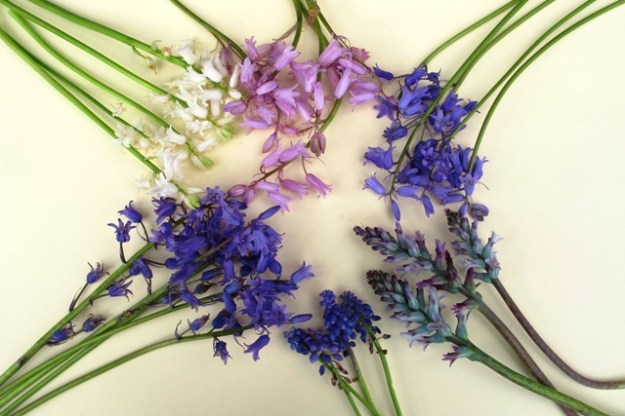
Bottom left, clockwise: Spanish bluebells in blue, white and pink, allegedly English bluebells, blue lachenalias and grape hyacinths – muscari – which some people mistakenly refer to as bluebells.

Bottom left, clockwise: Spanish bluebells in blue, white and pink, allegedly English bluebells, blue lachenalias and grape hyacinths – muscari – which some people mistakenly refer to as bluebells

There is ongoing angst in Britain over the incursions of the stronger growing Spanish bluebell, Hyacinthoides hispanica, dominating and hybridising with their native bluebell H. non scripta. We spent some time discussing the difference. Lorri has a large patch that she understands is the true English bluebell and she has kept it isolated from the rest which are probably mostly Spanish, or Spanglish as I call the hybrids between the two – technically H. x massartiana.

Bluebells and very fragrant jonquil species are both originally from Spain.

Bluebells and very fragrant jonquil species are both originally from Spain.

One way you can tell what you have, apparently, is by pollen colour. The English ones always have creamy pollen whereas the Spanish ones often have blue pollen. I had noticed the latter. After some random sampling and Mark’s memories of what he refers to as “Grandma’s bluebells” (technically his great grandmother, I think), we came to the conclusion that it is likely that most of what we have here are hybrids. We are none the wiser as to whether Grandma started with English or Spanish ones, but we think that the lilac pink and white ones that were brought in to add variety are all of Spanish origin.
Mostly Te Popo 014 - Copy
Te Popo Gardens are located near Stratford and will be open during the Powerco Taranaki Garden Spectacular from October 31 to November 9

First published in the Waikato Times and reprinted here with their permission.

Garden Lore – witches’ broom

Indubitably witches' broom, not two trees

Indubitably witches’ broom, not two trees

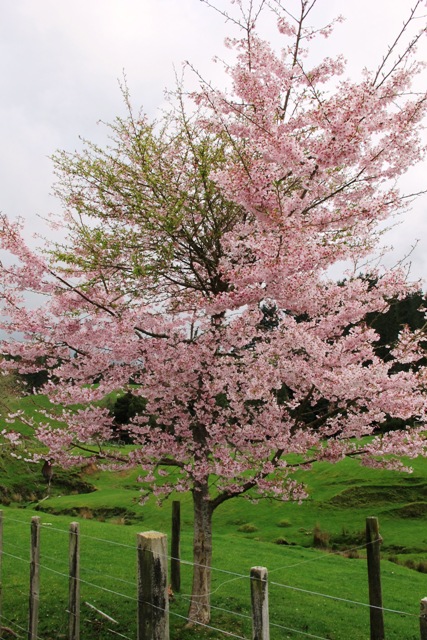
I came across this fine example of witches’ broom in a roadside tree planting of Prunus Awanui. That particular flowering cherry is known to be vulnerable to witches’ broom. It is the green section coming into dense leaf earlier than the rest of the tree and without flowers. Left to its own devices, over time the witches’ broom will take over the tree and you will no longer see much in the way of spring flowering. If you leave it for a few seasons, it also becomes harder to remove the affected sections without destroying the shape and structure of the tree.

Basically, witches’ broom is a mutation within the tree – possibly similar to an immune disorder in humans – which causes dense, twiggy growth in that section. It does not appear to heal itself and it does not grow out of it the following year. There are multiple causes but no general treatment beyond surgery – removal of all affected parts of the plant. Cherry trees are particularly prone to it, although you won’t find them in the campanulatas or Taiwanese cherries. Generally it is seen in the Japanese cherries and the hybrids. If you spot it now, mark it because it is harder to identify later in the summer when all the branches are in leaf. Spray on paint is handy for this, or a tie. Pruning cherry trees in high summer is recommended to reduce disease getting in.

On the bright side, witches’ broom mutations are what have given us many of the dwarf conifers so they are not all bad.

First published in the Waikato Times and reprinted here with their permission.

Garden Lore

A garden is a delight to the eye, and a solace to the soul; it soothes angry passions, and produces that pleasure which is a foretaste of Paradise.

Gulistān (The Rose Garden) by Sa’ Di (1258)

021 - Copy

More on narcissi

It was a full month ago that I wrote about daffodils and showed those varieties that were in bloom at the time. In peak bloom, in fact. We had hosts of golden daffodils in flower. We still have. I headed out to gather samples of the varieties currently blooming.

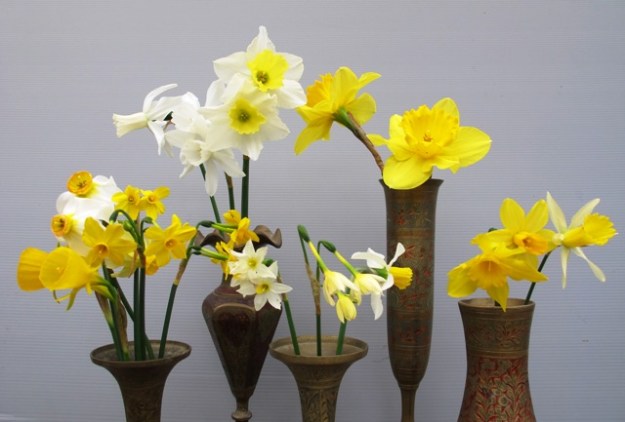
In the vase on front left, we have the three showiest for this time of the season – the bright yellow cups of Narcissus bulbocodium, Narcissus ‘Beryl’ and a dainty little N. jonquilla species which, despite its diminutive size, packs a powerful perfume.

In the centre front vase is a named dwarf variety which we have lost the name of. Mark thought it might be Narcissus ‘Snipe’ (who calls a dainty daff ‘Snipe’?) but the clever internet shows me that the one on the right is more likely to be. The lemon one in the middle is Narcissus ‘Hawera’ which is not growing as strongly as some of the other varieties for us. On the right we have the last blooms of Narcissi x odorus, ‘Tete a Tete’ and ‘Twilight’ – all featured a month ago and only now finishing. These are ones I mentioned don’t set seed. This is why they have such a long flowering season.

In the vases at the back, they will be named varieties on the left but we don’t have their names any longer though one is probably ‘Thalia’. I quite like the white daffodils. To the right, the classic King Alfred type is at its peak for us.

If you love narcissi, you can extend the season past two months by growing a range of different varieties.

First published in the Waikato Times and reprinted here with their permission.

Floral Skypaper – the garden in August

Magnolia Felix Jury

Magnolia Felix Jury

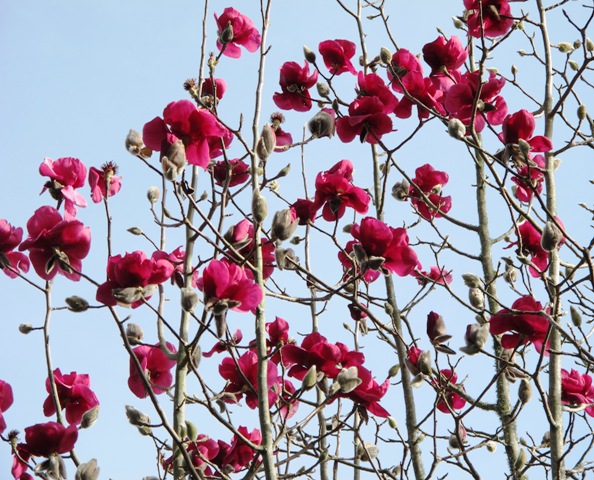
Not for us the refinement of declaring we garden for foliage and form. Give us floral extravaganza, we say, and August obliges. In the deciduous magnolias, it is the reds that dominate. By the end of the month and well into September, the softer pinks and whites come into their own but at the start, we have an unrivalled display of the stronger colours which just gets better every year as the trees get ever larger. Floral sky-paper, I call it when looking up from below. I say it is an unrivalled display because nowhere else in the world gets the same intensity of red in these magnolia, nor have they done the breeding on them that has been done in this country over the past 40 years. First Felix Jury, now Mark Jury and also Vance Hooper have pushed the boundaries with the reds. Mark was very pleased to find recently that Britain’s Royal Horticultural Society has given an Award of Garden Merit to the magnolia he bred and named for his father, ‘Felix Jury’. While we admit to being biased, it still takes our breath away each season.
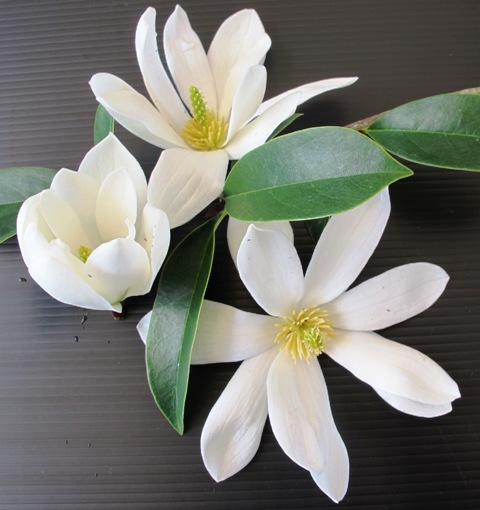
Mark's new 'Fairy Magnolia White'

Mark’s new ‘Fairy Magnolia White’

It is also michelia time – or as they have been reclassified botanically, magnolias. Do not confuse them with the evergreen grandiflora magnolias which are the summer flowering trees with big, glossy, leathery leaves. I admit we still call them michelias in conversation or we go with the “Fairy Magnolia” branding that has been placed on Mark’s new cultivars. Because michelias flower with their leaves, they are not as individually spectacular as the deciduous magnolias but they are a wonderful addition to the spring garden.

Mark has been breeding michelias for coming up to two decades now and we have many hundreds, maybe over 1000 of them, planted around our property. Out of all those, he has only named and released three so far. Fairy Magnolia White is the earliest of the season to open and has the loveliest star flower as well as being strongly fragrant. There is a purity in such white flowers, especially when contrasted with deep green foliage and wonderful velvet brown buds. One of the breeding advances has been to eliminate the tendency of some cultivars to drop their leaves and defoliate after flowering. Readers with Michelia doltsopa ‘Silver Clouds’ may recognise this trait.
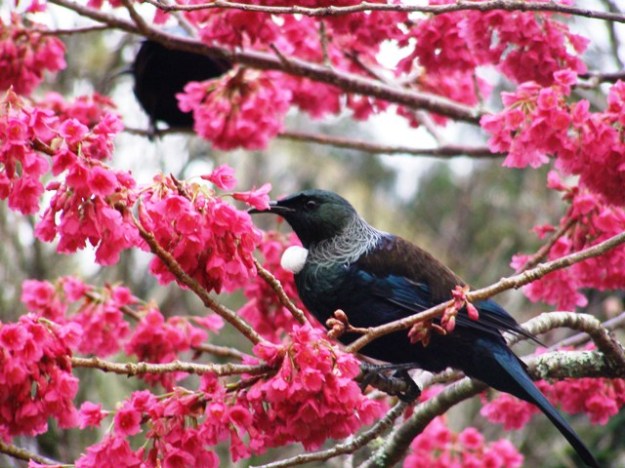
???????????????????????????????Nothing excites the tui more than the Prunus campanulata. These are somewhat controversial, especially in warm northern areas, because too many of them set seed freely, threatening to become noxious weeds. Both the tui and we would be grieved to see all campanulatas banned, though we are vigilant weeders on the germinating seed. We have a number of different trees that come into flower in sequence and we can have literally scores of fiercely territorial tui bickering and fighting in these trees as they try and claim their feeding space. There are times it can appear as if the trees are dancing with the tui.

Until a whole lot more work is done on selecting and marketing sterile forms of campanulatas (in other words, they don’t set viable seed so will never become weedy), if you live in Northland, Auckland, Waikato, Bay of Plenty, Marlborough or the West Coast, where regional councils are understandably touchy on this topic, look for Prunus Pink Clouds or Prunus Mimosa which are sterile options.
???????????????????????????????
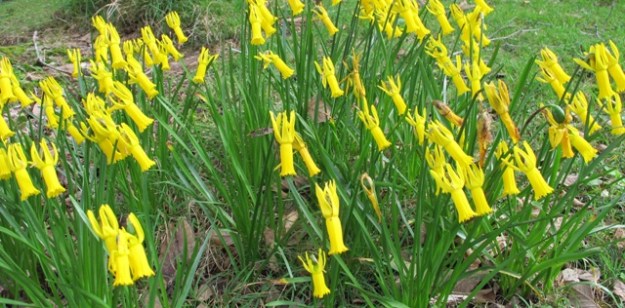
From the big to the small – narcissi season is in full swing here. The little pictures they create give wonderful detail in a big garden. We have such a problem with narcissi fly that we struggle with the later flowering hybrids which comprise most of what is sold through garden centres (commonly called daffodils). The dwarf forms tend to flower earlier so they are over and going dormant when the narcissi fly are on the wing later in spring. The little cyclamineus ones, with their swept back skirts, seem to have a look of perpetual surprise. We are delighted with how well they are naturalising on our grassy banks where conditions are harder than in cultivated garden areas.
???????????????????????????????
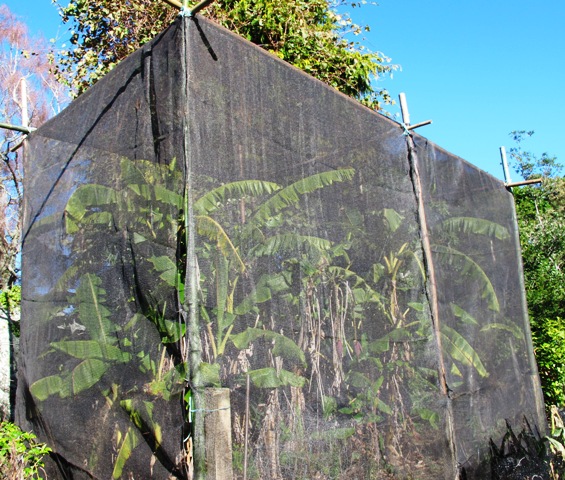
We looked enviously at Russell Fransham’s magnificent bananas in the June issue.
They are a pretty marginal crop this far south and as we live 5 km from the coast, we have to take extra care and cover them in winter. We do this with giant bamboo frames and old shade cloth. A bunch of 50 is a triumph for us so we were in awe of Russell’s 200. We won’t remove the covers from ours until later in spring, just to be on the safe side. I call these constructions here the Theatre of the Banana.

First published in the August issue of New Zealand Gardener and reprinted here with their permission.