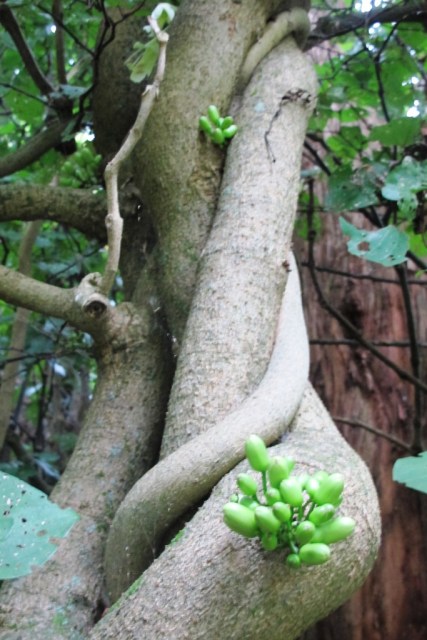
Tag Archives: Tecomanthe venusta

Summer time

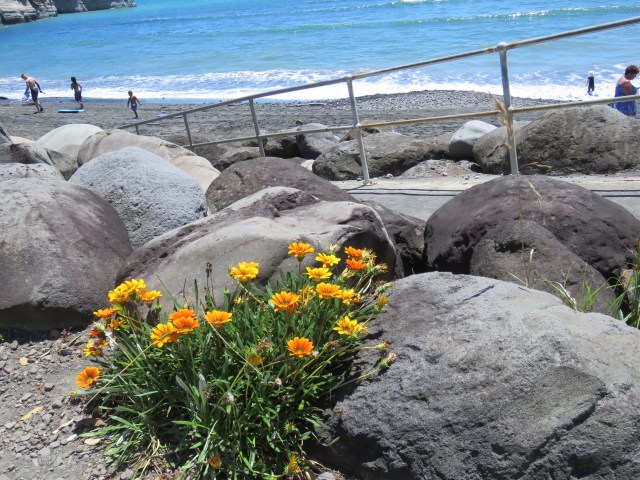
Gazanias, I think – though I confess to knowing nothing about gazanias – growing amongst the retaining rocks at Urenui Beach

It has been a busy couple of weeks. Well, busy in a high summer, low-key, somewhat retired sort of way. We had a small UK garden tour through on Friday and we wanted to present our best face while managing to find time for activities and family while our eldest child is home for a summer holiday with our only grandchild.
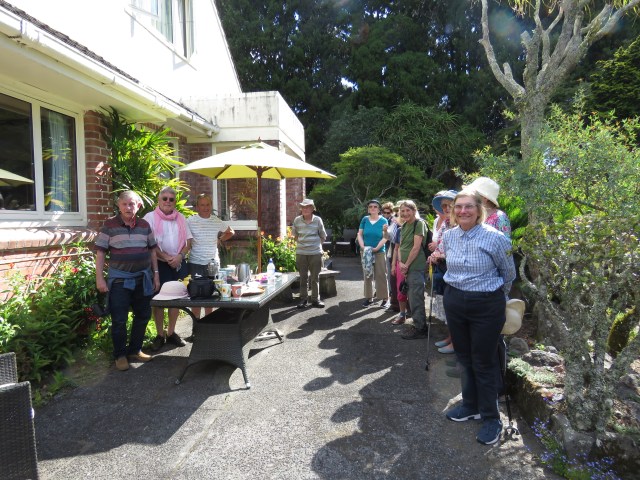
A small UK garden tour, led by our most favourite tour leader of all, Trevor Edwards wearing his trademark pink scarf

The tour is done and dusted and the daughter and grandson fly back to Canberra tomorrow. Come Tuesday, I may be wondering what to do with myself. Hosting a garden tour is different to opening the garden to the general public because we get to determine which route to take around the garden and it is possible to skirt certain areas if necessary. When the garden is open to all comers and people wander where they like and take as long as they like, everywhere has to be presented well. This means tours are less stressful in terms of preparation but it still takes a sustained effort just to add that extra polish. That is it for visitors now until October and November when we have a conference and a couple of overseas tours booked.

Tongaporutu Beach on a crowded Saturday afternoon
Fish and chips at Urenui Beach – a family tradition

In-between, we have been out and about. Daughter has been keen to introduce her six-year-old to the experiences she remembered from her childhood summers. Taranaki beaches, she comments, are different to the Australian beaches that he usually visits. There is nothing but ocean between us and Australia and our beaches are often big, wild and with very little development – and usually without many people. And black iron sand, of course. Taranaki children learn from a very young age to wear sandals to cross the dry sand on sunny days because that sand heats up to a burning temperature. We know from past experience that if you take a dog with you, it is often necessary to carry it over the dry sand sections. Fish and chips at Urenui Beach are a family tradition, though I did remind the daughter that when she was little and we were a great deal poorer, it was in fact the cheap hot chips without the fish.
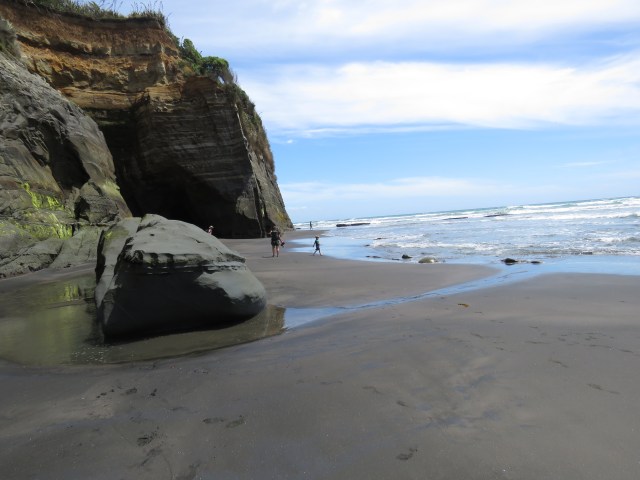
*Our* beach at Tongporutu

Tongaporutu has the best beach, in our books. We regard it as *our* beach. Mark’s parents built a modest little holiday house there (known as a bach in the North Island of NZ, a crib in the South Island). We lived there for the year when our daughter was born and spent a fair amount of time there when the children were young. We knew pretty much every nook and cranny. Daughter noted it had clearly become an Instagram location, to the extent that you can now buy a latte coffee or Kapiti icecream in a cone now. But the beach itself is large enough to never feel crowded, even on a busy Saturday afternoon.
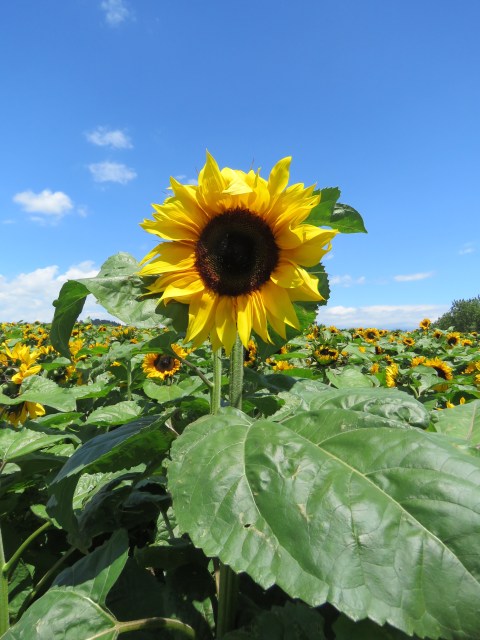
The six-year-old was not as keen on the visit to the field of sunflowers, although a little mollified when he was allowed to cut one head of his choice from the picking field. But daughter and I were charmed, even as she commented that it was another particularly Instagrammable attraction. I don’t use Instagram but as soon as she said that, I could see how much of the set-up was designed for that perfect picture that others seek to post.
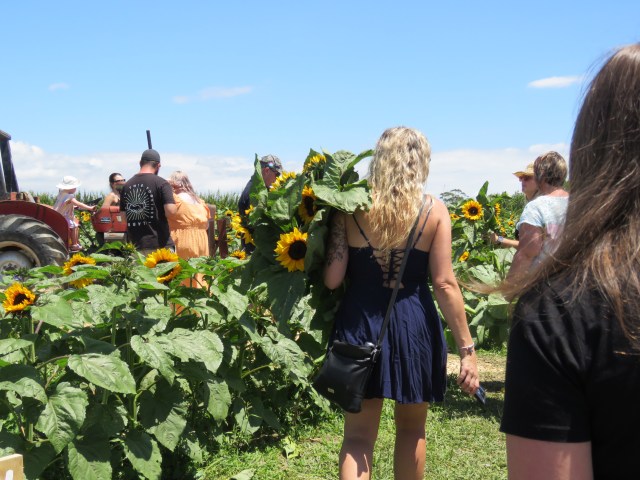
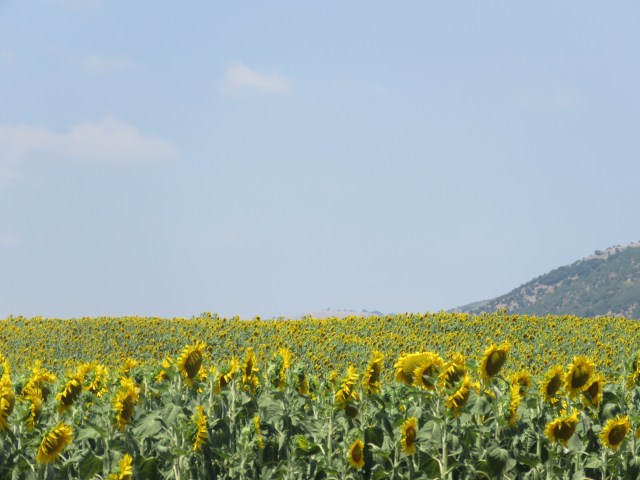
Grandson was happy with buying just one selected sunflower but others splashed out on more as they posed on the old tractor or the hay bales for the Insta shots
Summer in Italy, 2017. On the road to Giardino di Ninfa.

It reminded me of the fields of sunflowers grown as a commercial crop that I stopped to photograph in Italy, on the road between the garden of Ninfa and the hilltop village of Sermoneta where we stayed on a particularly memorable visit we made in 2017. I felt a passing pang that our days of international travel are likely over now but at least we saw quite a bit when we could.

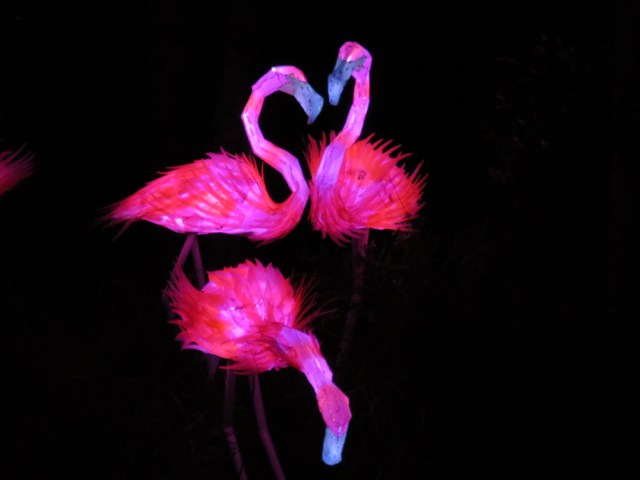
This was one of the more low-key vistas of the Festival of Lights, taken from the Poet’s Bridge in Pukekura Park but it was also one of the most charming

No summer visit to our area is complete without an evening jaunt to the Festival of Lights in our New Plymouth city park – Pukekura Park. I admit that it is many years since Mark and I have been and it is certainly an upgraded version these days with technological advances in lighting and a bigger budget. It was a magical experience, albeit one shared with hordes of others. As a free event every evening, it is hugely popular with locals and visitors alike.
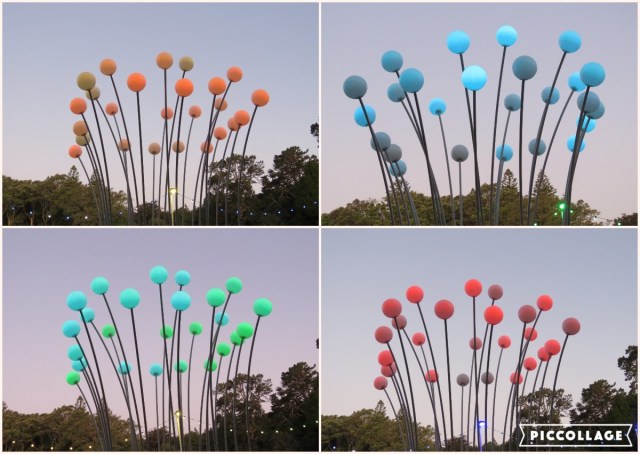
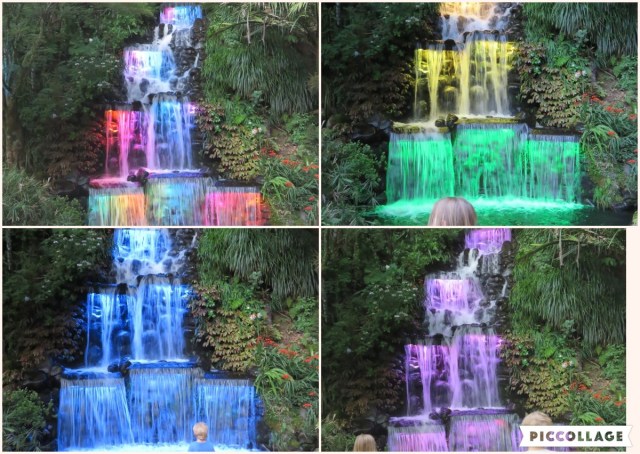
The waterfall verged on tacky, perhaps, but high tack at least and it was quite mesmerising

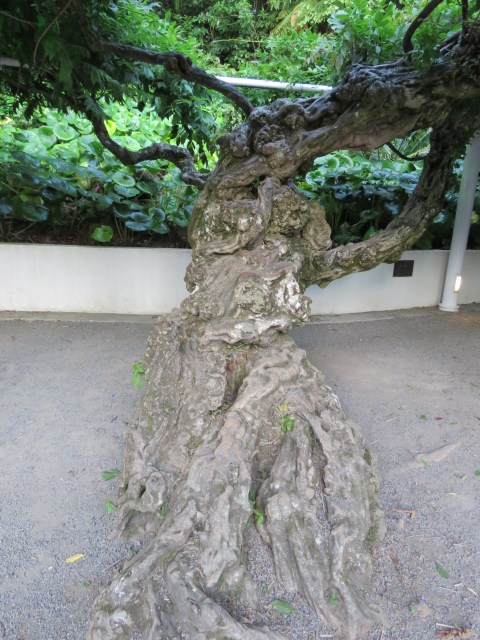
For those who want a bit more plant interest from my posts, look at this wisteria in the park, toilet sign and all. I want to know how they stop that massive trunk from getting infested with borer beetle. I am guessing there must be some intervention to have enabled the wisteria to get to this size.

Tomorrow I will be sad as we put our grandson and daughter on the plane to start the long journey back to Canberra. On Tuesday, who knows? It is summer. I may pick some lilies.
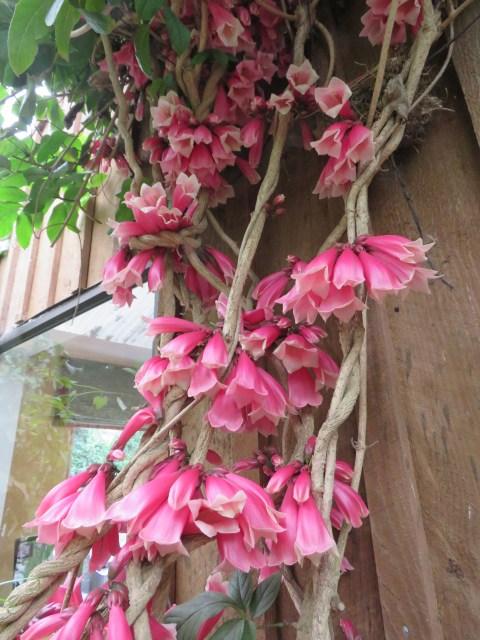
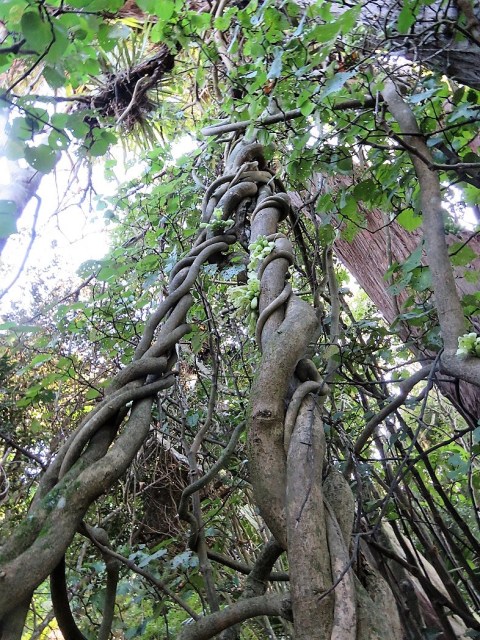
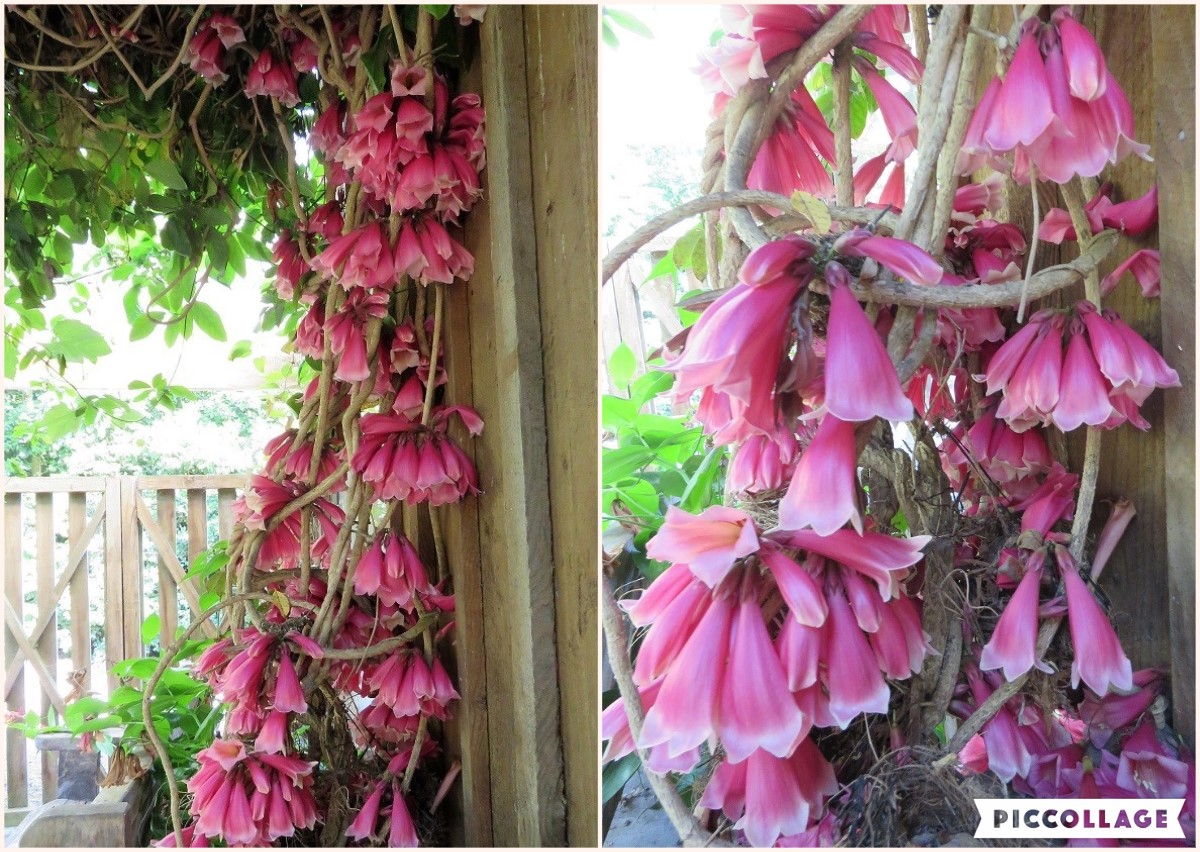
Irrelevant to this post but the Tecomanthe venusta – a tropical climber from Papua New Guinea is putting on an astounding show on the wall outside my office window.

When survival of a species rests on a single plant

Our native Tecomanthe speciosa is quite the clmbing vine over time

Plant collectors and the nursery trade don’t always have the proudest record when it comes to preserving desirable plant species in the wild. It was the habit of stripping material for commercial gain that saw flora as well as fauna being protected by CITES*.  But there are exceptions and our native climber, Tecomanthe speciosa, is one example.

It was down to just the one, single, solitary specimen ever found and I think it is still down to just the one plant in the wild. Arguably it is the nursery trade and the popularising of it as a garden plant that saved it from extinction.

The same situation applies to Pennantia baylisiana, found at the same time on the same island. We have that growing in our garden too. One of the species of our native kakabeak, Clianthus puniceus, has never been reduced to just one plant but it is critically endangered with just one small location in the wild on Moturemu Island in the Kaipara Harbour. Circulating these plants in the garden trade doesn’t alter the situation of them being endangered in the wild due to loss of habitat, but it does stop them being wiped out entirely.

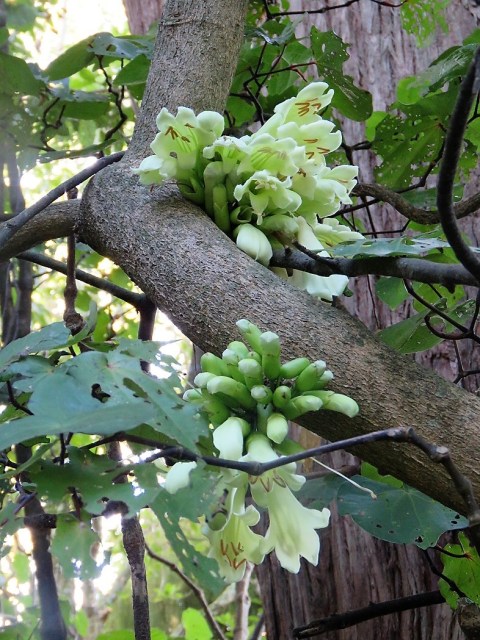
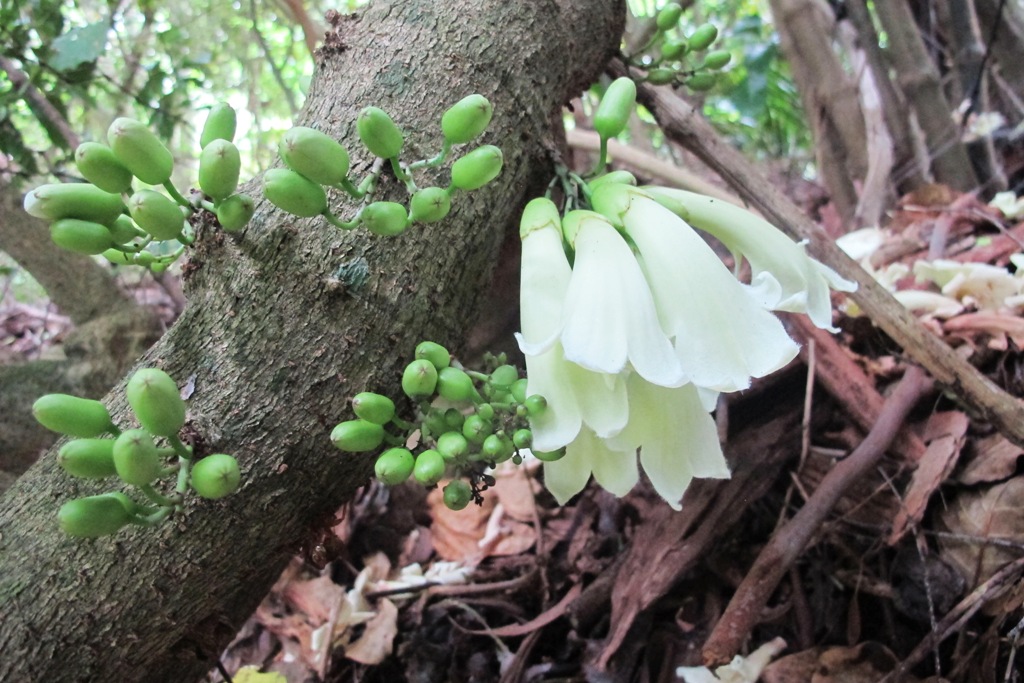
Tecomanthe speciosa setting flowers down its woody stems in very late autumn. The foliage in the photo is unrelated.

The  tecomanthe was found on Manawatāwhi (formerly referred to as the Great Island in the Three Kings group to the north west off the top tip of New Zealand. It was found in 1946 and it is thought that the introduction of goats to the island had led to the extinction of all but the remaining plant. I understand the goats were introduced to provide food for shipwrecked sailors. With the eradication of goats, vegetation on that island has regenerated to the point where that last plant has become heavily shaded and  it has hardly flowered since that year of discovery.

The tecomanthe is climbing vine, subtropical and therefore frost tender but well adapted to coastal conditions. Its foliage is relatively large, lush and shiny and I can’t get a photo because it is all right up on top, maybe 10 metres above. Fortunately, it doesn’t only flower right at the top but can put clusters of blooms out on its bare lower lengths of vine.  

I didn’t know until I looked it up that T. speciosa is best grown from fresh seed and can flower within a couple of years whereas it takes much longer for a cutting-grown plant to start flowering. I am guessing most plants sold in the trade are cutting grown.

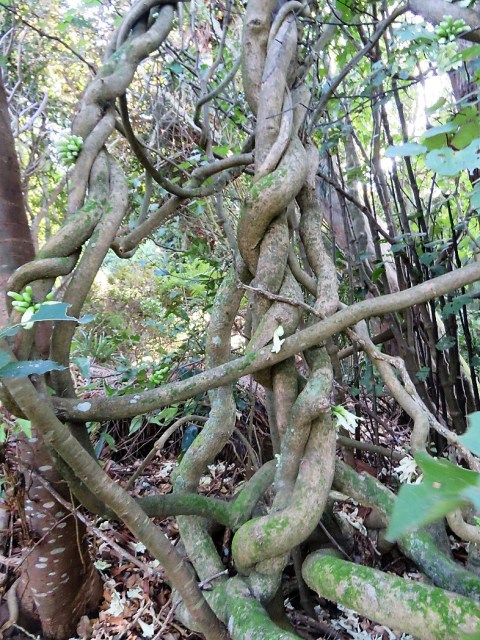
The potential is there for this vine to become a gnarly old plant – as ours has – with very thick trunks which may smother and even fell the host tree it clambers up for support but that will take many decades. I have seen tecomanthes trained along front verandahs but they do need training and pruning. Left to their own devices, they may rip the guttering off the house if you turn your back on them but at least you can get most of the flowering at eye-level with a bit of effort. It is probably safer to train a plant along a fence or a wall but whatever location is chosen, it needs a strong support.

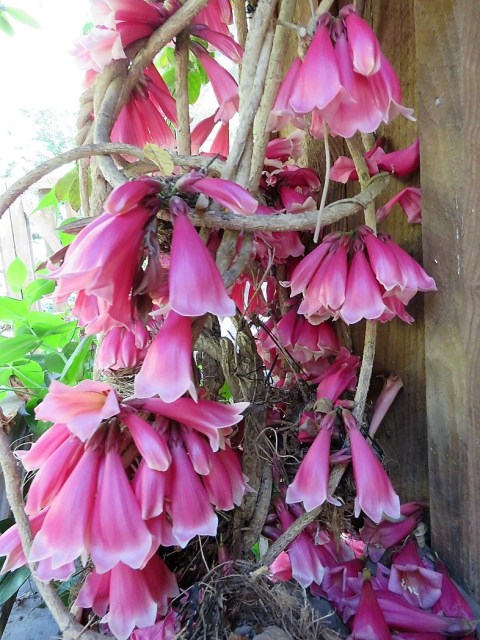
Our Tecomanthe venusta needs to be grown under cover but it also flowers on bare wood, although in summer, not autumn. It doesn’t always flower quite as prolifically as this but it is showy.

We grow two other tecomanthe species but both are more tender than T. speciosa because they come from New Guinea. Tecomanthe venusta (syn dendrophylla) needs to be under the cover of a verandah this far south but can be grown outdoors in Northland. The dainty one we have as T. montana (which may or may not be the correct botanical name) is arguably the prettiest of the three. We did have T. hillii which is native to Queensland but it succumbed to neglect.

I think Tecomanthe montana is the prettiest flower. It blooms in spring.

None of the tecomanthe species are common in New Zealand but only one of them is extra special for the patriotic gardener. Fancy being a direct descendant of the one sole, surviving plant. They don’t come more endangered than that.

*CITES stands for Convention on International Trade in Endangered Species of Wild Fauna and Flora

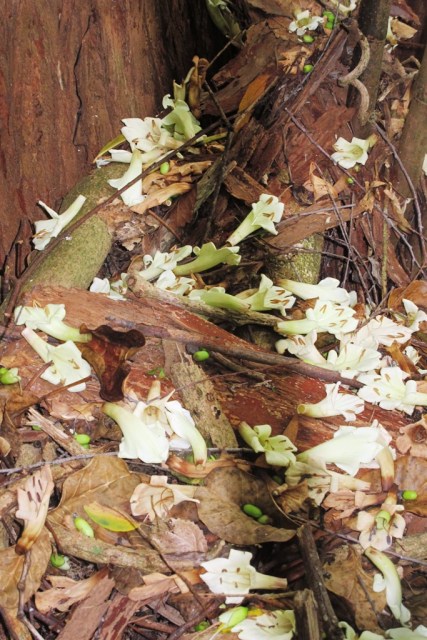
Fallen blooms on Tecomanthe speciosa

Some flowers of summer


Tecomanthe venusta at its best 

I have been busy gardening all week so all I have to give you this weekend are summer flowers. The New Guinea Tecomanthe venusta has never bloomed better than this week. The vines are simply smothered with its pink trumpets and I had trouble getting a photo that does it justice. True, it is not the prettiest pink to my eyes, but with all its blooms sprouting out from bare wood, it is spectacular. We have it growing under the verandah on our shed because it is a tropical climber and we are warm temperate, not tropical. For much of the year, it serves as the repository for the birds’ nests I pick up around the place. 

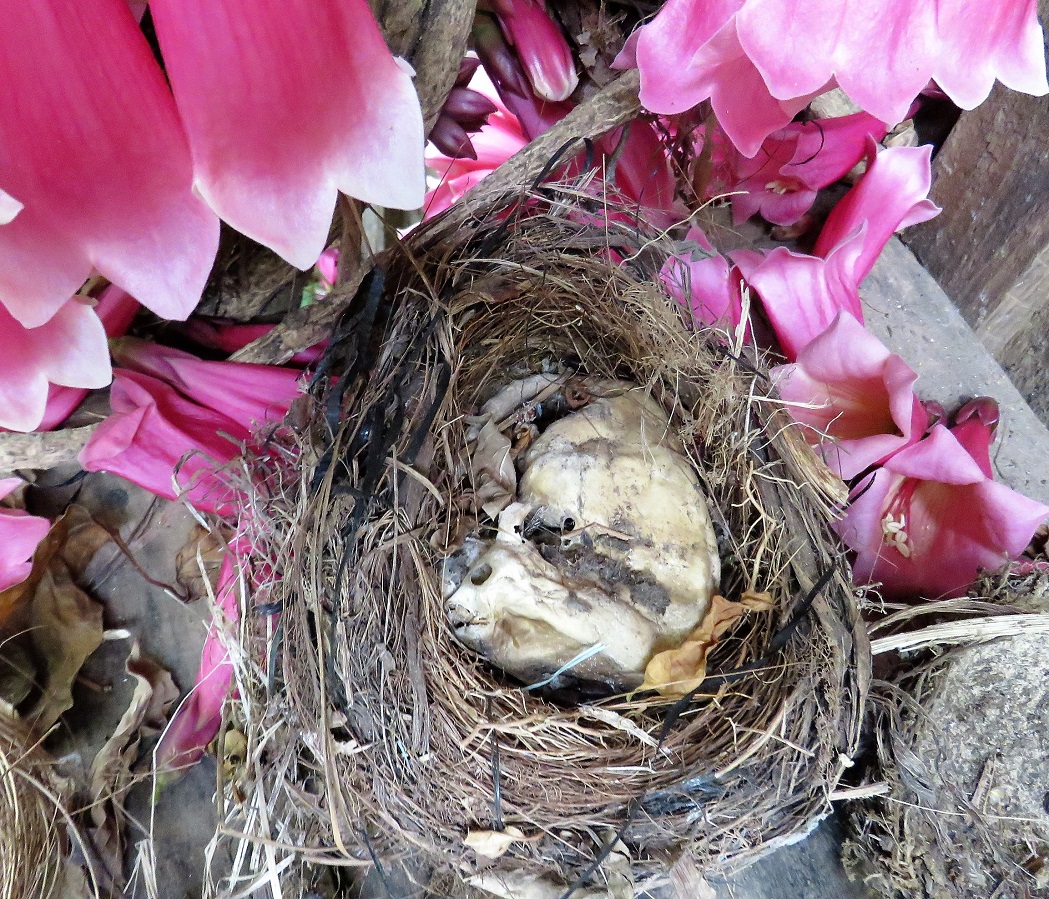
Mummified rat in a nest

If you can get over the somewhat grotesque aspect, the mummified rat found in a blackbird nest is a little haunting. I found it like that.

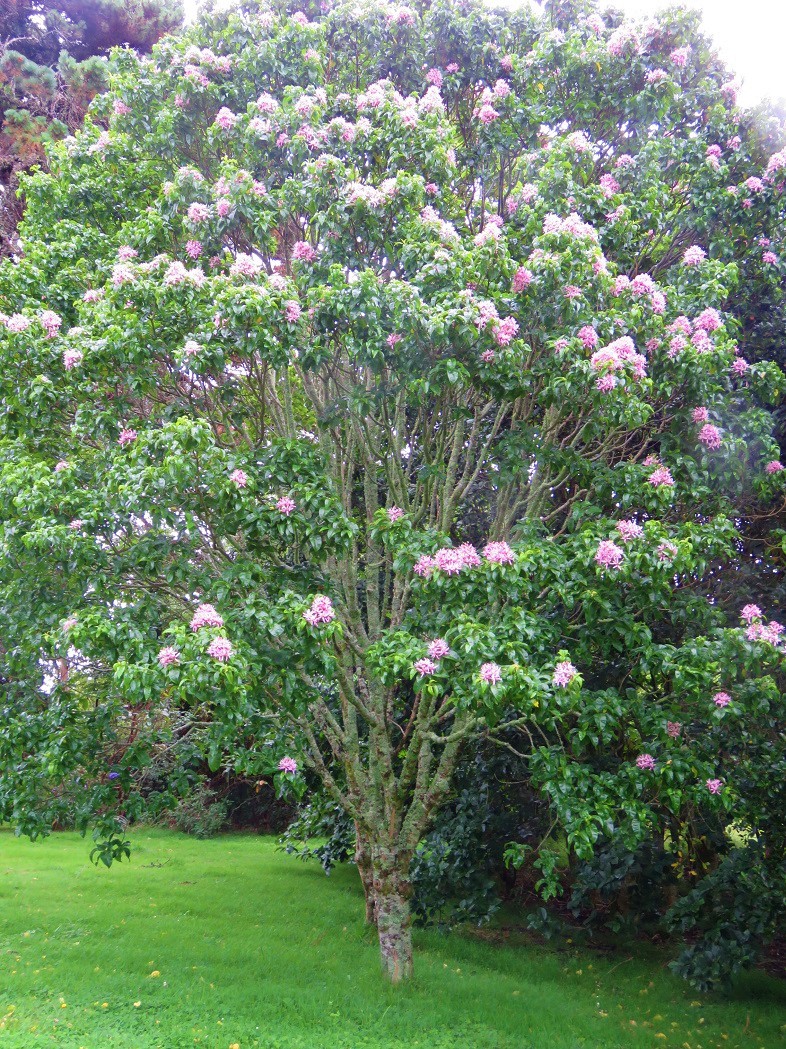
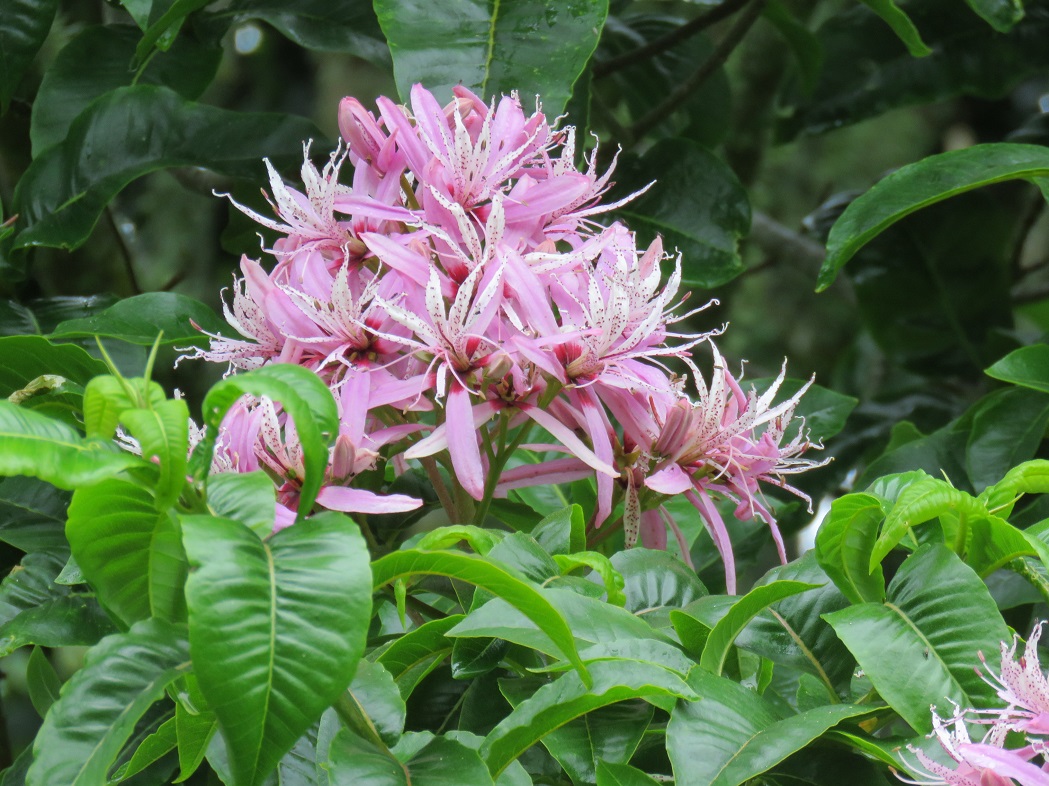
Calodendron capense 

Not an aesculus, a calodendron

Across the southern hemisphere, it is the south east of Africa that gave us the cape chestnut or Calodendron capense. This is another plant that probably prefers a drier climate and few more degrees of heat than we can give it but some years, it pleases us with a really good season in bloom. Even before I found its common name of cape chestnut, I noticed the similarity of the blooms to the aesculus, or horse chestnut. The edible sweet chestnut, by they way, is a different plant altogether, being Castanea sativa. It is not even a distant relative though there is some botanical heritage shared between aesculus and calodendron so the latter should really be the Cape horse chestnut. I haven’t found any advice that it is any more edible to humans than the common horse chestnut.

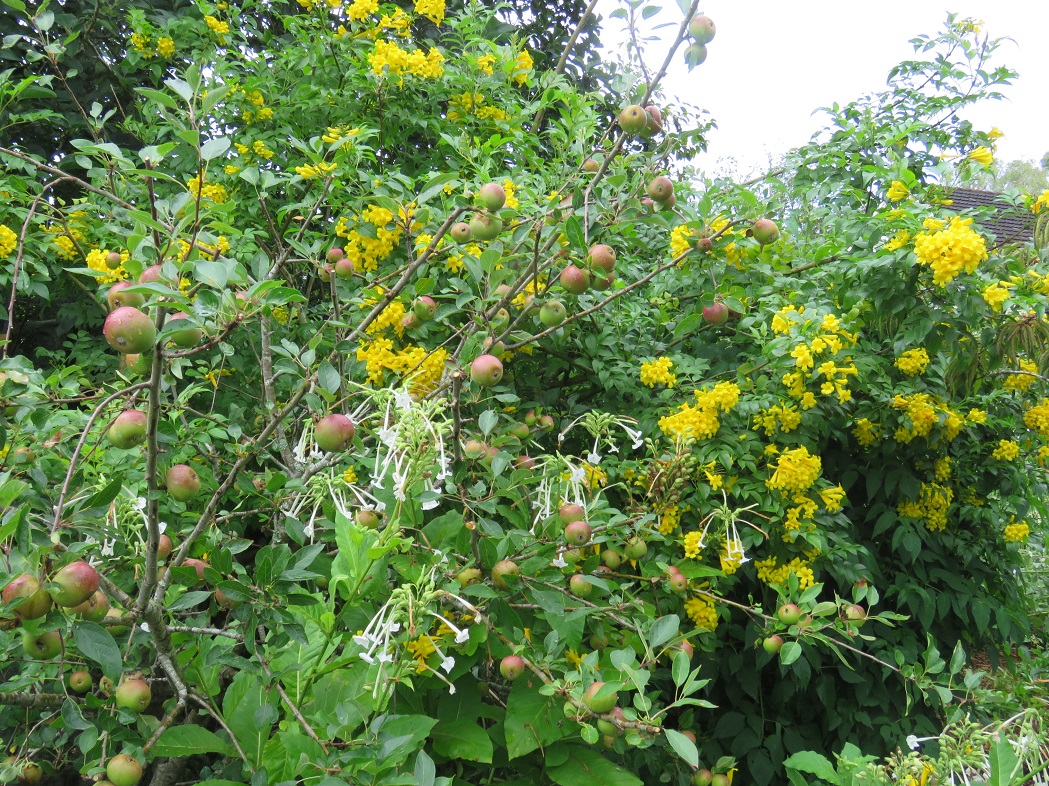
Tecoma stans – with apple tree and nicotiana in the Iolanthe garden 

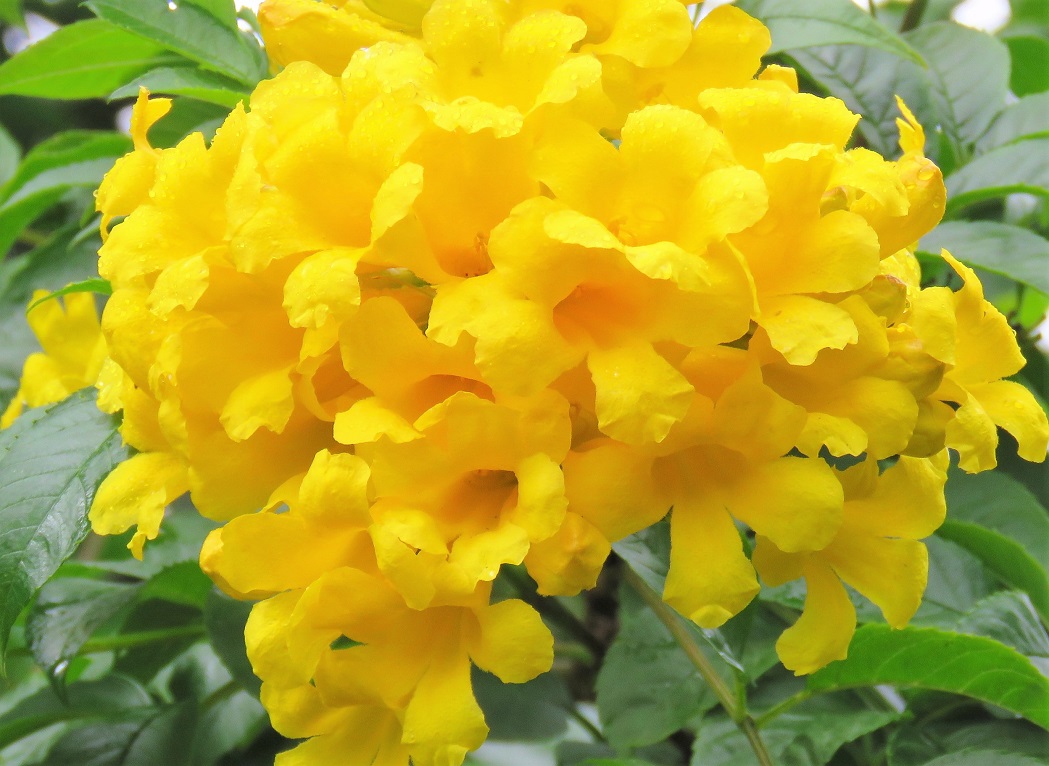
Tecoma stans – it is very yellow.

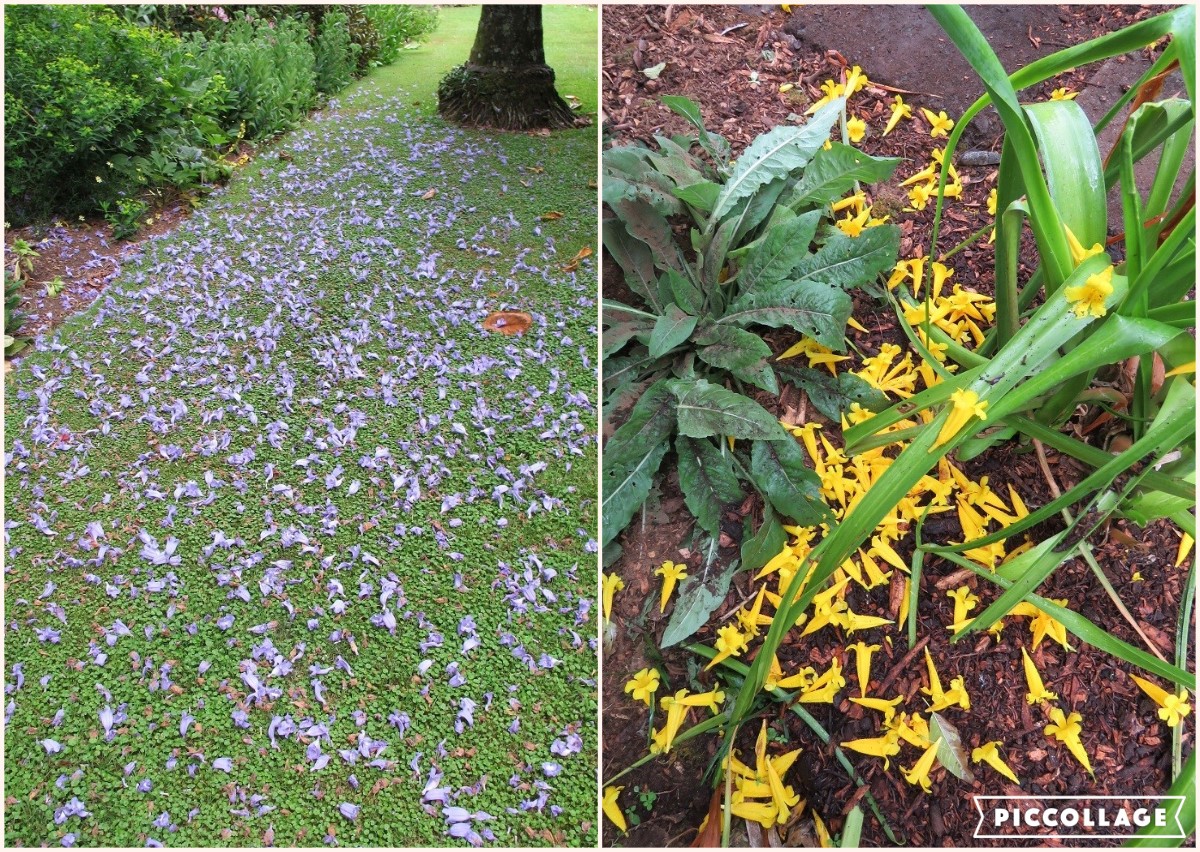
Tecoma stans is also from southern and central Africa and it is coming into its own now it is well established and has some size. It is growing in the Iolanthe garden where I have been working and because I have spent most of my time on my knees in that garden, eyes faced downwards, it was the bright yellow fallen blooms that first caught my eye. I had meant to photograph the falling blue of the jacaranda flower carpet but I left it a bit late so this is the best I can offer.

Jacaranda to the left, tecoma to the right – fallen flowers

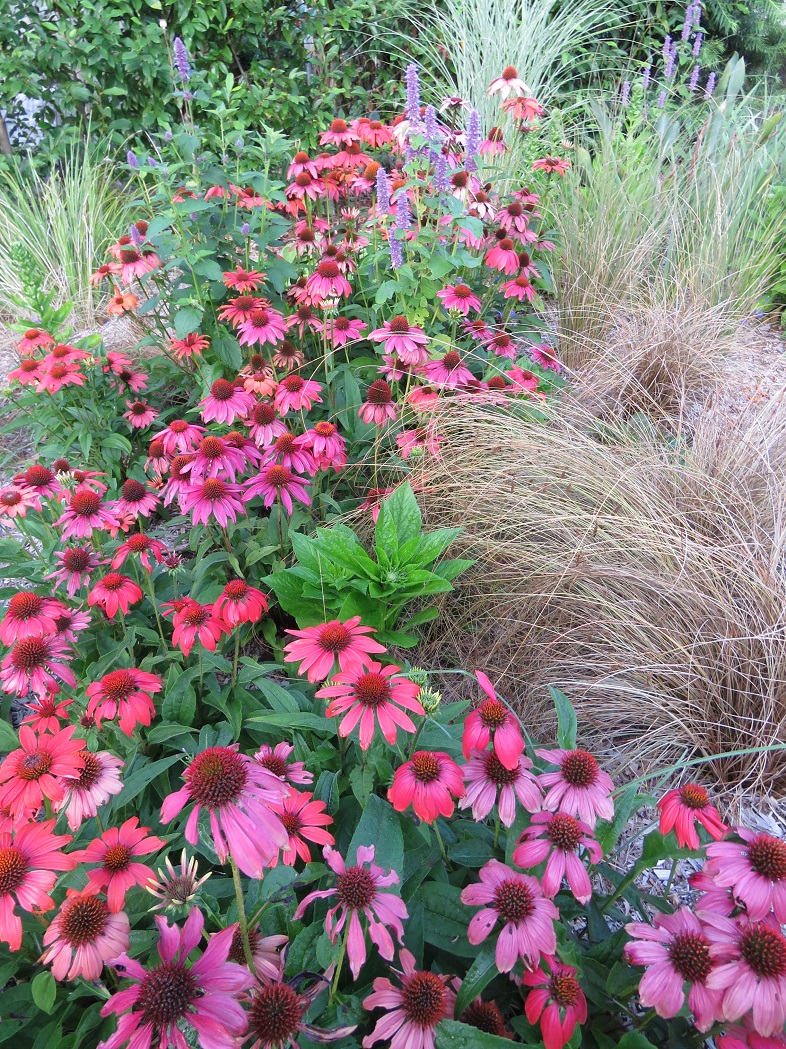
The echinaceas have been slow to come into their own this summer. Some were set back when I did a certain amount of digging and dividing of large clumps over autumn and winter but the main problem has been the rabbits. They never touched them in the previous two years but developed a taste for them in spring when they started coming into growth and it took me a while to notice.

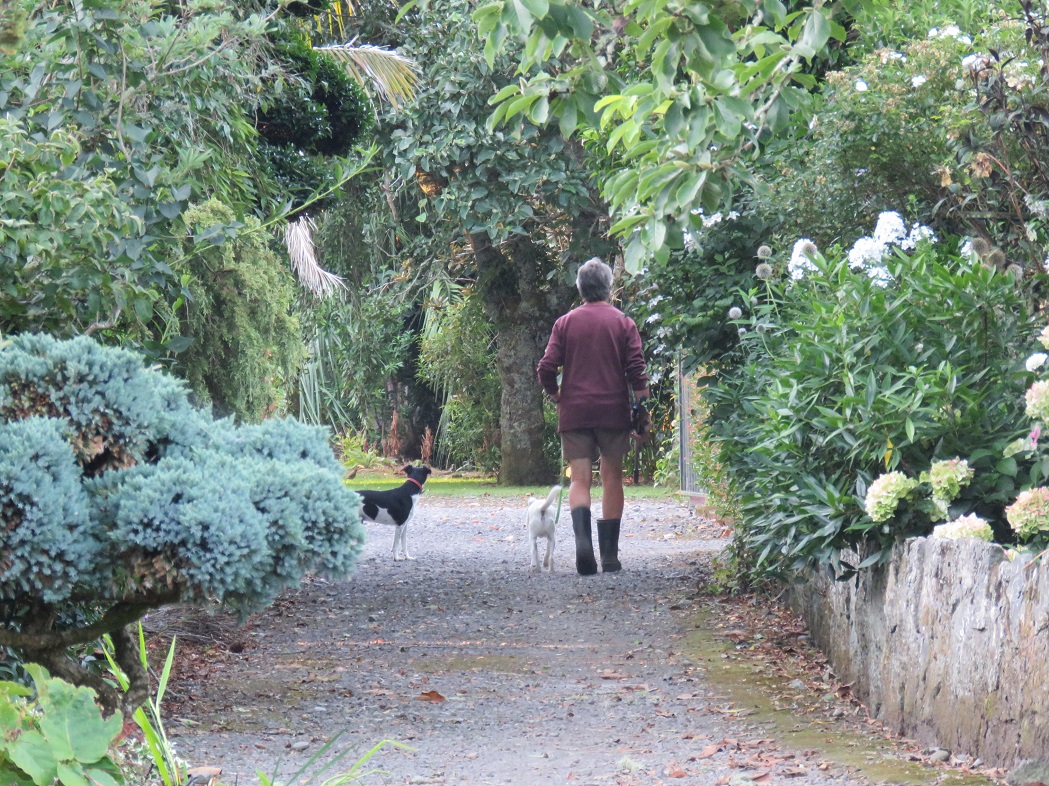
Mark has been waging war on the rabbits this summer. Every evening he heads out with our useless fox terriers – one too old and deaf to be any good on rabbits and who just likes to feel a part of things these days and the other who has never really caught on to how to hunt. Dudley hangs around waiting for Mark to shoot them. “Come on Dad, hurry up.” He appears to think he is a retriever, not a terrier. Mark is simply gobsmacked at how many he has shot in recent weeks – around 23 in just one area of the garden that is probably only an acre or two in total. They are spread over the rest of the property – in fact, right across Tikorangi we are told by others – but they aren’t wreaking havoc there on the same scale as in the house gardens.

Mark is on a mission, the fairly useless dogs don’t want to miss out on potential excitement but fail to honour their terrier heritage

Next spring, I will be out with the blood and bone in early spring at the first hint of growth on the echinaceas. We beat the bunnies on the lilies though I admitted defeat and moved the campanula that they took down despite my best efforts. I will win on the echinaceas.

Garden diary, January 31, 2017. Radio, geckos, summer flowers and a tour in the rain.

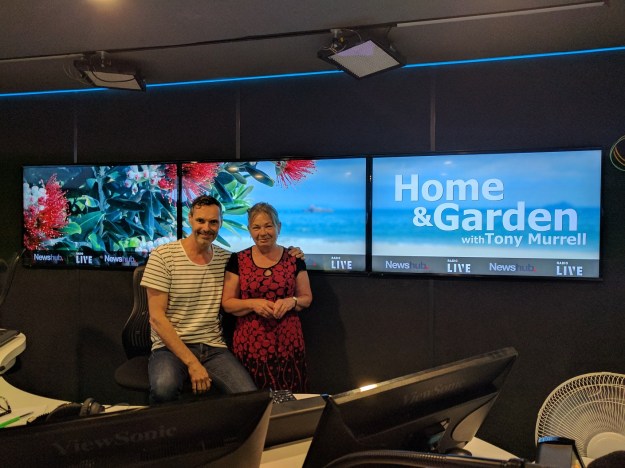
img_20170129_064707A quick trip to Auckland at the weekend saw me rushing hither and yon but also enabled a face to face conversation with Tony Murrell in the studio at Radio Live. Usually we do these by phone. It is at the unseemly hour of 6.30am each Sunday morning so I had to rise even earlier to get to the studio. These conversations are remarkably complex for the early hour but both Tony and I are enjoying them enormously. Last Sunday it was partly about taking inspiration from other people’s gardens and not falling into the trap of thinking that recreating these ideas at home means using their blueprint, often from another climate, another country and another time. The link is here if you want to listen – it is about 25 minutes of solid gardening discussion.
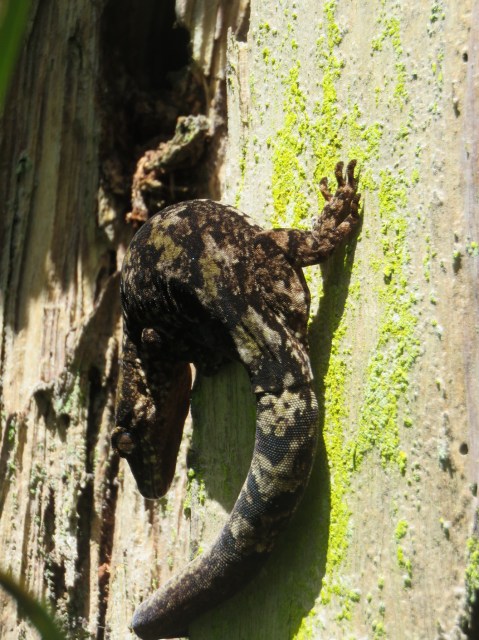
img_3767We did not see Glenys, our resident gecko, last year so were thrilled to spot her again last week. But this one is not Glenys. It is considerably smaller so our best guess is that she is the daughter of Glenys. Whether the mother is still around and we just haven’t spotted her remains unknown but having a smaller specimen this year suggests we now have a breeding population. Why do I use the female gender? Because those more knowledgeable about herpetology tell us that this is the behaviour of pregnant geckos, incubating their young. These reptiles can disappear in a flash if they are spooked so it takes quiet movements to sneak up to see. The safe haven appears to be in the fissures of the tree, beneath the bark.

img_3770The UK gardening tour I mentioned last week has done been and gorn. It rained, steadily, when they arrived which was disappointing but we moved them all indoors for tea and cakes and the rain stopped a few minutes into the walk around the garden. While hosting these tours takes a bit of work and a surprisingly large amount of mental energy, the visitors often repay the efforts in more than money.  Being able to share the garden with appreciative visitors who have a fairly high degree of knowledge themselves – albeit with an entirely different range of plants – is what it is all about really. We don’t garden on this scale just for ourselves and it can be extremely affirming to share it with a group like this one. I have to report that the lilies in the garden did not flower as hoped but we have enough lilies planted “out the back” as we say for me to pick an impressive display for vases indoors and they did not go unnoticed.
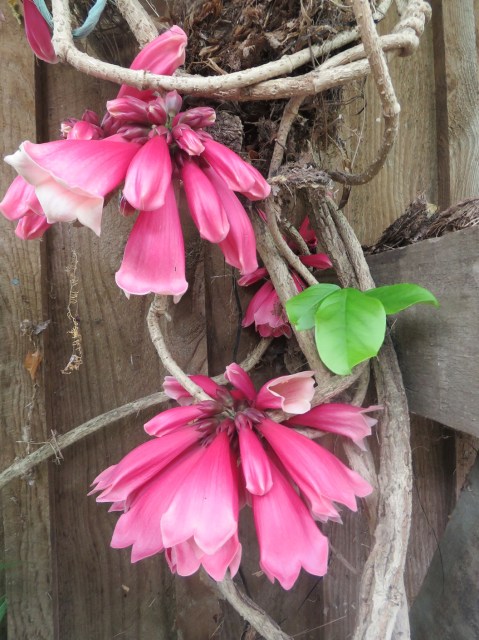
img_3900img_3902Also putting on the very best display we have ever seen here is Tecomanthe venusta.  Other plants here may be more floriferous. Indeed there are some years that T. venusta doesn’t actually flower at all, but it is lovely when it does.

img_3784Finally, a few snapshots of summer flowers I liked this weekend. I called in to Joy Plants to check out their perennials and the kniphofia in the gardens were looking marvellous.

img_3780


There are times we get distinctly sniffy about both agapanthus and red hot pokers in this country but look at this scene – it was simple but lovely.

img_3811

Auckland Botanic Gardens have some excellent, large scale perennial plantings which are well worth a visit at this time of the year. This yellow achillea with a compact, very dark foliaged dahlia which is opening yellow flowers was a striking combination.

Fingers crossed here for some more sun this week and it really would be awfully nice if the temperature rose a few degrees more so we were in the mid twenties, rather than barely breaking into the early twenties.

Sole survivor – Tecomanthe speciosa

Tecomanthe speciosa - a sole surviving specimen was found in the wild

Tecomanthe speciosa – a sole surviving specimen was found in the wild

Plants cannot come more endangered than our native Tecomanthe speciosa. Only one has ever been found in the wild and that was back in 1945-6 on Manawa Tawhi, the biggest island of the Three Kings group off the northern coast of New Zealand. Blame the goats which were introduced to our offshore islands, as I understand it, to provide food for shipwrecked sailors back in the days when this was a more common event.

I have a fondness for carpets of fallen blooms

I have a fondness for carpets of fallen blooms

Fortunately T. speciosa is not difficult to propagate and it is its use as a garden plant in frost-free areas of the country that has ensured its survival. I usually miss the autumn flowering on our vines because most of it occurs about 10 metres up in the sky where it has clambered its way up to the light on one of our road boundaries. I only noticed it this season because I happened across the flower carpet below and looked more closely. I must admit that I did not realise it put out clusters of blooms on bare wood in its lower reaches too.

Tecomanthe  venusta

Tecomanthe venusta

There aren’t many tecomanthe species, all of which are members of the bignoniaceae family and evergreen. There seems some agreement on the number five, maybe six. There is our T. speciosa, one maybe two from Queensland in Australia (T. hillii is the most recognised) and three from New Guinea. We have two New Guinea forms here. The first is what we call T. venusta (syn dendrophylla).

It is distinctly tropical but shows the same characteristics as T. speciosa when it comes to putting up strong tendrils and flowering in clusters from bare wood.

Tecomanthe montana

Tecomanthe montana

We had T. hillii which was sold commercially in NZ some years ago but it didn’t look like too much of a gem here so we didn’t take care of it and no longer have it. The real gem for us is not even on the usual lists of species but we have it under the name T. montana from New Guinea. It flowers in mid spring and is much finer leafed, finer growing and more floriferous than its larger two cousins we also grow.

Our native speciosa appears to be the giant in the family. The vines on our well established plant are as thick as human limbs. It also has much larger, glossy leaves. The best plants I have seen have been trained and kept pruned along the verandah fronts of houses. You need a very strong structure to hold them and to be consistent on pruning but it does at least get them flowering well at a level where it is visible.

Vines are large as human limbs on our native T. speciosa

Vines are large as human limbs on our native T. speciosa

On the same botanical survey of the Three Kings that the sole tecomanthe plant was found, another sole remaining specimen of a tree species was found – Pennantia balyisiana.