
Garden Lore
“I fear I am a little impatient of the school of gardening that encourages the selection of plants merely as artistic furniture, chosen for colour only, like ribbons or embroidery silk. I feel sorry for plants that are obliged to make a struggle for life in uncongenial situations, because their owner wishes all things of those shades of pink, blue or orange to fit in next to the grey or crimson planting.”
Edward Augustus Bowles My Garden in Spring (1914)
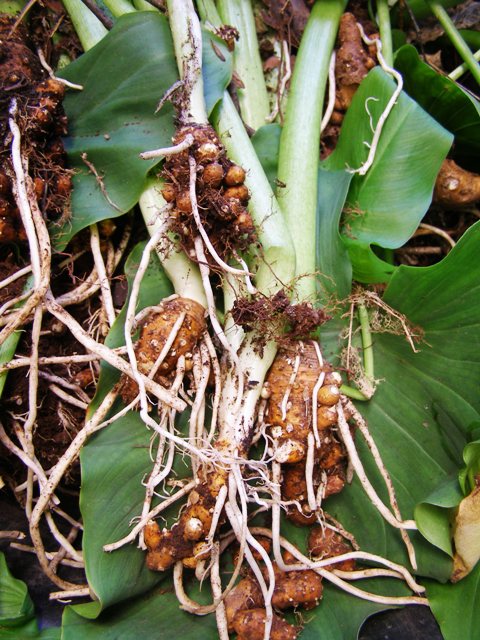
Garden Lore: arum lilies
Arum lilies are something of a scourge in this country. These are the remains of a selected white splashed-green flowered form called ‘Green Goddess’. I have just done what I hope is the final clean up in my eradication efforts. You can imagine the hollow laugh of disbelief from Mark when I informed him that ‘Green Goddess’ has an Award of Merit from Britain’s prestigious Royal Horticultural Society. It is clearly not a weed there, no sirree.
The common weedy arum here is from South Africa and is Zantedeschia aethiopica, although Z. italicum is also a problem. The issue is that these plants just do too well here. They are tolerant of a very wide range of conditions and, being toxic, stock won’t touch them so they can multiply even on grazed land. Not only do they spread by seed but you can see from the root system why they can be difficult to eradicate. The rhizome below ground has numerous offsets and every one has the potential to grow to a separate plant.
I eradicated by digging carefully and thoroughly gathering all the baby offsets. Don’t risk composting them. Either dry and then burn them or put them out in the rubbish for deep burial at landfill. Never, ever dump them on the roadside. I have just done what I hope is the final follow-up to root out the remaining stragglers after 3 years. If you want to go the chemical way, the Weedbusters website recommends metsulforon-methyl with glyphosate and penetrant (to make it stick). Or Escort is what Mark recommends – that is the metsulforon-methyl bit.
The smaller growing, coloured zantedeschias that are often known as calla lilies are generally derived from different species and do not show the same weedy inclination, being prized as cut flowers and making excellent garden plants. However, they are apparently all equally toxic so take care when handling them as their sap can burn.
First published in the Waikato Times and reprinted here with their permission.
 There is nothing unusual about the dietes flowering at the moment, but don’t let the fact that it is much favoured by amenity landscapers put you off. The reason it is seen so often in shopping centre garden plots is because it is tough and easy care.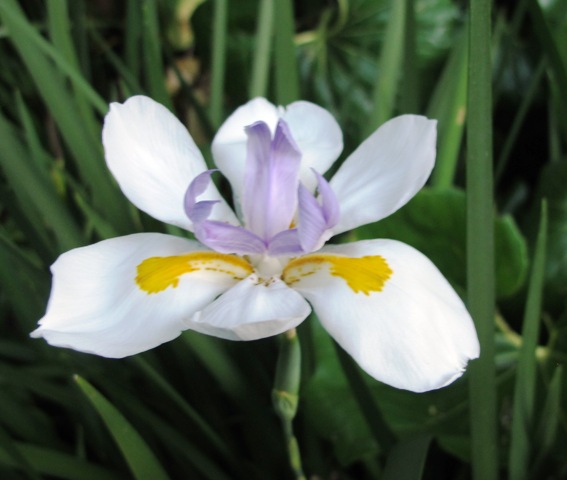
 Garden lore: raising dahlias from seed

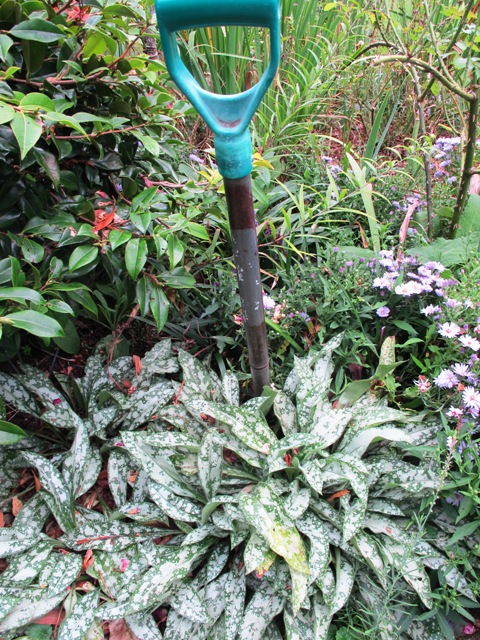 1) Clumping perennials can get overcrowded and start to deteriorate over time. Some will stop holding their flowers up well, some can die out from the middle while others just look tired and messy. Some need digging and dividing relatively frequently to stay looking their best. This clump of pulmonaria (unromantically known as lungwort) probably started as a single crown two years ago but grows rapidly.
 2) Dig out the clump, shaking off the soil. If you are not sure what you are doing, hosing off the dirt can make it easier to see the structure of the root system which varies between different plants.
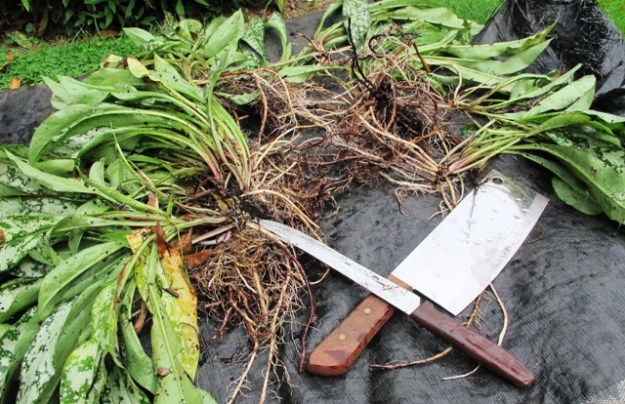 3) Part the leaves to find the separate sections growing from the centre or crown of the plant. Some plants just pull apart. An old carving knife is helpful and a meat cleaver is good for larger clumps with tough crowns. You can use a spade but it is hard to get accurate cuts. The pulmonaria yielded at least 15 divisions, all of which would grow as separate plants if I wanted that many.
 4) Replant the strongest divisions into soil which is well dug and friable. If you are only lifting and dividing every 10 years or longer, this can be a major task as soils compact over time. If you are doing it more often, it is easy as the soil stays looser. Spread the roots evenly and cover to the same level it was earlier. We like to add compost mulch and then water thoroughly but gently. Removing some leaves reduces the stress on the plant.
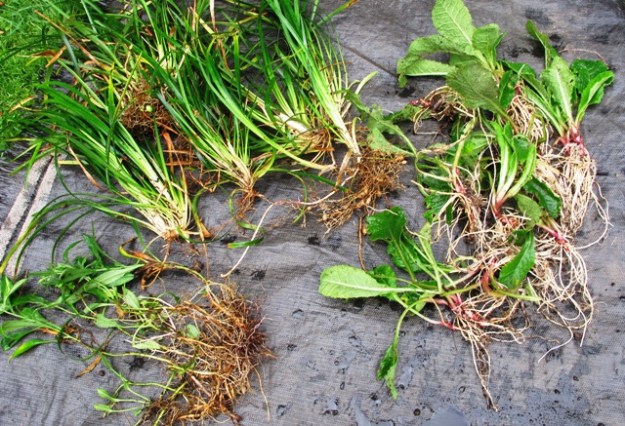 5) These three perennials also benefit from lifting and dividing every few years. From left to right: an aster which just pulls apart into separate sections, mondo grass (ophiopogon) which also pulls apart but sometimes needs the runners snipped, and polyanthus which usually needs to be cut through the crown to ensure that each piece has roots attached.
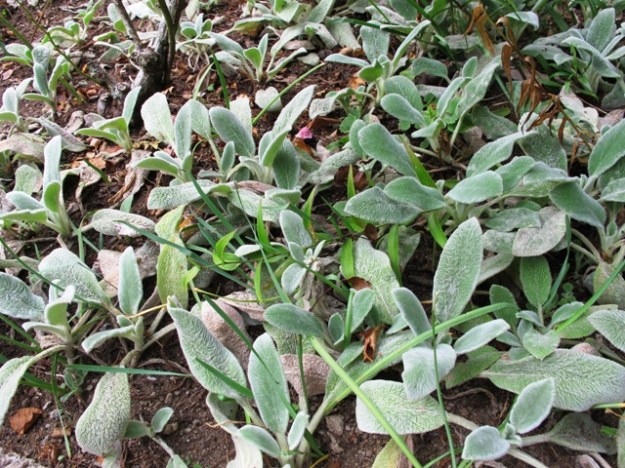 6) This patch of stachys (lambs’ ears) was dug and divided three weeks ago and has already recovered well because it is in full growth. Timing is not critical in our mild climate but done in midsummer, care needs to be taken to avoid the roots drying out and plants will need thorough watering for the first week.
