Tag Archives: Tikorangi: The Jury garden

“It is a good plant but we don’t need it everywhere”

Mark will only have planted a few Scadoxus katherinae at the start – maybe 3 or 4. I think we can say they have naturalised now but they are not invasive.

This is my new mantra. We have always had some level of self-seeding in the garden, some more desirable than others. We are fine with desirable plants like Scadoxus multiflorus ssp katherinae and the Himalyan lily, Cardiocrinum giganteum, deciding where they are happiest growing and gently settling in by spreading seed; we call that naturalising. Similarly, when the plants are natives, we don’t worry about them spreading around and we just decide whether we want them where they appear and weed them out if not. Nikau palms, tree ferns, kowhai and the like fit into that category.

Then there are the invaders, of whom our worst offender is Prunus campanulata. At the moment the parent plants have a stay of execution but we aim to remove every seedling we see. We cut down the parent bangalow palms (Archontophoenix cunninghamiana) because of their rampant seeding. It may be we reach a day when the prunus suffer the same fate.

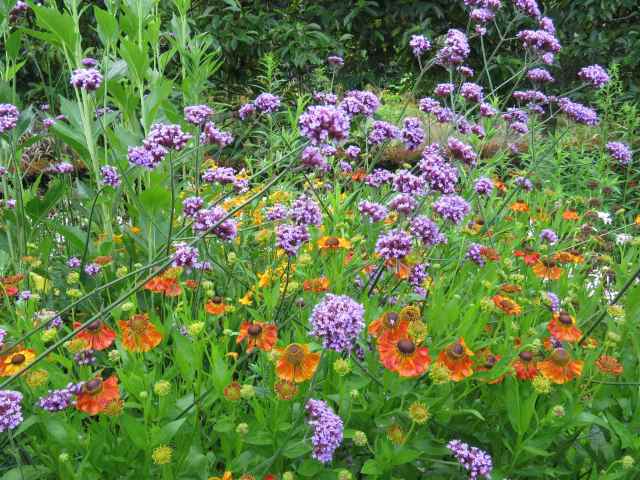
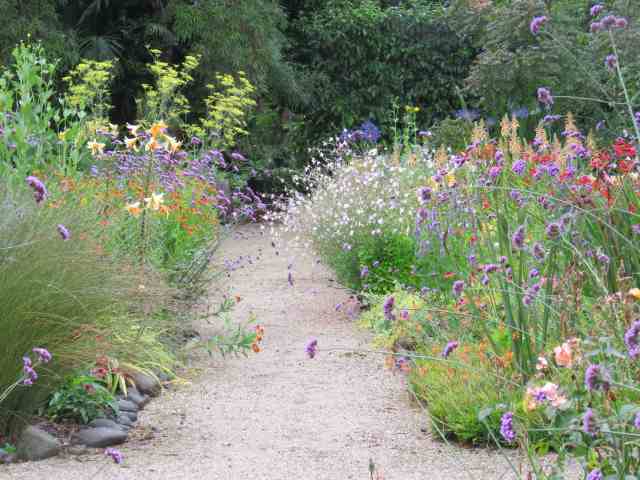
Verbena bonariensis in purple. I didn’t even plant it. It came in on something else and is welcome to stay but I don’t want it everywhere whereas it would like to be in every garden. Fortunately, it is easy to pull out.

Establishing the summer gardens has added a whole new range of plants that want to expand their territory beyond their allotted area – not for nothing are they called colonisers. The reason is that plants growing in well-cultivated soil in sunny conditions can multiply and spread exponentially, both from below ground and by airborne seed.  

When I planted the summer gardens in the years between 2017 and 2019, I made it a priority to use different plant material in each garden. While they are adjacent to each other, I wanted clear differentiation between the Wave Garden, lily border, Court Garden, back border and the twin borders while anything and everything that was left over was fine in the wilder Iolanthe Garden. I avoided repeating plants because as soon as your start using the same plant palette, they all end up losing definition and looking the same. I was pretty disciplined about it and there are only one or two repeats.

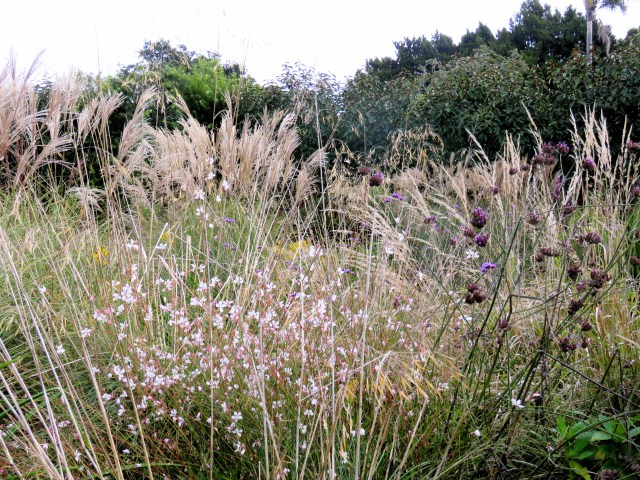
Gaura flowers for such a long time – this photo was actually April last year and the plants started flowering before Christmas. But it does seed down and not every seedling is precious.

Many of the plants have different ideas and that is escalating. Which is why I find myself saying often, “It is a good plant but we don’t need it everywhere.” I mentioned  mondo grass in last week’s post. It is very handy, both in black or green but it also sneaks all round the place both by seed and by spreading below ground. Too much. We will have much too much mondo if we don’t take charge now. Besides, it doesn’t look that great when it gets very thick and it is not easy to thin without a major effort on lifting, dividing and replanting. It needs restricting and reducing right now.

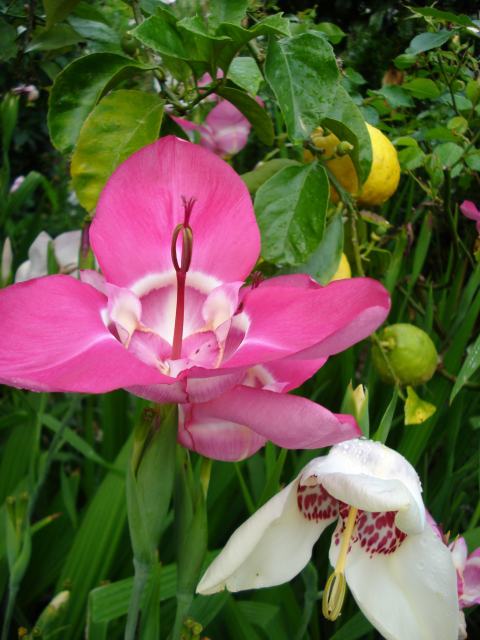
You may not believe me but you can have too many gloriosas and they can spread too enthusiastically and bury themselves so deep it is difficult to dig them out.

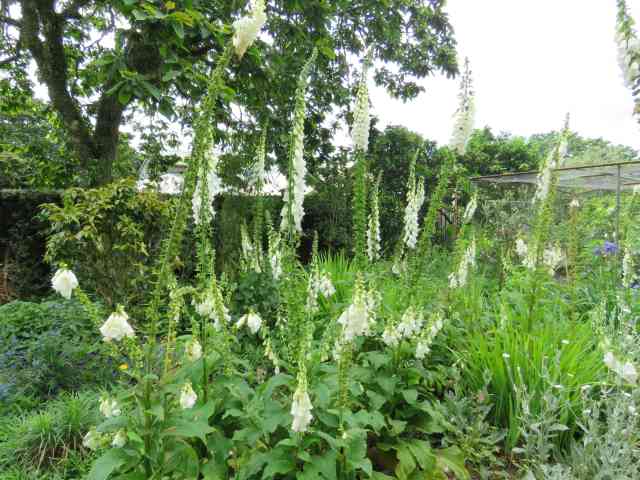
But there are so many more spreaders. Perennial lobelias, tigridias, verbascums be they chaixii or virgatum, Verbena bonariensis, crocosmia, scuttellaria, lychnis, gaura (so much gaura…), gladiolus and more. I have been gently restricting Gloriosa superba but I now think I have been too gentle and I need to get them out by the barrow-load and confine them to just two or three areas. And white foxgloves. I went to quite a lot of trouble to get a pure strain of white foxgloves established but now they want to be everywhere. Knowledgeable visitors from Europe last spring were astounded by the size of my white foxgloves, declaring that they have never seen them so large in Europe.  Therein lies the problem: foxgloves are thugs that smother their neighbours and they seed far and wide. They need to be kept to a limited number of places where they can star but not smother.

Where we are, there is little to no danger of these plants escaping into the wild but I can see how we have arrived at a situation in this country where many, possibly most, of our environmental weeds are escapees from gardens. Pretty escapees they may be, but it does not stop them being weeds when they spread uncontrollably in the wild.

We gardeners need to take responsibility for our plants.

Tigridias build up quickly and do like to move around. I have places where they are allowed to stay but woe betide those that think they can breach the boundary.

I do a lot more deadheading these days than I ever anticipated but that is basically short-circuiting what will be an even larger task if I don’t. A stitch in time and all that. We don’t generally compost seed heads. While we make hot compost, it is not always hot enough to kill off seeds and we certainly don’t want to be spreading viable seed right through the garden in the compost. Mostly, we dump them in piles in deep shade out of sight, which is possible in a large garden but not always practical in small, urban gardens.

The retired nurserywoman in me feels bad about wasting so much good plant material that has commercial value, but not to us. When we had the nursery, we mainly grew woody trees and shrubs which generally take a whole lot more skill, specialised facilities and time to get to saleable size. We used to question how some perennials could be sold at a similar price to a shrub or tree. Now I have a whole lot more experience gardening with sunny perennials and realise how easy it is to multiply most of them, I am even more amazed at the prices I see in garden centres.

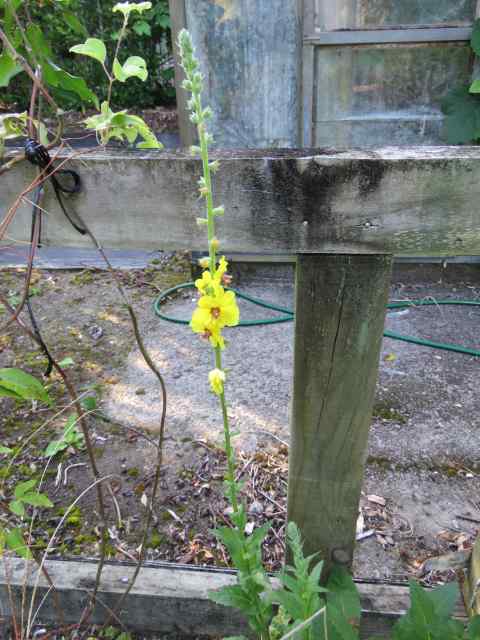
Verbascum virgatum making itself right at home by the old prop houses – and about 40 metres away from here as well. From just a single plant last year, I now have them spreading alarmingly

One of the interesting parts of gardening is deciding plant combinations and it is certainly easier when you have too much plant material rather than too little so that, at least, is a good problem to have. Verbena virgatum can go entirely though. It is way too enthusiastic and if I turn my back it will have infiltrated everywhere. It is pretty enough but not a good plant when it comes to behaviour. Keep to Verbascum creticum, I say. Similar large yellow flowers although in spring, not summer, and while it seeds, it has never been a problem for us.

Changing plans

It has been a somewhat difficult start to a new year here, both at a personal level and in the wider context of global events. This is why I have been silent since Christmas but, with an unprecedented upsurge in subscribers (waving hello to new subscribers), I felt I needed to break the silence.

Solace in the garden

When I find myself in times of trouble, it is not Mother Mary who comes to me as she apparently inspired John Lennon and Paul McCartney. Rather, it is the garden that wraps around my day. Always, as I reach the reflective time at the end of the day, when Mark’s and my ritual is to sit together and have a drink (sometimes alcoholic and sometimes just homeopathic gins – lime and soda in a glass with just the memory of actual gin), I think how lucky I am in life to have washed up living in such a special environment. 

We don’t often open the garden these days but I had booked two summer tours from overseas. One cancelled a couple of months ago (presumably advance sales were too slow) so that left one for this weekend. It has dominated my days since just before Christmas. Everything I did in the garden was driven by the deadline of having the place spruce and ready for this weekend. I will delay cutting those back until after, I would think, rather than making a gap. The Aurelian lilies will be at their peak, I thought while I hoped some of the auratums would also be open. When Lloyd and Zach returned to work last Monday after the Christmas break, it was action stations. The pressure was on.  We are an experienced and well-oiled machine on this but it is quite a lot of extra work and a different focus to our usual days.

Morning tea was required and I arranged extra help from a friend and planned to spend Friday baking. If you have ever been here to one of these situations you will recognise my menu because I keep to the tried and true – Annabel’s (Langbein) Orange Lightning Cake, Lemon Yoghurt Cake and Edmond’s hokey pokey biscuits with added oats or walnuts. My fail-safe recipes.

Not having heard from the NZ company that was managing logistics for the tour since early December, I started asking on Monday for final numbers and arrival and departure times. And on Tuesday. On Wednesday, I phoned them and they said they would get back to me. A few hours later, they did get back by email – to cancel. Apparently, they can no longer fit us in to their itinerary.

It was discombobulating. Zach felt the same as priorities suddenly changed and the pressure was removed. At first I was angry at the unacceptably short notice and cavalier attitude. Now I am resigned to the fact that it is just ignorance. It is a company that doesn’t know us and has no idea what our set-up is here where we only open on request for specialist tours. They probably thought it was the same as cancelling a café lunch or a visit to a public garden.

Mark’s Aurelian lily hybrids come in two colours – soft orange and clear yellow.

I am also relieved. I hadn’t been enjoying the lead-up and feeling the pressure to showcase our garden at its best and I had been thinking that I may decline all future bookings for summer tours. That decided it; I WILL be declining all summer tours in the future. We are not that desperate. We only accept these tour bookings because we think they might have some interesting people on them and the actual visit is enjoyable as we take them around the garden and then host them over morning or afternoon tea. Despite the pressures of preparation, the visits are leisured, pleasant and affirming for us – a good experience for all parties.

So here we are. The pressure is off. The sun is shining. The pool is warming up nicely and I can spend time floating on my lilo and dipping in the water. The Aurelian lilies are indeed at their peak and the first auratum lilies are opening. The garden is looking lovely as we head into peak summer. And I am now doing the garden tasks that I want, rather than those I felt I had to.

The first of the auratum lilies are opening. We do an impressive display of auratums here.

It may be that the tour company, who shall remain unnamed, will learn in time that the holy grail of garden tours is personalised experiences and getting into gardens that are not normally open to casual garden visitors. Australian designer, writer and tour leader, Michael McCoy knows this. “This morning we’re heading to Dan Pearson’s own garden Hillside for a wander with Dan himself, who will talk us through how his own garden fuels and inspires his design work. What a treat!”

UK-based garden tour specialists, Brightwater Holidays, know this. “After breakfast today we visit the private garden of Clos du Peyronnet, Our access to this private garden is a Brightwater exclusive, and a real highlight of our tour.” This is from their tour of gardens of the French Riviera that we were hoping to join in May before circumstances conspired against that plan.

The magnificent terrace at Mount St John In Yorkshire created by leading designer, Tom Stuart-Smith

Some of our own special memories are of gardens we gained access to that do not open to the public – a private commission of Dan Pearson’s in the Cotswolds , Mount St John in Yorkshire (owned by a grocery magnate, I believe) where leading designer Tom Stuart-Smith has created a sublime terrace with a borrowed vista into seeming eternity, being hosted to morning coffee by the owner of Bury Court near Farnham when the gate was very firmly closed to general garden visitors, being accorded the privilege of wandering alone at our own, slow pace through Ninfa in Italy, a champagne and canape reception for our group only, hosted by the Principe and Principessa Borromeo on Isola Bella – these experiences are on a different level to following the tried and true garden destinations that anybody and everybody can get into.

Personally hosted over coffee by John Coke at Bury Court, a memorable and privileged experience

While twenty-five Canadians have missed their only chance of ever getting to see our garden, I feel I have taken it back. You will find me out digging mondo grass. I am thinking my way into an article on ‘when good plants go feral’.

Abbie

A white Christmas

Here in Aotearoa New Zealand, we don’t ever do traditional white Christmases. This is on account of us being in summer and currently two days past the summer solstice. It is a very different experience here in the south of the southern hemisphere. I was surprised when I looked around over the last week by quite how many white flowers we have in bloom at this time.

I felt my all white flower lay was not really festive enough for the day before Christmas so I added just a touch of red. Meri Kirihimete, as many (but not all) of us now say in Aotearoa. May your festive season be full of love and laughs, or at least tranquillity.

I have never wanted a white garden myself, but I have looked at them and thought about them in the past. It was UK designer and gardener, Dan Pearson who made me think about the different shades of white which is a very important consideration if any readers are contemplating planting one. Not all whites are the same, not at all. And I wrote about more contemporary approaches to white gardens after our 2017 visit to Italy, France and the UK. Garden styles have evolved since Vita Sackville-West put in her famous white garden at Sissinghurst.

Meantime, please join me on a foray around parts of our summer gardens this week.

There is something very charming in the simplicity of a carpet of white daisies seemingly suspended in the air in the twin borders. Alas these ones only bloom the once and then need to be cut back to the ground level rosettes but they are showy enough for me to forgive them.

The common ox-eye daisies, however, are lighting up the Court Garden. Soon we will cut them back hard and they will be in full bloom again in six weeks.

Rhododendron sino nuttallii was still in full bloom at the start of last week. My favourite rhododendron of all, it flowers late in the season and the only drawback is that warm weather can cut its flowering season short.

Albuca nelsonii is inclined to be large, sometimes unwieldly and in need of some targeted staking, but it is very showy and handsome and the flowers are perfect for adding to Christmas bouquets.

Lychnis coronaria would be a perfect choice for a white and grey garden. We just let it seed down gently in the Wave Garden. I can’t believe I have lost the shocking pink form – I thought it was indestructible.

Alstromerias in white with a sunny yellow throat – but they are probably not white enough for white garden enthusiasts?

Spring was surprisingly late this year, considering our winter was mild, and the lateness of the season has also affected the lilies. Usually, I can pick Lilium regale for Christmas but they have yet to open. The only lily currently in bloom is this compact one in the rockery and I don’t even know what it is. Beautiful flowers, but alas it has no scent.

Finally, I know next to nothing about cacti and succulents and I have no plans to remedy that gap in my knowledge. As a group of plants, they do not inspire me enough to put the effort in but this one in the Rimu Walk delighted me this week. I don’t think I have ever seen it flower before but maybe I just haven’t looked at the right time. Flowering in subtropical woodland, it lit up the area.

Meri Kirihimete one and all.

Kindest regards,

Abbie

Magical moments both here and abroad

Three weeks ago, I quoted Australian garden expert, Michael McCoy, saying “But what I’m forever chasing, and experience with joyous regularity, are those magical moments when conscious enjoyment turns to inexplicable enchantment.”

I lack any good photos of our visit to Hidcote but I will say this much photographed walk to what is known as ‘Heaven’s Gate’ made a whole lot more sense when we found that gate opened up to a huge vista beyond, which neither of us thought to photograph at the time.

Since then, I have been thinking about those times in my gardening life. The first time I remember it clearly is when we visited Hidcote in the UK, back in 2009. It was Mark’s and my first independent foray visiting gardens in that country. Our original aim had been to see those gardens that were more or less parallel to ours – large private gardens managed by their owners without big budgets and just the occasional bit of outside assistance. We wanted to set benchmarks for our own garden. After the first 10 days or so, we were distinctly underwhelmed by what we had seen; we switched tack and went to see some of the better-known ones. Hidcote just blew us away. It was, quite simply everything we aspired to at the time. I italicise those words because our aspirations have changed direction in the time since but on the day, we spent hours there and came out of the garden feeling like stunned mullets. I wish I had better photos but I have never forgotten the feelings of being overwhelmed with delight.

The Missouri Meadow at its very best

On that same visit, we also saw the Missouri Meadow at RHS Wisley and it too, blew us away with its magic. Sadly, we watched it decline badly on subsequent visits but that simple beauty on our first sight is a memory that has never faded. It was an entirely new take on meadow or prairie gardening that was beautiful in concept and initial execution, if not in its subsequent management.

The Quarry Garden at The Garden House in Devon
Immortalised on the top right on my wall of memories in the room we call the laundry in this country, often referred to as the utility room overseas.

We were also entranced by what is called the quarry garden at The Garden House in Devon. The work of Keith Wiley at the time, I wrote about it being like a magic carpet garden and to this day, I have a photograph of it on my laundry wall of favourite travel photos.

Magic at Wildside.

We were so impressed by the quarry garden that we searched out Keith Wiley’s own garden on our next visit and that is a joyous triumph of vision, energy and plantsmanship. It was so inspiring it drew us back a second time on our next trip and it did not disappoint us on the second viewing which was just as engrossing as the first. We planned a third visit but Covid got in the way and, given that we rarely go back to gardens we have seen before on our brief overseas trips which are packed with garden visits, that tells you how special we regard his garden to be.

La Plume

The soaring veronicastrums and thalictrum behind a unique hedge of waves at Le Jardin Plume in Normandy were pretty darned memorable, even as my own efforts to grow veronicastrum here continue to flounder and my thalictrum do not soar.

Wildflowers at Villa Adriana
and at the Palatine in Rome. Likely more of naturalistic planting than actual self-sown wildflowers. I didn’t look closely enough at the time.

We have seen a fair number of Italian gardens on three separate trips but the moments of magic have been from incidental delights of wildflowers growing beyond the over-groomed austerity of many major gardens in that county.

Outdoor dining at Winterhome

Back in Aotearoa New Zealand, those moments of transcendent delight have been a little harder to isolate in my memory. Winterhome is a garden near Kaikoura that is usually represented by a view of the long pool that left me unmoved (I really don’t like the square pots along its length) but there were plenty of other parts that I loved, none more so than the casual outdoor dining area immediately in front of the house looking out to the ocean beyond and below.

On that same 2008 trip to Marlborough, my first encounter with a fully naturalistic garden right on the wild coastline was a revelation. I remember wondering if it could be described as a garden; now I have no hesitation at all in saying yes, yes, yes – albeit one without flowers or any pretensions to prettiness. I can’t remember the name of the man who created it and built the inground house but I think he was a well-known Blenheim architect.

Bluebell time at Te Popo Garden  back when it was still owned by our friends, Bruce and Lorri Ellis, was a special time, even if many of us have learned that bluebells can be determined thugs. A sea of blue is a visual delight. Even more magical, but in the days before I carried a camera, was seeing English bluebells in flower beneath deciduous woodland near Castle Douglas in Scotland.

My heart sang when I walked amongst our own meadow and streamside Higo irises back in 2015 and it continues to make me happy at this time every year.

And yes, our own garden gives me moments when pleasure transforms into joy, times when I feel my cup floweth over with happiness.

Helianthus and grasses blowing in the wind in our Court Garden in late summer.

Readers may notice that my photos do not feature heavily defined and structured gardens with pristine maintenance. It is clear that, even before we realised it ourselves, both Mark and I have been drawn to a more naturalistic, softer-edge style of garden. The more I reflected on my memories of special experiences and searched out photo confirmations of those memories from my thousands of images on file, the clearer it became where our hearts lie. This is not to say that I can not enjoy or appreciate more structured, manicured gardens. It is just that that, to hark back to Michael McCoy’s comment, my ‘conscious enjoymen’t does not turn to ‘inexplicable enchantment’. Put more simply, they do no make my heart sing.

Didn’t even Marie Kondo decide that having children was a greater joy than having a well-ordered home?

Finally, nothing to do with gardens or plants, an image of a special moment of magic in fading light in the hillside village of Sermoneta in Italy. I may have taken this photo in June 2017 but I have used it on Christmas cards in the time since. In a country where Christmas comes in summer, it feels apt and it remains a special moment when time, place and light all came together in a magical moment, quite possibly aided by a few wines with dinner at the time.

The lower angle of the winter sun striking the plumes of miscanthus flowers in our Wild North Garden
A field of flowers in its first summer at The Old Vicarage in Norfolk, UK
Wildflowers at Villa Adriana

Where did that plant come from?

Species or not species, that is the question

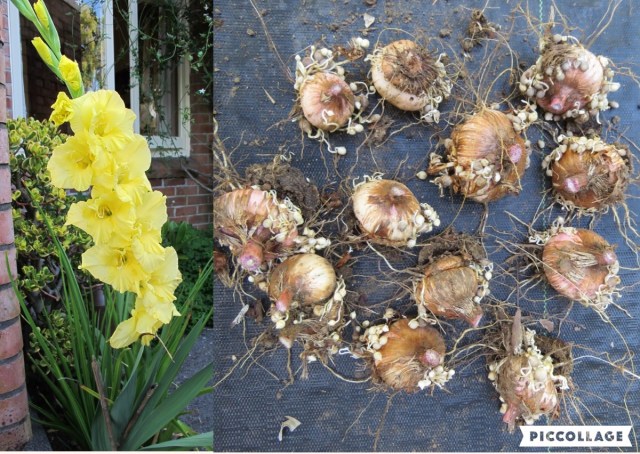
Occasionally, a plant turns up in the garden that is a mystery. So it is with this gladiolus. It is flowering for a second season in the Court Garden. I know I didn’t plant it – at least, not knowingly. I would never have put gladioli in that garden, or so I tell myself. There is nothing around it that it could have snuck in as corms in the root ball. Neither Mark nor I can remember seeing it flower elsewhere in the garden but it must have been in the rockery because it has also turned up in the Wild North Garden after I gave Zach a random collection of surplus bulbs to try naturalising.

Out of place here but I can find a spot where it will fit in better

It is a mystery and may remain that way. I will have to move it. When it flowered last year, it was beside a dark blue salvia that has since gone into serious decline and the combination was striking. I looked at it and wondered if it was too striking or just unexpected in that context. This year, it is more jarring than striking because the colour palette of the Court Garden is otherwise soft and muted. I will move it after flowering. It will fit more harmoniously into the borders.

Dame Edna type hybrids – a legacy from my very late mother in law. I like the pure yellow because of the clarity of colour and the rather muddy apricot looks fine in a cottage-style planting

I assumed it was a legacy from Mark’s mother (who died in the mid 1980s so we are going back a long way, now). Somebody gave her a collection of different gladioli hybrids that she planted in the rockery, not so much because she liked them as because they were a gift of colour. I am not a fan of those big, vulgar gladdies – too Dame Edna Everage-ish for my taste – and the foliage succumbs to rust in our climate so they don’t stay looking good and their scale is wrong for our rockery. Over the years, I discarded most of them although I did find another spot for a pure yellow one that does not displease me. A few others have gone into the mix and match of the Iolanthe Garden.

G. dalenii or not?

“I think it might be a species,” said Mark. That makes more sense because if it is a species, there is every chance he bought it at some point. If he had ever kept an accessions book, we would be able to check but he never has so we can’t. I reached for Terry Hatch’s book “Bulbs for New Zealand Gardeners” which is somewhat out of date now but still a useful record of many of the more obscure bulbs that were available in this country at the time when Mark was buying and acquiring plants to extend the collection. From Terry’s book, I found a few names to look at further on the internet and I am wondering if it is Gladiolus dalenii syn natalensis, or,  if not a species, then maybe a first generation hybrid. Maybe some reader has more expertise in this area than I have?

Gladiolus papilio or the butterfly gladiolus

What I did learn from the internet is that there are at least 255 different gladiolus species and those species can be highly variable. I was curious as to the main breeder species that have been used to get those Dame Edna hybrids and the two main ones, it turns out, are the rather odd little G. papilio (otherwise known as the butterfly gladiolus) which we have in abundance and the aforementioned G. dalenii syn natalensis. So that was interesting.

Gladiolus x papilio ‘Ruby’, thank you.

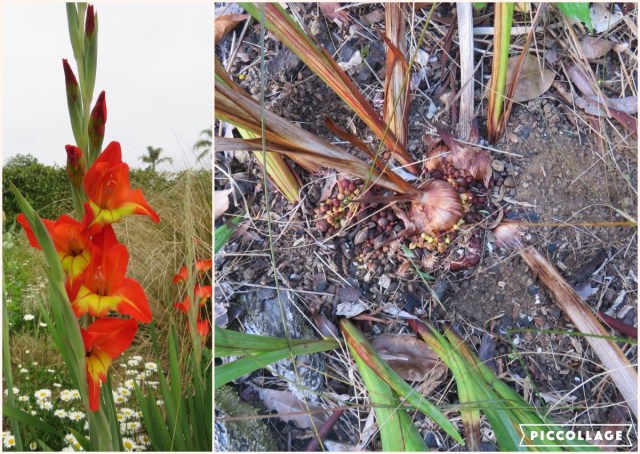
What I was delighted to be given as the red form of G. papilio named ‘Ruby’ or ‘Ruby Red’ turns out to be a hybrid, too. Technically, it should be named as G. X papilio ‘Ruby’. The X is shorthand for a hybrid although my somewhat superficial search didn’t find what it is crossed with. It is very good.

Gladiolous tristis

It is only the OTT hybrids I am so dismissive about. We grow a few of the species and I would happily add more. I wouldn’t be without the night-scented G. tristis that is a graceful and charming addition to the in spring and we seem to have a number of different forms of the variable Painted Lady gladiolus, otherwise known as G. carneus. If you want to see more of the charming species, the Pacific Bulb Society has a gallery of dainty delights. Many of them won’t be in Aotearoa New Zealand and few that are will be commercially available. Gladiolus species are somewhat of a niche interest.

Gladiolus carneus or the Painted Lady gladiolus