Tag Archives: Tikorangi: The Jury garden

Notably nerines

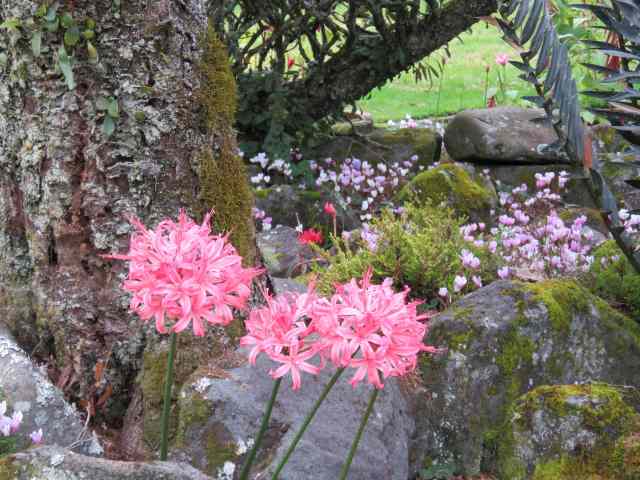
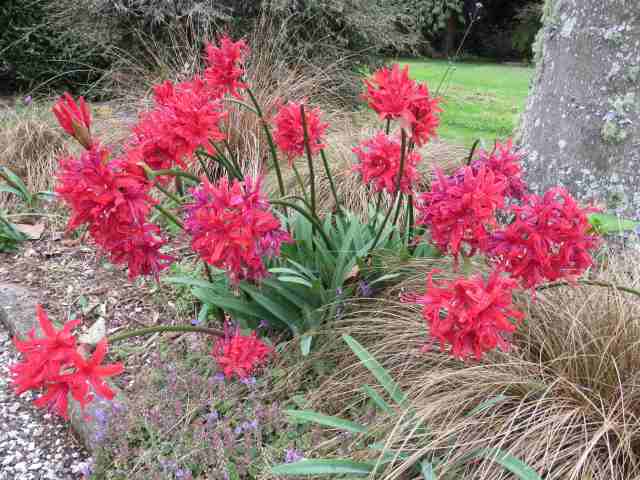
Nerine sarniensis hybrids in the rockery

It is nerine season and they certainly put on a great display. I don’t love them in spring when the foliage is slow to die off and looks scruffy as all the spring bulbs light up the rockery, but, come April, all is forgiven.

I need to put a tie on the two pink ones which have inveigled their way amongst the orange-red so I can move them. While we are fine with the adjacent blocks of clashing colour, they look better to my eye if they are adjacent, not mixed together.

Most of our nerines are sarniensis hybrids which give the range of colours and full heads of flowers. Often referred to as ‘Guensey lilies’, their connection to Guernsey is solely due to the cut flower trade because they are native to the Cape area of South Africa.
One of Mark’s unnamed hybrids that matures to purple, planted amongst our native carex grasses. It is a very good head of flowers with long stems but the stems really need to be a little more sturdy to hold the big head upright.

The sarniensis hybrids need really good drainage, open conditions and sun. Because they are in leaf in winter, they aren’t suitable for areas that get heavy frosts. These are bulbs that want to grow where their bulbs can bake in the sun so the rule of thumb is to plant them to a depth of no more than half the bulb with the other half and the long neck above the soil. They are also happiest in a crowd and can form a clump above the soil. I will divide the clumps when they get too congested and I discard the many small bulbs before replanting the larger ones close together.
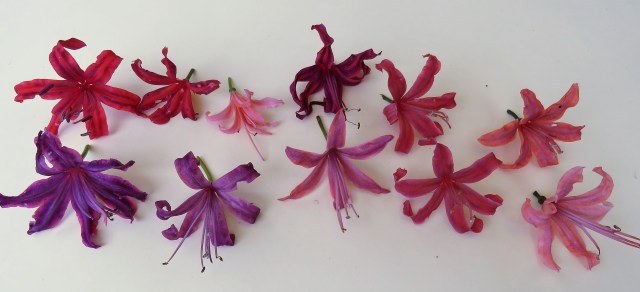
Smoky shades
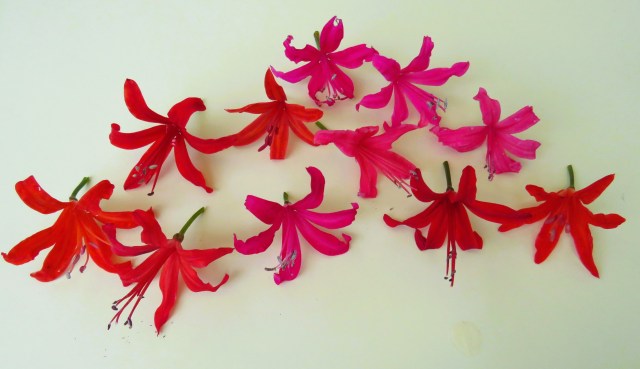
Undeniably vibrant shades. I find the highlighter pink particularly so.

We have a few of the early Exbury hybrids and the rest are all the result of Mark’s dad, Felix, hybridising to get a wider range of colours, along with some by Mark in days gone by. Felix particularly liked the smoky shades and they have a subtle charm of their own, as do the ones that mature to blue-purple shades. That said, the vibrant orange, clear red and highlighter pink ones are unashamedly bold and make a loud statement of their own.

The sarniensis hybrids are not that easy to find for sale. Local readers might like to hop in their car right now and head out to the Inglewood Sunday car boot sale because I saw somebody selling a really good selection of different colours in bloom there last Sunday. It is likely they will be there again today and maybe next week while we are at peak bloom. Beyond that, I don’t know where they are available but don’t expect them to be cheap like mass produced daffodils and tulips.
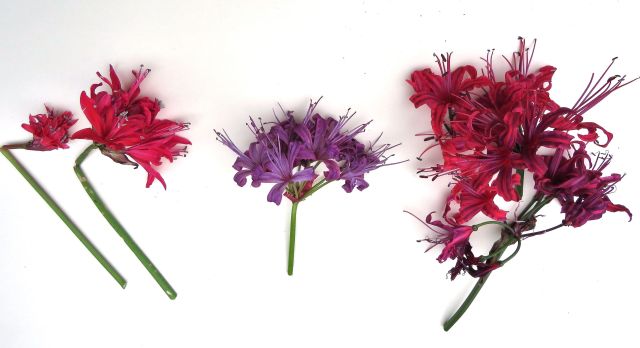
As I gathered single flowers to show the range of colours we have here, I picked up a few that had been snapped off. The one in the centre I think I can blame on Ralph dog who is no respecter of gardens. The ones on the right were clearly leaning over onto the grass where they fell victim to the lawnmower. The ones on the left are weevil damage on the rockery. If you zoom in on the second left, you can see the telltale damage on the stem which eventually weakened it to the point of breaking and flopping near the flower. Notwithstanding an exuberant dog, lawnmower and our localised patches of weevils, there isn’t much else that attacks these plants.

Nerine pudica on the left and bowdenii on the right

While we favour the sarniensis hybrids as garden plants, we also have a fair swag of N. bowdenii seen here on the right. There was only stem open so far two days ago when I took these photographs because it comes into bloom a little later than the sarniensis. It is easier to grow with stems that are strong enough to hold up the truss of flowers and is certainly more widely available than most others. On the downside, its truss is not as full of flowers and it basically comes in shades of hot pink although there is a white form, the internet tells me.

On the left in the photo above is N. pudica which I had forgotten about until this stray pot in the nursery opened its blooms. Several years ago, I planted a whole lot out, mostly in the rockery, and I had forgotten about them because I can’t recall them ever flowering there. I think I have found one patch of them which I shall watch to see if they do bloom. The same thing happened with the Lycoris aurea that I planted in the rockery a decade ago. They have never flowered again which is a pity because they were lovely – a most attractive shade of yellow and looking just like a yellow nerine except they are a lycoris, not a nerine. I live in hope that they are still there and pretending to be a mound of non-flowering nerines, so they can spring forth one year and delight me.

A range of the colours we have from pure white (named ‘Sacred Heart’ from memory) through soft pinks to alarmingly bright pink, coral, smoky shades, blue tones, reds through to bright orange

Nerines became popular as a cut flower because they have long stems and last well in a vase – hence the ‘Guernsey lily’ moniker. I rarely pick them because they last longer in the garden and, when a bulb only puts up one flower stem, it feels like flowercide to cut it to bring indoors to die. They are not as easy to produce as many other flowers for the cut flower trade so I would not expect them to be cheap to buy.
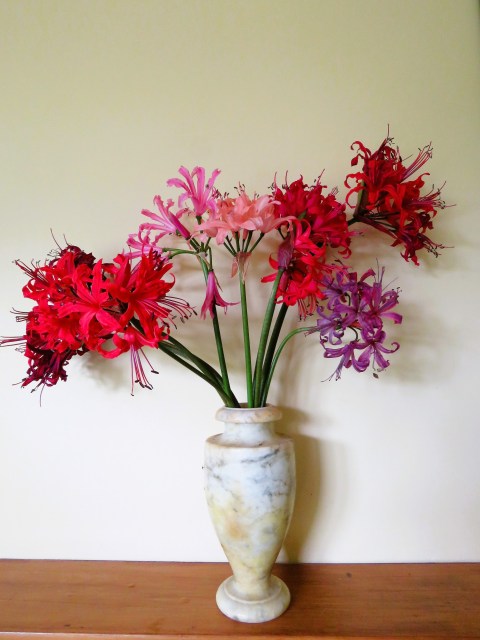
‘Say it with flowers’

Back in the prehistoric times before the internet, sending flowers to somebody in another place usually happened through Interflora – organised by telephone (land line, of course) or in person. The Interflora group ran extensive advertising and their slogan was ‘say it with flowers’. I have been thinking about that all week in various contexts – letting the flowers tell the story.

The free-form version

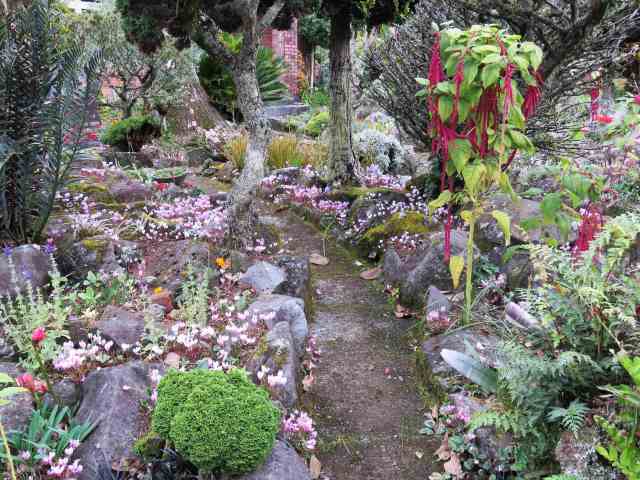
When daylight saving ends here in the southern latitudes, we have to accept that autumn has arrived and this always happens around Easter. The rockery has its second coming and oh my, but it is pretty at this time of year.

Cyclamen with amaranath and the first nerines

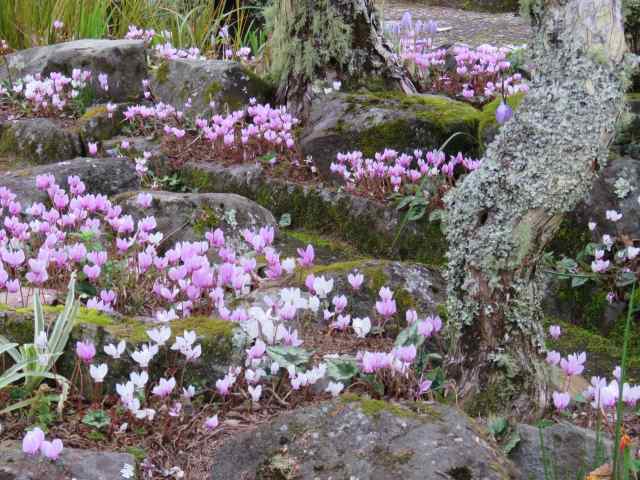
In early spring, the highly detailed rockery is dominated by the yellow of dwarf narcissi and every lachenalia we can grow here, across the range of colours. In autumn, it is mostly pink and white with masses of Cyclamen hederafolium and the Nerine sarniensis hybrids we can grow well.

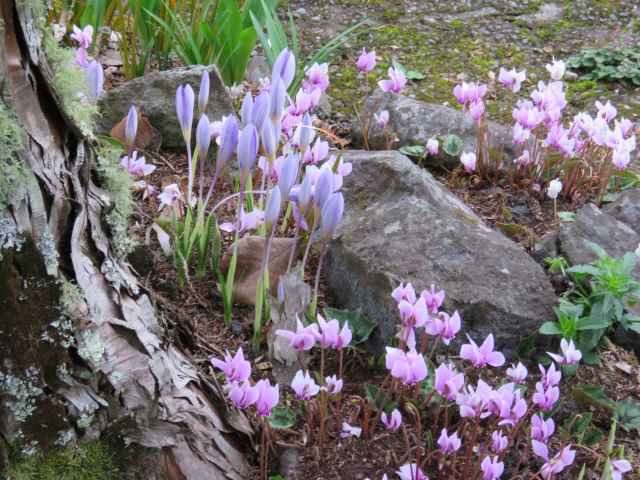
Can one ever have too many of the species cyclamen? I think not. They are seen here with the lilac blue of the autumn crocus from the C. serotinus group, maybe salzmanii. Our rockery is immediately in front of the house so we walk past it often every day and really it is very, very pretty at this time.

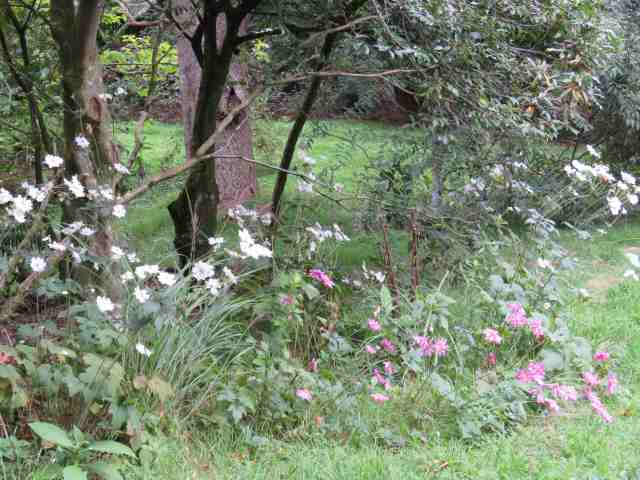
The Wild North Garden has largely become our gardener Zach’s domain and he is continuing to add suitable plants that are surplus to the more tightly managed garden areas. He was so pleased with how the Japanese anemones he planted last year have settled in that he is adding more this year.

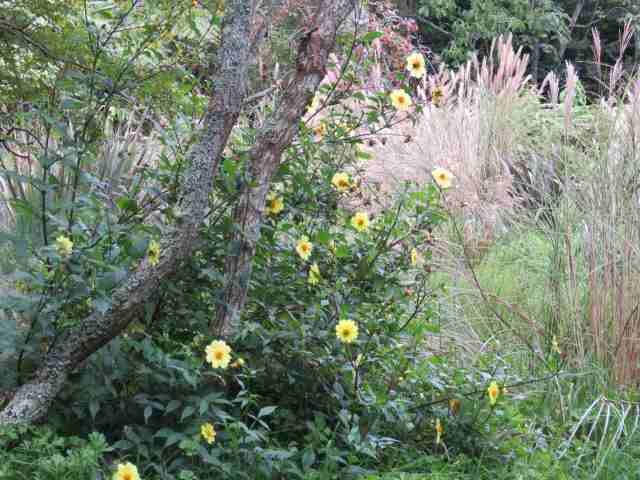
The dahlias have also settled in well to this controlled wilderness. I am pretty sure this is Dr Keith Hammet’s Dahlia ‘Conundrum’ which certainly increases well and flowers for a very long time.

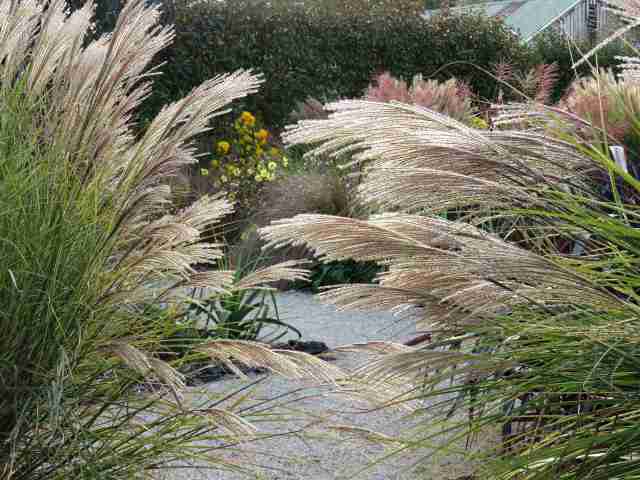
The Wild North Garden may be Zach’s special area but the summer gardens are mine and I love the Court Garden in early autumn as the tall helianthus come into flower and the sun drops lower in the sky to shine through the flower spikes of the tall grass, Miscanthus ‘Morning Light’.

Personally, I would have called it ‘Evening Light’ or maybe ‘Late Afternoon Light’ but that has to do with location and the direction of our lowering sun.

I captioned the top pastel pink, blue and white confection as ‘the free-form version’. This more explicit floral version of a flag would have worked better had Japanese anemones also come in pale blue as well as white and pale pink but we make do with what we have. It reminds me of the floral confections the very late Queen Mother used to wear. Some of you may remember her many appearances where it looked like she was wearing pretty hydrangeas on her head. I went looking for images but they were all copyrighted so if you are curious, google ‘Queen Mother’s petal hats’ to behold the visions.

Sometimes in life, we need to stand up to be counted and I will stand up and be counted in support of the extremely marginalised group this flag stands for as they face an onslaught from people who want to erase them from history, from the present and from the future.

Road cones on duty

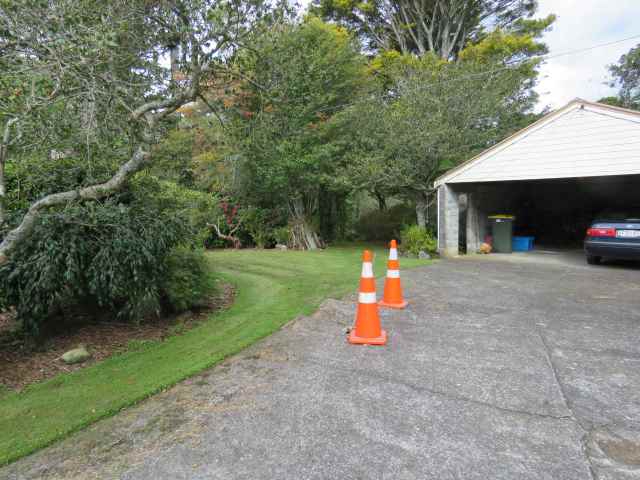
I have come to the conclusion that road cones are like rabbits. They have gone forth and multiplied. Exponentially. Everywhere. Over the years even we have acquired maybe half a dozen road cones. Lost or abandoned by their previous owners, they found what they hoped would be their forever home with us. They found a useful new purpose in life, usually reserving space for coaches during the busy garden festival season. With the garden now closed permanently, I had wondered whether rehoming them would be a betrayal of trust, maybe putting them out with their mates in any number of places where road cones choose to congregate.

But no! They have a new role to play and much closer to our house. Every time I step out the back door, I get a minor visual jolt at the sight of them. Lloyd has placed two of them on the breaking concrete. For we have developed a sink hole and he was worried that it is now deep enough to catch any visitors’ cars that might not notice the tell-tale signs of concrete slabs askew.

The sink hole is a mystery and one we will have to live with until Lloyd returns to work in a couple of weeks and lifts the broken pieces to fully investigate the scale of the problem. I have poked around with a bamboo stake and it goes in at least 40 or 50cm so it is not a small issue.

The concrete is the parking and turning area in front of our carport and it must date back to when the house was built around 1951. Over the years, it has developed cracks and broken in a few places but it remains perfectly functional.

So why have we developed a sink hole? The gas wells that have been deviation drilled in our area are several kilometres below ground level so it won’t be those and there is no history of mine shafts in Tikorangi. We know where our house drains go and there aren’t any in that area. There is no spring water bubbling up anywhere. So we can probably rule out both human activity and water.

This leaves tree roots. Many of us have the experience of tree roots lifting paving but maybe not so many have the experience of tree roots of sufficient magnitude to collapse paving when they rot out entirely. It is not any tree that we have felled or lost during our time here but maybe it takes many decades for tree roots to rot out and the stump disappears first? I am hoping we can solve this mystery. And if it is tree roots, I am hoping this is a one-off and not an indicator of larger problems that may surface – or indeed cave in – over time.

In the meantime, the road cones stand as sentinels.

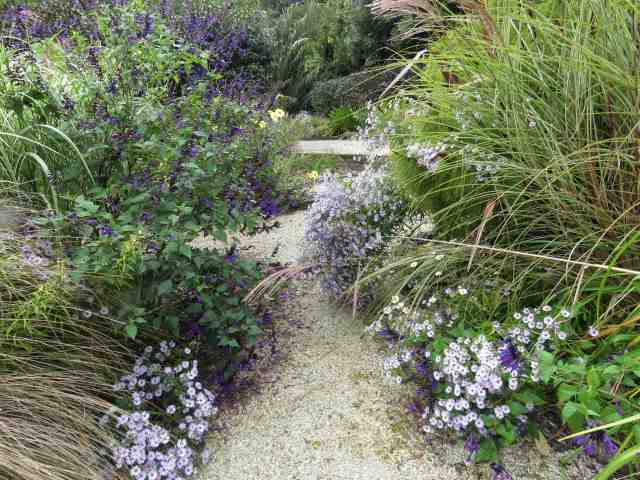
Finally, I wrote a couple of weeks ago about the species aster that I was attempting to eliminate from the twin borders. I see I relocated more than I remember to the Court Garden a few years ago and now I am having to remove most of those. I may end up resorting to total removal next year but at this stage, I am trying to restrict it to maybe three smaller areas. I took out the ones in this photograph this week even though it disturbed the very busy bees that were feeding on them. This path had become impassable because of intense bee activity once the morning sun had warmed up. Pretty, but hazardous as the bees buzzed above and the rampant root systems below were spreading in every direction.

“His Majesty The King’s Coronation Collection”

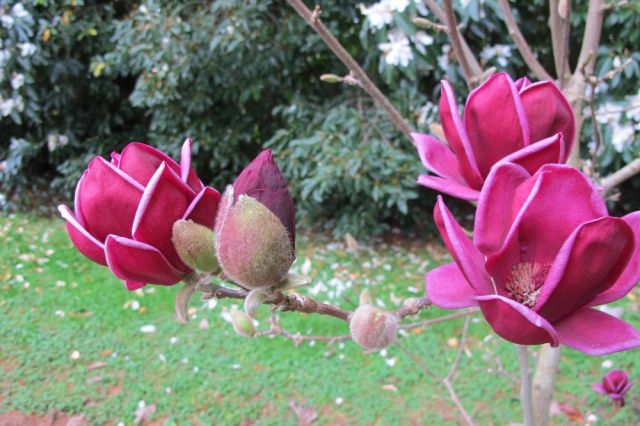
Mark’s Magnolia ‘Felix Jury’

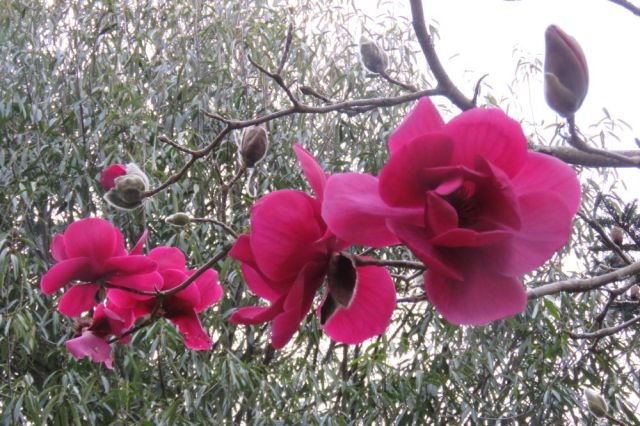
It is a well-known fact that King Charles 111 is a very keen gardener and has been for a long time. We received confirmation this week that Mark’s Magnolia ‘Felix Jury’ was included in a collection of 25 carefully selected plants presented to him to mark his coronation.

The gift was from the Royal Horticultural Society (RHS), specifically from the Rhododendron, Camellia and Magnolia Group of which he has been the royal patron since 2018. Reportedly, he was delighted to receive the plants this week and they are destined for his Sandringham estate which is undergoing a major rejuvenation under his personal direction.

There are only three magnolias included in this collection and all are from Aotearoa New Zealand, which is a sign of this country’s standing in the heady world of international magnolias. Most of the collection is focused on rhododendrons with just three camellias included, one of which is also a NZ hybrid. ‘Festival of Lights’ was bred by the late Neville Haydon of Camellia Haven fame.

Magnolia ‘Genie’ bred by Vance Hooper

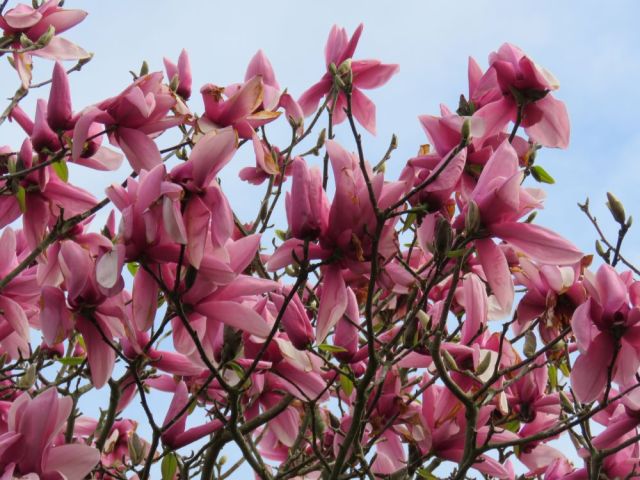
The other two magnolias are ‘Genie’ which is the best-known cultivar of breeder, Vance Hooper and the late Os Blumhardt of Whangarei’s ‘Starwars’.

‘Starwars’ dates back to the 1960s when Felix was also raising the first generation of Jury magnolia hybrids. We knew Os Blumhardt fairly well. He used to stay with us when he came to Taranaki and he was most encouraging to Mark in his early days of plant breeding and extraordinarily generous with his own material. We still have some very fine vireyas and camellias of his in our garden and his early, limited work with michelias (‘Mixed Up Miss’ and ‘Bubbles’ are his best known) laid the groundwork for Mark’s Fairy Magnolia series many years later. But we were less enamoured by his Magnolia ‘Starwars’ – until we made a magnolia trip to the UK, Italy and Switzerland back in the early 2000s.

Magnolia ‘Starwars’ bred by Os Blumhardt

At home, we have ‘Starwars’ planted on the roadside on our lower boundary in a row of other magnolias. It is pretty enough and puts on a good show but the flowers are a bit floppy and, to be brutal, it looks a bit dated compared to many of the magnolias we grow now. It was a different story in the UK and Europe. That was before any of Mark’s hybrids were available in that part of the world and we were tracking how his father’s varieties were performing. There is a huge difference in climate, growing conditions and light between here and over there and there is no guarantee that plants will look the same. We were a bit disappointed, particularly in ‘Iolanthe’ in those conditions.

‘Starwars’, on the other hand, was an absolute stand-out and it was being grown widely. Many of the international group we were travelling with assumed it was a Jury plant because it came from NZ. After we had seen several looking brilliant, Mark was moved to reply, “No, it isn’t one of ours but I wish it was.” I think it has earned its place in the Royal Collection as a proven performer.

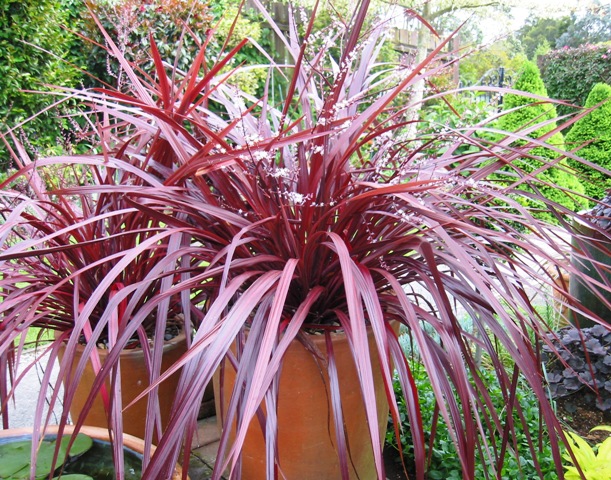
Cordyline Red Fountain

This is not the first of our plants to grace the royal estates. The first we know of was when our Cordyline ‘Red Fountain’ was presented to the then Prince Charles in a ceremony at Auckland Regional Botanic Gardens – but not by us. While I have no doubt that the plant was a very fine specimen, we rather doubted that it had all the phytosanitary clearance and paperwork needed for plants to cross international borders. Mark quipped at the time that maybe we should alert Border Control that the royal entourage was carrying plant material. We have no way of knowing whether Royals are subject to the same regulations as travellers of lesser status or whether it even left the country. I hope it might be in his garden at Highgrove.

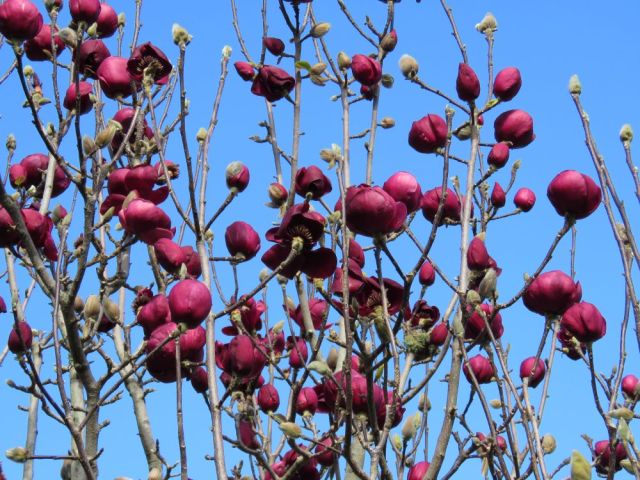
Next, there was a presentation of Mark’s Magnolia ‘Black Tulip’ to the late Queen in 2010. We don’t know which royal garden that plant ended up in – maybe Windsor?

Then there was the ceremonial planting of another specimen of Magnolia ‘Black Tulip’ by the Burmese leader Aung San Suu Kyi with the then Prince of Wales and the Duchess of Cornwall at their London residence of Clarence House in 2012.

That felt like a significant moment in history and to our great amusement, it is immortalised in a You Tube clip. That video shows it in a prime spot close to the residence. From memory, the magnolia they move over to look at was one planted by the Dalai Lama but I can’t remember what that variety was now – one of the species, maybe.

Magnolia Black Tulip

At the time, I wrote here: “We are honoured by this international recognition, though Mark would have preferred them to have planted his Magnolia Felix instead. It appears to be performing very well in the UK and the Royals’ gardens are large enough to take large flowered magnolias.”

We are very pleased that it will be ‘Felix Jury’ that will grace the Sandringham estate.

“The Rhododendron, Camellia and Magnolia Coronation Collection is a collection of

plants and trees gifted to His Majesty, to mark his Coronation. As our Royal Patron

it represents our appreciation of how much his support and interest in our genera is

valued by our members from around the world.

It tells the story of the Rhododendron, Camellia and Magnolia Group’s one hundred

and seven-year history. The twenty-five plants and trees provide a historical and

horticultural link between the genera and the Royal Family and represents the

legacy of great gardens, the passion of private breeders and having good plants

in the garden. The specially chosen plants form a tapestry of our beautiful genera

internationally.

The best of the past and of the future, old and new. We hope that His Majesty enjoys

these plants and that they give him great satisfaction in the years ahead.”

From the official release announcing this gift.

When good plants go feral

While I like the smaller flower and the airiness of the plant, the aster must go

I have spent the better part of the last week digging out an invasive aster. Pretty it may be in flower but I am now aiming at total eradication from the twin borders and I am looking at in askance in the Court Garden.

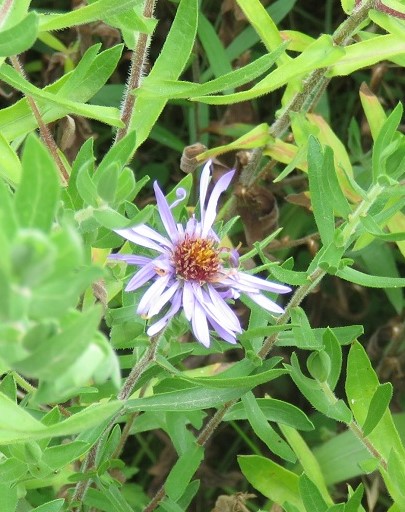
I don’t know what the species is but I am pretty sure it is a species, not a named hybrid. I see it was back in 2020 when I first decided it could be a problem. I lifted masses of it but left a few bits behind to see if it could stay with closer management. I would have started with just one small pot of it but from modest beginnings and despite some intervention along the way, I could now measure it by square metres. It has to go.

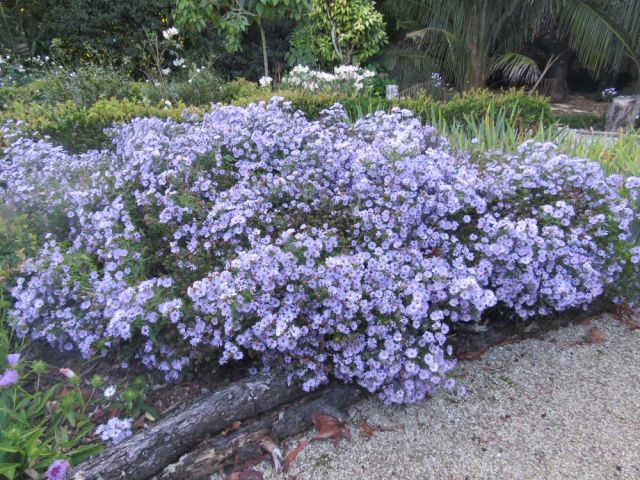
Veritable thickets of aster in the borders

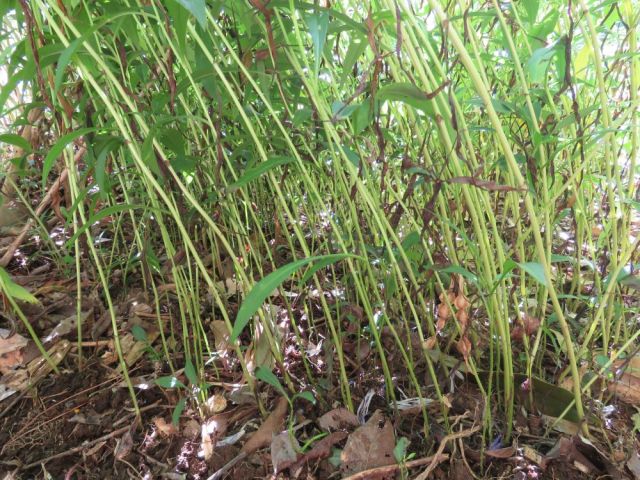
The problem with this aster is not just that it needs staking in our climate because it reaches maybe 1.3 metres high in flower and flops over under its own weight, smothering everything around it. I could have coped with some seasonal staking and restricting its spread from seed by deadheading it, but it is what is happening just below the surface that is frankly alarming. It runs in every direction with huge enthusiasm. I am lifting it out of areas where I never planted, several metres away from the original clumps.

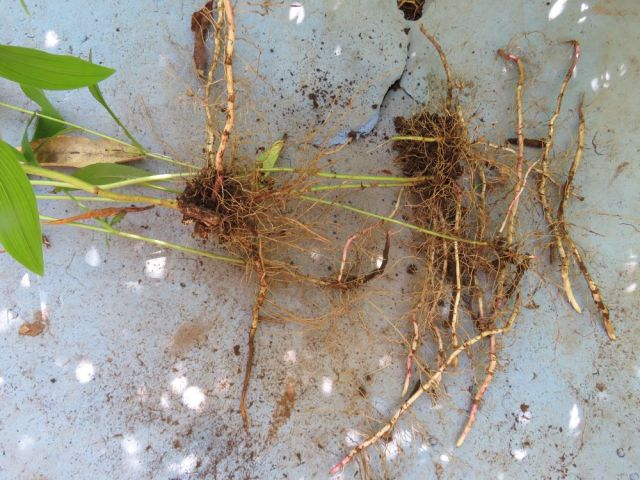
Surface rooting but it is those runners that are the real problem. They will put up shoots along the length and just keep running in every direction.

Because it is shallow rooted, I can lift the mats of roots okay and often just grab each runner in turn and carefully pull it out for most of its length – which can be 30cm of runner at a time. The problem is where it has invaded the root systems of its neighbours and the runners break off. It is going to take me years to achieve total eradication from the borders.

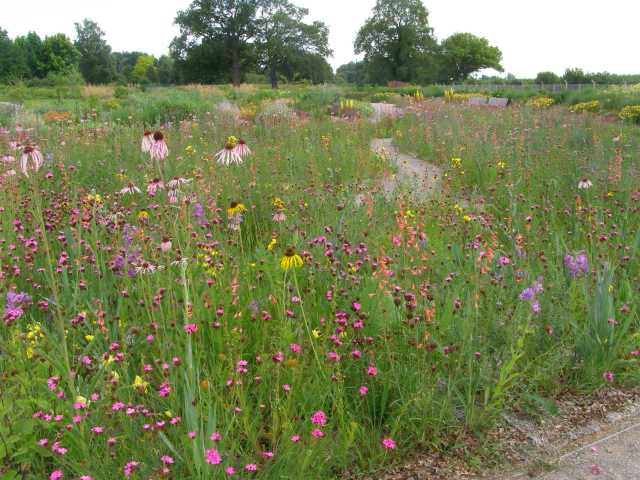
The Missouri Meadow at Wisley in 2009 – simply magical
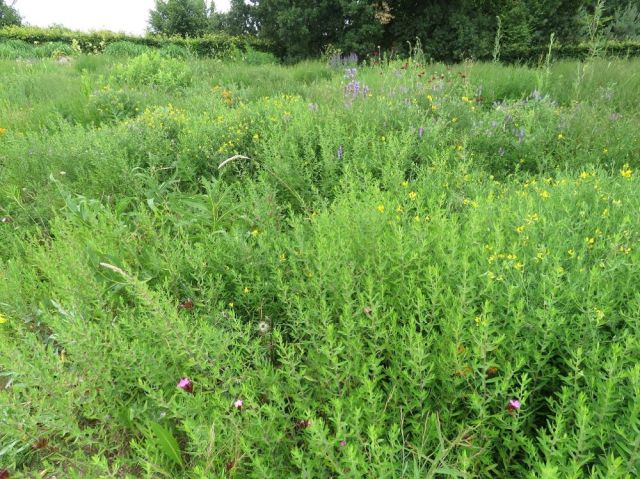
and in 2017 – the Missouri Meadow choked by aster
That Missouri Meadow aster looks very similar to the one I am eradicating, although we were there too early to see any more than just the occasional flower

At the back of my mind is what happened to the Missouri Meadow at the RHS flagship garden Wisley, in the UK. When we first saw the meadow in 2009, it was in its second year and remains in our memory as one of the most enchanting plantings we have ever seen. By, 2017 it was a real mess because – wait for it – an invasive blue aster had taken hold and run wild. I would guess the whole garden has long gone now and been replaced by something else because getting rid of just the aster would have been impossible. I don’t know if it was the same aster but I could see that, left unchecked, my twin borders would have gone the way of the Missouri Meadow in just a few more years.

We have maybe half a dozen other named cultivars of asters in shades of blue and pink and they are fine. They are all hybrids, not species, and while they will form a fairly dense surface mat of roots, they are not invasive in the same way. And they do tend to have stronger stems so hold themselves upright, even the ones that are waist height.

Aster novi-belgii ‘Professor Anton Von Kippenberg’ is more of a compact bedding plant and I have used it in the Wave Garden. It needs digging and dividing regularly but it doesn’t keep trying to stage an escape, trampling its neighbours in the process

Also going from the borders are all the Miscanthus ‘Morning Light’. This is not because they are invasive, although they do seed a little more than Mark thinks they do. I know this because it is I who weeds out the seedlings. Beautiful they may be, especially in flower in late autumn as the sun drops in the sky and illuminates the plumes in the lowering light levels. But they are relatively demanding and, if not managed tightly, they grow too dense and fall apart in heavy rain and wind. Basically, they need to be lifted and divided every three years and root-pruned in the intervening years and that is a big job in densely planted borders.

Alas the Miscanthus ‘Morning Light’ must also go from the borders

I have used the same miscanthus extensively in the Court Garden and they can stay there, even though the lot need to be lifted and divided this winter. That can be done when the flowering is past its peak. But it is another lesson we learned from several visits to Wisley that led to my decision to get them out of the borders next to the Court Garden. It seemed to us that Wisley had used Stipa gigantea in almost every garden there and, while a most obliging plant with the prettiest flowers of any grass I know (golden oats, is its common name), when it is used in many garden beds, it just ends up making them all look the same. Too much of a good thing. I have generally avoided repeating plants in the different summer gardens so that each one has a different look. Miscanthus ‘Morning Light’ was one of the very few plants I repeated and, with hindsight, that was not a good decision in our growing conditions as far as the twin borders go.

So I have spaces to fill but plenty of other material to use that will be better. The thing about gardening is that it is a constant learning process but that is also what keeps it interesting. A stitch in time may indeed save nine when it comes to sewing; in the garden, removing certain plants in time may avert a takeover that will choke everything else out.

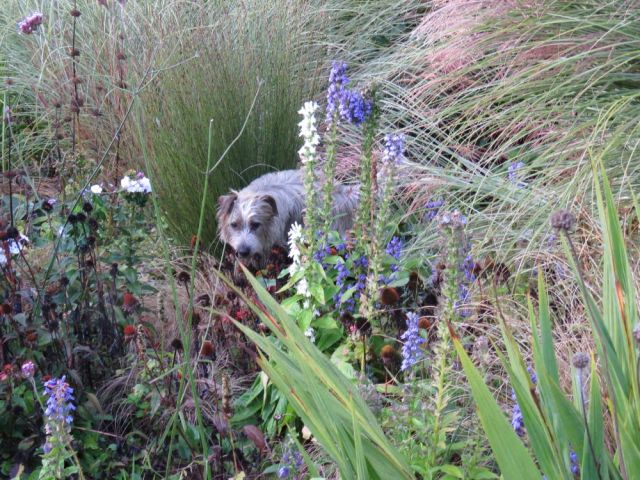
Ralph is no respecter of gardens, especially as this border is adjacent to The Rabbit Family Who Live Beneath the Swimming Pool Deck and he is on their case every day.