
Written for and first published in the Royal Horticultural Society yearbook of the Rhododendron, Camellia and Magnolia Group 2025.
Over our years of experience with the michelia group of the magnolia family – en masse, so to speak – we have learned that we can treat them as we treat camellias when it comes to clipping and pruning in our climate. I italicise those last words because I hesitate to advise gardeners in more extreme conditions.
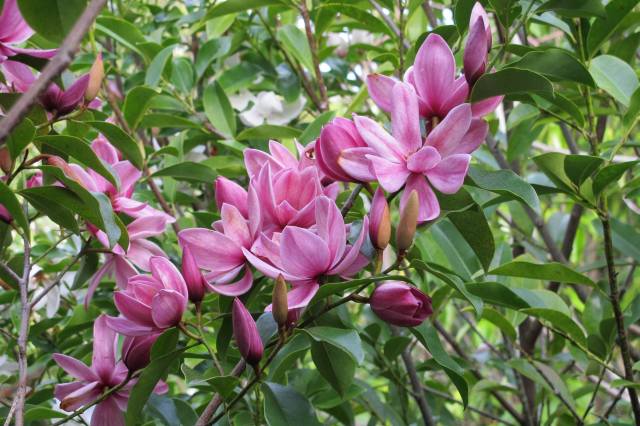
We have a very soft climate. We are never very hot and never very cold, regular rain falls all year round but our sunshine hours are high and we are on friable volcanic soils. If that sounds like gardening paradise, it probably is, as long as you can cope with the wind we get here on the west coast of the North Island of Aotearoa New Zealand.
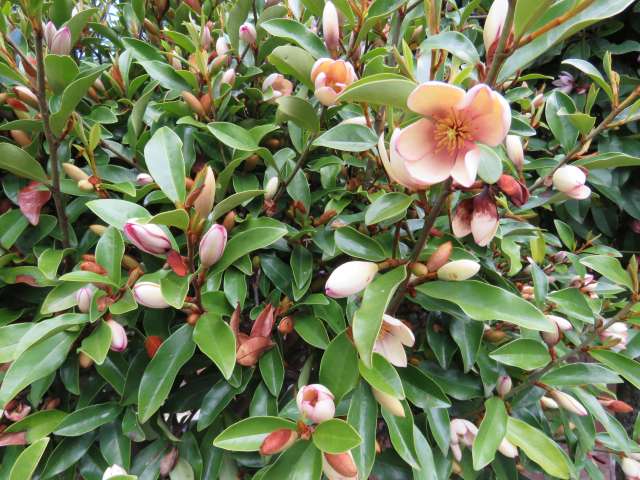
We also have an abundance of michelias to work with, as a result of my husband, Mark Jury’s breeding programme with the genus down the past 30 years. We have never kept track of the numbers raised here but it will be in the thousands. From those, three have been released under the Fairy Magnolia™ branding; there are two more in the pipeline for release shortly and we are in the process of selecting maybe another three. That leaves many, many seedlings that have been rejected along the way, including entire crosses that he has decided are not worth pursuing. Most get cut out but some we have utilised as screen hedging and shelter belts. There is no shortage of raw material here.
I often claim that we don’t do a lot of heavy clipping and shaping; I have seen Italian gardens and compared to them we are minor players indeed. We do a lot of pruning because our garden is mature and is strong on trees and shrubs which take management down the decades. When it comes to detailed clipping and shaping, it is mostly on camellias and michelias.
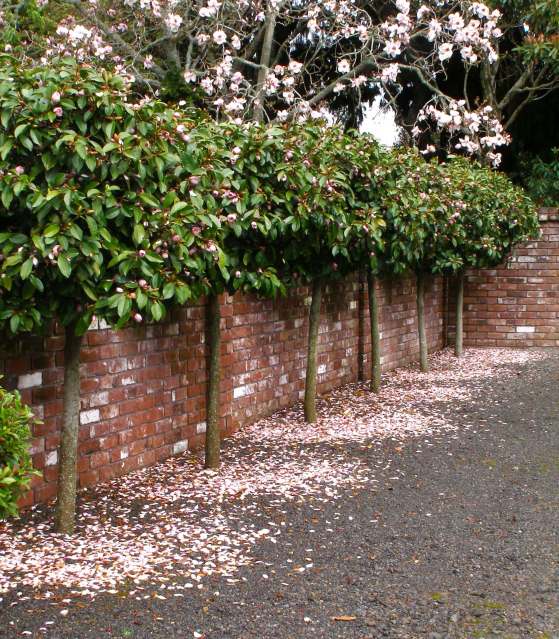
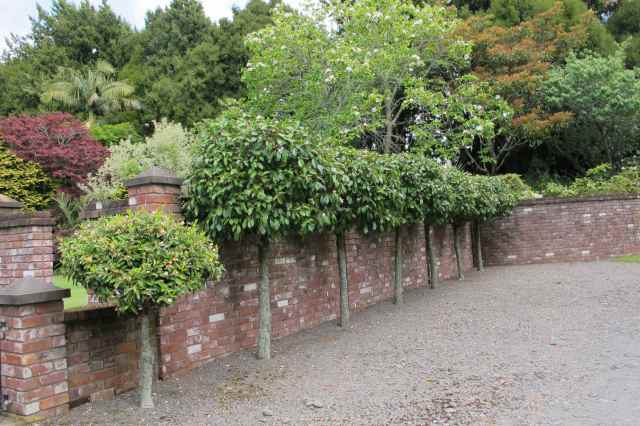
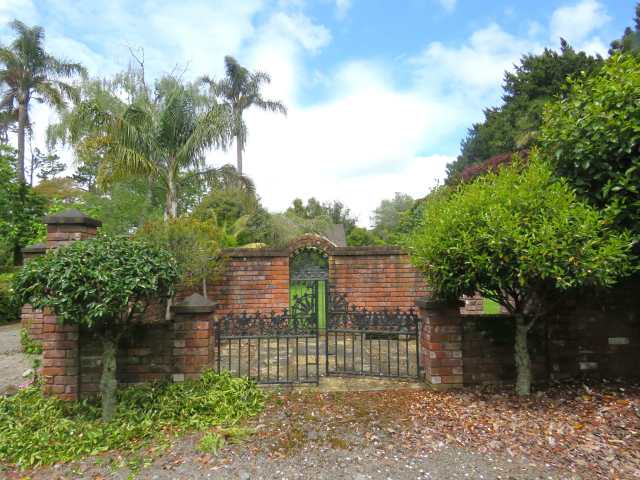
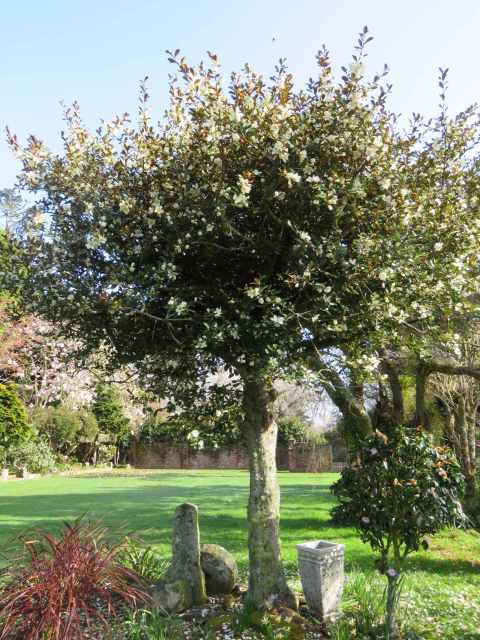
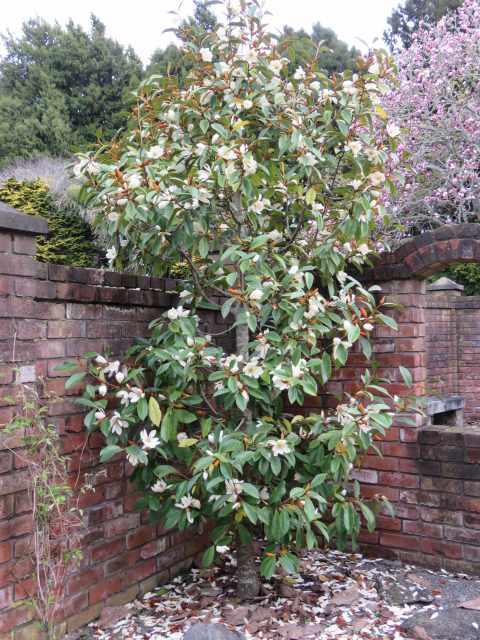
We started with Fairy Magnolia® ‘Blush’, planted twenty years ago in front of our brick wall. These were original stock plants grown in large containers in the nursery so they went into the ground with big root systems. We gave them a season to get established and then started shaping to lollipops. They have grown a little larger over the years but not hugely so. Every spring, as flowering finishes, we clip them hard, removing somewhere between 30% and 50% of their foliage.
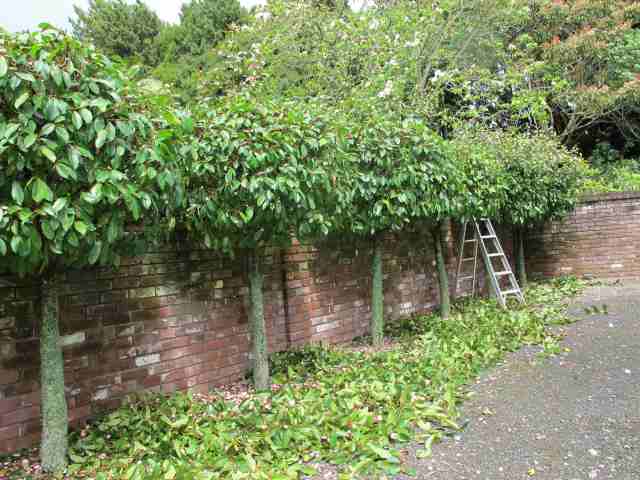
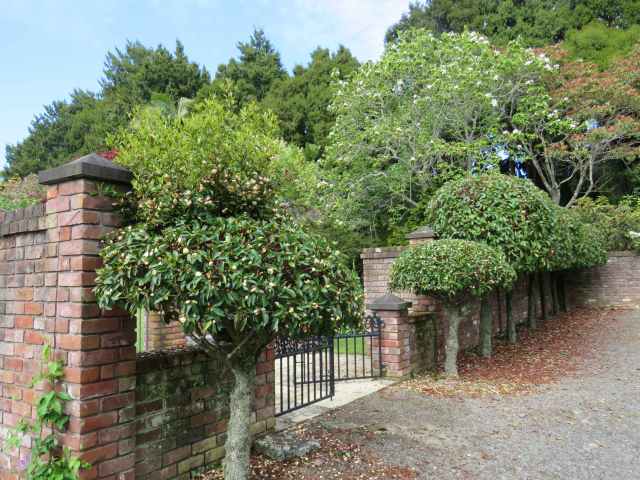
We clip for future blooms so we only clip once a year, as they finish flowering. By the end of summer, they can be a bit woolly in appearance but if we cut again then, we would be removing many of the flower buds. If you want a sharp form all year round, don’t start with plants you want to flower well, at least not michelias or camellias. We use secateurs to trim. Hedgeclippers may be faster but they cut all the external leaves, the edges of which then go an unsightly brown. There is only a day’s work in clipping this row and cleaning up.
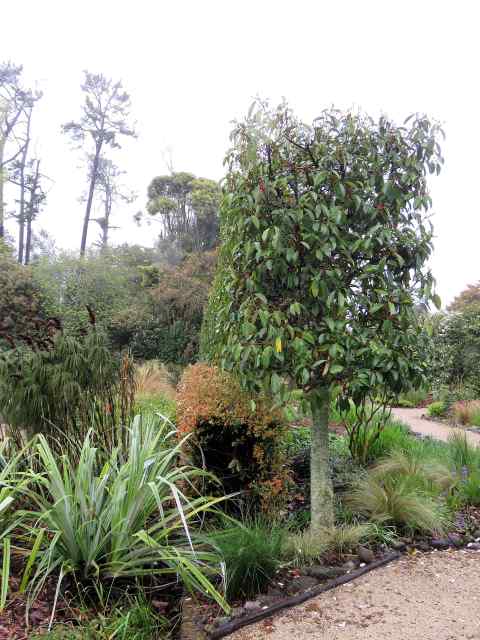
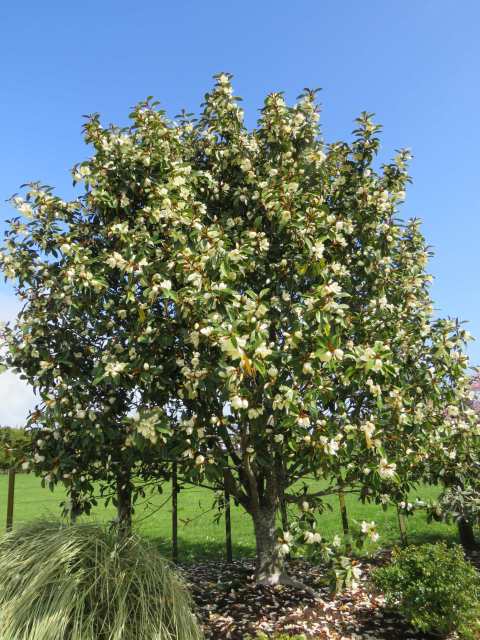
If you want to create standardised lollipops, be patient. Let the plants become well established and growing strongly before you start serious shaping. You need a strong central leader to hold up the weighty head. Too often, I have seen plants in garden centres that have been *trained* to standards with a spindly trunk and all side growths removed, so it is entirely dependent on the strong stake holding it upright. You will have a higher success rate if you start with a plant which has a central leader as well as multiple side growths which you can trim but not remove entirely until later. Reduce particularly strong branches which are competing with the central leader but those side growths give the plant more strength and vigour. The leader doesn’t have to be dead straight to start with. What looks like a kink in a stem that is one to two centimetres across will have disappeared by the time it is five to ten centimetres in diameter. Don’t stake unless you have to. Long term, you want the plant to stand straight on its own and plants that are staked from the start come to depend on the stake rather than developing their own strength in the roots and stem. Once the plant has reached the height you want, then you can start serious shaping and when the central leader is strong, you remove all side growths below the top knot.
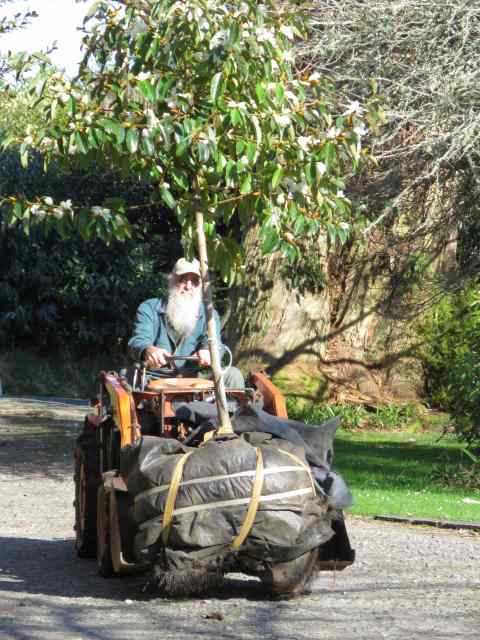
Our pleached rows of Fairy Magnolia® ‘White’ have taken patience. Pleaching is basically a hedge on stilts. These came in as large plants we dug out from the field where they were growing in 2015. They have looked good and flowered well in the intervening decade but it took until last spring’s pruning for me to look at them and sigh with satisfaction. At last we had that two dimensional plane sitting above the camellia hedge below that we had envisioned from the start.
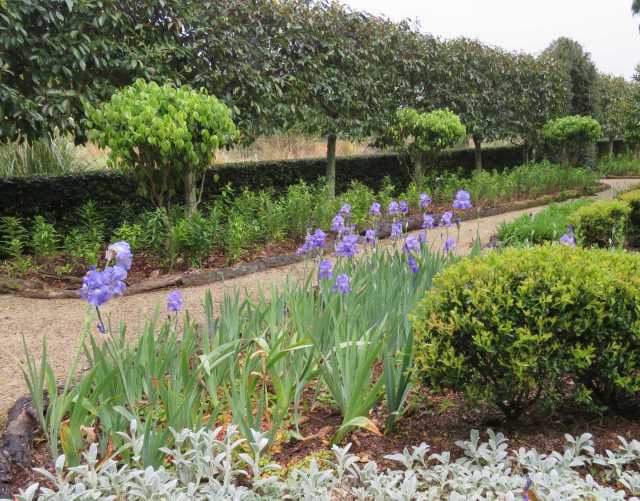
Again we trim hard once a year, as flowering finishes, using secateurs and loppers to remove probably 40% of the foliage to freeze them in size and to create the form we want. They are bigger plants and surrounded by gardens, so trimming them is more challenging and slower than the aforementioned lollipops. Good ladders help. We bought both an orchard ladder and a platform ladder and I see our gardener, Zach, has both of these out when it comes time to trim the pleached rows.
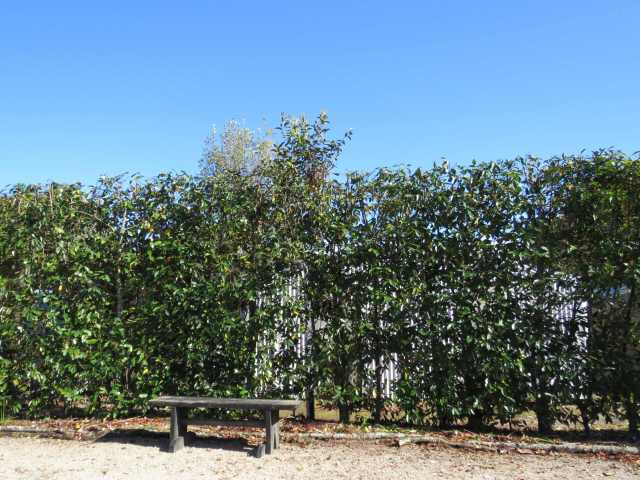
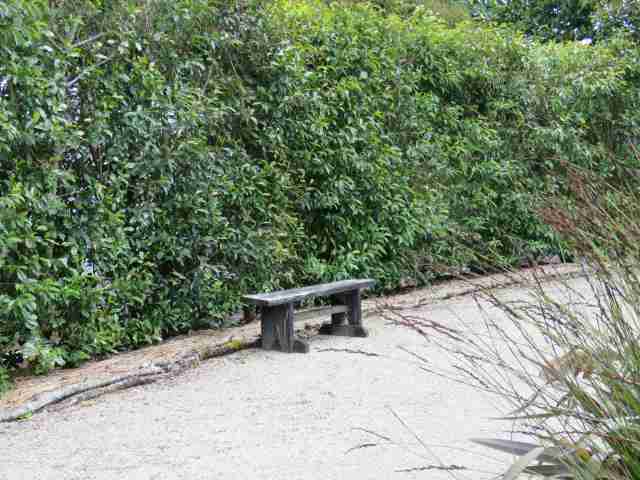
We also use michelias as tall screening hedges kept to about three metres and these, too, get trimmed after flowering. They can look a little sparse when first done but it is only a matter of six weeks before the flush of new growth fills in the spaces.
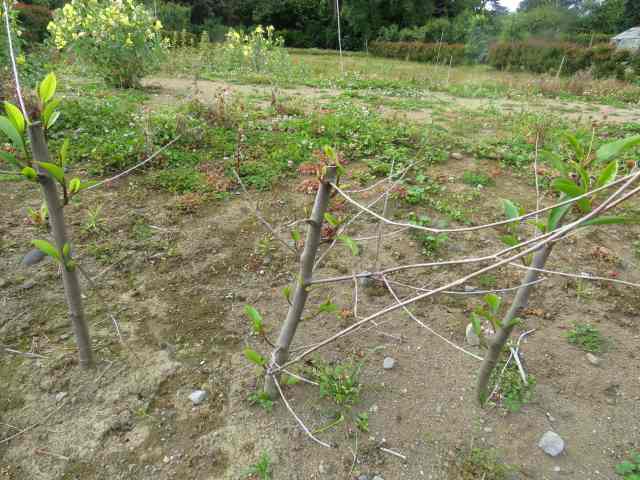
About once every five years, these plants need to be picked over more thoroughly, to take out dead wood in the middle where branches have not resprouted. It saves them from getting woody and ugly over the longer term.
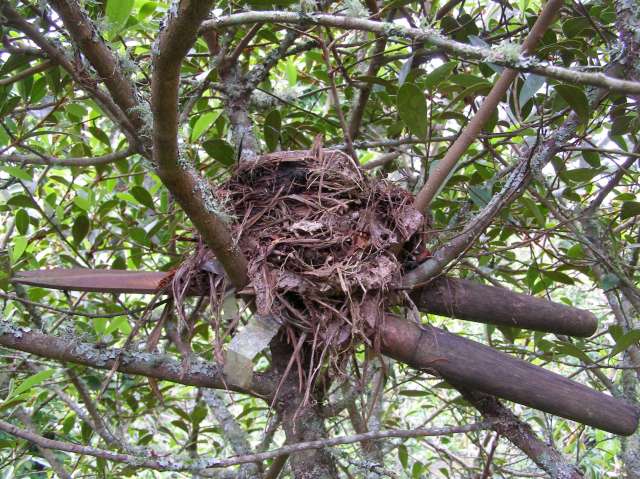
Well established plants that are growing strongly can be trimmed back to bare wood, as can camellias and rhododendrons. It is a last resort when a plant has got away on us but we have done it successfully, notably on M. laevifolia. The plants may take another year or two to flower again but they will reshoot from bare wood.
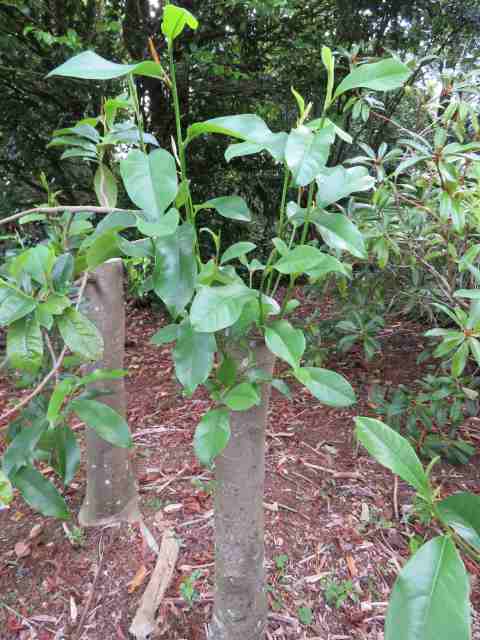
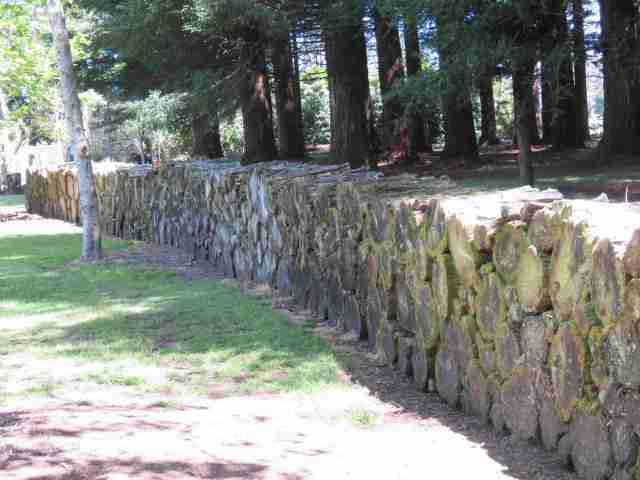
Unexpectedly, michelias also have potential as a coppiced crop, or what we refer to as a sustainable wood-lot, much as hazel is used in the UK. We found this out by chance when we were running low on winter feed for our very small number of beef cattle – more a group of cattle than a herd. Mark started trimming michelia branches as stock food (do NOT try this with rhododendrons which will kill animals) and they were perfectly happy eating the foliage. The plants which were cut to the ground, allowing us to use the trunks for firewood, responded by reshooting from the base with very straight stems.
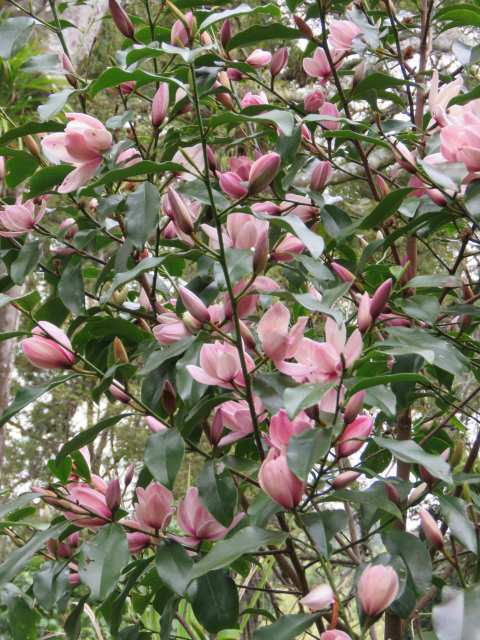
In our climate, michelias can set prodigious amounts of seed. In fact, setting too much seed is one of our most common reasons for rejecting a cultivar as unsuitable for commercial release. They are not as prolific in harder climates but if you can find one that sets seed, raising the seed is not difficult and the results are reasonably quick, by woody tree and shrub standards. You will get seedling variation; if you want a hedge of identical plants you need to buy or propagate by cutting or grafting to get them all the same. We like the seedling variation which makes for a more interesting, though less formal, flowering hedge. If you are using seed from the same source, the variations are more likely to be subtle, not radically different. It is likely that Magnolia laevifolia will be the most common seed setter in the UK and Europe. It clips well but can be slow to get established. If you can find a hybrid that sets seed, it generally brings a degree of hybrid vigour.
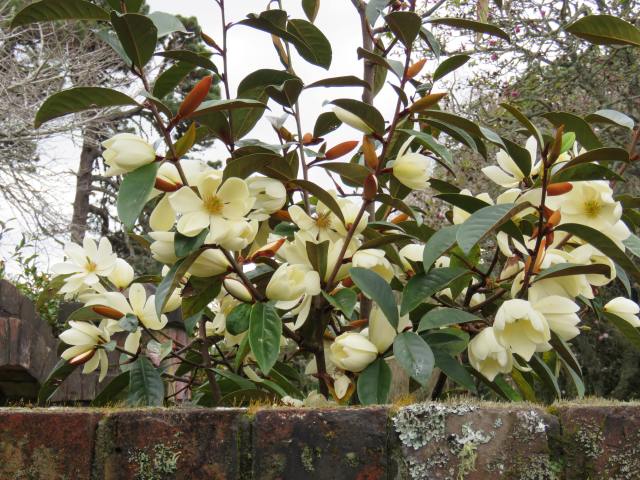
With most michelias, there is the added bonus of scent. In our humid climate, camellias are ravaged by camellia petal blight and we no longer get the mass displays on the reticulatas and japonicas. To some extent, the michelia group have filled the gap and they are rewardingly free of pests and diseases.
A note on nomenclature: Michelias have been reclassified as magnolias so all species are now listed as magnolia. The Jury hybrids are sold under the trademarked name of Fairy Magnolia®. For purposes of clarity, we continue to refer to them as michelias in common usage, to differentiate them from both deciduous magnolias and other species of evergreen magnolias, particularly M. grandiflora.





 Tikorangi The Jury Garden