

A big, blank space. Bamboo stakes are used to define the areas to be be cultivated and to get the curves right.
In the world of gardening, I am not sure that there is much that is more exciting than starting planting a new garden which has been years in mental incubation. Indeed, I am surprised how positively thrilling I am finding it to be out in the space actually putting the plants in.
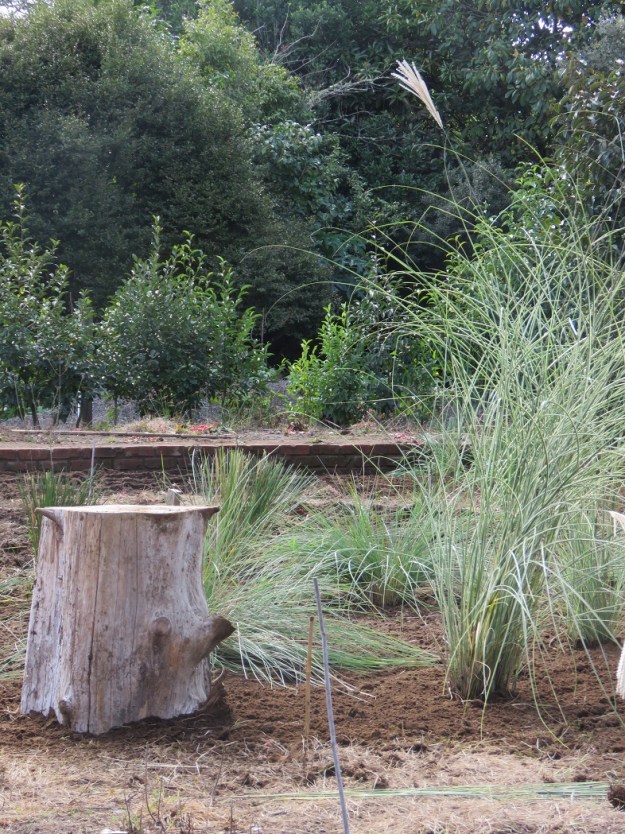 It is a blank canvas, what we refer to as the court garden, on account of it looking like a tennis court when it was just an open space. We have talked about it a lot, stood and looked at the space and mentally envisaged the possibilities – which were pretty much endless – for this open, sunny area. Having narrowed down the plan, I set about refining the plant palette and building up the material to go in. As Mark has observed in the past, ours started as a poor man’s garden. His father could not afford to buy in all the material to plant up the large garden across several acres so applied himself to raising a lot of it. These days, rather than a poor man’s garden, it is an economical couple’s garden. It would cost a lot to buy in all the plants needed to fill over 450 square metres and they would arrive as small specimens. I have been gently building up plants for a few years now so what are going in are reasonable large divisions. Instant effect, Mark calls it.
This is to be my contemporary grass garden, inspired by the work of Christopher Bradley-Hole at Bury Court but different. Immersive, not pictorial, to coin the phrase of English writer, Tim Richardson. It is set a little lower than surrounding areas so we step down into it to be surrounded by the movement of large grasses, shoulder or head high, planted in waves. A prairie on steroids perhaps? It is not designed to be viewed from a vantage point so much as to be experienced within.
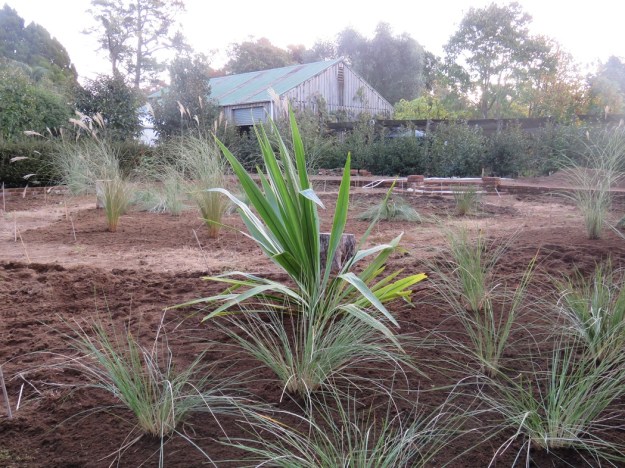
Doryanthes palmeri (which will grow much larger) with Stipa gigantea
I have planted the first waves using Miscanthus ‘Morning Light’, Stipa gigantea, Chionocloa rubra and Calamagrostris ‘Karl Foerster’. And I have found a suitable space for Doryanthes palmeri. The next two waves will be Elegia capensis and Astelia chathamica. I do need to buy in about three plants of our native austroderia, commonly known as toetoe. For, as Mark says, what is a grass garden in New Zealand if it lacks toetoe? I have sufficient plants for a wave of Chionocloa flavicans (which looks like a smaller toetoe) but I am not pinning my hopes on that because it seems to be like Christmas dinner for the rabbits and I am learning that I must garden that area with the rabbits, rather than fighting them all the time. It is one of the very few plants I am using that we have not trialled and come to understand already.
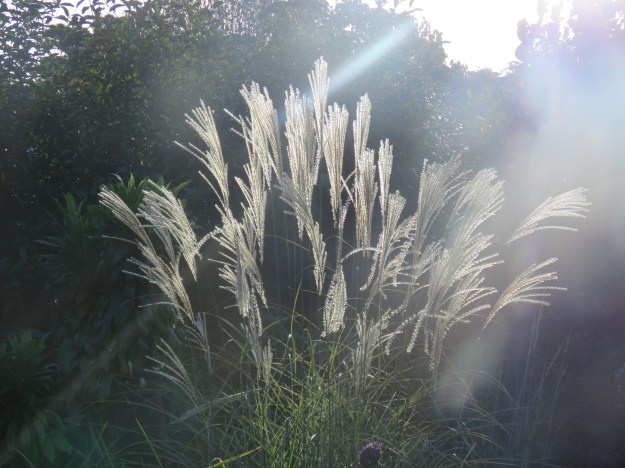
Moody miscanthus in the autumn light . It will be on a much larger scale in the new garden
Once I have planted all the waves of grass, then I will paint within with the few flowering plants I plan to use – the giant autumn-flowering salvias in yellow and red, tall yellow Verbascum creticum for spring, the very tall white nicotiana we have seeding around the place, maybe foxgloves in white and fennel. Nothing small, nothing detailed, no bulbs except the huge Albuca nelsonii. I expect the large evening primrose to find its way into the area of its own accord and I am sure Verbena bonariensis will seed down from the neighbouring borders. But the flowering plants are all secondary to the movement of the grasses.

Mark is rotary hoeing. The vintage piece of equipment in front is his prized Planet Junior that he uses often.
For those of you who are interested in the mechanics, Mark killed off the weeds and dead-headed the nasty carex we have through there to reduce future seeding. He is currently rotary hoeing the area. I drew up a planting plan and expected to be out there with my large piece of graph paper, keeping fairly closely to that plan. But in practice, it is just a guide. My spacings on paper were too close. My eyes on the ground are better than a paper plan. I rake out the rough-turned sods and then lay out each wave and sometimes I dig the plants back up again to move them a little to change the angle or the spacings. I am constantly mindful that this must be a low maintenance area. We have quite enough high maintenance areas already.
We won’t mulch immediately. Because our soils are so wonderfully friable, we will allow the first couple of flushes of weeds to germinate and rake them off. Weed control from the start is critical, especially with big grasses. Only then will we mulch. I have decided against the fine gravel mulch I had thought I would use. I am sure I will have to refine the plantings at least once in the early years and don’t want all that gravel incorporated into the soil. Neither do I want sharp edgings to the paths (which are about 1.8 metres wide to allow for plant flop). I want it to be more seamless so the current thinking is that we may opt for a granulated bark mulch which can be spread across both garden and paths. That we will have to buy in by the truckload.
We should see results this summer in our soft growing conditions and by the second summer, it should be hitting its stride. I am optimistic. Sure, it is hard work but if you are into active gardening, this is probably the peak of fun. The culmination of years of thinking and planning and something entirely different. I will keep readers posted on progress.
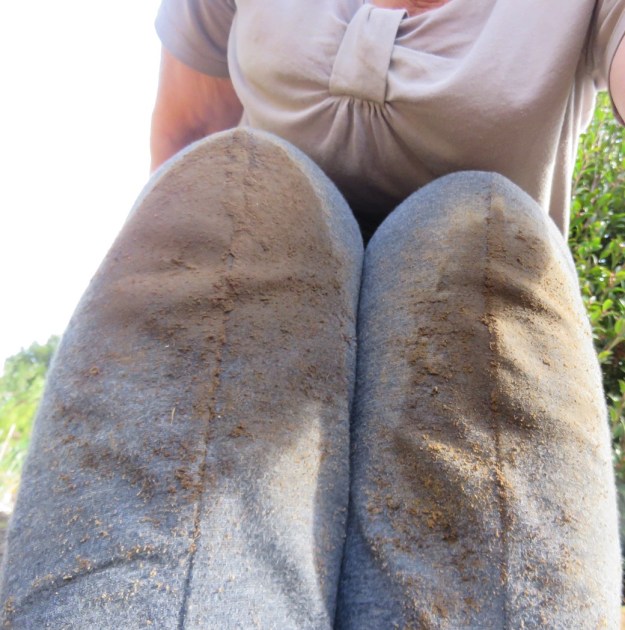 Postscript: I am a dirty-kneed gardener. Mark laughs at me and regularly tells me I should not be allowed indoors. Indeed, I often shed my trousers in the laundry before I enter the house. Don’t tell me about knee pads. I have tried them and they don’t suit me. I have an abundance of kneeling pads but unless it is wet, muddy and cold, I find it easier to wash my clothes than constantly re-position the kneeling pads.
What I don’t understand is how Mark stays so clean, despite gardening as much as I do. Well I do know. He either uses long-handled tools or squats. My gardening mother stayed clean by always bending. With dodgy knees and a dodgy lower back, I kneel. Kneelers with dirty knees unite, I say.
 It is indubitably autumn. Not only do the autumn bulbs tell us this, but the night time temperatures have dropped considerably. It is the time of the year when we have our annual debate about whether it is time to start lighting fires yet.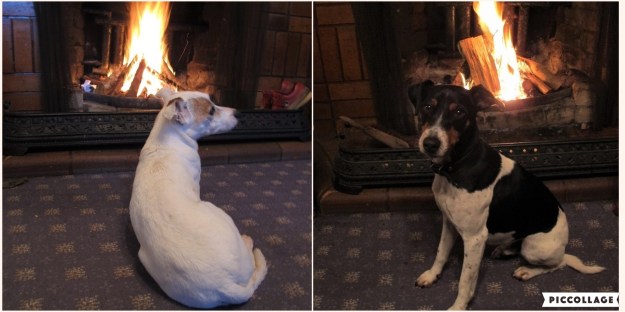
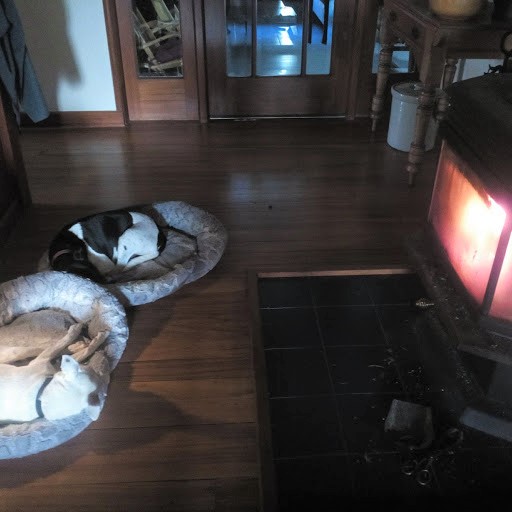
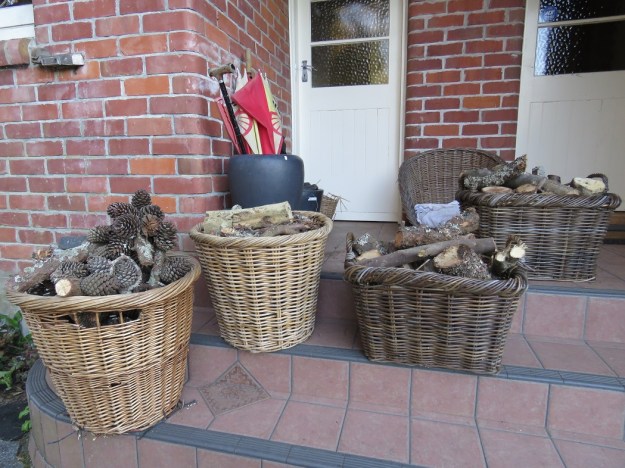
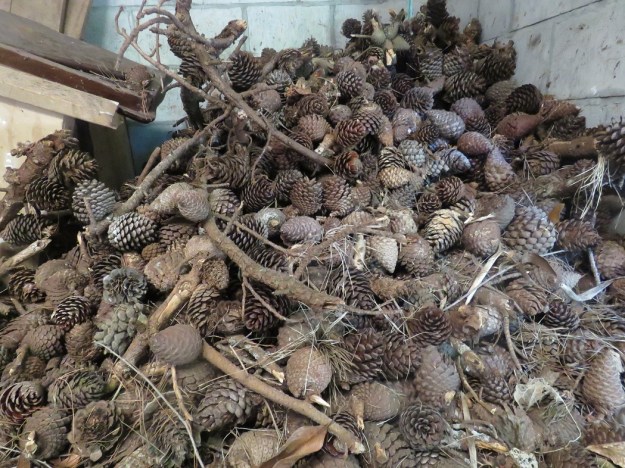 It is the pine cone and faggot time of the fire season. This does not count as burning our way through the winter firewood supplies. It is midway territory. We may be one of the few households with a designated pine cone shed. What we lack in bathrooms, we make up for in sheds here. The volume of pine cones depends on whether one of our massive pine trees has fallen in the year. None have in the past fifteen months so it is just the cones I have picked up from the gardens and lawn but it should be enough to get us through the shoulder season.



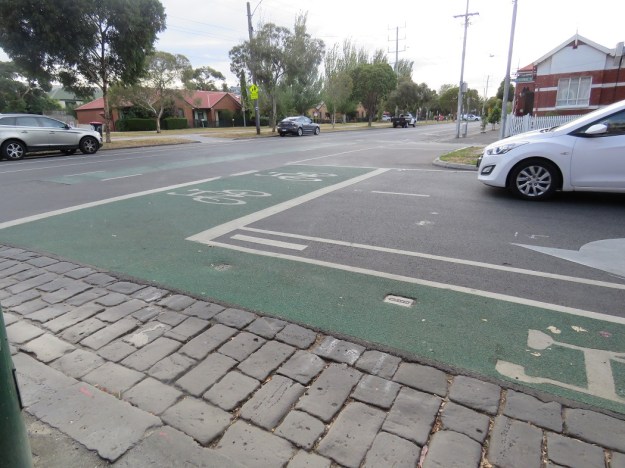
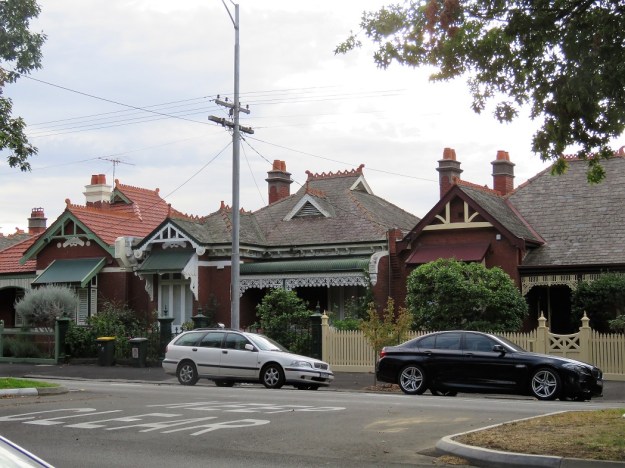

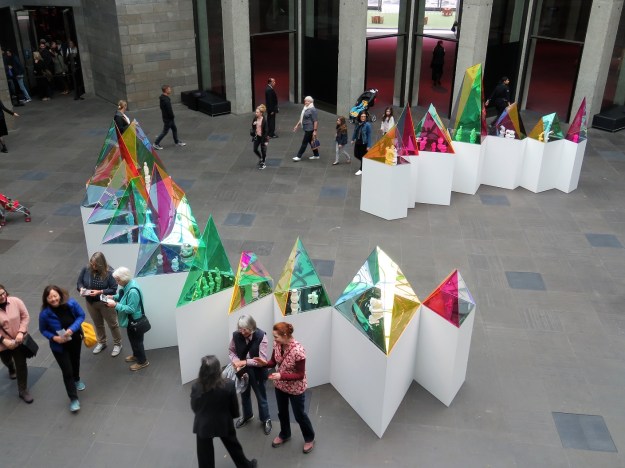 After two hot days in Melbourne last week, the temperature plummeted from 27 degrees to about 10 (Celsius). Fortunately, I had looked at the weather forecast and packed extra layers but I did wonder if I was going to have to buy myself gloves as my poor arthritic fingers complained. It was a day for indoor activities so we went to Melbourne Art Gallery instead.
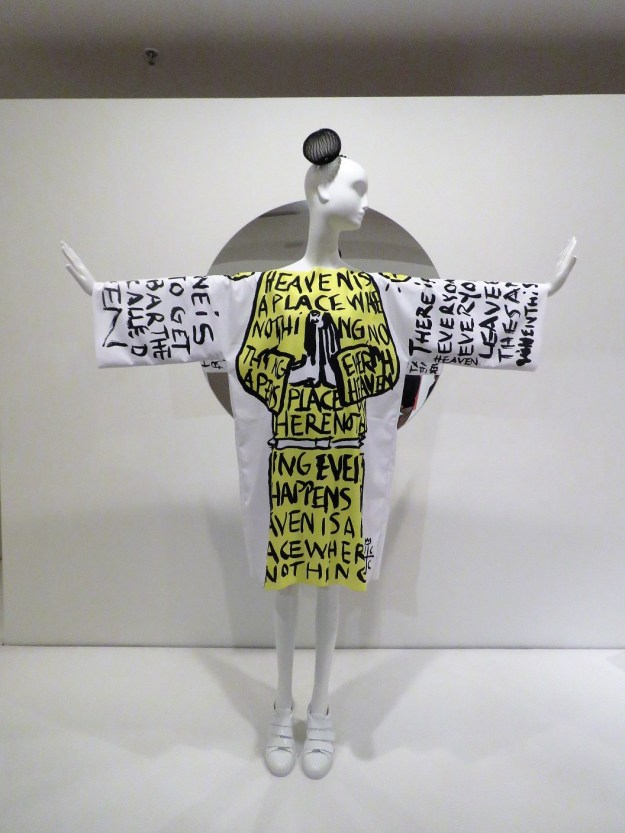 It was the final day for the Escher exhibition and the queues were enormous so we avoided that and went instead to the Krystyna Campbell-Pretty collection of haute couture and Parisian fashion from 1890 to the current day. Now, haute couture does not feature in my life, I admit that. But staging exhibitions has been on my radar from earlier in my life when I worked in an art gallery for close to five years. With over 150 outfits on display, the first rooms were simply staged to feature the gowns.

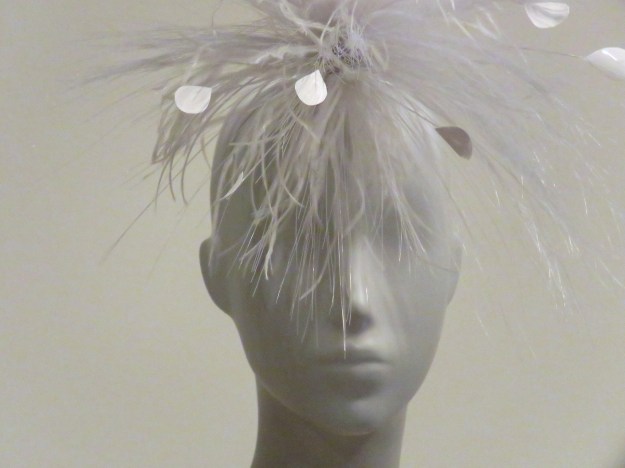 Over 150 gowns is a large number and I guess when I started photographing the models’ heads, my attention was already slipping. But then I noticed another aspect entirely. My guess is that the first gallery rooms were staged initially but then the exhibition designer and hanging assistants also found their attention straying and decided to step everything up several notches.
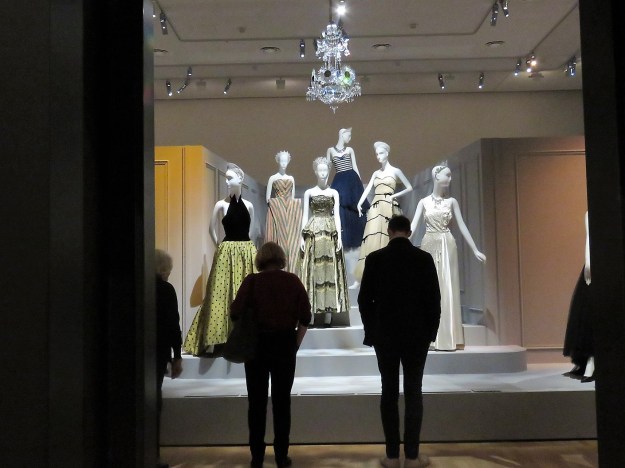 First it became somewhat theatrical in the staging.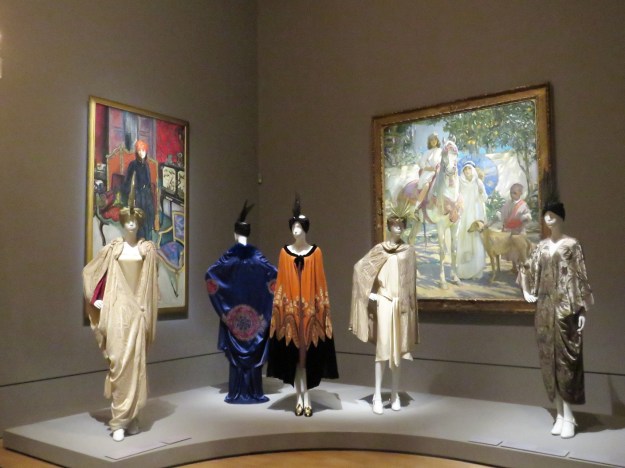
 Then we came across examples where the models and gowns were clearly matched to the paintings on the walls. They were witty but it does mean that one’s eyes naturally focus on the whole scene, rather than on the individual gowns. Which is fine, after 100 or so gowns.
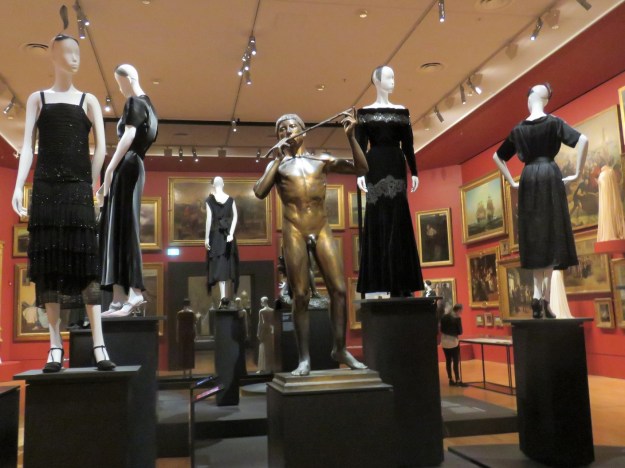 The gallery of the little black dress was Something Else. In the centre of the room, the models were staged with a collection of 3 or 4 smaller, nude men in bronze which was pretty humorous.
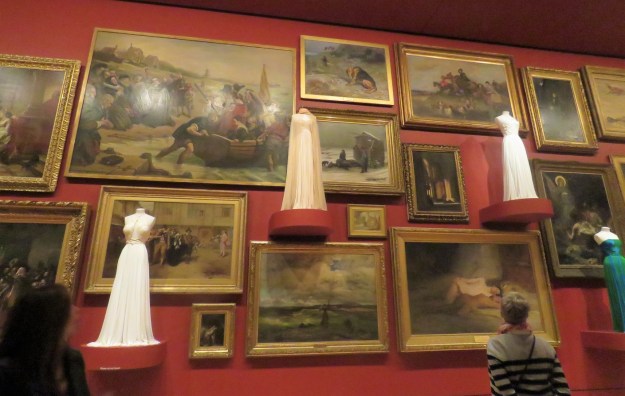 But around the walls, the gowns were arrayed on a series of rising platforms on the wall, and as they rose, the models became not only elevated, but also headless.
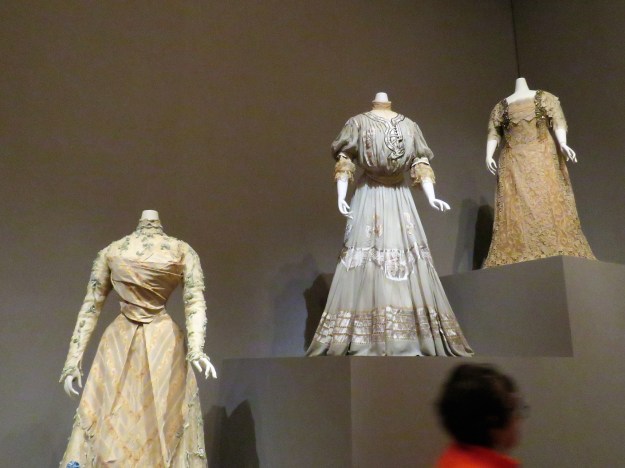 As we exited, I saw this display which had me come home and Google when bras were invented. These three gowns came from around 1890 to 1905 and the first and third gown presumably indicated the use of binding that pre-dated bras. The middle one, it appears from the shape, was for the bra-less – a 1905 afternoon gown from Marie Callot Gerber. And in case you are dying to know when bras appeared, the first models were around this time but they did not come into widespread usage until the 1930s.
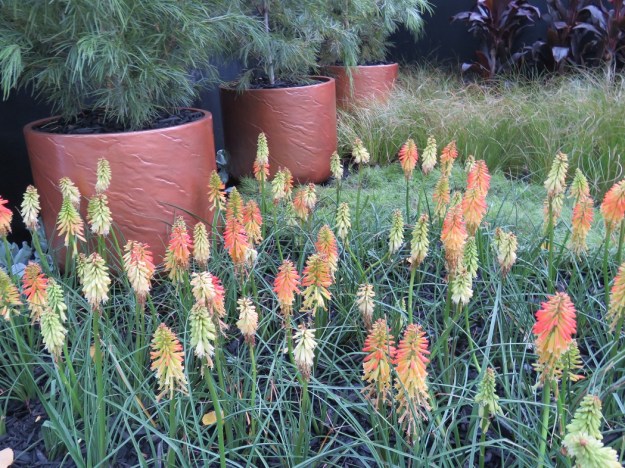

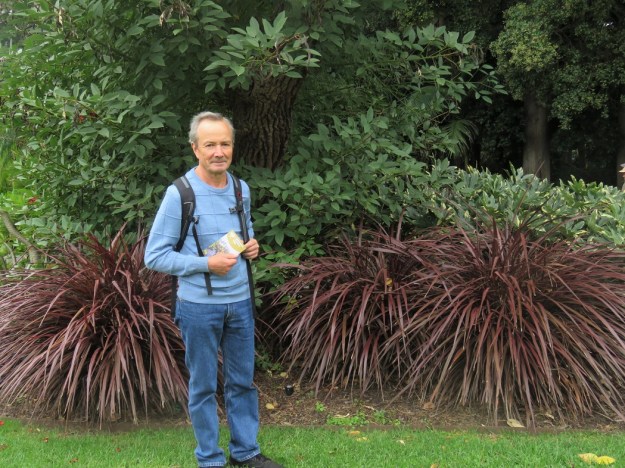
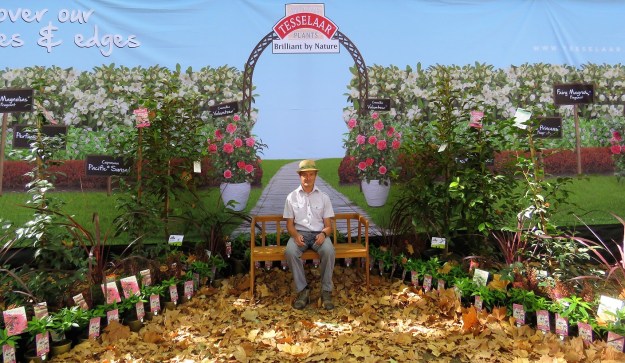 We were not above some pride in what I called the Mark Jury Wall of Fame on the outside of the Media Centre. And Mark was sufficiently gratified to pose for my photos. All the plants except the coprosma are his breeding. Admittedly the Media Centre is organised and run by our agents, Anthony Tesselaar Plants, but it did feel a bit like having a prime position at the show. Sometimes, it is easy to lose sight of the bigger picture when we are immersed in our garden at home and New Zealanders rarely like to hail one of their own, lest that person get a swollen head, so it was pretty interesting to find his standing in Australia is greater than at home.





 Tikorangi The Jury Garden