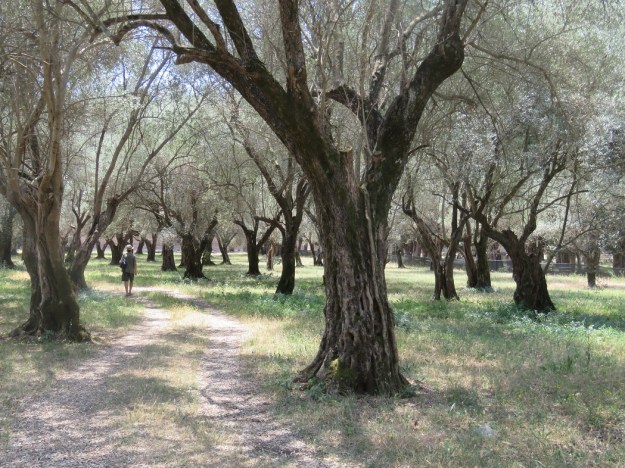
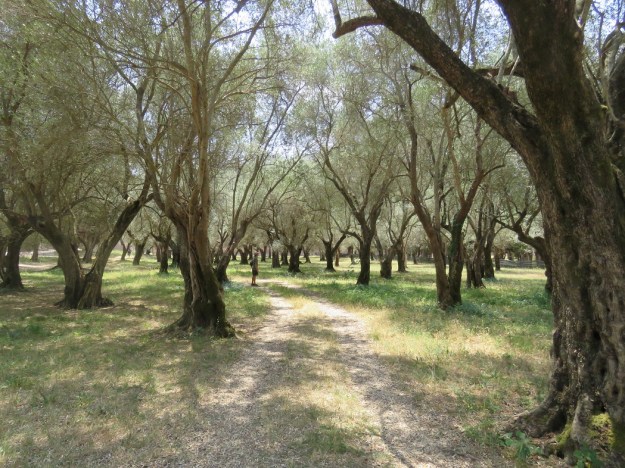
 Stand back. For I have found the most impossibly romantic olive grove. It is at Villa Adriana near Tivoli, which is relatively close to Rome. Adriana is the expanse of ruins that are somewhat quaintly described as Hadrian’s Villa. At about a square kilometre in area, it would be a mistake to think of it as Hadrian’s country retreat. It is more akin to an estate that was likely on the scale of a town. It is an enormous site where there is still much archaeological excavation to take place. On the day we visited, the temperature was in the mid thirties, the place was nearly deserted and there was not a breath of wind.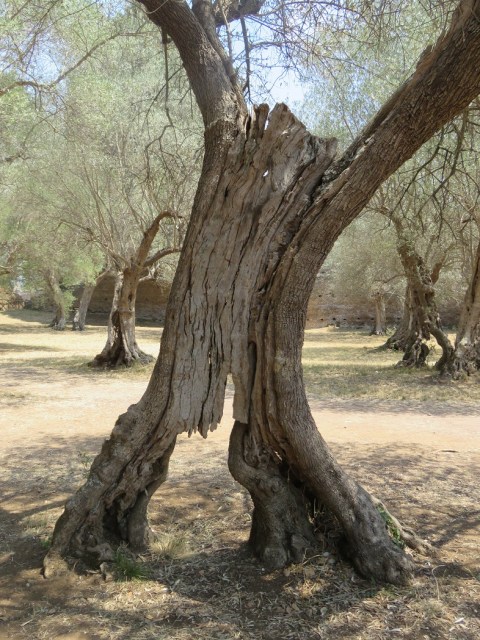
Unless you are a scholar, there are only so many ancient Roman ruins that enthral and only so many times one can ooh and aah over the wildflowers growing amongst the tumbled stones before shade and a cool beer start calling. But then we came across the olive grove.
I use olive oil; I eat olives; I can even enjoy dipping a tasty bread finger into a bowl of high quality, single origin fresh olive oil. But I have not been convinced about the romance of the olive grove before. The vast olive plantations of Spain I had seen were industrial production.
I was once told by somebody overstepping all personal boundaries that I lacked any romance in my soul. This was because I had described the mass vineyards of sauvignon blanc in Marlborough as being industrial horticulture. When my critic looked at them, I am pretty sure he saw the quaint little family vineyards of Italy whereas I saw hectares of tanalised timber and corporate investment. That searing dismissal of my finer feelings came back to mind as Mark and I wandered the Adriana olive grove. I just wanted to photograph every tree. Here was romance and antiquity in its original form.
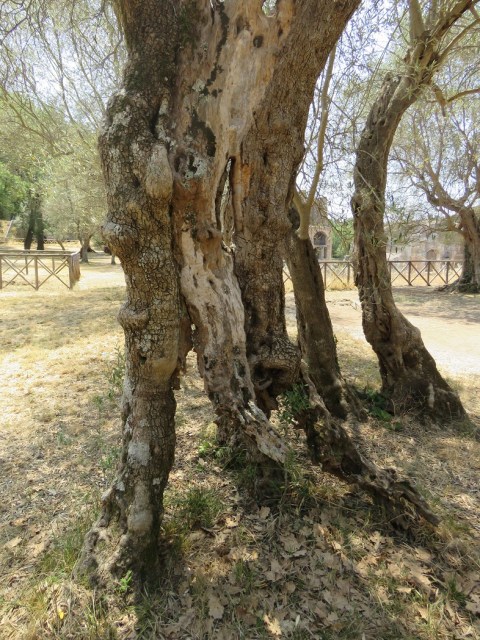 I have no idea if it is still managed as a commercial operation but the lack of olive stones beneath would suggest that the crop is gathered. These were venerable trees clinging tenaciously to life down the centuries. I did a quick net search and found that at least some of the Adriana trees have been given monumental status.
“A monumental olive trees has an aesthetic destination, since production efficiency is undermined due to the elevated costs to maintain them. Often, producers will use these secular trees as emblems of an olive oil produced from younger plants of the same variety. “These plants are icons of a territory, a heritage, a tradition, a culture,”
As I read that quote, I think it must have been translated from Italian but it captures the flavour. It continues:
“An interesting fact about dating monumental olive trees is the difficulty in calculating the age because the inner part of the origin area tends to disappear due to diseases over the centuries. The wood keeps growing laterally but is internally hollow, often making it impossible to calculate the exact age, leaving scientists to estimate using available data.”
From the Olive Oil Times.
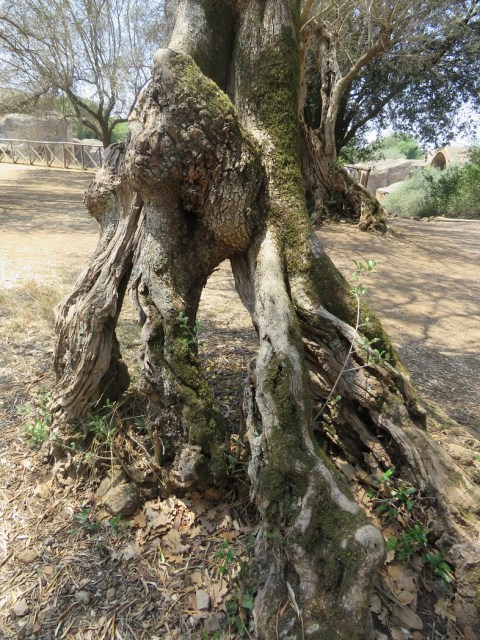
The age of some of these Adriana olives has, apparently, been calculated at around 660 years. So they don’t date back to Hadrian, just to the fourteenth century. And the hollow centres are a typical feature.
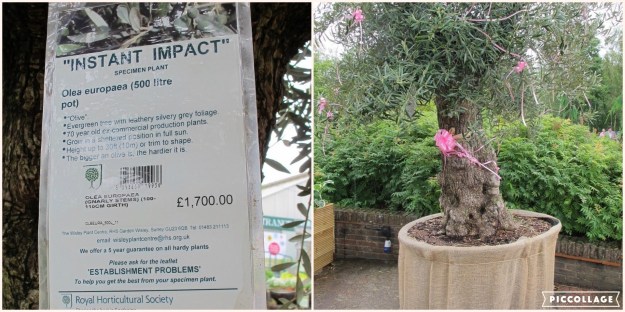
Seen in 2014 at RHS Wisley
At least the monumental status may protect these trees from the ignominy of being dug up and shipped over to Britain for sale with a huge price tag. Instant maturity for English gardeners wanting to pretend that they are living in Italy at £1700 for a relatively young plant of a mere 70 years.
Lacking the rose tinted glasses of the former colleague who thought the vineyards of Marlborough were “romantic”, it is going to take a lot to convince me that the recent olive plantations of New Zealand are anything but utility until those trees are nearing a century of age at least.

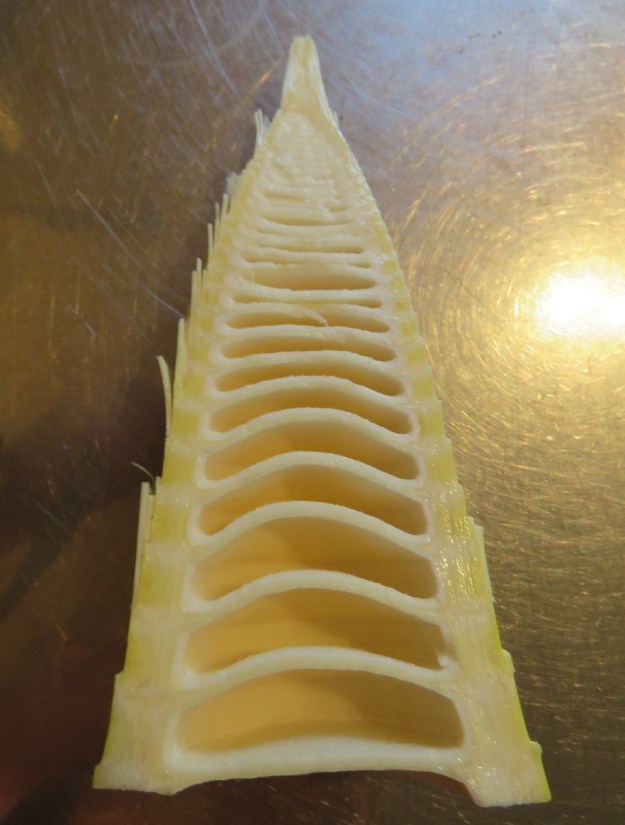
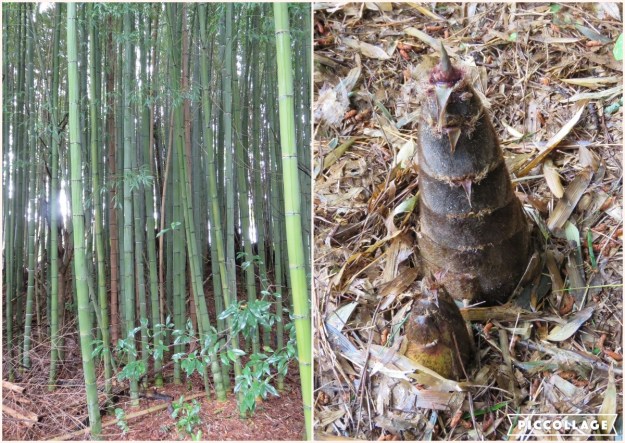 Our stands of giant bamboo are a never-ending source of disappointment to us. That is because they are enduring proof that the cargo cult does not work. The cargo cult is that school of thought that says “build it and they will come”. We often see it espoused in this tourist backwater where we live. Build a café/gondola/light rail/cruise ship terminal/tourist hub (strike out any which do not apply) and visitors will arrive. Well no panda bears have arrived here, is all I can say. I even checked that they eat Phyllostachys edulis – it is not their favourite bamboo but they will eat it.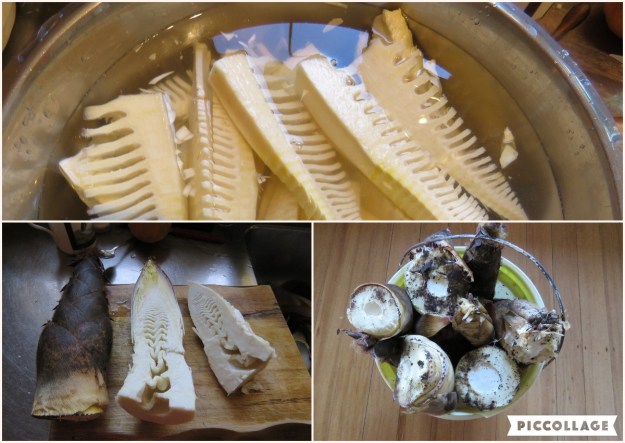
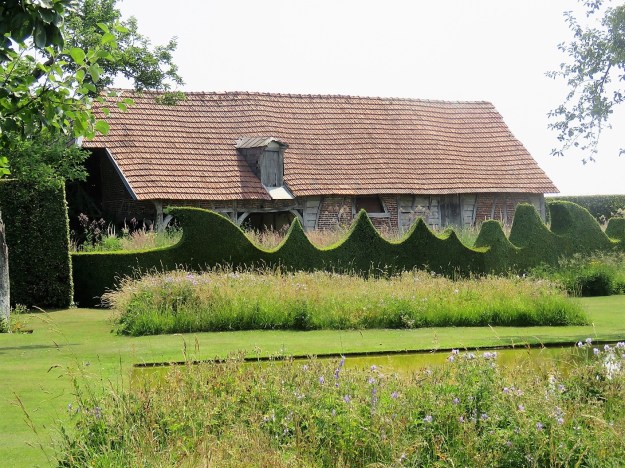
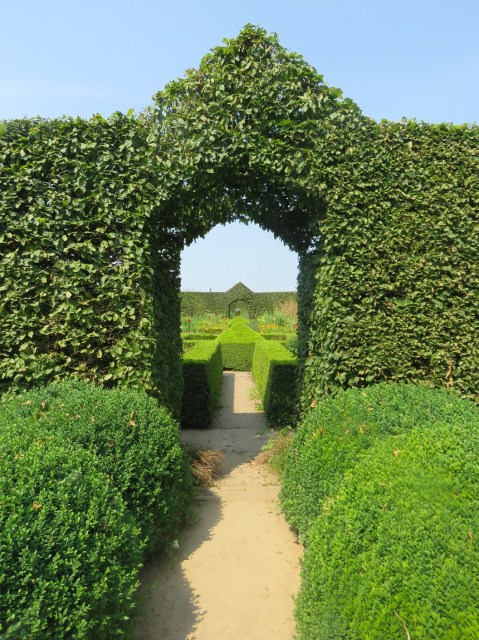 In the same garden the green walls in le jardin d’ été (the summer garden) are less unusual but still performing the dual function of both restraining and protecting extravagantly loose plantings while providing a sharp contrast in style. The hedges are the structure and form within the garden.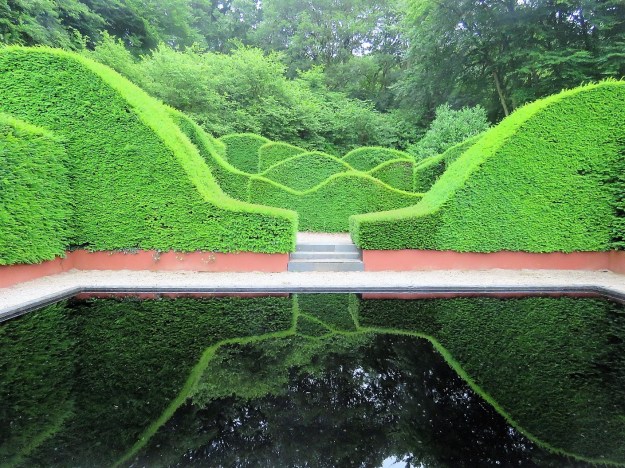
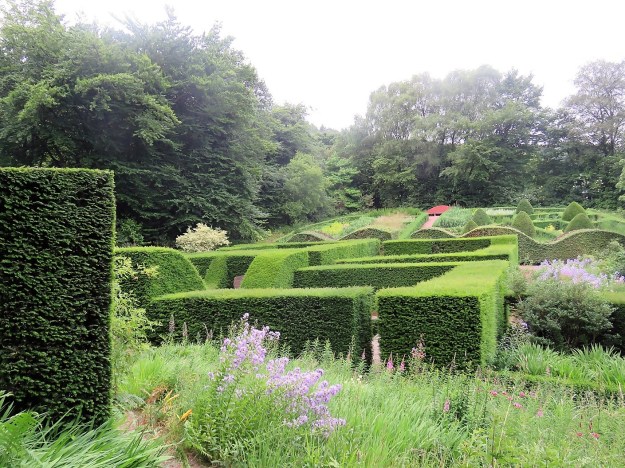
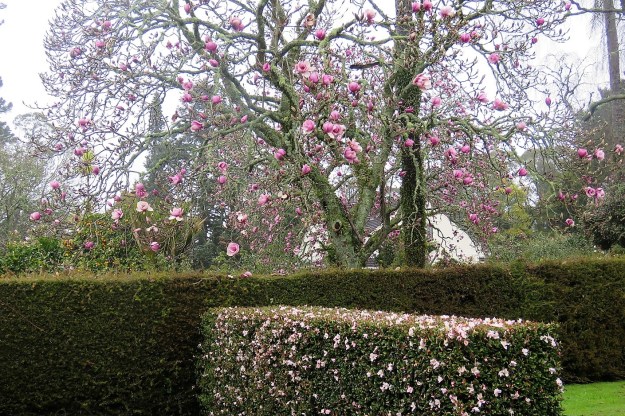

 I have only seen the white garden at Sissinghurst once and, to be honest, it did not inspire me at the time. I need to go and have a second look but certainly leading English landscape designer, Dan Pearson’s comments on white gardens in general and Sissinghurst in particular, rang true for me. “Too many whites together in one space”, he wrote. Vita Sackville West called it her ‘grey, green and white garden’. Maybe over the years, more attention had been given to the white flowers at the expense of grey and green tones? Or maybe it was just the sheer size of it and the tight constraint of all those neatly clipped hedges and edgers that did not inspire me. And the memories of all the customers I met in the trendy nineties, mostly of the Ladies Who Lunch brigade, buying plants for their white gardens. There must have been an awful lot of such gardens going into aspirational New Zealand real estate back then.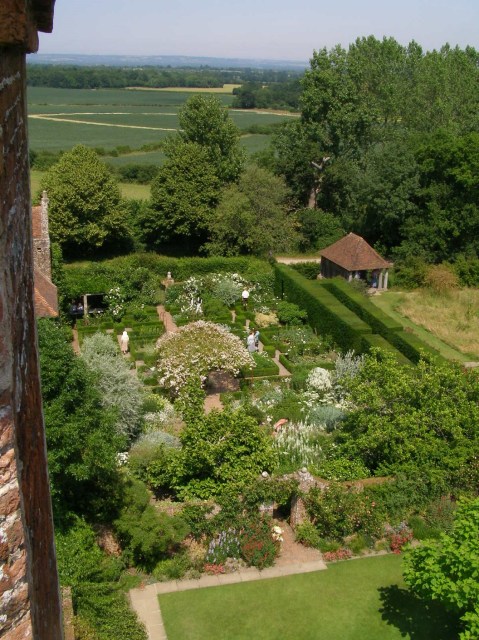
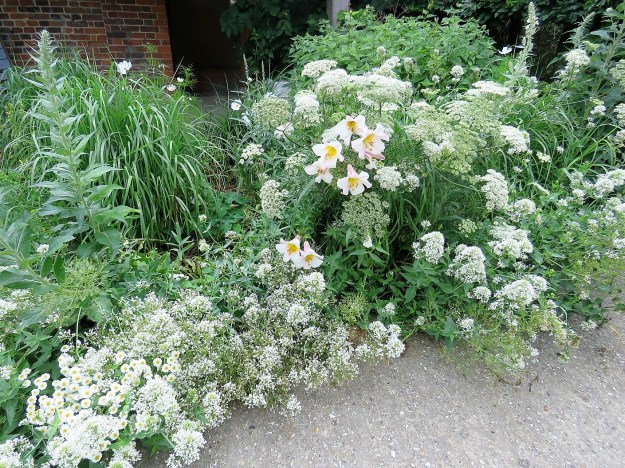
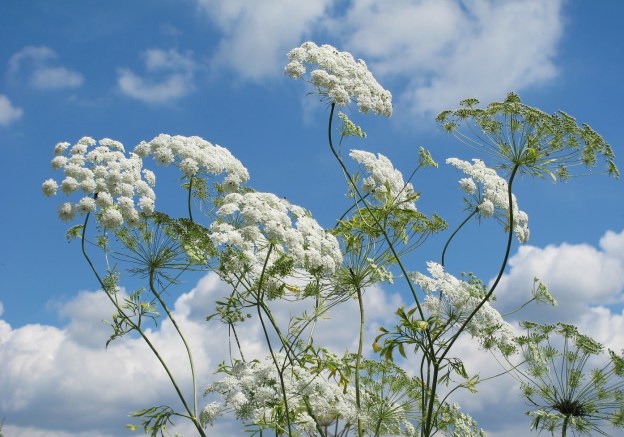
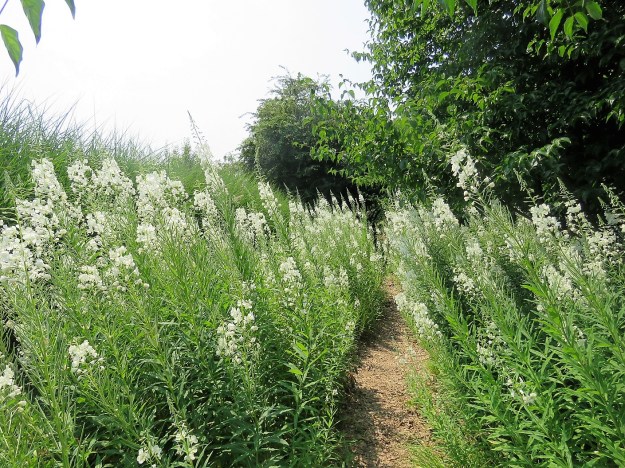 The white avenue of Epilobium angustifolium ‘Album’ at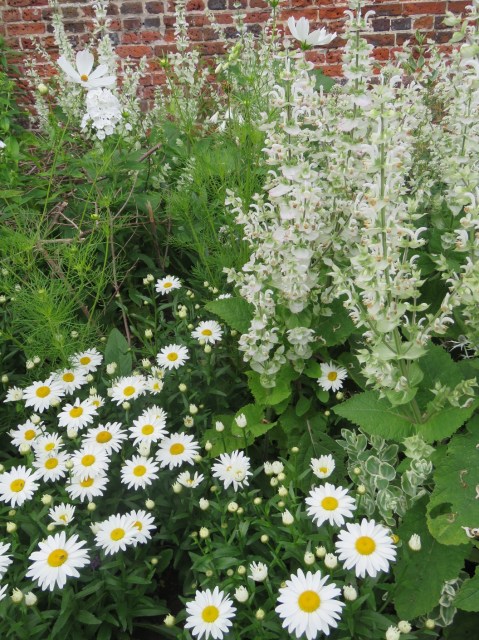

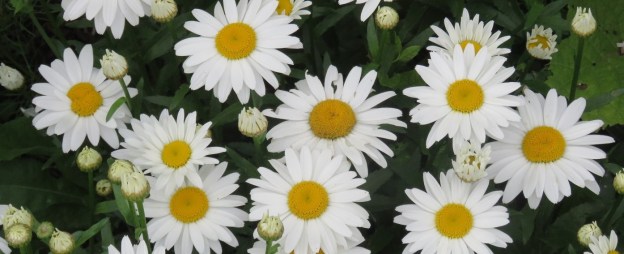
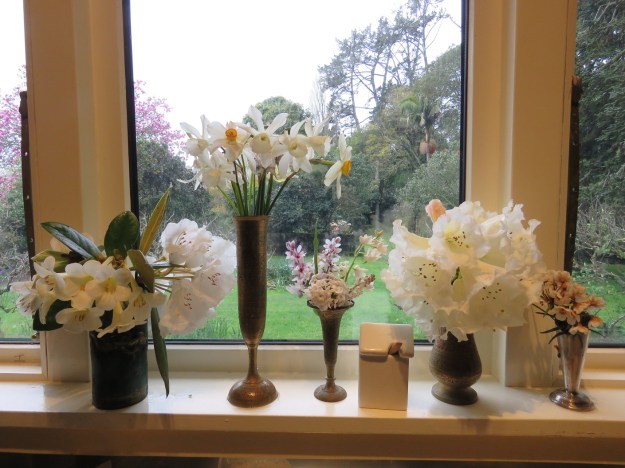
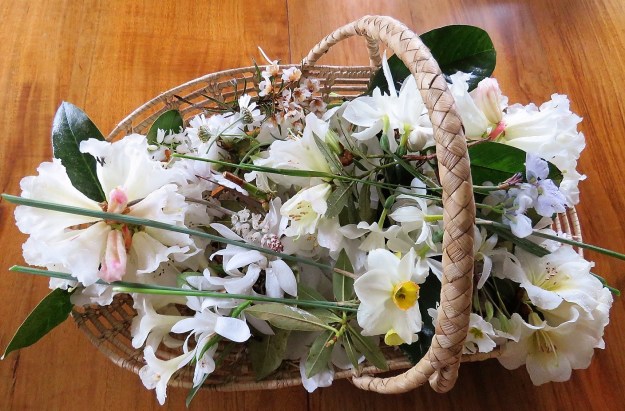 I have been drafting a piece about contemporary white gardens for a publication, so my mind has been on white blooms. Yesterday, in the post-election hiatus and the gloom of a wet, grey day, I headed round the garden with my vintage flower basket to pick a selection of white and largely white flowers.
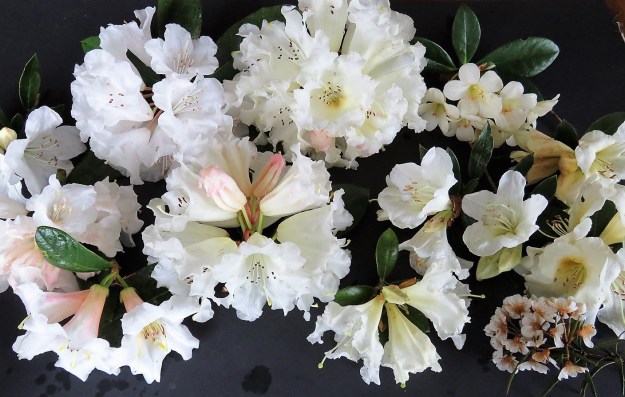 Ringing in my ears were Dan Pearson’s words above, even though I had read them so really they should have been flashing in front of my eyes – visible rather than audible, so to speak. I had not really got my head around the different shades of white before. Neither, I am sure, had the many women whom we used to describe as being of the Remuera genre back in the 1990s, but who would be known as “ladies who lunch” these days. These were the ones who were hellbent on putting in a white garden, à la Sissinghurst. They were numerous and, in our peak retail days, we met a fair number of them. I recall some for whom white flushed pink was out of the question. Candidates for their white garden had to be pure in hue. White and nothing else. I wish I had the Pearson quote back then. There are many, many plants that open from a pink bud to a white bloom.
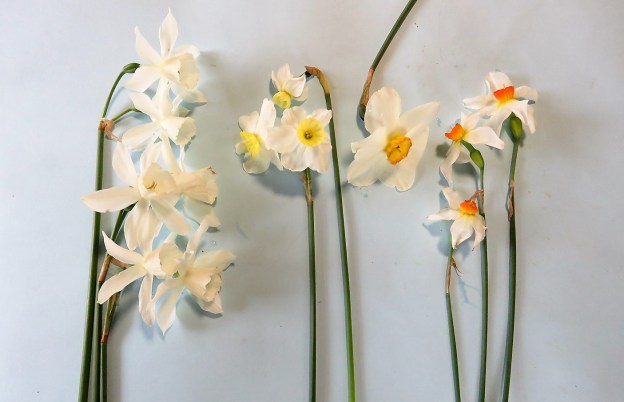 Is Narcissus ‘Thalia’ (on the left) acceptable in a white garden, though it is cream, not white? If ‘Thalia’ is acceptable, how about the narcissus with the pale lemon corona and white petals? And if that lemon corona is still okay, does this go across to ‘Beryl’ and other poeticus hybrids with white petals and small coronas which are somewhat stronger coloured and into the yellows and oranges? Where is the cut-off point? I tell you, this white garden business is fraught with problems and judgement calls.
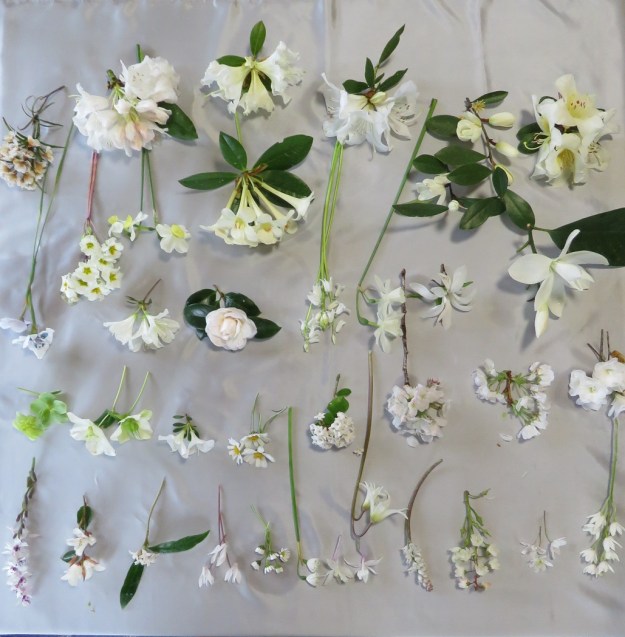 Are green flowers permissible? If so, why not the white Moraea villosa with blue peacock eye markings or Lachenalia contaminata or Onixotis triquetra which are white with maroon markings? If the latter two are not acceptable, does that rule out the white rhododendron with maroon spotting. Is it not sufficiently pure? Is it okay for a white rhododendron to open from a soft pink bud? No? How about a soft lemon bud or one with a green cast?