

Casa Batlló was a private residence in the heart of Barcelona and the owners at the turn of last century were clearly not faint-hearted because they commissioned Antoni Gaudi to do a full makeover on their residence. Six stories of Gaudi creativity and flamboyance executed on an existing city terrace house in the early 1900s. It is spectacular, in a domestic residential sort of way.
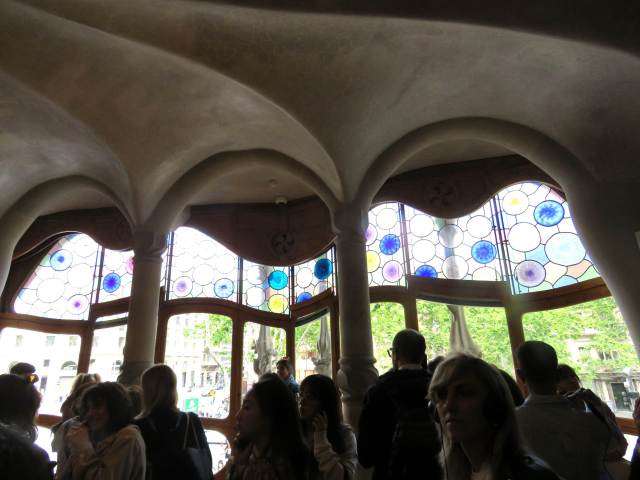
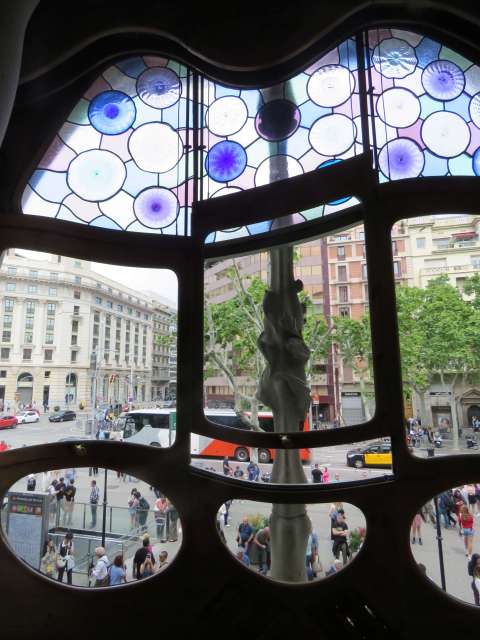
Again, the joy for me was in the light. I have always thought it would be really interesting to have a house with irregular windows breaking free from the square, the rectangle or the circular. Gaudi certainly managed it and the windows even opened. They are nothing short of sensational and, to my mind, the best feature of this extraordinary residence.
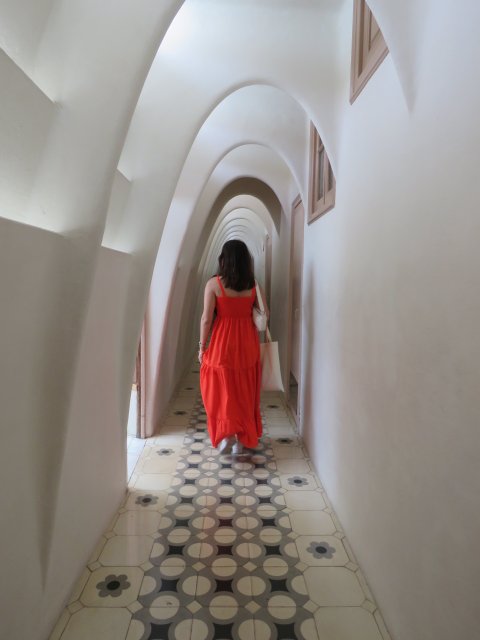
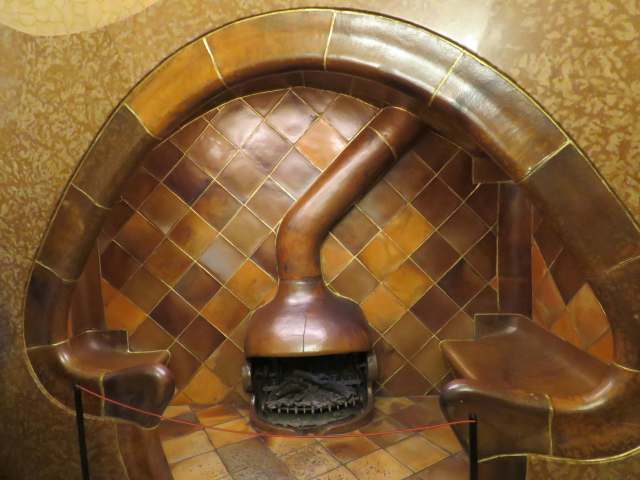
Gaudi really didn’t like straight lines and flat surfaces. The ceilings and walls often deviated from the norm and this is very much part of his signature style.


But let us head out onto the roof terrace, along with the other sightseeing hordes. The Spanish do a good line in roof terraces but only Gaudi added the mosaic froufrou that defines this one. Looking down gave me vertigo but I can see how one could sit up there and feel on top of the world, were it private again.
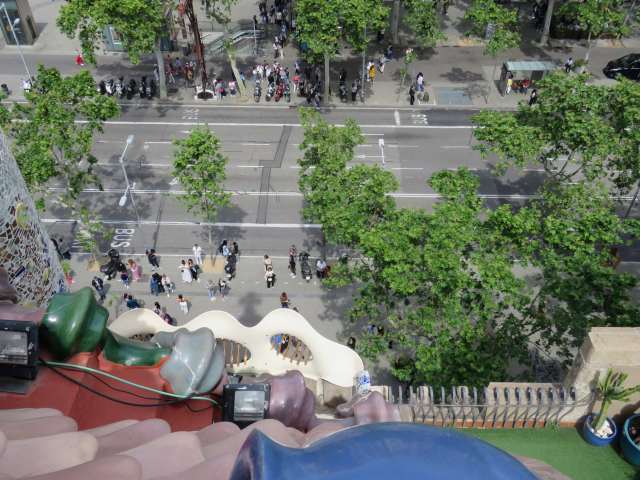

In its current state, the terrace is housing a café, festooned with lights and wiring and… wait for it… the Sky Garden. We were gold ticket holders so we alone were permitted to ‘Discover a new perspective of the rooftop’. This has absolutely nothing to do with Gaudi that I could discern but there was a thrill of anticipation as we showed our gold ticket entry and donned the mandatory white hard hats before climbing about three steps onto some scaffolded construction.

A FAKE FLOWER ARBOUR – no, I am not joking. That is synthetic grass, too. It was so bad it was actually funny. What you see in the photos is it but looking better in a photo than in reality. You step up to enter one side, walk through and step down at the other end, handing back your monogrammed hard hat. What were they thinking when this project was conceived?
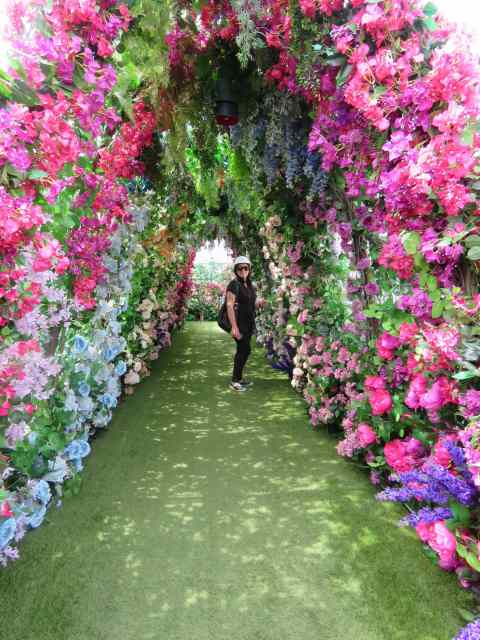
There are unexpected modern introductions to the world of entertainment at Casa Batlló and I guess this is the reality of keeping a modern tourist operation viable. The house is still in private ownership but with the Bernat family these days, not the Batllós. They carried out major restoration and set the place up to cope with one million visitors a year. For me, the restoration of the house alone was fascinating and a complete experience in its own right. It seems that is no longer enough for many others who expect more whistles and bells because the novel and unexpected whimsy of Gaudi is not sufficient.

The sound and light experience at the point just before exit was unexpected and pretty intense. It is billed as ‘The first real 360º experience in the world. The new media artist Refik Anadol presents his pioneering work “In the Mind of Gaudí”.’ We are talking about suddenly being enclosed in a room without warning and immersed in a three minute surround sound and flashing light experience that was akin to a drug-induced trip. Personally, I doubt that Gaudi lived his life in the permanent state of hyped-up hallucination but there we are. It was at least beautifully put together and executed, unlike the modest rooftop flower garden of fake flowers.

I see one aspect of the modern Batlló experience entirely bypassed me and that is the capacity to illuminate the front façade at night in ever-changing colours and effects. I like a good lighting display but I rather feel that one might want black-out curtains were one a resident in the many neighbouring apartments. I am sure it was much quieter when the original family were still in residence.
Next week – back to gardening and gardens of the French Riviera.




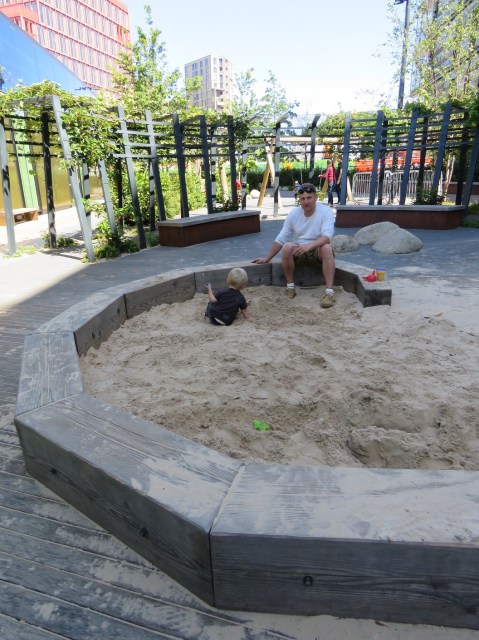
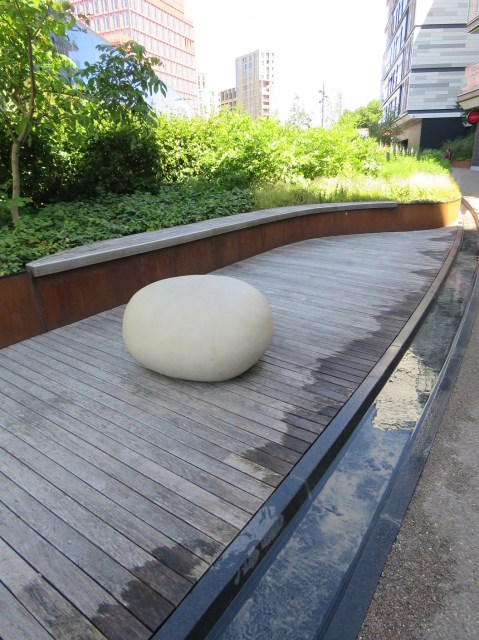
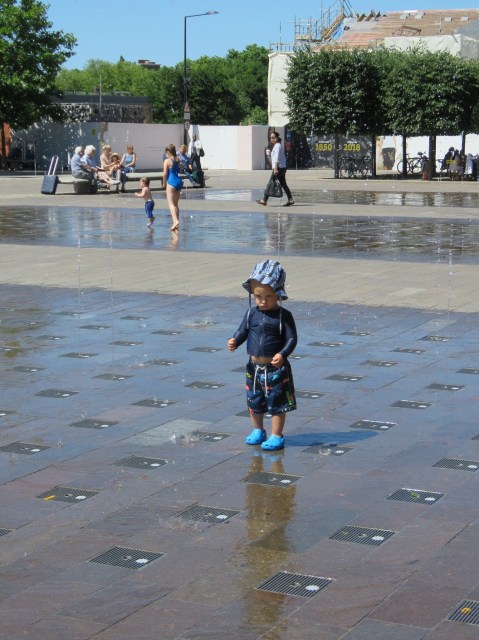
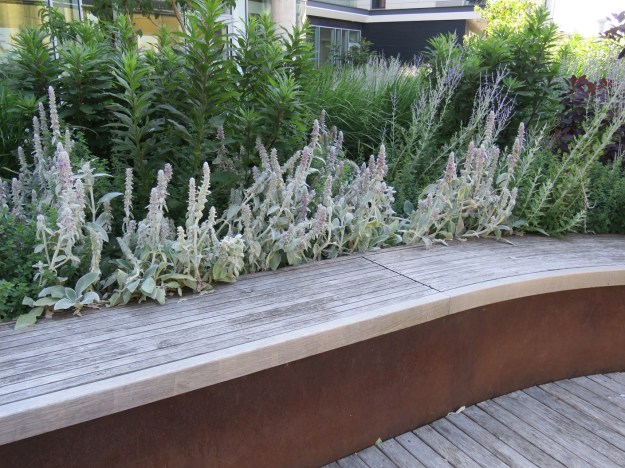 As we walked along, we saw a few sodden children in their togs (bathing suits) and towels walking towards us. We rounded the corner and there, truly, was an amazing sight. The fountain in Granary Square. It was large and safe for playing. The seating around was occupied by parents watching their children as the water danced in sequences, sometimes stopping altogether for a brief moment, sometimes shooting high and then in waves across the area. It was magnificent. And safe fun. An urban beach, of sorts. Our kids would have stripped off and been in that water like a shot when they were young. It wasn’t exactly tropical on the day we were there but clearly kids still love water play. At night it lights up – 1000 different points of water and light.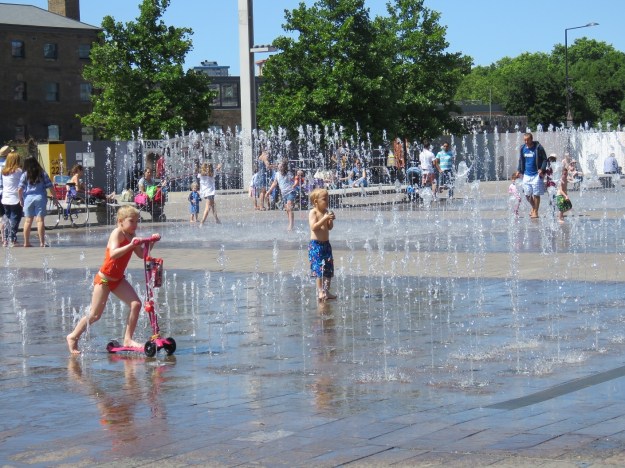
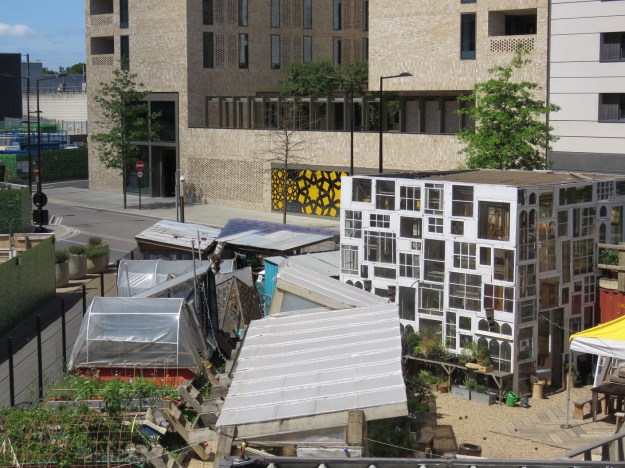
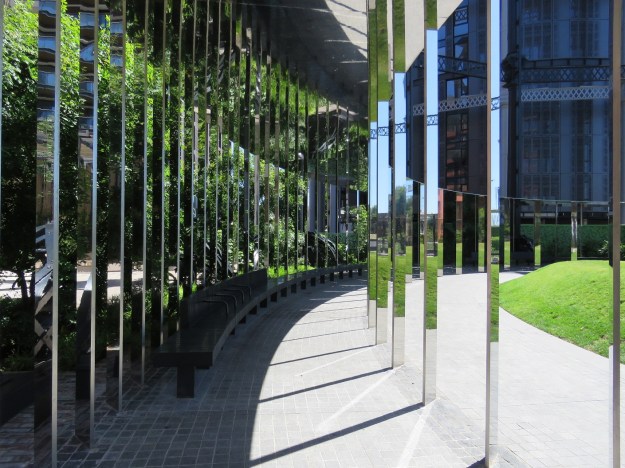 From there we wended our way round to the Gasholder Park, a major redevelopment utilising the old gas tanks for upmarket canal-side apartments and green space and gardens open to all. There is serious money going into this redevelopment around Kings Cross and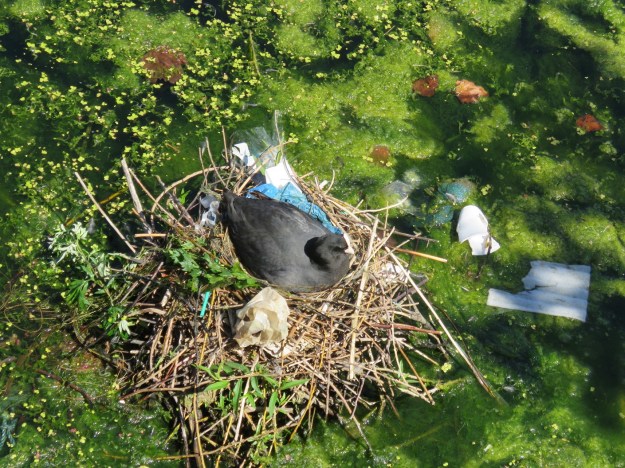
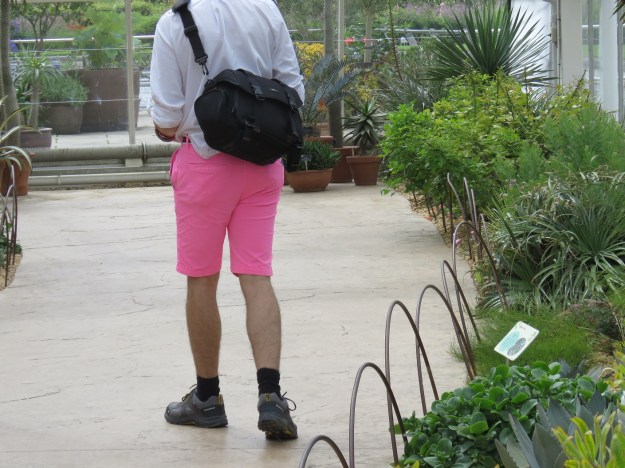
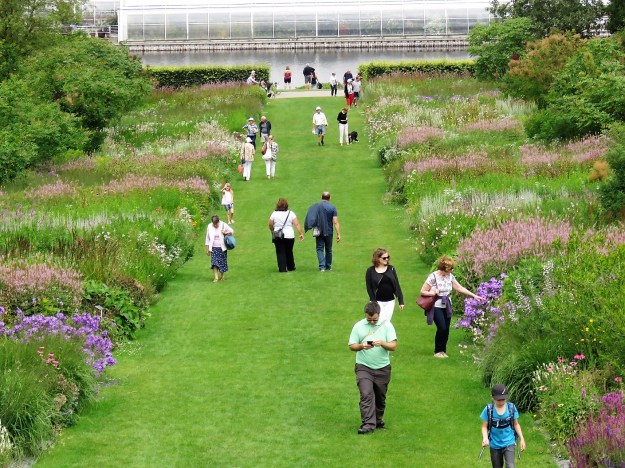
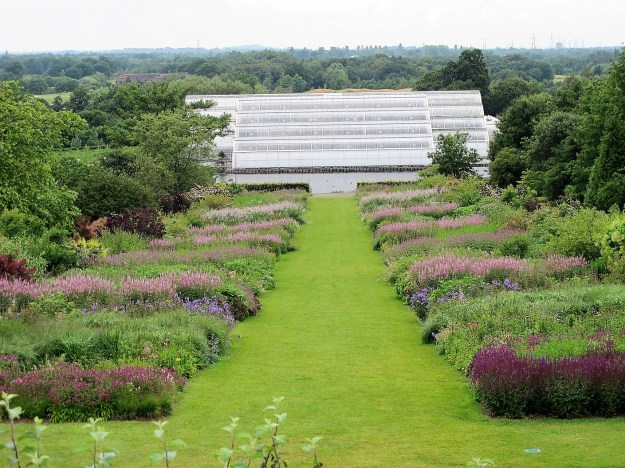

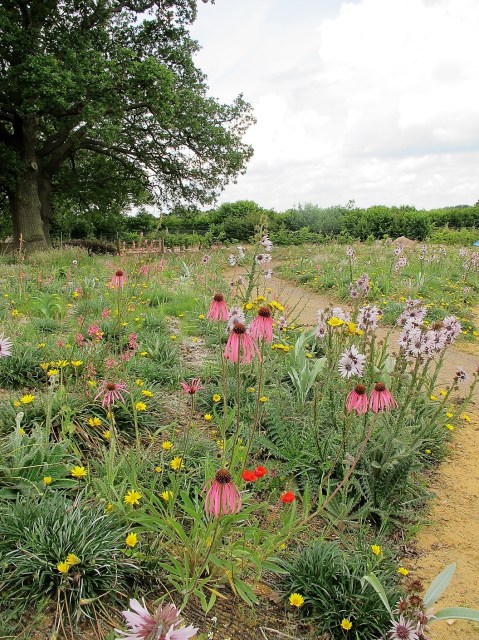
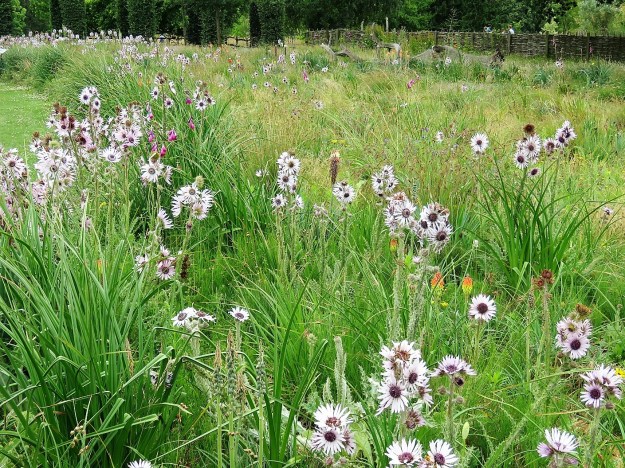
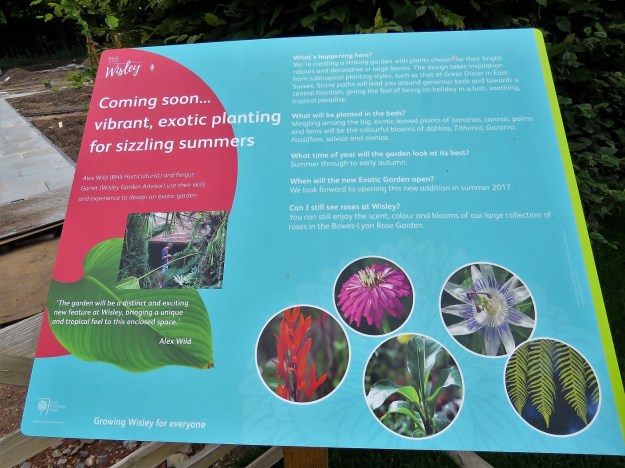
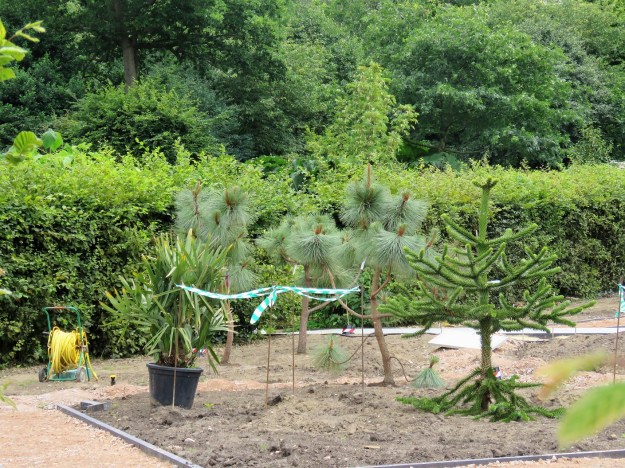 These friends had recently been to Great Dixter and expressed surprise at Christopher Lloyd’s dramatic ‘subtropical’ garden being taken out and seeing conifers going back in instead. It became a little clearer when we came across the Wisley project along similar lines. The conifers are being used as a framework for subtropical plantings. This is not a combination that would ever occur to a New Zealander but we will reserve all judgement until we see the finished product. Sometimes it is good to be surprised. Conifers are long overdue a revival and who knows? Maybe a new combination will launch a new fashion. Or maybe not.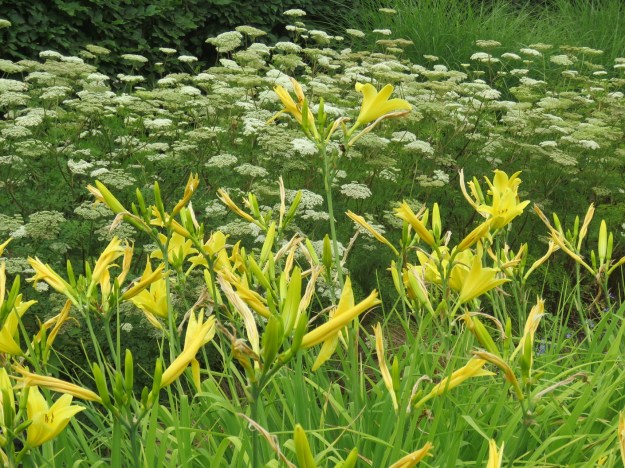
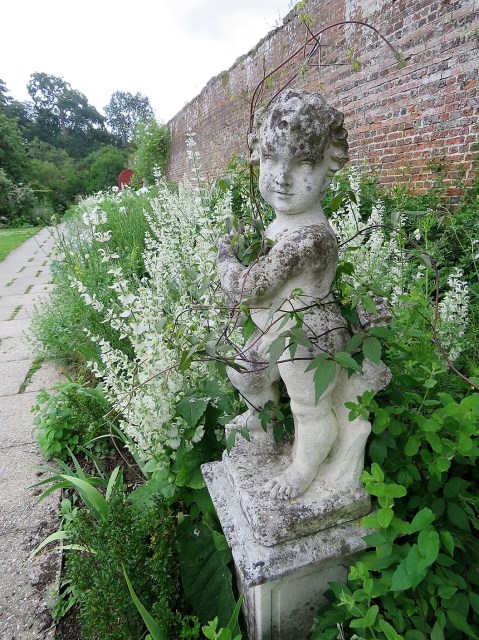
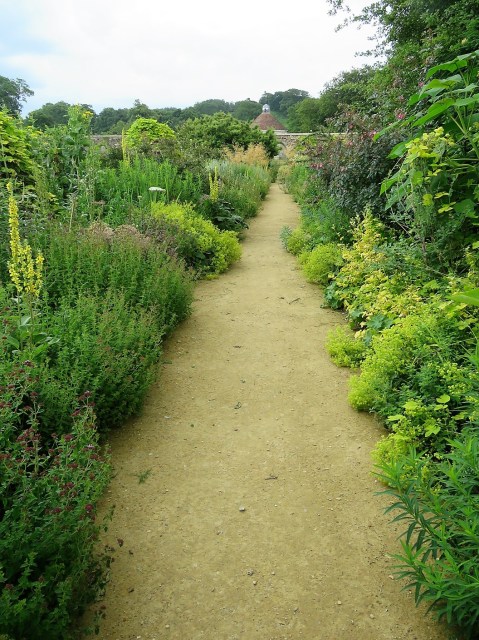
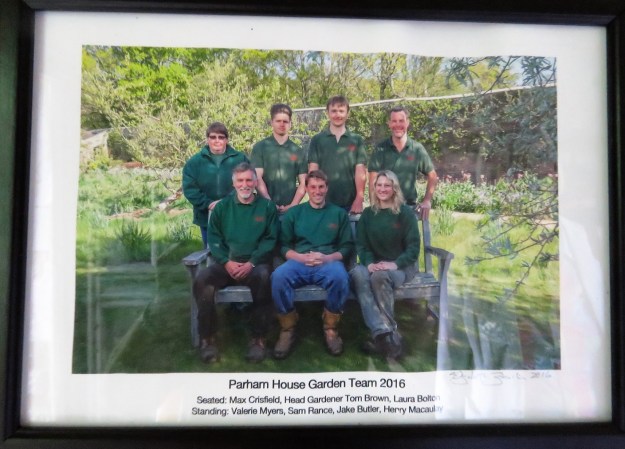 There was a team of seven hard working gardeners though I can’t tell you if they are all full time. We met the head gardener because he did his apprenticeship under the eye of our friend who took us there. Britain still has an enviable tradition of training professional gardeners. I have seen a few gardeners at work when we have been out touring, and I can tell you that these Parham ones were hard workers and focused on tasks to hand.
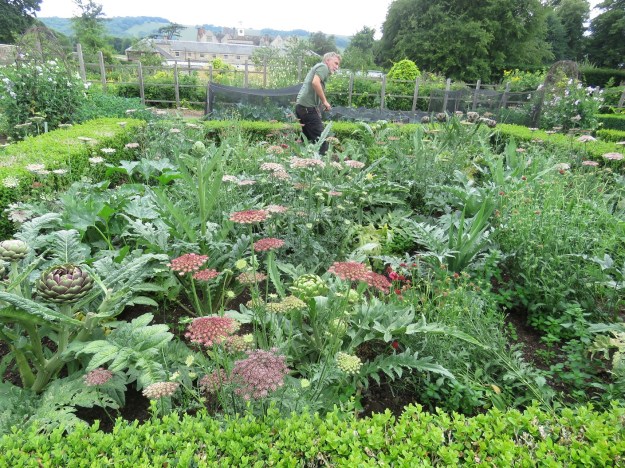 From memory, they are required to provide 30 buckets of blooms to the big house a week. That is a huge amount and they must be hard pressed in winter. But the production of both food and cutting flowers was impressive – highly productive, in fact. Also done without chemical sprays.


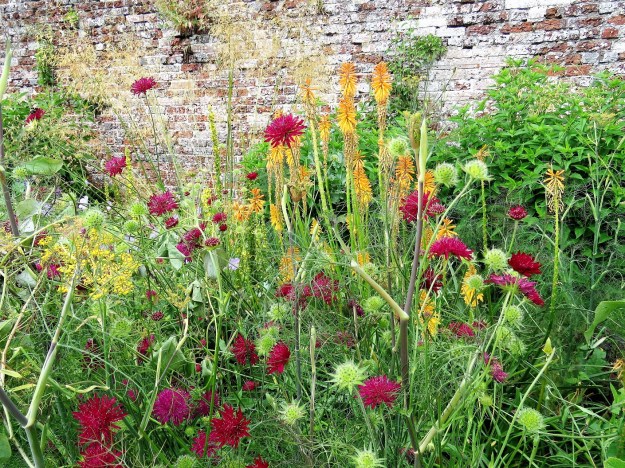
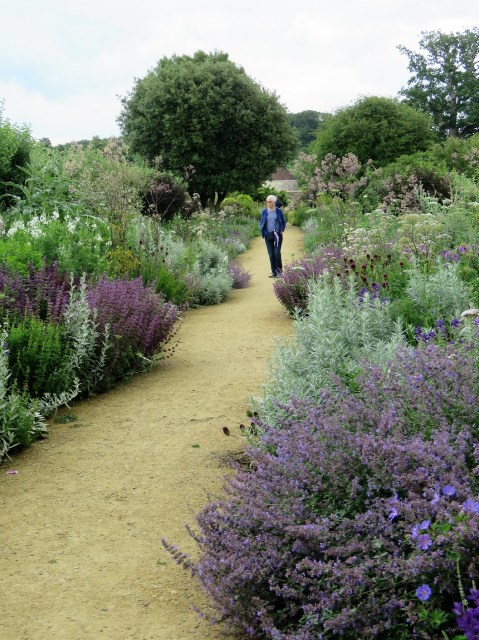 The herbaceous borders were another modern take on classic design and techniques. The blue border was the most recent to have had a major makeover and it certainly looked glorious. I complimented the woman in blue whom I photographed strolling through the border, for her superb choice of toning colours. The yellow border was less flowery on the day but carefully composed and easy on the eye. The shorter white border was also at peak border perfection that the Brits can do so very well. If there was a red border, I missed it entirely but I do not think there was.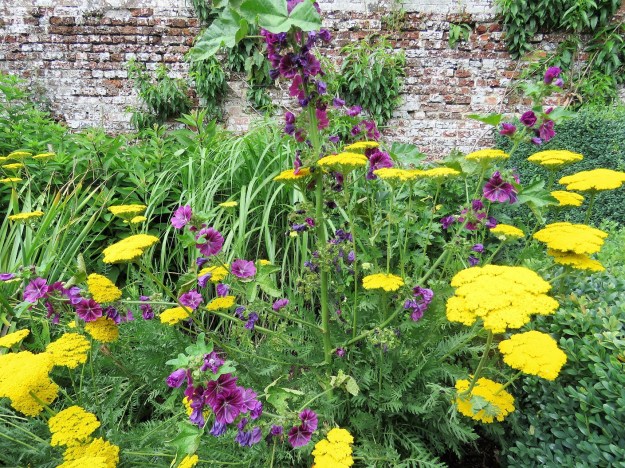
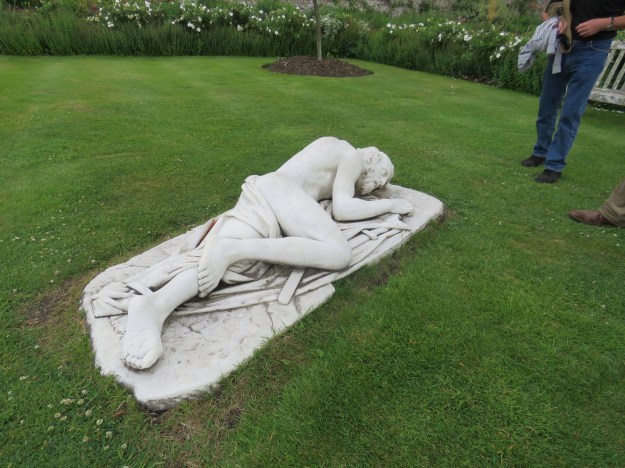
 Some of the statuary was… very white. Not necessarily to my taste. Some were more subtle than others. This was not. I am sure there will be somebody out there who can explain the significance of this figure and the inscription he is marking out with his finger.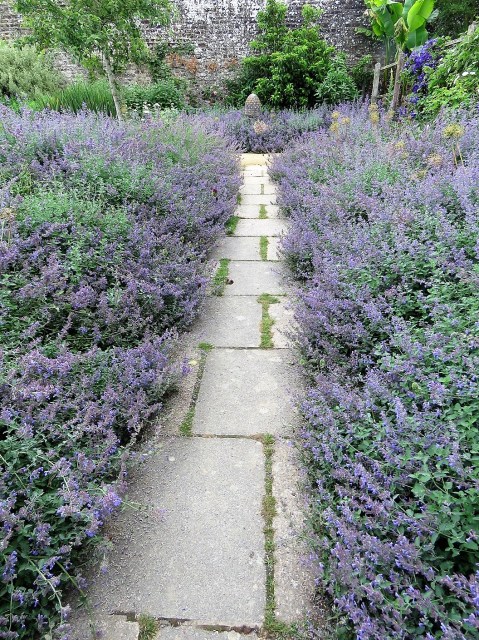
 Tikorangi The Jury Garden