Tag Archives: tried and true plants

Tried and True: Tree Dahlias

•Flower from mid to late autumn when few other perennials flower.
• Fill a large space in the garden.
• Many of the best new varieties available here have been bred in New Zealand by our own expert, Dr Keith Hammett.
•Deciduous, so the foliage dies away completely over winter and returns afresh.
• Easy to grow in good conditions which don’t get too dry over summer.

You do need space for these late autumn beauties and they will be badly affected by heavy frosts.
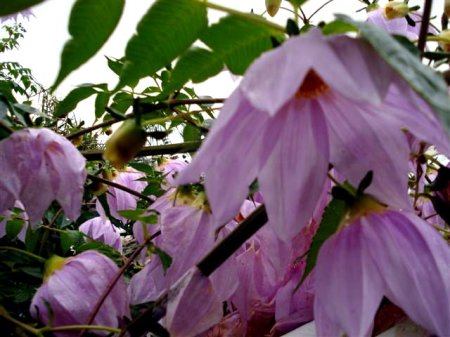

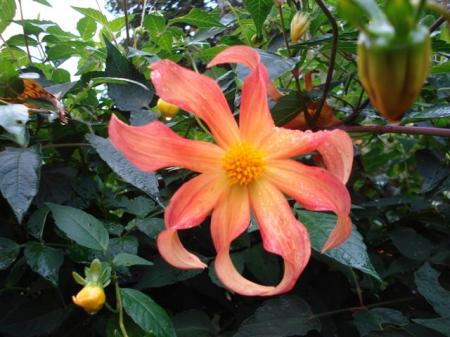
But if you have a suitable position, they are an easy-care delight. These two varieties are both from the breeder, Keith Hammett and alas we no longer have the names. The big, floppy pastel lilac is so pretty against our shed and I thought at first I was looking at a clematis from afar (it is about 2 metres tall). The golden orange sunburst bloom (love the slightly twisted petals) is a little more compact (a little shy of two metres) and has delighted us for a number of years, planted as it is by the mandarin tree whose fruit are colouring to match.

They are not called tree dahlias because they grow up like a tree but rather because they grow much larger than the usual type of perennial dahlias. In windy conditions they need a bit of support – some of ours we fence in with heavy duty bamboo cross bars. Otherwise, they are like any other dahlia with typical hollow stems and dahlia leaves, growing in a large clump from tubers below ground. Most tree dahlias come from D. imperialis which is native to Columbia and Guatemala which explains why they are not keen on cold and frosty conditions.
Tried and True – heucheras

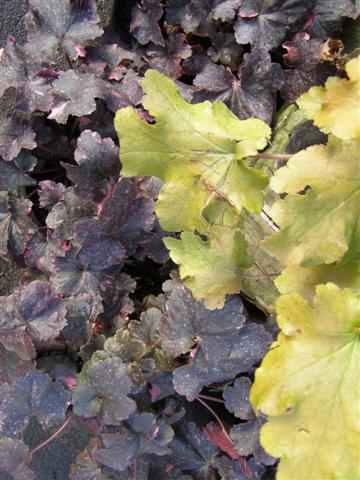
Heucheras - burgundy and lime shades

Heucheras - burgundy and lime shades

• Widely available in garden centres.
• Evergreen and generally hardy.
• Interesting range of colours and foliage markings.

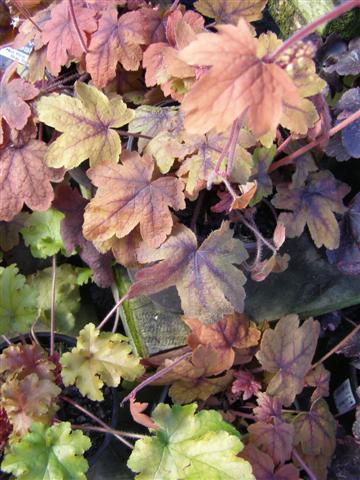
Heucheras have gone through something resembling a makeover in recent years, thanks mainly to American plant breeders, and are now a stock line in every garden centre. I have never heard them go under a common name in this country, but they are the clumping perennials with frilly, maple-shaped leaves often with mottled or frosted markings. They do flower but the tiny blooms are secondary to the wonderful foliage. Being native to North America, heucheras are reasonably hardy, even though they are evergreen. It was the lovely burgundy and purple shades which made most of us take notice of this plant genus here. Since then there have been a range of amber, gold and almost ginger shades as well and there is a lovely little lime green.

Heucheras in autumn tones

Heucheras in autumn tones

It took me a while to learn how to grow heucheras successfully. It was a little irritating to admire them in other people’s gardens and to have their owners smile smugly and say that they had no difficulty with them, all the while seeing my own plants get smaller, not larger. The secret, which they did not tell me at the time, is that heucheras are not a perennial that you can plant and leave for years. They thrive on being lifted and divided regularly (late winter to early spring is the best time for this) and replanted in well cultivated soil with plenty of humus added. I also find they do better in a colder, open area of the garden where they get plenty of light but they are not baked in the summer sun. In good conditions, the divisions reward you by making satisfyingly big clumps within the season with foliage which keeps its colour well and is generally untroubled by pests and diseases.

Tried and True – Camellia Mimosa Jury

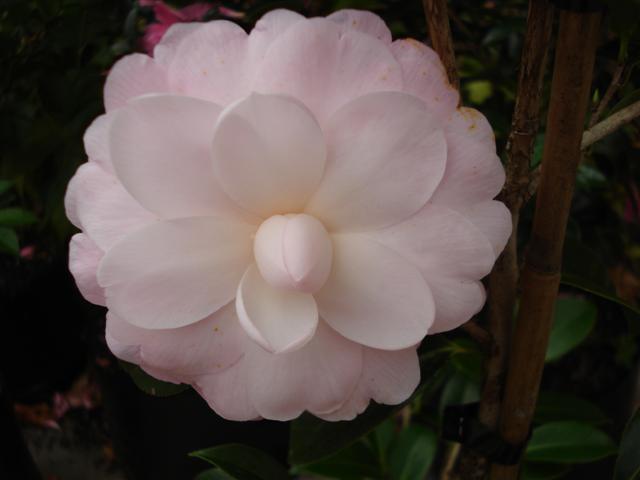
The floral perfection of Camellia Mimosa Jury

The floral perfection of Camellia Mimosa Jury

We have a familial connection here – this camellia was bred by Mark’s father, Felix, and named for his mother – but that is not why it is a tried and true plant. It is the perfection of the bloom which is its appeal, along with a much higher degree of weather hardiness than most pale, formal camellias. The regular arrangement of the petals, in similar lay-out to a water lily with no central stamens visible, is what makes it fall under the classification of formal (these rules are written down, I tell you). The soft pink colouring is particularly pretty. When the blooms are spent, they fall to the ground rather than hanging on as brown mush – a characteristic which is called self grooming.

Mimosa Jury has been around for some years now – there are established specimens locally in New Plymouth in St Mary’s Cathedral grounds. Left to its own devices, as has been the original plant behind our house, it grows tall and columnar, making an excellent hedger or accent plant. It also makes a brilliant clipped specimen. The neighbours have a perfect big lollipop Mimosa Jury as a feature. They have kept it tightly clipped and pinched out so that it is a solid ball of healthy foliage which will hold the perfect blooms out to display. In our opinion, this camellia is probably the best that Felix named and it is no wonder that it has stayed so popular over a period of years. Other formal camellias have bigger blooms but usually sustain much more weather damage and do not have as many flowers over a period of many months.

Tried and True – loropetalums

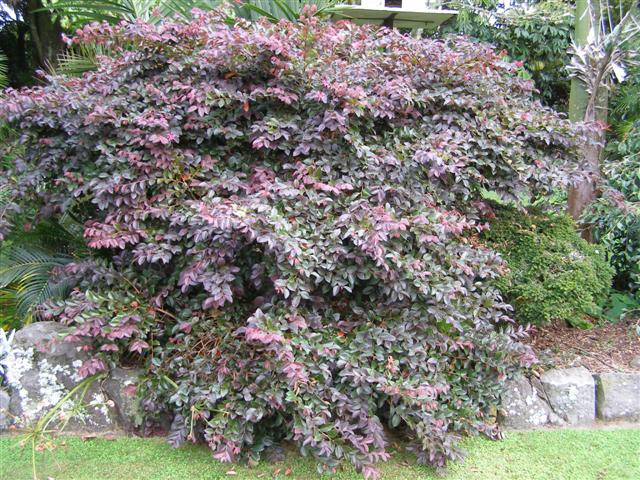
Loropetalums
• Widely available from most garden centres.
• Evergreen shrub.
• Tolerant of a surprisingly wide range of conditions but may need protection from heavy frosts and strong winds.
• Burgundy forms give colour all year round. 

The wine red forms of the loropetalum are a particularly good recent introduction to this country


The wine red form of loropetalum (sometimes called the Fringe Flower) is a relatively recent introduction to this country and a particularly good one at that. It builds in layers and left unclipped it can reach two metres by two metres reasonably quickly. It is easily shaped but is rather brittle so will snap off in wind. We grow China Pink but there is a form called Burgundy and several others – all appear to be very similar and equally good with one exception. Shun Razzleberry if you find it on offer. It starts with good colour in spring but then changes quickly to a murky, dull olive green of no merit that I can see. The flowers on the burgundy forms are interesting clusters of shocking pink spidery petals and stamens but discreet, not showy. If you have a Singapore stopover and go to the Chinese gardens there, you will see all sorts of techniques with bonsai, clipping and hedging of the attractive loropetalum shrub.

Tried and True – sasanqua camellias

The cheerful face of Camellia sasanqua Gay Border

• Autumn flowering.
• Excellent hedging and good wind tolerance.
• Generally happy in full sun or partial shade.
• Widely available in a range of colours.
• Hardy in all Taranaki conditions.
• Not affected by camellia petal blight.

The first camellias of the season to flower each year are the sasanqua group from Japan. The white sasanqua hedge, Setsugekka in particular, has become a garden cliché in New Zealand but that should not detract from the garden value of this useful and hardy group of evergreen shrubs. When the deciduous trees are changing colour and dropping their foliage, the mass flowering of sasanquas is a cheerful sight. With smaller leaves in a good deep green and a growth habit that is a little lighter and airier than the rather solid japonica camellias which flower later in winter, sasanquas are less chunky as garden plants.

As well as the whites (Early Pearly, Silver Dollar, Mine No Yuki and the like), there is a whole range of pinks from pale to deep shades, a few reds and some attractive bi-colours such as the deep pink and white Gay Border. The flowers are softer and less formal than the japonicas. If you want to clip your sasanqua camellia, the rule of thumb is to do it as flowering ends with a follow-up on wayward growths in spring. It will then hold its tidy form for the rest of the year.