Tag Archives: Winter garden

Blue sky winters

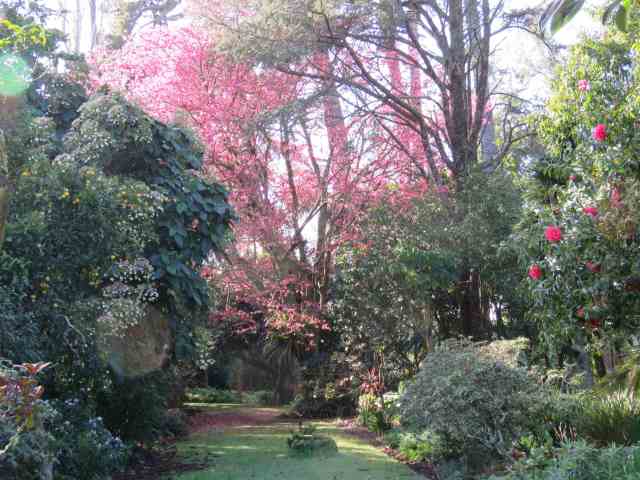
The bright pink Prunus campanulata are controversial in this country because of their seeding ways but this enormous specimen is sterile and doesn’t set seed. The greatest danger is being hit by low flying birds as scores of tui move around the garden.

We are very sensitive about criticism of the climate in our neck of the woods. It is true that other places warm up more quickly in spring, some of us would like another degree or two of heat in summer and spring can be wet and windy. For many years we would cringe as garden and nursery visitors from further north or east would come in, hopping out of their heated cars and shivering, saying how cold and miserable it was here and asking if it was always like this.  Or worse, asking “How can you grow such tender material in your cold climate?” One person clearly pushed Mark too far because I heard him reply with a dead pan face that we get out at night with little woolly jumpers and blankets to cover them up.
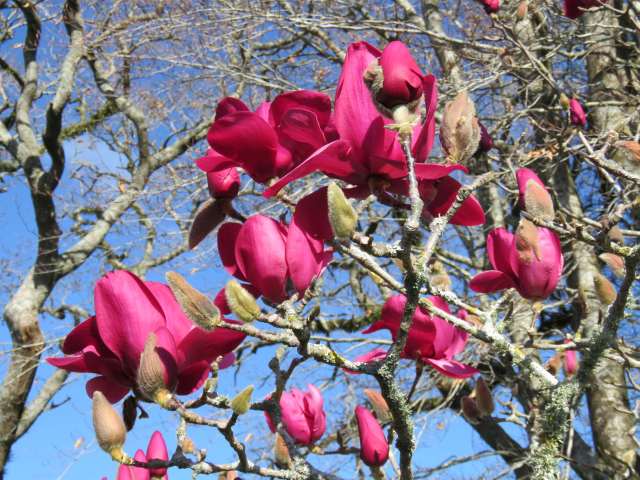
First blooms opening on Magnolia Vulcan, one of our early flagship Jury magnolias

We may not have higher temperatures in summer but we have high sunshine hours and high light levels and that makes a big difference in winter. Of course, it can get cold and we have winter storms as cold fronts move over bringing wind, rain and gloomy skies. But in between, we can get bright blue skies and sunshine for days on end. Right now, in what we deem midwinter and our bleakest month, we still get 10 hours of daylight.
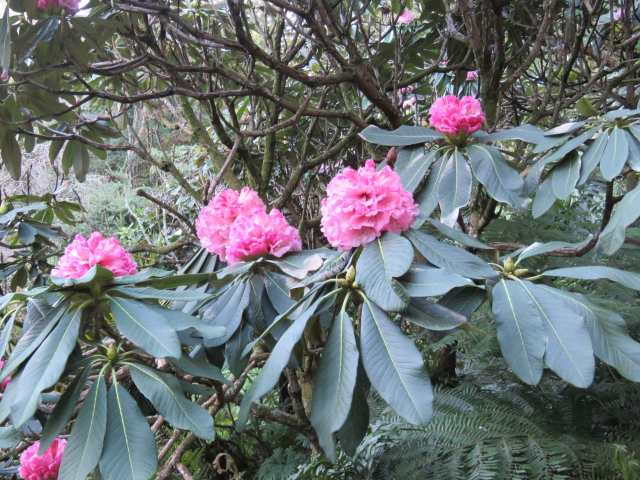
Rhododendron protistum var. giganteum ‘Pukeiti – one of the big leafed varieties that flower early. We also have subtropical vireya rhododendrons in bloom.

This train of thought was started by reading a blog post by Christchurch gardening colleague and friend, Robyn Kilty. Headed ‘It’s winter drear, my dear’, it vividly conveys her experience of mid winter, where low light levels and grey skies suck the colour out of both garden and landscape.
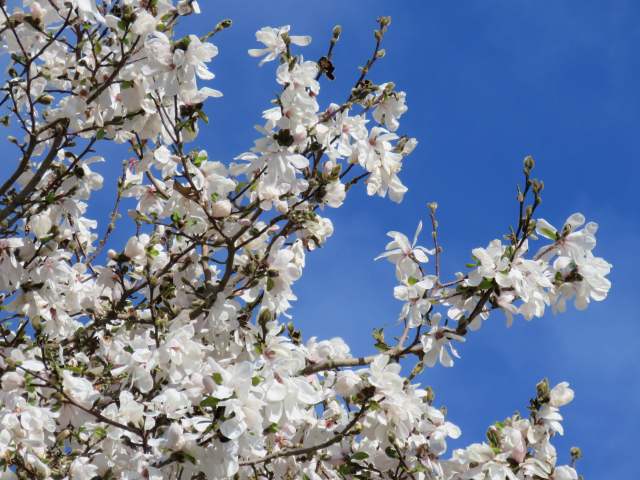
Blue skies a-plenty. With a white magnolia – likely kobus, flowering in a garden down the road.

I have not been to Christchurch in midwinter so I have no opinion on their winter conditions. For overseas readers, we are in the middle of the west coast of the North Island. Christchurch is in the middle of the east coast of the South Island. Clearly our winter experiences are totally different and that is what happens when you live in a country of long thin islands that run north to south, surrounded by vast oceans with no major land masses nearby. There are big variations in climate.
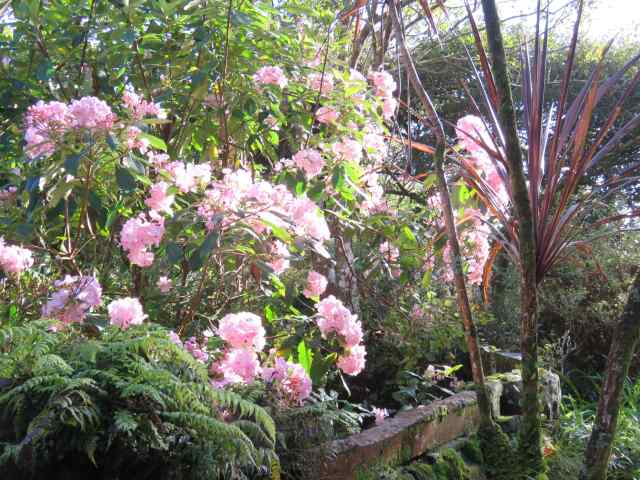
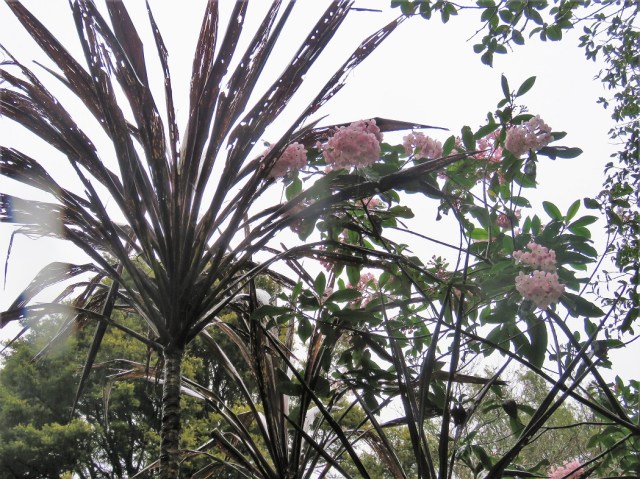
Luculia ‘Fragrant Cloud’ flowers on, undeterred by winter.

Nobody is going to suffer from seasonal affective disorder here in Taranaki. We are at latitude 39° south. If you match that to the 39th parallel north, we correspond to places like Ibiza, Sardinia and a line through California. Not that this means in any way that our climates are similar but it does mean our winter daylight hours are greater, as is the height the sun rises in the winter sky.
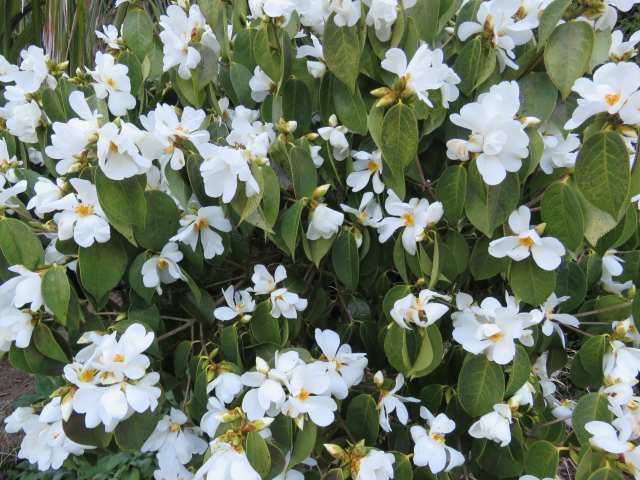
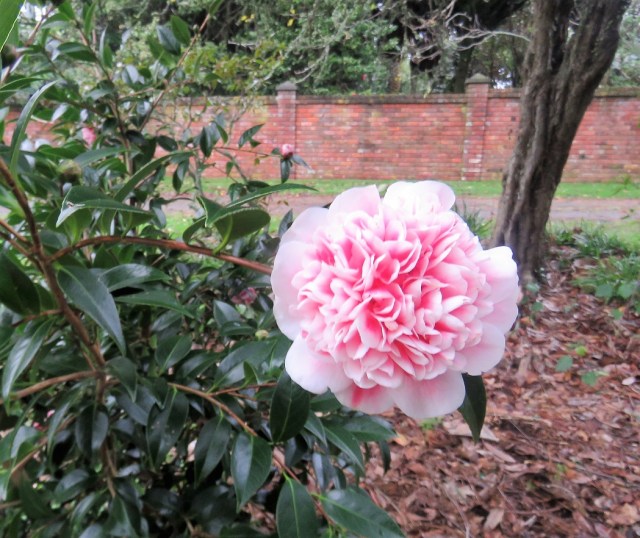
Camellias in bloom – this is Camellia yuhsienensis (syn C. grijsii var grijsii)

We garden all year round. If it is wet and windy or bleak, I will stay inside. I wait until the mornings have warmed up a bit before heading out, retiring indoors when it starts to cool off at 4.30pm. But most days, we are out and about for most of the day. I have a penchant for photographing flowers against blue skies but I don’t colour enhance my photos so what I show is colour as my camera captures it.
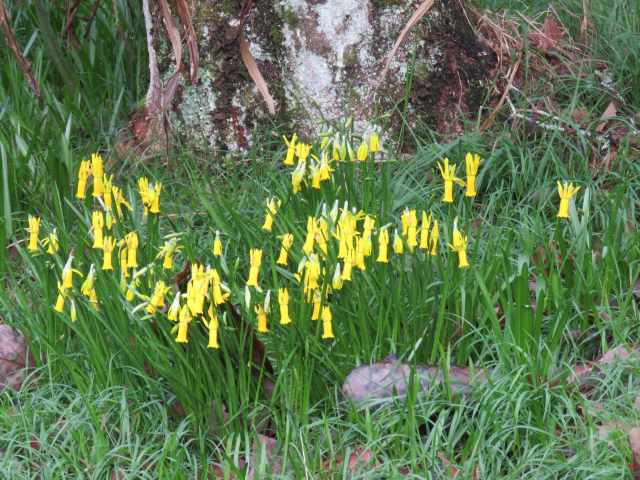
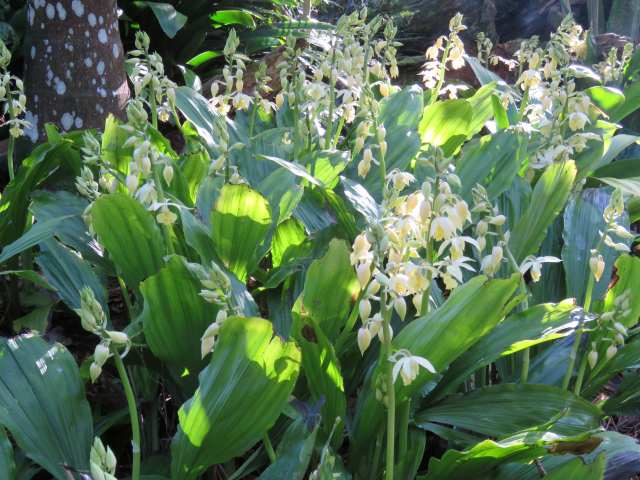
Loads of narcissi in bloom. We mostly grow the early flowering dwarf varieties because they are over before the nasty narcissi fly is on the wing.
Everybody grows narcissi but not everybody grows orchids in the garden. These are calanthes opening and most of our cymbidiums are already in flower.

Our winters are still filled with colour and flowers. As the snowdrops pass over – their season is but brief in our mild conditions – so much else is coming into flower that I feel that slight sense of panic that I may miss something altogether if I don’t get right around the garden every few days. At least we no longer suffer from anxious pressure at the need to get many tasks done before the garden visiting season starts – on account of us no longer opening the garden, you understand.

There are many worse places to spend winter than here in North Taranaki.
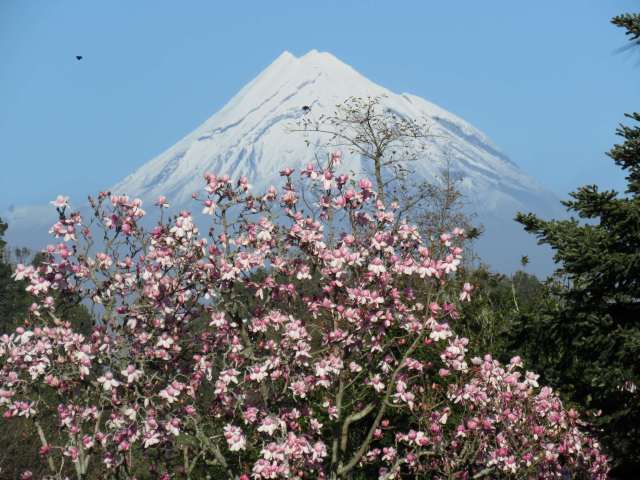
Magnolia campbellii var campbellii in our park. The snow line on Mount Taranaki is high this year, indicating a milder winter than some other years.

Winter has arrived on cue

Early blooms on Mark’s Camellia Volunteer

Here we are in midwinter, just past the shortest day, which was last Monday, and in the middle of Matariki, the Maori New Year which is determined by the rise of the Matariki (Pleiades) cluster of stars, so determined by astronomy not the Gregorian calendar.

Our first polar blast of winter is forecast to arrive this week. The golden days of late autumn and early winter are over. Winter, of course, is a relative matter. We have only ever had snow once here in Tikorangi – on August 15, 2011, to be precise. It was a memorable event. Our worst weather here is usually limited to heavy rainfall – which can seem incessant – and sometimes wind. We moan about that but it is more soggy, grey days than months of bleak weather when it is too cold to be outside.

Magnolia campbellii

I headed out with my camera before the heavy rain set in this morning. Matariki and the winter solstice are always marked by the early blooms on Magnolia campbellii here. Now I just have to wait for the few days of calm, clear weather over the next six weeks or so when conditions are right to capture our seasonal scene of the magnolia and te mounga.

Luculia Fragrant Cloud and moth-eaten cordyline

The luculias are all in bloom and sweetly scented too. ‘Fragrant Cloud’ is my favourite, seen here alongside a typically moth-eaten native red cordyline. Why do I say typically moth-eaten? Because that is literally true. Our native cordylines look much cleaner overseas whereas you would be hard-pressed to find one here that does not have holes in all its leaves on account of a native moth, Epiphryne verriculata. Its common name is the cabbage tree moth – of course it is – and it is only found in NZ. We have to take the rough with the smooth here and at least it is all part of our ecosystem.

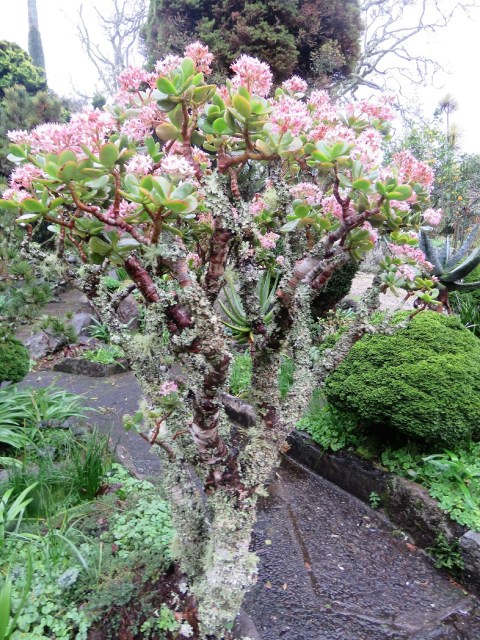
Crassula ovata in the rockery
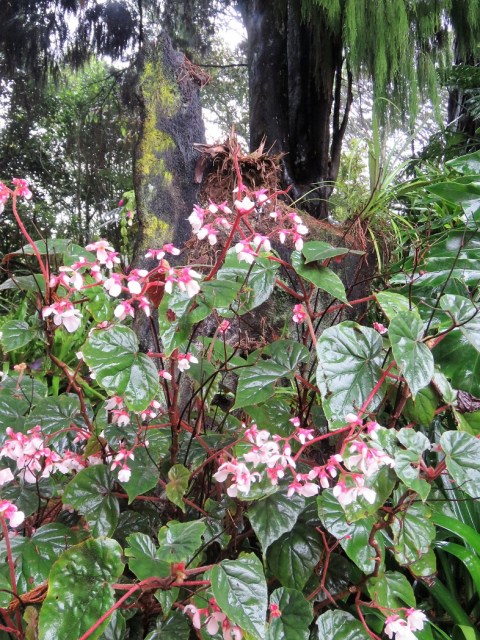
It is a tall begonia, probably a species – one of those plants that quietly occupies a frost-free position and never demands any special care while flowering most of the year

Also signs of a climate that is remarkably benign, the Crassula ovata and a tall begonia are also blooming happily in midwinter.

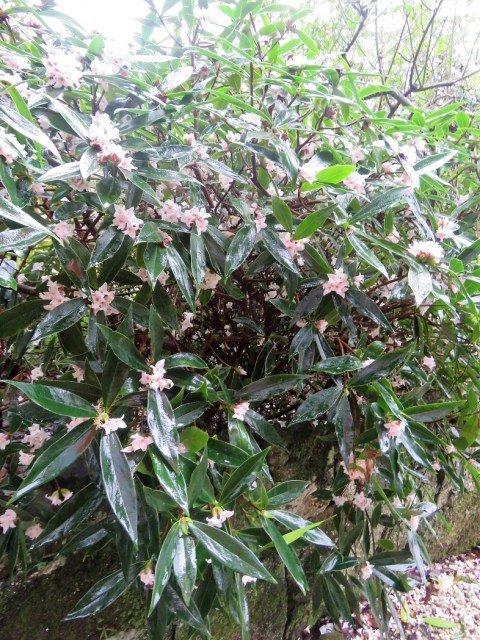
Daphne Perfume Princess, easily distinguished by its vigour, health and a very long season in bloom, as well as larger individual flowers

We have Mark’s Daphne ‘Perfume Princess’ well represented in the garden. That is because when he selects a new plant, he carries out propagation trials and we need to build up stock to be able to start the licensed growers with initial material. We gave a certain number of plants to friends but I must have planted out at least fifteen of them around the garden – all by paths or the driveway so we can catch the delicious scent as we pass.

Camellia yuhsienensis
I helpfully added a red arrow just to draw attention to the posterior of a busy little honey bee working the flowers in midwinter

On a gloomy winter’s day, the coloured camellias like ‘Volunteer’ at the top cheer me up more than the white ones, but Camellia yuhsienensis is looking delightful – seen here used on the farthest margins of the summer gardens. Even on a grey day, the flowers are feeding the honey bees at a time of the year when food sources are in limited supply.

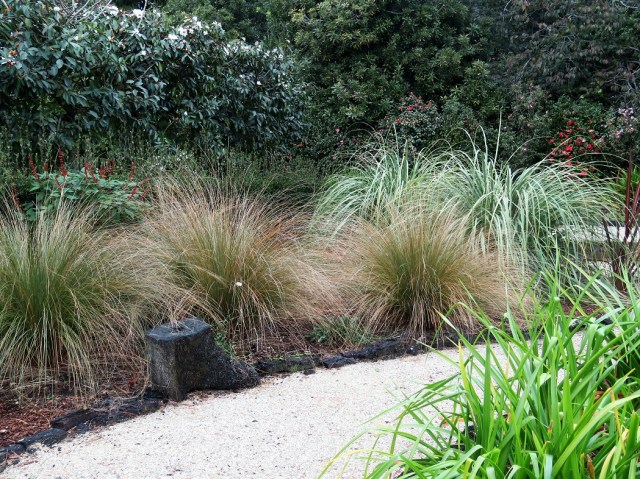
Chionochloa rubra with our native toetoe (Austroderia fulvida) behind. These native grasses need plenty of space

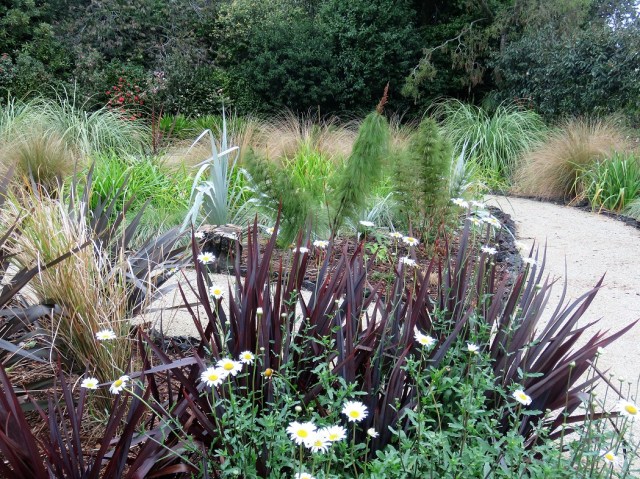
Zach cut down all the Miscanthus ‘Morning Light’ in the Court Garden last week and lifted the lot. We only replanted around 30% of them at wider spacings. Here’s hoping I have the spacings right this time because it was a big job. Interestingly, it is our native plants that are the winter stars. The form of Chionochloa rubra (red tussock) is a constant source of delight to me and it looks best when it stands in its own space, rather than being hemmed in by other plants. The red and black phormiums (coloured flaxes) have come into their own with a bit more size and the silver Astelia chathamica glows in the lower light levels.

Red flaxes and silver astelia are particularly distinctive in winter

The use of native plants is one aspect that sets of NZ gardens apart and never more so than in winter because, with very few, minor exceptions, they are all evergreen. We don’t have the bare borders in winter that characterise so many northern European gardens in colder climates. A mix of natives and exotics carries us through twelve months of the year.

Seven days from the winter solstice – Tikorangi this week

IMG_7033

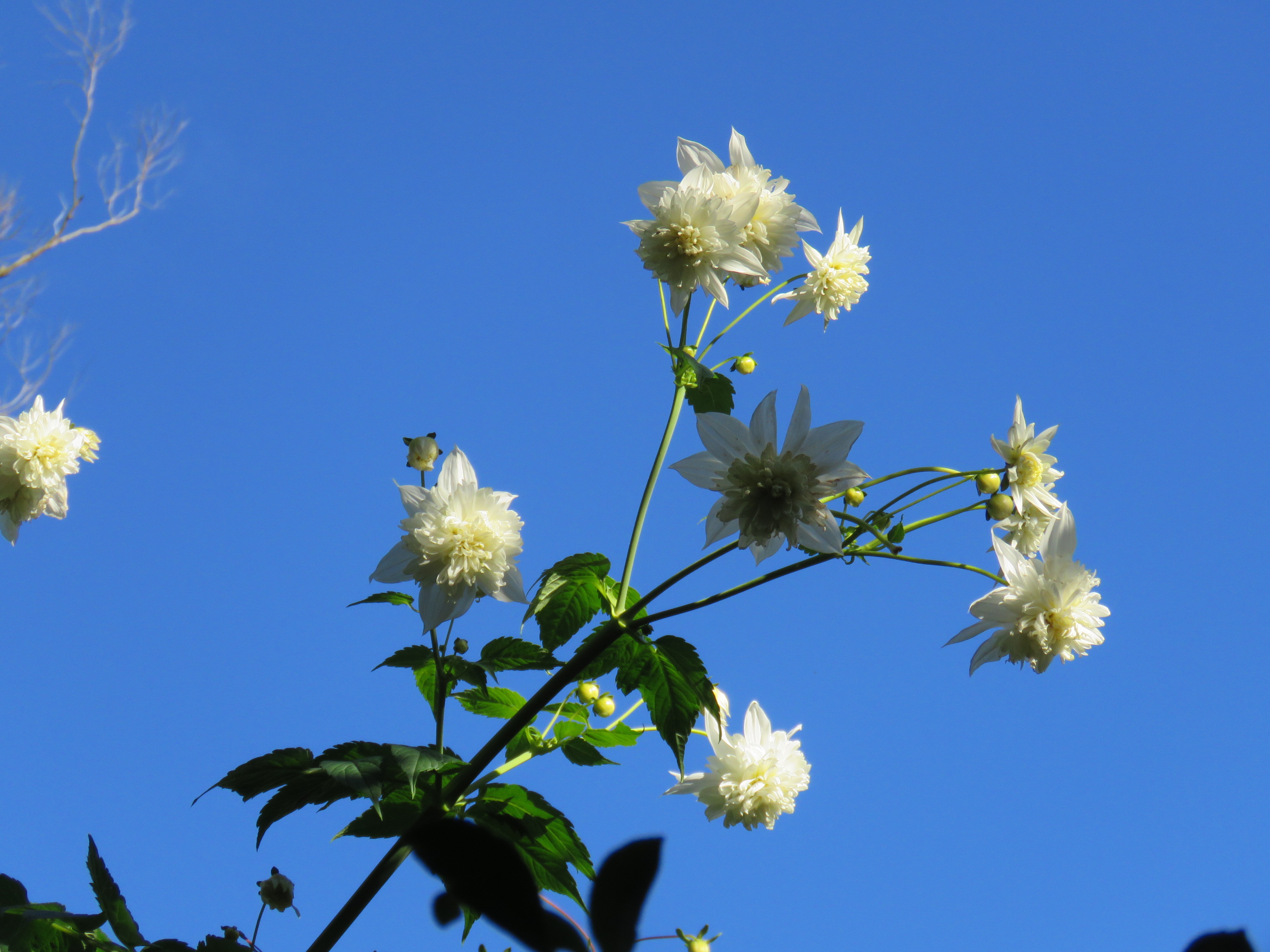
The white form of Dahlia imperialis

The last tree dahlia of the season is in bloom. Dahlia imperialis alba plena is the towering giant of them all, way up in the sky, not blooming until well into winter so particularly vulnerable to frosts and winter gales. I took this photo yesterday to show those in other climates the intensity of winter light that we get here on sunny days. It is different to those who garden where the winter sun hangs lower in the sky. We are not tropical; I don’t want to mislead. It is almost mid-winter and can be quite chilly. However, it is a lot less depressing to the spirits when you live somewhere with this clarity of bright light, even on the shortest days of the year.

IMG_7045

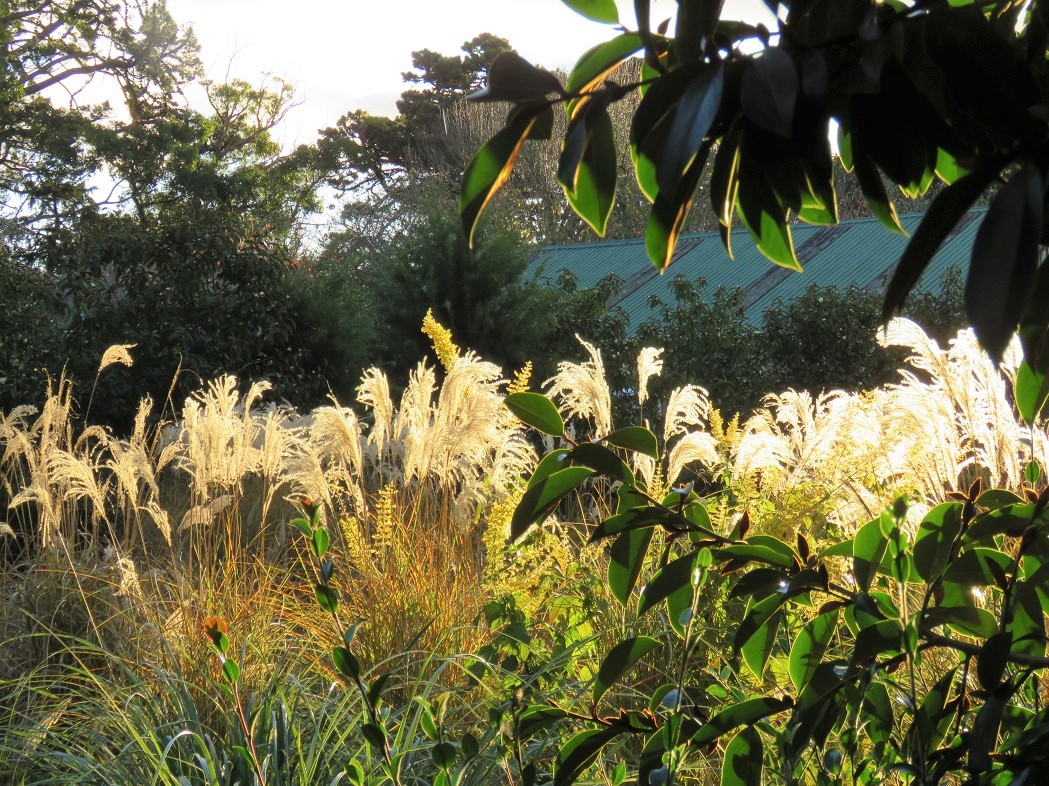
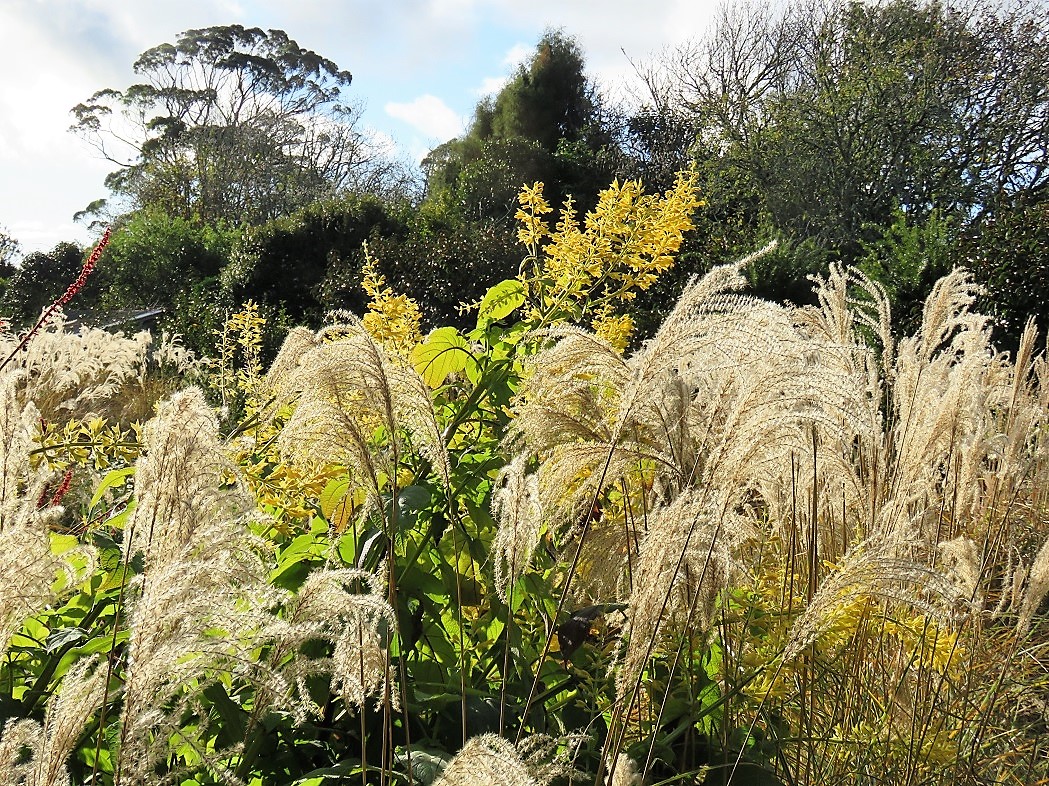
Miscanthus ‘Morning Light’ shimmering in the late afternoon light

IMG_7040We are now well into what Piet Oudolf refers to as the ‘fifth season’ and the new Court Garden brings me much pleasure, especially in the late afternoon when the sun is dropping lower and shines through the miscanthus grasses. I have used a lot of miscanthus running through the garden in waves and the plumes shine in the light and wave gently in any breeze.

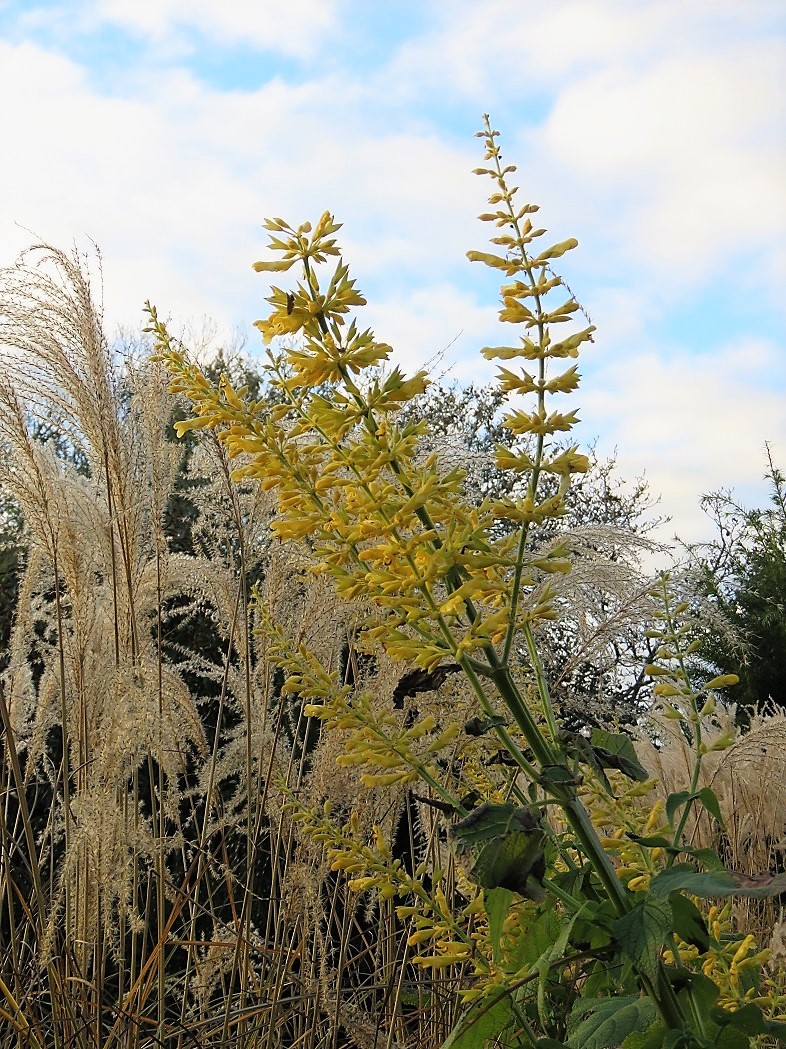
IMG_7031IMG_7039I have finally found a place where this large yellow salvia can grow with sufficient space and it is a late autumn – early winter highlight. We have never had a name on this variety so if any readers can identify it for me, I would be grateful. It stands a good two metres tall so it is a large plant to accommodate. *** Now identified as Salvia madrensis, thanks readers.
Tips and techniques for the week:

IMG_6920

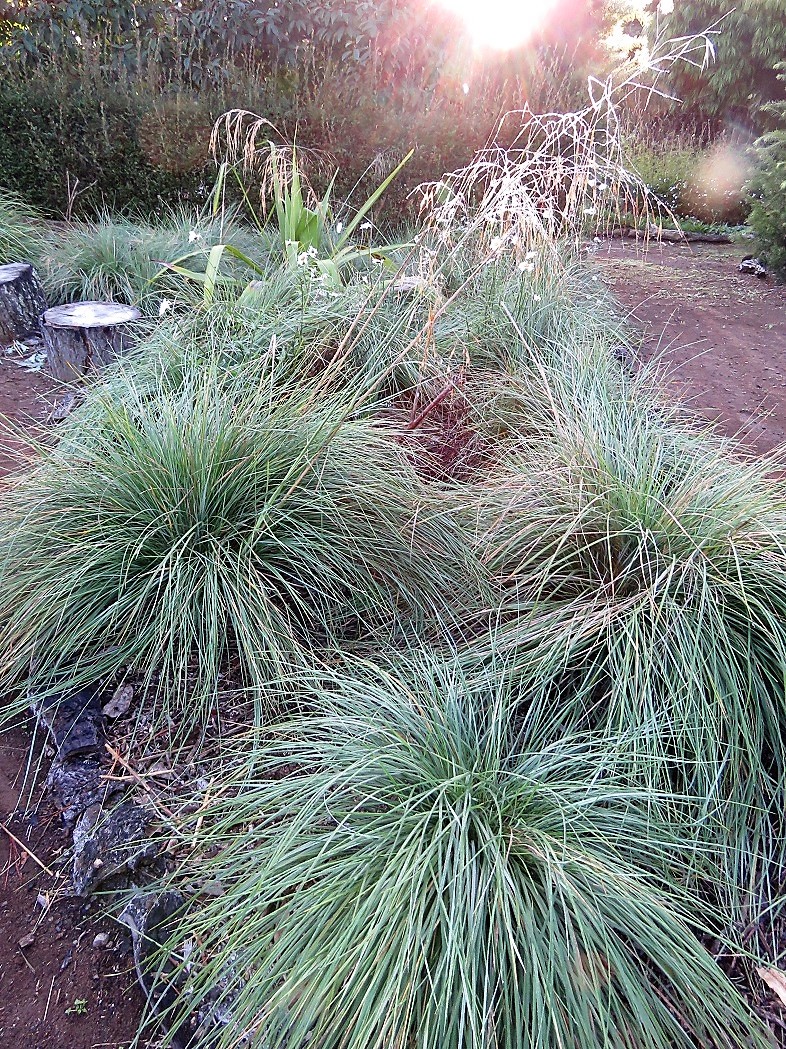
Stipa gigantea after a major thinning exercise

  • I took a before photo of this block of Stipa gigantea in the new Court Garden but I appear to have deleted it when I was filing photos. It looked fine at the end of its first year but I knew it wouldn’t stay looking fine and it was already too congested to allow the plants to fountain out and show their natural form. Last week, I took out well over half the plants and gave them away. I did have to lift some of the remaining plants to centre them to their own space but I am much happier with it now so it was worth the effort. I haven’t grown this stipa before and hadn’t realised how much space each plant needs. I am hoping this can now be left alone for a few years at least. It has a white field daisy growing between which I have learned I can get two, maybe three successive flowerings from spring to autumn if I cut it back to the base rosette at the right time.

    IMG_7050

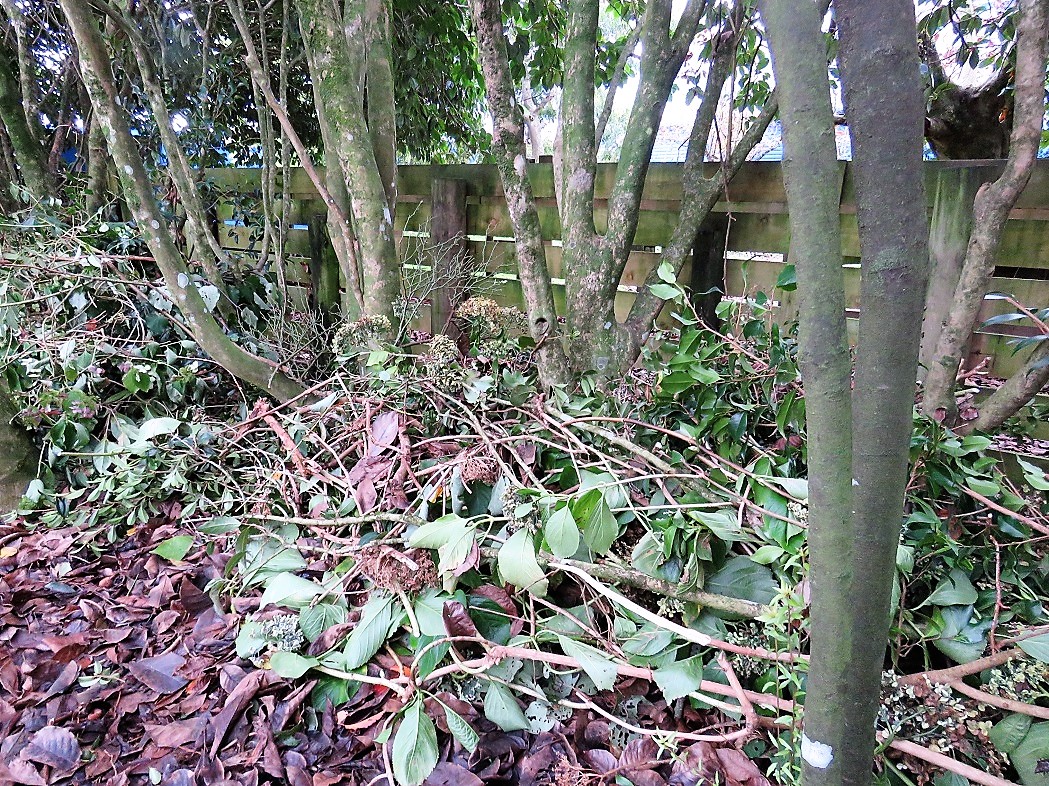
    Layering up the prunings at the back, more or less out of sight

  • Out of the ‘I thought it would be a straightforward job that would only take a day and a half at the most but actually took four full days and still isn’t quite finished’ school of thought, I spent this week clearing the wilderness of boundary plantings that separate the caterpillar garden from the boundary with the neighbours’ wool shed and yards. People with big gardens will understand that you have areas which get planted and then mostly left to their own devices. It is one of those jobs you finally tackle when preparing to open the garden to the public again. Nobody will notice I have done it, but they may well have noticed had I not. Over the years, it had become largely impenetrable with self-sown camellias, layered hydrangeas, native seedlings, especially kawakawa and various mounds of vegetation where I had emptied the wheelbarrow of prunings that I didn’t want in the compost heap. It amazes me how far I can get with a sharp pruning saw. Because there was so much of it, I dragged all the debris to the back and layered it by the boundary fence. At some points, it is quite a bit higher than in this photo. It can gently rot down there, adding humus and carbon to the soil and is a lot lighter on labour than carting it all away to compost and mulch. It is a technique we are using quite extensively now and is a tidy, unobtrusive way of dealing with excessive amounts of garden waste. That said, it is a big garden technique, rather than one for small town gardens.

    IMG_7047

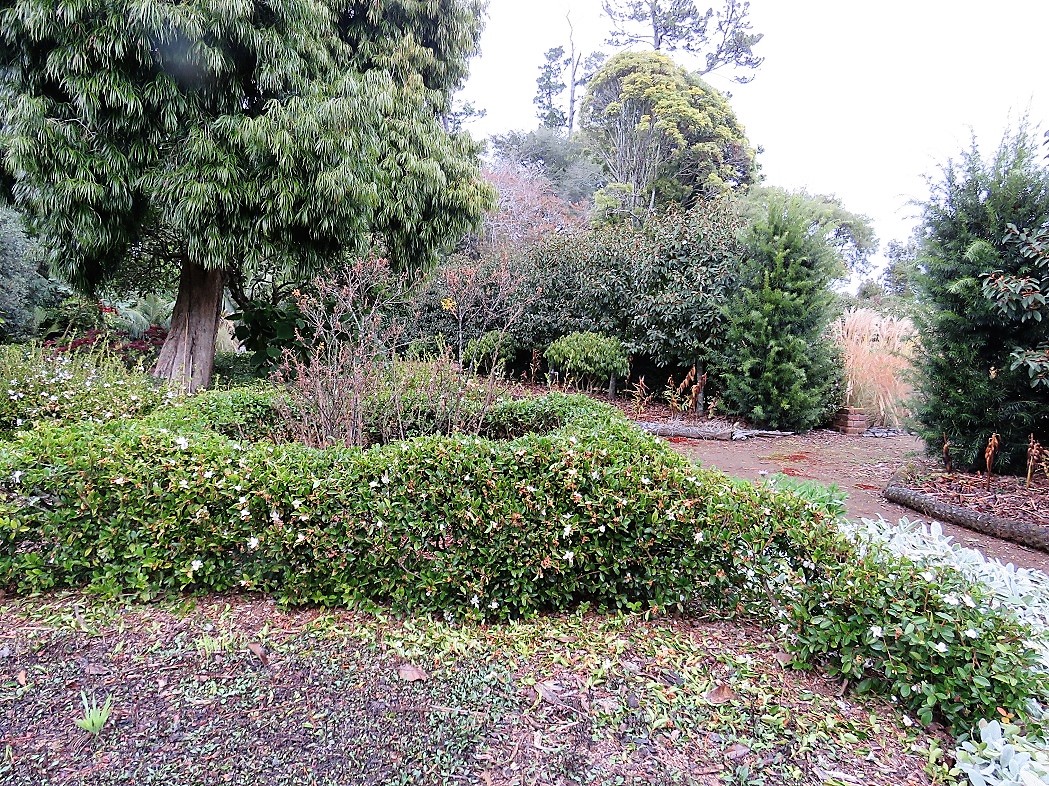
    On track to be an undulating, curvy hedge like a moving caterpillar

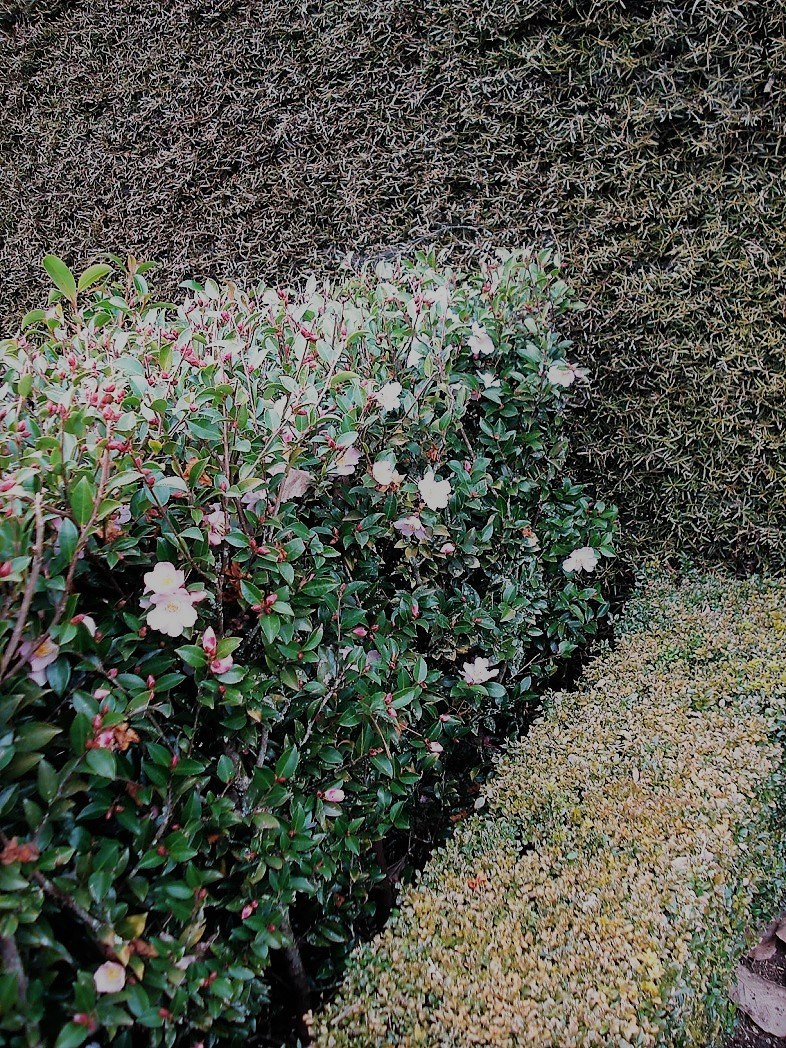
  • I have started a major clipping round on the hedges in what we call the Caterpillar Garden. The hedge is Camellia microphylla, already nearing the end of its flowering season. The plants were pretty neglected -raised from seed and cuttings many years ago and then left to kick around the old nursery until we were ready to use them. We planted them two years ago and the hedges, laid out in the shape of the basket fungus, are still a bit patchy. Mark’s plan is to clip these hedges into mounded, free-form shapes like an undulating caterpillar in the style we associate strongly with UK designer, Tom Stuart Smith. I am doing the first clip this season and have told Mark it is his job to come through and do the final clip of the top to get the mounding shapes he wants.

    OCcamellias 014

    The straight-edged, hard clipped approach

    Most of our clipped hedges here are very straight sided with the top meeting at right angles. Lloyd does them with a string line to keep the lines straight and the hedges a uniform width. He has a good eye for these things. But after spending a fair number of hours clipping and shaping the caterpillar hedge, I can tell you that it is a great deal easier and more pleasurable to work with a more organic shape and form than that military regimentation of the sharper-edged hedges. Informality is much more forgiving than formality.