Tag Archives: woodland gardening

Learning to garden with shade – the woodland

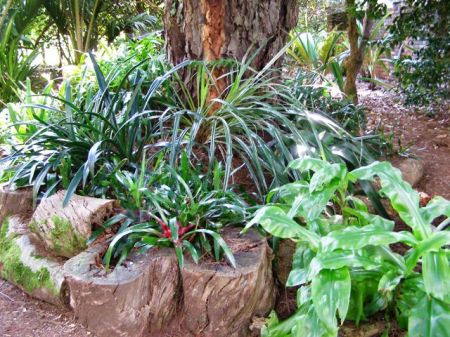
Raised beds can be desirable, but not in tanalised timber

Raised beds can be desirable, but not in tanalised timber

When you start a new garden, especially on a blank canvas, it is hard to imagine dense shade and sheltered conditions. Fast forward some years and the picture changes dramatically. If you have planted trees and larger growing shrubs, your open, sunny conditions change gradually to the point where you realise the whole micro-climate has altered and the sun-lovers like roses and lavender are struggling. You either cut back or remove large plants to regain the earlier, open conditions or you change your style of gardening. Most larger, more mature gardens move naturally into woodland or shade gardening.

In their simplest form, woodlands are a natural occurrence – but not here. Our native forests are just that – forests. In their natural state, they can be near impenetrable and are more akin to cool climate jungles. I have seen the bluebell woods in flower in Scotland and they were enchanting. A carpet of blue, spread beneath comparatively small deciduous trees which were just breaking dormancy. I can’t recall what the trees were – chestnut, maybe, or sycamore, possibly oak – I was more charmed by the bulbs growing wild. I have only seen the flowering of the English snowdrops in photographs. A particularly memorable image showed a dense carpet of snowdrops beneath the graceful, slender trunks of the white barked birches. However, I can tell you that in general, British and European forests are quite open. You can walk through them without needing a slasher and tramping boots as you do in our forests. Robin Hood and his merry men could probably move through Sherwood Forest without having to keep to tracks. While there are conifers growing which are evergreen, the vast majority of other trees are deciduous. This means that light gets through in winter and early spring and that there is a seasonal carpet of leaf mulch below. In their predominantly dry summers, the shade inhibits the rampant growth we expect here.

But gardening is not about reproducing nature. It is about reinterpretation. Those natural woodlands, which are essentially a shade meadow garden full of wild flowers, peak for maybe two weeks of the year. We are not going to be happy with that in a home garden. England’s wonderful grand dame of gardening, Beth Chatto, has planted her woodland in a succession of spring flowering bulbs which extends the display but even so, by early summer, there was nothing left to see. I was still sufficiently inspired to return home and do the same in one small area. Here, I had to make sure there was no grass and the ground surface is bare soil and light leaf litter. And I can tell you that in a small triangular area about eight metres long and five metres at its widest, it took hundreds of bulbs – snowdrops (galanthus), Cyclamens coum and repandum, assorted dwarf narcissi, rhodohypoxis and lachenalias. The sheer volume of bulbs required rules it out for most gardeners.

The allure of the woodland garden path

The allure of the woodland garden path

Shade gardening is the option for extending display and keeping some definable form in a garden. With huge trees here, dating back to 1880, we have a lot of shade garden, usually referred to as woodland. The basic principles of gardening still apply – it is the variations in foliage, form, height and colour that give interest. Achieving it under a canopy of foliage is different to being out in the open. There are three obvious keys to remember.

Firstly, few plants are happy in dense shade. There is nothing else for it. You have to lift and limb – raise the canopy sufficiently high to allow filtered light below. The trunks of the trees are a feature in their own right and if you want to garden below, getting a four metre vertical clearance will allow space and light to give the plants a chance.

Secondly, there will be a great deal of root competition from established trees. In fact it can be damned difficult chiselling out a hole large enough to plant into and even then, there is little chance of many plants thriving when they are competing for space, nutrition and moisture. That is why many bulbs do so well – because they can cope with harsh conditions and little soil. Clivias, too, will foot it in this environment, as will some of the plectranthus, but many other shade plants such as hostas are never going to be happy and healthy. We get around this in some areas by building informal, raised beds and moving in soil and compost to get the plants established. Ponga lengths and fallen branches still look natural but spare me from the idea of tantalised timber. I don’t like the look of tantalised timber anywhere in a garden but it is even more incongruous in woodland. Casual and natural are the words to remember here.

Thirdly, woodlands are usually dry, a fact many people fail to realise. That is because when you have large trees, their massive root systems suck up the water, leaving little for smaller plants. Often the canopy of foliage and branches will deflect the rainfall away. You really do not want to be creating a garden where you have to water regularly so it is better to choose plants from the start which will take dry shade. Fortunately, the fact that they are growing in shade hugely reduces their water requirements (little evaporation from the sun) so even hostas, which are generally regarded as needing plenty of water, can thrive in dry shade once established.

You can manage flowers and colours for most of the year in a woodland garden - a tricyrtis or toad lily

You can manage flowers and colours for most of the year in a woodland garden - a tricyrtis or toad lily

I will return at a later date to plant options for shade or woodland gardening but here, we are strongly of the view that mass planting of herbaceous material in a shade garden is even duller than mass planting in a formal garden (where the structure and straight lines give form). Give us variety and mixed plantings. The aforementioned clivias are fantastic plants but you only want so much of their strappy foliage and predominantly orange flowers. Combine them with filmy ferns and the extravagance of the massive, split leaves of Monstera deliciosa (the fruit salad plant) and you have a combination with some zing.

It is possible to garden with flowers in woodland and to have colour for most of the year. And, a huge bonus for most, weed growth slows in the shade so you don’t have to be so vigilant on the weeding front. The invitation of a winding path into the woodland can be so much more mysterious and full of promise than the open, sunny section, but, like all forms of gardening, it does not just occur of its own accord.

You have to make it happen.

No bletting the chaenomeles in our climate

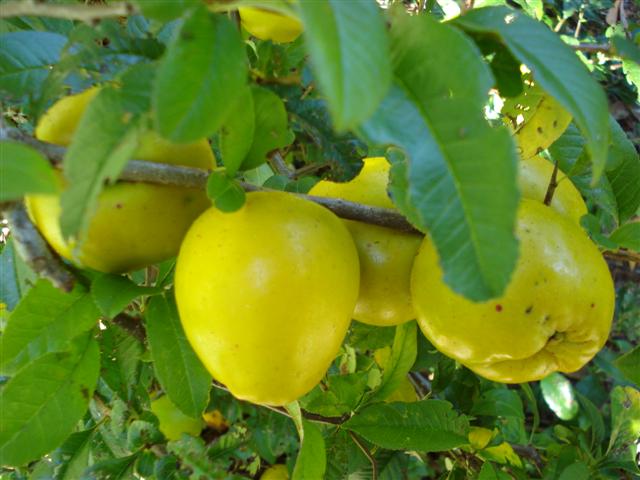
More ornamental than useful - chaenomeles or japonica apples

More ornamental than useful - chaenomeles or japonica apples

I have been harvesting the chaenomeles though harvesting is perhaps too much like hyperbole. I have been picking up a bowl of their golden yellow fruit. Most will look at the fruit and say quinces but they are not. If you said japonica apples, you would be closer to the mark. Quinces – or cydonia – are small trees from central and south eastern Europe and are closely related to apples and pears. The fruits look like golden pears. The chaenomeles are from east Asia, including Japan, and are shrubs referred to inaccurately in the past as japonicas. In fact we associate the flowering sprays of japonica strongly with Japan where the simplicity of single flowers on bare wood is evocative of that wonderful, sometimes stark, simple beauty so prized in Japanese gardening and floral art.

Back to my chaenomele fruits which are not only very decorative and long lasting, they also exude a perfume which I find pleasant. It is such a shame you have to work hard to transform the crop into something edible. The usual approach is to turn them into japonica jelly though I admit I have never tried this. My jam making efforts are limited to the raspberries these days and as it takes us about three months to get through one jar, there is a not a big incentive to be more adventurous. I did try making chaenomeles brandy one year, wooed by the delightful aroma of the fruit. I figured that I would follow the recipe for damson gin though this fruit clearly needed slicing. So I layered the slices of chaenomeles alternately with sugar in the mandatory stoneware crock, of which I happen to own several. Then I poured a bottle of brandy over it all and put it in a dark place for a year to gently steep. Yes, a whole year. Now, the damson gin recipe says that after a year, you should strain off the liquid, dilute it with another bottle of gin and leave it to mature for a second year. In my forays into damson gin, we waited the first year but never made it to the second bottle of gin and a further twelve month wait. Neither did we get past the mid stage with the chaenomeles brandy which we strained off and drank after twelve months. It was pleasant if a little underwhelming. But this is not a household where we ever drink liqueurs or indeed any sweet drinks, so perhaps our palates were just not accustomed to sweet, high octane alcohol. I prefer my brandy with lime and soda.

These days I just bring a bowl of chaenomeles into the house for aesthetic reasons. They sit for weeks without going off, golden orbs with an odd waxy coating, exuding a natural tropical perfume. So much nicer than those synthetic air fresheners marketed by Glade, I feel. The remainder of the crop hang on to the bush until their weight pulls them off and they lie below. Although the bushes are rangy, scrubby things of no merit or form out of season, in early spring the dark pink flowers are eye-catching and in autumn the fruit is a feature for a good couple of months.

In case you are wondering what a chaenomeles tastes like, I can assure you that the taste and texture does not match the fragrance. They are astringent – will pucker your mouth – but apparently in colder climates, the first frosts reduce the astringency. This is a condition referred to as bletting (there is a piece of information which you may need one day for Trivial Pursuits or quiz nights) and bletting is a key to growing good Brussels sprouts, swedes and turnips. Personally I prefer to live in a climate where we can grow oranges and avocadoes even if that means we can not have bletted crops since we never get a run of heavy frosts, or much frost at all.

Some years the chaenomeles pass me by because the good fruiting bushes (and by no means all of them fruit as spectacularly as this one) are in an area of the garden which has been a bit of a wasteland. Probably every large garden, and quite a few smaller ones, have areas where you hurry past with eyes averted because you really don’t want to address the problems there and if you ignore them, perhaps other people won’t notice them either. There comes a day when you can no longer pretend that the area does not really matter. You have to get in there. In our case, it is an area where the ever growing trees and shrubs had turned a formerly sunny position into overgrown shade forever making incursions outwards. It certainly helps to have somebody at your behest with a chainsaw and mulcher but you can get a long way with strong loppers and a sharp pruning saw. These jobs always escalate beyond what was originally envisaged as you keep penetrating onwards and inwards. We have trimmed and removed a prodigious amount of material. We have allowed sunlight into areas which haven’t seen light for nigh on a decade. We have rediscovered plants which only Mark ever knew were there. We have dug out sizeable nikau palms. It is possible to have too many self-seeded nikaus and we have more than enough. In fact we have turned dense forest or jungle into woodland.

Woodland means keeping a lighter canopy of larger plants but sufficiently open to allow reasonable growing conditions below. I haven’t finished yet but I have reached the fun stage where finally I have had the chance to try the traditional method of establishing a drift of spring bulbs. That is broadcasting handfuls of bulbs and planting them more or less where they fall. It avoids the natural tendency to plant in rows or as edgings on the margins. In this case, I have been scattering English snowdrops and interplanting with Cyclamen repandum, the last of the dwarf species to flower in spring. I have removed all the herbaceous leafy plants and relocated them. In this one patch, I don’t mind if the ground is bare for periods of the year. All I want is the higher canopy and a natural build up of leaf litter with small bulbs popping up in season.

Attractive in season but prickly and nondescript at other times

As I moved futher outwards to the sunny area again, I reached the chaenomeles and that is a bit of a challenge. Not only is it battling quite creditably with the competing growth, it seems to be attaining mammoth proportions. A mere two metres high, but it arches and layers over an area more than four metres long. I didn’t mention it is somewhat spiny and prickly, did I? It is just as well it has pretty flowers and very decorative fruit or it might have gone the way of other prickly plants – into the waiting mulcher.