Tag Archives: Worsleya procera

Harbingers of autumn


It may still feel like high summer where we are, but the flowers do not lie. We are on the cusp of autumn.

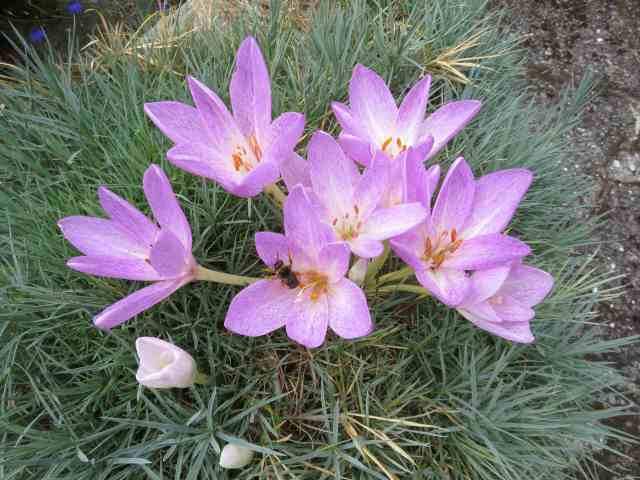
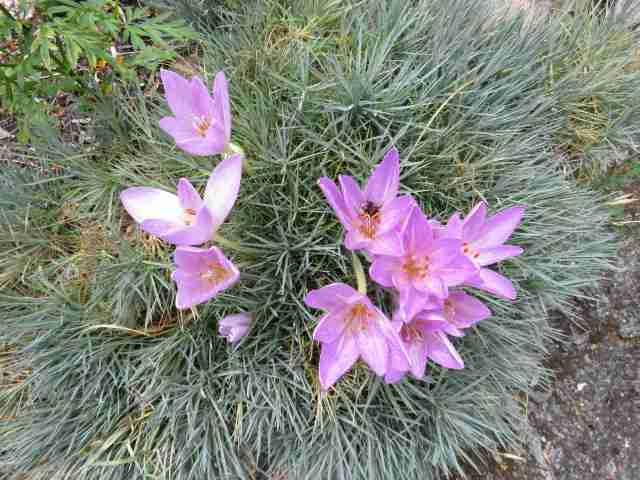
Colchicum autumnale

Summer here in North Taranaki has not followed its usual pattern. While we are always slower to warm up in November and December than the east coast, it didn’t really feel like summer until mid January. I don’t swim in cold water and I wasn’t tempted into the pool until well into January. Since then, we have been in and out of the water every day in an unseasonably warm and dry spell. A couple of degrees of extra heat on an ongoing basis makes quite a difference when you spend most of your days outdoors in the garden.

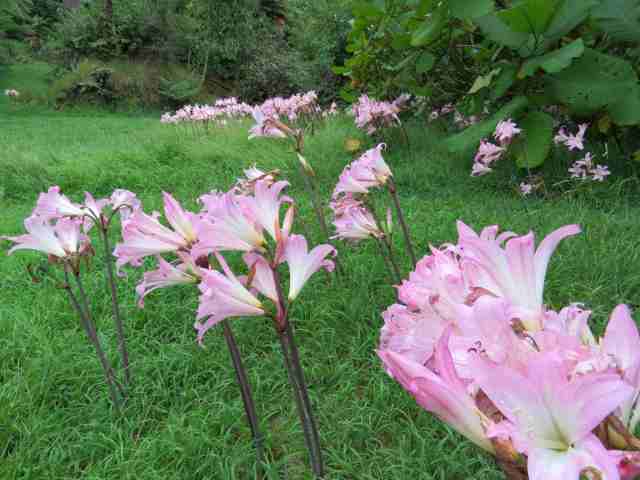
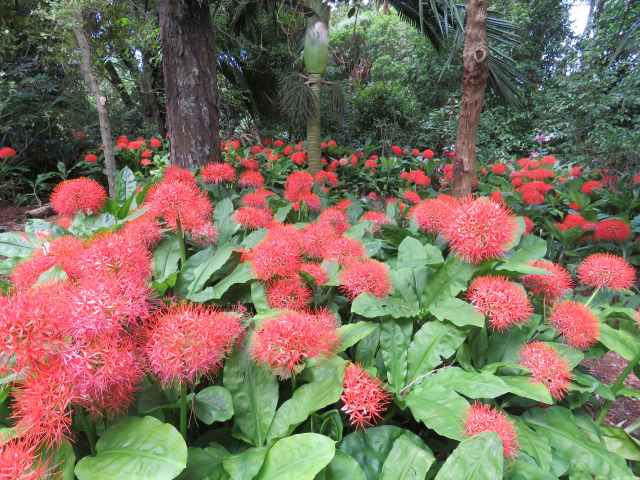
A stray belladonna in the raspberry cage was the first autumn bulb I noticed this season

And dry. I know when we talk about dryness, others may scoff. We all adapt to our own, local conditions and we expect rain on a regular basis all through the year. Mark, a keen weather watcher who could have happily pursued a career on meteorology, tells me we only had 40ml in January and that fell basically on one day, late in the month. We don’t ever water the garden (except for some of the vegetables) and we have no irrigation system; it isn’t necessary in our climate and nor does it seem like good practice but we are seeing some floppy looking plants and some early dropping of leaves.

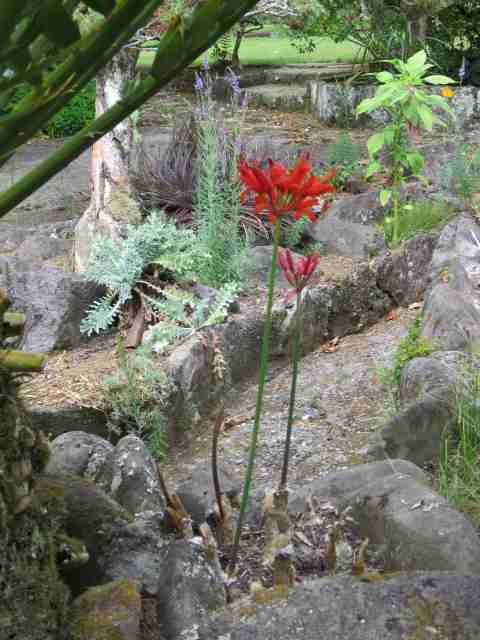
Even the first nerines are opening

When the autumn bulbs started flowering in what still feels like high summer, I assumed they were being triggered by day length, as vireya rhododendrons are. They are certainly not being triggered by change in temperature, either day or night. Mark pointed out that it may well be that one day of rain in January that triggered them into growth and that makes sense because many bulbs are identified as summer rainfall bulbs.

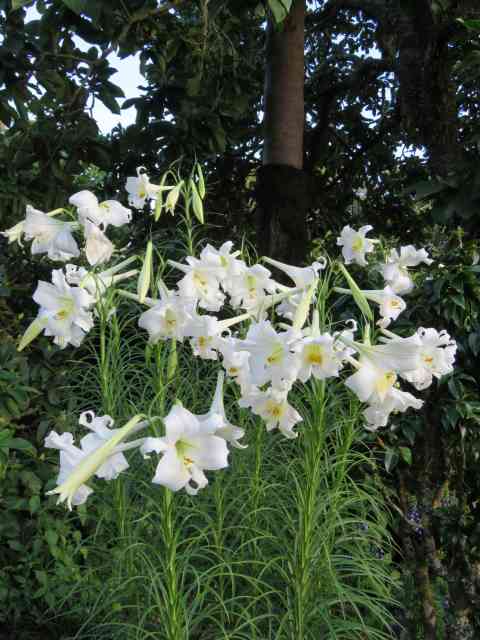
Lilium formasanaum is a bit controversial in this country. It is on the Pest Plants Accord so illegal to propagate or sell. We keep it because it is showy and not a problem in our garden but also, it is not in a situation where it can escape from the garden to become a problem elsewhere.

Zach and I are waiting for rain so we can move plants again. We have plans we want to get underway. At least we know that here, with a temperate, maritime climate, the rains will come. While our high summer may be of short duration, so too is the depth of winter which we measure in weeks, not months. We have exceptionally long autumn and spring seasons and that does make for a good gardening climate.

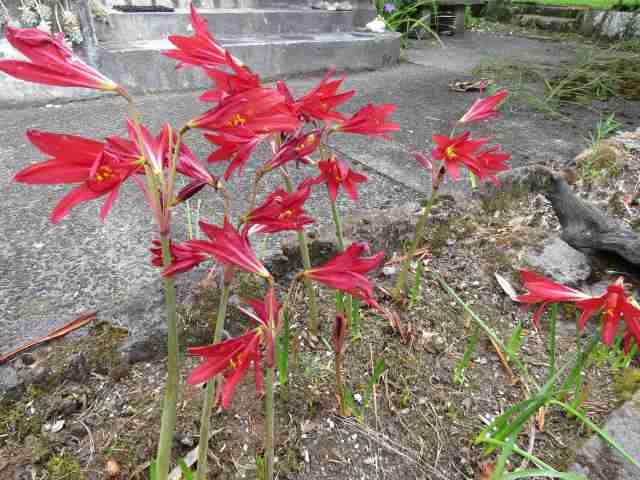
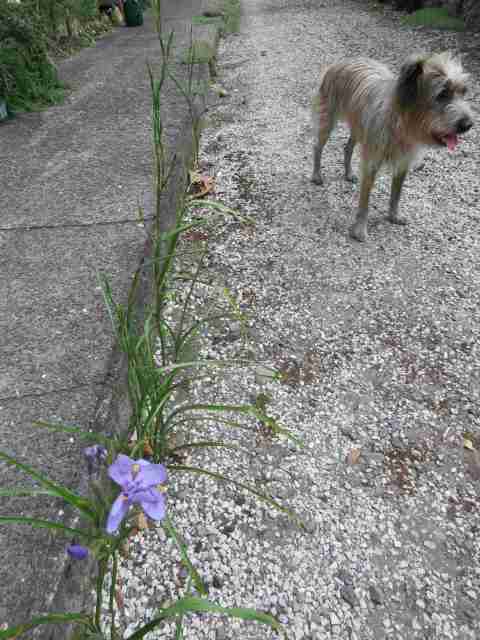
A self-seeded Moraea polystachya on the side of the drive. Of all the autumn bulbs, this moraea probably has the longest flowering season.

The autumn bulbs are one of our seasonal highlights.

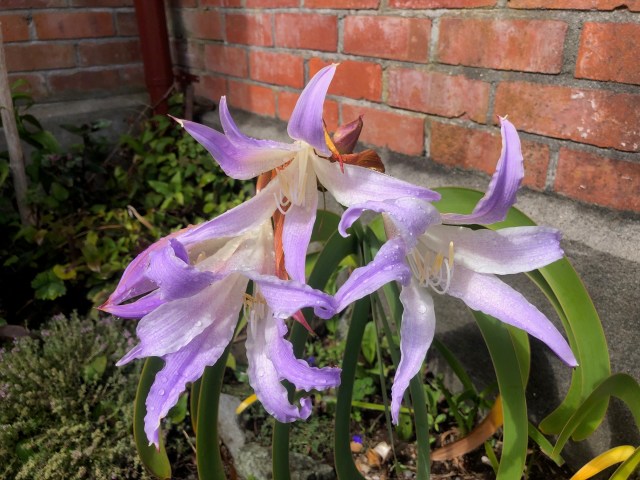
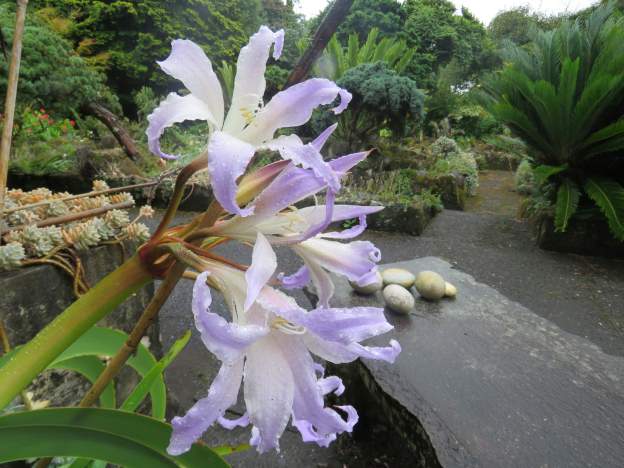
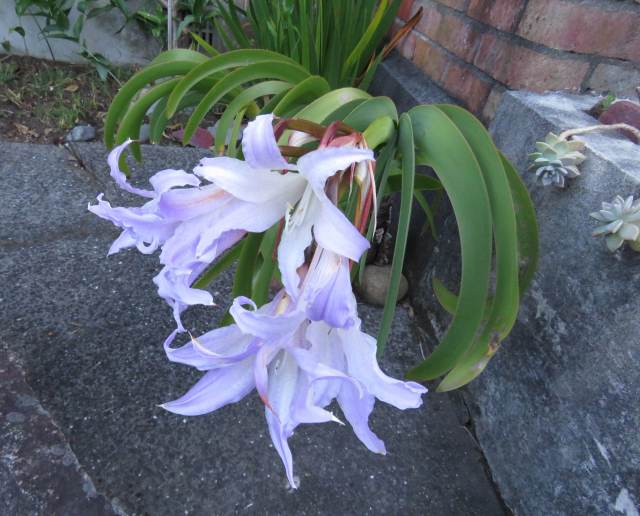
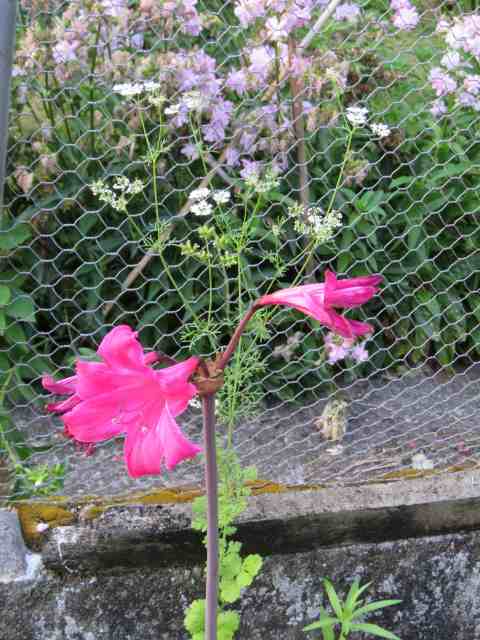
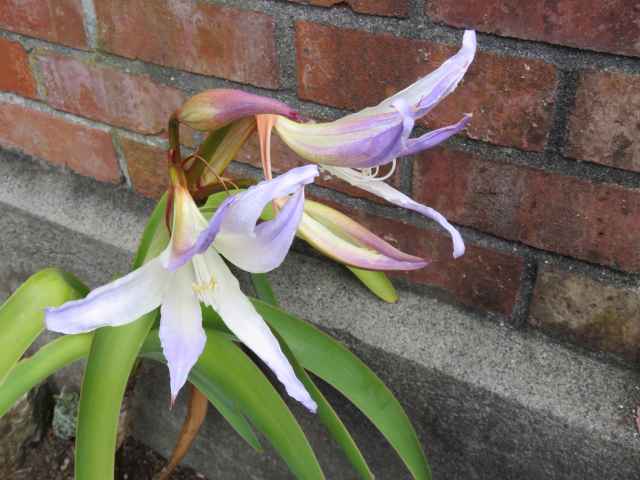
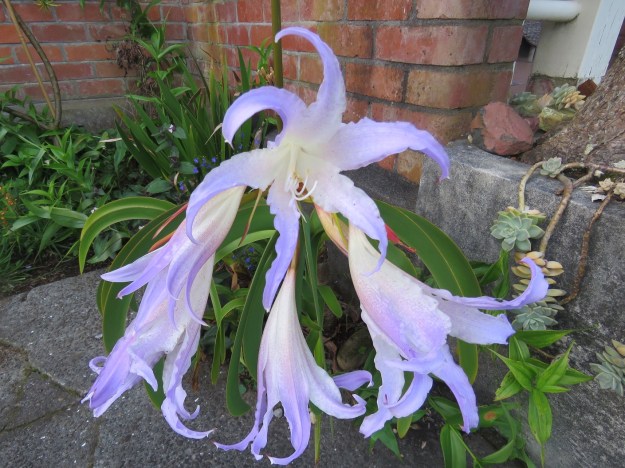
The Worsleya procera is opening! This bulb is one we take some pride in because it is rare in cultivation, even rarer to see it flowering in a garden situation and it is very choice. It is generally grown as a pot plant in carefully controlled conditions. The lilac colour deepens and spreads as the flower opens.

Garden diary February 5, 2017 – all about flowers this week

The exquisite Worsleya procera after all the rain

The exquisite Worsleya procera after all the rain

I shall ignore the weather, bar noting that we had over 100ml of rain on Thursday night and while we get some sunny days, this is not summer as we know it. As we enter February, we may just have to accept that full-on summer is bypassing us this year. In the meantime, large parts of the country are in drought.

At least the beautiful worsleya didn’t mind the torrential rain. Maybe it is used to heavy spray, given its natural habitat beside waterfalls in Brazil. W. procera now flowers every year for us – though rarely more than two flower spikes despite the fact we have more than two bulbs – but it never fails to wow us. This really is a most exotic bulb in a particularly unusual blue shade, though neither easy to source nor grow. Ours never set seed because they are all the same clone. It is always extremely slow to set offshoots from the bulb.

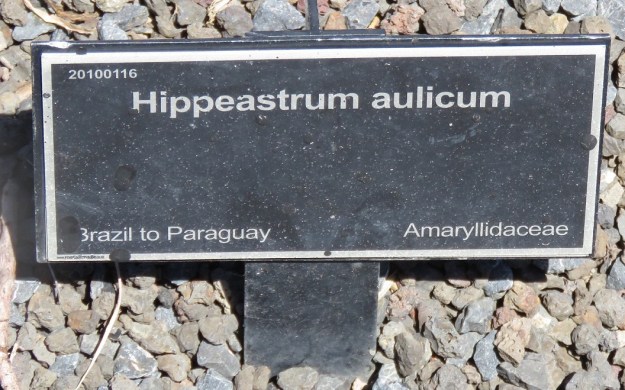
Not a Hippeastrum aulicum

Not Hippeastrum aulicum

...despite the label

…despite the label

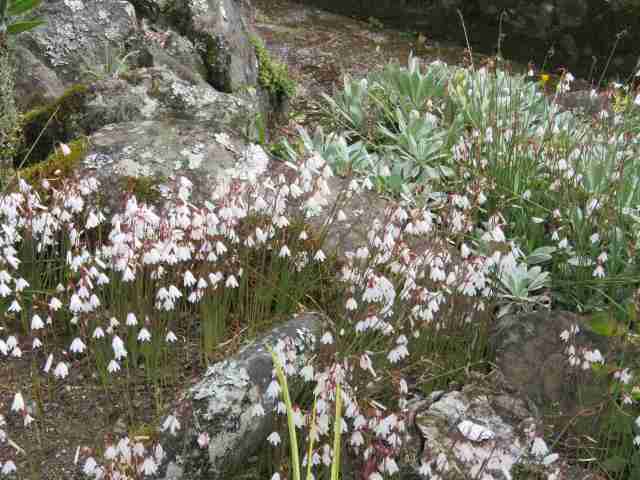
While on bulbs, I shall be a little unkind and post this photo from my visit to Auckland Botanic Gardens last week. Hippeastrum aulicum? Ahem, I think not. For they are red and flower in August and September. This patch looks mighty like belladonnas to me.

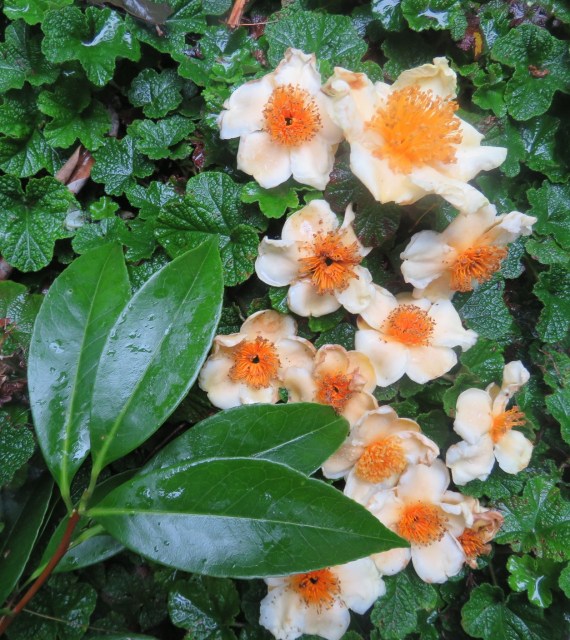
Not a camellia - a tutcheria, we think

Not a camellia – a tutcheria, we think

We went to visit a friend this week for a stroll around his garden – he is very strong on hydrangeas that go way beyond the commercial mop-top macrophylla types. But, while charmed by these, it was the yellow ‘camellia’ that excited us. Here, we thought, was an interesting summer-flowering yellow camellia that was far more sun tolerant than the yellow species we grow and that we had spent some time looking at in China last year. Ignore the background foliage which is the dreaded Rubus pentalobus (though not out of control in this shady spot). I just used it as a carpet to arrange the fallen blooms upon, with a leaf of the plant to the left. It certainly looked like a camellia in flower form, bud shape and texture and it was from a recent interesting plant collection in Asia.

I was about to email photographs to an Australia expert on yellow camellias for an identification when Mark saved us great embarrassment. Sometimes he surprises me with his knowledge, as when he came in and said he thought it was a tutcheria, not a camellia. It took a while to find the right spelling to enable a net search (he is better on names than he is on spelling) and it appears to be Tutcheria championii syn spectabilis and is found in woodlands of Hong Kong. Yes it looks like a camellia bloom and the habit of growth is similar but, like the gordonia, it is simply one of those related plants in the theaceae family which includes all camellias.

img_3969

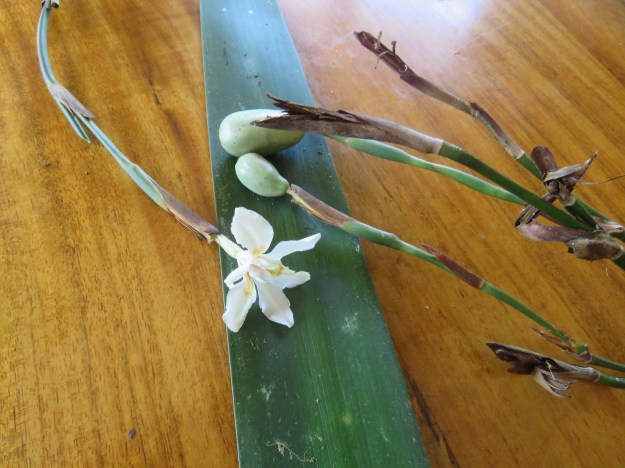
Probably Dietes butcheriana

Probably Dietes butcheriana

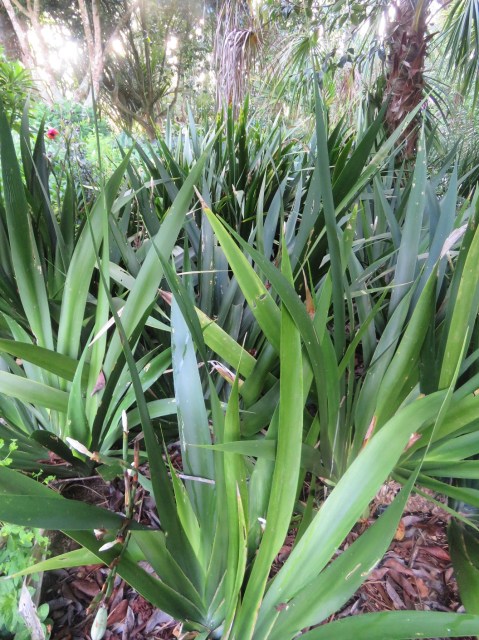
Another plant mystery was solved when we managed to get what we think is the right species name on this dietes. After finding our neomarica was not a dietes, I wasn’t entirely sure whether Mark was right that this was one, either. The foliage is more spectacular than the flowers, which are rather small in comparison and not at all showy. But it appears it is the lesser known Dietes butcheriana that has made itself completely at home in a shaded area of the garden.

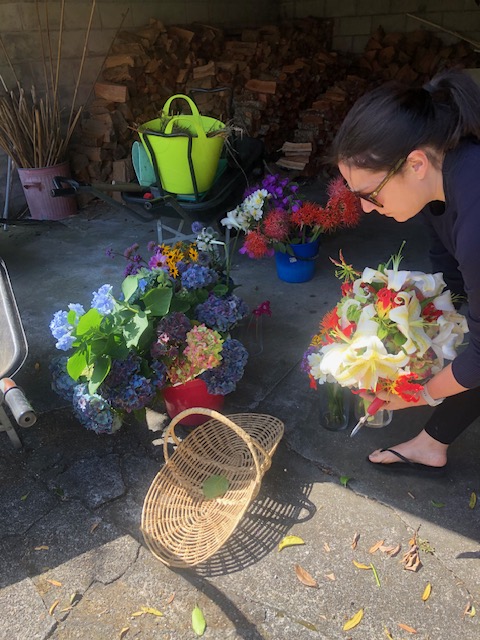
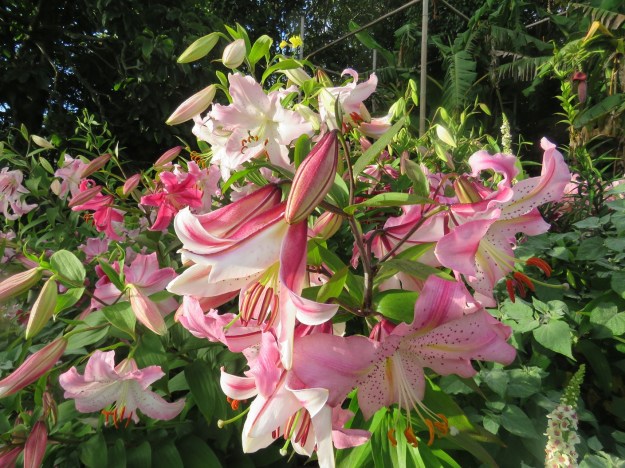
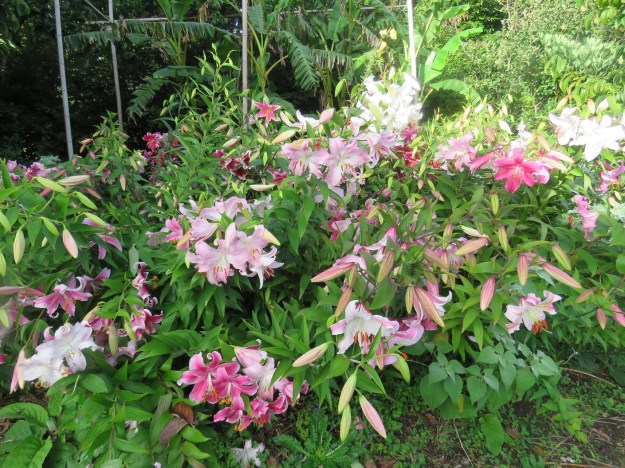
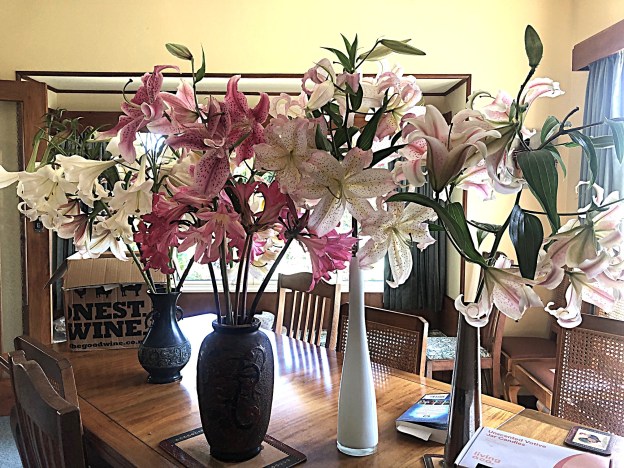
img_3976It is auratum lily season here and we have quite a few of these. I managed to get around staking the garden plants, in anticipation of the UK tour ten days ago – though they failed to flower on cue this summer. I don’t like to pick the flowers from the garden but… out in one of Mark’s vegetable patches, we have a large number of auratum lilies of many hues which Mark has hybridised and raised from seed in preparation for a new garden under construction. This has taken longer than anticipated so the lily patch has expanded and I can cut these to my heart’s content to bring indoors or give away.

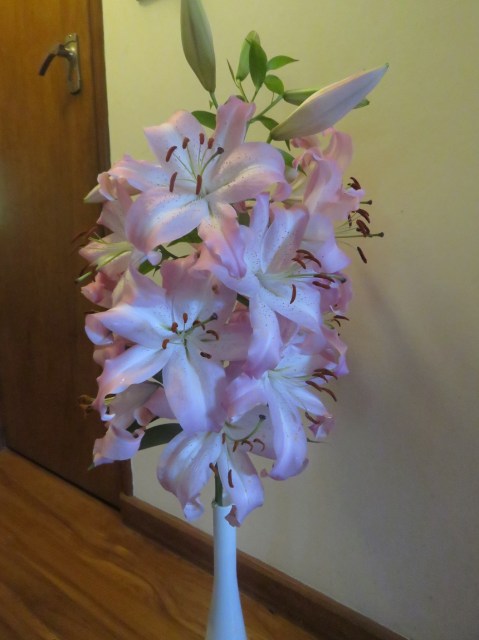
Just a one-off auratum seedling

Just a one-off auratum seedling

This soft pink specimen is decidedly over the top. With 20 separate blooms, the flower spike is much too heavy to ever make a good garden plant and indeed it looked a bit gross out in the lily patch. But it looks splendid cut and put in a vase. You may notice the outward facing blooms. Florists prefer upward facing blooms and many of the auratums offered for sale are upward facing. Felix and now Mark started breeding for outward facing blooms because these make much better garden plants. They are hardier to weather conditions, do not gather debris and suffer less from pollen staining when grown in open conditions. Like many of Mark’s efforts, these are not oriented to commercial production, just to get better plants for our own garden. But oh we do get such a lot of delight from these summer flowers.

The lily patch in the vegetable garden

The lily patch in the vegetable garden

Plant Collector: Worsleya procera

Worsleya procera (syn. W. rayneri)

Worsleya procera (syn. W. rayneri)

The most special plants flowering in our garden this week are the Worsleya procera (syn. W. rayneri) and they are not only special because they have the wonderful common name of Empress of Brazil (which tells you where they come from). They are also extremely rare in cultivation, a very beautiful lilac-blue in colour and generally regarded as almost impossible to grow as garden plants. We have two growing in different positions in the garden where they are just left to their own devices with no special treatment at all. When we had an international tour of clivia enthusiasts through, a number were also bulb aficionados and they were genuinely impressed that we could grow and flower this choice bulb in the garden. They are usually grown as really pernickety container plants. True, our flower spikes do not match the 150cm in height that they are reputed to reach, but the flowers are large and a most unusual colour in the bulb world.

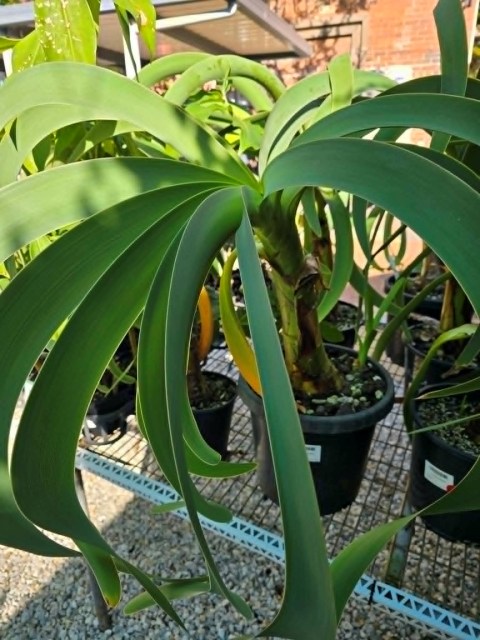
There is only one species of worsleya but if you go back a step to the extended family, they are related to hippeastrums, crinums and amaryllis. Apparently in Brazil, they grow on steep granite cliffs beside waterfalls (where it is hard to imagine a flower spike of 150cm) but our garden conditions in no way resemble the natural habitat. The foliage is really interesting, arching in a semi circular, sickle fashion. These bulbs are not for the impatient gardener. Mark was standing looking at one of ours with Auckland plantsman, Terry Hatch, who originally supplied it to us. They agreed that was a long time ago, maybe as much as eight years. Mark found the label and it was in fact fifteen years. It had taken thirteen years to flower the first time. Time flies, apparently, when you are a gardener. Sadly, both ours are the same clone (one was an offset) and you need two different clones to get viable seed. Pukekura Park’s worsleya in the Fernery is not going to flower this year so if any local readers happen to have one in flower, we would love to swap pollen.