Tag Archives: sustainable gardening

Invisible gardening

I made that term up. It is when I spend a fair amount of time working through an area, removing a large amount of plant material and at the end of it, most people wouldn’t even see the difference because it all looks pretty much the same. Just a bit tidier.
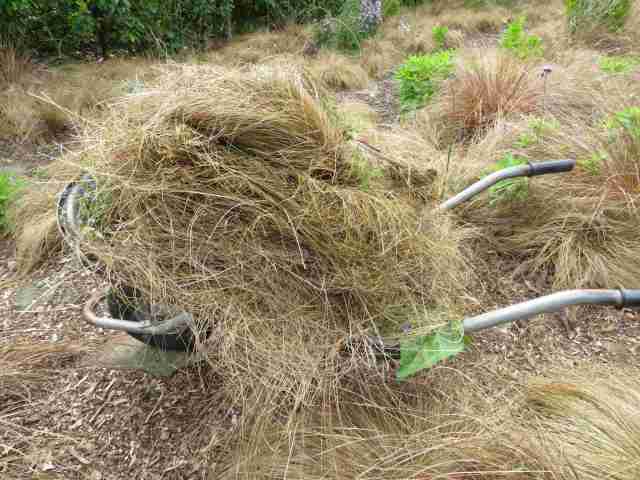
This times ten is a lot of waste to remove from an area that is not large

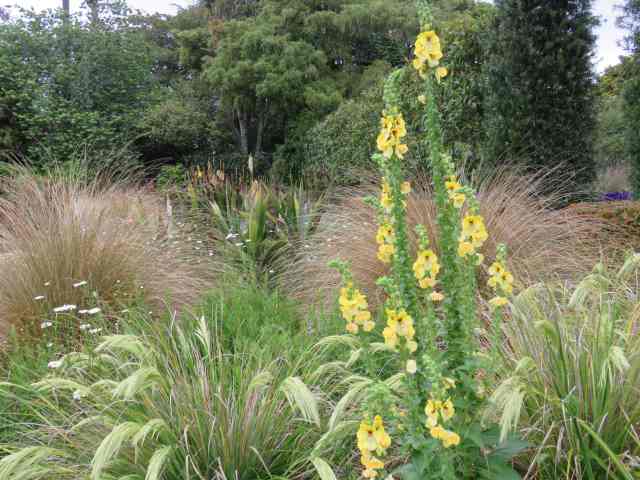
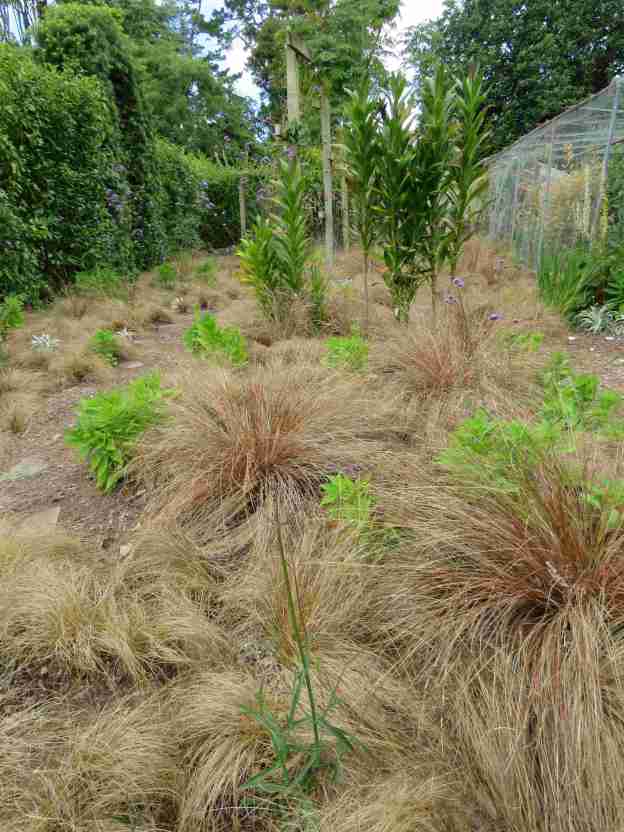
In the past week, I have spent five days meticulously going through the area we refer to as ‘the grasslands’. It is a very simple planting, mostly our native Carex buchananii and Carex comans ‘Bronze’. In the process, I have removed about ten overloaded wheelbarrows full of vegetation but honestly, nobody else is likely to notice the difference. That is fine. In fact, I regard it as something of a triumph because I know it is a lot better.
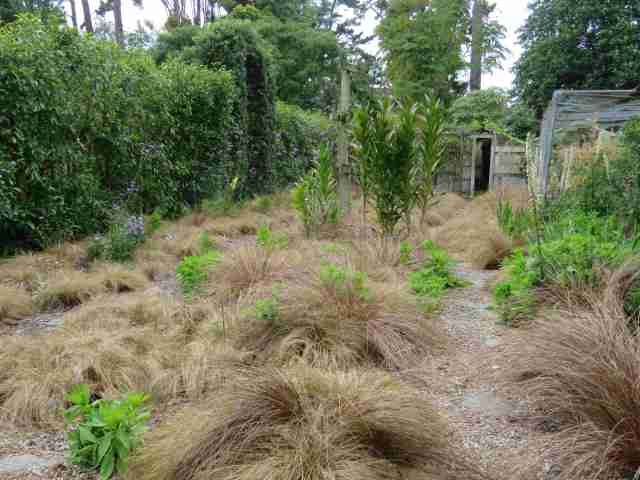
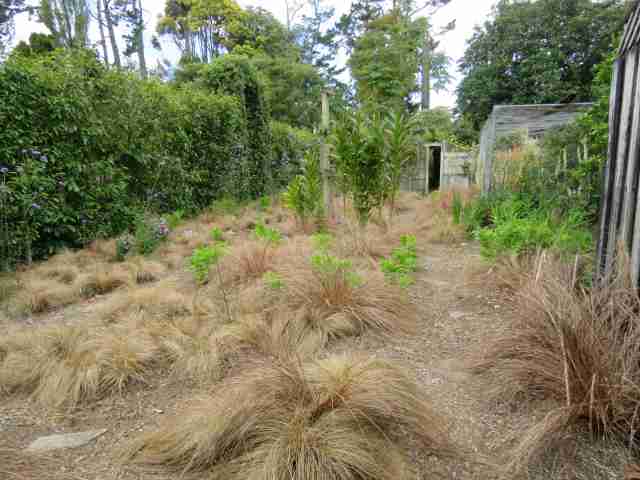
The ‘before’ scene
And the ‘after’ scene looks very similar

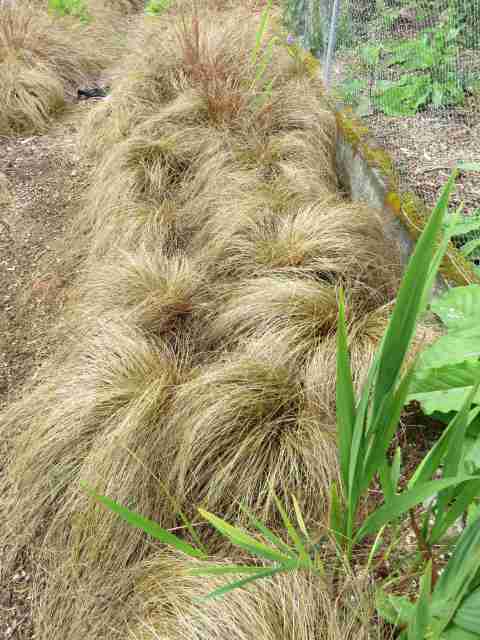
Most of the grasses we grow are evergreen and it seems that taking the time to work them over once a year, removing spent foliage, dead patches and debris buildup in the crown of the plant keeps them looking healthy and attractive as garden plants. That is the big difference between how they grow in the wild and keeping them in the garden – the human hand making an intervention now and then. While they will seed down and establish as a colony in the wild where some dead plants and strugglers are just part of the natural cycle, a garden situation only looks natural. My intervention makes sure that each plant is standing in its own space with limited competition, either from its seedlings or indeed weeds. I also comb out the foliage on each plant to remove the buildup and to keep the festooning form rather than it becoming a tangle.

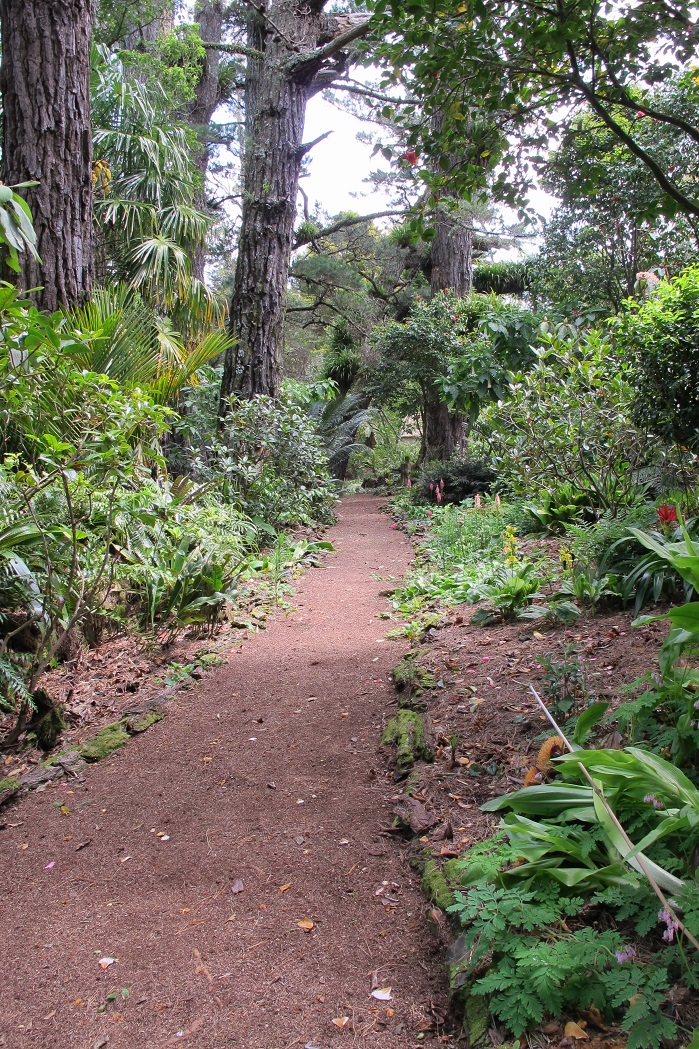
The Rimu Walk is maintained with one major, annual blitz and just the occasional tidy-up of fallen debris inbetween

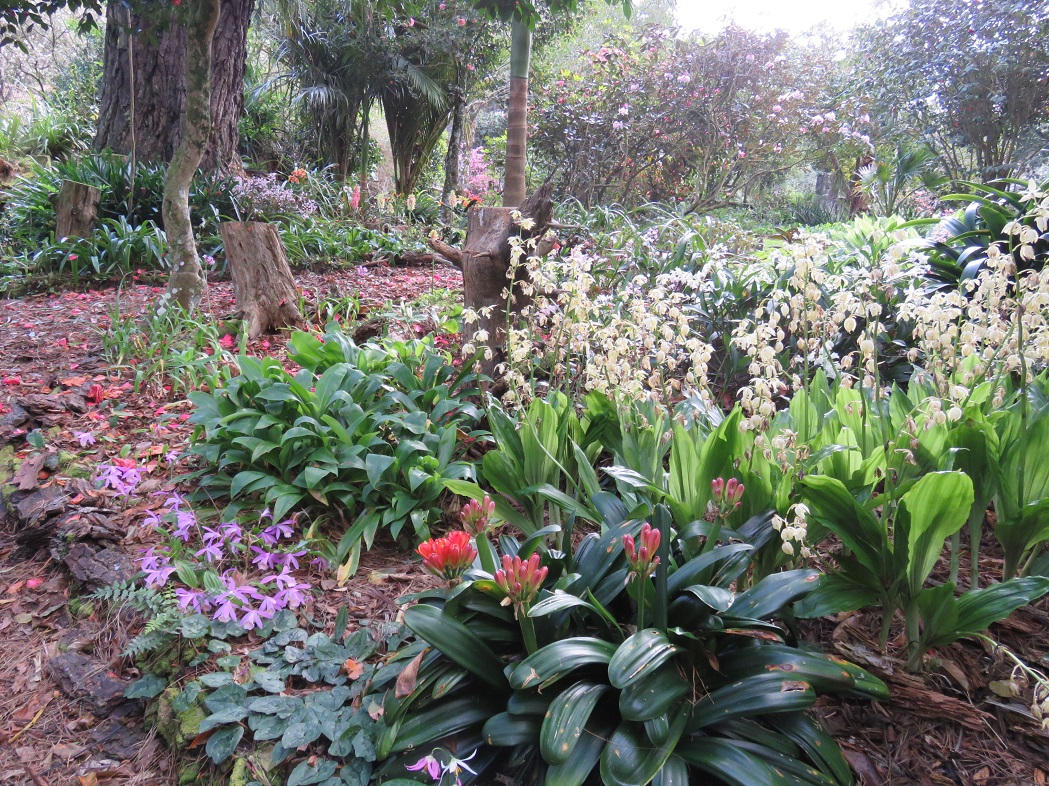
We have a few other areas that also thrive and look good all year round with just one concentrated, annual blitz on maintenance. The Rimu Walk is notable. Every year, I spend a couple of weeks working my way over every plant from one end to the other and the garden waste is shipped out by the wool bale load to compost in a patch of bush elsewhere on the property. I work on rotating two wool bales and, at a rough guess, we probably move out over fifteen bales full. That is to say, I fill them and Lloyd or Zach remove them for me. At the end of it, there are no gaps in the garden, no bare areas and no indication of the time and care that has been spent but it just looks tidy, cared-for, healthy and loved. My efforts are largely invisible and I like it that way.
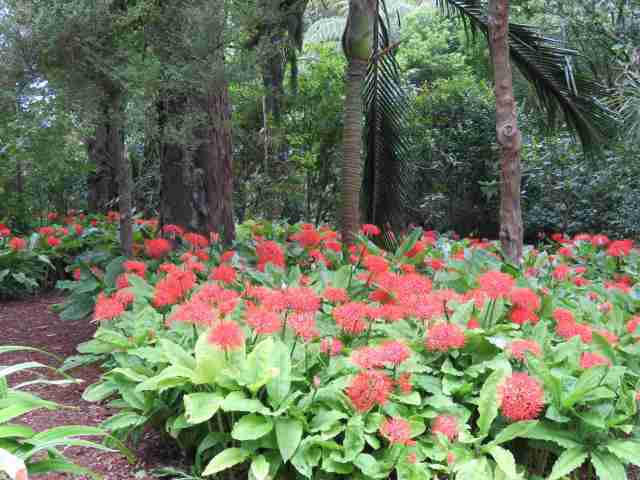
The spectacular Scadoxus multiflorus ssp katherinae is also managed with one major clean-up a year and very little inbetween

I refer to areas like these as ‘low maintenance’. With one thorough, detailed effort a year, there is little that needs to be done between those big clean-outs. We did one weeding round on the grasslands area in spring but nothing else. The scadoxus area will remain largely untouched until late winter again. Beneath the rimus, we will pick up fallen branches and sticks brought down by the wind and pull out the odd weed that has sneaked in but that is about it. They feel as though they are low maintenance, but if you averaged out the hours spent on that annual blitz, they are possibly not that low.   It is just different maintenance, albeit that it only works in areas that are largely weed-free to start with, filled with plants that do not require ongoing staking, deadheading, cutting back, dividing, restricting or training and where a thick layer of natural mulch has built up over the years. Nor do they have edgings that need to be maintained, grass that needs to be cut or paths that need to be swept.
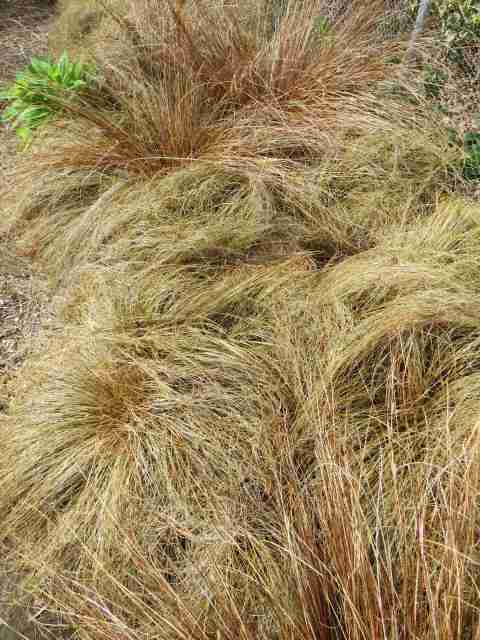
It is perhaps easier to see in close-up. Before…
… and after

Garden maintenance can be a bore as well as a chore. There are areas I don’t enjoy working in. But it is oddly satisfying to focus entirely on just one block, working over it in minute detail and wrapping up after a few days, a week or even more and having the area look its well-furnished best at the end of it all, despite the removal of prodigious amounts of green waste. Even better is knowing that it will remain looking fine for the better part of the next year.

Maybe it is more discreet gardening than invisible. it is also a sign of somebody who has the time and inclination to spend on such fine tuning. I am aware that for many people, garden maintenance sits somewhere closer to crisis management and that is a very different scenario.
Gardening more sustainably – part one. Where to start?

A friend was telling me about a major garden that he had visited recently and his disappointment that it was, as we say, noticeably ‘going back’. He then offered the reason that “of course, they are trying to garden sustainably,” as if to excuse the out-of-control weed issues.

No. No. No. That is not sustainable gardening. That is stopping using glyphosate in regular garden management but not replacing with extensive hand weeding, mulching and making sure no weeds ever get large enough to seed down.

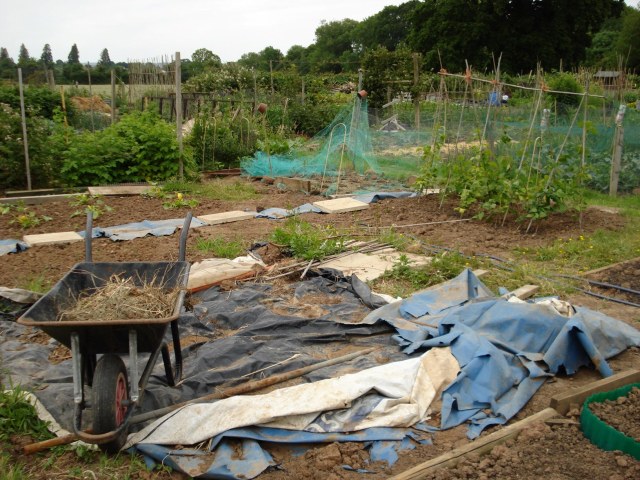
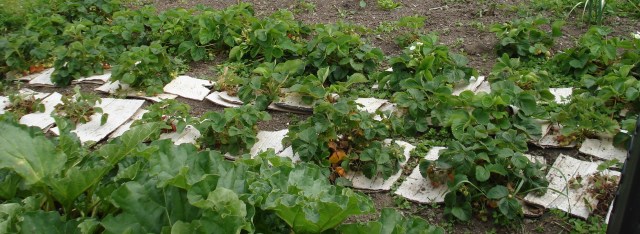
This is from a block of English allotments, many of which are highly productive but score low on aesthetics. Different goals apply in ornamental gardens. Also, too many synthetics and plastic to ever be described as sustainable.

A sustainable approach has more traction in the home vegetable garden where good soil management and the production of healthy vegetables  are prioritised – often a mixture of organics, permaculture, biodynamics and other approaches that used to be extremely fringe but are now more mainstream. What doesn’t usually come into that type of gardening is aesthetics. Laying cardboard and old woollen carpet is fine in a utilitarian environment of food production but not generally acceptable in an ornamental garden setting.

Cardboard is a lot better than laying synthetic weedmat and bequeathing non biodegradable materials to the land for centuries to come, but it is not exactly pleasing to the eye.

We have been talking about sustainable gardening here for years and it comes down to two main principles for us. One is eliminating – or at least hugely reducing – garden practices and habits that we know are bad for the environment. The second is gardening in a way we can manage as we age but which maintains the garden in a state that continues to bring us pleasure. We are certainly ageing here, but we have no plans to sell up and move somewhere smaller so that second point is equally important to us, but may not apply to others.

If you do a search on sustainable gardening, there are plenty of resources on line, like this one from Missouri Botanic Gardens, which give handy hints on things great and small that you can do to make your garden practice more environmentally friendly. You do not need me to produce another check list. Small steps are a good start.

Changing a large, predominantly ornamental garden to more sustainable management needs more than small steps. It takes a whole different approach and looking through different eyes. Alas, it sometimes starts with ceasing use of all toxic sprays and that is a giant step, not a small one. We are old enough to be of the glyphosate generation. When it was introduced and then generic, cheaper options became available, it was a game-changer both in gardening and in agriculture. Mark recalls the talk at the time that Round Up (the original glyphosate) was the equivalent of a labour unit. One man – and they were usually men – with a knapsack sprayer could deal to weeds astonishingly quickly. Many large gardens in this country were established and are still maintained with weed sprays. Ours was no exception. Mark would fill the sprayer and start a weed round from one end of the garden to the other on a regular basis.

The Rimu Walk is the lowest maintenance area of our garden and one of the most highly detailed. The combination of shade and years of vigilant weeding means that weed growth is minimal. Problem plants have long since been removed and the complex plantings are compatible with each other and form a stable matrix which requires very little attention.

Over time, that practice has become questionable and is now increasingly regarded as unacceptable. I remember a point in time when Mark decided it was not at all okay to be seen by members of the public with the knapsack sprayer on his back. He would discreetly disappear when people arrived. When we closed the nursery, we moved away from the routine use of sprays. We removed plants that needed spraying to stay healthy; we stopped using fungicides, went for canola oil-based insecticides when we needed them and stopped the routine use of glyphosate in garden management.

We don’t describe our garden as organic because it is not. There are times when we will resort to sprays to deal with particularly invasive weeds (onion weed, tradescantia and the like) or to knock back weed growth in areas of the property we don’t garden but it is never routine and it is not often. We don’t spray or fertilise our lawns and haven’t for at least 15 years but we have changed how we manage them. Our general use of commercially produced fertiliser is rare and targeted to single plants. There is no nitrogen run-off from our place.

In full sun, we control weed growth in the Court Garden by a thick mulch of wood chip, vigilant hand weeding and deadheading some of the plants which need it before they seed down too much. Started in freshly dug ground, this garden has never been fertilised nor shown any need for it. If we are planting something new, it will usually get some compost on its roots. Where appropriate, we will often return thinnings and prunings to the mulch as we go so the soil will continue to be enriched with fresh humus on top.

There are commercial products now that claim to deliver the same results as the spurned sprays but all that is doing is continuing the same gardening practices, usually with less effective tools. Think of it like the attempts to reproduce the traditional food diet but with vegan substitutes – tofurkey (tofu turkey) and fake chicken made from pea protein come to mind. I tried the pea *chicken* once and it was perfectly pleasant but it wasn’t the same as chicken and, when I looked at the packet, the food miles were huge – I think I remember it coming from the north of the UK – and it was a highly processed product. I didn’t buy it again. Just as a good vegan diet is not as simple as swapping out animal products for something that emulates that product, so too does swapping out a toxic spray for an *organic* product fail to get to grips with real issues of sustainability.

Nor indeed should sustainability be confused with low maintenance. They are different concepts.

Once you have taken the first baby steps towards gardening more sustainably, it takes a change of thinking and management to make the next, more significant steps. It is not what we garden with that is the issue; it is how we garden and what personal values we bring to our gardens.

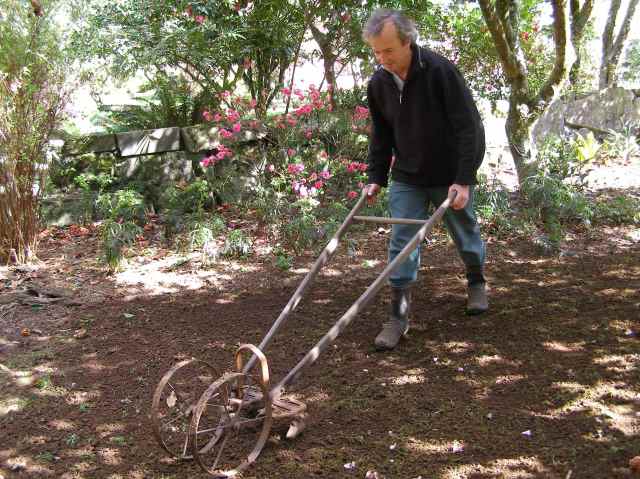
Before glyphosate, there was the multi-use Planet Junior which can be used to till the top layer of soil and leave the hoed weeds in the sun to die off. This is an old photo but we still have the Planet Junior and it has handy applications in some situations.

Part one of two. Sustainability and gardening for biodiversity to follow…. Probably tomorrow.

Apparently, almost everybody loves a meadow

“Wow! Moved to tears at the beauty around the river, couldn’t drink it in fast enough! Well done! ❤️” (Thanks, Amanda and Tim.)

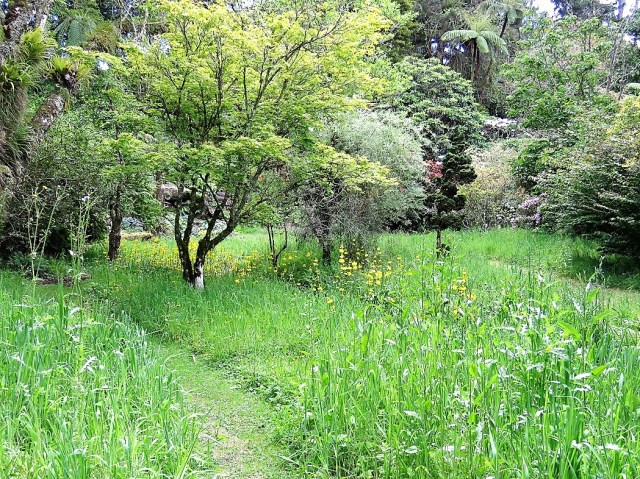
I can admit now that the aspect that worried me most about opening the garden after seven years was how people would react to the meadow we are developing where it was formerly all neatly mown parkland. Would others like it as much as we do or would some visitors criticise it for being ‘full of weeds’?

There is no doubt that the meadow harbours many plants that are generally regarded as weeds. Buttercups, dandelions and daisies abound, along with Herb Robert, the interloper Mark refers to as ‘stinking billygoat weed’ and Yorkshire fog grass. We try and keep in check the common, weedy crocosmia (orange montbretia) that washes down to us from upstream every flood. I dig out flowering docks and pull out cleavers and Mark will resort to spray to get the onion weed out before it gets too widespread – it too has washed into our place from upstream. We have a zero tolerance policy on tradescantia. But there are a lot of common weeds in amongst the long grass.

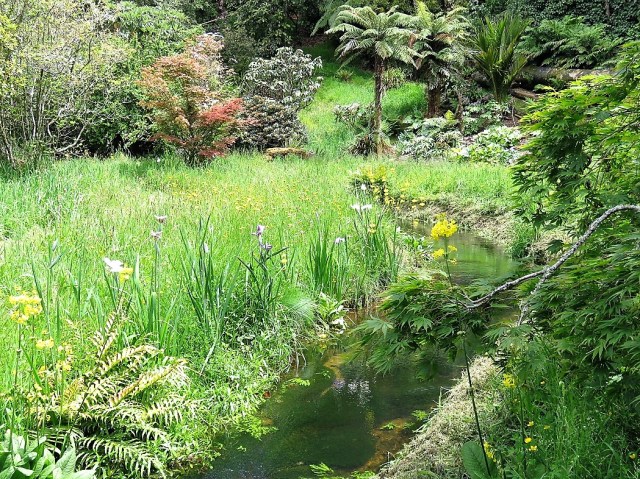
The streambanks were cut back with the weedeater this week. We have learned we need to do this more frequently to stop the grass from invading the stream bed.

Maybe New Zealand is moving on from its dedication to gardens as an exercise in total control. At its worst, this may be seen in scalping lawns (cutting with the lawnmower set on the lowest level possible), spraying along all path edges with glyphosate and a scorched earth approach. Equally, it may be seen in gardens laid out in straight lines with rows of tidy edging plants or low hedges defining the end of paved areas or mown grass and the start of all garden beds. Certainly, visitors who have looked at the UK, European and American traditions of meadows and long grass could relate to what we are doing, but would New Zealanders understand it, I wondered.

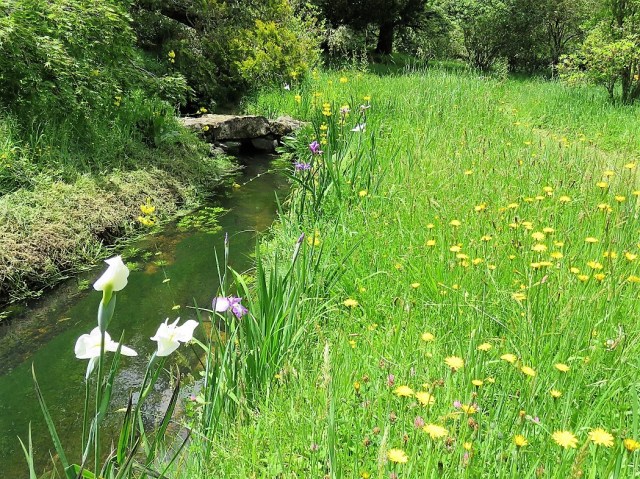
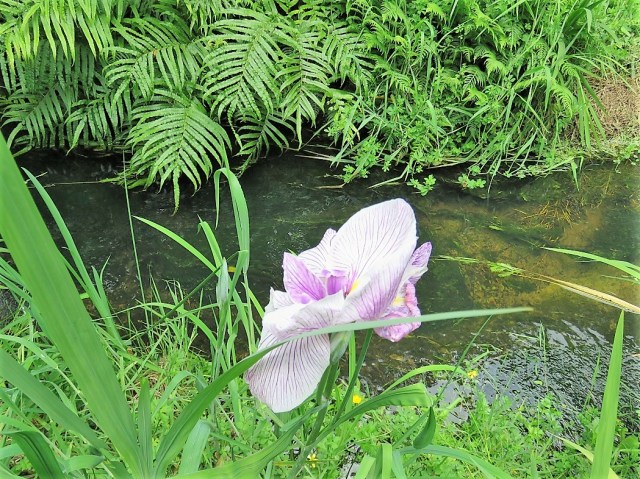
The lovely Higo iris are coming into bloom

The answer was a resounding yes. The comments we received in person were all very positive and it was the area of the garden that attracted most comment overall. The language in the visitor book kept using words like tranquil, inspiring, magical, relaxing and restful. It may be that anybody who didn’t like the meadow was too polite to say anything but we were only aware of one dissatisfied visitor. An older lady, she asked three of us in turn where the meadow was and insisted that somewhere there was a flat field of flowers. I am sorry we disappointed her but I am also surprised and reassured that there weren’t more people like her.

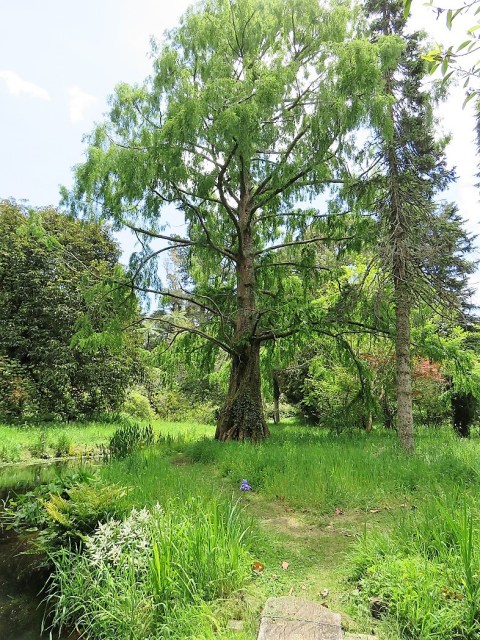
Metasequoia glyptostroboides

Maybe the reason our meadow works is in part because the rest of the garden is as close to free of weeds as humanly possible so it doesn’t look as if we are weedy everywhere. We love the softness of it, the more natural feel that comes with keeping a much lighter hand on its maintenance and management. It has certainly reduced the maintenance burden and is more environmentally friendly than keeping it as mown park. But it is the feeling of romance that comes with that softer approach that delights us. The plants that have naturalised within it are seasonal pleasures – from the common yellow primulas and bluebells to the irises, the lysichitons, Mark’s unexpected trilliums, even the white ox-eye daisy that is now settling in. We keep adding a bit more as we find plants that we think will fit the environment without becoming a pest.

It was affirming to have so many visitors who found our meadow just as charming as we do. I hope some will be inspired to find ways to implement this gentler style in their own home spaces. Also, given how wet the ten day festival was, it was reassuring to find that even in such conditions, the meadow can still be a delight and not just acres of unappealing, sodden, rank, long grass. That was a good test for it to pass.

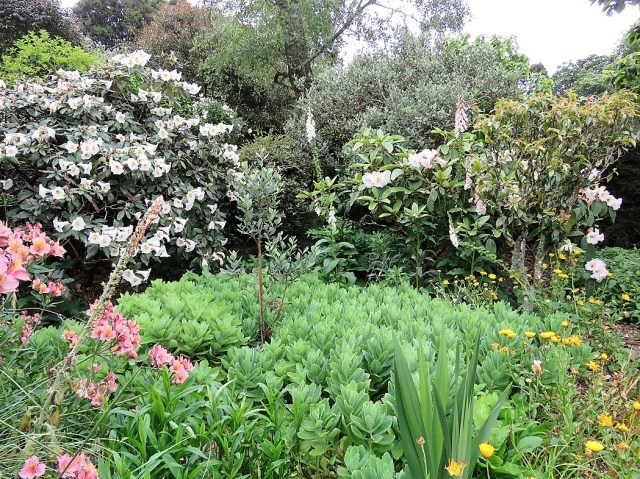
More cottage garden than anything else. But with a few unlikely plants like the nuttallii rhododendrons as well as feijoas and flowers.

One visitor solved a different problem for me. I was struggling to explain the bee and butterfly garden we refer to as the Iolanthe Garden a few weeks ago, landing eventually on the descriptor of it being a form of  freestyle, transitional meadow. “I am English,” this visitor said. “So my favourite part of the whole place was the cottage garden.” It had not occurred to me that what I was planting was a cottage garden but I looked afresh. She was right. The Iolanthe Garden is a cottage garden. I shall describe it as such from now on. It makes simpler sense.  

Started at last – a perennial meadow

Not a blank canvas – closer to a wasteland with potential

Sometimes a garden can catch you unawares. At least, that is the case in a large garden. It is probably harder to avert your eyes from messy areas in a small garden. So it was that I found myself in the Iolanthe garden this week, thinning both the Daphne bholua forest that had formed (there is a plant that can seed and sucker alarmingly if you turn your back on it) and the sugar cane patch.

The original plant of Iolanthe is the dominant feature on one side 

Iolanthe has only opened her first two blooms this year but here is a view I prepared earlier

I paced out the Iolanthe garden and it is somewhere over 500 square metres so it is not a small space, though it is in a prime position and has a mix of shade and sun. It lost its way some years ago. In Mark’s father’s time, it was his vegetable garden but as the original plant of Iolanthe grew ever larger, the shade increased. I admit to having done a major effort on it back in the early 1990s, attempting to turn it into a stylish potager. In self defence, it was the fashion at the time and I was following Rosemary Verey’s example. I divided the space into rectangular areas defined by square, concrete pavers and planted rather a lot of twee buxus hedges. Of course, anybody with experience can tell you that little buxus hedges are not actually compatible with growing plants like vegetables that require friable soils to be dug over every season. Their root systems encroach ever more on the surrounding areas.

At its best, Mark’s chaotic butterfy garden could look like this – but all too briefly

Mark’s dad was patient with my efforts to pretty up the area but Mark removed most of the buxus in the years that followed. He then relocated the vegetables to a sunnier area on the property and the Iolanthe garden became the holding area for plants that needed to be relocated to other parts of the garden ‘in due course’ and the trial area for growing perennials he was buying in to see how they would perform here. And it became increasingly chaotic. At its best, in summer, it was Mark’s butterfly and bee garden with a riot of unrelated flowers, both self-seeding and planted. At its worst, it was a mess and that was for most of the year. I could no longer ignore it and it needed more than just an annual spruce-up.

This is a massive job and I had already started when I realised what I was doing – making a perennial meadow. We have made a considerable study of meadows and I have written plenty about different meadow styles. In our climate and conditions, we have to maintain some level of weed control at all times so that pretty mix of flowering annuals and field grasses is not a look we can maintain. But finally, I think the threads are coming together and I can plant a perennial meadow that will require only light maintenance and flower for maybe nine months of the year. The influence is very much Nigel Dunnett and some of the plantings I see on Pictorial Meadows. If you want to know more about this, google the work Dunnett has been doing at Trentham Gardens, near Stoke-on-Trent.

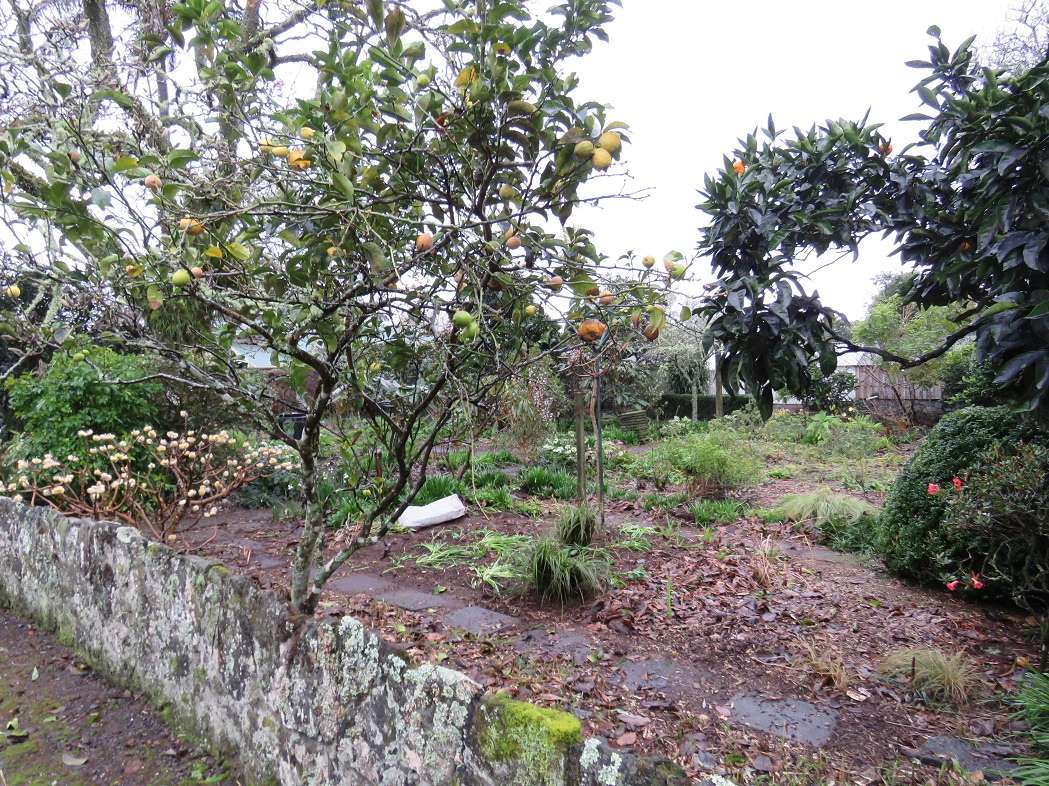
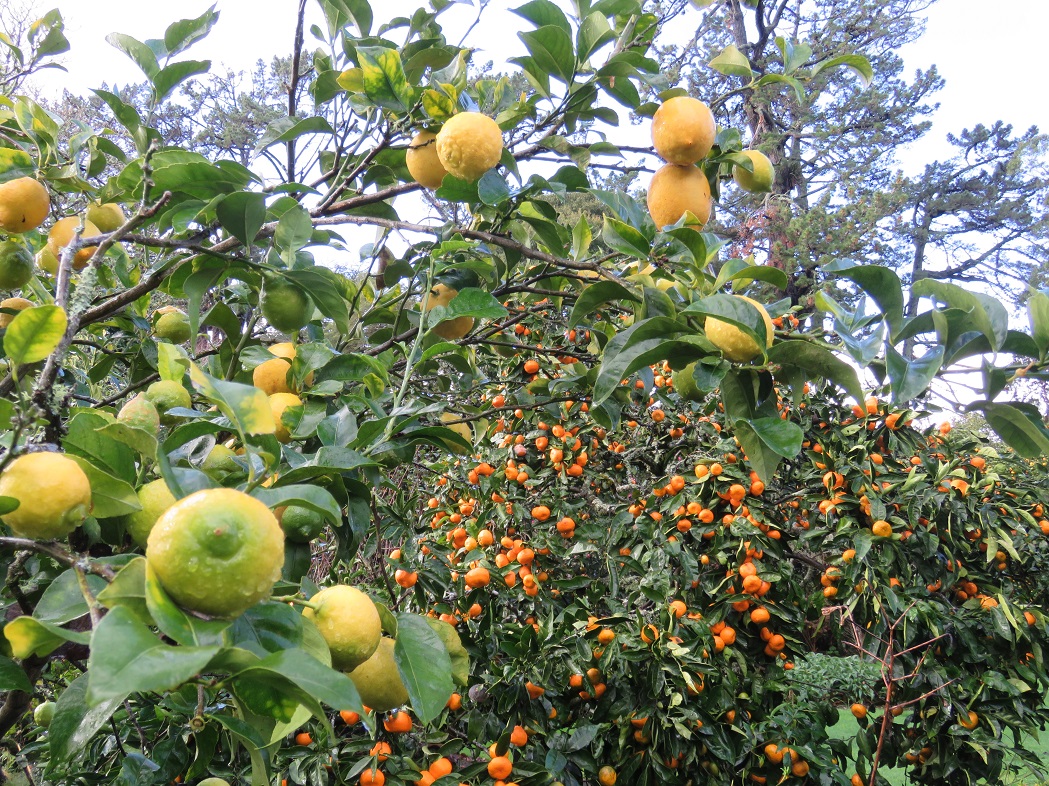
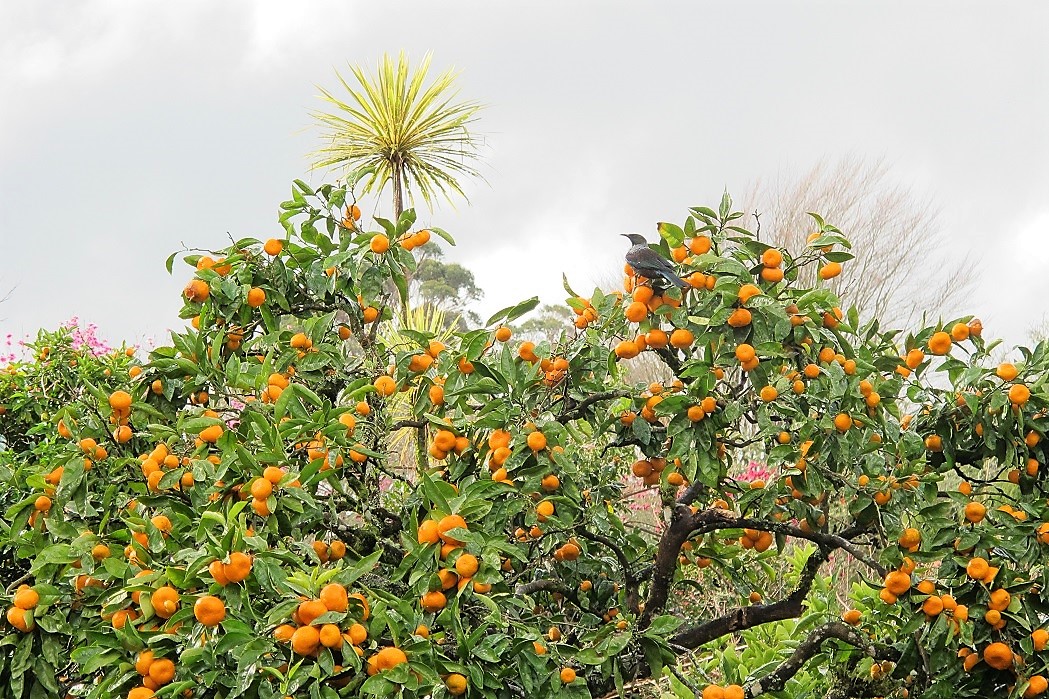
Existing citrus trees in this area

We are extending the permanent trees and shrubs. Mark has long talked about establishing an orange grove to give some purpose to the area. There are already about 10 citrus trees there (tangelo, limes, lemon, oranges and mandarins) and another three plants were hanging around the old nursery waiting to be planted. And feijoas. There was one growing and another two waiting for a home. Same with the tea camellia (C. sinensis).  While we are never going to be self sufficient in tea, I have taken to harvesting the big plant each spring and Mark had another two or three waiting to be planted.

Planting beneath the widely-spaced trees and shrubs is the big task but also the most interesting one. The meadow effect. Liberated from the feeling that I must manage the colours carefully and follow certain rules for herbaceous planting, all I am doing is thinking as I go about sustainable combinations planted in loose blocks. I am using the plant material we have to hand but avoiding using the perennials I have already featured heavily in the sunny perennial plantings around the new Court Garden area. In other words, really casual plantings but strong growers, a different plant palette so it doesn’t all look the same. Am I lucky that we can go into planting a fairly large area drawing on plant material we already have around the place or is that good management? Using material we already have does mean we know how it will perform in our conditions and how to manage it.

It was a throwaway comment from Mark that made me think more clearly about what I was doing. “I’ve always thought wind anemones have a place in an orchard,” he said. Yes! I thought. We have two shades of pink Japanese anemones on our roadside that I can raid and this is a place where they can grow in their own space and star in their season.

Elsewhere, we have a variegated agapanthus that I have never found the right place to feature in the garden. I have yellow day lilies I could use with that in one block. It is painting with plants and that is fun. I have already interplanted the purple eucomis with yellow crocosmia and am now interplanting bluebells and a pink alstromeria.

I have more confidence with this venture having ascertained that a small area I replanted two years ago and mulched heavily with fresh bark and leaf chip has stayed weed free. This week, I found that the price of a truckload of up to 6 cubic metres of such mulch material can be delivered here for a mere $100. This seems like a bargain to me. I am waiting for my first load and will mulch heavily. As with everything we do in the garden here, we factor in sustainability and maintenance from the very start.

Our bulb hillside plantings are successful but do not a meadow make

We have always wanted a meadow and have had success with bulb hillsides but have been apprehensive about going full-on into a more extensive area. There is romance in the simplicity of flowery meadows but that does not mean they are simple to create. I am hoping that we now have sufficient experience and knowledge to make it work. It may be the last piece in the assemblage of sunny perennial gardens we have been putting in – all different in style and concept with very little overlap in the plant selection for each area.

I have a lot of work to do before summer to get the meadow planted. I just wish it wasn’t quite so muddy at the moment and that the weather gods would give us a spell of several dry days in a row.

It is an old photo but one of my favourites and is the view at one end of what is to be a perennial meadow

Matrix planting – a skill worth pursuing

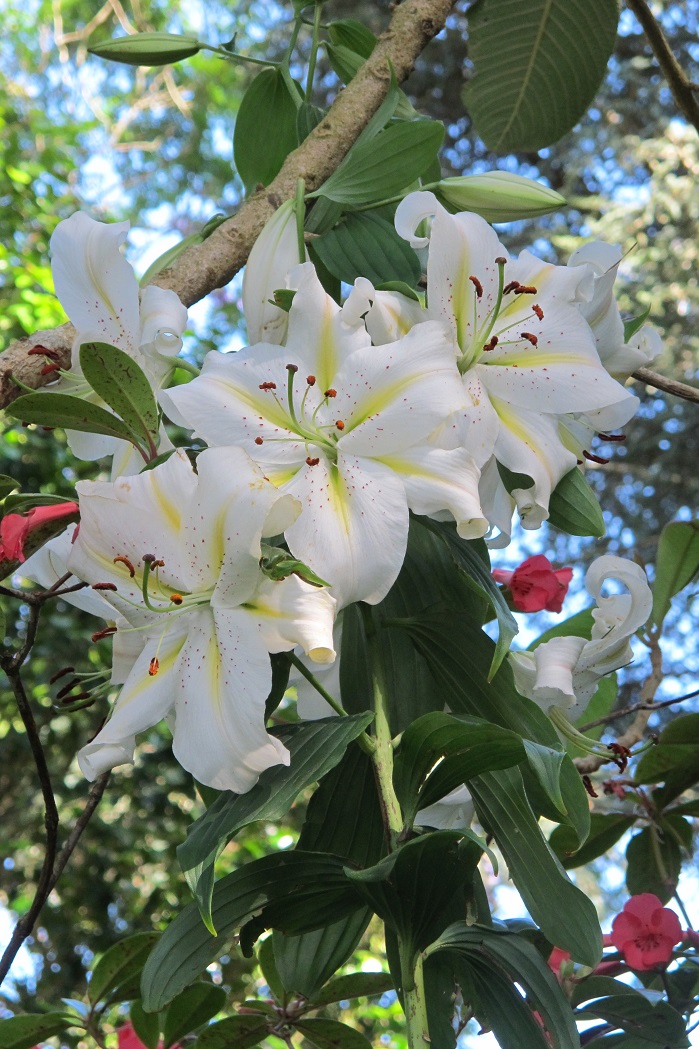
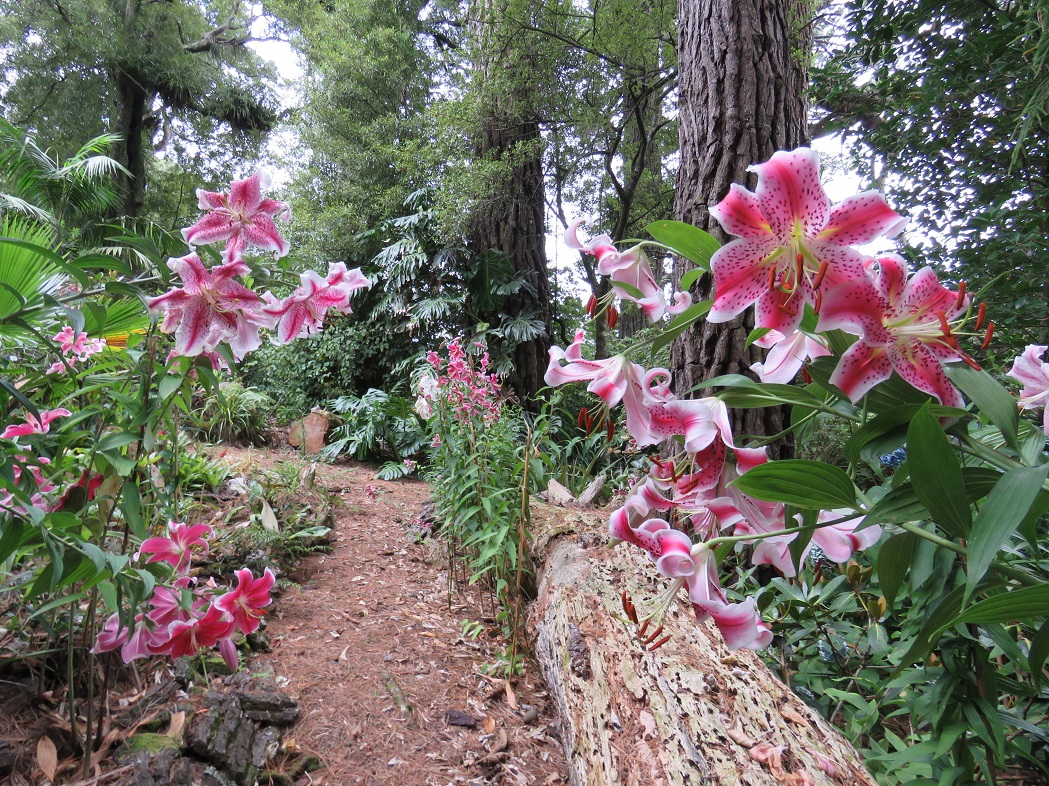
The auratum lilies -now dormant – called to me for some attention

Many gardeners will recognise the situation where one heads out to the garden to do something and what initially seemed to be a straightforward task escalates into one that is considerably more major. I shall dig and consolidate the lily bulbs in the avenue garden, I thought to myself. They haven’t been touched for years and are somewhat higgledy piggledy around the place. It escalated. Of course it did.

After more than 20 years…

“I am surprised they are still there, really,” said Mark. “It must be 20 years since I planted them and some of those now are seedlings from the originals.” It is probably more like 25 years since Mark planted the lower beds of the Avenue Gardens. No major work has been carried out in the time since, bar clearing up after the occasional treemageddon. We do a tidy-up from time to time and most years the lilies get staked. Nothing has been fed and not a lot new has been planted, just the occasional removal of a dead plant and plugging the gap if need be. I ended up going over almost every square centimetre of the area and becoming familiar with every plant, not just the lilies.

Remarkably low maintenance in the long term

As the days passed, my awe at the skills Mark used when planting the area grew. Matrix planting. That is what it was at the time – a highly complex planting of a whole range of different material, most of which has stood the test of time and is still there. It is the stability and the compatibility of the plants used that makes it a matrix – a form of sustainable gardening that is worth attempting to come to terms with.

When I did a net search looking for a definition of matrix planting, I found a fair number of recent references attributing it to renowned Dutch designer, Piet Oudolf. Oudolf is a giant in the contemporary international garden scene and he may have popularised matrix planting as a concept but he did not come up with it.

Orchids a-plenty in early October

As I told Mark how much I admired his skills in carrying the original planting 25 years ago in some areas, he just shrugged it off and said, “I was only copying what my father did”. Indeed, we still have areas in the garden that Felix planted from the 1950s onwards that remain stable, interesting, timeless and remarkably low maintenance today. These are mostly in shade and semi shade whereas Oudolf’s contemporary work that I have seen is predominantly in open, sunny conditions.

It is the sustainability and low maintenance with a high level of plant complexity that makes matrix planting so important. Without a high level of plantsmanship, you end up with utility, mass planting of few varieties – the hallmark of many contemporary landscape designers who have to plant clients’ gardens with reliable selections so they can not take risks. And people who pay professionals tend to like the tidiness of uniformity. Without sustainability, you have much higher maintenance requirements. This may not matter much in a small garden but if you are managing a large area with a low budget and low labour input, that stability of plant relationships is critical to keeping it all manageable while maintaining a high level of plant interest.

When I talk about a complex planting, I mean different layers and a mix of trees, shrubs, perennials both evergreen and deciduous, bulbs and a smattering of self-seeding plants. In this area, we start at the top with a layer of massive old man pines which are up to 50 metres high. At a lower level, we have rhododendrons (a few, in better lit areas), vireya rhododendrons, cordylines, brugmansia, palms, a few cycads, hydrangeas and the like). At ground level we have trilliums, Paris polyphylla, assorted varieties of bromeliads, Helleborus x sternii, argutifolius and foetidus, orchids (mostly dendrobiums, calanthes, cymbidiums and pleiones), veltheimias, hippeastrums, the aforementioned lilies and a whole lot more. I did say it was a complex planting.  Oh, and lots of clivias in red, orange and yellow. Being in the shade, we don’t get a lot of weeds but the naturally occurring vegetation needs to  be managed and thinned – assorted ferns, macropiper (kawakawa, pepper tree or, botanically, Piper excelsum), native astelias and collospermum, even seedling nikau palms and cordylines.

Lifted, divided and replanted after many years

The surplus from this one small batch amounted to 3 or 4 barrow-loads

I was amazed at how much I could remove without making it look different, just tidier. I lifted entire blocks of bromeliads and reduced them to a shadow of their former selves. After replanting this patch, I removed four laden barrows to dump but it still looks well furnished.

At the end of about three weeks, I decided I had done as much as I intended to. I didn’t need to add much new material at all. That is why I was in awe at Mark’s original plant selections and plantings. And while it was a larger job than I originally envisaged, if that sets it up so that it can be maintained with the lightest of intervention over the next two decades, that is a good outcome.