
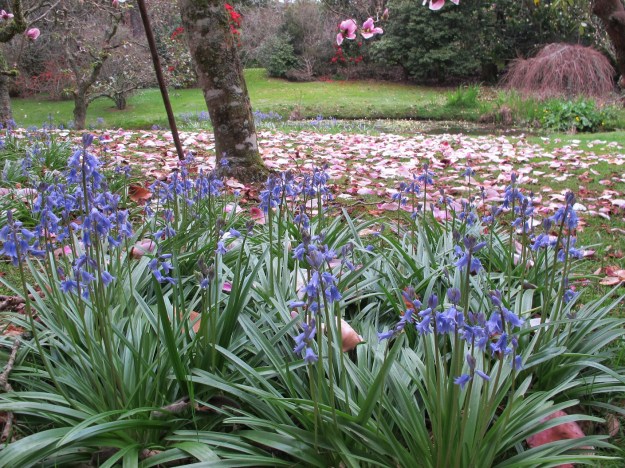
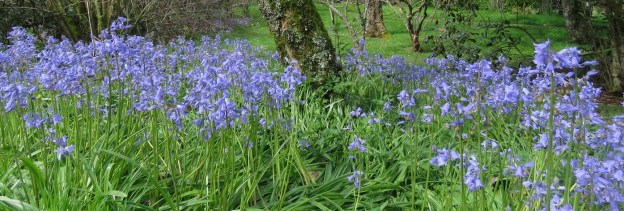
 There is something wildly romantic about a proper bluebell wood. I have never forgotten being entranced by the haze of blue through woodlands near Castle Douglas in Scotland and that was more than two decades ago. Those particular bluebells and woodland trees are native to the area but this does not stop many of us trying to replicate the effect at home.
Bluebells are best suited to the meadow look, in our experience. They grow too vigorously to tuck tidily into garden borders but their charms become obvious in a less constricted, wilder setting. The whole woodland style is dependent on having deciduous trees fairly widely spaced because the bulbs need light to bloom. In this country, we tend to have a mix of deciduous and evergreen in our gardens and lean more to “bush” or even “forest” than open “woodland”. On top of that, the time at which the bluebells are in growth, coincides with the spring flush of grass so mowing becomes problematic. As with most bulbs, it is best to let them die down naturally because that leafy stage is replenishing the strength of the bulb for next season’s flowering.
We solved this problem by planting bluebells in our wilder areas that we do not mow and on the margins of plantings in the park where we used to mow the wider area regularly. That way, we had defined swathes of blue in bloom and then swathes of long foliage until they went dormant. Now that we have stopped the regular mowing, it will be interesting to see if they spread naturally to give us expansive carpets rather than swathes. They set seed so freely that we try and remove at least some of the spent flower spikes.
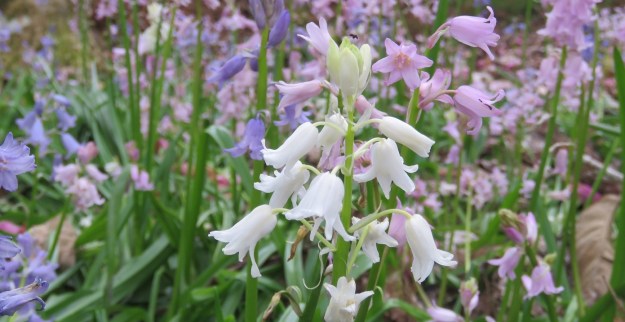
 It took UK writer Ken Thompson to demystify bluebell differences for me. The English Hyacinthoides non-scripta has sweetly scented, deep blue flowers on a droopy spike which means most hang to one side. Individual flowers are narrow tubes with reflexed tips. The Spanish H. hispanica is much stronger growing with an upright spike and flowers radiating all round. There is a greater range of colour from pale to dark blues and lilacs along with the pinks and whites. Individual flowers are bell-shaped and while the tips of the blooms flare out, they don’t reflex. They have little scent.
But to add to the mix, there are the natural hybrids. The English and Spanish forms cross freely and the hybrids fall somewhat in the middle with characteristics from both parents. I had previously tried to unravel the species and headed out looking for the cream anthers that define the English one as compared to the blue anthers of the Spanish form, ending up totally confused. Of course I did. I wasn’t factoring in hybrids. If Ken Thompson is right in his interesting book ‘The Sceptical Gardener’ – and I am willing to accept that he is correct given that he is an academic plant ecologist – and the majority of bluebells growing in UK gardens now are either the Spanish version or hybrids, then it seems likely that almost all of what we see in this country will be the same.
I stopped down the road to examine some bluebell patches on the site of one of the first settler houses built in Tikorangi. If we had any proper English bluebells around here, Mark hypothesized, that seemed a likely site. No, they were either Spanish or hybrids. Ditto with the bluebells here which date back to his great grandmother’s days and have now mixed with all the others we have. I can’t see any point in nursing ideals of species purity when it comes to bluebells in New Zealand.
 A word about white or pink bluebells. While the English bluebell can occasionally throw a white mutant, given the rarity of H. non-scripta in this country, it seems likely that all colour variants we have are either Spanish or hybrids. The whites and pinks are charming mixed with the predominant blues, making a pretty scene. Isolate them out by colour on their own, and they become a novelty plant. Bluebells, by definition, should be mostly blue. A display of only pink bells would look awfully contrived for this simple flower while a mass of white bells might as well be onion weed, really. That is my opinion.
First published in the September issue of New Zealand Gardener and reprinted here with their permission.

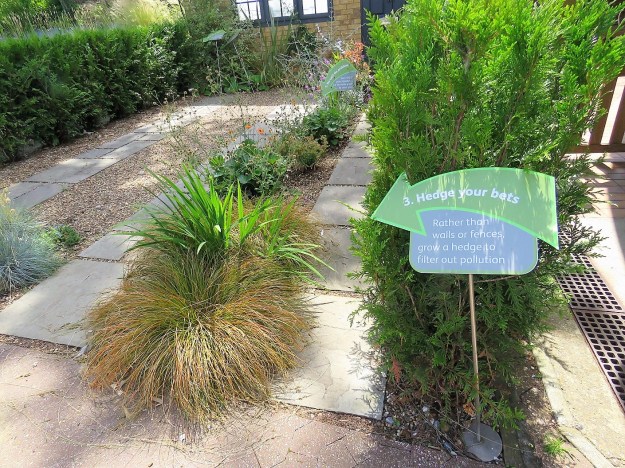
 The environmental benefits of growing plants are perhaps a harder concept to sell to people who don’t see anything wrong with living in concrete jungles. But we ignore the evidence of declining insect populations and the loss of biodiversity at our peril. Our planet is hitting crisis point, fuelled by human ignorance.
 It is not that the RHS are the only body leading public education in this area, but they are an influential one and all power to that.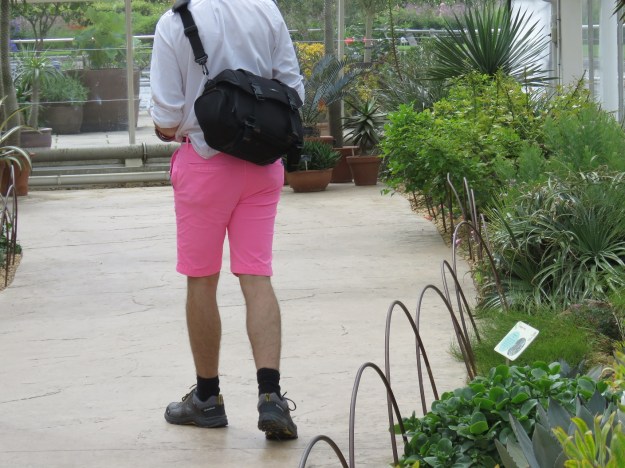


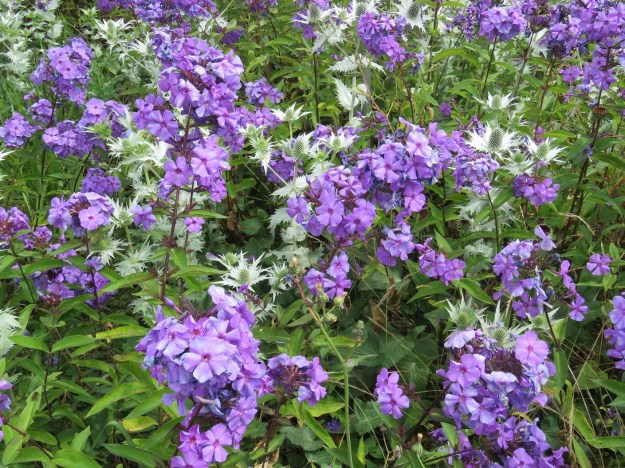


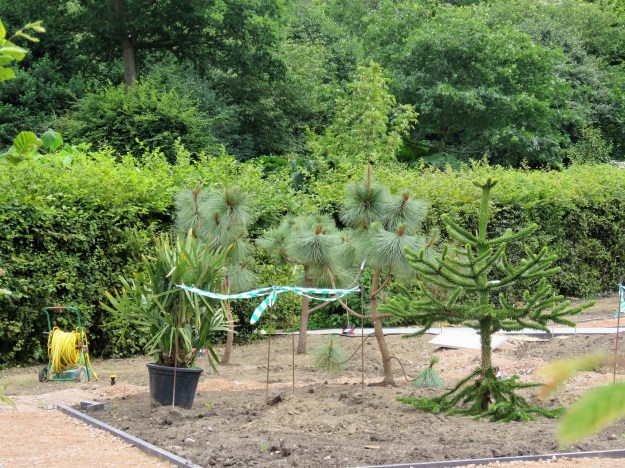 These friends had recently been to Great Dixter and expressed surprise at Christopher Lloyd’s dramatic ‘subtropical’ garden being taken out and seeing conifers going back in instead. It became a little clearer when we came across the Wisley project along similar lines. The conifers are being used as a framework for subtropical plantings. This is not a combination that would ever occur to a New Zealander but we will reserve all judgement until we see the finished product. Sometimes it is good to be surprised. Conifers are long overdue a revival and who knows? Maybe a new combination will launch a new fashion. Or maybe not.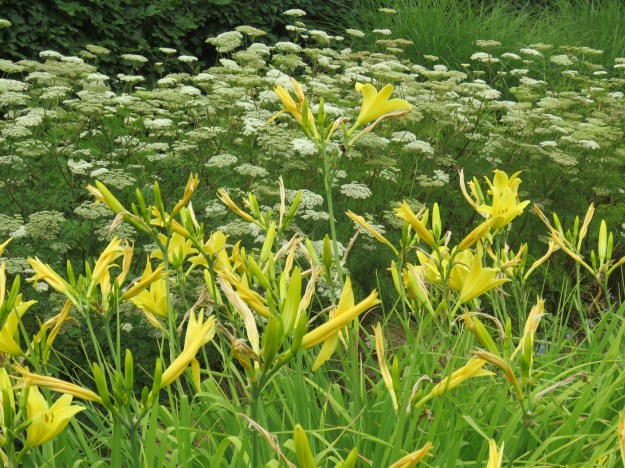
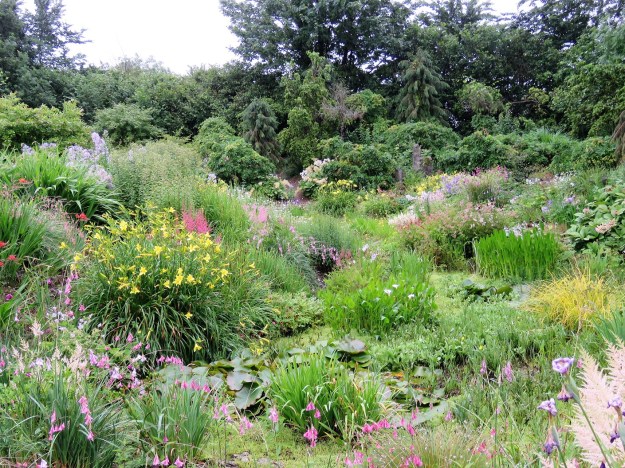
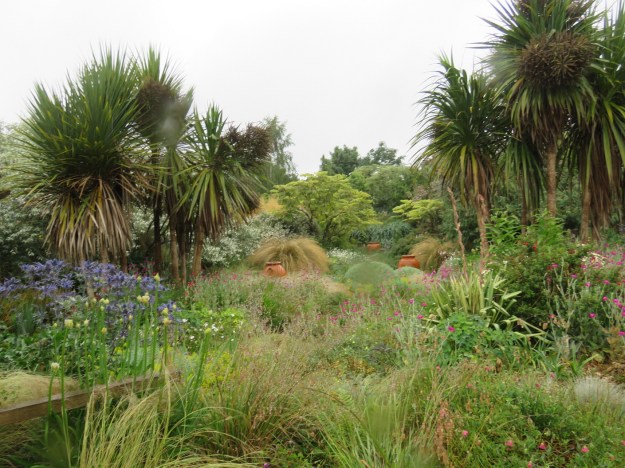
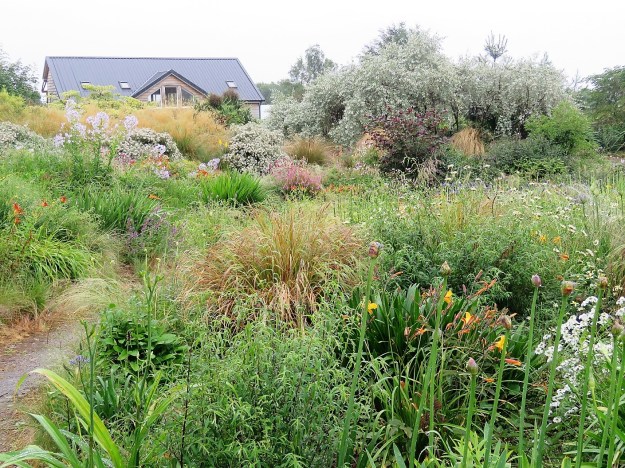 Keith and Ros Wiley had shut the garden for the past two years in order to start building their house and are still only open for very limited days but it is worth planning a trip around those days. It was interesting to see the way in which the building of the house gave a central heart to what is a private and very personal garden. But also, we knew we were looking at a situation where the owners’ energies had largely been going into the house in recent times. The garden hadn’t expanded physically into the remaining areas that had already been prepared when we visited in 2014. It will happen at some stage, I am sure. The existing plantings had filled out and softened in the intervening time.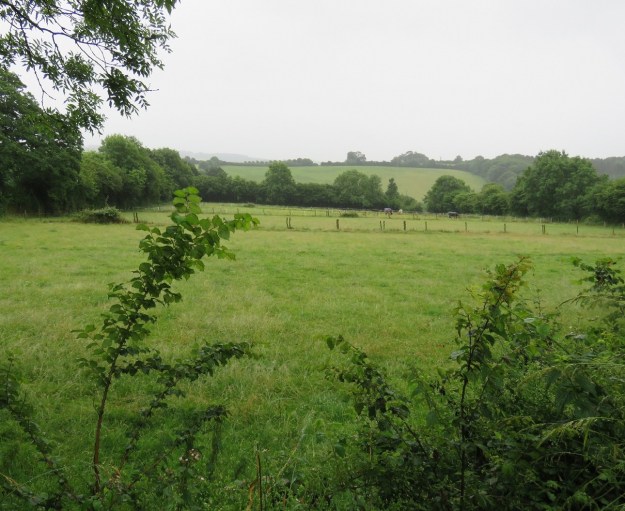
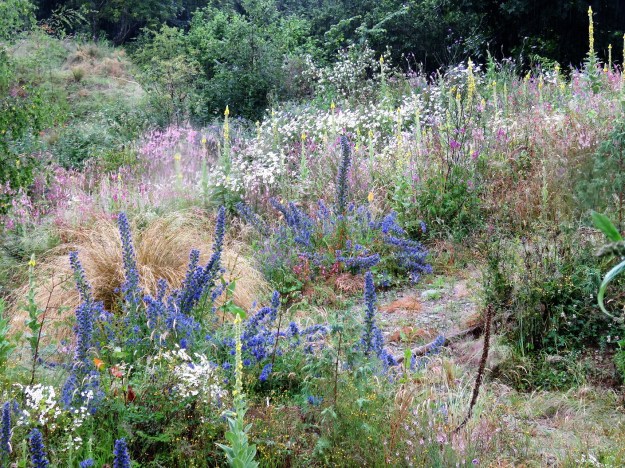
 Tikorangi The Jury Garden