


Just an unnamed seedling but glory, glory glory.
Is there a lovelier plant than a magnolia in full bloom? Maybe that is too extreme, but at this time of the year the absolute glory of magnolias all around me truly makes my heart sing. I will be talking about them with Tony Murrell on Radio Live tomorrow morning – tune in at about 7.45am these days.
Herewith, my answers to frequently asked questions.

A stomach full of red magnolia buds
- If your magnolia looks as if it still has furry buds (the outer casing of the flower bud that our children used to describe as sleeping bags for mice) but they fail to open to blooms or only show a splash of damaged petal, the culprit is almost certainly a possum. If you examine a bud, you will see where it has eaten its way in to take out the tasty centre. A single possum is capable of destroying most of the buds even on very large trees. Mark has been shooting possums most of his life and has carried out autopsies on the stomach contents of literally thousands of them over the years. This is because he wants to know what they are eating and it is part of the process of skinning them and jointing the carcass to feed the dogs. Old habits die hard and it seem a waste to discard both the fur – which can be sold – and the meat. At this time of the year, he can find a few possums wreaking havoc with stomach contents entirely comprised of magnolia buds. Red buds from early varieties on this one in the photo.

A kereru eating early blooms on Magnolia Vulcan
- Once the flowers are open, we have seen kereru eating the petals, particularly of the early varieties. But they don’t destroy an entire tree and we are willing to accept the damage. We have heard of the Eastern rosella parrots stripping trees up north but we have not seen it here, even though we have some of this Australian import here.
- This is your annual advice NOT to spray your lawn from here on. Without fail, every year, we get enquiries about magnolias opening with distorted foliage and without fail, when we enquire, the person has used lawn spray nearby in early spring Most lawn sprays are hormone-based and will cause damage to a number of crops including tomato plants, kiwi fruit and grapes. Magnolias are particularly vulnerable at the point when they are about to break into fresh leaf and because they are often used as specimen plants in or close to the lawn, they cop the spray drift. If you must spray your lawn, at least wait now until later in spring when the trees have put on their new foliage.
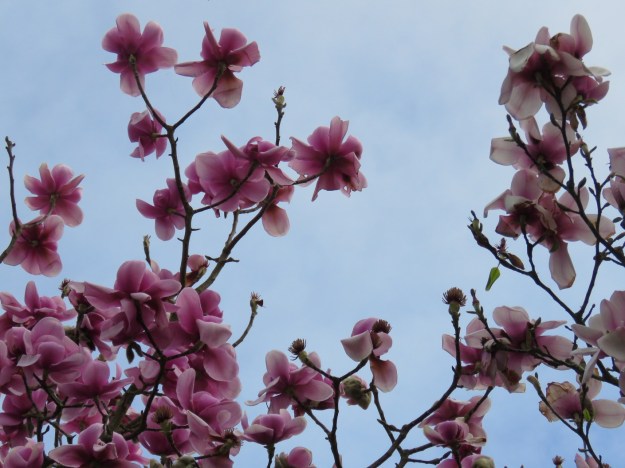
Just more pretty skypaper
- As far as we are concerned, it is a myth from England that magnolias cannot be moved. We have moved large trees but do it in late autumn or winter, not spring.
- If your coloured magnolia is flowering for the first time and the colour is not what you expected, take a look at the flower form. Some magnolias will put up pale blooms to start with. If the flower shape is more or less correct, then be patient. With a bit more maturity, the colour should deepen. This is particularly true of the deeper coloured reds and purples.
- If your magnolia has two totally different flowers on it, it is most likely that the root stock has escaped and is growing too. Most magnolias are budded onto a strong growing root stock. Over time, a root stock that has put out shoots will out-compete the chosen variety budded onto it, so it really does need to be removed. Examine the base of the trunk. Budding is done just above the soil level so you will find the rogue growth on the lowest branching level. Anything below the bud (or graft) is rootstock, above is the chosen variety. The sooner the escaped root stock is removed, the better.
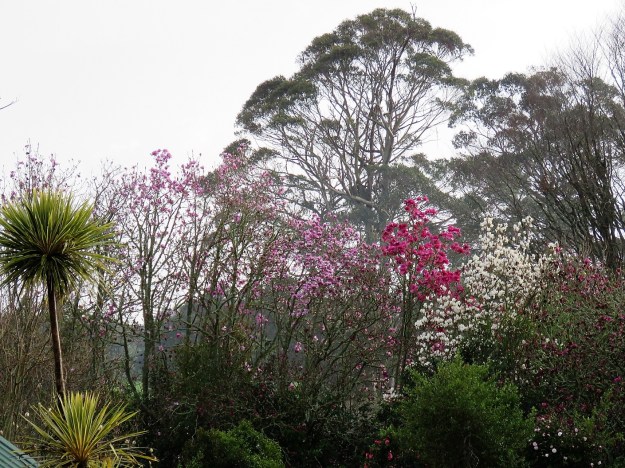
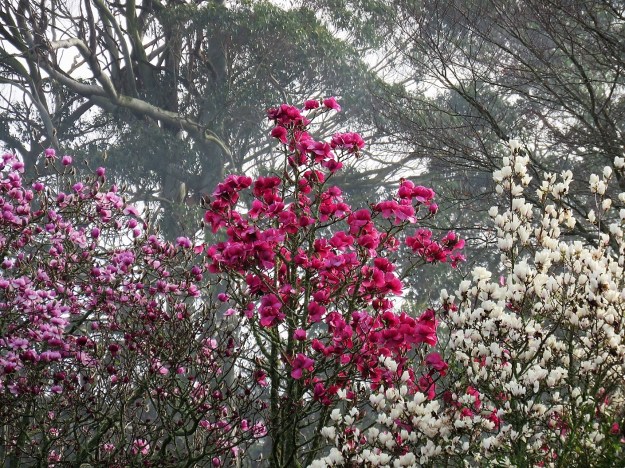
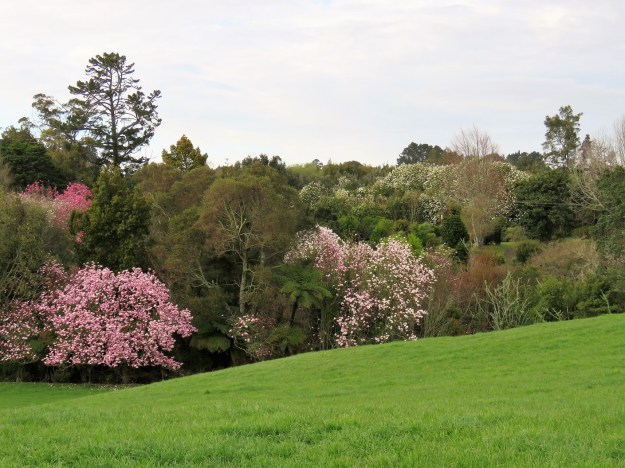
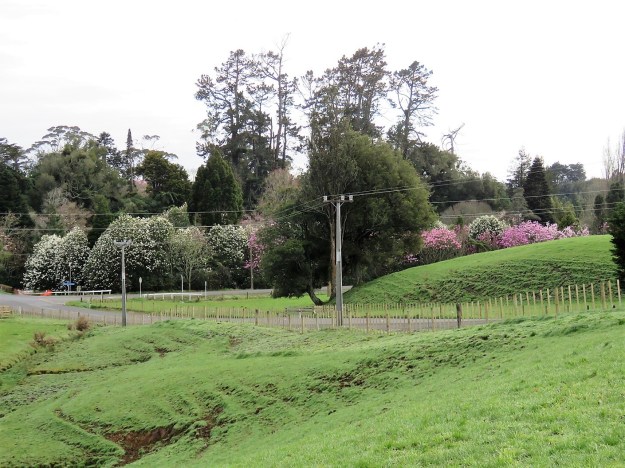
Finally, I posted the two photos below on our Facebook garden page but I wanted to include them here too. This is the sight I see when I look out of the window every morning – upstairs, looking across to one of our boundaries. That stand-out magnolia is Mark’s Felix Jury, named for his father. The white adjacent to it is Manchu Fan, the pinks are all unnamed seedlings. It is an absolute stand-out magnolia and I can boast because Mark won’t.



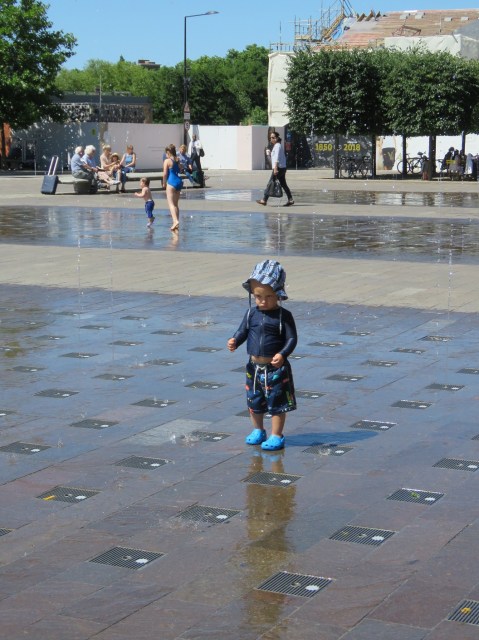
 As we walked along, we saw a few sodden children in their togs (bathing suits) and towels walking towards us. We rounded the corner and there, truly, was an amazing sight. The fountain in Granary Square. It was large and safe for playing. The seating around was occupied by parents watching their children as the water danced in sequences, sometimes stopping altogether for a brief moment, sometimes shooting high and then in waves across the area. It was magnificent. And safe fun. An urban beach, of sorts. Our kids would have stripped off and been in that water like a shot when they were young. It wasn’t exactly tropical on the day we were there but clearly kids still love water play. At night it lights up – 1000 different points of water and light.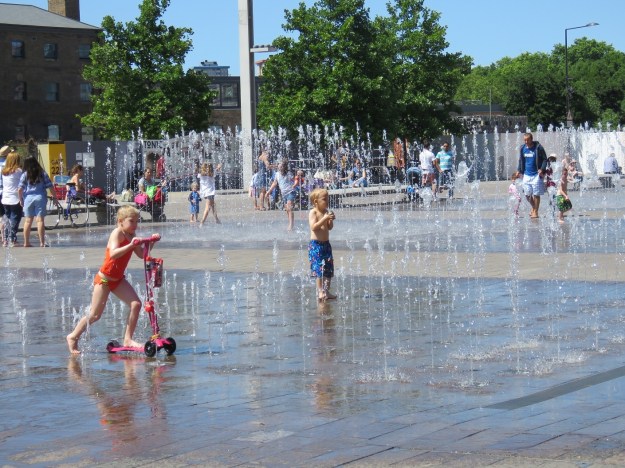
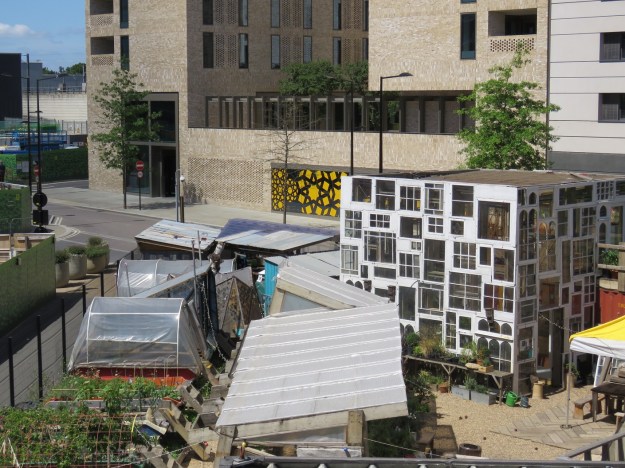
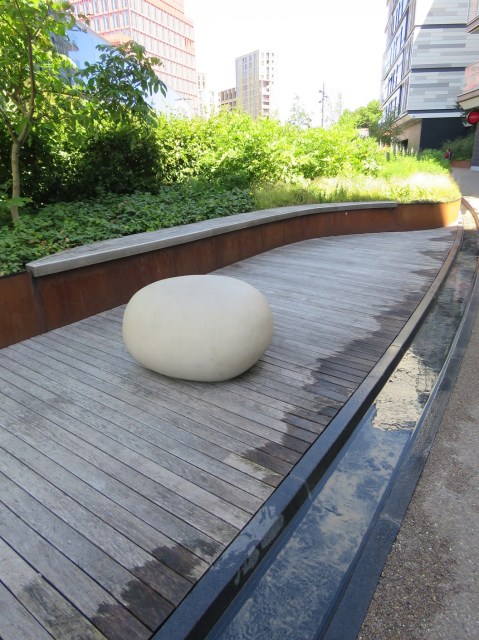
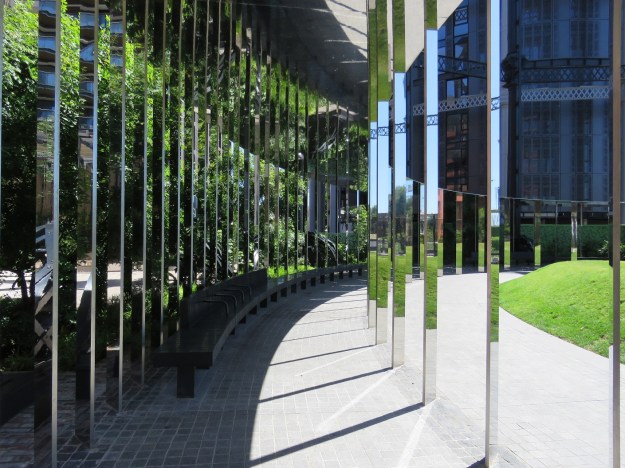 From there we wended our way round to the Gasholder Park, a major redevelopment utilising the old gas tanks for upmarket canal-side apartments and green space and gardens open to all. There is serious money going into this redevelopment around Kings Cross and
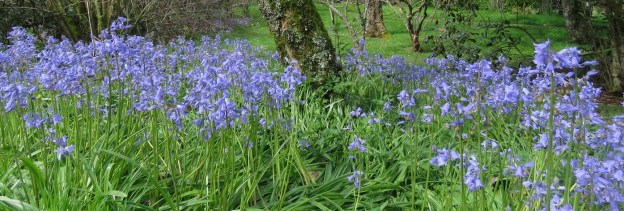
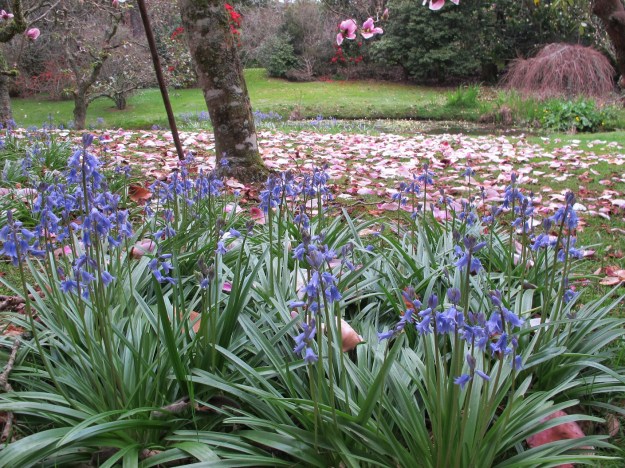 There is something wildly romantic about a proper bluebell wood. I have never forgotten being entranced by the haze of blue through woodlands near Castle Douglas in Scotland and that was more than two decades ago. Those particular bluebells and woodland trees are native to the area but this does not stop many of us trying to replicate the effect at home.
 It took UK writer Ken Thompson to demystify bluebell differences for me. The English Hyacinthoides non-scripta has sweetly scented, deep blue flowers on a droopy spike which means most hang to one side. Individual flowers are narrow tubes with reflexed tips. The Spanish H. hispanica is much stronger growing with an upright spike and flowers radiating all round. There is a greater range of colour from pale to dark blues and lilacs along with the pinks and whites. Individual flowers are bell-shaped and while the tips of the blooms flare out, they don’t reflex. They have little scent.
 A word about white or pink bluebells. While the English bluebell can occasionally throw a white mutant, given the rarity of H. non-scripta in this country, it seems likely that all colour variants we have are either Spanish or hybrids. The whites and pinks are charming mixed with the predominant blues, making a pretty scene. Isolate them out by colour on their own, and they become a novelty plant. Bluebells, by definition, should be mostly blue. A display of only pink bells would look awfully contrived for this simple flower while a mass of white bells might as well be onion weed, really. That is my opinion.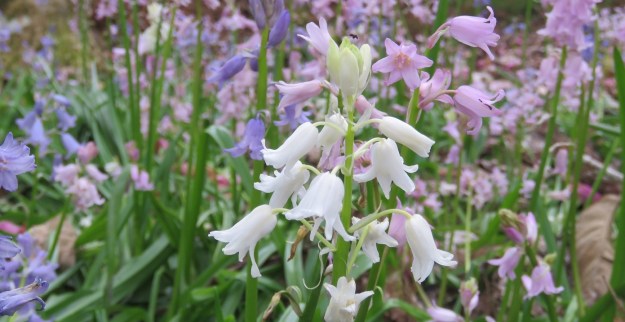
 Tikorangi The Jury Garden