


At the altar of the motor car
I have nothing but admiration for the lead Britain’s Royal Horticultural Society takes on public education on matters related to plants and the natural environment. And boy oh boy, the paving front yards to accommodate cars is a huge issue. One in three front yards is paved, they say. This is not unique to Britain. Every western city probably has a similar situation.
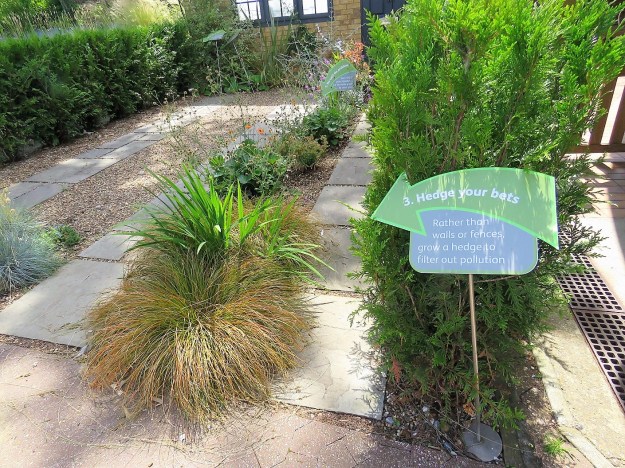
The alternative suggested by RHS
Does it matter? Yes. It matters in many ways. Out of pure self interest, the paving enthusiasts of this world should worry about increased flooding. The earth is like a giant sponge that absorbs and filters water. If large areas are paved, the water is then channelled to a limited number of collection points which can’t cope in times of heavy rain. No matter how much one rails at the local council’s inability to deal with flood waters, there are limits to what can be done when water is being turned into a flowing torrent rather than being absorbed into a wider flood plain. Channelling it to flowing water also stops the natural filtration that operates through earth’s own systems so all toxins and pollutants are being headed straight to waterways.
 The environmental benefits of growing plants are perhaps a harder concept to sell to people who don’t see anything wrong with living in concrete jungles. But we ignore the evidence of declining insect populations and the loss of biodiversity at our peril. Our planet is hitting crisis point, fuelled by human ignorance.
Twenty six years ago, I went to Britain on a study bursary as a Commonwealth Relations scholar. Many interesting things happened on that trip. That was how I once ended up in Belfast as a guest of the Irish Information Service at a time of high tension during The Troubles. Also, the House of Lords to listen to a famous debate about the smokies from Arbroath. As part of a fortnight hosted by the Foreign Office, we had many briefings including one from a senior government official who proclaimed, “Britain leads the world in conservation.” I hope I kept my snort silent. At the time, New Zealand really was pretty clean and green and Britain could not have been a sharper contrast. I was deeply cynical. I am not now.
We have heard and seen far more discussion at the most local and personal level about environmental matters in the parts of England we have visited. There is an awareness of the importance of green space, of trees, hedgerows, ponds, wild flowers, meadows and gardening that leaves us for dead in New Zealand. We have seen little back gardens that are set up as mini nature reserves. It may all be too little too late in global terms but at a personal level, I think it is important to daily life.
 It is not that the RHS are the only body leading public education in this area, but they are an influential one and all power to that.



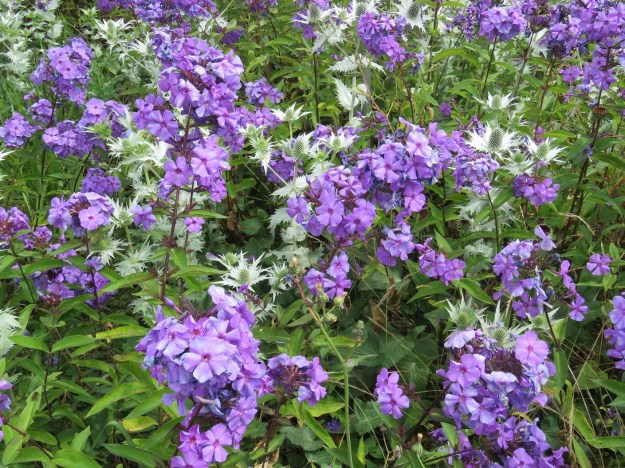


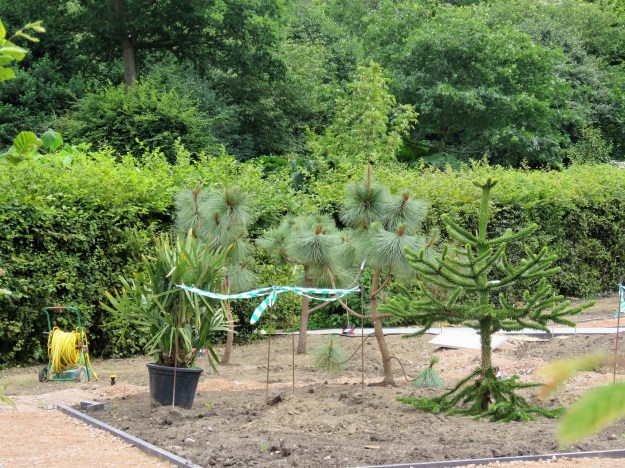 These friends had recently been to Great Dixter and expressed surprise at Christopher Lloyd’s dramatic ‘subtropical’ garden being taken out and seeing conifers going back in instead. It became a little clearer when we came across the Wisley project along similar lines. The conifers are being used as a framework for subtropical plantings. This is not a combination that would ever occur to a New Zealander but we will reserve all judgement until we see the finished product. Sometimes it is good to be surprised. Conifers are long overdue a revival and who knows? Maybe a new combination will launch a new fashion. Or maybe not.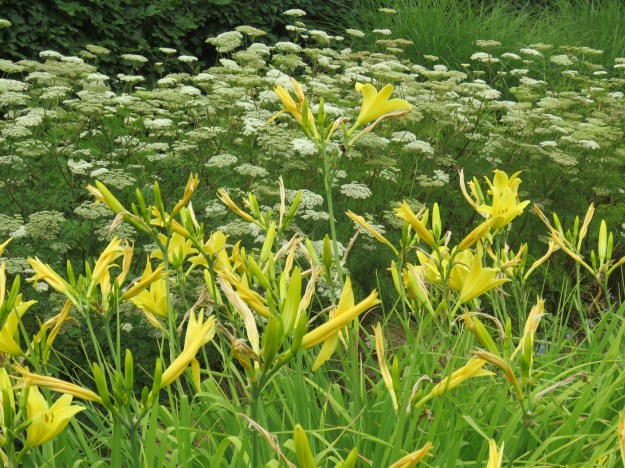
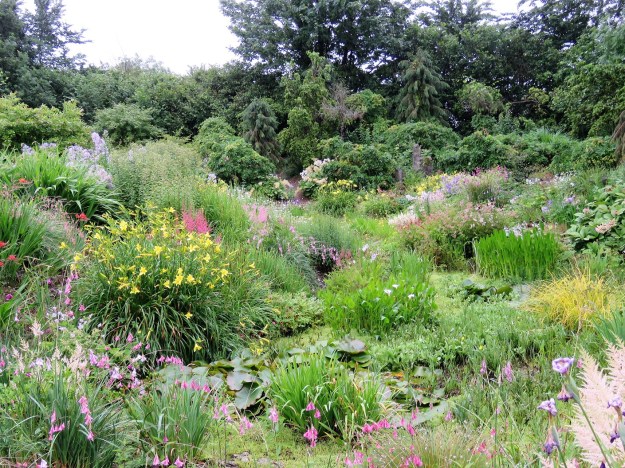
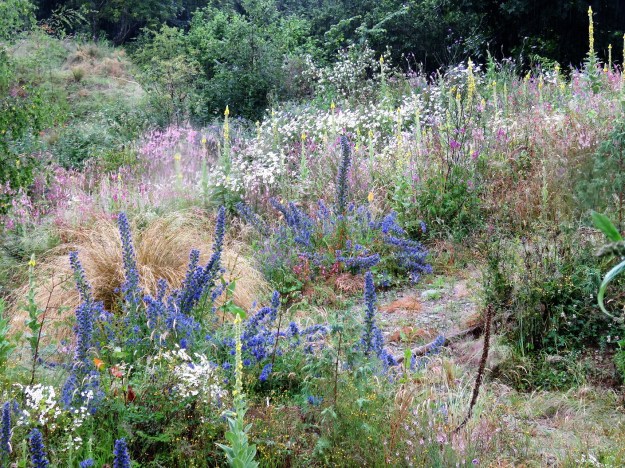
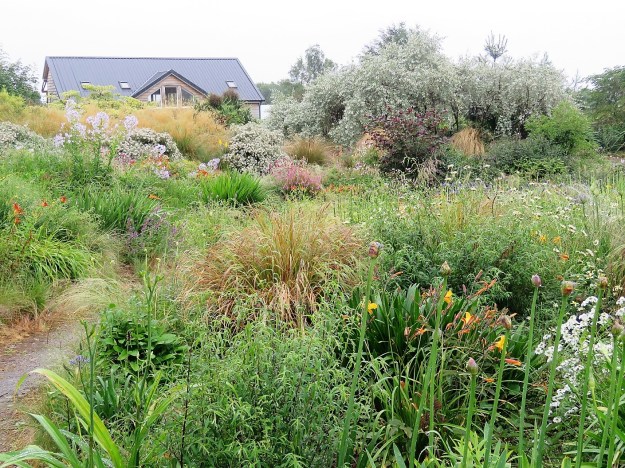 Keith and Ros Wiley had shut the garden for the past two years in order to start building their house and are still only open for very limited days but it is worth planning a trip around those days. It was interesting to see the way in which the building of the house gave a central heart to what is a private and very personal garden. But also, we knew we were looking at a situation where the owners’ energies had largely been going into the house in recent times. The garden hadn’t expanded physically into the remaining areas that had already been prepared when we visited in 2014. It will happen at some stage, I am sure. The existing plantings had filled out and softened in the intervening time.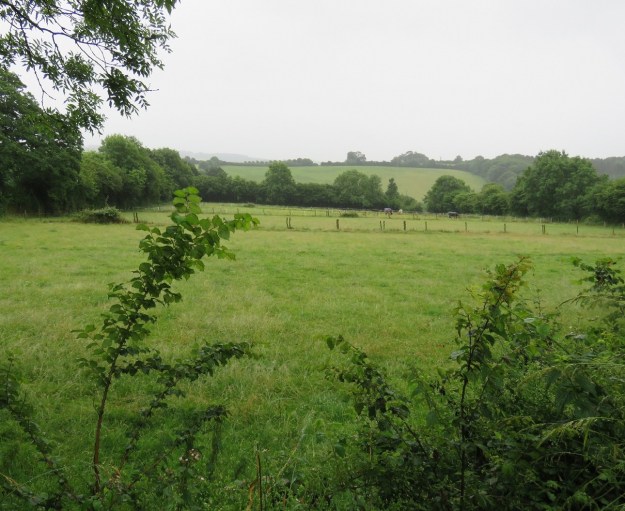
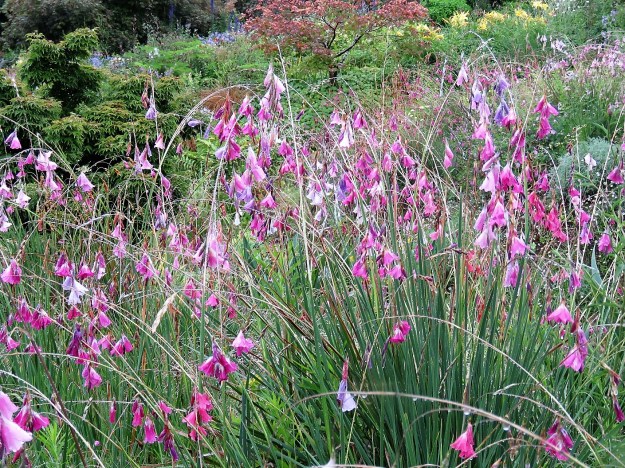
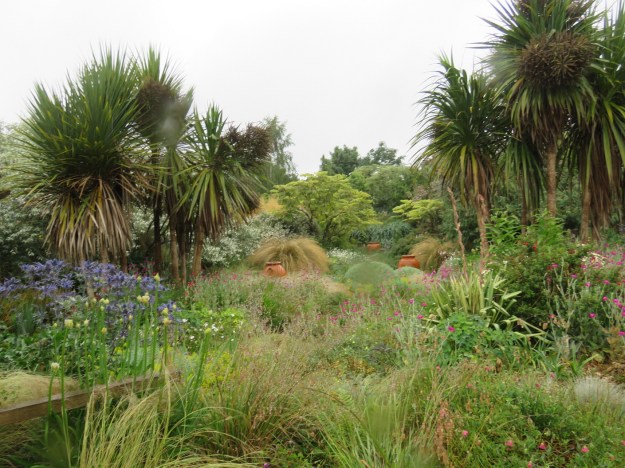
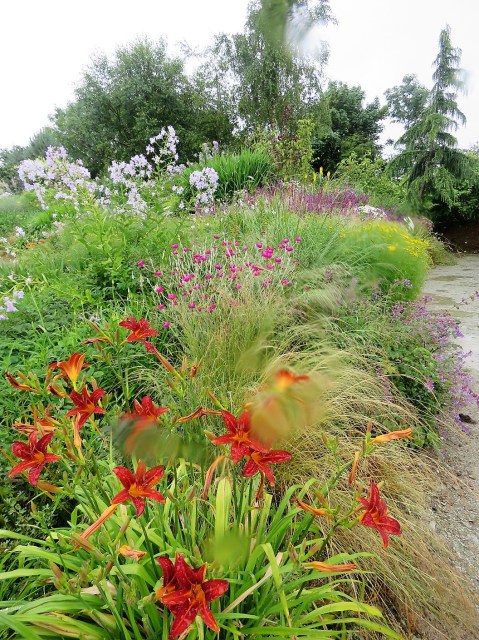


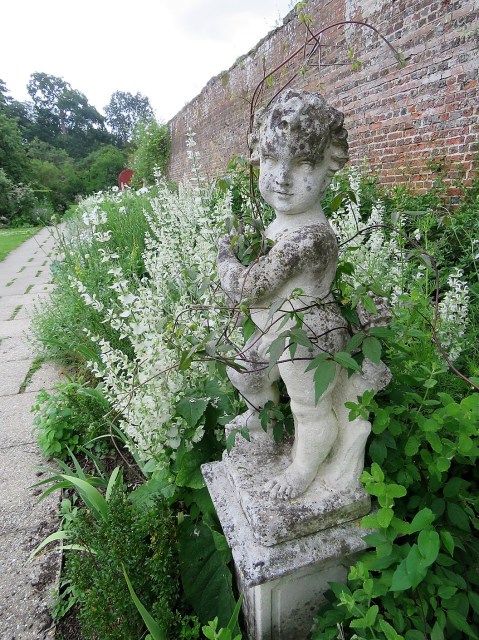
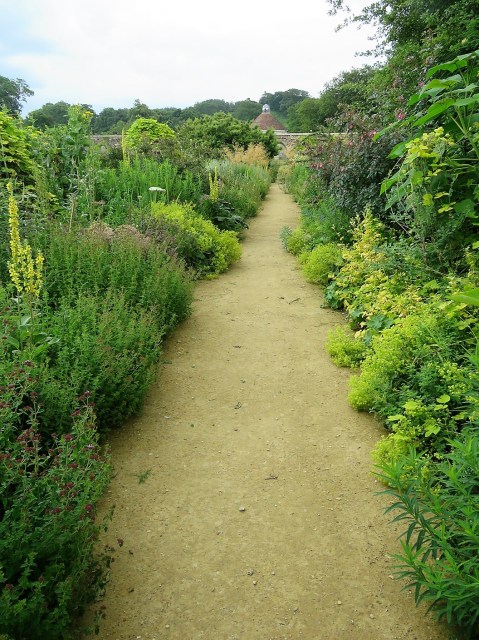
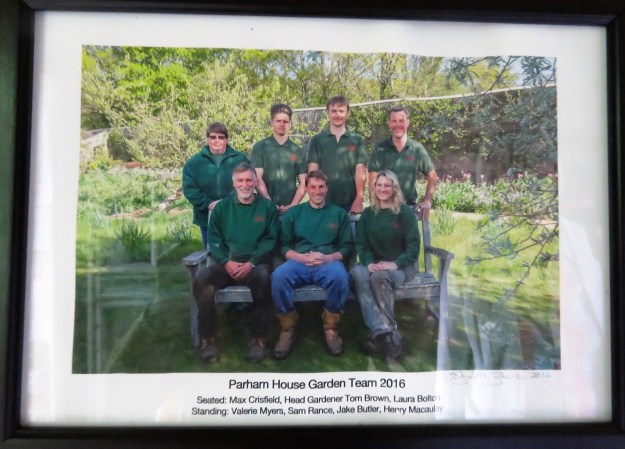 There was a team of seven hard working gardeners though I can’t tell you if they are all full time. We met the head gardener because he did his apprenticeship under the eye of our friend who took us there. Britain still has an enviable tradition of training professional gardeners. I have seen a few gardeners at work when we have been out touring, and I can tell you that these Parham ones were hard workers and focused on tasks to hand.
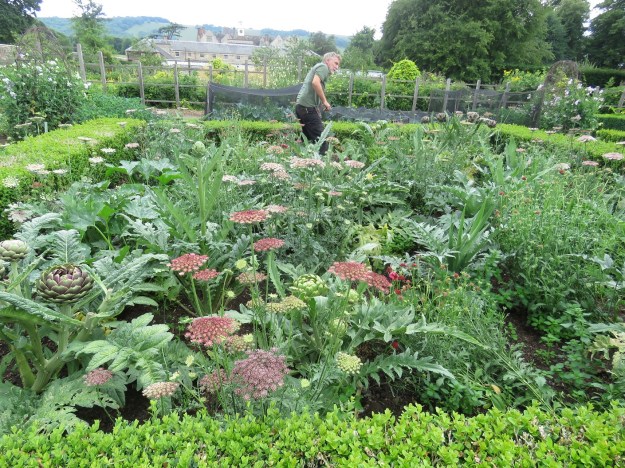 From memory, they are required to provide 30 buckets of blooms to the big house a week. That is a huge amount and they must be hard pressed in winter. But the production of both food and cutting flowers was impressive – highly productive, in fact. Also done without chemical sprays.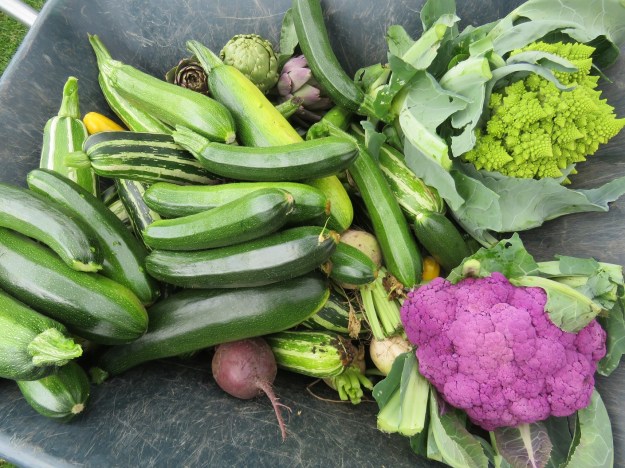


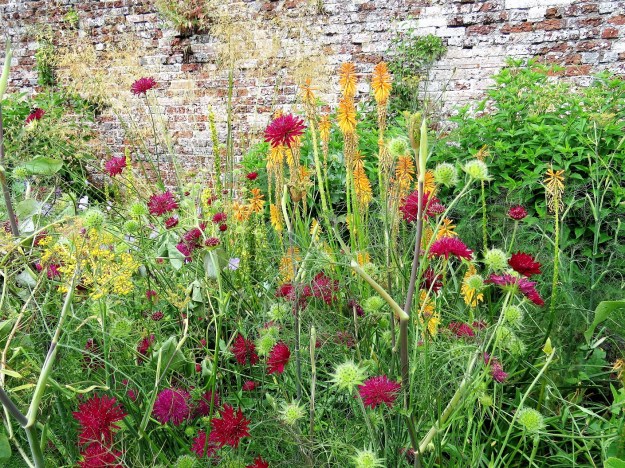
 The herbaceous borders were another modern take on classic design and techniques. The blue border was the most recent to have had a major makeover and it certainly looked glorious. I complimented the woman in blue whom I photographed strolling through the border, for her superb choice of toning colours. The yellow border was less flowery on the day but carefully composed and easy on the eye. The shorter white border was also at peak border perfection that the Brits can do so very well. If there was a red border, I missed it entirely but I do not think there was.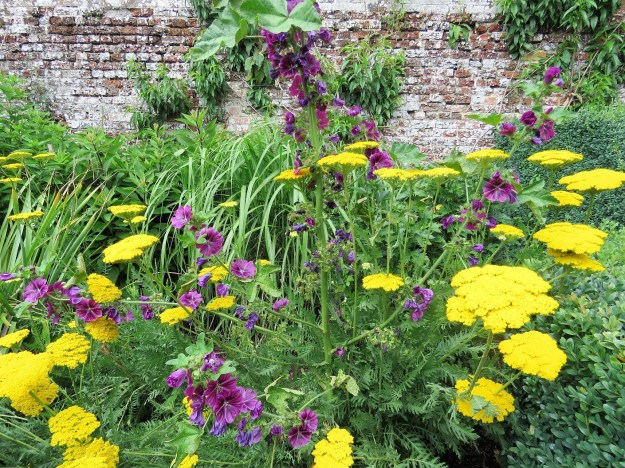
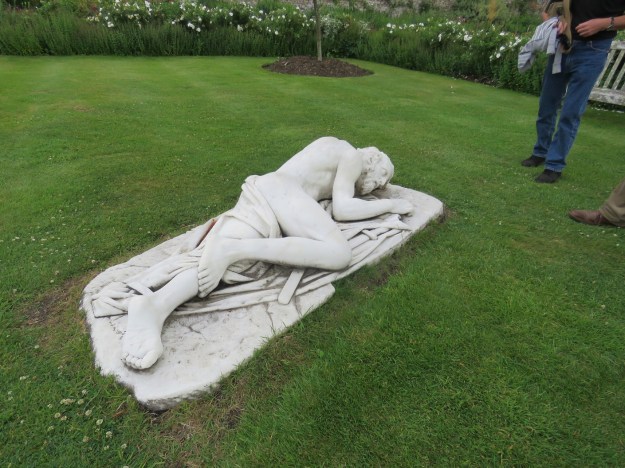
 Some of the statuary was… very white. Not necessarily to my taste. Some were more subtle than others. This was not. I am sure there will be somebody out there who can explain the significance of this figure and the inscription he is marking out with his finger.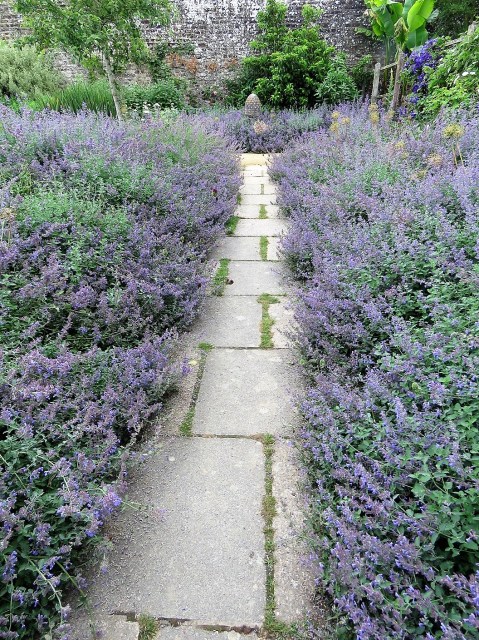
 Tikorangi The Jury Garden