

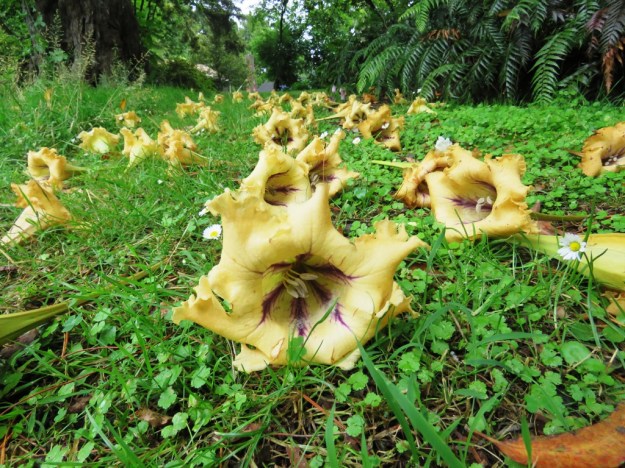
 Petal carpets! I take great delight in petal carpets. I even have a folder in my photo files designated ‘petal carpets’ and may go through and collate the best for a post later. It is beyond my comprehension that some gardeners try and remove every petal from their lawns. I first read this in a profile of a garden open to the public at a time when Prunus Awanui is in full bloom. The owner proudly proclaimed that he had to rake beneath it twice a day and mow the lawns every day to keep the pristine appearance. All I could think was “why?”
More recently, a friend was telling me he was taken on a tour of a large garden where the owner paused to pick up every leaf and petal that spoiled the appearance of his immaculate lawns. That is what I call fighting nature – gardening in a style where success is measured as a triumph over nature.
This week’s petal carpet comes to you courtesy of the strong climbing solandra vine, S. longiflora, I think. Again. This is an annual event.
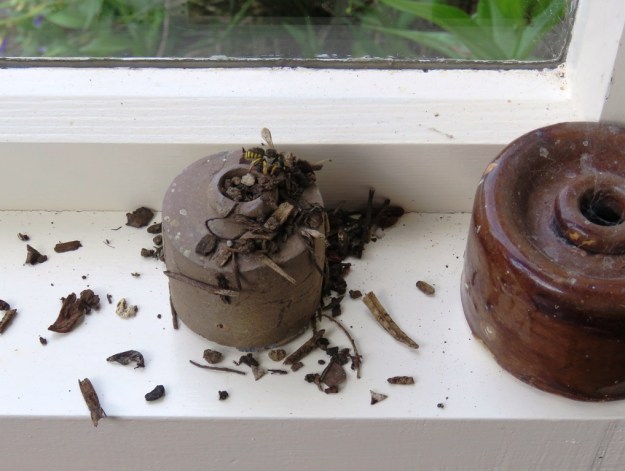
The busy little wool carder bee at work, building her nest
The wool carder bee is a relatively recent arrival in this country. It may not be to their credit that they closely resemble wasps at first glance but they are not the curse that the latter are. Wool carders are solitary bees, the males strongly territorial, and if you are looking closely you may see one working its own patch of the garden while fighting off any intruders. Given the plight of the bees, we are happy to encourage any which will lend their energies to pollination.
On the topic of wasps, Mark is vigilant at this time of the year and has already dealt to over 20 nests. He gets them when they are small and is not the son of his father and nephew of his Uncle Laurice for nothing. Both those men were extraordinarily observant. Mark used to describe his uncle as being like an Aboriginal tracker, such was his intense focus on reading the signs of nature all around him. I rarely pick a nest but the signs are a few wasps entering and leaving from the same spot. I posted a photo sequence earlier showing Mark’s cautious but effective method of dealing to wasp nests without harming other insect life around the place.
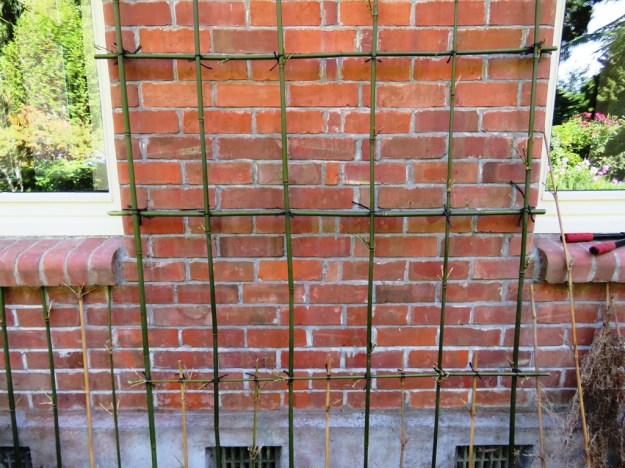
As I harvested bamboo to build wall frames – particularly for the spring appearance of Tropaeolum tricolorum along one wall of the house – I thought both how lucky I was to have bamboo at the ready to harvest and also how every large garden would benefit from something similar. I understand the nutteries of England provide a similar resource for hazel rods.
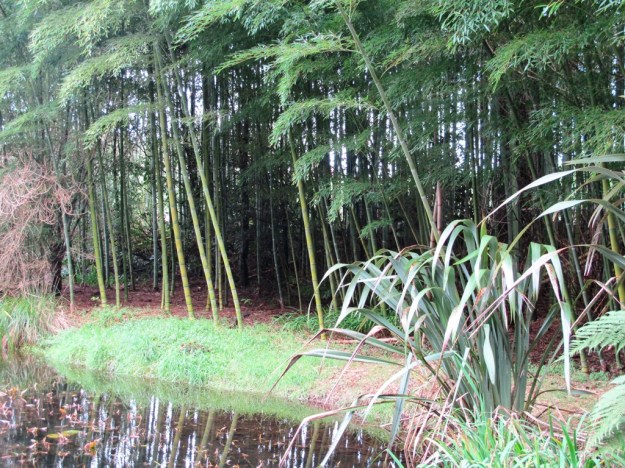
We have both thin bamboos and giant bamboo growing. The former is a running type which makes it easier to harvest (the clumping varieties have canes growing much closer together which makes it more difficult to get in with the loppers). The latter also runs, which can be a problem because one patch is on the boundary with the farm next door. We like the natural look of the fresh, thin canes when it comes to staking plants in the garden and leaving the leaf axels on means that plants don’t usually need to be tied to the stake. The bamboo only lasts a season or two where it meets the ground – longer in a very dry border under the eaves – but we are not asking them to be permanent stakes.

The giant bamboo is harvested for a variety of purposes – washing line prop (where we must get about 10 years out of each length), super long rake handle for pulling out weeds from the larger ponds, obelisks and what Mark calls hitching rails. The latter uses a length of giant bamboo tied to tanalised fencing standards to hold back plants that are engulfing paths – in this case a New Guinea tree fern.
There is much to be said for having wilder areas in the garden which can accommodate plants such as bamboo.


 Having just posted the pensive message above, I walked into the kitchen to find Mark arranging flowers. Umbellifers! Which one, I asked. “Manchester Table, to be precise,” he replied. Daucus carota subsp. sativus – in other words carrot that was bolting to flower and seed. It did strike me that there was a certain symmetry between my words and Mark arranging his floral display of Manchester Table, Yorkshire fog, Lotus major and linaria.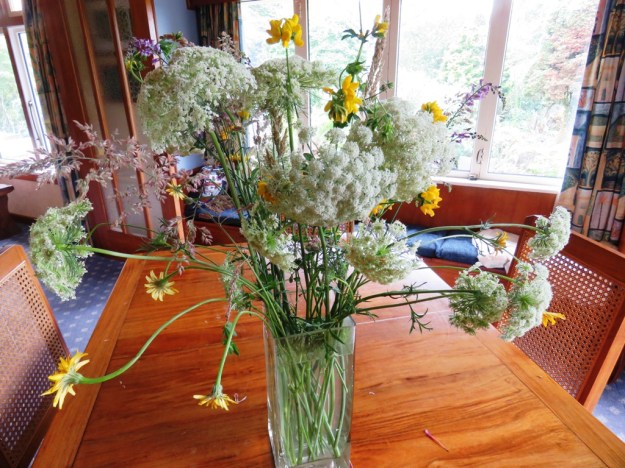


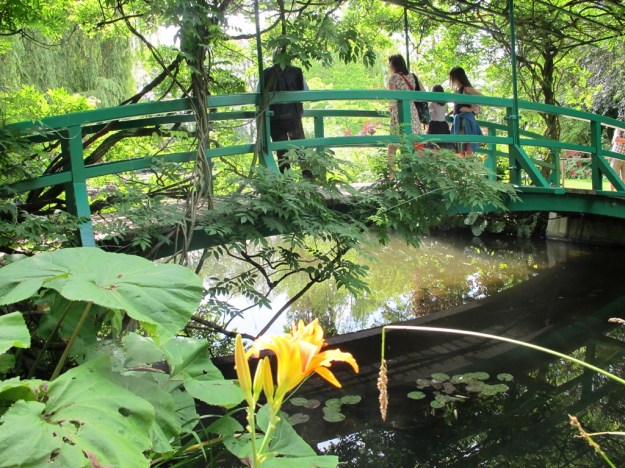 Monet’s garden in Giverny has probably given us the most recognisable garden bridges – gently arching in form and painted. While originally Japanese in inspiration, Monet gets all the credit these days.
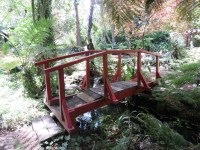
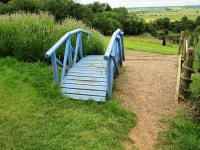
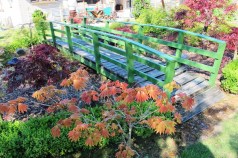
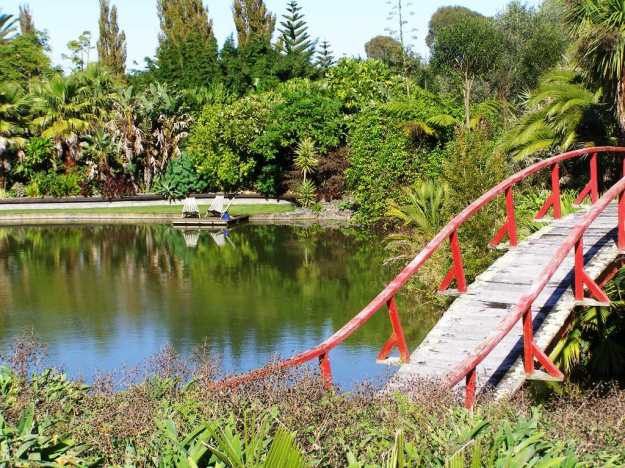

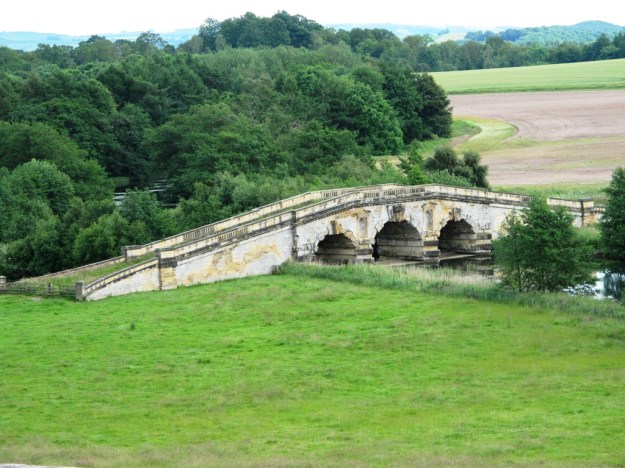 Away from the domesticity of Monet-style, I photographed this handsome, apparently disused bridge at Castle Howard in Yorkshire. What a handsome landscape feature it is, though I failed to find out the story behind its construction.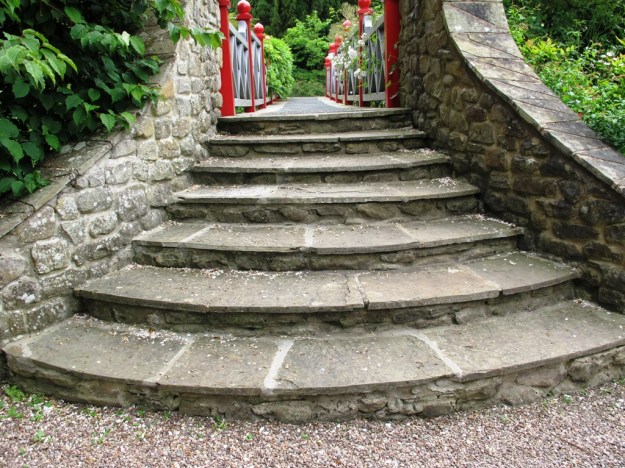
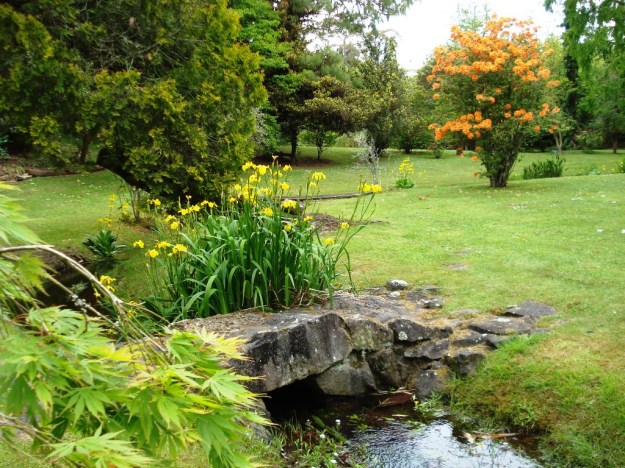 We have a small stone bridge in our park, modest in scale though perfectly functional and gently permanent in its visual appeal.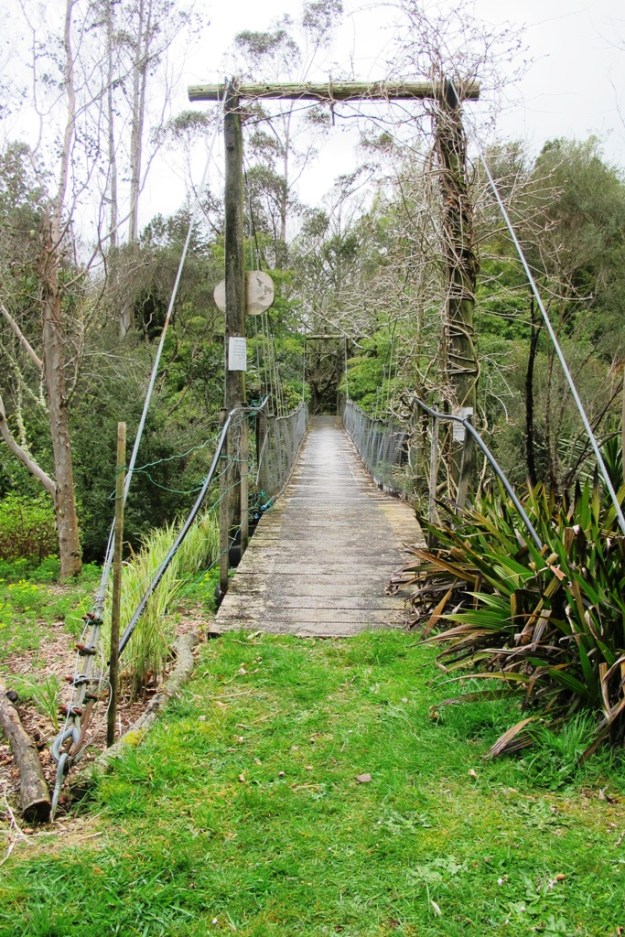
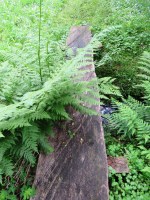
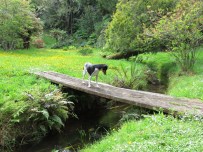
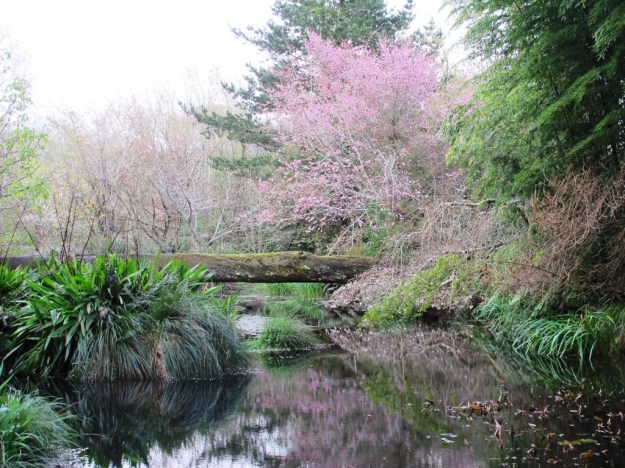
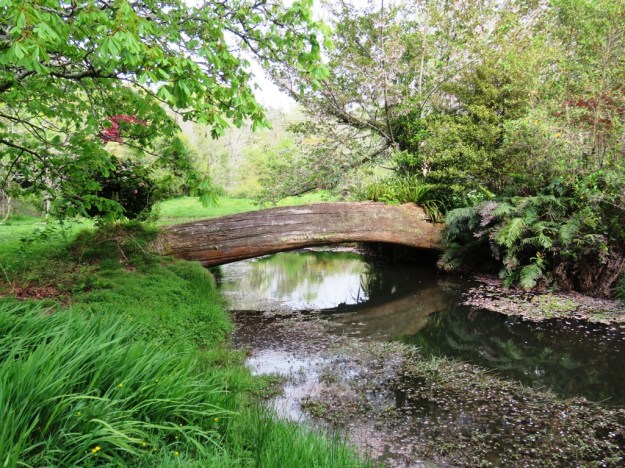

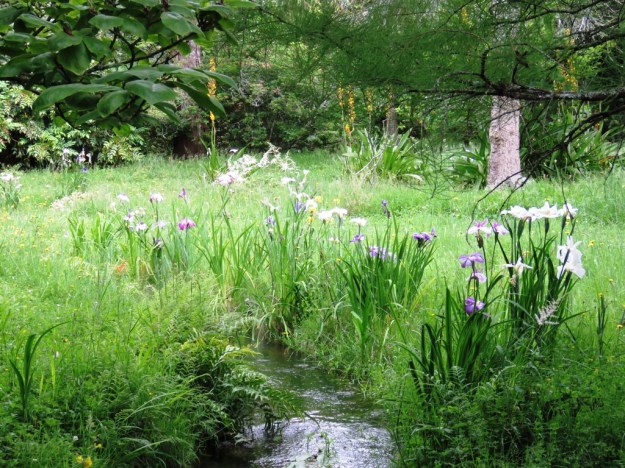 A water meadow! I was delighted at the sight in our park this afternoon. We stopped regular mowing of our park two years ago when we first closed our garden to the public. We were keen to see how far we could push the meadow effect in our climate and also concerned at our heavy dependence on internal combustion engines to maintain the garden. Long grass and flowers are far more ecologically friendly than mown grass.
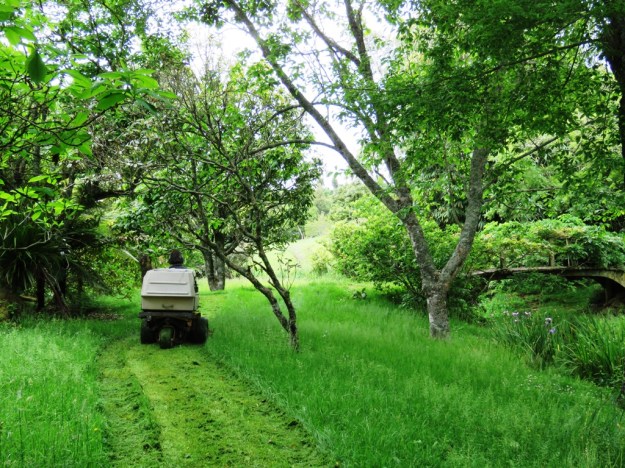 Mark took note of my request that we mow double width paths through the grass this year. A single mower width looked a bit mean to my eyes. I commented to him earlier this week that my only worry was the abundance of buttercup that we now have. He wryly pointed out that it has always been that way. His childhood memories are of the yellow buttercups and dandelions and white daisies throughout the park. We have just returned to that, though not to grazing with sheep.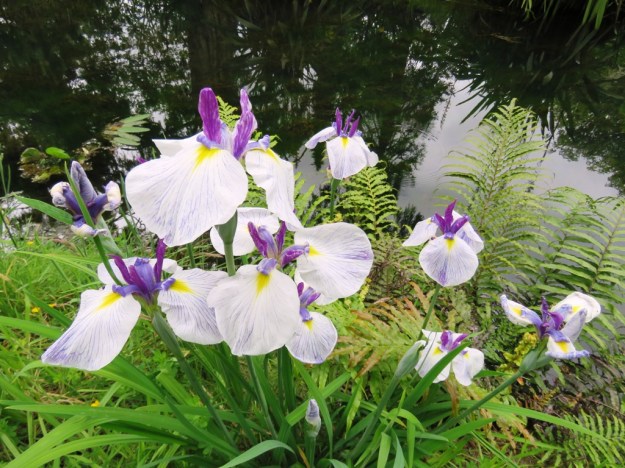
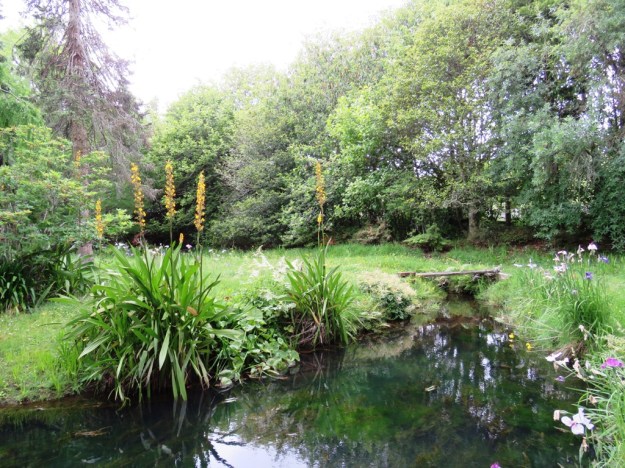
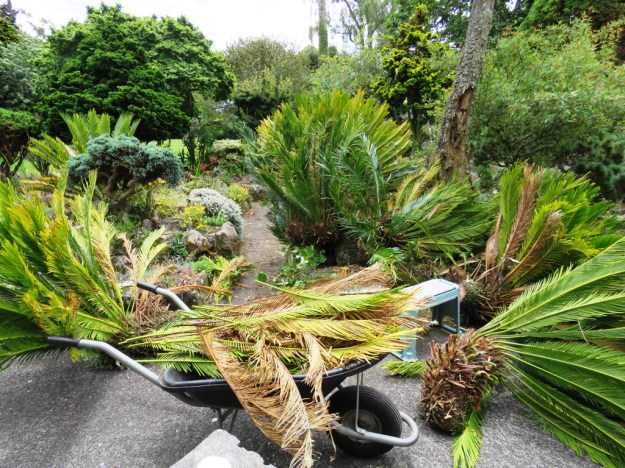 Before the thunder storm hit this afternoon, the sheer size of the
  News from Australia that Mark’s new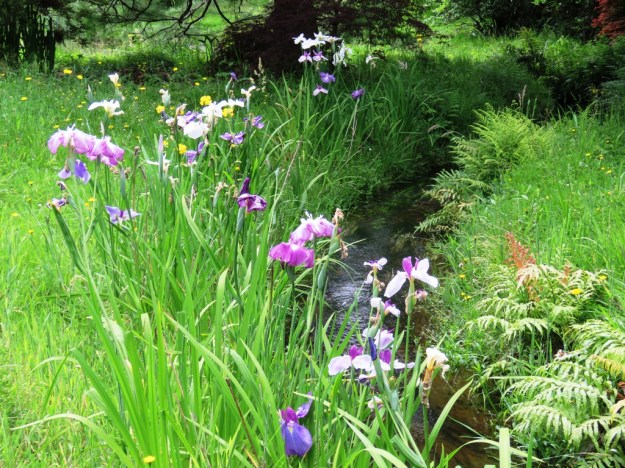
 Tikorangi The Jury Garden