Author Archives: Abbie Jury

Unknown's avatar

About Abbie Jury

jury.co.nz Tikorangi The Jury Garden Taranaki NZ

The tyranny of monocultural gardening

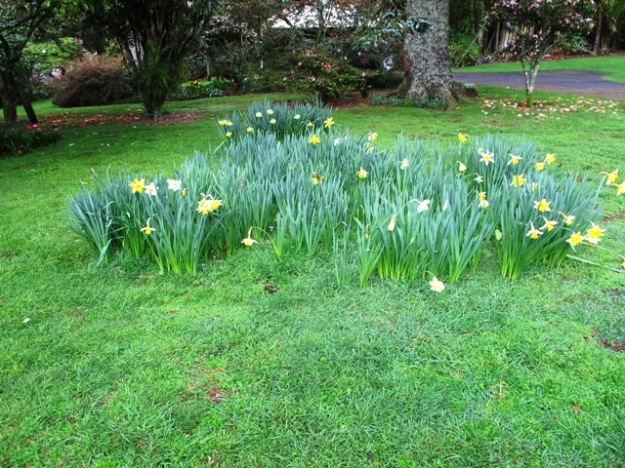
We have abandoned the tyranny of the perfect lawn

We have abandoned the tyranny of the perfect lawn

Monocultures. We have been talking about horticultural monocultures – the cultivation of a single crop on a large scale.

I saw a monoculture in Malaysia – palm oil. The accompanying photograph was taken from a moving bus and shows a relatively recent planting. As palm oil plantations go, it is not one where native forest has been cleared for commercial purposes and no orang-utans were endangered for this one – that is happening in Indonesia more than Malaysia. But palm oil is an extensive monoculture.
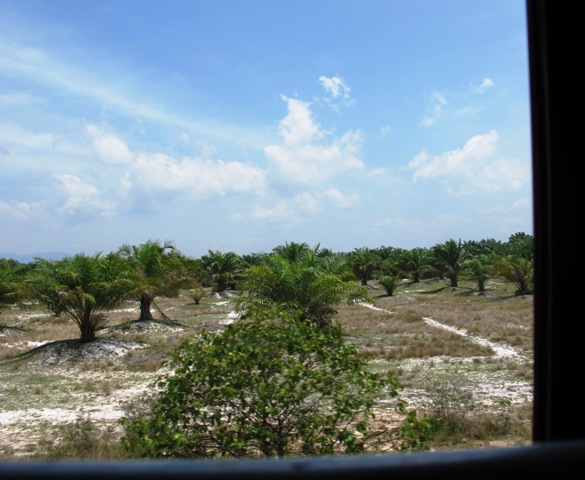
Palm oil - the increasingly common monoculture of some Asian countries

Palm oil – the increasingly common monoculture of some Asian countries

In this country, we have a localised but more extreme example of the risks of monoculture in our golden kiwifruit. As I understand it, that was not only one crop – it was one clone. That means that pretty much all the golden kiwifruit plants descended from the same original specimen. So when that plant selection succumbed to the dreaded Psa bacterial disease, it affected all plants equally and threatened the very existence of the crop. The race is on now to find clones which are resistant to Psa.

You can’t buy plants of golden kiwifruit in this country because that one clone that was used and the replacement clone are restricted to licensed commercial growers only. In recent years, Mark has been raising seedlings from fruit we have bought and this year we had minor harvests. Because this fruit does not grow true from seed (it needs to be vegetatively propagated), our seedlings will be genetic variations. The fruit so far is not of the same size and consistency of the commercial selection and the taste varies between plants but it looks as if we may have some viable options amongst the crop to keep ourselves supplied.
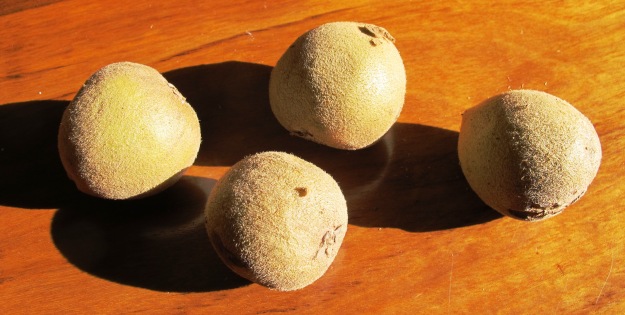
Raising our own selections of golden kiwifruit gives genetic diversity

Raising our own selections of golden kiwifruit gives genetic diversity

But where do monocultures fit in when it comes to a gardening context? Matched avenues of the same tree. Massed plantings of a single selection in the modern landscape style. Lawns. Of those, lawns are probably the only monoculture in a technical sense, but they are a major issue.

Matched avenues can look fantastic when they are at their best. They give a beguiling formality and structure to a garden or landscape. When they are at their best. The problem is that plants are living things and don’t always oblige by growing uniformly. I am sure some readers will be nodding in wry agreement. Then there is the problem if a plant dies. Matched avenues with gaps are nowhere near as pleasing. And you are faced with a conundrum. Do you leave the gap? Or replace it with the same plant selection which will almost certainly be a different size and stick out like a sore thumb for years to come? And how do you know that the affliction that killed the missing plant isn’t in the soil and therefore likely to attack the replacement plant as well? Replace the dirt as well, maybe? It is often difficult when things go wrong.

Many modern landscapers favour massed plantings of a single plant variety. It is a broad brush technique which can be visually effective, if you like that look. But if you have a problem, you end up with the acne look which is not so nice at all. A few dead lavenders amidst your simulated fields of Provence, massed rust-spotted renga renga lilies which look as if they have chicken pox – this can easily be your lot if you favour the monocultural approach. Or indeed, you may lose the whole patch at once which can be expensive when it comes to a quick-fix replacement.

Nature of course does not generally grow as a single species. In the wild there is often a dominant species but around that, there will be a host of other plants in a natural mixed colony. That is what makes it nature.

Nowhere do we fight nature more than in the highly valued lawn. There, it is often decreed, the only plants to be accepted are the selected grass species – often rye and fescue. Anything else is an interloper to be weeded or poisoned out. That is a never-ending battle yet we persist in demanding the perfection of the monoculture of lawn grass. Lordy lou but I was reading about an obsessive English gardener this week who is so proud of his lawn that he tends it constantly and mows it with pride six times a week! I looked at the photo – a bowling green style with five brown patches where he had clearly sprayed out weeds.

We have made the conscious decision to abandon this futile quest for lawn perfection. As long as it is green, fine-leafed and able to be mown, it can stay. Perhaps more controversially, Mark tells me that he has decided the flowering clover and self-heal can stay. He likes the patches of colour and the fact that these flowering lawn plants feed the bees and butterflies. We are headed down the mown green meadow path rather than the garden lawn. No monocultures here. The more experience we get in gardening, the more we favour a natural style which works with, rather than against, nature.

First published in the Waikato Times and reprinted here with their permission.
Plant Collector: Magnolia Manchu Fan

Magnolia Manchu Fan

Magnolia Manchu Fan

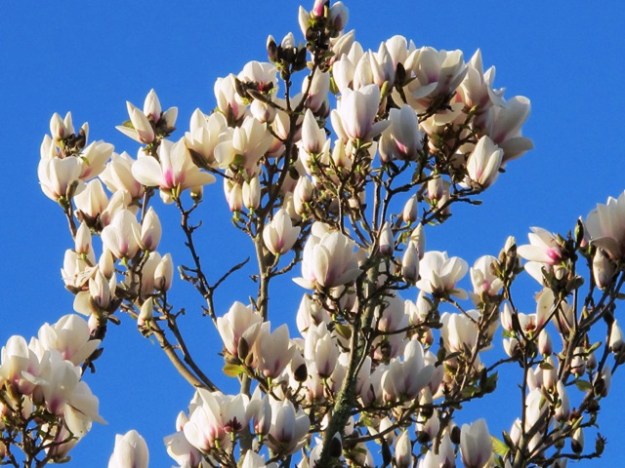
The most spectacular flowering trees of the early spring season must surely be the magnolias. But not everybody has room for a large, spreading tree festooned with enormous blooms. Manchu Fan has long been one of our recommendations for a smaller growing white variety. It is not that the individual blooms are drop dead gorgeous and showy. They are just white goblets with a pink blush at the base but they have heavy textured petals (or tepals, as magnolia petals are more accurately described) which withstand weather damage. And there are lots and lots of them, produced on a small growing, upright, narrow tree that will fit in urban gardens.

Manchu Fan was bred by American hybridist, Todd Gresham, in the middle of last century. There are a fair number of his selections named – enough to be referred to internationally as ‘the Gresham hybrids’. Of the ones we have grown, Manchu Fan is the standout performer. After maybe 20 years, our plant is 5m high by 3m wide without any trimming or shaping. In overall performance, it is not hugely different to the better known M. denudata but, because it flowers later in the season, it escapes frost damage and the tree will remain smaller in the long term. It also has a longer flowering season.

Manchu Fan is in commercial production in this country and available on the market. For the purists, its breeding is (M. soulangeana ‘Lennei Alba’ x M. veitchii).

First published in the Waikato Times and reprinted here with their permission.
Garden lore

You buy some flowers for your table; You tend them tenderly as you’re able; You fetch them water from hither and thither – What do you get for it all? They wither.

Samuel Hoffenstein (1890-1947)

020 (4)
Garden lore- dividing polyanthus

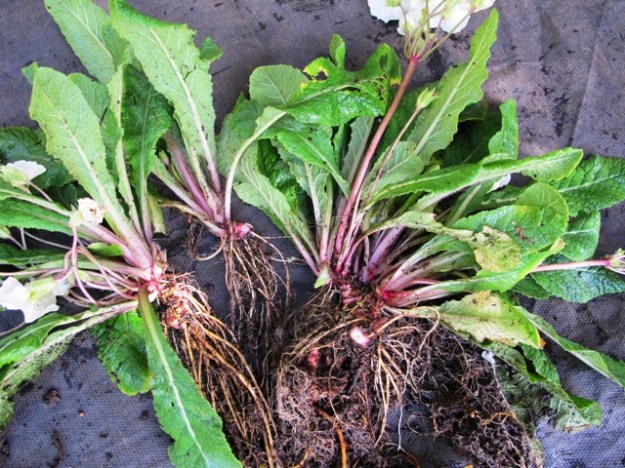
Polyanthus are cheerful little souls flowering away at this time of the year but often treated as disposable plants with a short life span. Yet they clump up quickly and are easily divided to spread wider to get a carpet or patch that obligingly flowers when few other perennials do. I planted white polyanthus last year, all single crowns with just one rosette of leaves. This week, even though they are in flower, I have been digging and splitting the ones that have already multiplied well – the clump in the photo yielded five good sized plants. When perennials are in full growth, they can recover quickly from being divided.

Lift the clump and look at the base of the leaves. It should be clear where the different rosettes of leaves have formed. Sometimes you can gently pull them apart at the base. Sometimes you need to cut through the nubbly root formation just below the top. Each clump needs as many roots as possible. Trim off the outer leaves and replant into well cultivated soil, enriched with compost if you have it. You only need to water them in if conditions are dry. The replants should romp away with fresh growth and reward you with extended flowering well into spring. If you put the plants at maybe 30cm spacings, they have room to grow and you can inter-plant with something else entirely that will flower through summer.

First published in the Waikato Times and reprinted here with their permission.
The pros and cons of the campanulata cherries

Manna from heaven for the tui

Manna from heaven for the tui

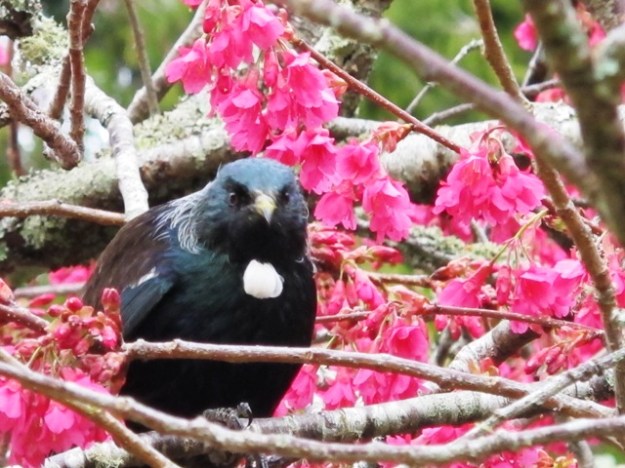
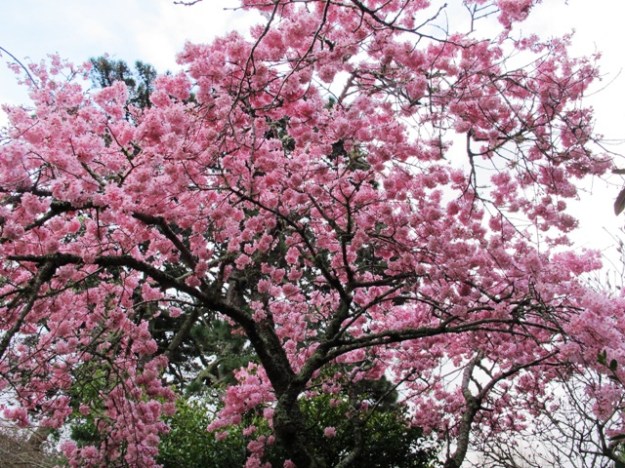
Taiwanese cherries, Fomosan cherries, Prunus campanulata – they are one and the same and around this time of the year are explosions of candy pink which bring tui to the garden. In our case, it is not one or two tui. We could count them by the score if they would just sit still long enough for us to carry out a census.

Mark was not too sure about the tui which seems to have mastered the sound of vuvuzela. But I digress.

Love the trees or hate them, the tui have no qualms at all. The nectar is manna from heaven to them. And therein lies the problem. I was contacted recently by someone who is crusading against the sale and planting of campanulata cherries and I was only relatively sympathetic because I think we are in danger of throwing out the baby with the bathwater.

The problem is the seeding habits of some campanulatas. Many set prodigious amounts of seed which is then spread far and wide by our bird population. There is an alarmingly high rate of germination. The seedlings grow rapidly and after the second season, plants are too big to hand pull out. If you cut them off, they grow again. So bad is the problem that they have been banned in Northland and this correspondent would like to see them banned everywhere.

“There are loads of better trees for Tui such as Kowhai, Rewarewa that can be available at the same time” he claimed. I don’t want to be picky with someone who genuinely cares for the environment, but on a property packed with food for the birds, I have never seen a plant as attractive to tui as the campanulata cherries. Besides, in late winter, neither kowhai nor rewarewa are in flower yet.

I mentioned babies and bathwater because the problem is seeding. There are sterile forms of campanulata and both gardeners and tui alike may rue the day if ALL campanulatas get banned, even the named forms that never set seed. This is a problem we gardeners have brought upon ourselves. The record of garden escapes into the wild is not a proud one and too many gardeners don’t take responsibility for their weeds.

Prunus Pink Clouds - one of the sterile forms raised here by Felix Jury

Prunus Pink Clouds – one of the sterile forms raised here by Felix Jury

Mark’s father, Felix, was a fan of the campanulatas and he bred a few. “Pink Clouds” has an attractive weeping habit and an avenue of them has been a feature at Auckland Regional Botanical Gardens. I assume it is still there. “Mimosa” is more upright and flowers a little later. “Petite Pink” is probably no longer available commercially but is a dear little tree that never gets much over two metres in height but has all the appearance and shape of a proper tree. The thing that sets these three apart is that they are all sterile. They don’t set seed so are never going to become weeds. All three are in that candy floss pink colour range.

Prunus “Felix Jury” was named for him by Duncan and Davies (it is not the done thing, dear readers, to ever name a plant after yourself) but it was of his raising. It is a much deeper colour, carmine red, and a small growing tree. What it is not, alas, is sterile so if you see it being advertised as that, the nursery or garden centre is wrong.

It seems to be quite difficult to find reliable information on the seeding habits of other cultivars on the NZ market. If anybody knows more on this topic, please let me know. Every year at this time, Mark starts to talk about doing some more work with campanulatas to raise more sterile forms. We know which ones are sterile in the garden but the best one is a rather large tree for most people on small urban sections. It would not allow you to fit your house on the plot as well.

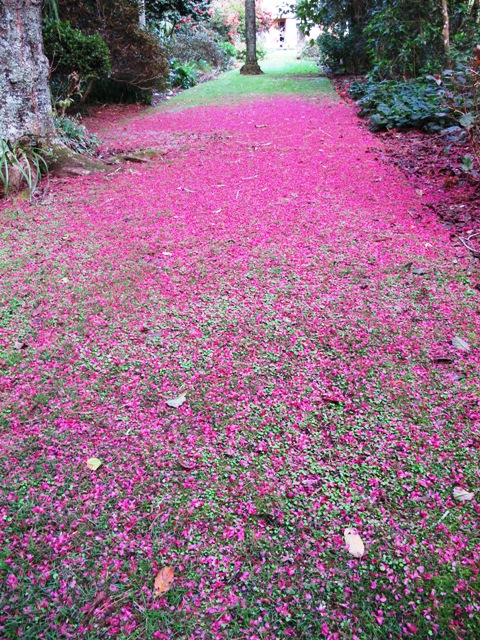
Petal carpets supreme

Petal carpets supreme

I can also tell you that one of our most common weeds here is seedling cherries and we are vigilant and persistent. If you live anywhere near native bush or a reserve, you should take great care to grow only sterile forms or to avoid them altogether if you are not sure. If you live in town with a seeding specimen, your neighbours probably grit their teeth at the seedlings that pop up in their place.

If you can manage the weed potential, the explosion of bloom in late winter is wonderful. Taiwanese cherries flower much earlier than their Japanese counterparts and are nowhere near as susceptible to root problems in wetter climates, so they live longer. Nor do they suffer from witches’ broom which can take over the Japanese types. It is when part of the tree grows much more densely and vigorously and fails entirely to flower. Left to its own devices, witches’ broom can take over the entire tree and the only way to deal with it is to cut out affected sections. It is very obliging of the campanulatas to be resistant.

The tui would be most grateful if we could just get this right for them before all campanulata are banned are noxious weeds.

First published in the Waikato Times and reprinted here with their permission.
Plant Collector: Aloe ferox

Aloe ferox - very orange and loved by waxeyes at this time of year

Aloe ferox – very orange and loved by waxeyes at this time of year

The waxeyes are delighted by the flowering of this aloe and the vertical flower spikes are often populated by at least half a dozen of these cheerful souls. This is a particularly spiky aloe, coming, as many do, from the coastal areas of South Africa. As such, it prefers a dry climate, warm temperatures and sandy soils. None of these apply here, so presumably it is fairly forgiving but it will rot out without excellent drainage. It is a very heavy plant on top so what is happening below ground is important. Wikipedia tells me that each fleshy leaf can weigh up to 2kg when it is harvested. And why is it harvested? It is not just the better known Aloe vera (or ‘ello, ‘ello, ‘ello Vera as we refer to it here) that has useful attributes. A. ferox also has medicinal and cosmetic properties and is a commercial crop. With its fiercely spiky leaves, you would want to be wearing leather gloves at harvest time.

There is nothing rare about A. ferox, except in the wild where it is endangered. It is widely available in the marketplace. In optimum conditions, plants can reach 3m tall, but after many years ours still sits at half that height. We may have problems if it reaches its potential.

Aloes are a very large family of flowering succulents from the African continent. Many are winter flowering, presumably triggered by seasonal rains.

First published in the Waikato Times and reprinted here with their permission.