Author Archives: Abbie Jury

Unknown's avatar

About Abbie Jury

jury.co.nz Tikorangi The Jury Garden Taranaki NZ

In the garden this fortnight: Thursday 29 March, 2012

A fortnightly series first published in the Weekend Gardener and reproduced here with their permission.

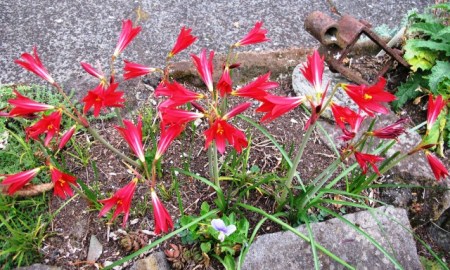
The little known Rhodophiala bifida

The little known Rhodophiala bifida

We keep talking about sustainable gardening here. For us, sustainable garden is twofold – both managing the maintenance of a large garden with a small labour input (wouldn’t we love legions of skilled gardening staff?) but also following garden practices which are not damaging to the environment. To this end we make our own compost, mulch heavily, use a mulcher mower, eradicate or control plants that threaten to become invasive, shun chemical fertilisers and hardly use sprays at all to keep plants healthy. We have a few plants of exceptional note that warrant a touch of insecticide, but generally, if a plant can’t grow well in good conditions, we will not persist with it. A few more roses are destined for the incinerator as I cull further. We do use glyphosate for weed control and Mark lives in fear that it may one day be ruled environmentally unacceptable because we would find it very hard to maintain standards without it.

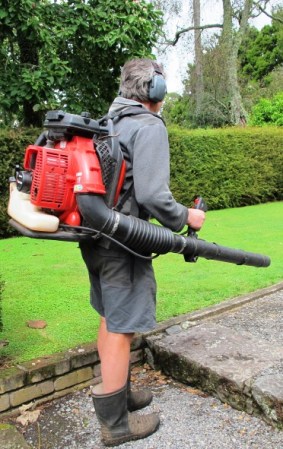
The enormously useful leaf blower

The enormously useful leaf blower

But our biggest environmental footprint here is the internal combustion engine – the lawnmower, weed eater, mulcher, chainsaw, water blaster and motor blower (leaf blower). We console ourselves with the thought that we are only a one car household and that car often has only one outing a week so maybe that compensates for CO2 emissions. The motor blower is a huge timesaver for a big garden. We started with a cheap handheld one but progressed to a backpack model. It is possible to sweep and groom one’s way right around the garden at walking speed. That is an awful lot faster than doing it with a leaf rake, broom and barrow. As we hurtle at alarming speed from deeply disappointing summer into premature autumn, the blower comes into its own. Fine debris gets dispersed (it does generate dust) while larger leaves can be hustled into discreet areas to break down and rot.

The autumn bulbs are starting. At the moment the little known Rhodophiala bifida is looking terrific as are the red paintbrush blooms of Haemanthus coccineus (the plant many readers may know better as elephant ears). The lovely blue Moraea polystachya is coming into bloom, along with Cyclamen hederafolium and the early nerines are open. These seasonal delights offer some compensation for a summer which never really got going.

Top tasks:

1) As perennials pass over and many fall over, we need to do a tidy up round of the garden borders. Because our temperatures are mild here and we have soils which never stay waterlogged, we can and do lift and divide perennials most of the year. There is still time for plants to re-establish before winter temperatures stop growth.

2) Where repeated use of the blower has led to too much of a build up of debris (mostly in our hellebore border), I need to get through and rake off the surplus for the compost heap before we add this season’s leaf drop.

Tikorangi Notes: Friday March 23, 2012

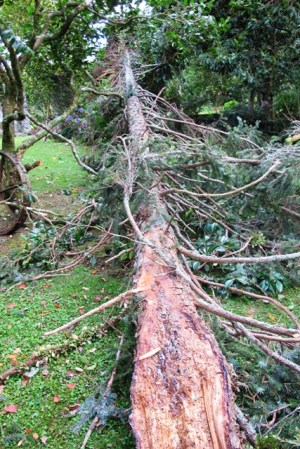
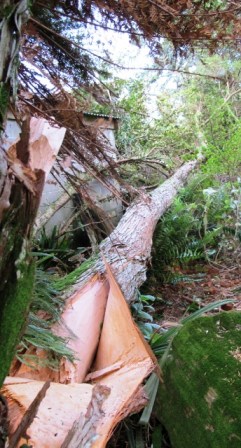
A salutary lesson in why trees should never be allowed to fork close to the ground - half the totara split out

A salutary lesson in why trees should never be allowed to fork close to the ground - half the totara split out

Latest posts:

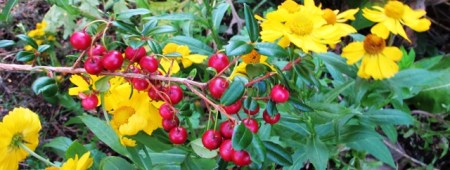
1) Ugni molinae or the New Zealand cranberry – a plant that every good family should grow. When it comes to encouraging children to venture out browsing in the garden, it ranks right up alongside fresh peas as a must. It is also easy care and a small shrub so once planted, it will last for years.

2) Clematis tangutica I was a little taken aback to discover that it is regarded as a weed menace in some areas. It has never been a problem here and instead is a source of pleasure in late summer with its lovely pure yellow flowers and silky, tasselled seed heads.

3) Lower maintenance gardening. I am unconvinced that there is any such thing as a low maintenance garden. There are certainly high maintenance gardens, moderate maintenance gardens and lower maintenance gardens but drop down below that and you end up with no garden at all. This week’s column focuses on lower maintenance options as befits a rental property.

4) The Easy Fruit Garden by Clare Matthews might make fruit gardening easy for gardeners in the UK but has little or no application here.

Tikorangi Notes:

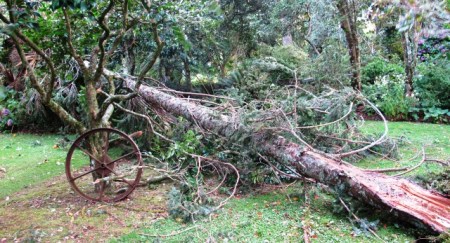
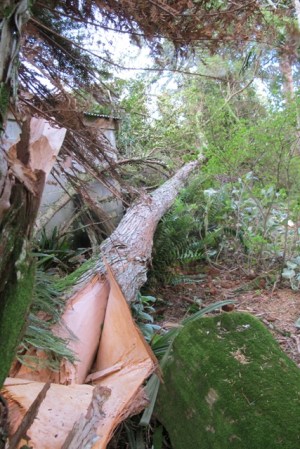
At least the falling totara missed the garage

At least the falling totara missed the garage

The Picea omorika felled itself

The Picea omorika felled itself

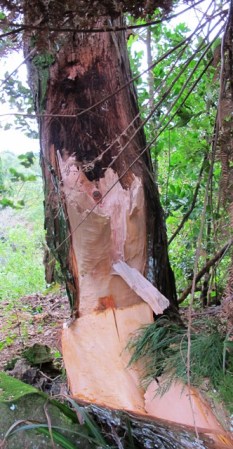
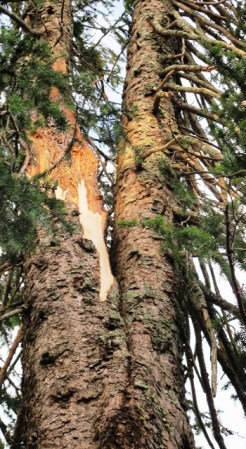
Last week was all about Womad and the weather held for a magic weekend of world music in the beautiful venue of Pukekura Park. By Monday evening, the magic was all used up and a storm of reasonably impressive proportions hit. Even Spike the dog was unnerved when we heard the unmistakeable sounds of large branches cracking and breaking. In the morning, the damage was clear. A large gust had taken out half a totara tree which would be around fifty years old. The wind tunnel created then broke out part of a Picea omorika around the same age. In falling, the totara twisted a large amelanchier and some drastic remedial action will be needed to save any of it.

The clear lesson here is the need to keep trees to a single leader and a good shape from the start. Forked leaders create a point of weakness, even though it may take 50 years to reveal itself.

We escaped lightly. Friends around Oakura report greater damage. It is only a few weeks since Patea to the south bore the brunt of hurricane force winds. The mess here is largely superficial and with the very large trees we have here, we are relieved that it was not a great deal worse.

Damage to the multi forked Picea omorika several metres up

Damage to the multi forked Picea omorika several metres up

Grow it Yourself: Ugni molinae

It is a very undemanding little plant to tuck in to a sunny spot in the garden - Ugni molinae or the NZ cranberry

It is a very undemanding little plant to tuck in to a sunny spot in the garden - Ugni molinae or the NZ cranberry

I have to use the proper name for clarity because this plant has five names. The most useful name is the New Zealand cranberry (though it is neither a cranberry, nor a native) because that is what it has always been known as in this country. These days you may find it sold as the Chilean guava – its common name internationally though in New Zealand we mean an entirely different fruit when we refer to Chilean guava. In Australia it is the Tazzieberry. Oft-times, it is referred to by its former name of Myrtus ugni.

Whatever. Grow one, especially in families with children. It is a wonderful plant for browsing as one passes and the fruit is ripe right now. The highly aromatic fruit is small and red like a proper cranberry but only in looks. These are sweet little morsels. The plant stays small, about a metre high, and rangy if you don’t clip and shape it. It is an evergreen shrub that you plant at the end of a row in full sun in the vegetable garden. It roots easily from cutting or is cheap to buy. Sometimes you will see it recommended as a substitute for blighted buxus hedging but it isn’t really ideal. It doesn’t like shade, it can get attacked by thrips (especially when in the shade or clipped tightly) and it can develop bare patches. I have seen handsome trained lollipop specimens in a designer potager but they would take regular work to keep looking that good. We just have a longlived and productive plant that hangs about beside the rosemary bush being undemanding, scruffy but fruitful every year. The fruit is sure to be healthier for feeding small children than packet raisins.

First published in the Waikato Times and reprinted here with their permission.
Plant Collector: Clematis tangutica

The early autumn charm of Clematis tangutica

The early autumn charm of Clematis tangutica

We have been gently enjoying the bright yellow, hooded bell flowers of Clematis tangutica, one of the later flowering varieties for the season. There may be a mere four petals and some purple stamens in the centre and the flower is only 7cm across, but they are very charming. The silky seed heads are a particularly ornamental addition especially as we have both seed heads and flowers on the vine at the same time.

C. tangutica is one of the very best yellow coloured clematis. It hails from north western China into Mongolia which means it is completely cold hardy. It is a clematis type where all that is required is to cut it off about 20cm above the ground some time during winter when it is dormant and leafless. They don’t come much more easy care than that. It means you can grow it scrambling through other plants if you wish, and it shouldn’t smother them. Ours is growing up a trellis.

We have never noticed our plant seeding down but I see it comes with a warning to weed out seedlings so it must have that capacity. This means that it is highly unsuitable for planting near native bush and reserves and would probably no longer be allowed into the country. We don’t need another old man’s beard smothering our native forests. In a garden situation where we have had it for a decade or so, it has not displayed these wayward habits so we are happy to continue giving it garden space so it can charm us from late summer through to autumn.

First published in the Waikato Times and reprinted here with their permission.
Lower maintenance gardening

The raised beds are going - to be replaced by wider steps

The raised beds are going - to be replaced by wider steps

I have been forced to look at practical lower maintenance gardening this week. Most of the time, we are practitioners of relatively high maintenance gardening on a large scale. I think it was the late Christopher Lloyd (he of Great Dixter fame) who made a comment that the more experienced one is, the more one realises that a high maintenance garden is a great more interesting. But there are times when a low maintenance one is required, particularly with rental properties.

For our sins, we are landlords. Just the one rental house and it is one we used to live in ourselves. There was a certain irony when we bought the property many years ago. We were doing a little land amalgamation at the time and Mark had exchanged quite a few plants with a previous owner for some work with his handy little bob-cat. When we came to buy the property, the valuation mentioned the high quality plantings. We certainly paid dearly to get our own plants back.

While living in the house, we duly extended the gardens and plantings to the point where they were reasonably expansive. When it came to letting the house, we realised the scope of the lawns and gardens were beyond what most tenants would manage, so part of the successive tenancy agreements has been that we will mow the lawns and loosely maintain the gardens as required.

Mowing tenants’ lawns is not a bad thing. We mow pretty much every Friday and it gets you onto the property on a regular basis so you can keep a discreet eye on things. It operates as an early warning system, so to speak.

But gardens are another thing. Few tenants garden. A few scratch around from time to time, but none we have met take as good care as we did. It is a fact of life. In this hiatus between tenants, we are doing a major clean out and simplification in the garden. Once it has been reduced to bare bones, the onus will be on the incoming tenants to maintain the gardens at that standard. There will be nothing too demanding.

Simplification has been ongoing but reached its zenith this time. The only garden borders left are the two defined by concrete paths alongside the house. A previous property owner had put in a number of raised garden beds. The last two are going now. Out with garden beds. They just look messy if not maintained.

The designated vegetable garden needs clearing but is being retained

The designated vegetable garden needs clearing but is being retained

The designated and fenced vegetable garden is staying. In this day and age, it is probably an asset and it has good soil, is an appropriate size and is sheltered but in full sun. It will be ready for a tenant to plant. We just need to clear it first. Similarly, the citrus trees can stay. They are fine with total neglect.

The extensive perimeter plantings have matured to shrubbery and they are staying. If you want low maintenance, long term plantings, go for shrubberies. Over time, shrubs and small trees will gently mesh and knit together to provide a green and flowery undulating wall of foliage. Being relatively dense, few weeds grow beneath. The herbaceous plantings we had there have long gone but that is fine. All we have to do from time to time in the shrubberies is to go through with a pruning saw and trim anything that is getting too large. In return, the mixed plantings of camellias, rhododendrons, magnolias, maples, self sown pongas, feijoas and the rest provide a soft and pleasing backdrop to the property. They stop it from being too austere and bare.

Any plants that require regular attention have gone. The last of the roses are on the burning heap. The espaliered camellias have gone. The devastatingly rampant wisteria has gone. It put up a brave fight but truly, wisterias are unsuitable plants to leave in a situation where they are not actively managed. This beautiful Blue Sapphire had put out its runners a good 20 metres away.

I have replanted the remaining, tiny house borders. I couldn’t stop myself especially as I found spring bulbs. But I have gone for simple mass plantings. A shaded, dry border which is a pathetic 20cm wide (honestly, who would make a permanent border 20cm wide?) is now mass planted with green mondo grass and bedding begonias. Utility and easy to maintain by non gardeners. The one hot, dry border retained its existing vireya rhododendrons which have survived total neglect and fifteen years of tenants, underplanted en masse with a compact yellow sedum. That is it for herbaceous material. As the one who does the knapsack spraying, Mark approved the mondo grass and sedums as being largely resistant to glyphosate so he could spray amongst them if necessary.

When you are preparing a property for sale, it is often about good looks in the short term – as we have all learned from those property makeover programmes on TV. When you are preparing a rental, it is about easy care, easy living in the long term. It can be done.

The shrubbery is the lowest maintenance form of gardening I know

The shrubbery is the lowest maintenance form of gardening I know

First published in the Waikato Times and reprinted here with their permission.